Anthiadidae
Anthias swarm reefs from the Maldives to Croatia in waters from 14 to 29 °C. Find out where to spot them and how to tell males from females.
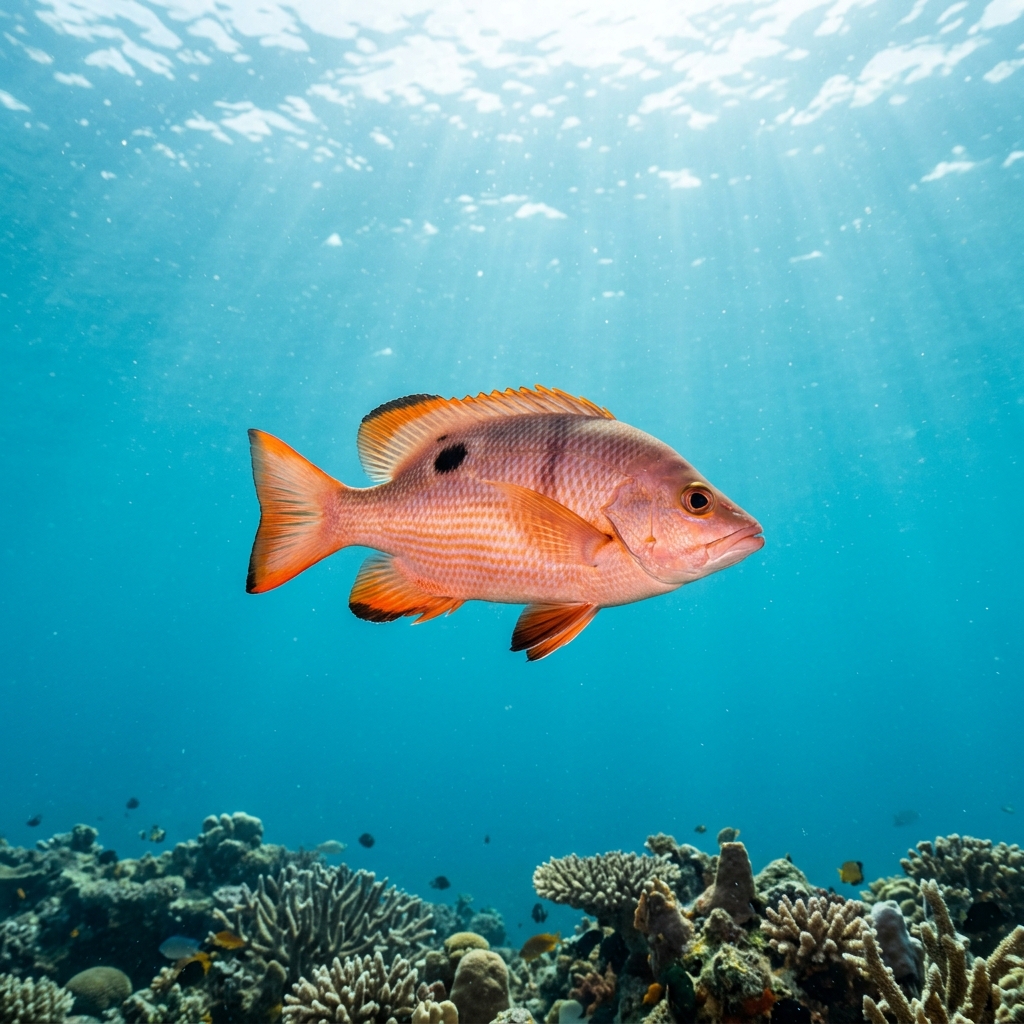
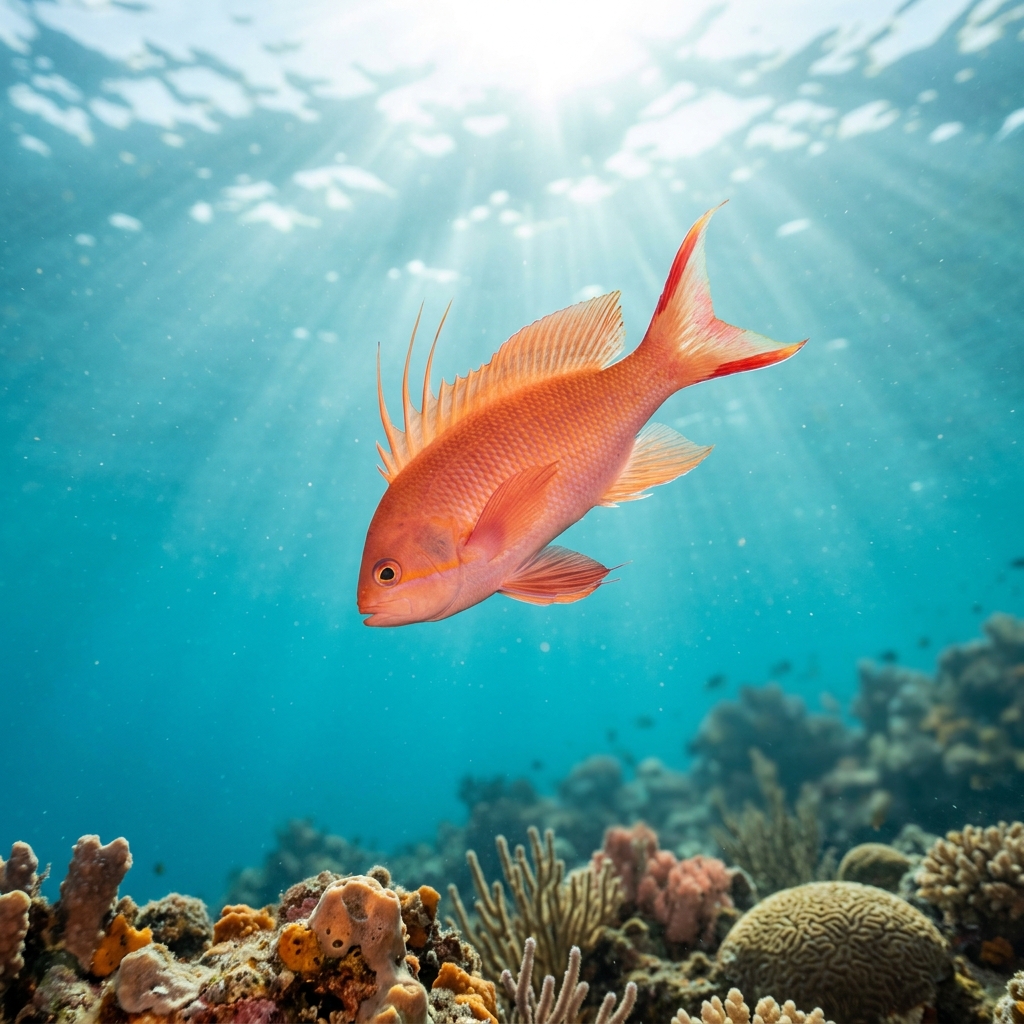
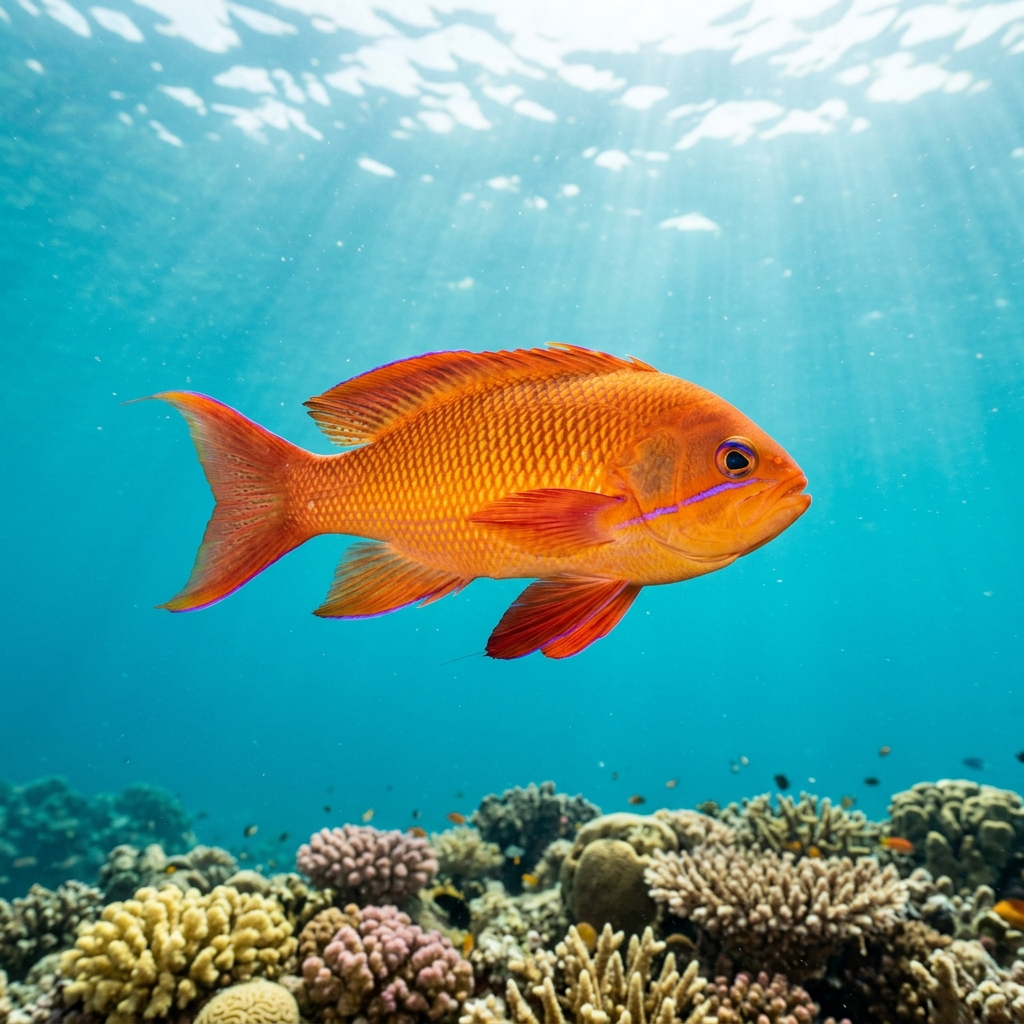
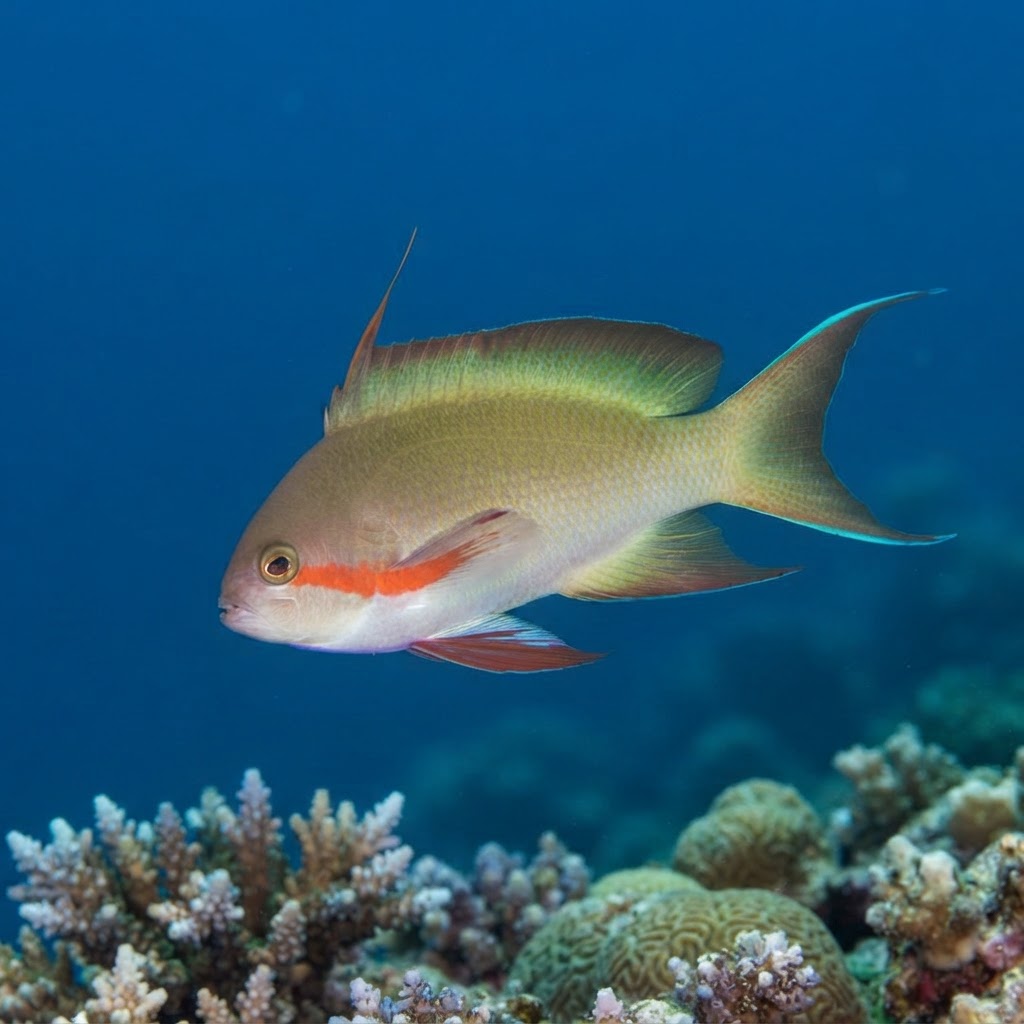
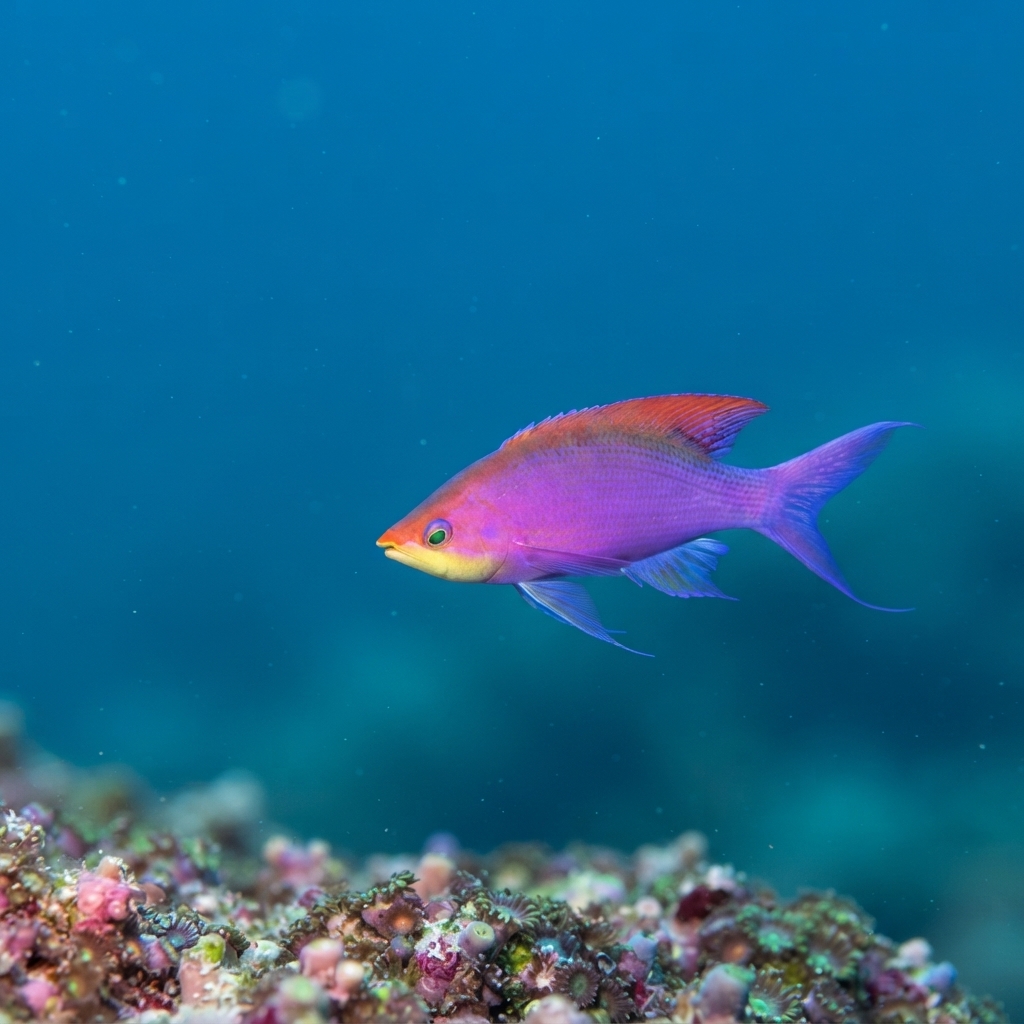
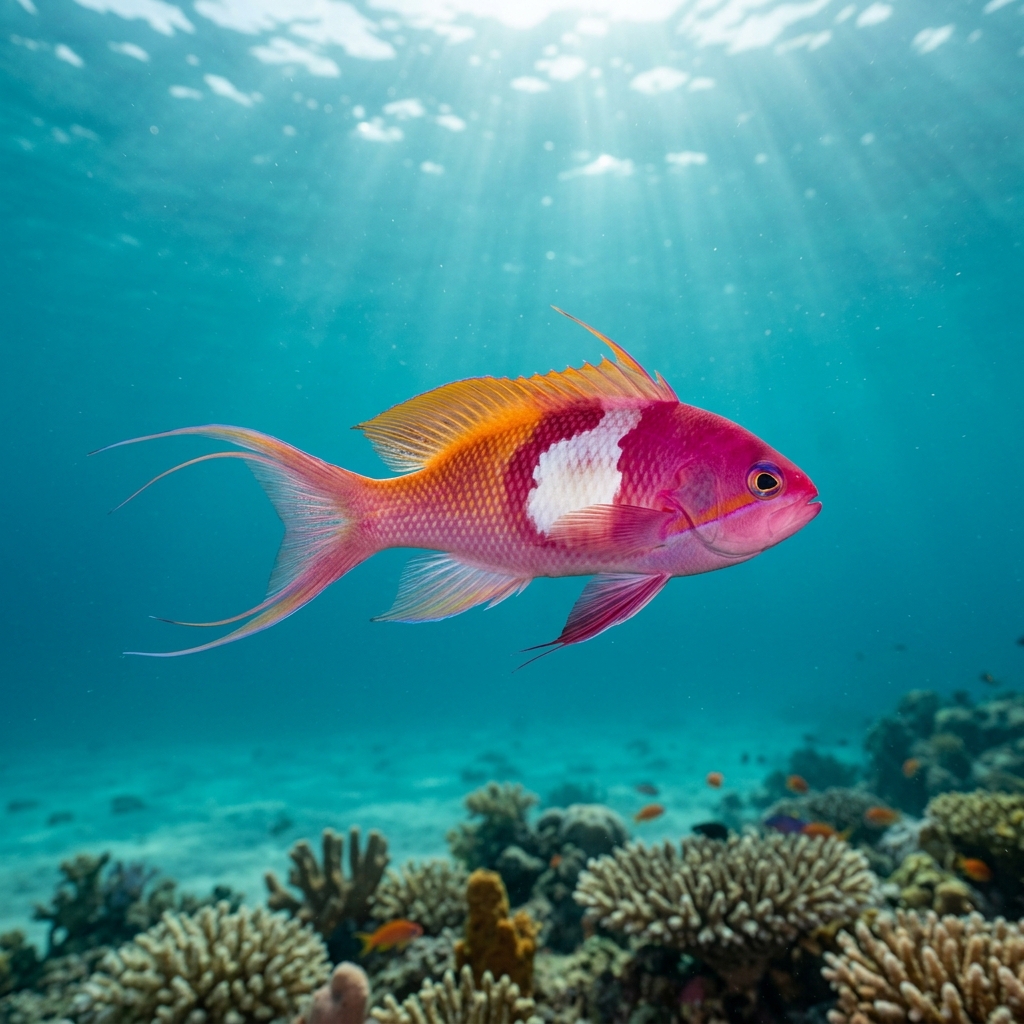
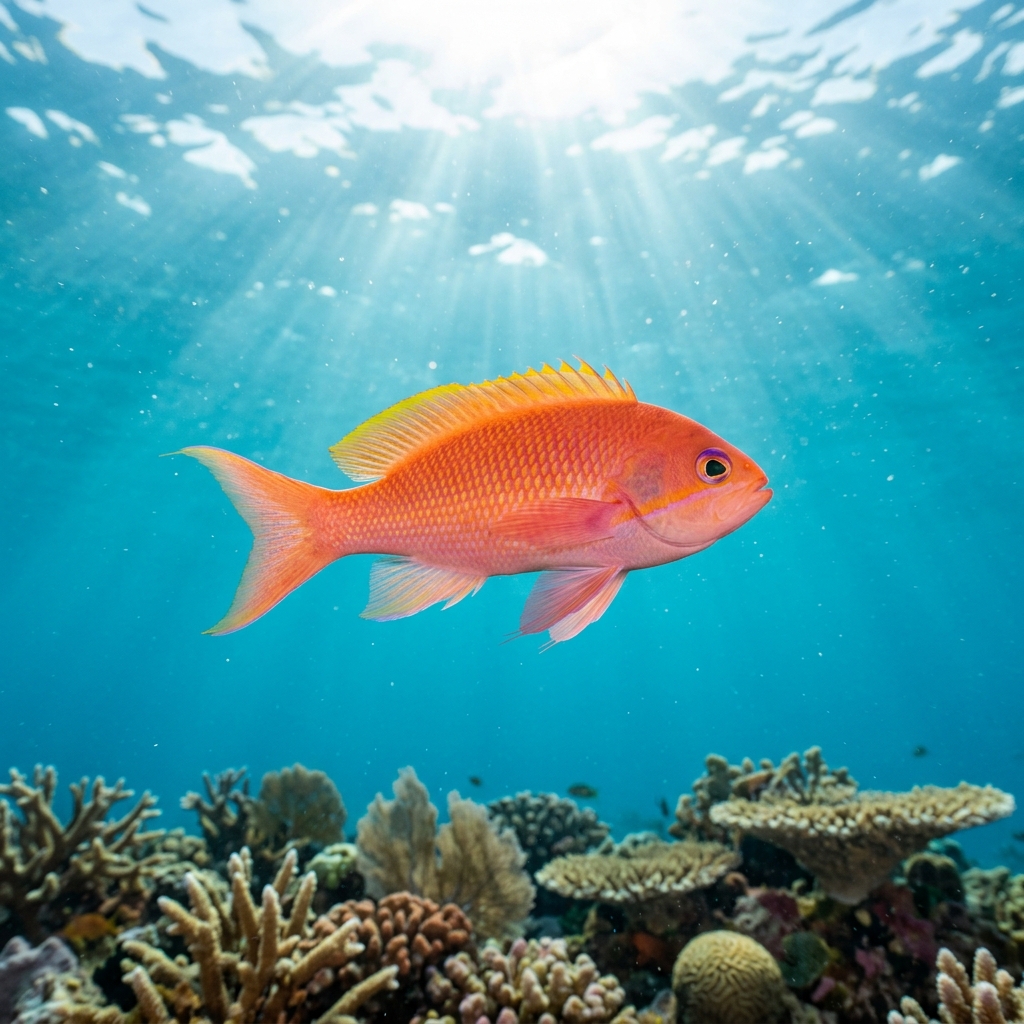
Small, deep-bodied reef fish typically dressed in shades of orange, pink, red, or yellow, anthias are most often seen in mid-water clouds above coral and rocky outcrops, rarely straying far from the reef. Males are noticeably larger and show bolder colouration, often with elongated fin filaments trailing from their dorsal or tail fins, while females tend to be smaller and more uniformly coloured. The habit of hovering in tight, constantly moving groups is their single most reliable field mark, if the reef above you is alive with a flickering cloud of orange or pink fish, you are almost certainly looking at anthias.
Anthias feed on zooplankton (tiny drifting animals) carried past the reef by current, which is why you typically find them hovering in large, swirling aggregations just above the coral or rock, faces pointed into the flow. They are not shy of divers but will compress towards the reef if approached too quickly, so slow movement lets you stay close. Early morning and late afternoon tend to see the most active feeding and the densest schools.
All anthias are born female; dominant individuals change sex to become males when the male in a group disappears. This means the large, vividly coloured fish at the centre of a school is almost certainly a recently transformed male.
Anthias appear to be available year-round across their range, which spans cool-temperate to tropical waters from roughly 14 to 29 °C, broad enough to cover both Mediterranean and tropical reef diving regardless of season.
Reef neighbours a diver could mistake it for. Use the identification notes above to tell them apart.
Anthias are logged across a wide spread of destinations, with particularly strong representation in the Maldives, especially the North and Central Atolls and the Felidhoo and Mulaku regions, and across the Indo-Pacific including the Philippines and Indonesia. Mediterranean divers encounter them regularly along the Greek coast around Attica, in Central Dalmatia in Croatia, and along Turkey's Aegean Coast, while Australia's Queensland sites and Florida and the Southeast in the United States also feature them reliably.
Mapping where Anthias is logged…
Anthias are logged at dive sites across a remarkable spread of countries. The strongest concentrations are in the Maldives (particularly the North and Central Atolls), the Philippines, Indonesia, and Australia's Queensland coast in the Indo-Pacific, and in Greece, Croatia, and Turkey across the Mediterranean. Florida divers also encounter them regularly.
Because anthias tolerate water temperatures ranging from around 14 to 29 °C, they are present year-round across both tropical and temperate reef destinations. There is no concentrated season to plan around, your best strategy is simply to visit a reef with healthy coral or rocky structure and look above the high points.
Look for dense, hovering clouds of small, brightly coloured fish, typically orange, pink, or red, above coral heads or rocky outcrops. The group behaviour is the key clue. Within the school, larger fish with elongated fin filaments and bolder markings are males; smaller, more uniformly coloured fish are females.
Yes, all anthias start life as females. When the dominant male in a group disappears, the largest female changes sex and becomes the new male, developing brighter colouration and elongated fin filaments in the process. This makes the boldest, largest fish in a school a recent sex-changer rather than a lifelong male.
Not at all. Anthias pose no risk to divers. They are small, planktivorous fish that ignore humans unless startled, in which case they simply retreat closer to the reef. Slow, calm approaches let you observe them at close range without disturbing the school.
Site and sighting data is aggregated from diver logs, iNaturalist and GBIF. For taxonomy and conservation status:
Purple Queenfish
254 sites