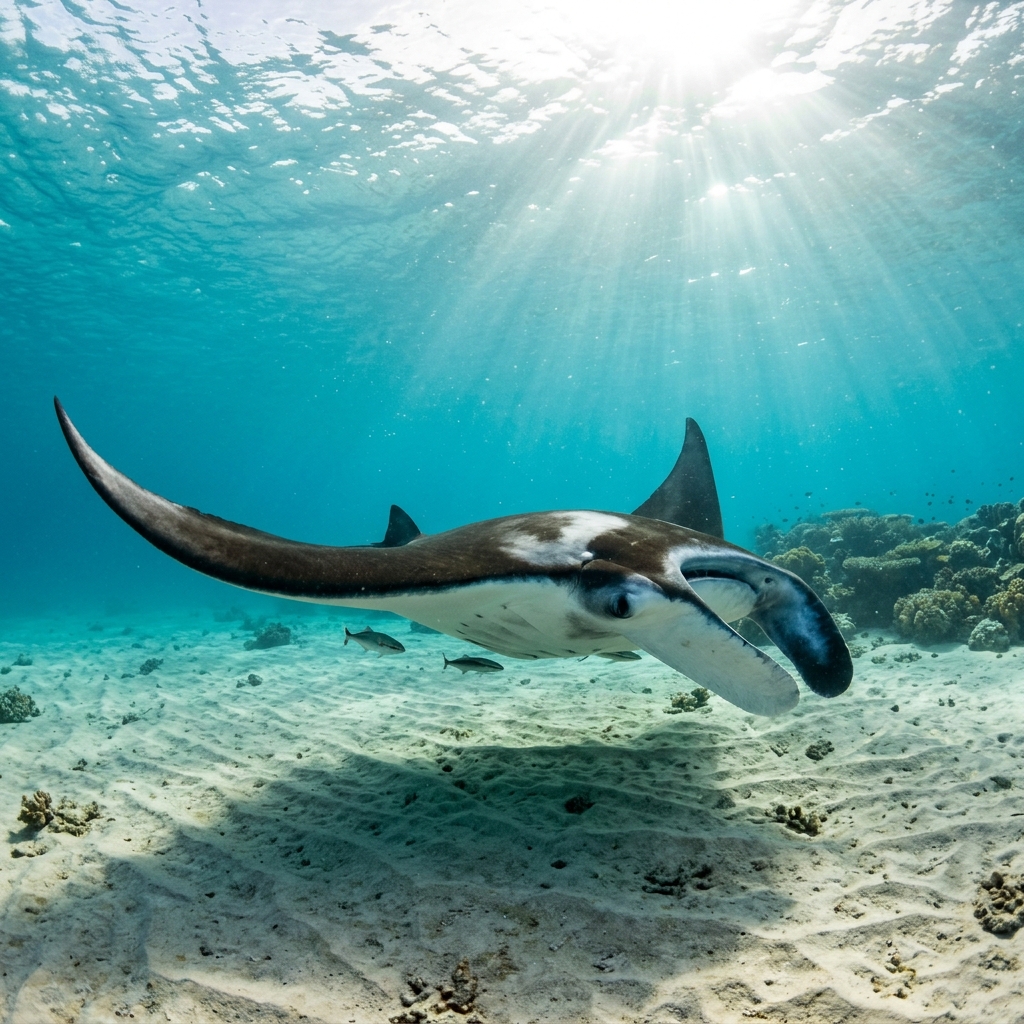
Mobula birostris
Spot the world's largest ray in the Philippines, Indonesia, and Florida. Comfortable in 23-29 °C water, it's a year-round encounter across tropical reefs.
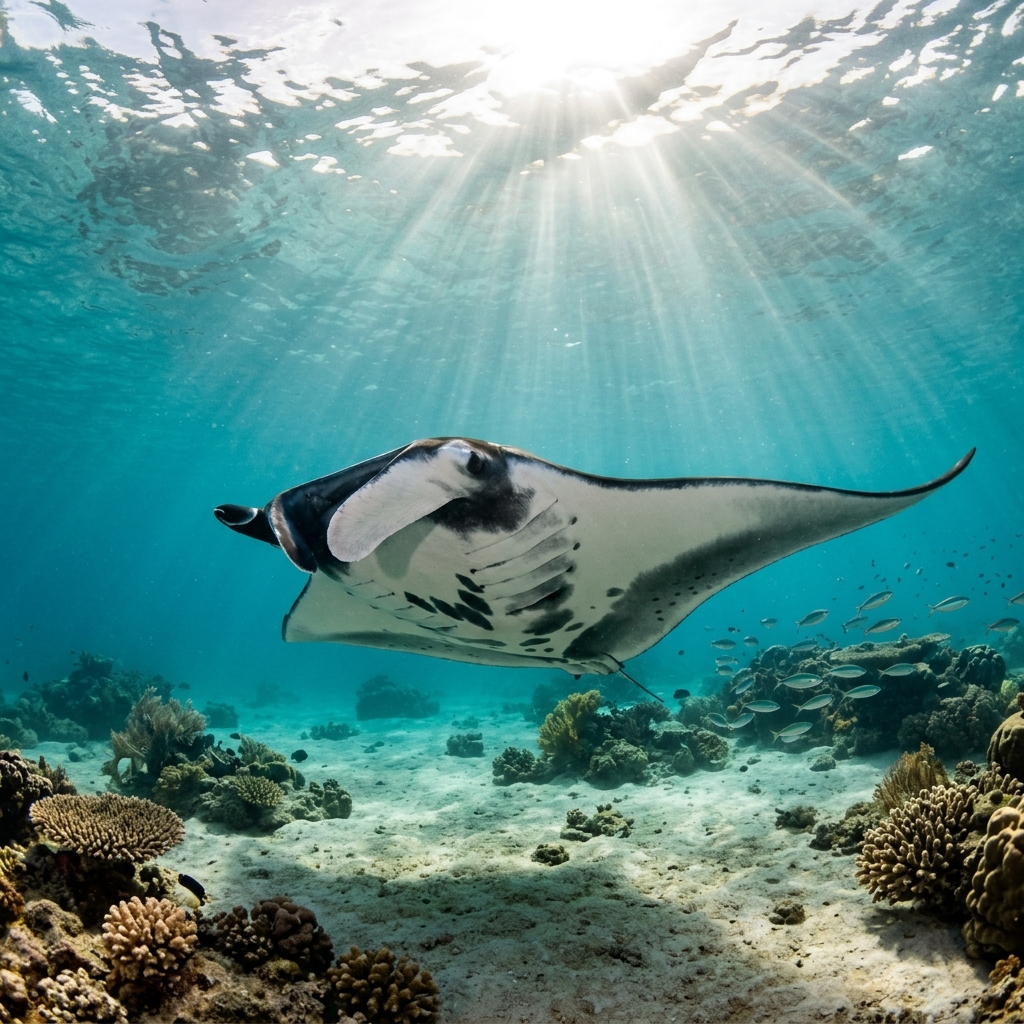
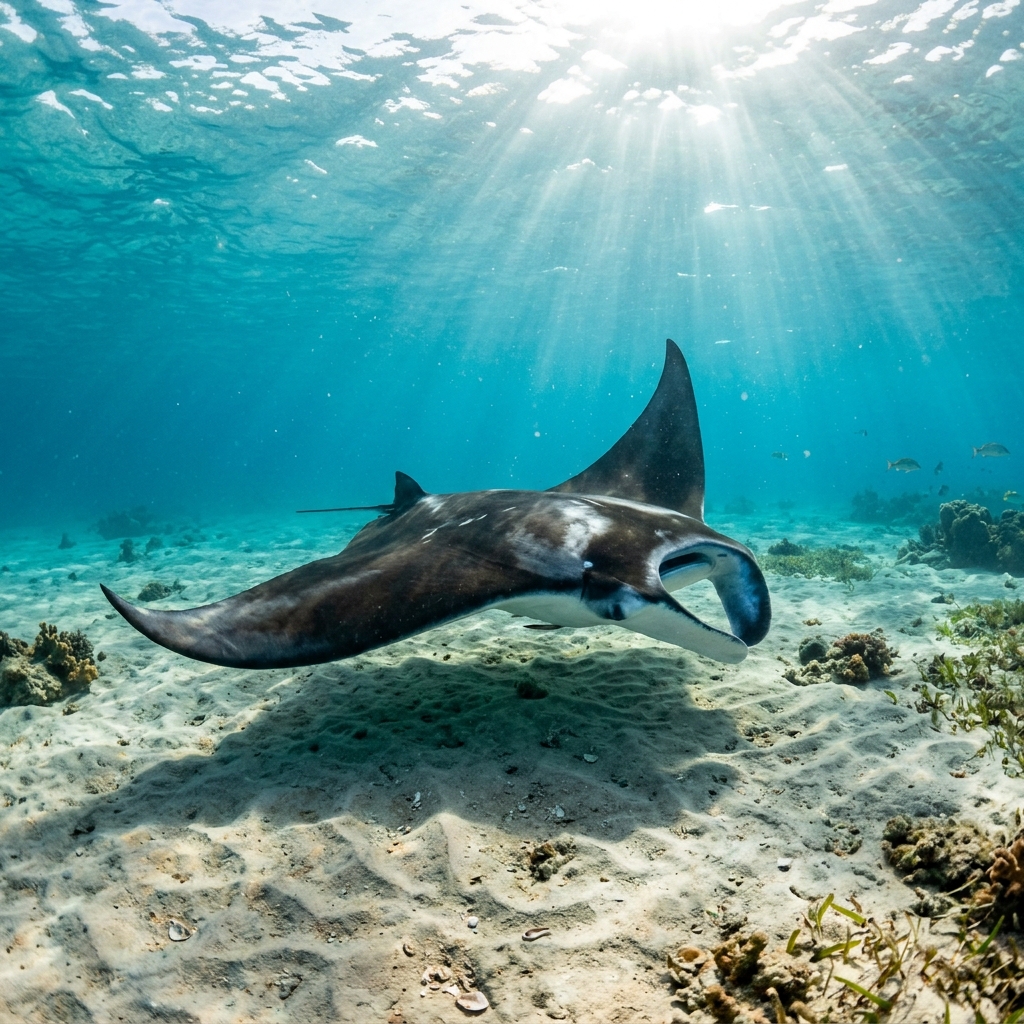
The sheer wingspan is the first clue, this is the largest ray on the planet, with a disc that can dwarf a diver completely. Look for the characteristic pair of cephalic fins (horn-like lobes either side of the mouth) curled in a loose spiral when cruising, or spread wide when filter feeding. The back is dark grey to black with a pale shoulder patch forming an upside-down triangle, and the white belly typically shows a unique pattern of dark blotches towards the rear, useful for individual ID. A single, thin tail with no spine distinguishes it from any stingray.
Oceanic mantas are open-water travellers rather than reef-hugging residents, often encountered doing slow barrel rolls through plankton-rich water as they feed, their cephalic fins funnelling food into an enormous, gaping mouth. They are generally relaxed around divers who approach calmly and avoid blocking their path, and have been known to linger at cleaning stations on prominent reef outcrops where small wrasse remove parasites. Surface sightings and shallow-water passes are possible, but chance encounters in the blue water column are equally common.
Each oceanic manta's belly-spot pattern is as individual as a fingerprint, and citizen-science photo-ID databases have now catalogued thousands of individuals by matching diver photos, uploading a clear shot of the underside can contribute directly to ongoing population research.
Sighting data are too sparse to confirm a peak season for any individual region, so treat encounters as a year-round possibility wherever water temperatures sit in the 23-29 °C range this species favours.
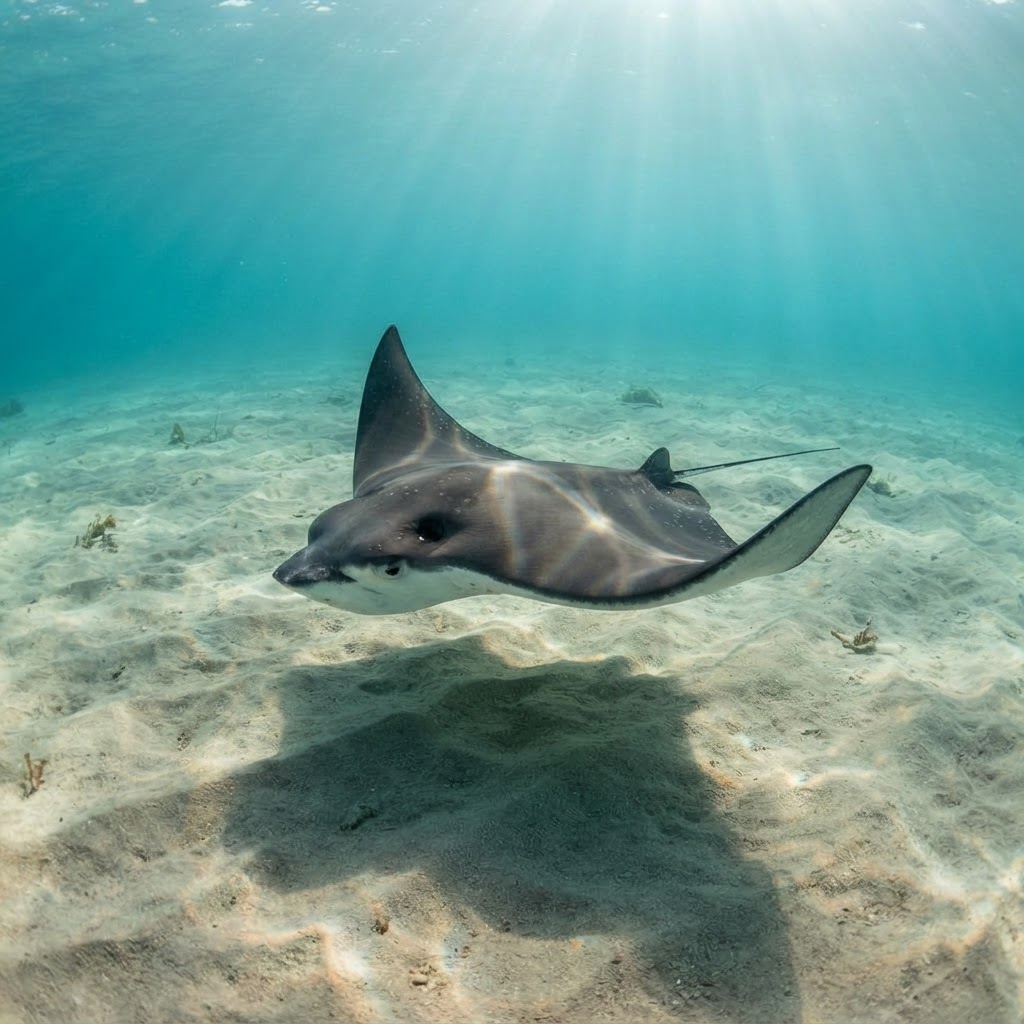
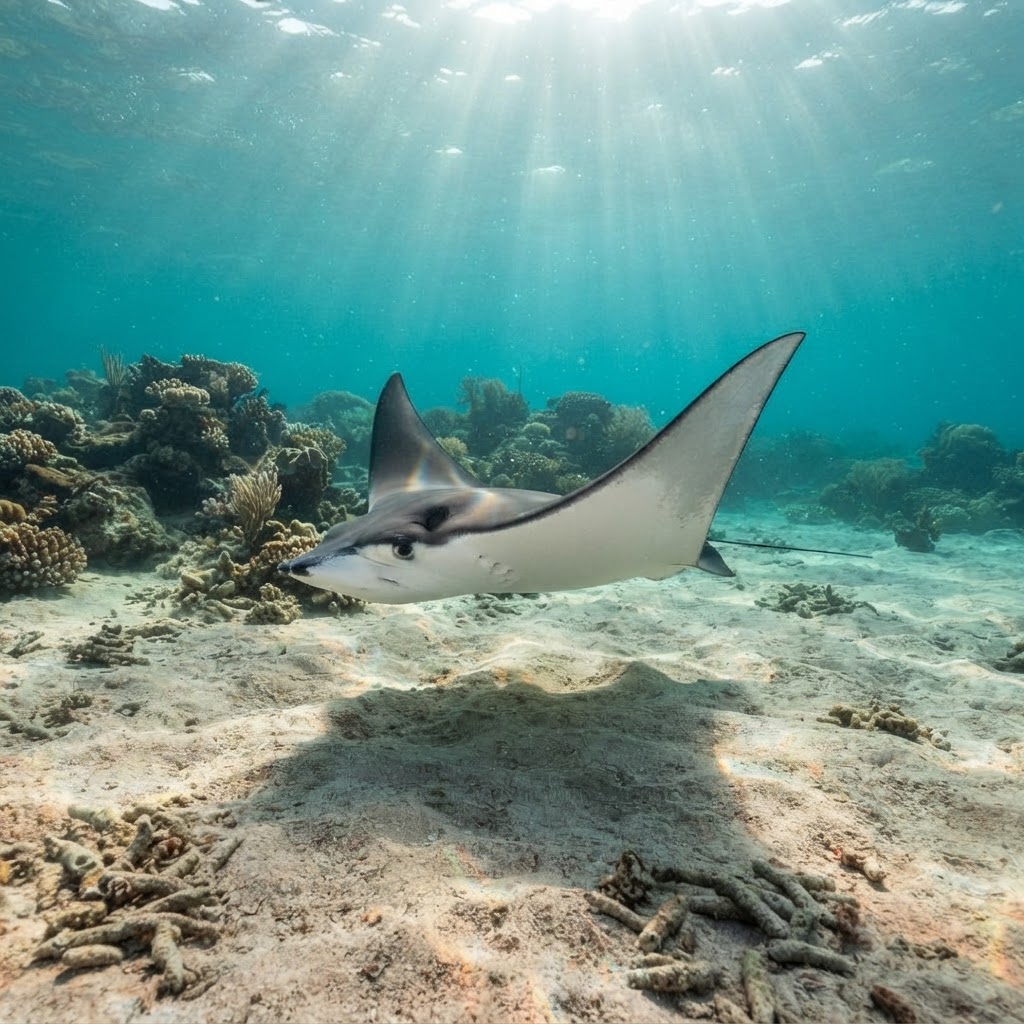
Reef neighbours a diver could mistake it for. Use the identification notes above to tell them apart.
The range model places this species across an enormous tropical and subtropical spread, with the greatest concentration of dive sites in the Philippines, particularly Palawan and Apo Reef, and Indonesia, including the Nusa Tenggara and Banda Sea and Maluku and Papua regions. The United States, especially Florida and the Southeast, also shows strong representation, alongside Mexico, Cuba, Colombia, Venezuela, and the Bahamas.
Mapping where Oceanic Manta Ray is logged…
The strongest coverage of sites is in the Philippines, particularly around Palawan and Apo Reef, and across Indonesia including Nusa Tenggara, the Banda Sea, and Maluku and Papua. Florida and the US Southeast, Mexico, Cuba, and the Bahamas also have solid representation. This is ultimately a wide-ranging oceanic species found across tropical and warm subtropical seas worldwide.
There is not enough monthly sighting data to pinpoint a clear peak season at any single location. As the species is comfortable in water from roughly 23 °C to 29 °C, it is essentially a year-round target across tropical destinations. Checking local conditions and plankton productivity at your specific site is more useful than a calendar date.
Size is the most practical clue, oceanic mantas are substantially larger, with wingspans regularly exceeding 5 metres compared to the reef manta's more modest 3-3.5 metres. The oceanic manta also typically has a more prominent pale shoulder patch and a darker, less patterned back. Where the two species overlap, the oceanic manta is more often seen in open water rather than tight to the reef.
They are the largest rays in the world. Disc width (the full wingspan) regularly reaches 5-6 metres, with exceptional individuals recorded beyond 7 metres. That scale makes them immediately recognisable underwater, a large oceanic manta can easily be wider than two divers lying head to toe.
Yes. The IUCN lists the oceanic manta ray as Endangered. Slow reproduction, females typically give birth to a single pup every two to three years, means populations recover very slowly from any pressure. Gill plate trade and bycatch are the primary threats. Responsible dive tourism that prioritises observation over interaction is one of the more tangible ways divers can support conservation.
No. Despite being related to stingrays, manta rays have no venom or spine on their tail. They are harmless to divers and have no defensive weapon beyond their size. The only risk during an encounter is an accidental collision if a very large individual changes direction unexpectedly.
The Oceanic Manta Ray is listed as endangered by the IUCN. Observe from a distance, avoid touching or feeding it, and report sightings to local marine research organisations.
Listed as Endangered on the IUCN Red List, oceanic mantas face pressure from targeted fisheries, bycatch, and demand for gill plates. Divers can help by never touching or chasing individuals, following responsible approach guidelines, and submitting belly-shot photos to recognised manta ID programmes.
Site and sighting data is aggregated from diver logs, iNaturalist and GBIF. For taxonomy and conservation status:
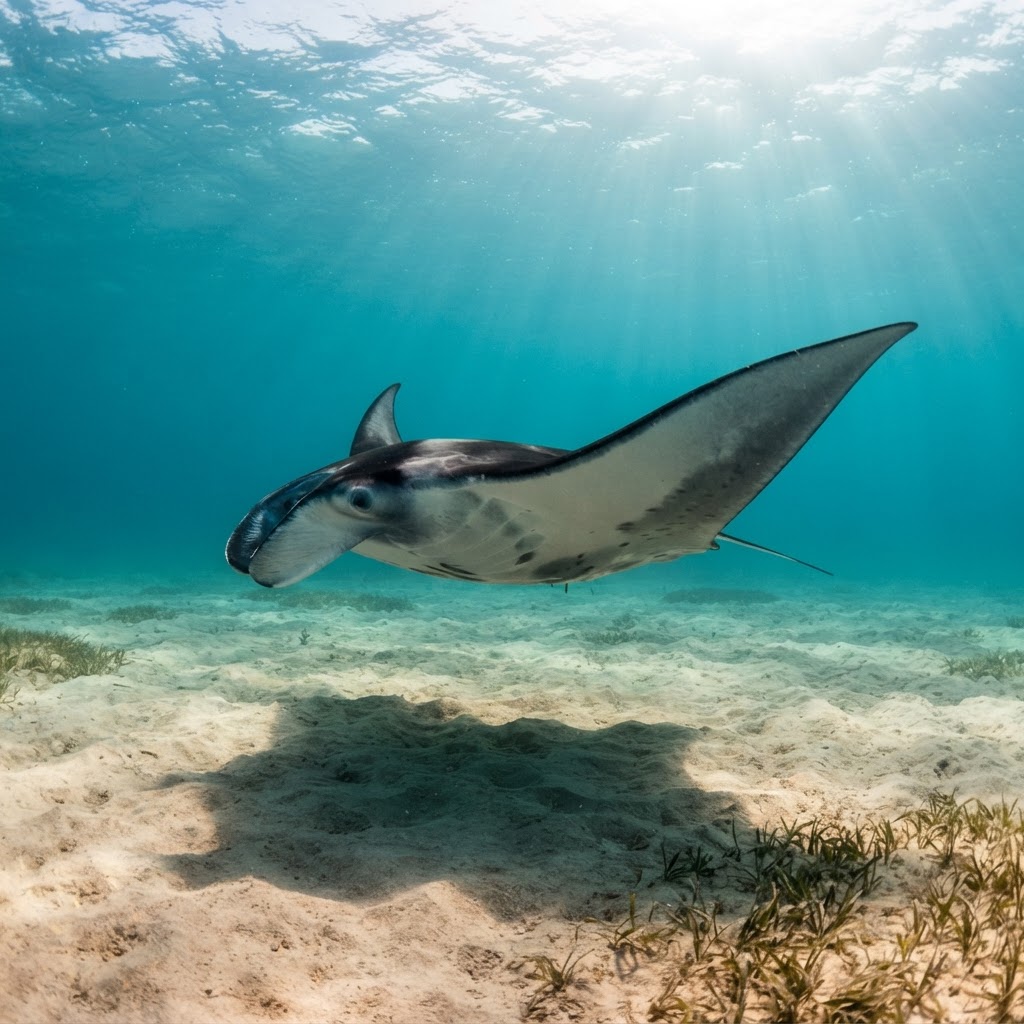
Atlantic Manta Ray
4 sites