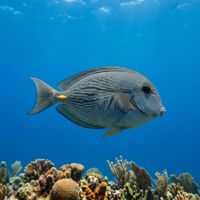
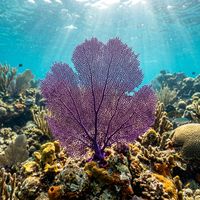
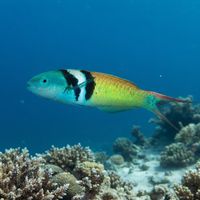
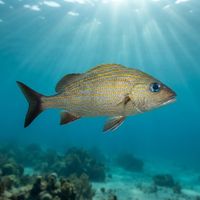
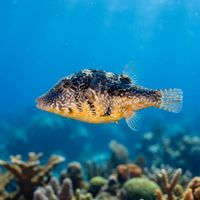
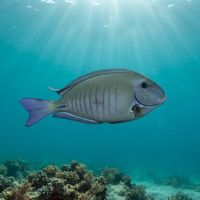
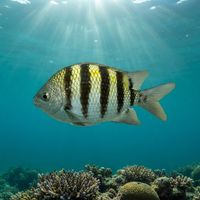
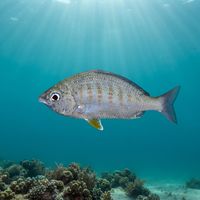
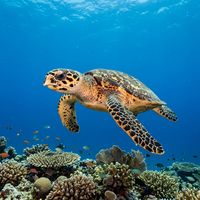
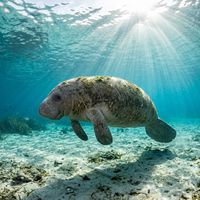
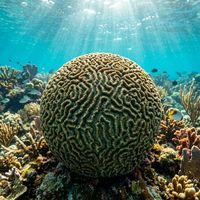
Costa Rica's Caribbean coast sits on the Caribbean Sea and holds the country's largest coral reef system. Water temperatures stay warm year-round, climbing highest in September and October. There is no true dry season here, so the windows of February to March and September to October bring the best visibility, while heavy rain can cause river runoff that cuts clarity sharply. The six sites in our database range from shallow shore entries suitable for beginners through to deep wall and reef dives reaching eighty metres, with topography covering walls, drop-offs, and reefs. Divers can encounter green sea turtles, nurse sharks, Atlantic goliath grouper, and whale sharks, alongside reef species such as yellowtail parrotfish and bluehead wrasse.
1 areas
Monthly water temperature across Caribbean's sites, from satellite sea-surface data corrected for depth. The band shows the site-to-site spread.
Water temperatures remain consistently warm across all months, rising slightly towards late summer and early autumn. Visibility is most reliable during the drier windows of February to March and September to October; outside these periods, river runoff can reduce it significantly. A thin wetsuit or skin suit is sufficient year-round.
Water temperature around Caribbean ranges from about 28°C in January to 30°C in September, based on satellite sea-temperature data for its dive sites.
With water around 28–30°C, a rash guard or 3mm shorty works in Caribbean year-round.
Fin maps 6 sites in Caribbean (6 scuba diving sites and 1 snorkelling spots, with some suited to both).
Across Caribbean's dive sites, March and April are most often reported as the best months to visit.