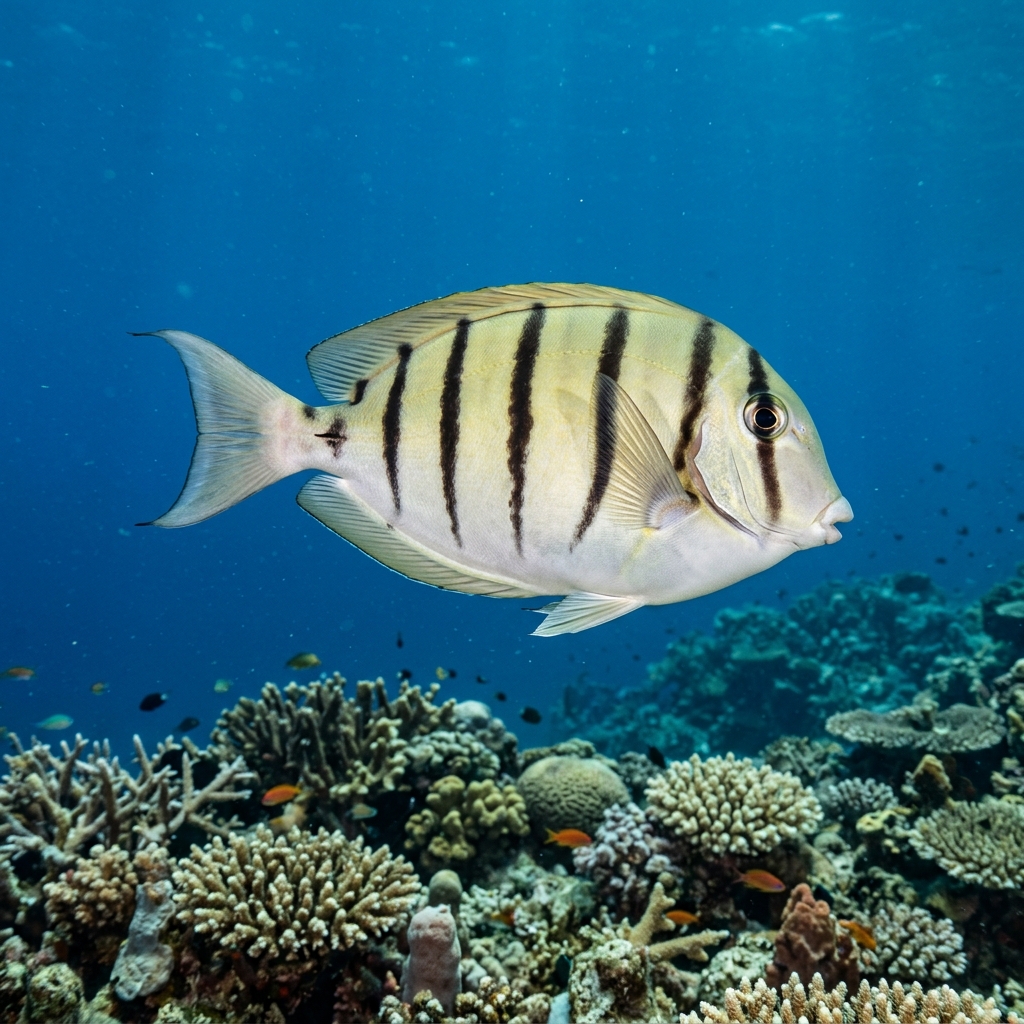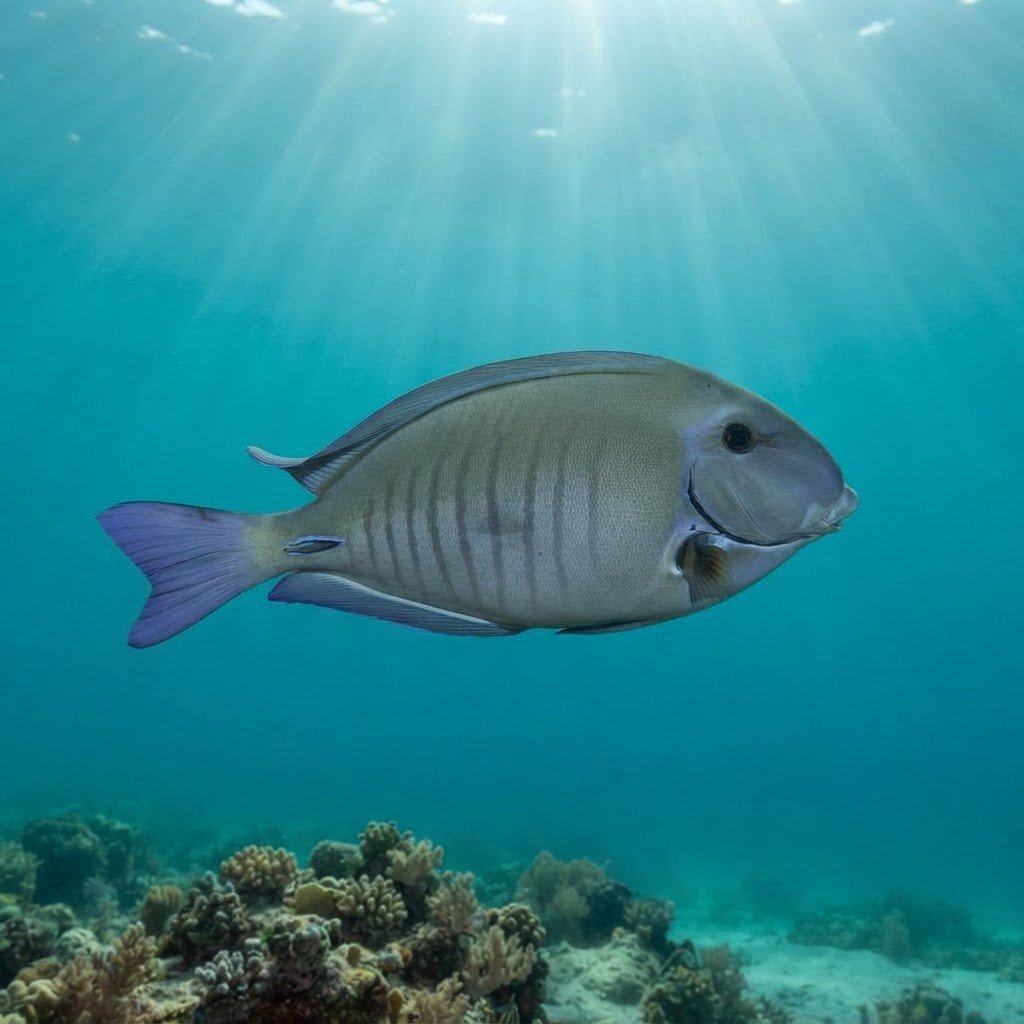
Acanthurus chirurgus
Grey-brown and easy to overlook, doctorfish turn up on reefs from the Yucatán to Florida in water around 27°C, year-round.
Safety warning
The tail spine can slice skin if you grab or corner the fish, so admire from a distance and never try to handle one. Injuries are rare and only happen when divers force contact.
If you're cut
Tail scalpelGeneral first-aid guidance, not a substitute for professional medical care. In an emergency, call your local emergency number.
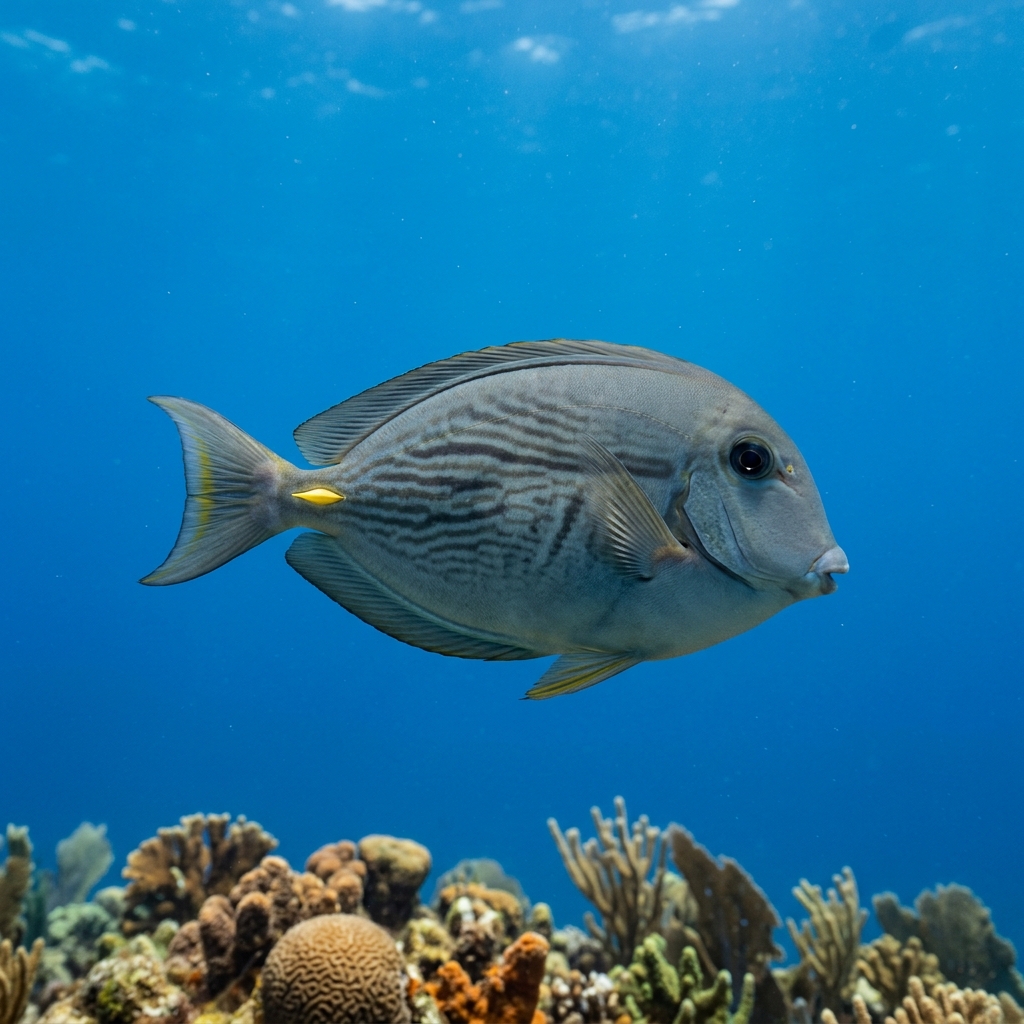
Oval, flat-bodied fish around 27 cm with a grey to olive-brown body crossed by faint darker vertical bars that can fade in and out depending on mood. Look for the sharp white line at the base of the tail and the small, scalpel-like spine just in front of it, the feature that gives the whole surgeonfish family its name. The dorsal and anal fins run long and low along the body, giving it a slightly deep, compressed profile compared with typical reef fish.
Usually seen grazing alone or in loose groups over rock and coral rubble, rasping algae off the substrate with quick, deliberate bites. Divers rate it uncommon at most sites rather than a guaranteed sighting, so it's more of a nice find while working a reef wall than something you'll see on every dive. It tends to keep a respectful distance but doesn't bolt the way some reef fish do, making it an easy, unhurried subject for photos.
That tail spine folds flat against the body when relaxed and flicks out sideways when threatened, working like a small switchblade against predators or careless hands.
No strong seasonal pattern shows up in the data, and it sits comfortably in 26 to 28°C water, so it's a fair sighting on Caribbean and western Atlantic reefs at any time of year.
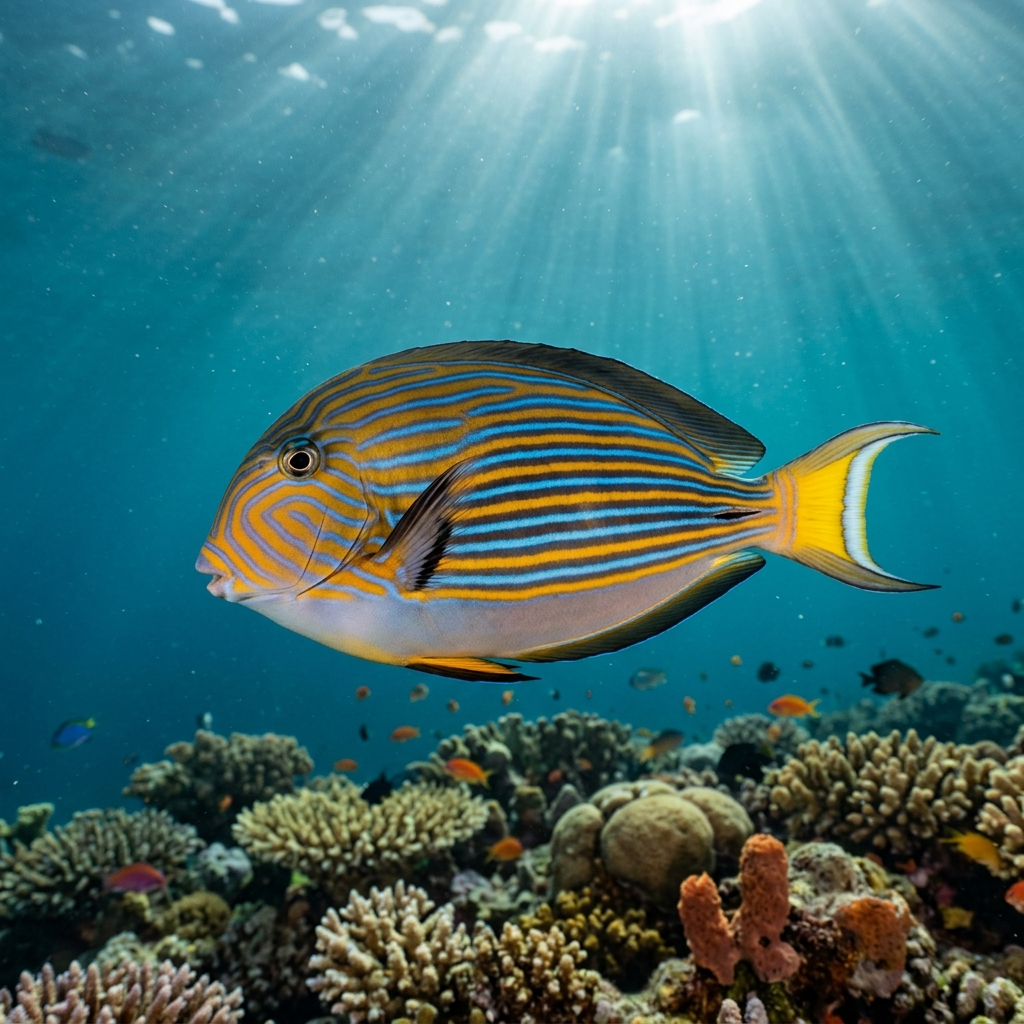
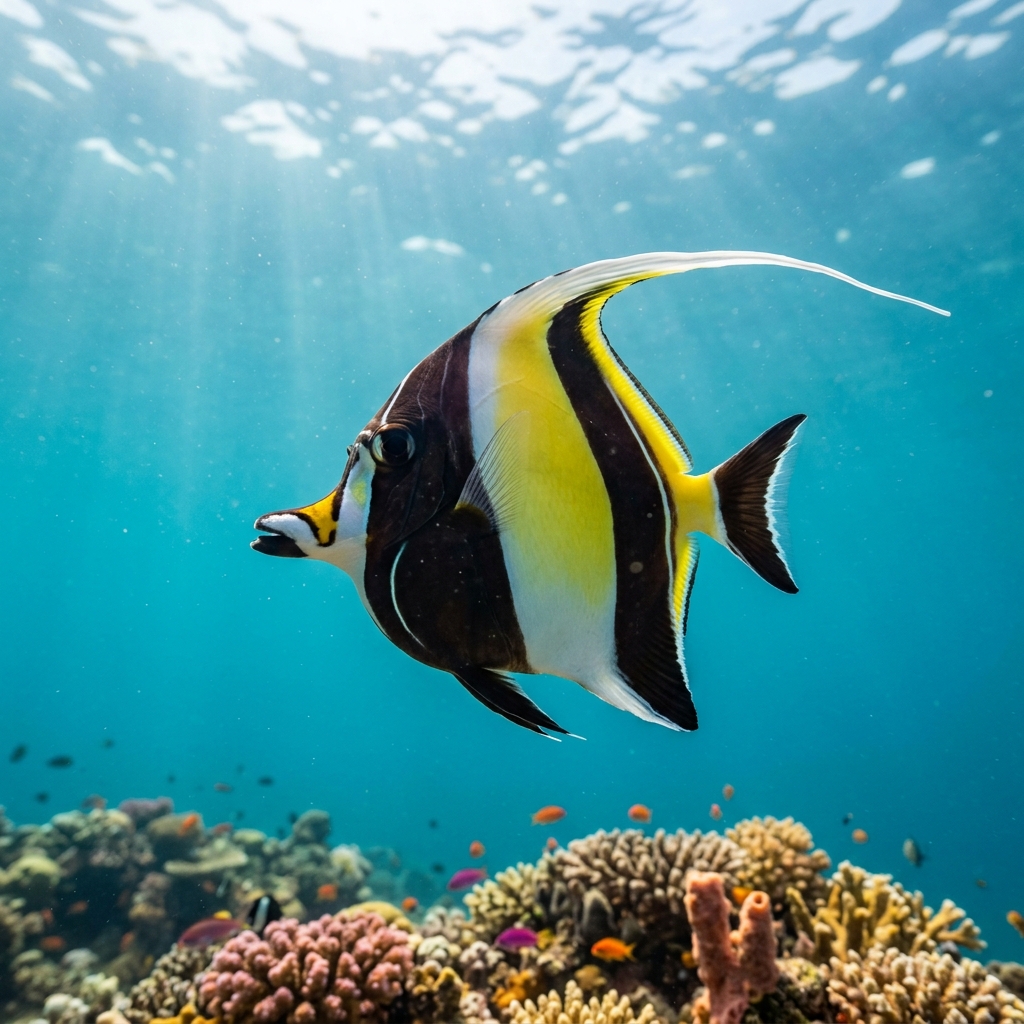
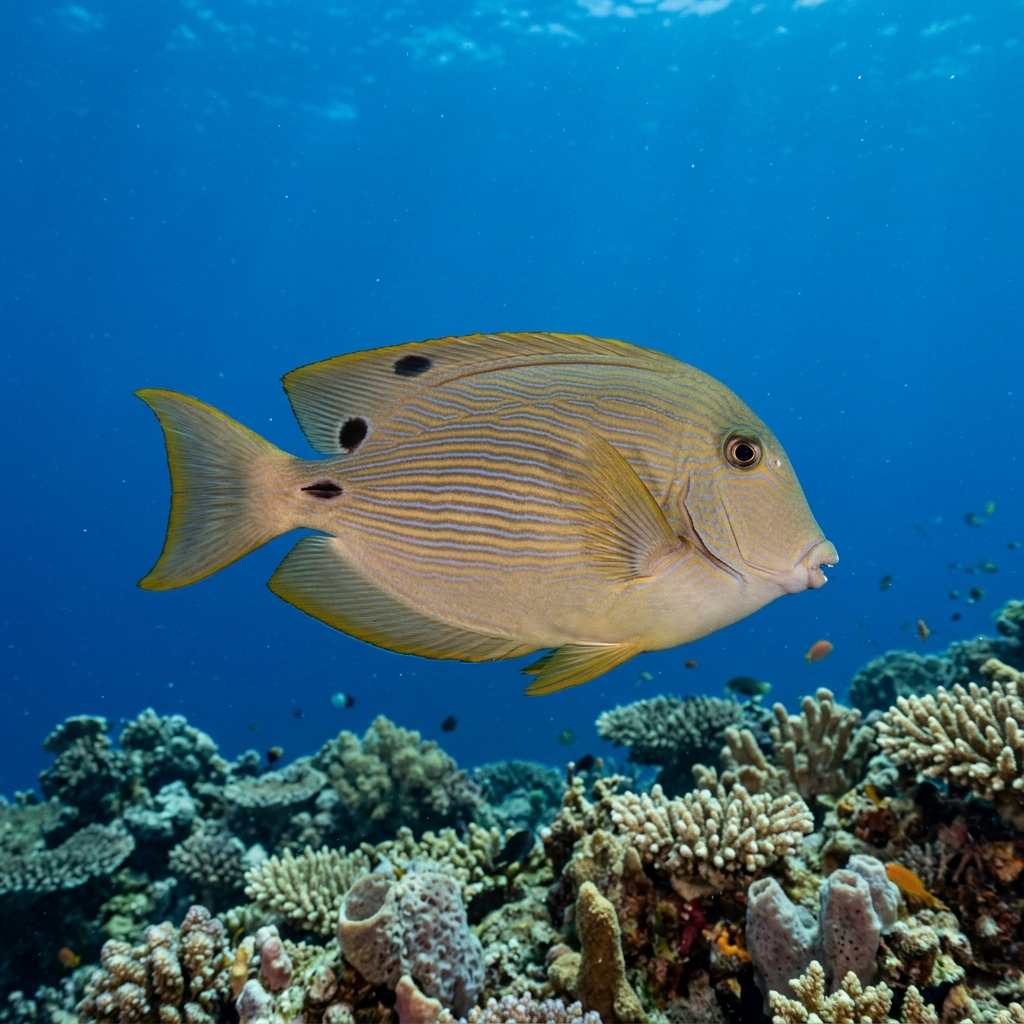
Reef neighbours a diver could mistake it for. Use the identification notes above to tell them apart.
Most reliably logged around Mexico's Yucatán Peninsula and across Florida, with strong numbers also in Honduras' Bay Islands. Beyond those hotspots it turns up widely through the Caribbean and western Atlantic, including Brazil (Rio de Janeiro and Fernando de Noronha), the Dominican Republic, Guadeloupe, San Andrés & Providencia in Colombia, and Grenada.
Mapping where Doctorfish is logged…
Best bets are Mexico's Yucatán Peninsula, Florida, and Honduras' Bay Islands, with good numbers also around San Andrés & Providencia in Colombia and Carriacou in Grenada.
There's no clear seasonal peak in the sighting data, and warm reef water in the 26 to 28°C range suits it year-round, so any month is fair game on Caribbean and western Atlantic reefs.
They carry a sharp defensive spine near the tail that can cut skin if the fish is grabbed or cornered, but they don't behave aggressively toward divers who keep their distance.
Look for a grey-brown, oval-bodied fish around 27 cm with faint vertical bars, a white line at the tail base, and long low dorsal and anal fins running the length of the body.
They typically reach around 27 cm in length, a mid-sized reef fish that's easy to mistake for a juvenile of a larger species at a glance.
Site and sighting data is aggregated from diver logs, iNaturalist and GBIF. For taxonomy and conservation status:
Striped Surgeonfish
3,289 sites