Haemulon carbonarium
Bronze-striped and often overlooked, Caesar Grunt turns up reef-wide in the Yucatán Peninsula and Florida in 26 to 28C water year-round.
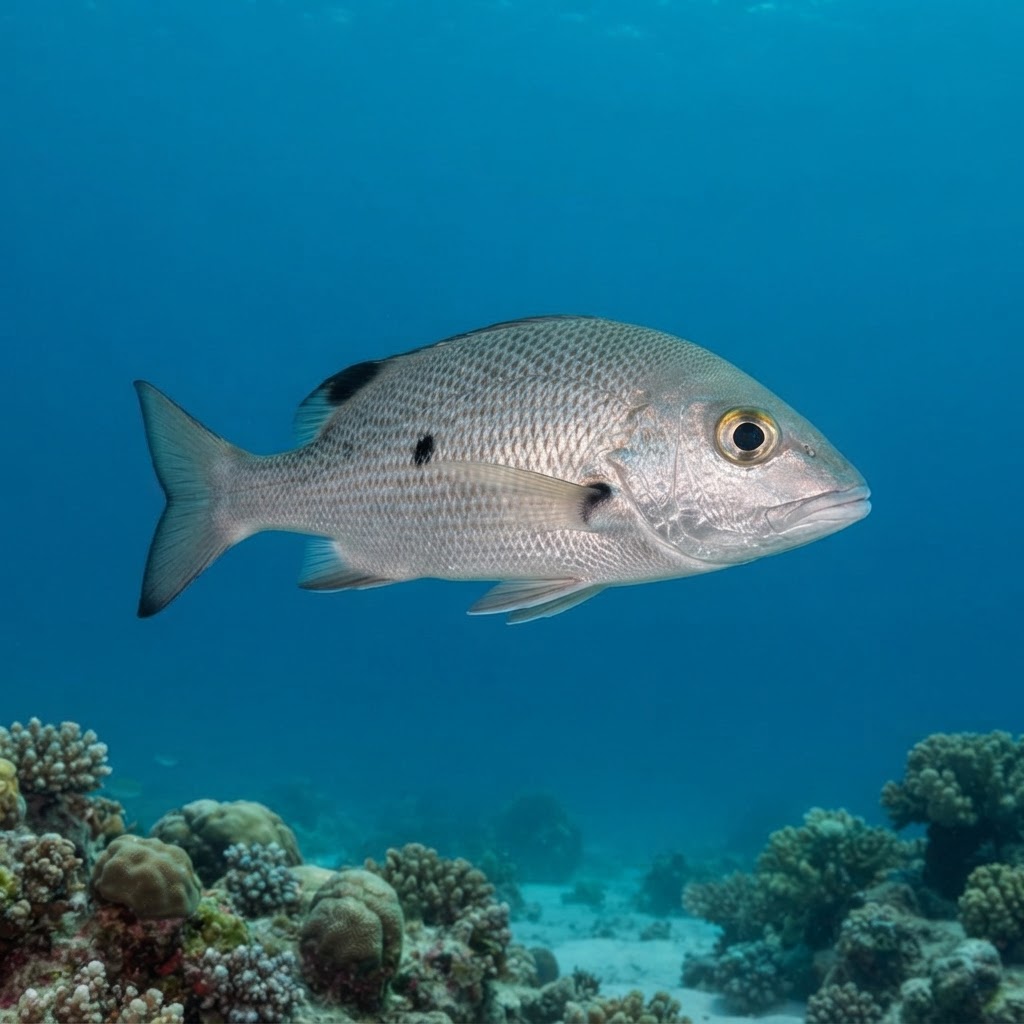
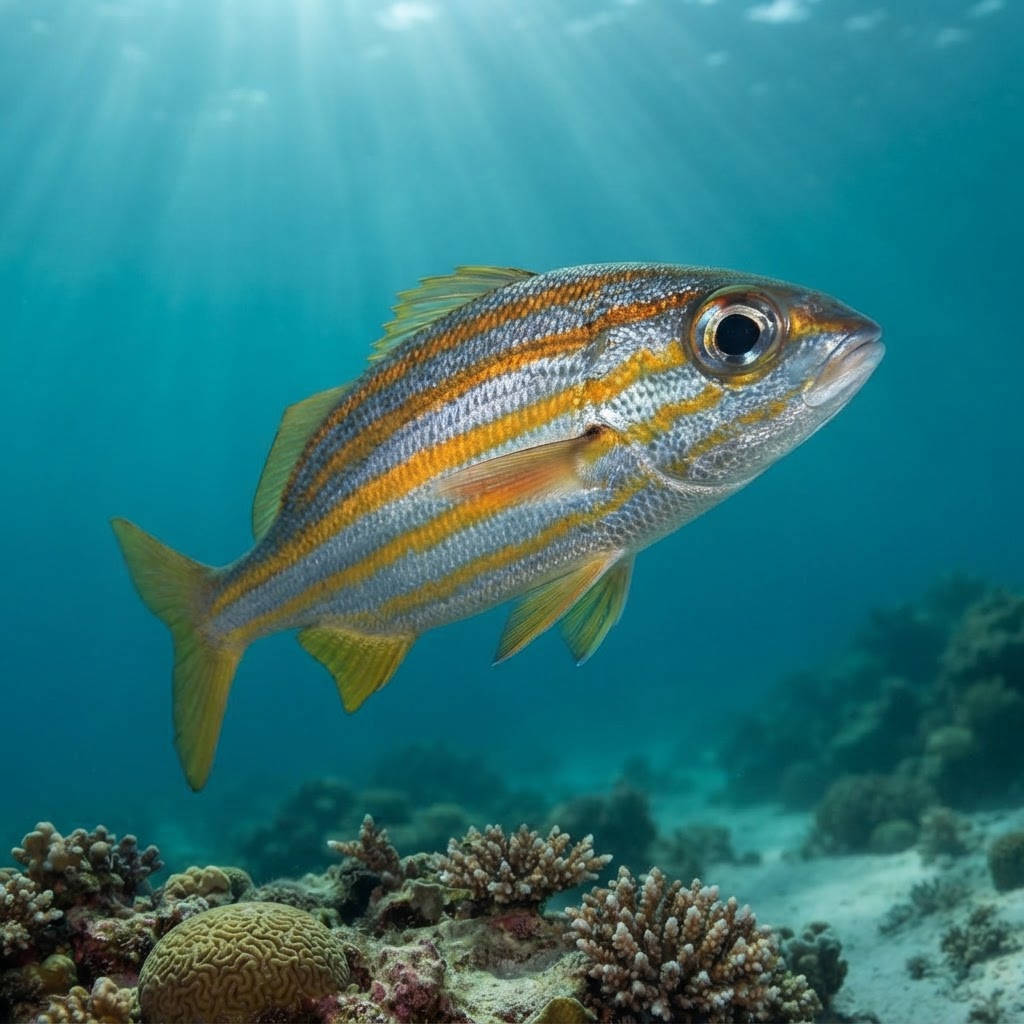
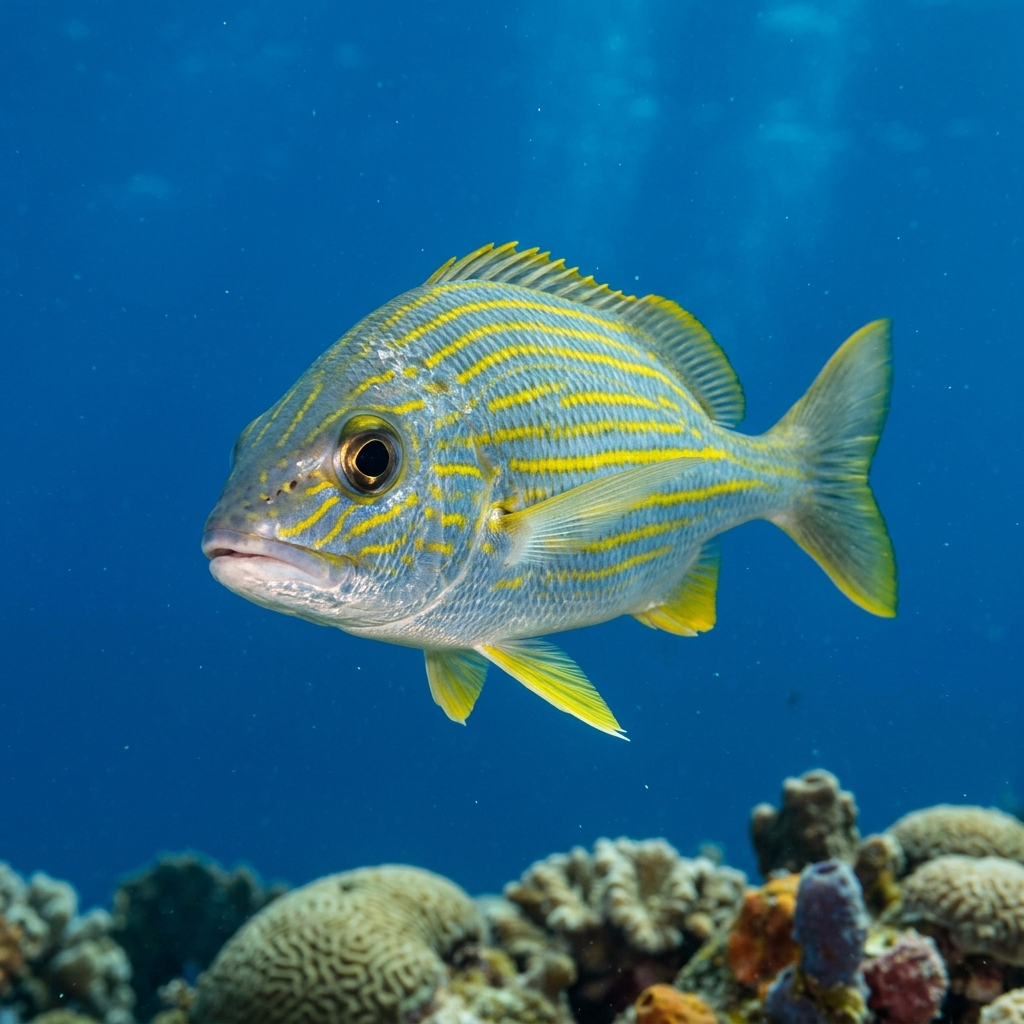
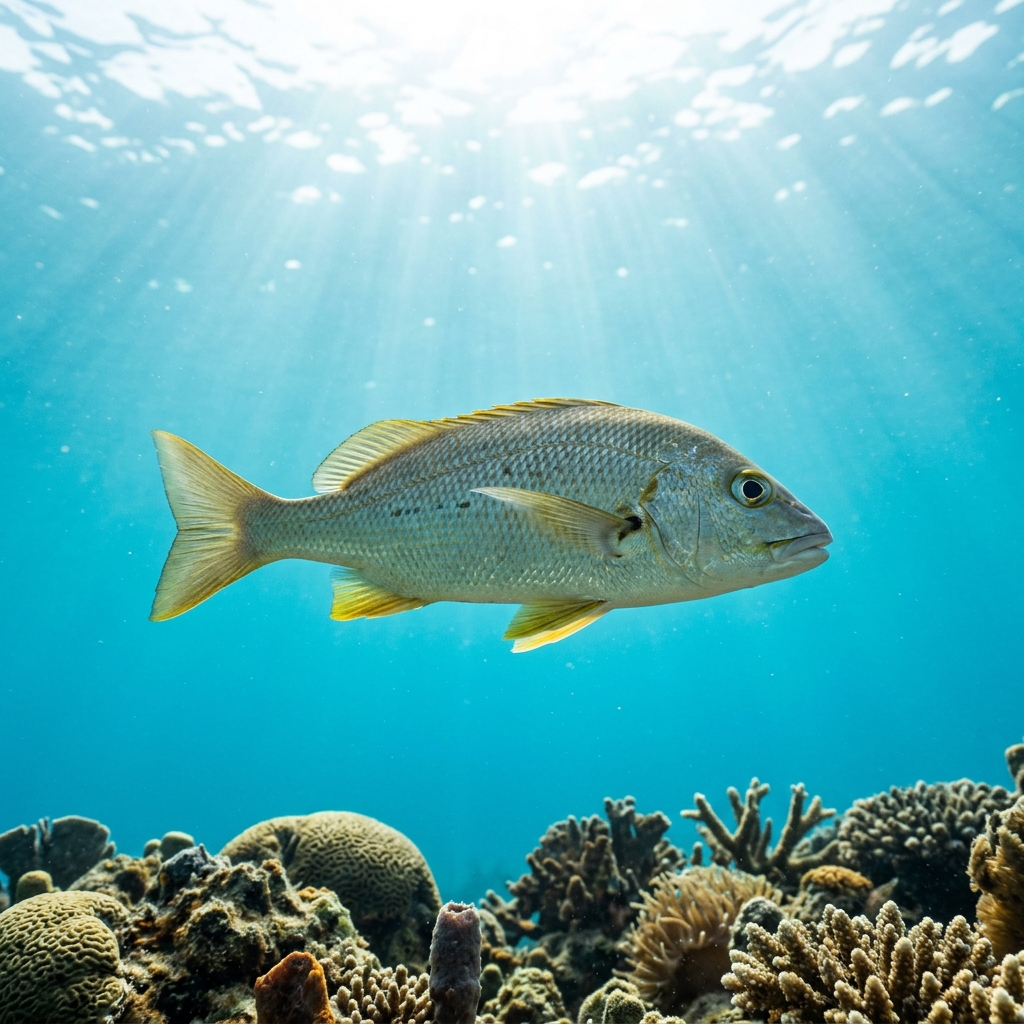
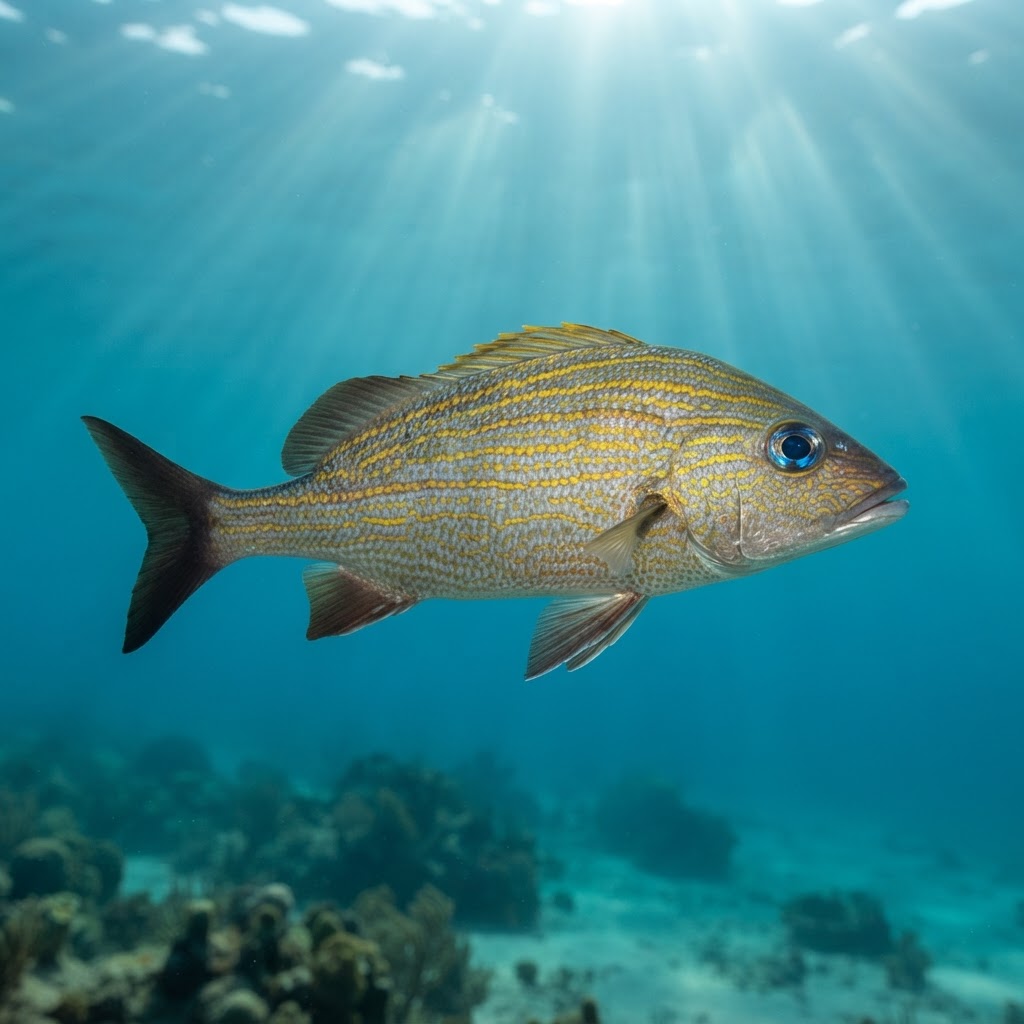
A stocky, silver-bodied grunt around 25 cm with a series of bronze-to-yellow horizontal stripes running from gill to tail. The inside of the mouth flashes bright red-orange when opened, a trait shared across the grunt family but useful for confirming the ID at close range. It tends to hang in loose groups just off the reef structure rather than out in open water, with a slightly humped back and blunt snout that give it a chunkier profile than the slimmer sweetlips it can be confused with.
Usually spotted in loose daytime groups tucked under ledges or hovering close to reef structure rather than roaming open water. It is not especially skittish but rarely approaches divers either, going about its business as you pass. Most feeding activity happens after dark, when it moves off the reef to hunt over adjacent sand and rubble.
Like other grunts, it makes an audible grinding noise by rubbing its pharyngeal teeth together, amplified by the swim bladder, which is likely a territorial or startle response rather than communication aimed at divers.
Sightings show no detectable season, and with a water-temperature niche of 26.3 to 28.2C it sits comfortably on tropical reefs all year, so any month works for a visit to its Caribbean and Gulf of Mexico range.
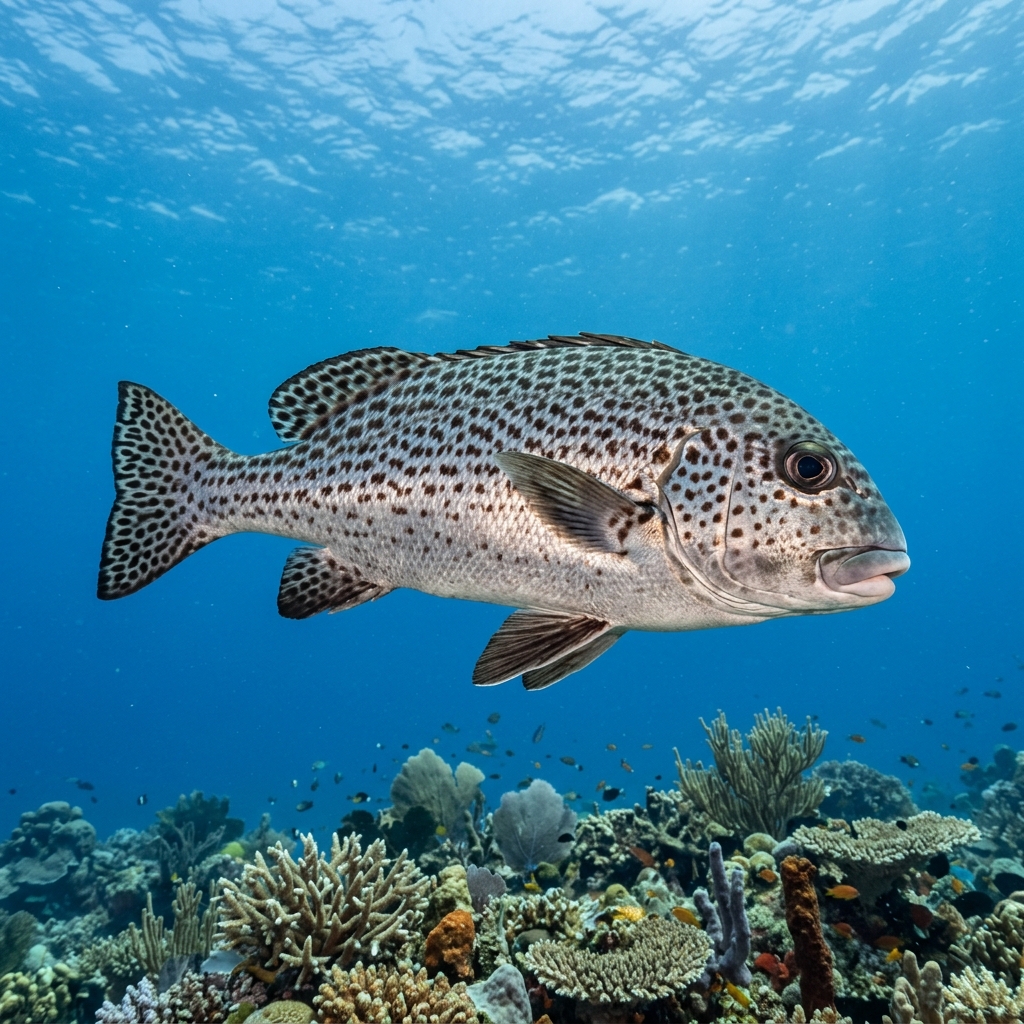
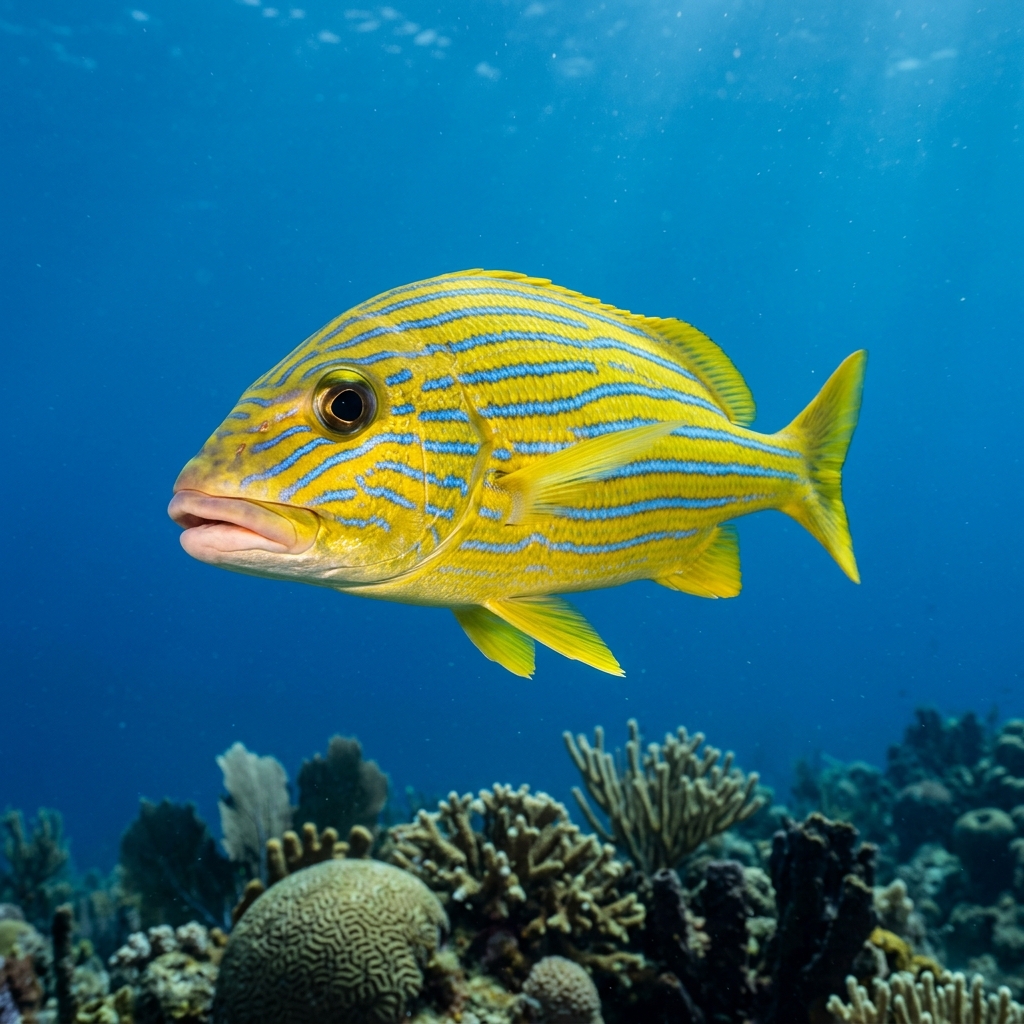
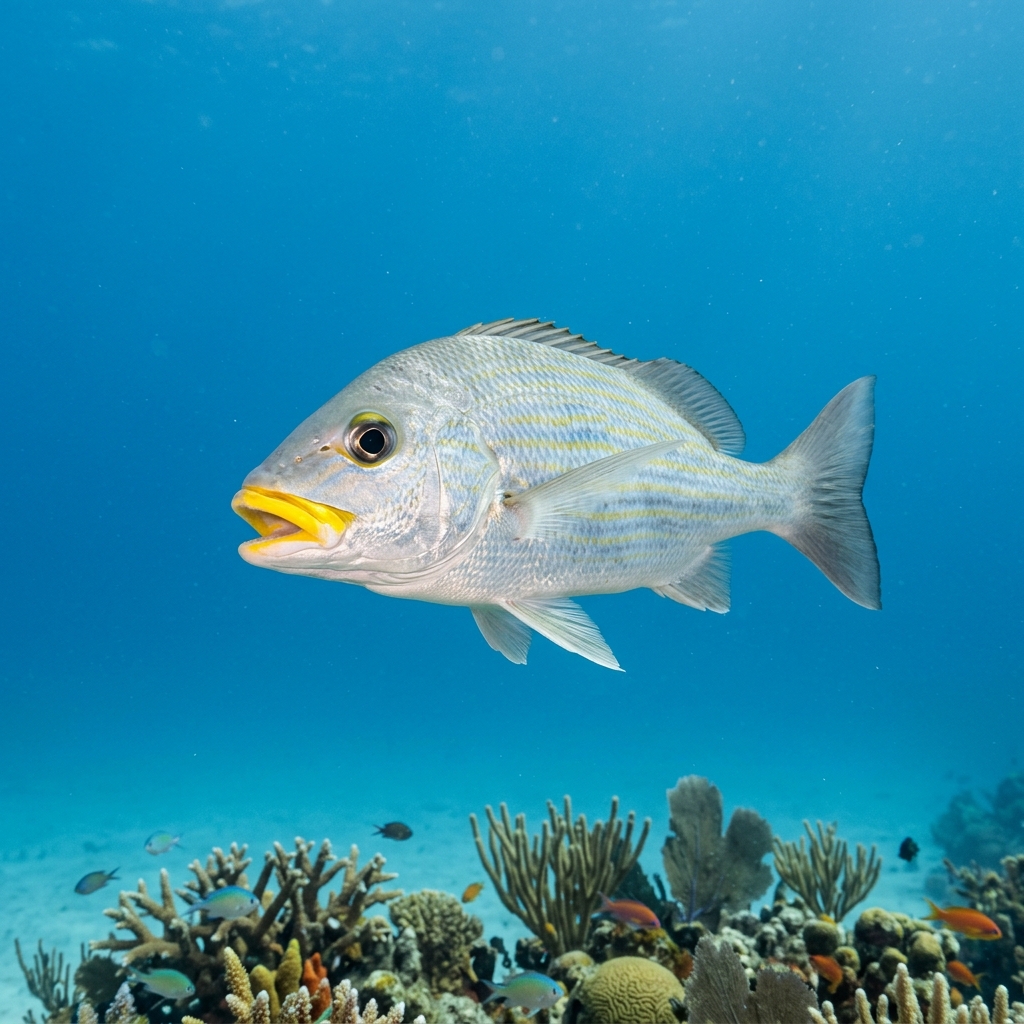
Reef neighbours a diver could mistake it for. Use the identification notes above to tell them apart.
Most consistently logged across the Yucatán Peninsula in Mexico, which accounts for the bulk of sightings, with strong secondary numbers in Florida, the British Virgin Islands around Tortola, and Grenada Island. It also shows up reliably in the US Virgin Islands, the Cayman Islands, Martinique, and Barbados, making it a fixture of Caribbean and western Atlantic reef diving generally.
Mapping where Caesar Grunt is logged…
Best chances are in Mexico's Yucatán Peninsula, which logs the most sightings by far, followed by Florida, the British Virgin Islands around Tortola, and Grenada. It is a widespread reef fish across the wider Caribbean too, including the Cayman Islands, US Virgin Islands, Martinique, and Barbados.
There is no strong seasonal pattern in sightings, and it stays in warm 26 to 28C water year-round, so it can be seen on any dive trip to its Caribbean and Gulf range regardless of month.
Look for a silvery, stocky body around 25 cm long with bronze-yellow horizontal stripes and a red-orange flash inside the mouth if it gapes. It usually sits in small groups near reef structure rather than swimming in open water.
They typically reach around 25 cm in length, a mid-sized reef fish comparable to many of the other grunts and small sweetlips found on the same reefs.
No, they pose no threat to divers and simply go about feeding and schooling near the reef, ignoring passing divers for the most part.
Site and sighting data is aggregated from diver logs, iNaturalist and GBIF. For taxonomy and conservation status:
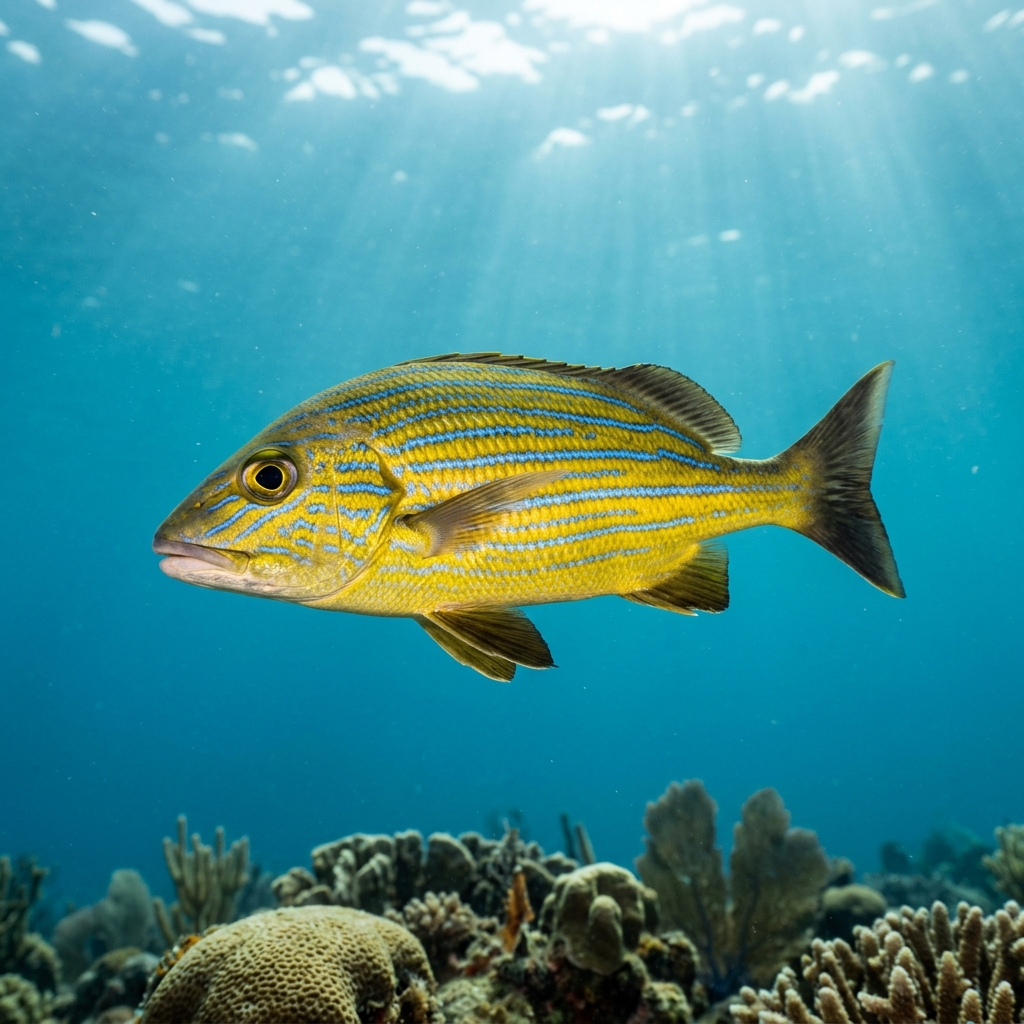
Bluestriped Grunt
1,907 sites