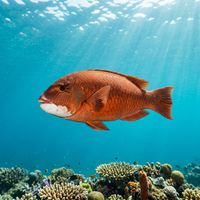
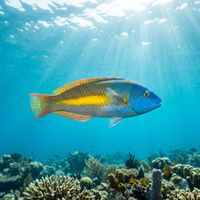
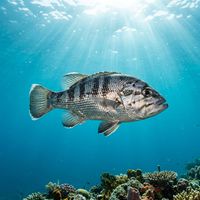
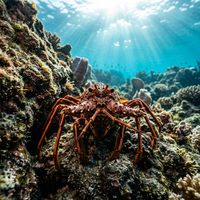
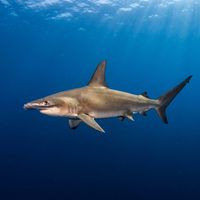
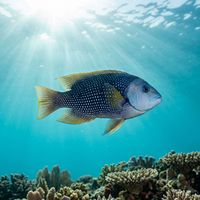
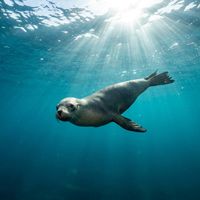
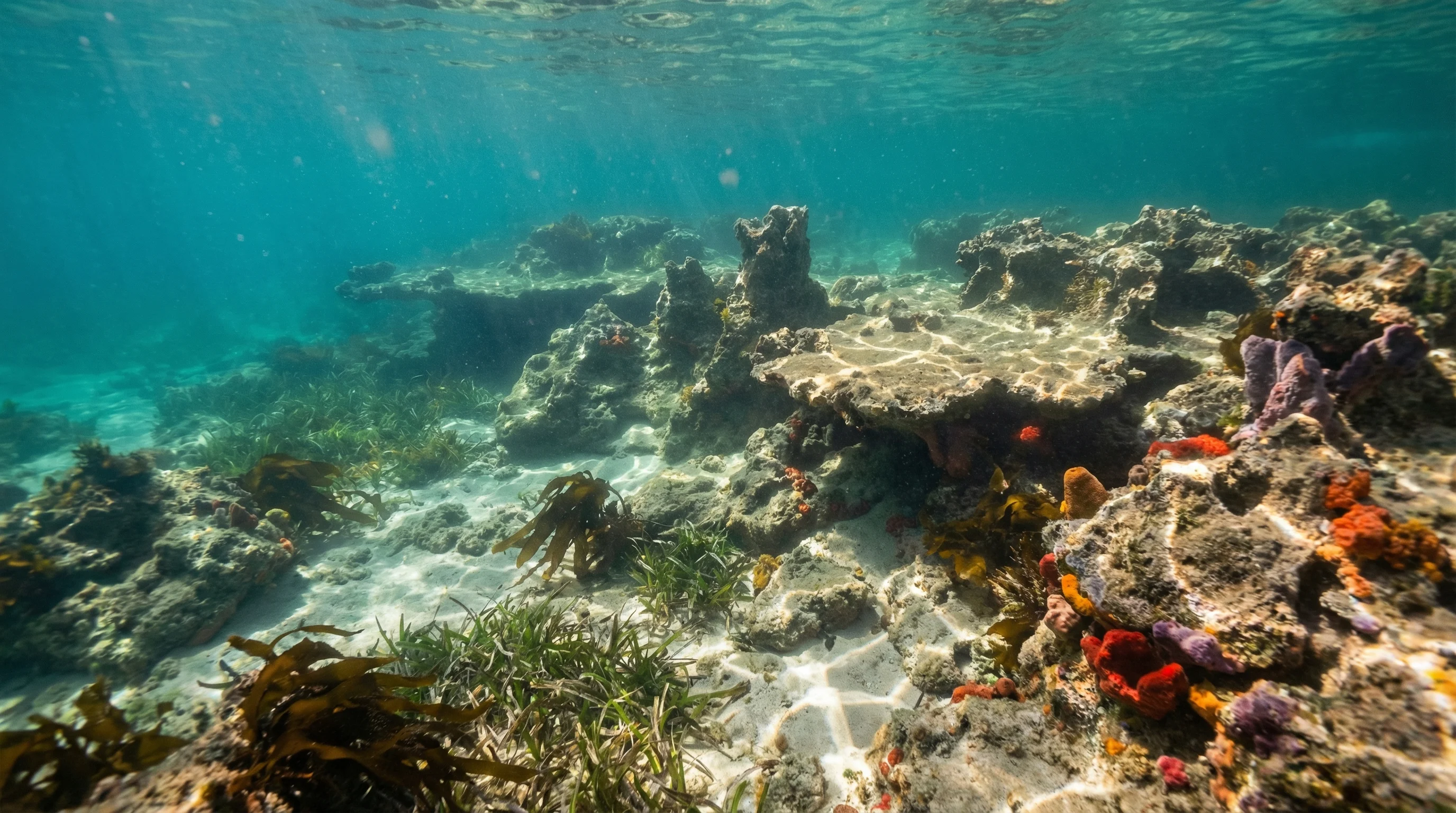
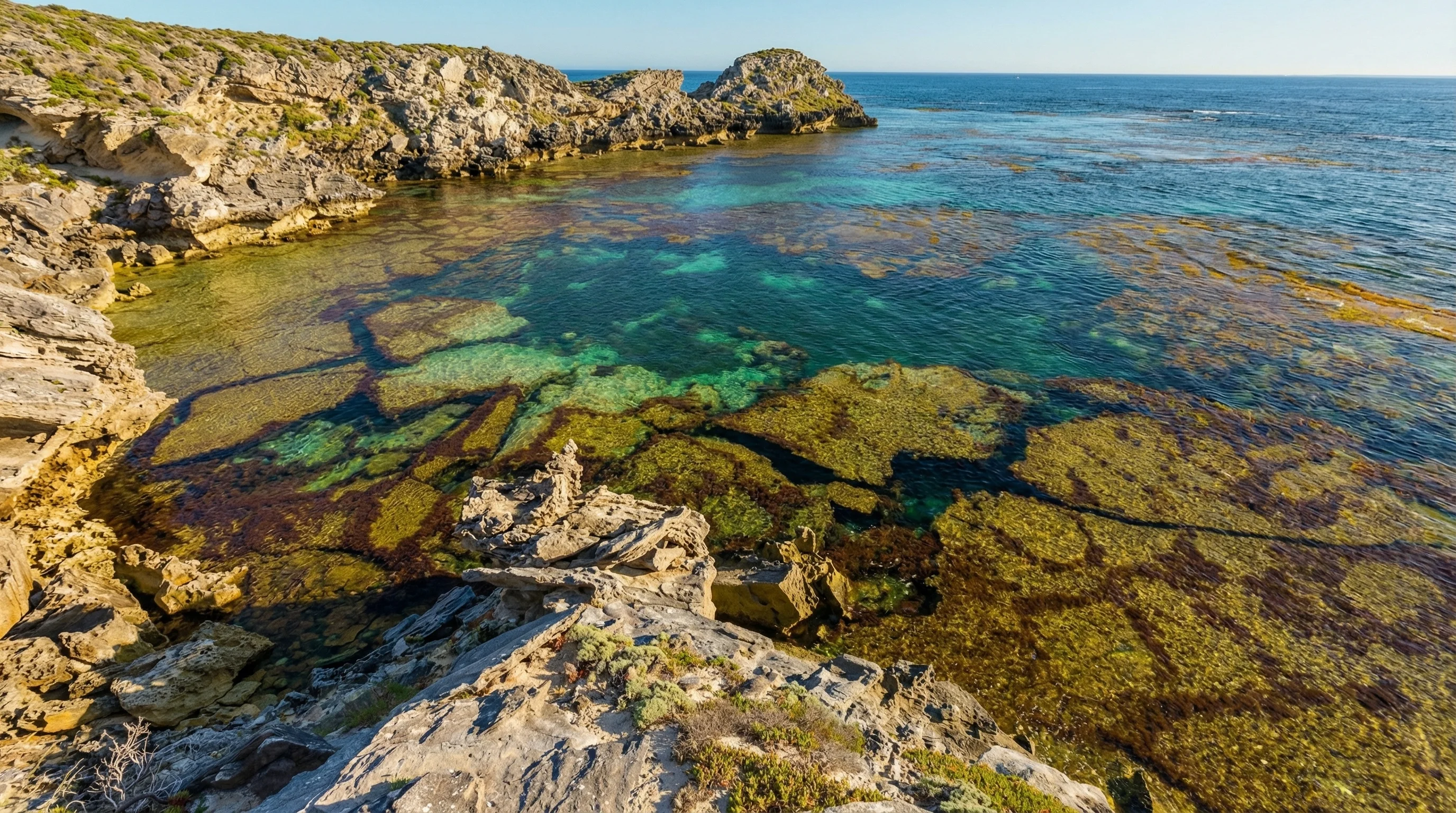
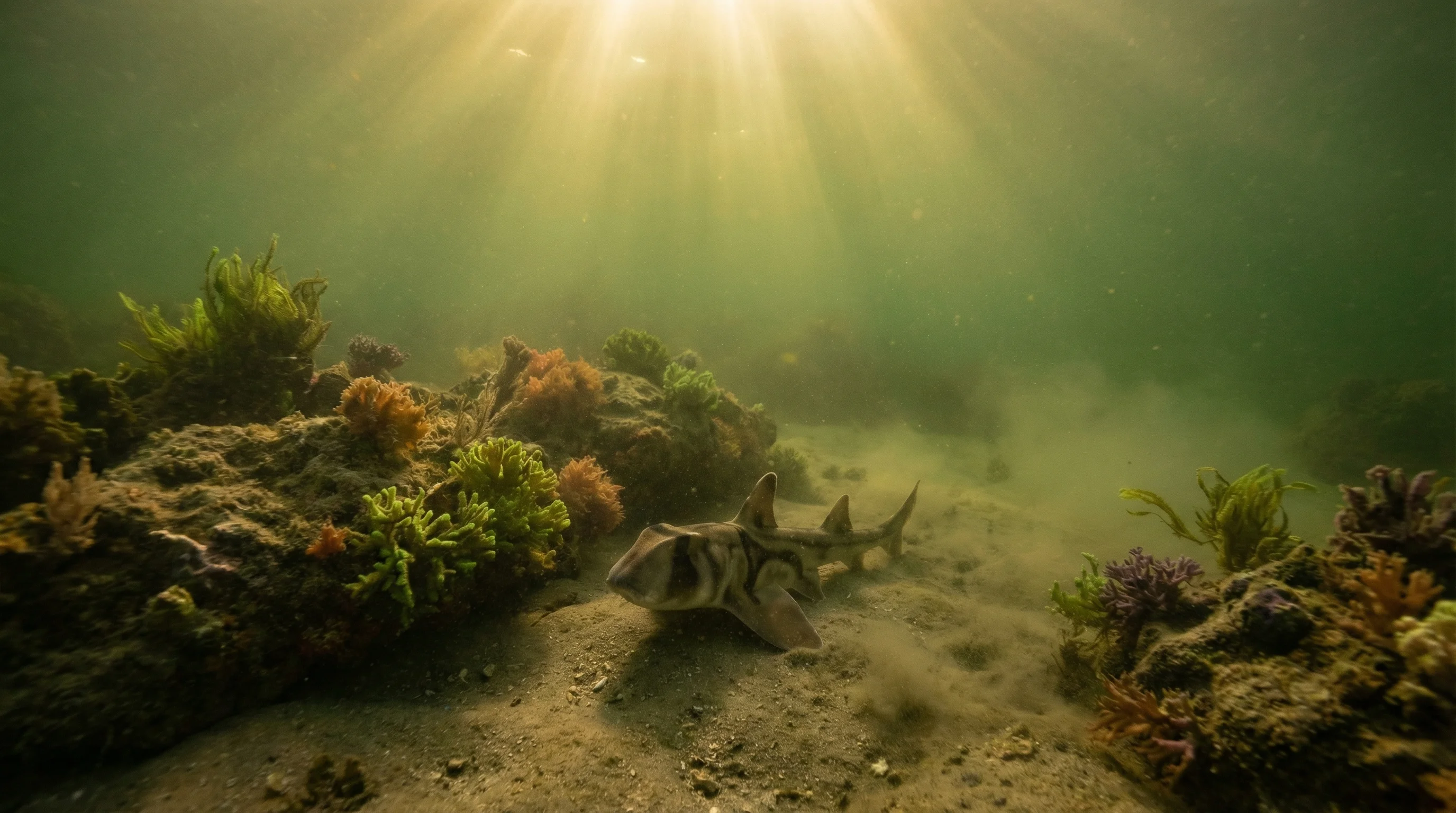
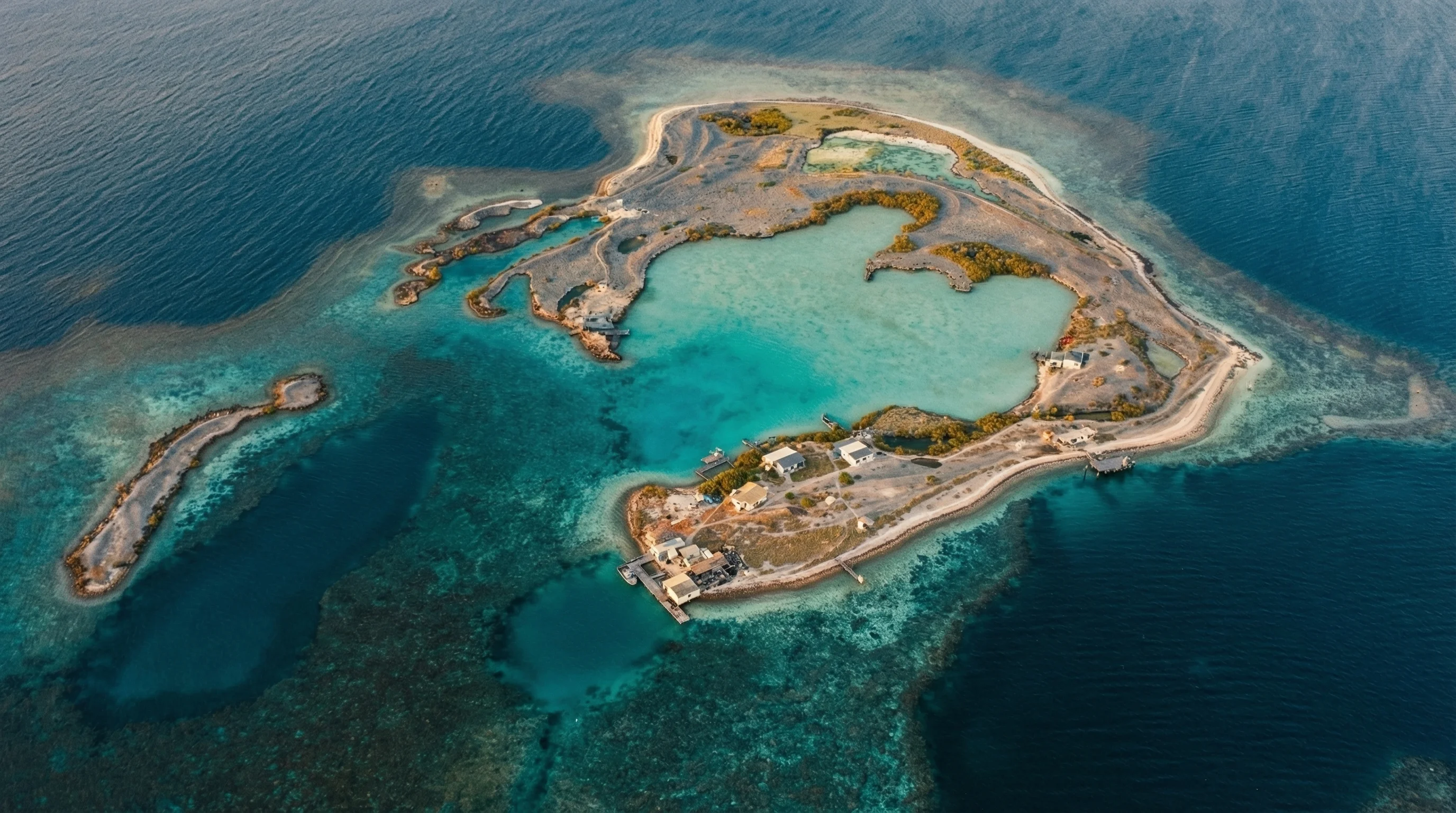
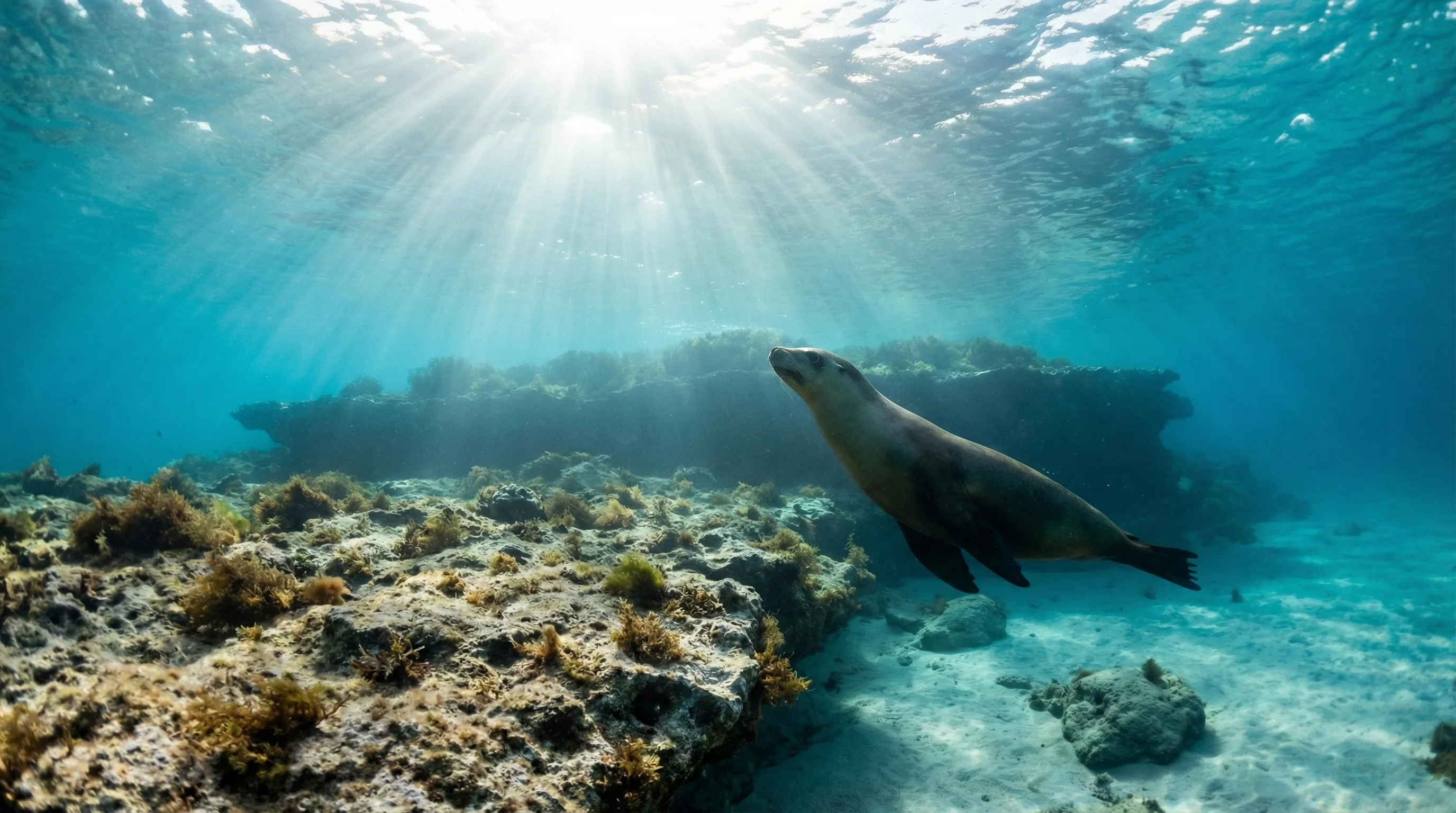
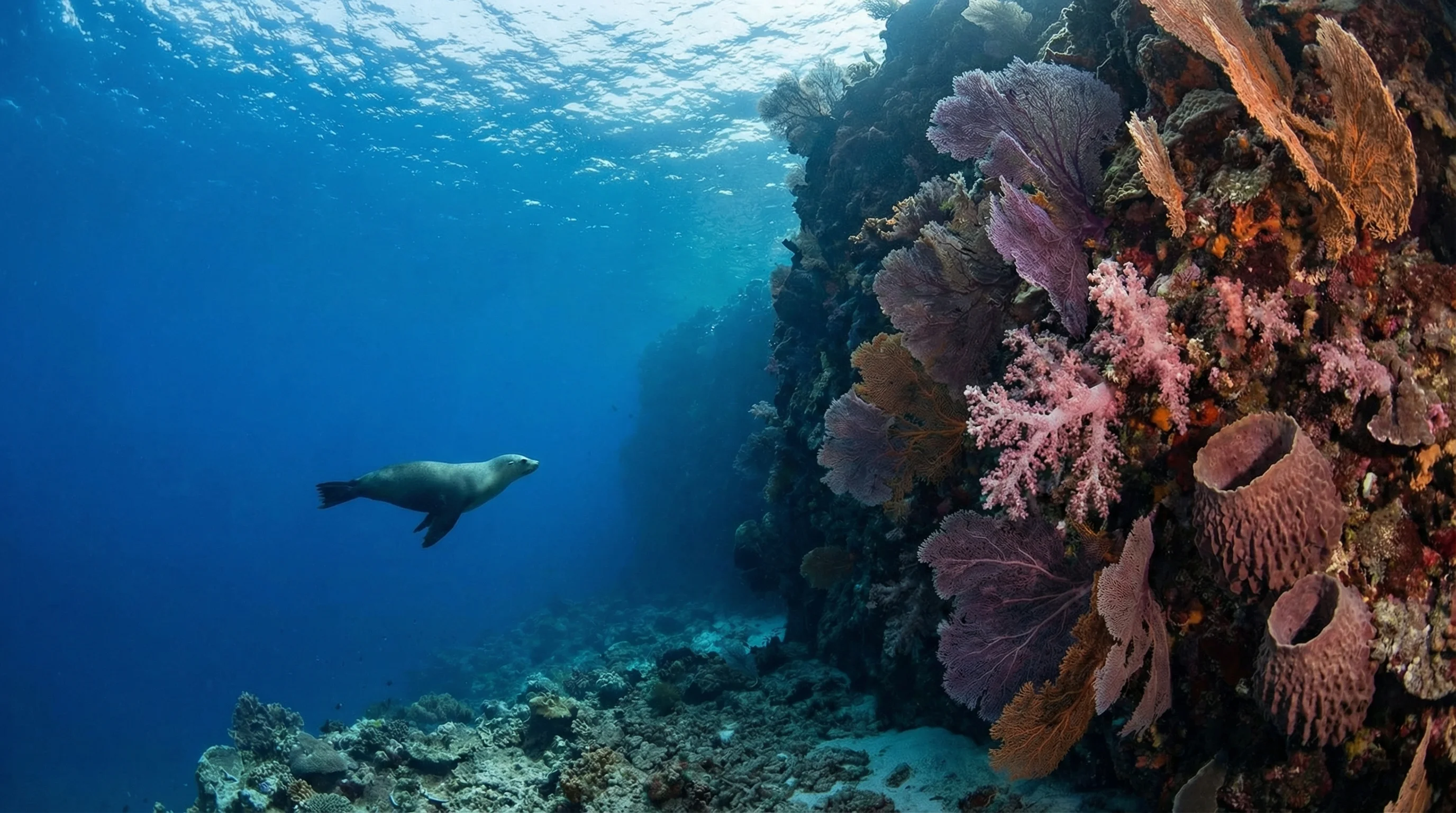
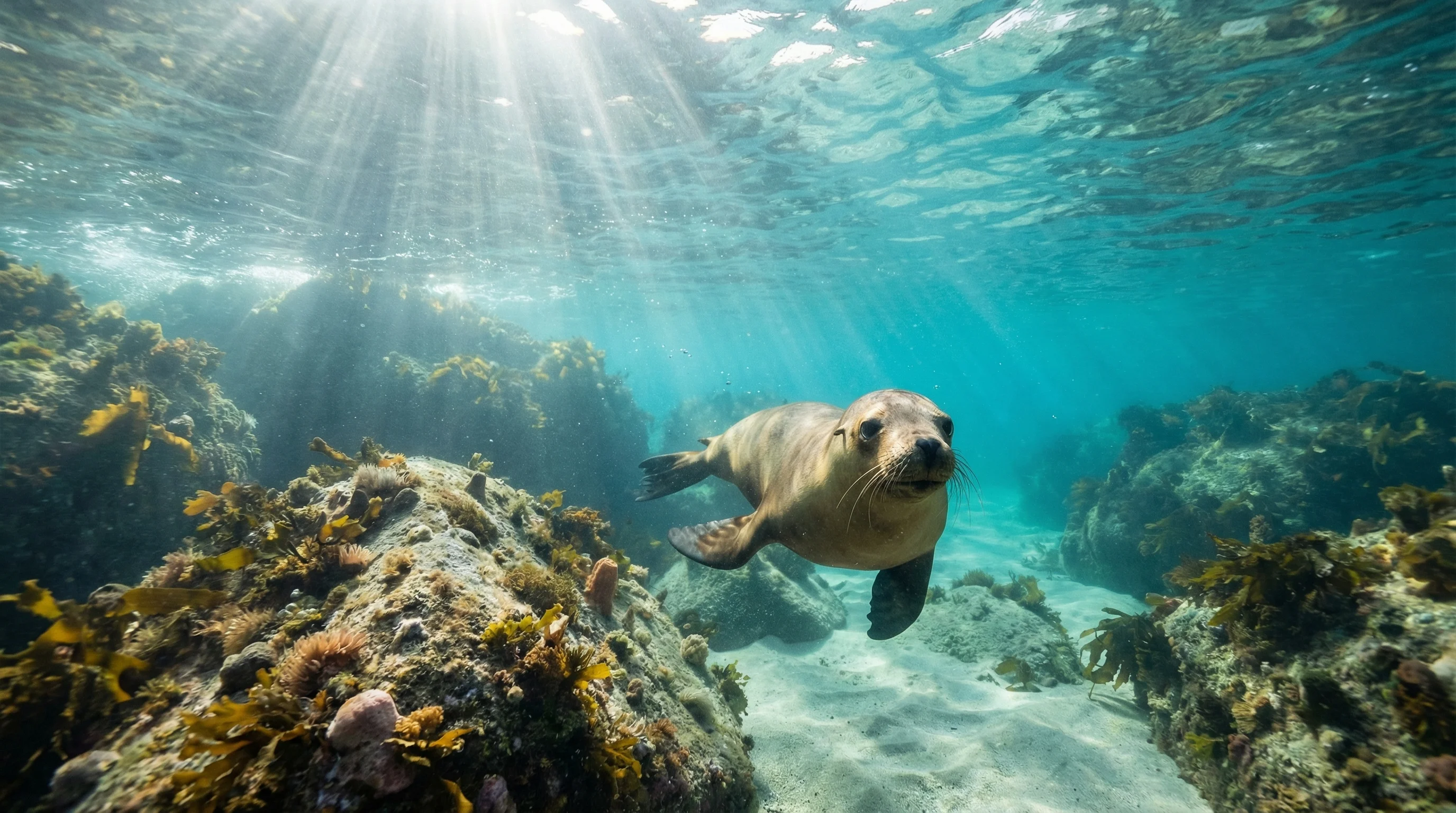
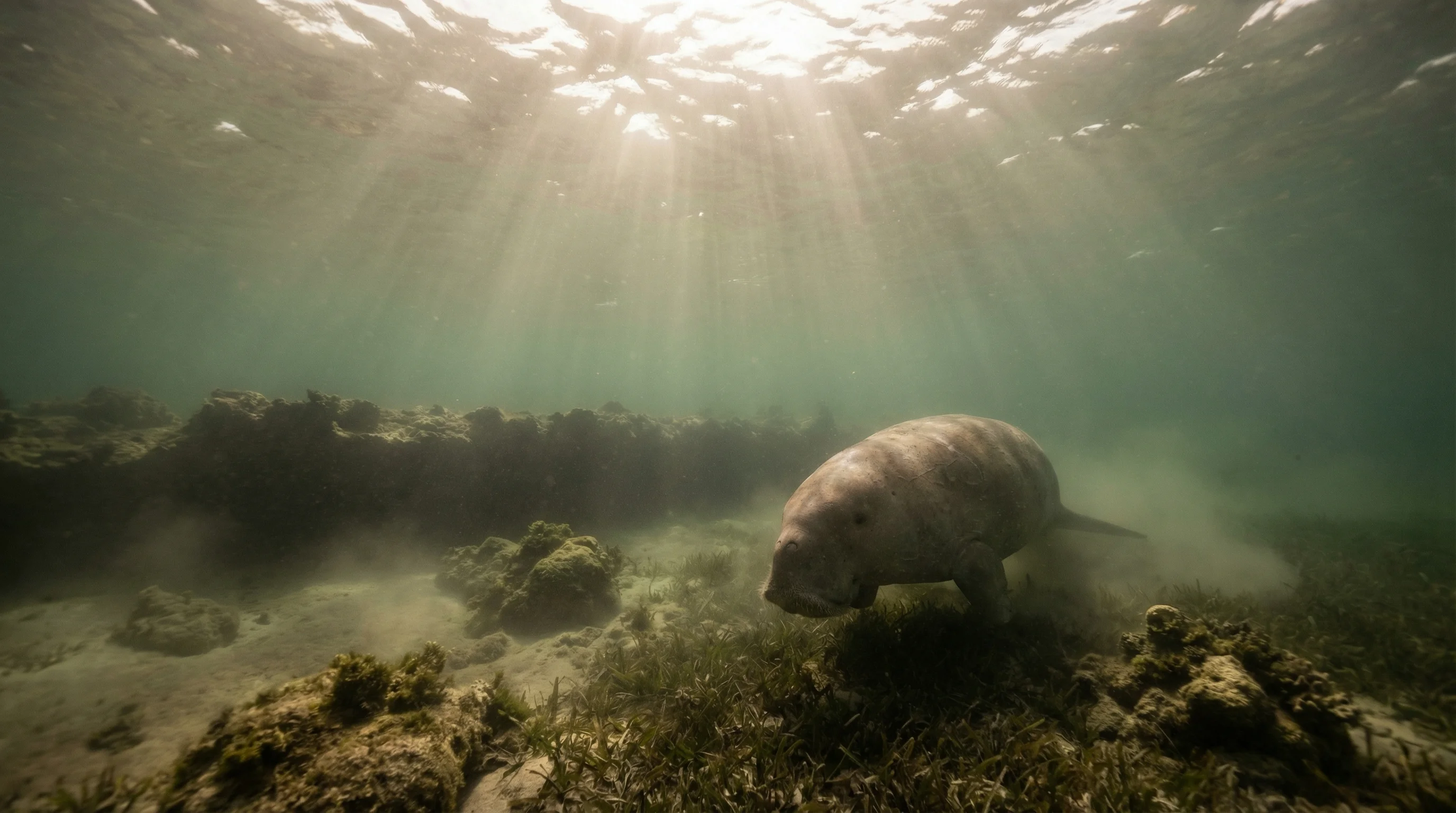
Jurien Bay's underwater character is shaped by a network of reef, wall, cave and artificial reef sites spread across boat-accessible waters, with one shore entry at Jetty #1. Caves and caverns appear at multiple sites, from shallow beginner-friendly systems to the demanding wall and drop-off at Osprey. Western Australian endemic species define the marine life here: Baldchin Groper, Dhufish and Western Rock Lobster are seen consistently, while the occasional Scalloped Hammerhead and Australian Sea Lion add real excitement.
Monthly water temperature across Jurien Bay's sites, from satellite sea-surface data corrected for depth. The band shows the site-to-site spread.
Water temperature stays warm from late summer through to autumn, with the histogram pointing to March through May and again September through November as the most popular periods. Winter months bring the coolest water and the fewest visitors. Exposed boat-accessible sites can carry swell, so conditions reward patience with timing.
8 more sites to explore
Water temperature around Jurien Bay ranges from about 20°C in August to 23°C in February, based on satellite sea-temperature data for its dive sites.
In the warm season (about 23°C) a 3mm full suit is comfortable in Jurien Bay; in the coldest months (about 20°C) step up to a 5mm suit.
Fin maps 15 sites in Jurien Bay (11 scuba diving sites and 7 snorkelling spots, with some suited to both).
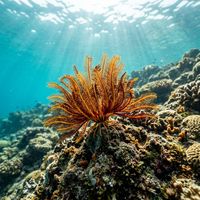
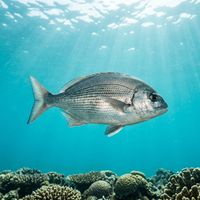
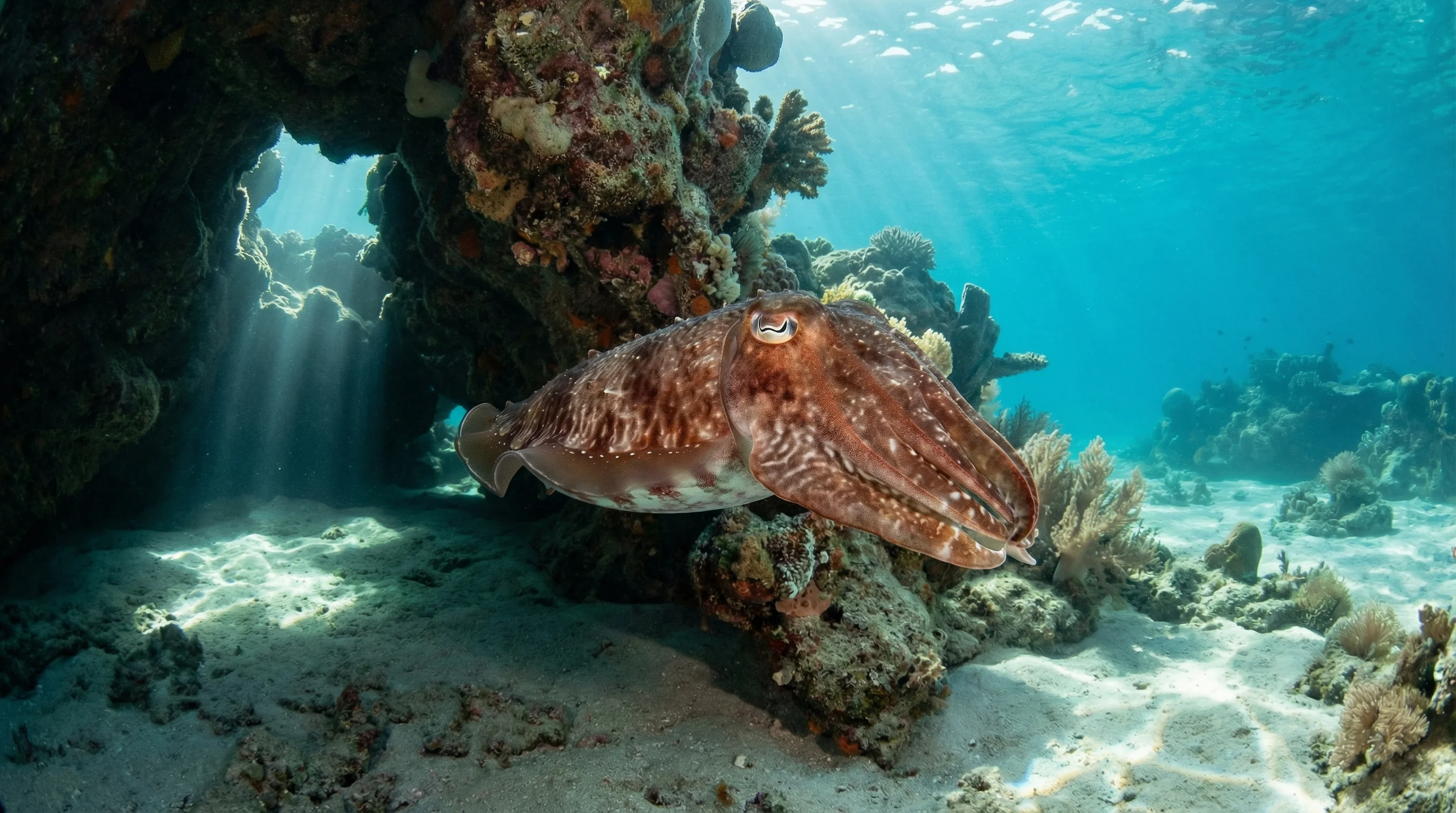
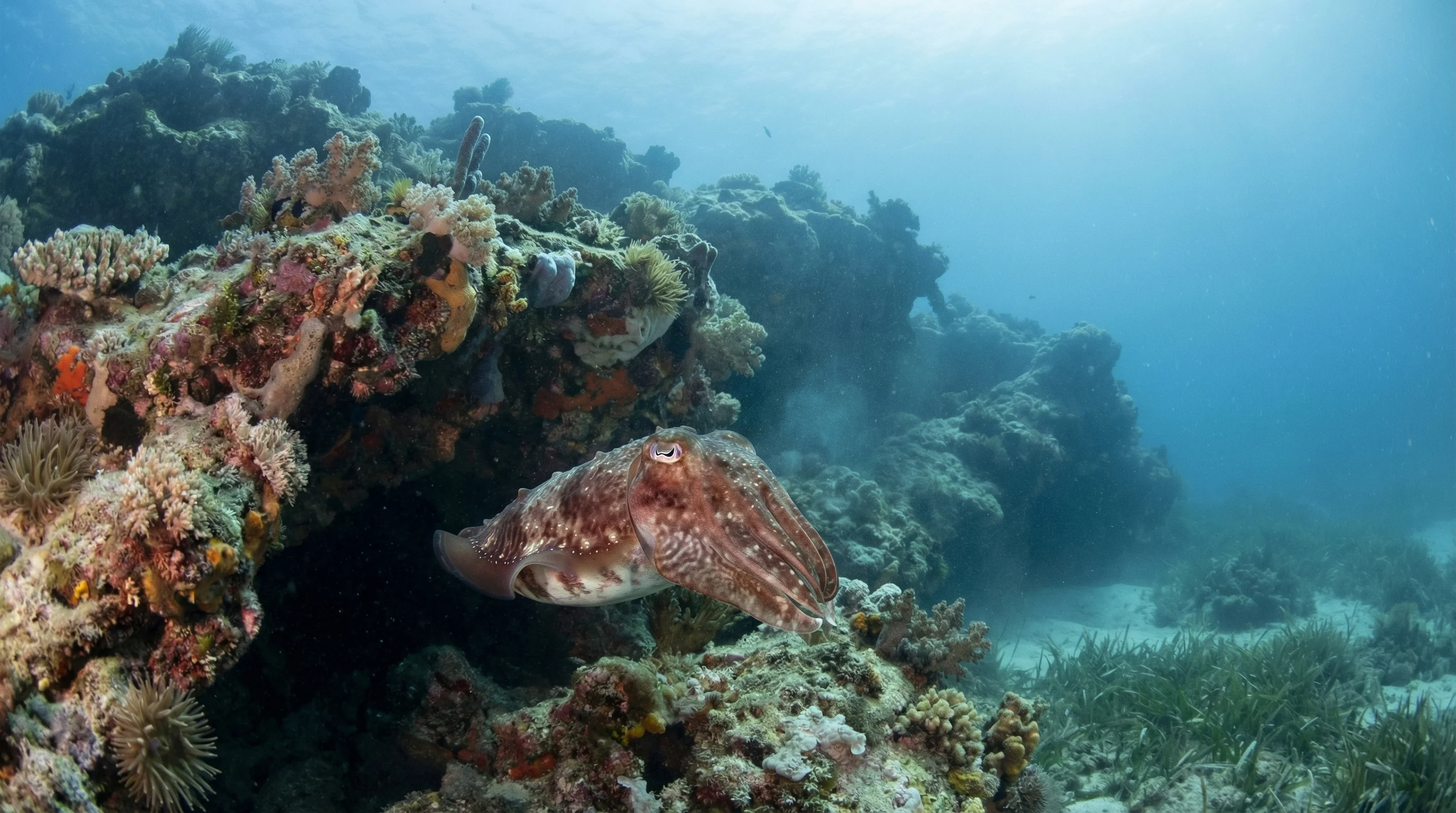
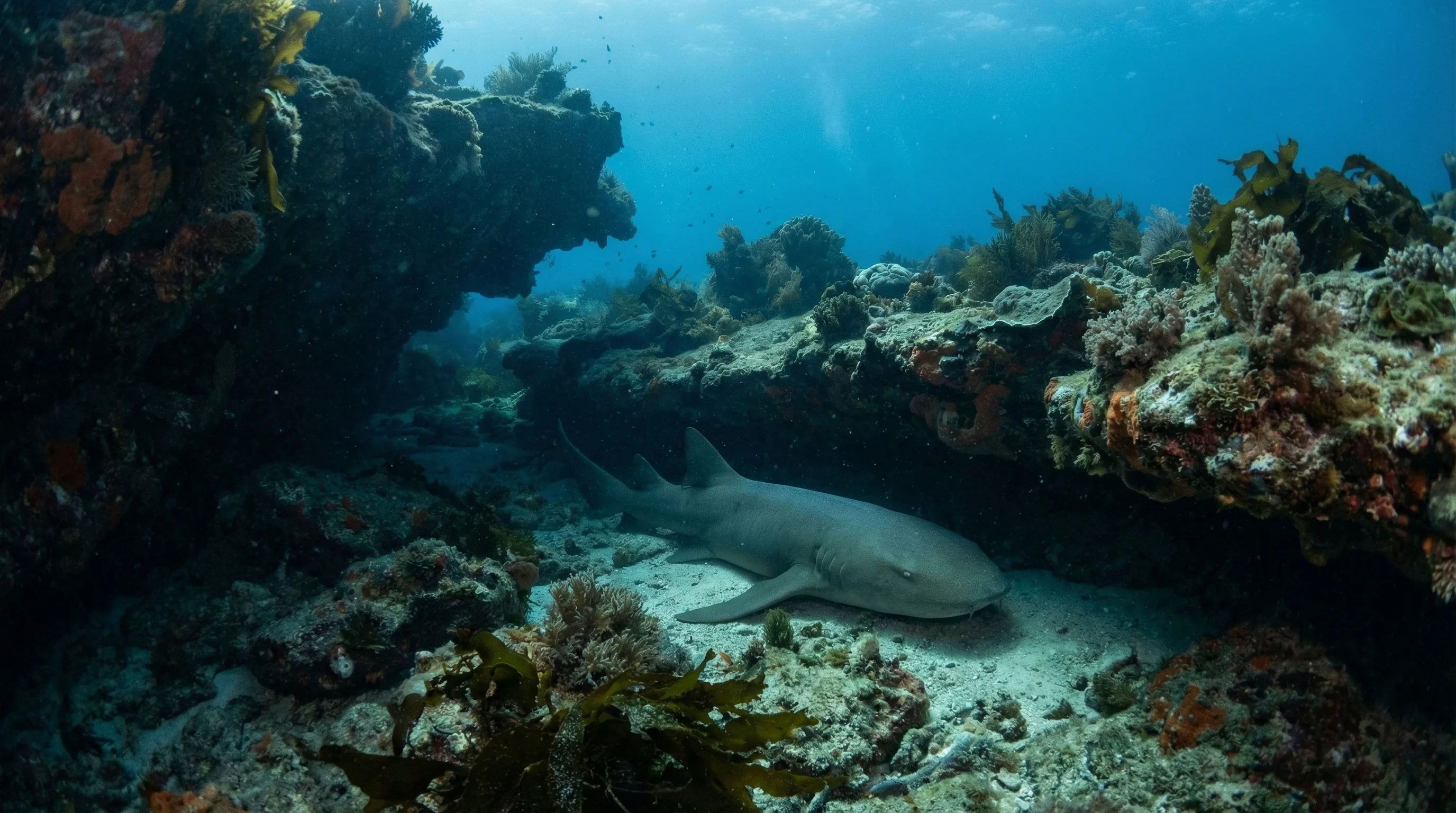
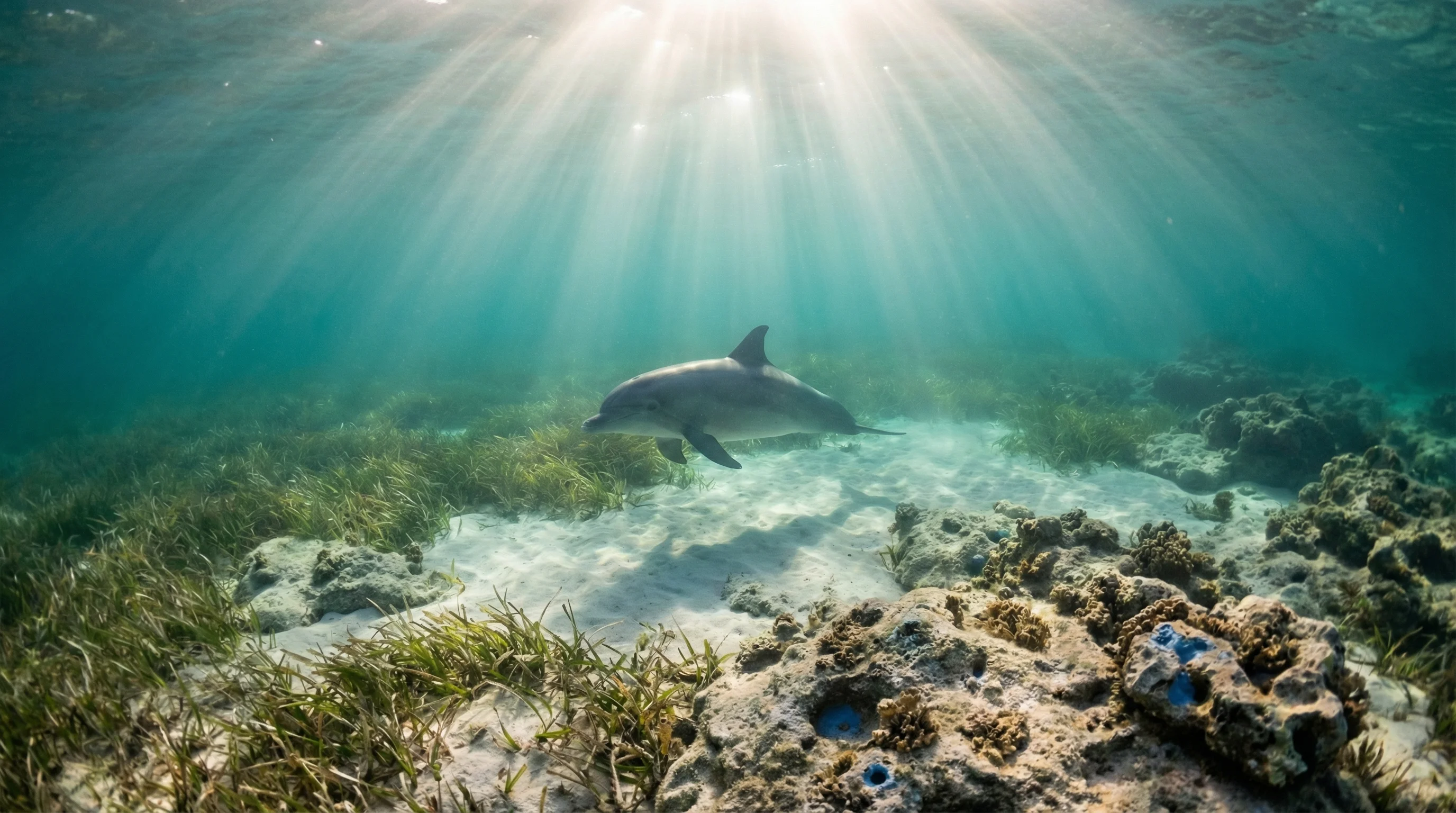
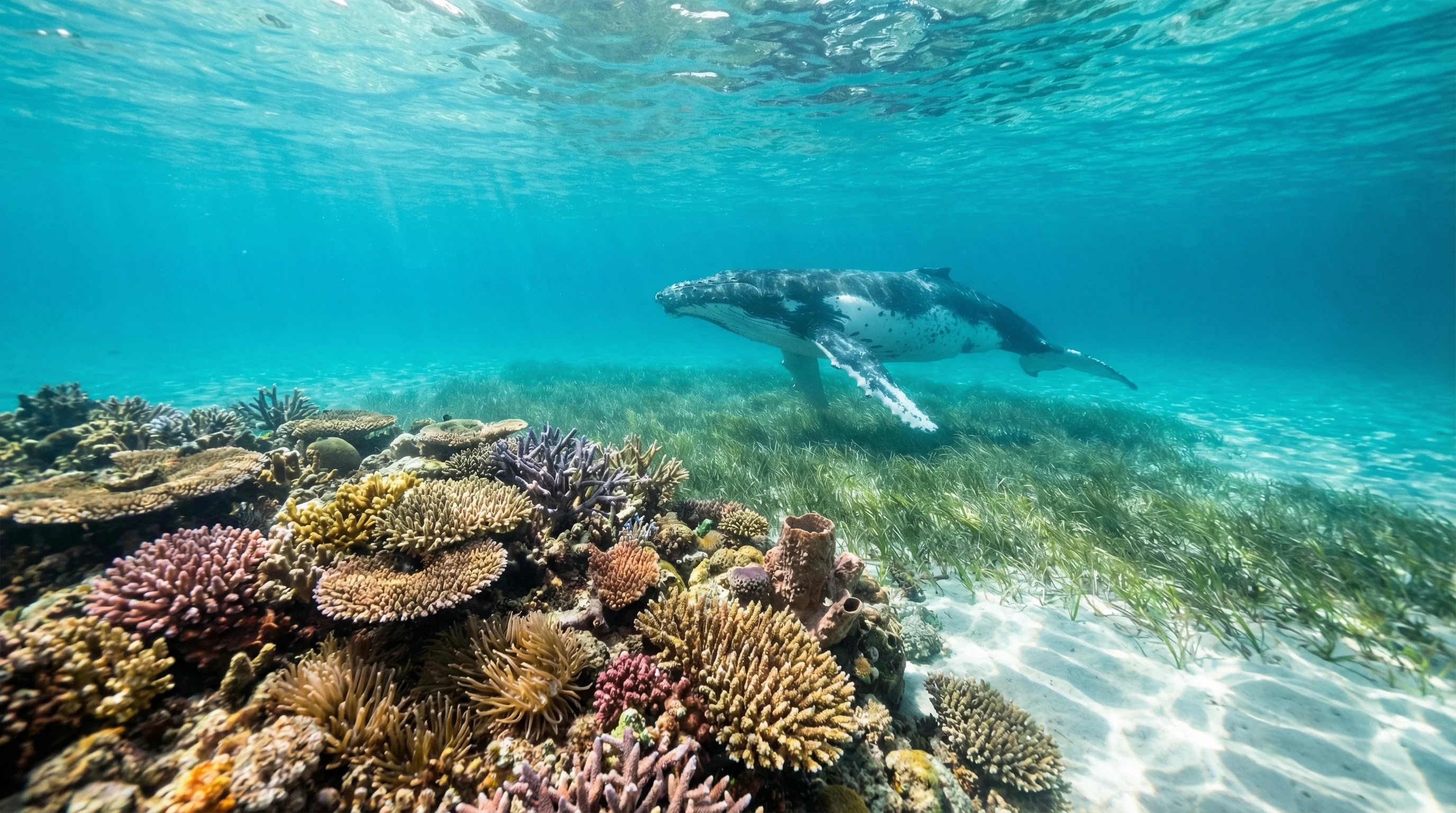
The reefs here are consistently home to Baldchin Groper, Western King Wrasse, Dhufish and Western Rock Lobster. Silver Drummer and Feather Star are seen across virtually every site. More occasionally, divers have recorded Scalloped Hammerhead, Western Blue Devil and Australian Sea Lion, and there are even sightings of Humpback Whale and Bottlenose Dolphin.
Almost all sites in Jurien Bay require boat access, and Jurien Bay Oceanic Experience is the operator based here to arrange that. The one exception is Jetty #1, which can be reached directly from shore, making it a convenient option if you are diving independently or want a no-fuss entry.
Several sites are graded for beginners, including Boomers, Caves, Seaward Ledge, Essex Rocks and Jetty #1. These offer sheltered cave formations, shallow reefs and mild currents. Osprey, by contrast, is graded advanced due to its deep wall and drop-off topography, so there is a clear range catering to different experience levels.
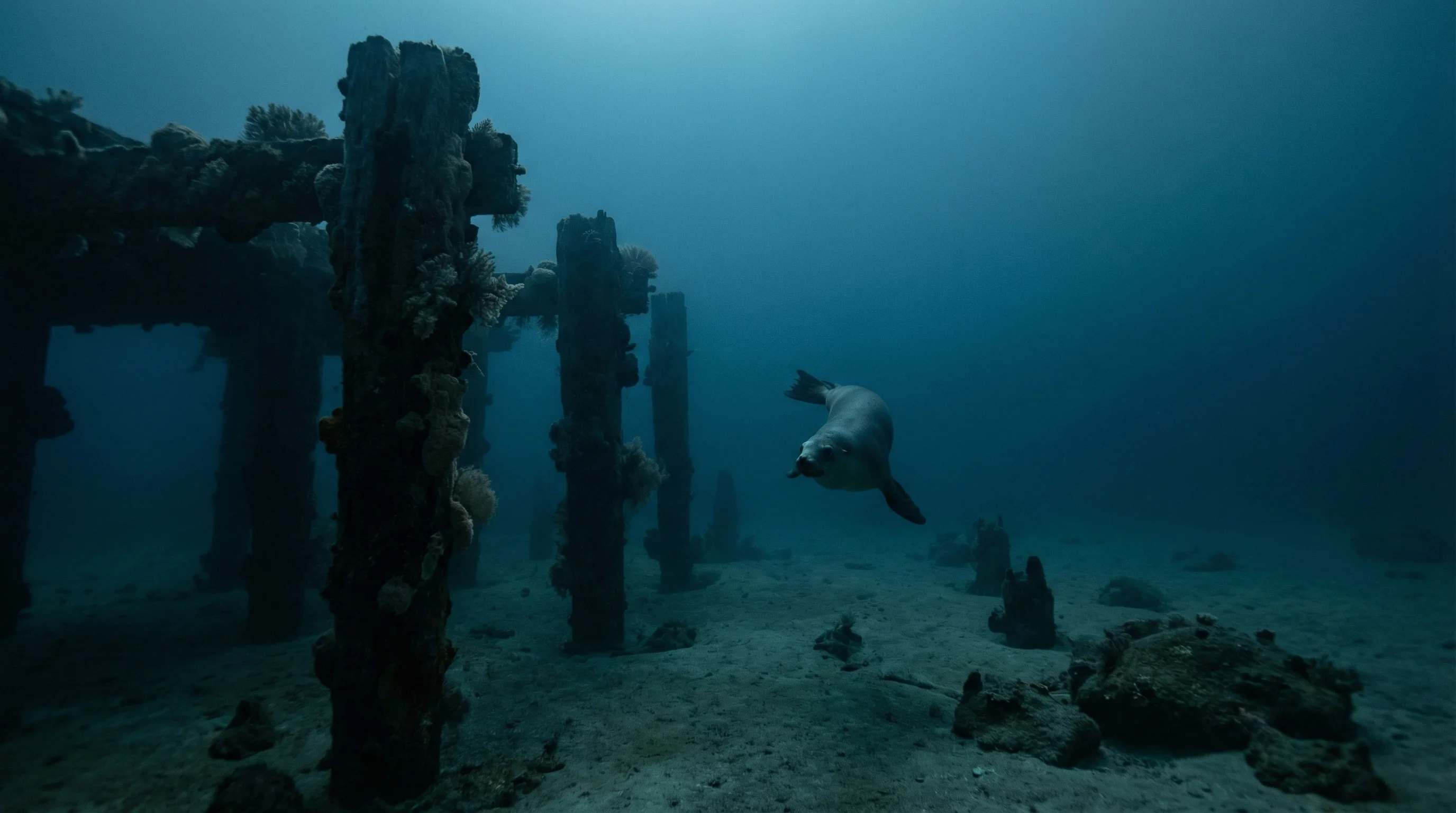
Caves and caverns are the standout feature, appearing at several sites including Boomers, Caves, Fisherman Island, Osprey and Seaward Ledge. Reef diving is also central, with hard corals and sponges noted at Fisherman Island. Osprey adds wall and drop-off diving for those seeking more dramatic topography, and Jetty #1 introduces an artificial reef structure near shore.