Istiompax indica
Black Marlin roam warm Indo-Pacific waters from the Maldives to Queensland. Here's where divers encounter them and how to tell them apart from blue marlin.
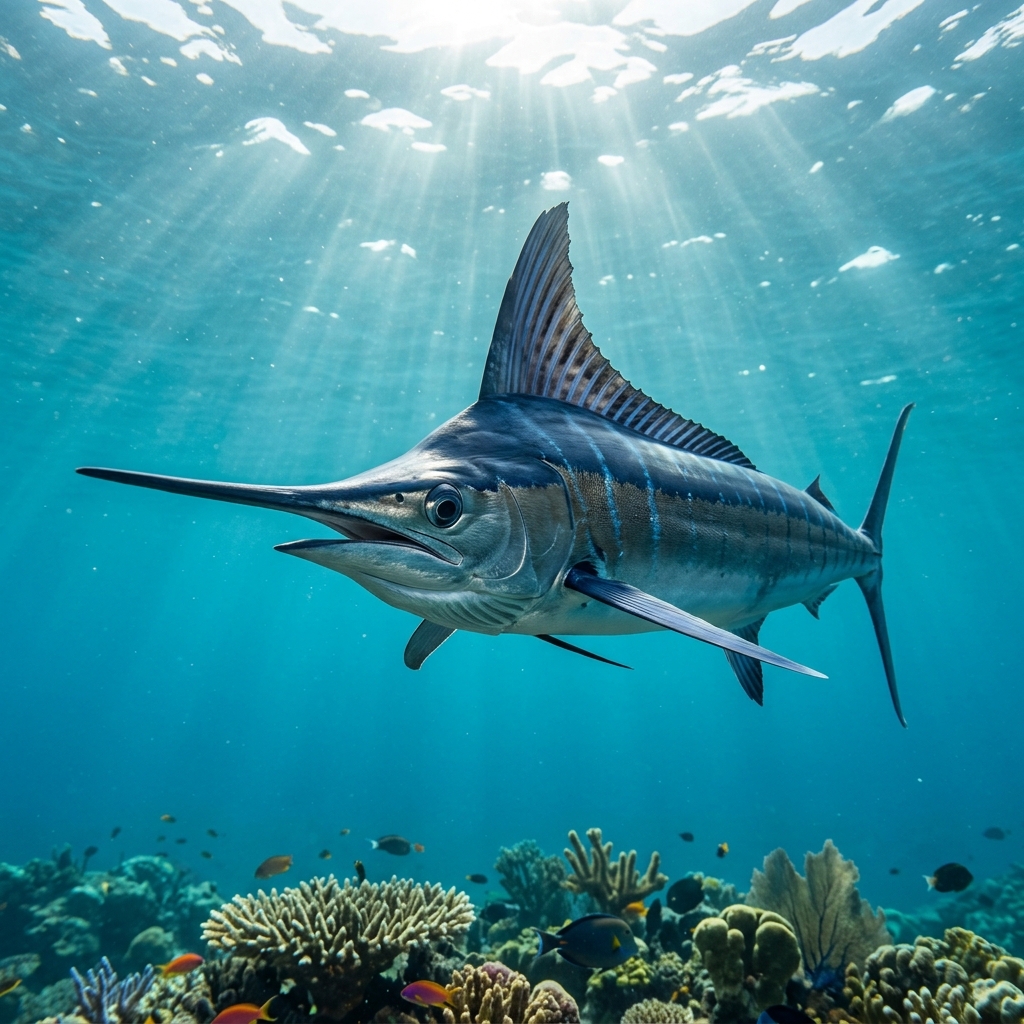
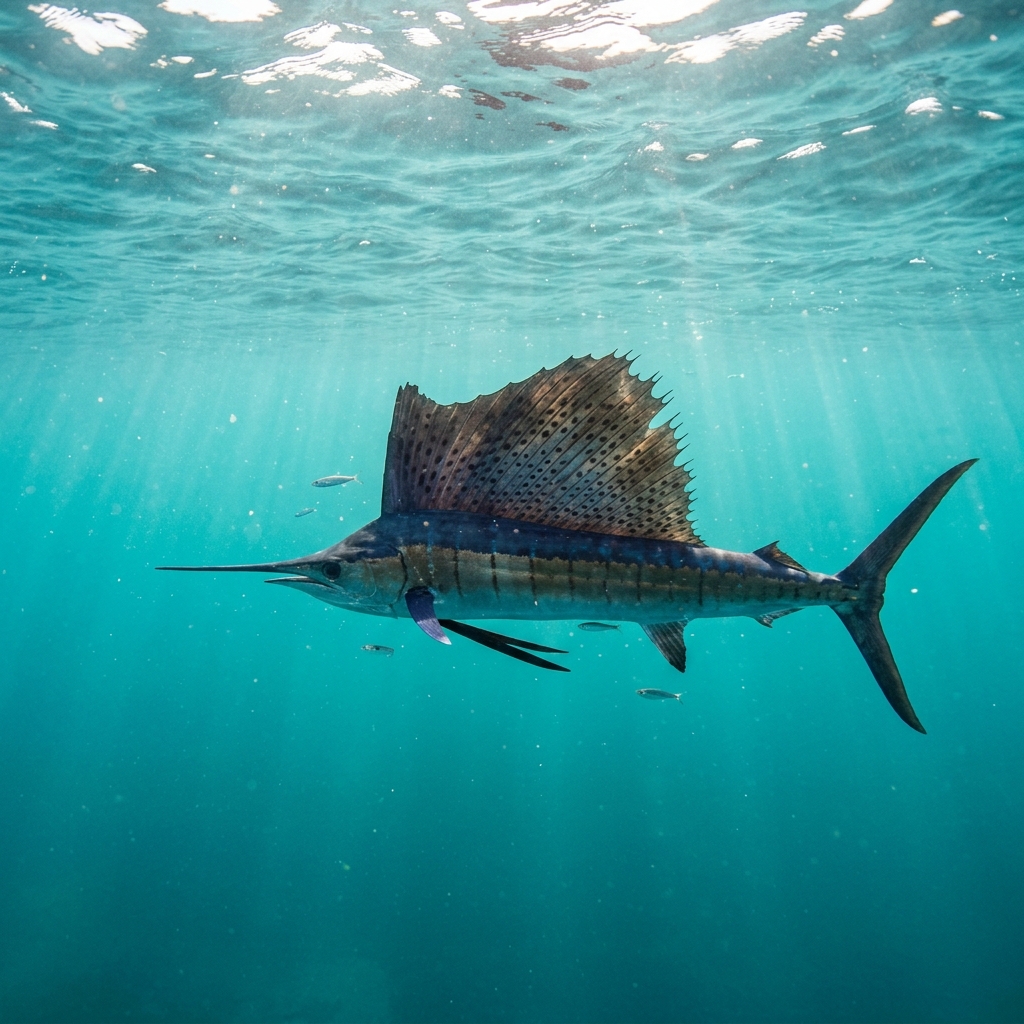
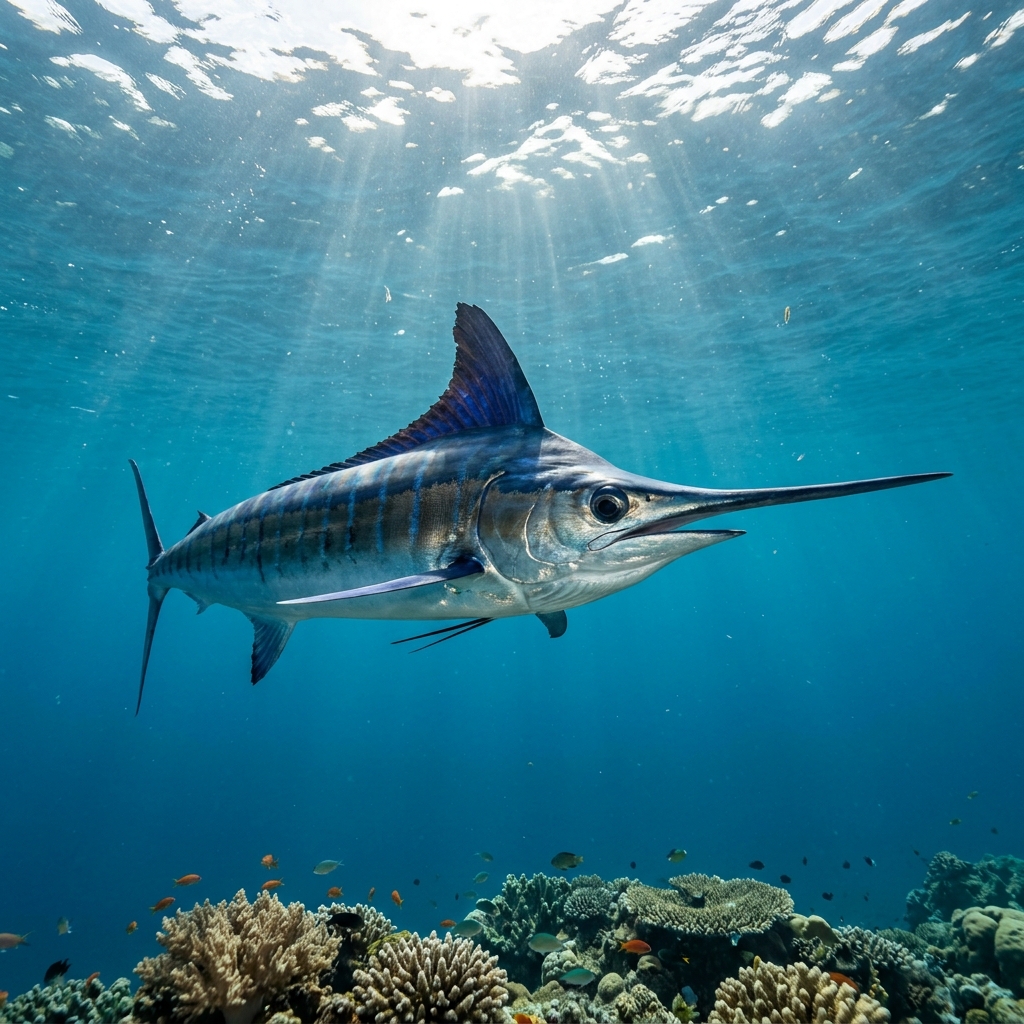
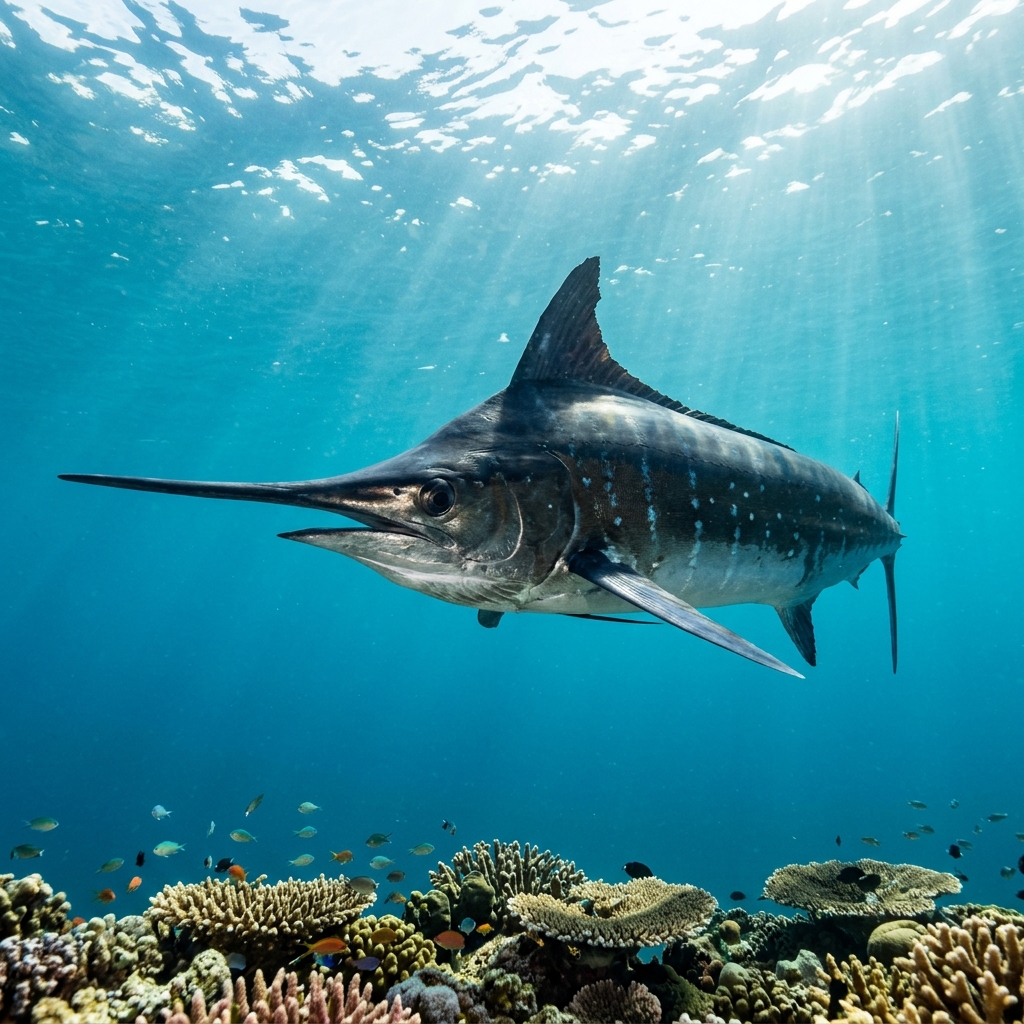
One of the largest bony fish in the ocean, it appears as a massive, torpedo-shaped silhouette in open water, with a dark blue-black back fading to silvery-white on the flanks and belly. The key field mark that separates it from every other billfish is the rigid pectoral fin (the side fin that sticks out from behind the head) which cannot be folded flat against the body. The bill is long and round in cross-section, and the first dorsal fin is relatively low and rounded compared to sailfish.
Black marlin are open-water (pelagic) hunters, and encounters typically happen as a fast-moving shape materialising from the blue before accelerating away. They are not reef fish and generally pay little attention to divers, though they may make a single curious pass before disappearing. Encounters are most commonly reported around seamounts, drop-offs, and areas with strong baitfish activity.
Females grow substantially larger than males and can reach over 700 kg, making this species one of the most extreme examples of size difference between sexes in any fish.
No concentrated season stands out from the available data, so black marlin can be treated as a year-round possibility wherever their habitat conditions are met. They tolerate water temperatures from about 16 to 28 °C, keeping them within reach of tropical and warm-temperate dive destinations throughout the calendar.
Reef neighbours a diver could mistake it for. Use the identification notes above to tell them apart.
Sightings are modelled across a broad Indo-Pacific range, with the strongest predicted habitat in the Maldives, particularly the North and Central Atolls. Queensland and Western Australia round out the main hotspots in Australia's waters, while Port Sudan and the Saint Johns area in the Red Sea represent the best-known African and Middle Eastern sites. Micronesia's Yap is also a notable area for pelagic encounters in the Pacific.
Mapping where Black Marlin is logged…
The Maldives, particularly the North and Central Atolls, is the most strongly predicted habitat for black marlin. Queensland and Western Australia are the top Australian regions, and Port Sudan plus the Saint Johns area in the Red Sea are well-known spots. Yap in Micronesia also offers open-water encounters in the Pacific.
Current sighting data does not point to a single peak season, so they are treated as a year-round possibility. They favour water temperatures of roughly 16 to 28 °C, which describes most tropical Indo-Pacific destinations throughout the year.
The single most reliable field mark is the pectoral fin: on a black marlin it is rigid and sticks out horizontally and cannot be folded flat against the body, whereas on a blue marlin the pectoral fin folds back easily. Black marlin also tend to have a rounder bill in cross-section and a lower first dorsal fin than blue marlin.
Black marlin are among the largest bony fish on the planet. Females in particular are exceptional, with well-documented weights exceeding 700 kg and lengths over 4.5 metres. Males are considerably smaller. In the water they register as an unusually large, fast-moving silhouette.
Black marlin are currently listed as Data Deficient on the IUCN Red List, meaning there is not yet enough information to assess their population trend accurately. This is not the same as being safe; it reflects a knowledge gap. Divers who record sightings with photographs contribute useful data to ongoing research.
Site and sighting data is aggregated from diver logs, iNaturalist and GBIF. For taxonomy and conservation status: