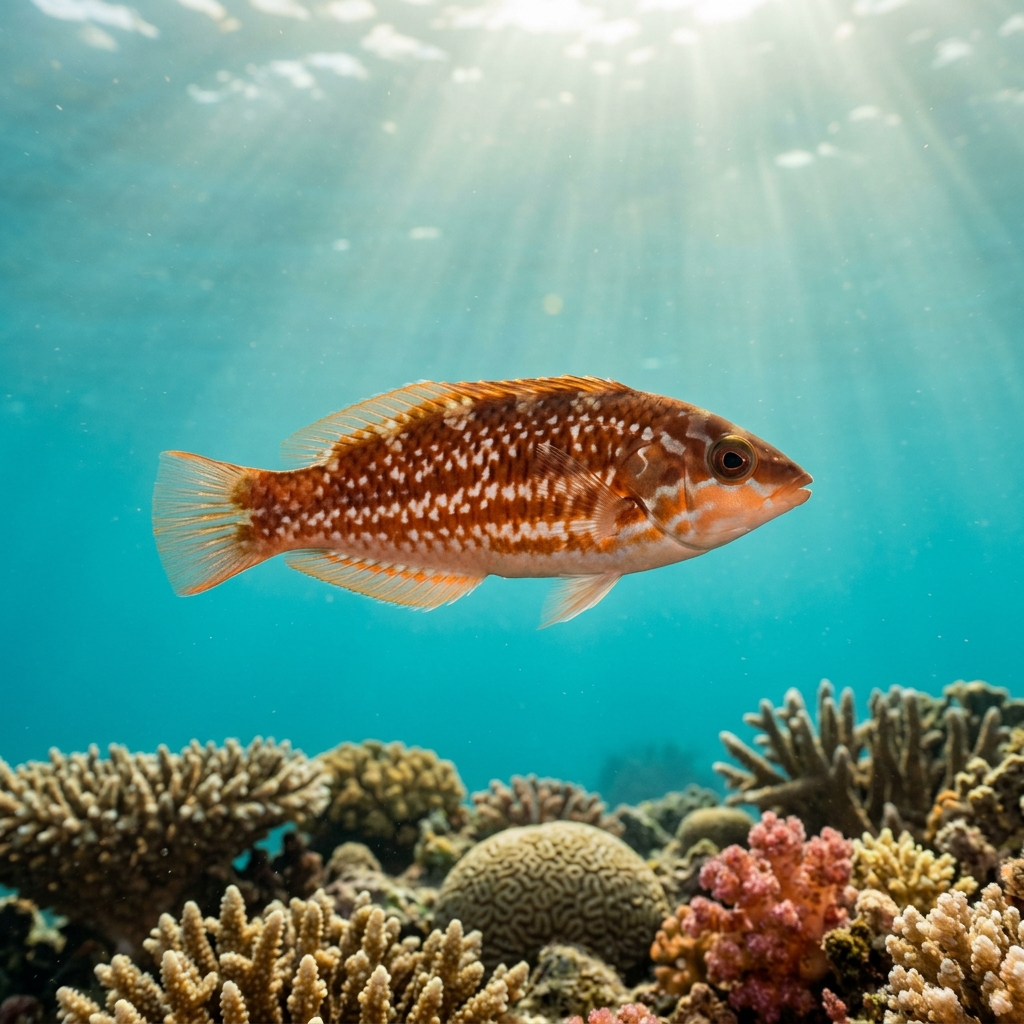
Coris auricularis
Spot Western King Wrasse in Western Australia's reefs, where sightings peak Dec, Mar in water between 17.5 and 24 °C. ID tips for males and females inside.
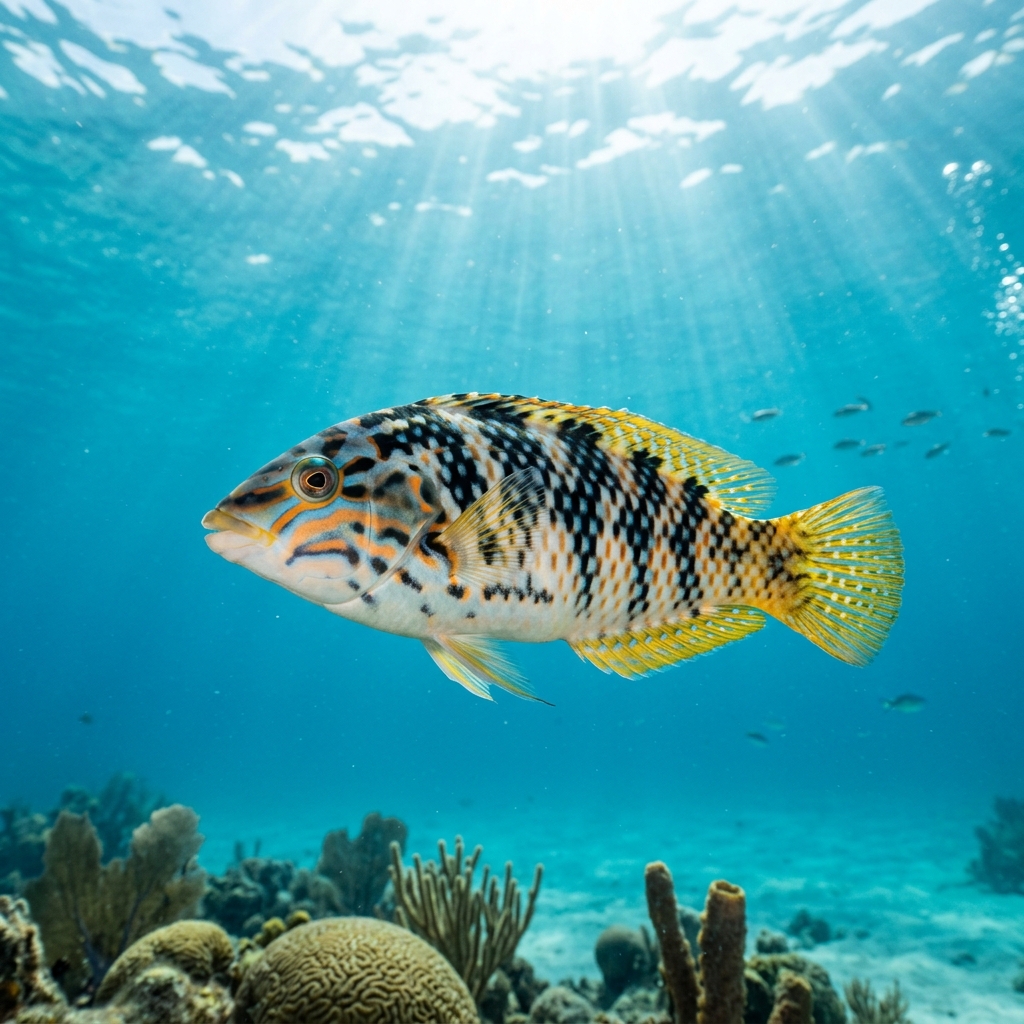
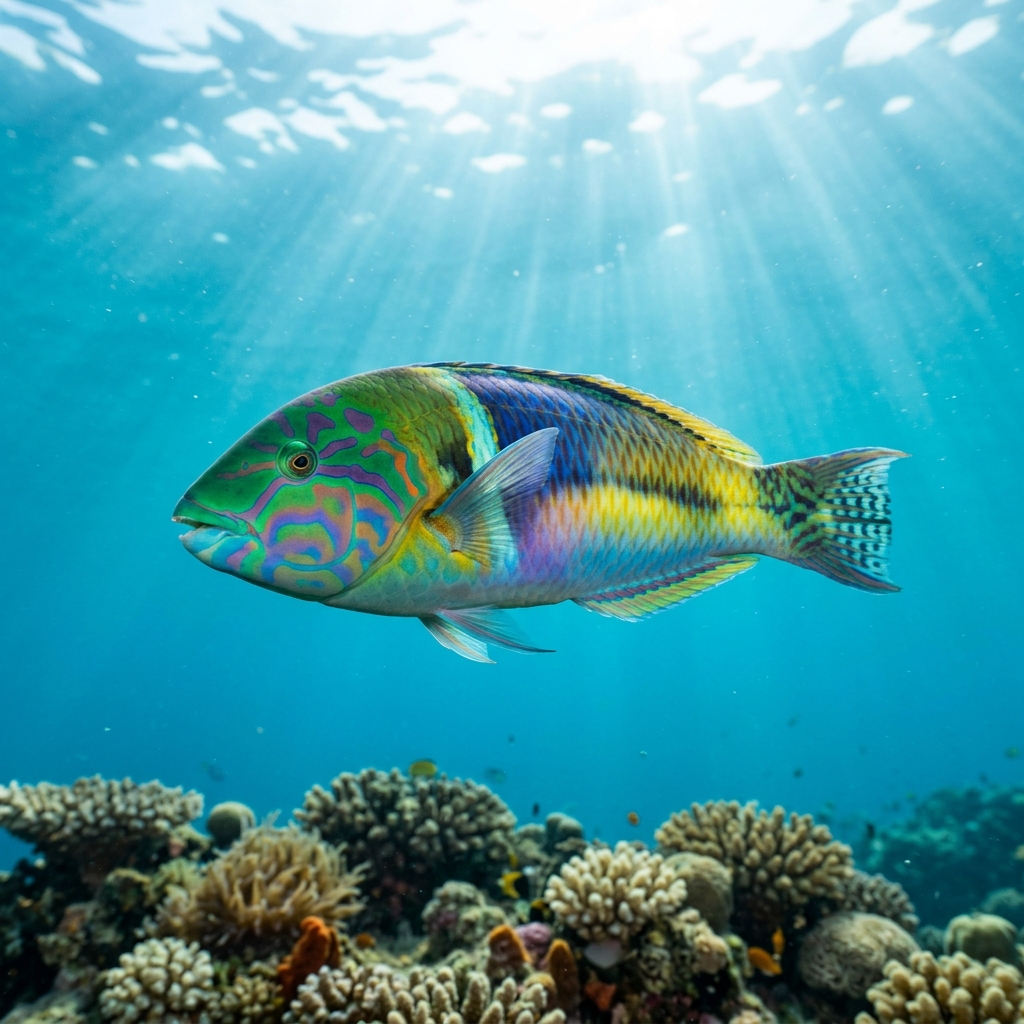
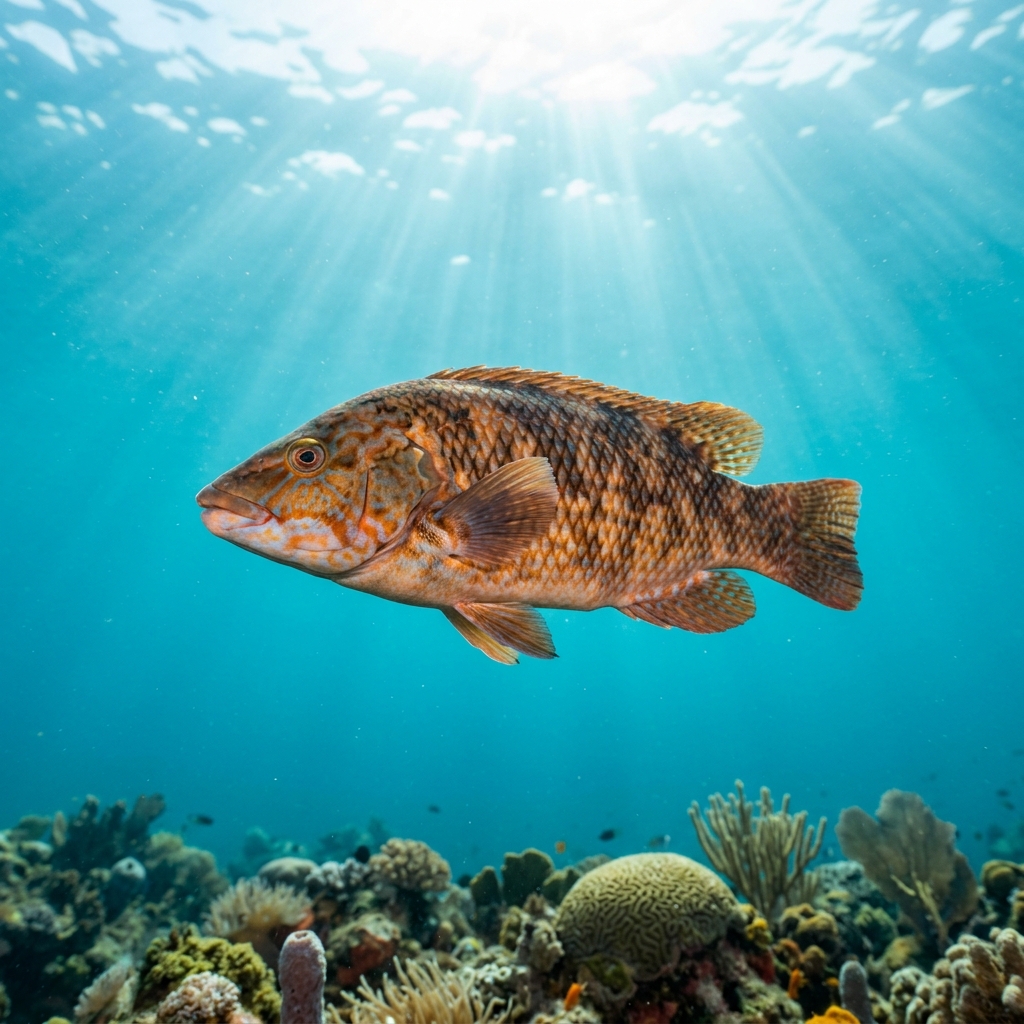
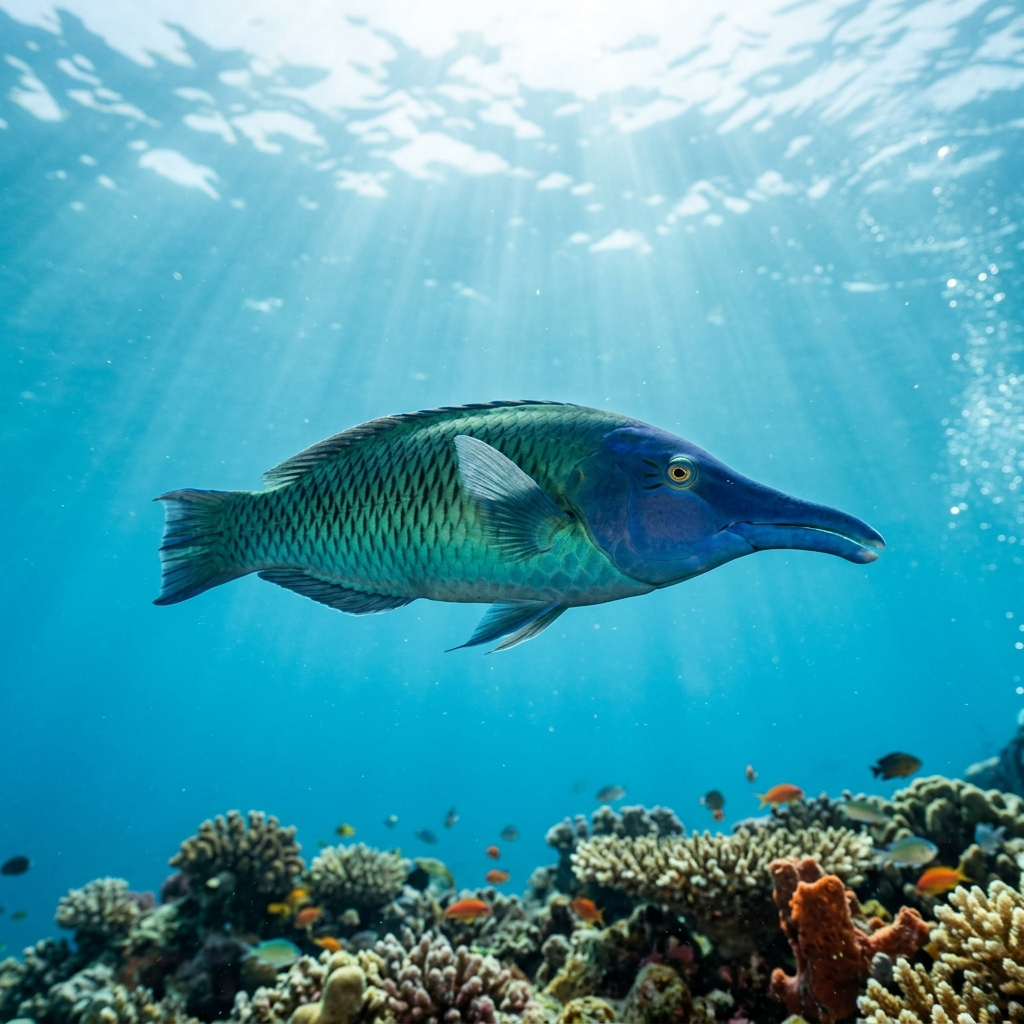
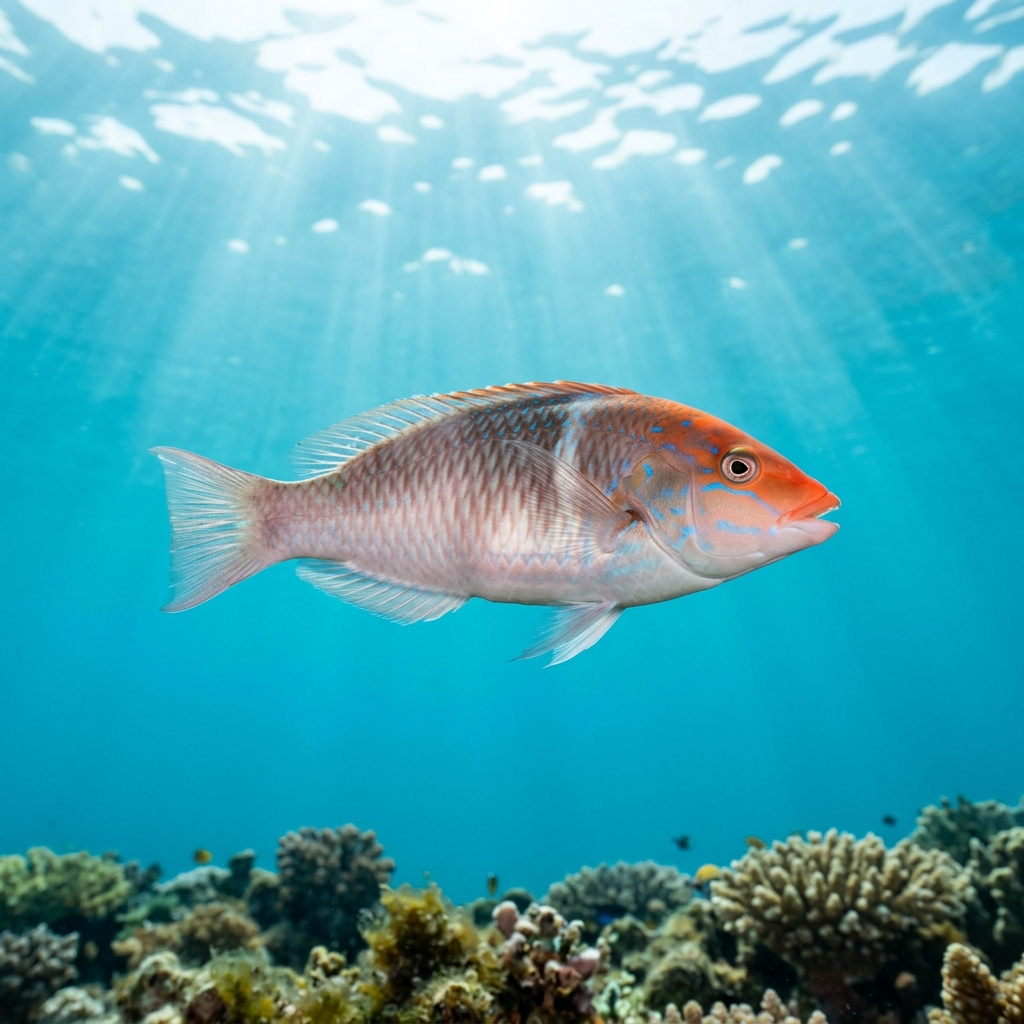
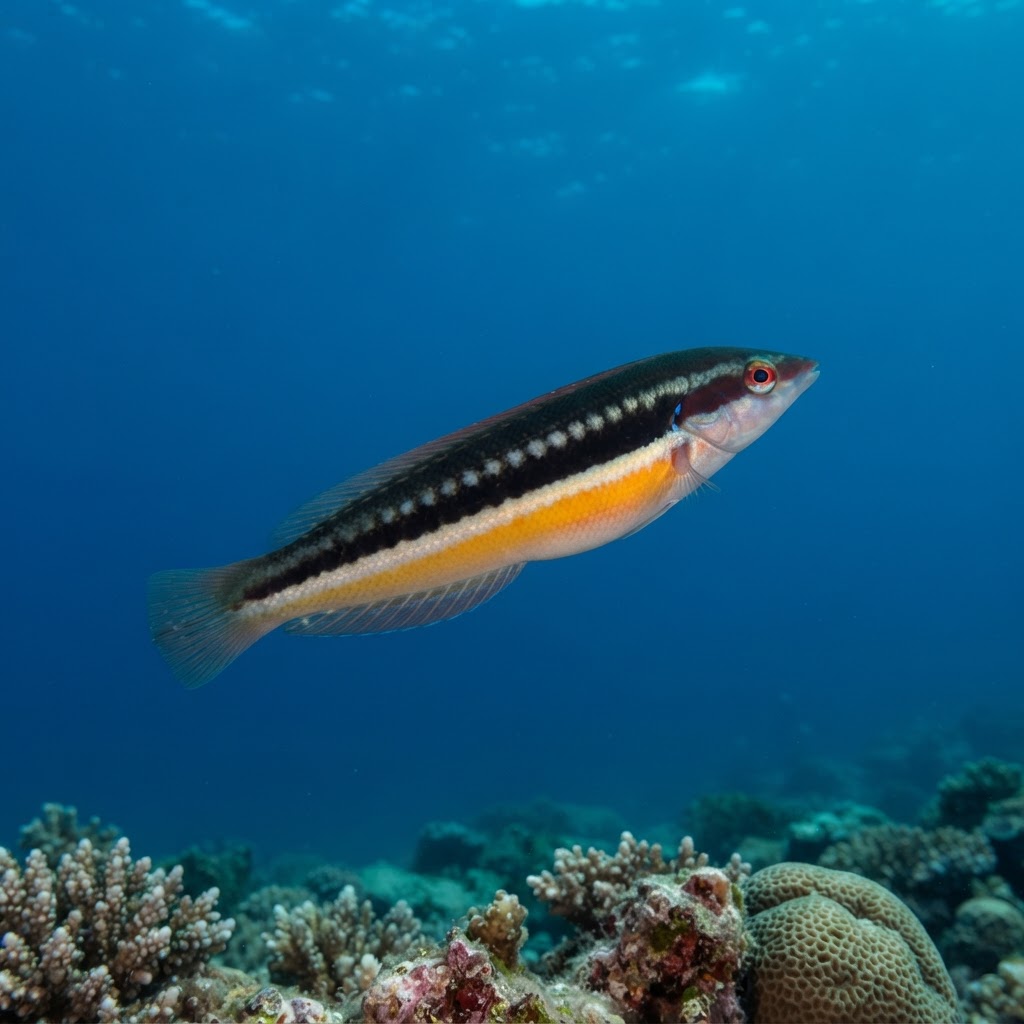
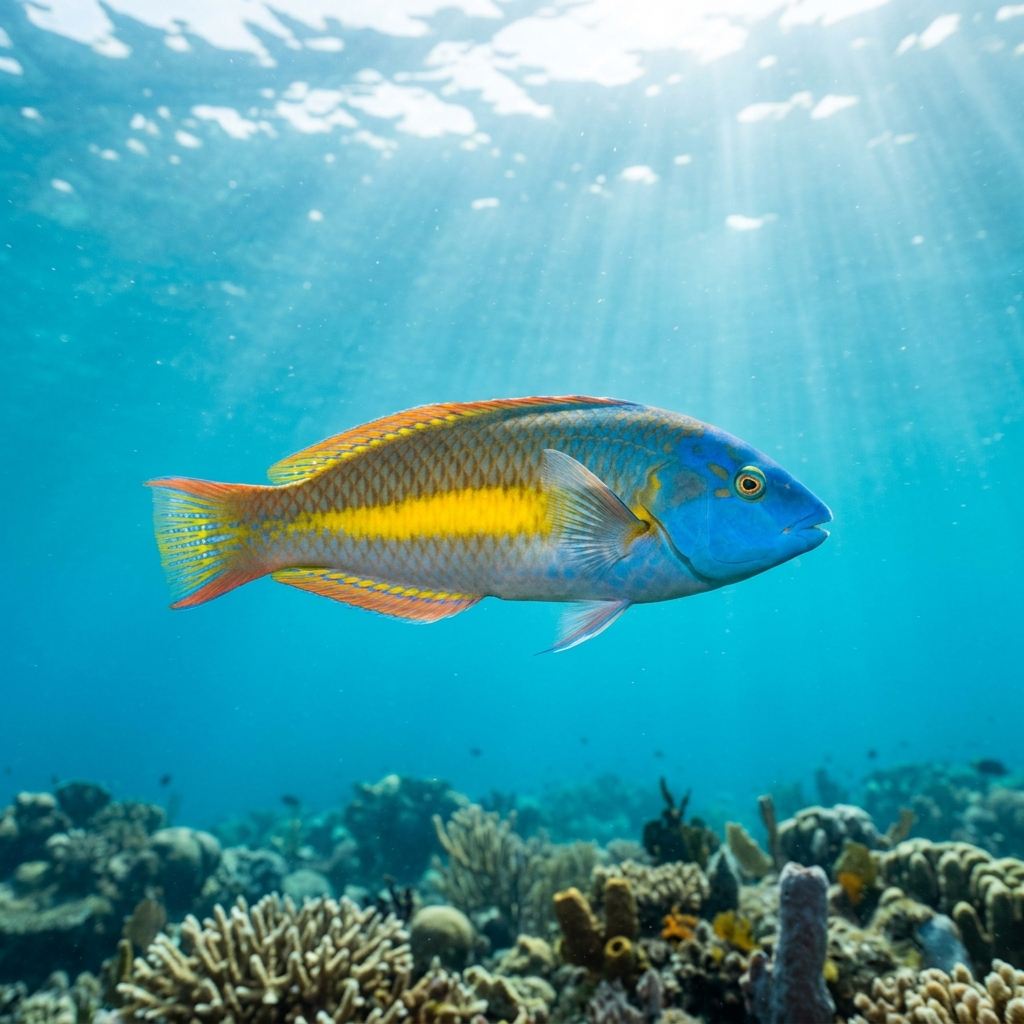
Males are hard to miss at around 28 cm: a riot of green, pink, orange, and blue with a distinctive pale saddle patch just behind the pectoral fin. Females are reddish-brown to orange with white spotting along the flanks, which can cause confusion with other wrasse species at a glance. Body shape is classic wrasse: elongated, slightly compressed, with a rounded snout and continuous dorsal fin. Juveniles show reddish-orange to brown colouring broken up by white spots or broken white stripes along the sides.
You will typically encounter western king wrasse cruising purposefully over rocky and coral reef, often in fairly shallow water down to around 20 m, picking at invertebrates as it goes. Males are bold and conspicuous, moving through open water in a way that makes them easy to spot; females and juveniles tend to stay closer to structure. They are generally undisturbed by divers and will often continue foraging as you watch from a respectful distance.
Like many wrasses, western king wrasse are protogynous hermaphrodites: females can transition to become males as they grow, which is why the two sexes look so dramatically different from each other.
Sightings concentrate in the Southern Hemisphere summer, from December through March. This aligns with warmer water conditions pushing toward the upper end of the species' observed temperature range of 17.5 to 24 °C.
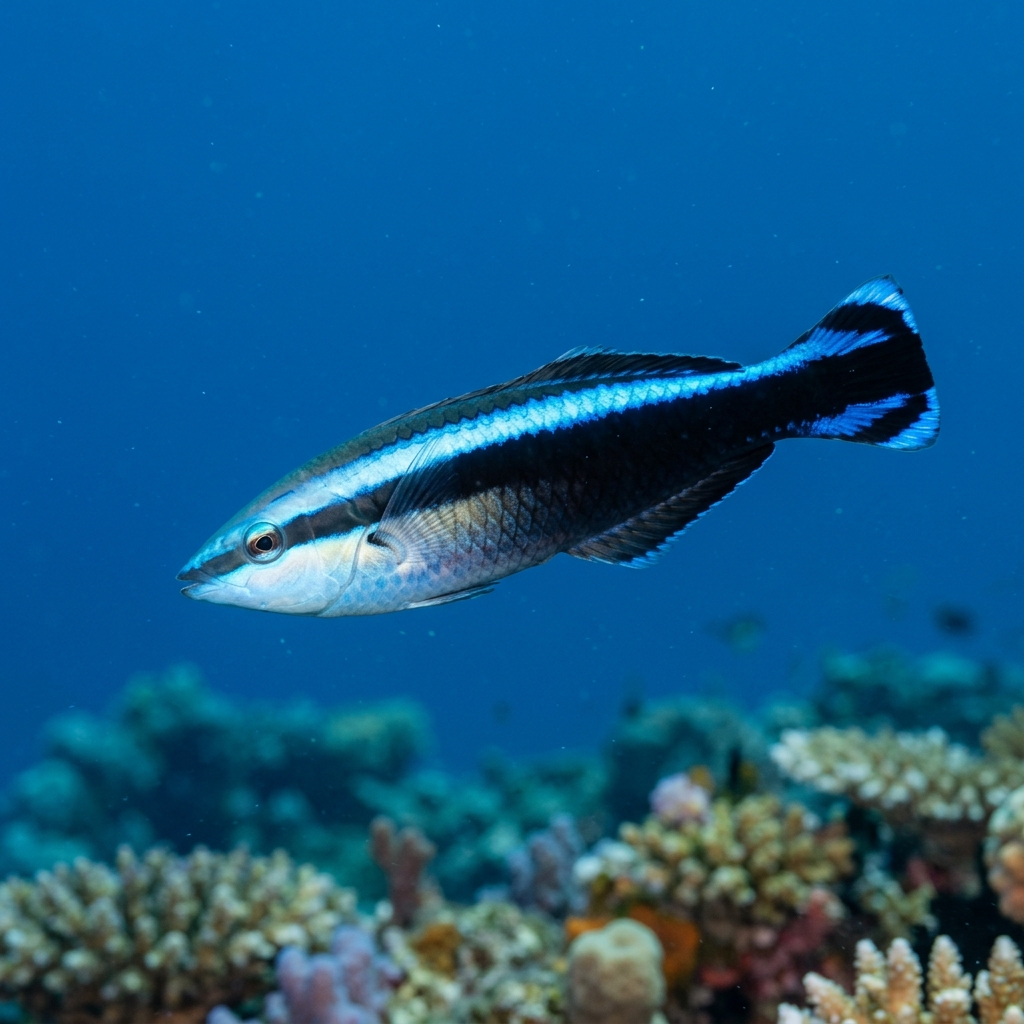
Reef neighbours a diver could mistake it for. Use the identification notes above to tell them apart.
Almost entirely an Australian species in dive records, with the overwhelming majority of sightings coming from Western Australia. A smaller number of records exist from South Australia and Queensland. If you are planning a trip specifically to find this fish, Western Australia is by far your best bet.
Mapping where Western King Wrasse is logged…
Western king wrasse are almost exclusively found in Australian waters, with the vast majority of sightings logged in Western Australia. Smaller numbers of records exist from South Australia and Queensland. It is a reef-associated species found from very shallow water down to around 45 m.
Sightings peak during the Southern Hemisphere summer, from December through March. Visiting Western Australia's reefs during this period gives you the best chance of an encounter, as the species becomes noticeably more active and visible in warmer seasonal conditions.
Males are distinctive: look for the mix of green, pink, orange, and blue with a pale saddle patch behind the pectoral fin. Females are reddish-brown to orange with white spots on the flanks. Juveniles share the spotted pattern but are more uniformly reddish-orange or brown. At around 28 cm, size helps too.
They typically reach around 28 cm in length. Males tend to be the larger individuals, since females can transition into males as they mature and grow.
No. Western king wrasse are protogynous hermaphrodites (females that can change sex), meaning individuals begin life as females and larger ones can transition to become males. This is why males and females look so strikingly different from each other, and why spotting a vivid male is relatively uncommon compared to seeing females.
Site and sighting data is aggregated from diver logs, iNaturalist and GBIF. For taxonomy and conservation status:
Bird Wrasses
3,632 sites