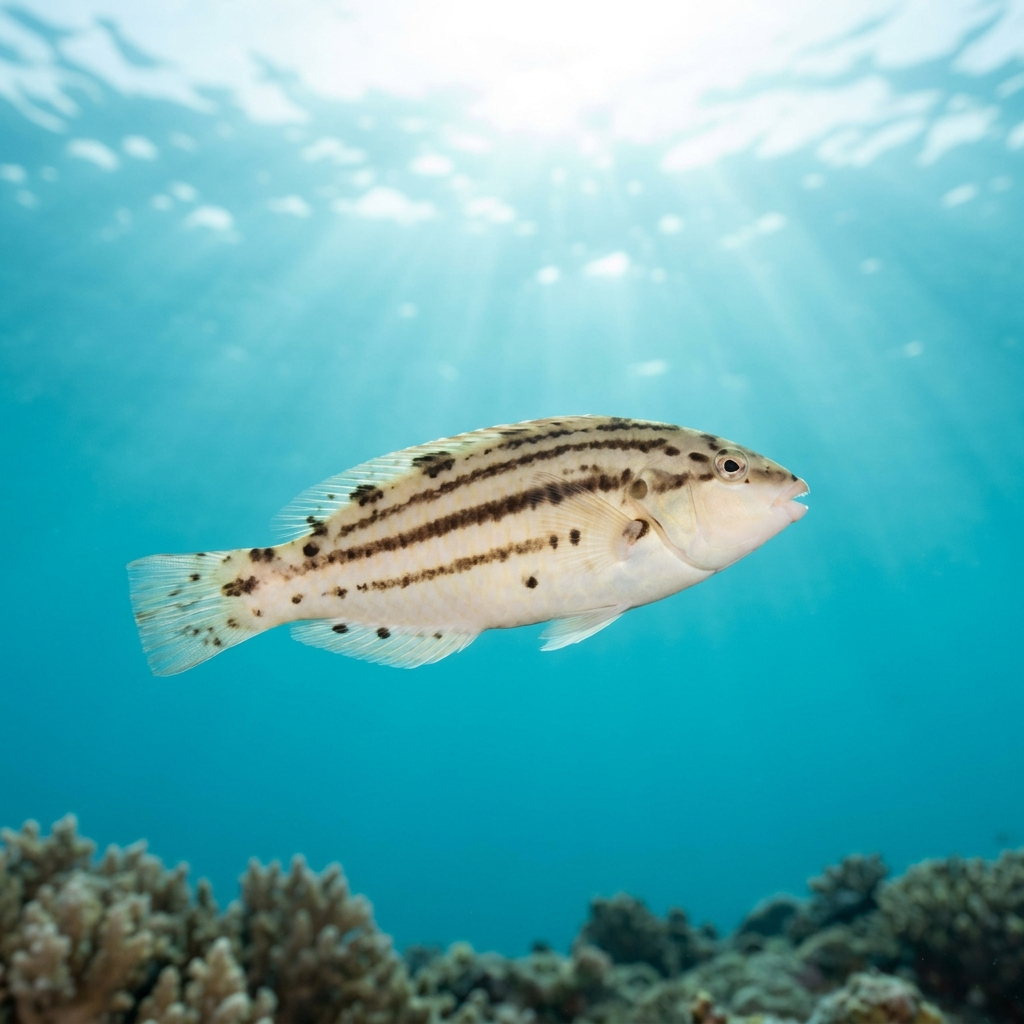
Choerodon rubescens
Spot Baldchin Groper on Western Australian reefs in 18-23 °C water. Learn how to ID adults vs juveniles and where divers actually log sightings.
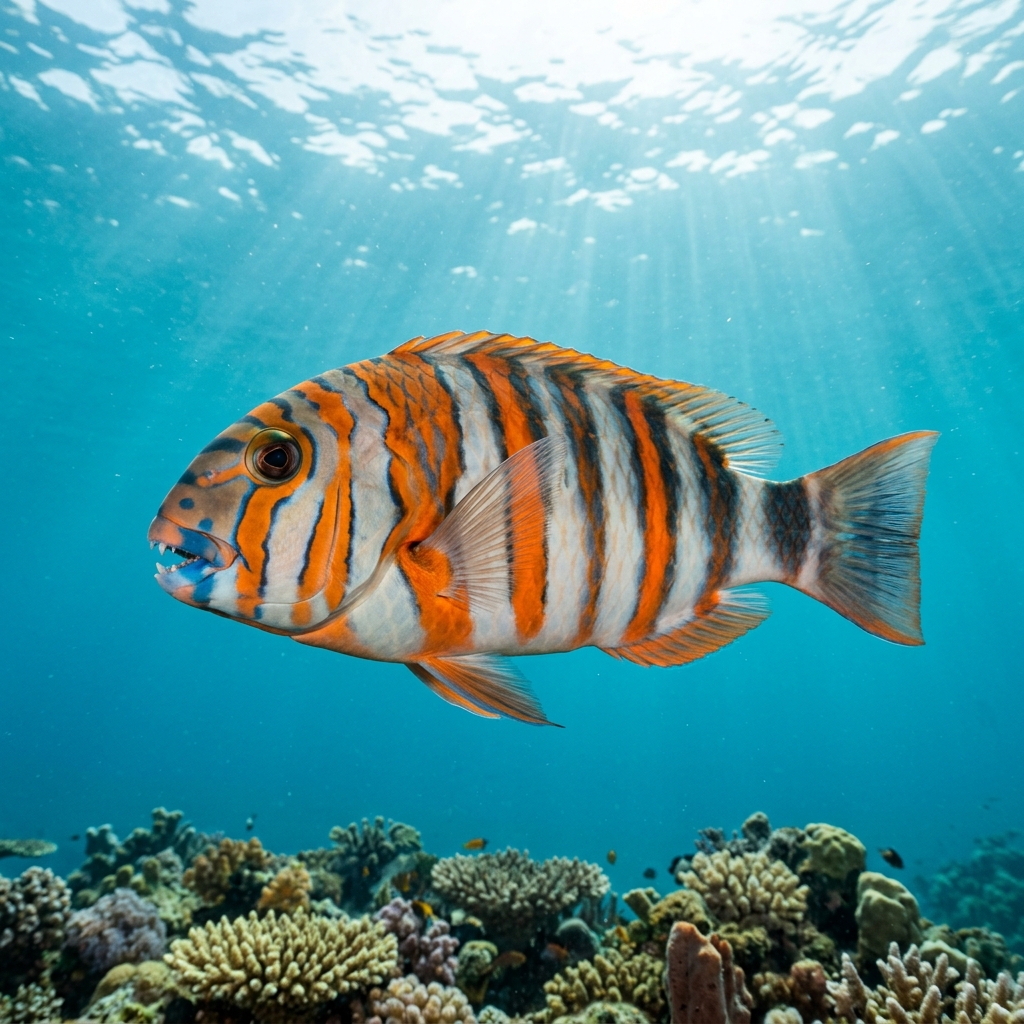
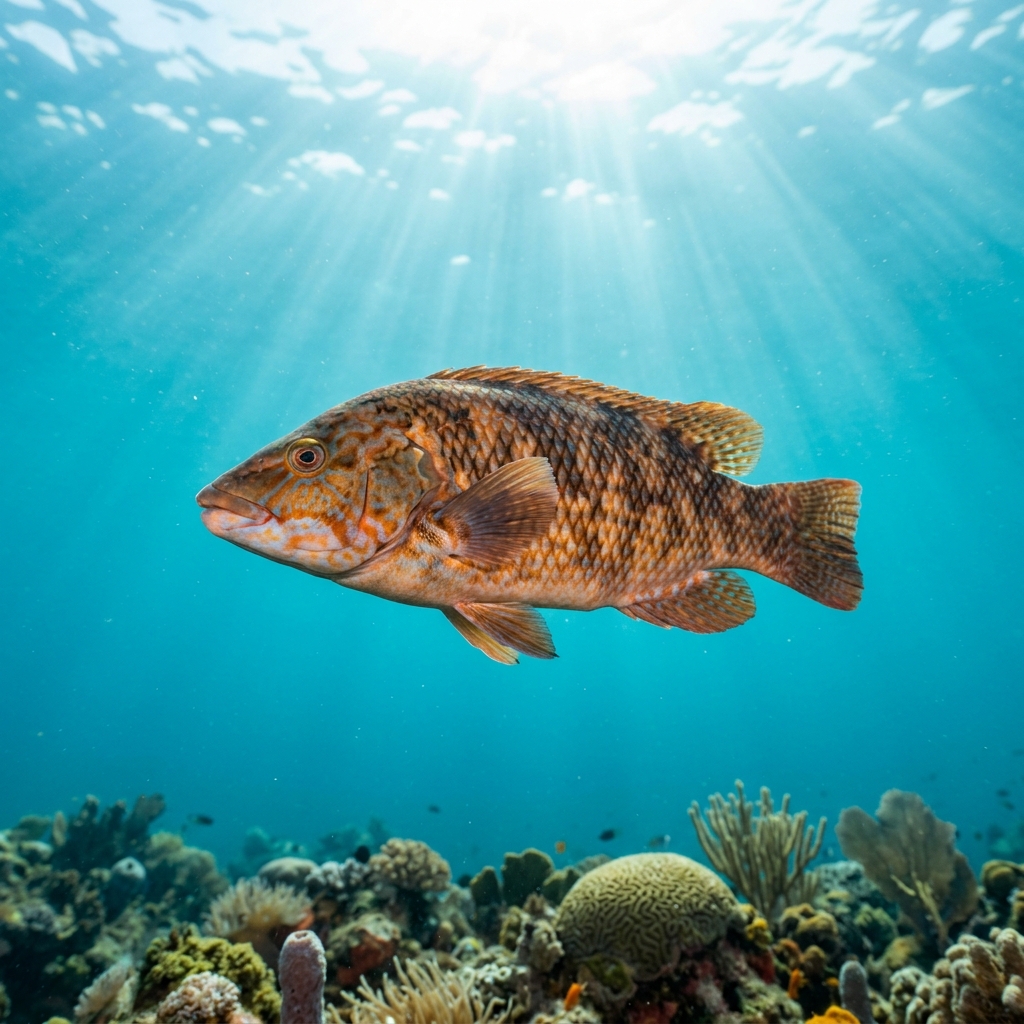
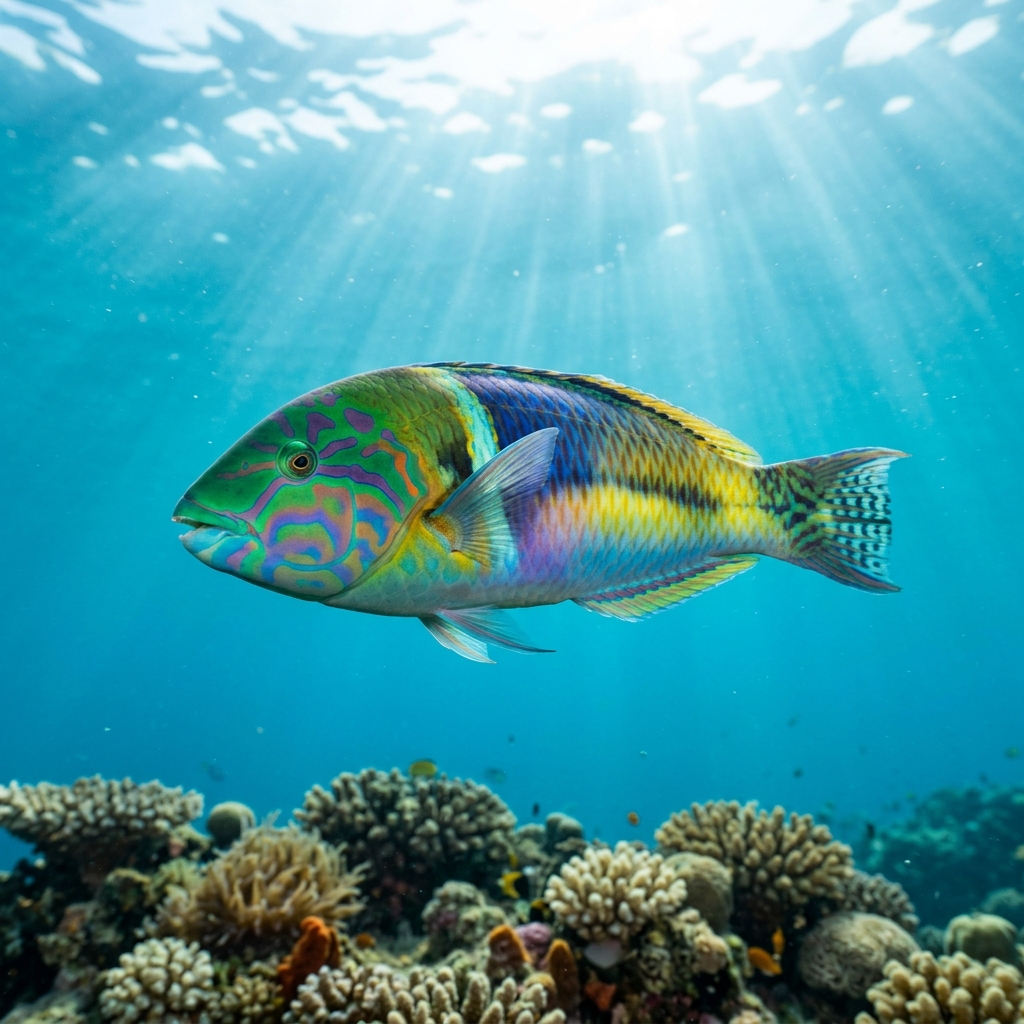
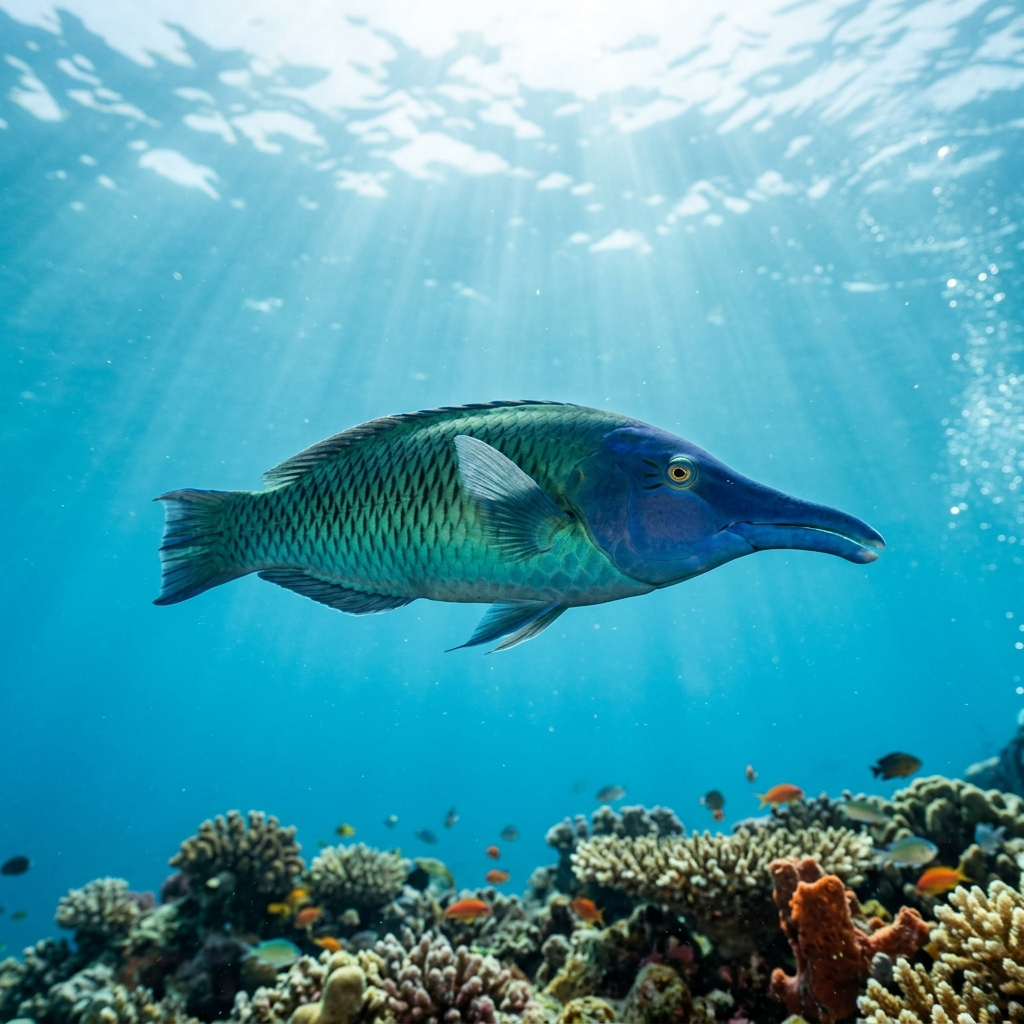
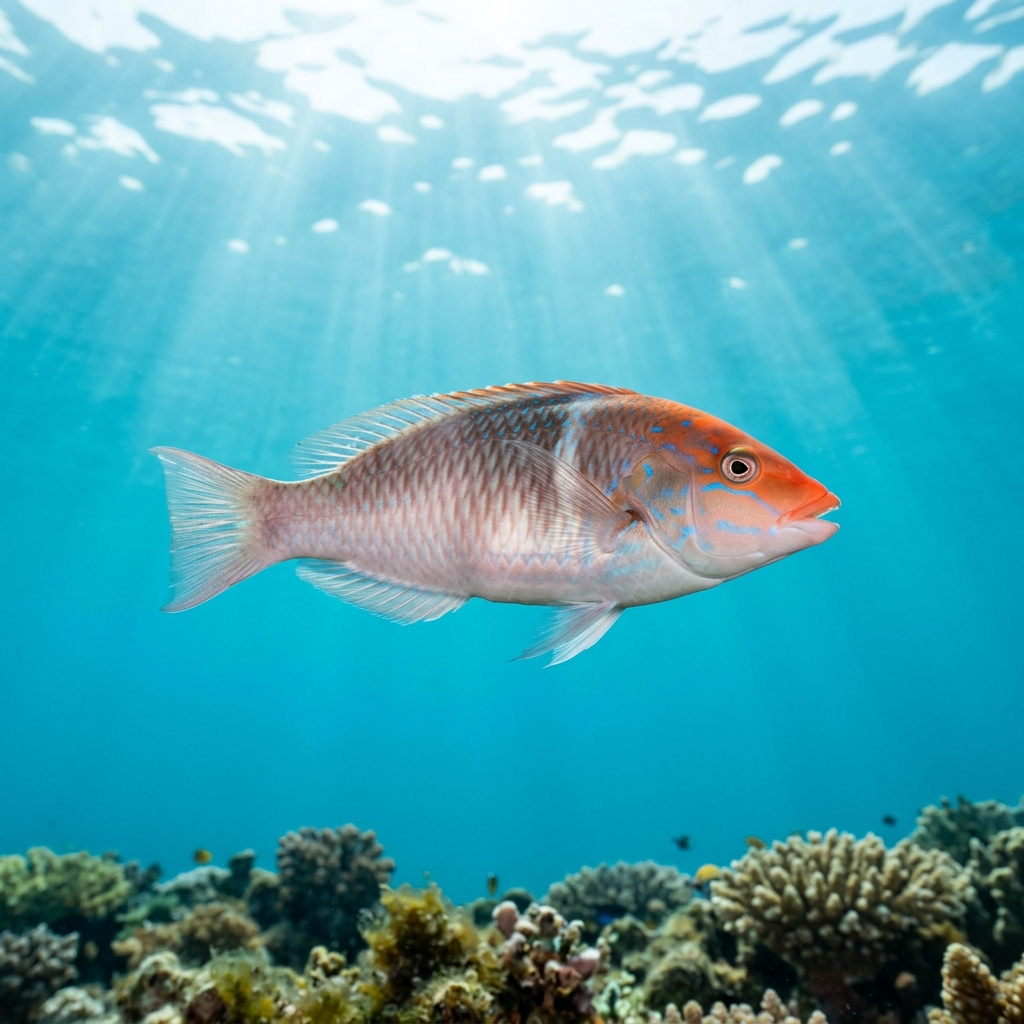
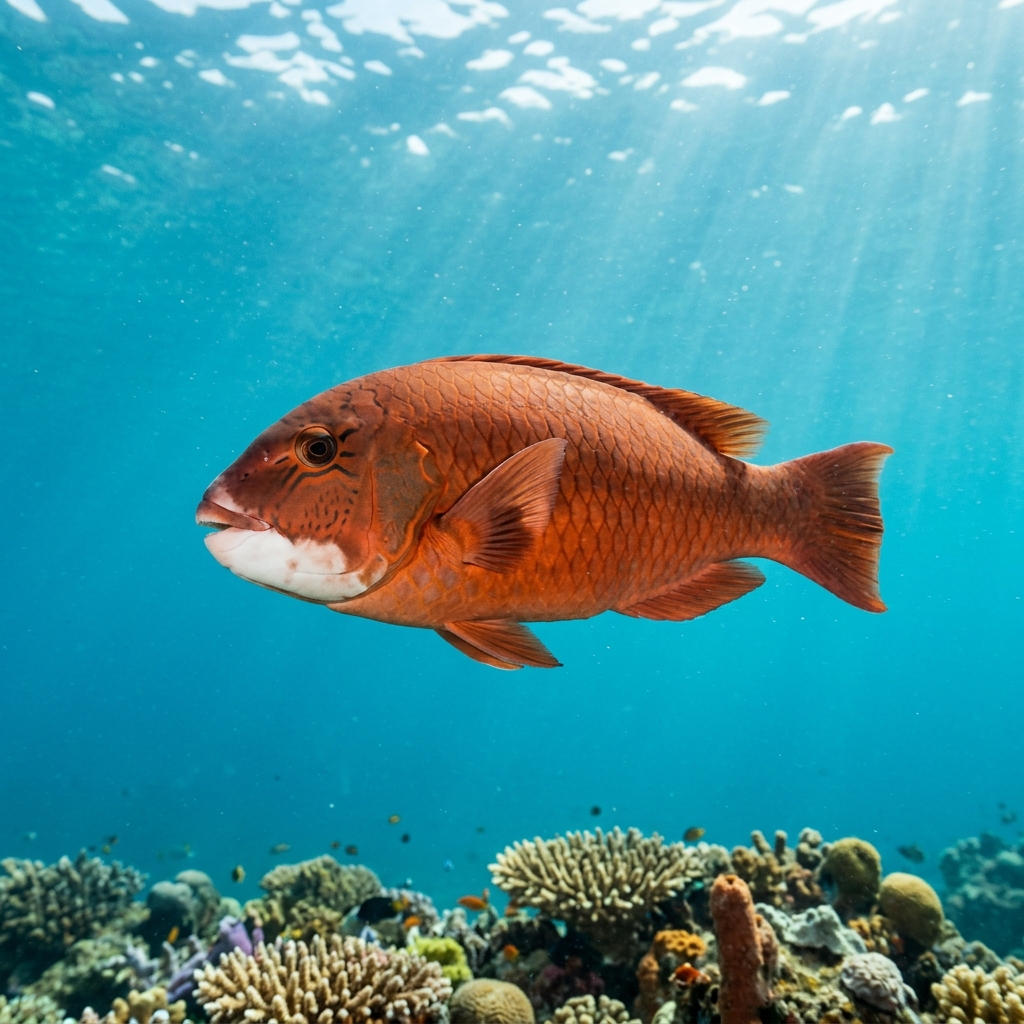
A chunky, thick-lipped wrasse that reaches around 60 cm, making it one of the larger labrid species on Western Australian reefs. Adults are broadly greenish to pinkish-brown with a notably pale, almost whitish chin and cheek patch, the feature that gives the fish its name and the quickest underwater key. Terminal-phase males are larger and carry brighter greenish and pinkish tones, while females are noticeably duller and more uniformly brown.
Baldchin Groper are typically seen moving purposefully over rocky and coral reef areas, often close to the bottom where they forage using their powerful, tusk-like teeth to crack hard-shelled invertebrates. They tend to be wary of divers rather than approachable, so slow, non-threatening movement gives you the best chance of a close look before they drift away. Most encounters are solitary adults.
Like many wrasses, baldchin groper are protogynous hermaphrodites, females can transition into males, which is why the largest, most colourful fish you see are almost always male.
There is not enough monthly sighting data to point to a peak season, so treat it as a year-round resident. Its observed temperature range of roughly 19 to 23 °C fits Western Australia's cooler coastal reefs across all seasons.
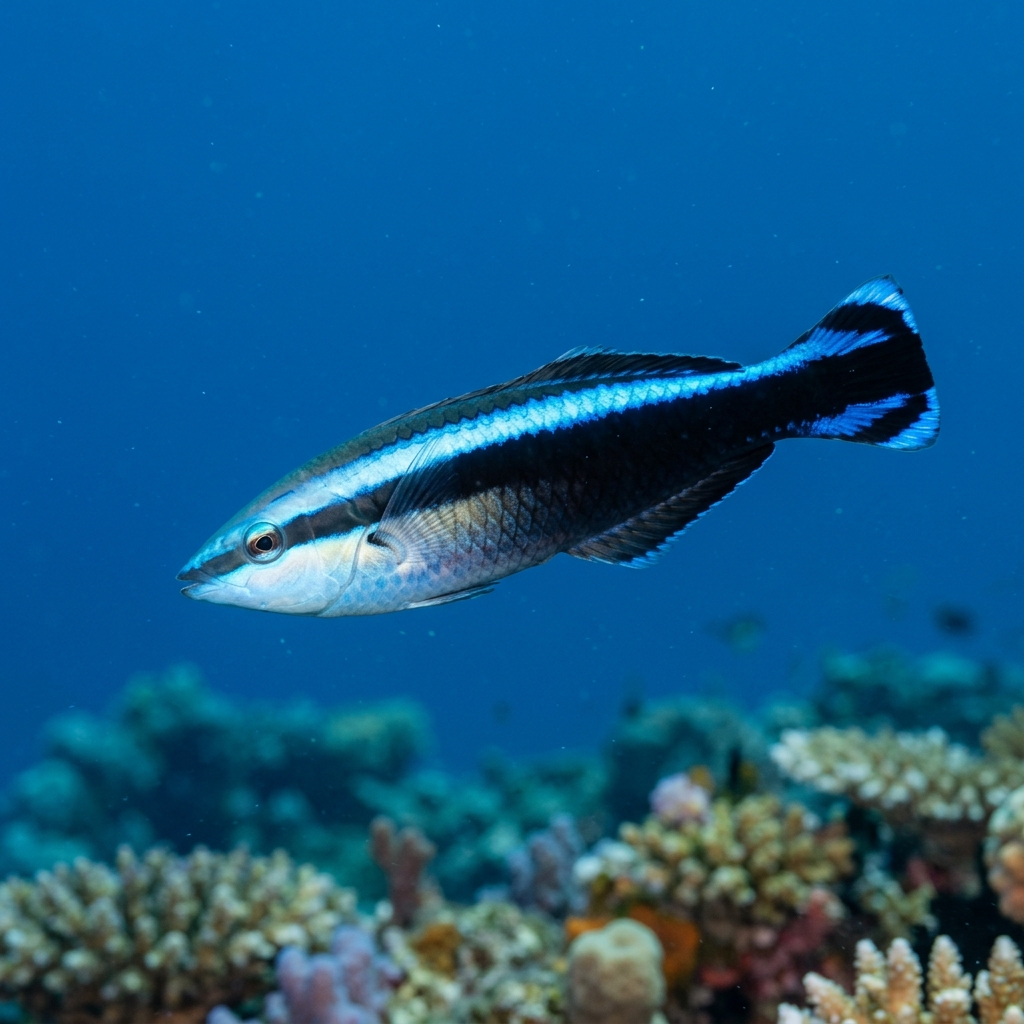
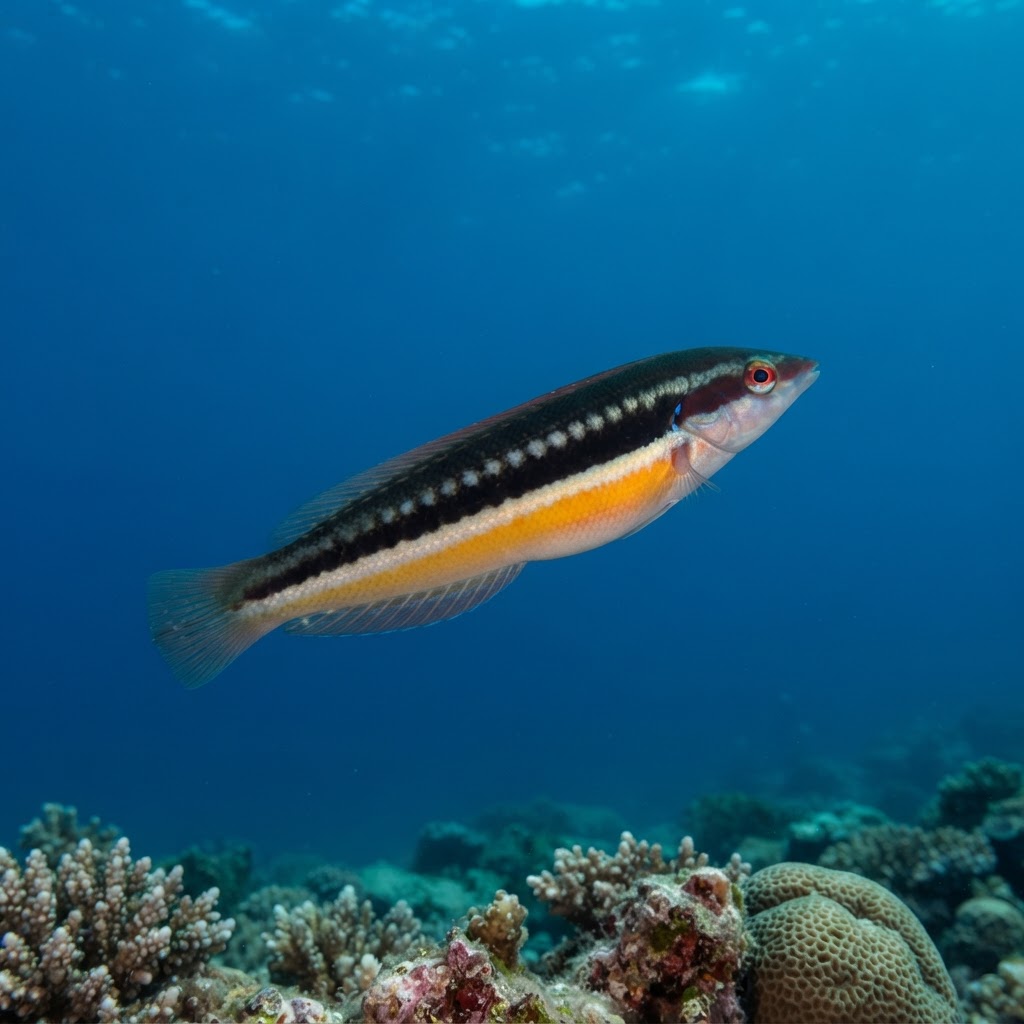
Reef neighbours a diver could mistake it for. Use the identification notes above to tell them apart.
Every logged sighting comes from Australia, and specifically from Western Australia, making it essentially an endemic species to that coastline. Look for it along the temperate-to-subtropical reef systems of WA, where it turns up across a wide spread of sites from the coast near Perth northward.
Mapping where Baldchin Groper is logged…
All logged sightings come from Western Australia, making it essentially a WA-endemic species. It inhabits rocky and reef habitats along that coastline, and divers report it across a wide range of sites throughout the region.
There is no clear peak season in the sighting data, so they can be encountered year-round. Their preferred water temperature of roughly 19 to 23 °C aligns with Western Australia's cooler coastal reefs across all seasons.
Look for a large, thick-bodied wrasse around 60 cm long with a distinctively pale, whitish chin and cheek patch against an otherwise greenish-brown body. Big males are brighter and more colourful; females are duller brown. The pale chin is the quickest field mark.
Adults typically reach around 62 cm, placing them among the larger wrasses on Western Australian reefs. Terminal-phase males are the biggest individuals you are likely to encounter.
Yes. Baldchin Groper are protogynous hermaphrodites, meaning females can transition into males as they grow larger. This is why the biggest, most brightly coloured individuals you meet on the reef are almost always male.
Site and sighting data is aggregated from diver logs, iNaturalist and GBIF. For taxonomy and conservation status:
Bird Wrasses
3,632 sites