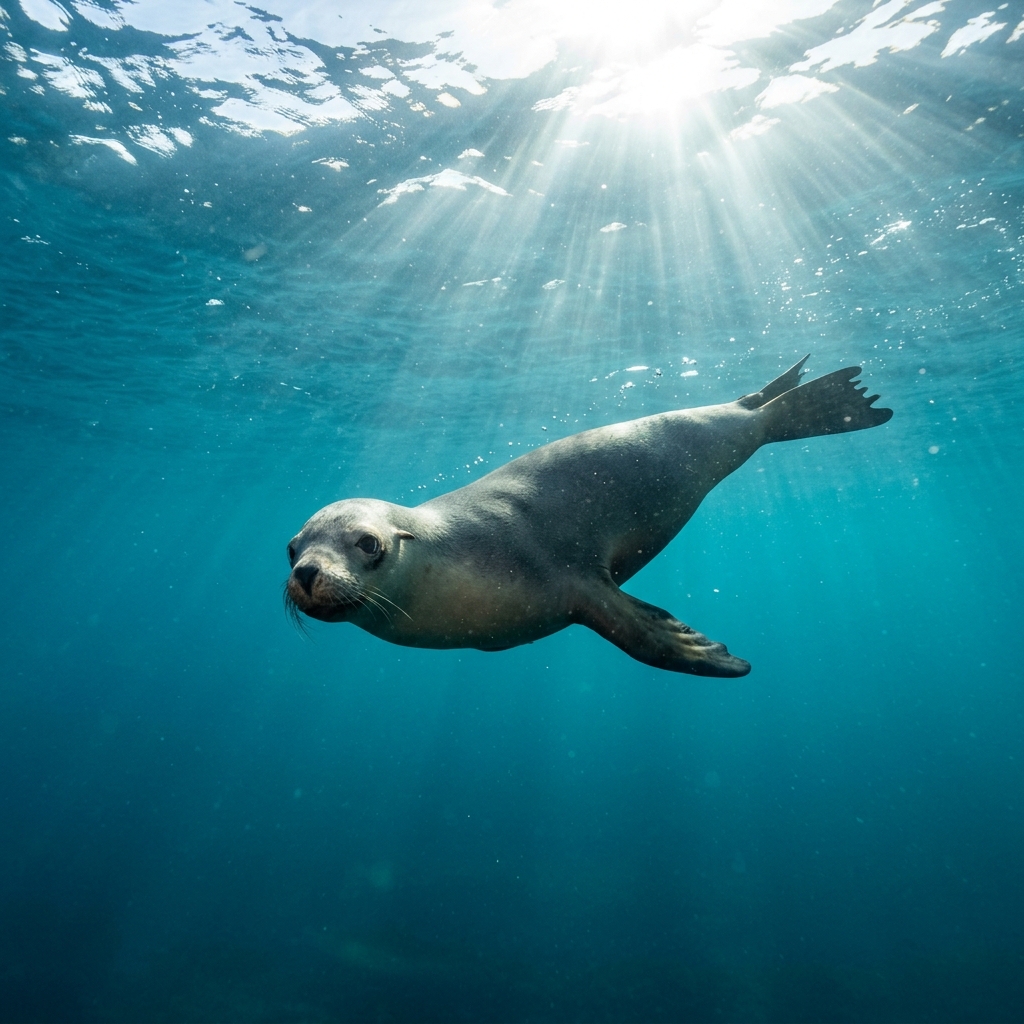
Neophoca cinerea
Spot Australian sea lions in South Australia and Tasmania in waters of 15-19°C. A rare and rewarding encounter on Australian reefs year-round.
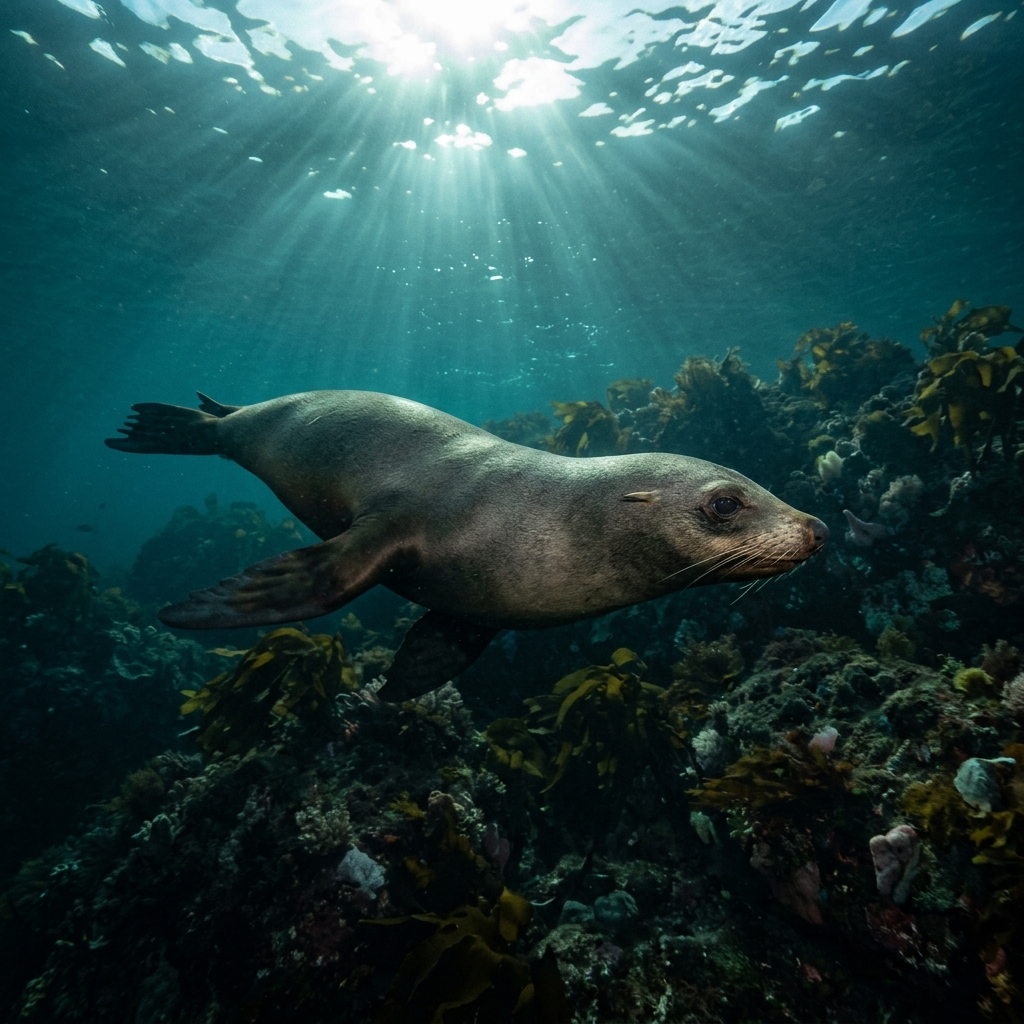
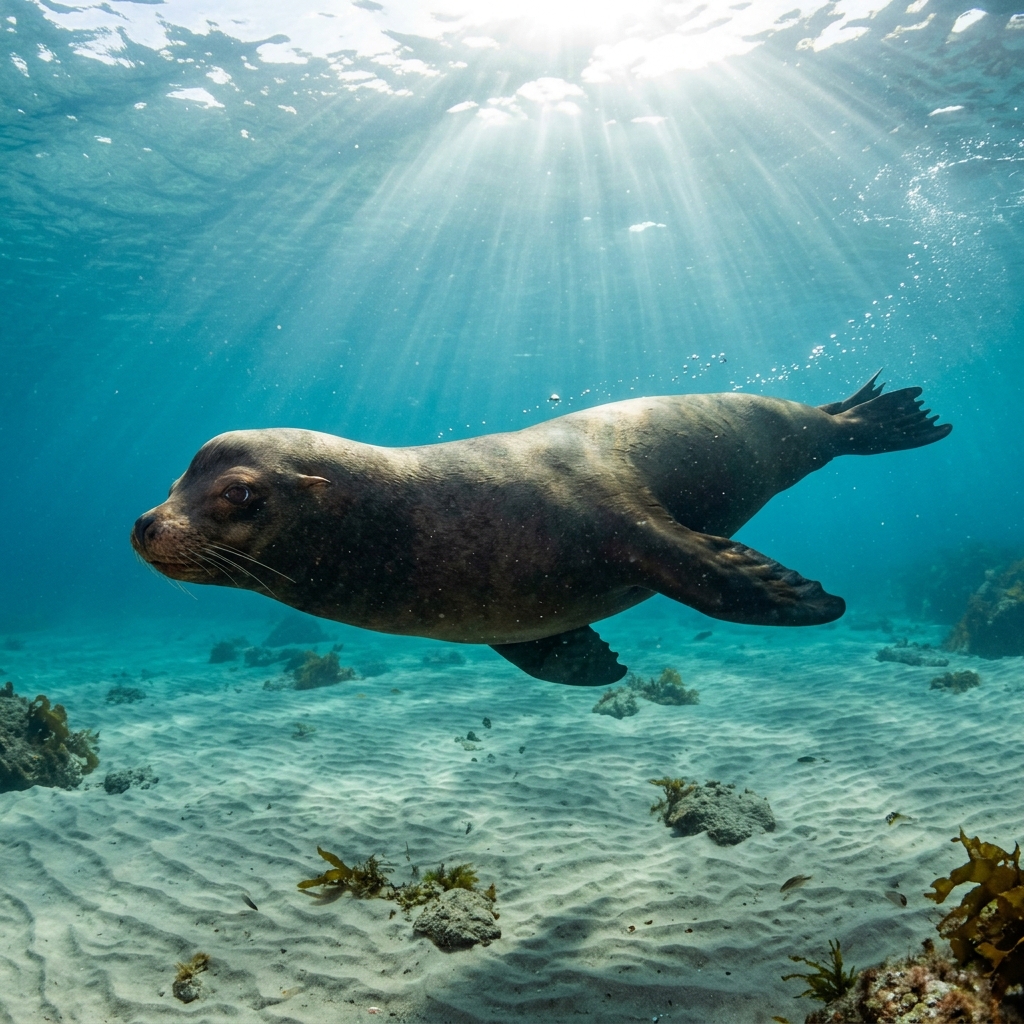
A large, torpedo-shaped pinniped that moves through the water with surprising agility. Females are the ones divers most often encounter up close: silver-grey on the back with a cream belly, reaching around 175 cm. Males are noticeably bigger and strikingly different, with dark brown to blackish bodies and a pale yellowish-cream patch on top of the head that makes them easy to pick out. Their broad, whiskered muzzle and fore-flippers used for propulsion (rather than hind-flipper rowing, as in true seals) are the key body-plan clues.
In the water, Australian sea lions are famously playful and curious, they will barrel-roll around divers, tug at fins, and blow bubbles in your mask. On the reef they tend to rest on the bottom or weave around kelp and rocky structures at shallow to mid-water depths. Their reaction to calm, non-threatening divers is generally one of interest rather than avoidance, making slow, unhurried approaches the most rewarding approach.
Australian sea lions follow a highly unusual 17 to 18-month breeding cycle, the only pinniped in the world not tied to a 12-month calendar, meaning pup seasons shift year to year and vary between colonies.
No clear seasonal peak emerges from current sighting data, so treat encounters as possible year-round. They inhabit cool temperate waters typically between 15 and 19°C, which describes southern Australian conditions throughout the year.
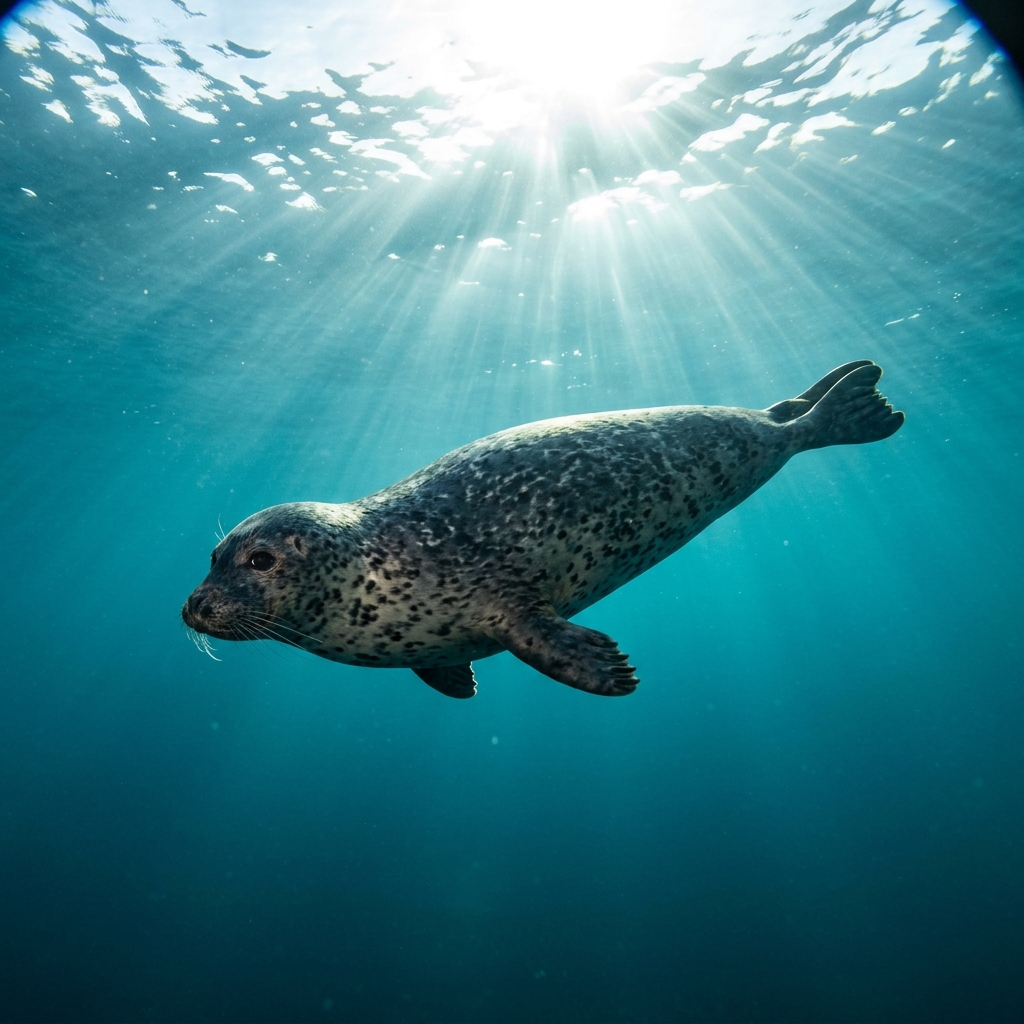
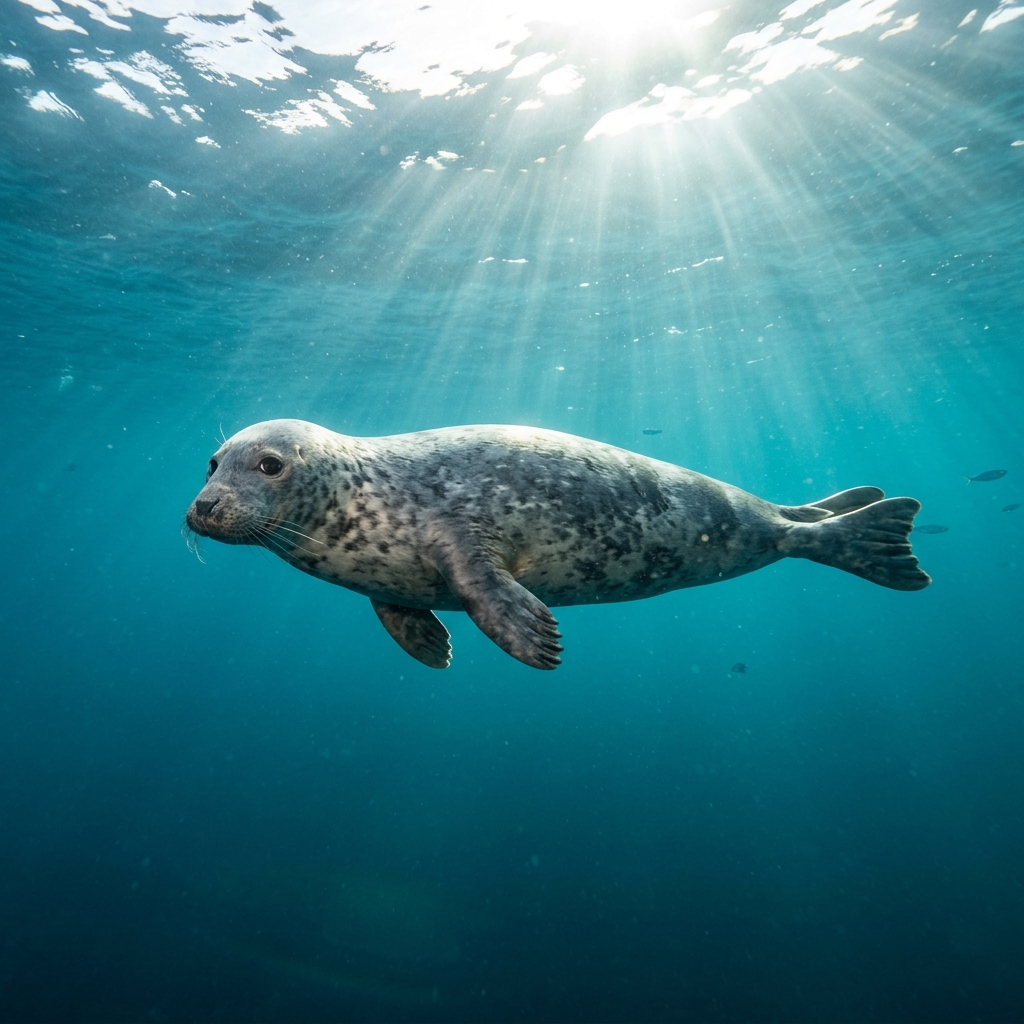
Reef neighbours a diver could mistake it for. Use the identification notes above to tell them apart.
Australian sea lions are found only in Australia, with the strongest concentration of logged sites in South Australia, followed by Tasmania and Western Australia. Sightings have also been recorded across Victoria and Queensland. South Australia, home to breeding colonies on offshore islands, gives divers the best realistic shot at an encounter.
Mapping where Australian Sea Lion is logged…
They are found exclusively in Australia. South Australia holds the highest concentration of known sites, with Tasmania and Western Australia also well represented. Offshore island colonies in South Australia offer the most reliable chances of an in-water encounter.
Sighting data does not point to a single peak season, so encounters are possible year-round. Their cool-water preference (roughly 15-19°C) matches southern Australian conditions across all seasons, meaning there is no strong off-season to avoid.
Look for a large, agile pinniped propelling itself with its fore-flippers. Females show a silver-grey back and cream belly. Males are much bigger, dark brown to blackish with a pale cream patch on the crown. Unlike fur seals, Australian sea lions have a broader, rounder muzzle and a more robust build.
They reach around 175 cm in length. Males are substantially heavier and longer than females, a difference that is obvious underwater, a large male next to a female looks like a different animal entirely.
Yes, they are listed as Endangered. The entire global population lives in Australia and numbers are small. Divers should keep a respectful distance, avoid cutting off animals heading to the water, and never approach pups on haul-out beaches.
The Australian Sea Lion is listed as endangered by the IUCN. Observe from a distance, avoid touching or feeding it, and report sightings to local marine research organisations.
Australian sea lions are listed as Endangered, with a small and declining population restricted entirely to Australian waters. Maintain a respectful distance at haul-out sites and never block an animal's path back to the sea; disturbing resting animals, especially mothers with pups, puts real stress on a species that cannot afford it.
Site and sighting data is aggregated from diver logs, iNaturalist and GBIF. For taxonomy and conservation status:
Long-nosed Fur Seal
347 sites