Nautilus stenomphalus
A coiled, striped shell and pinhole eyes set it apart on reef walls in 20 to 26C water, mostly after dark.
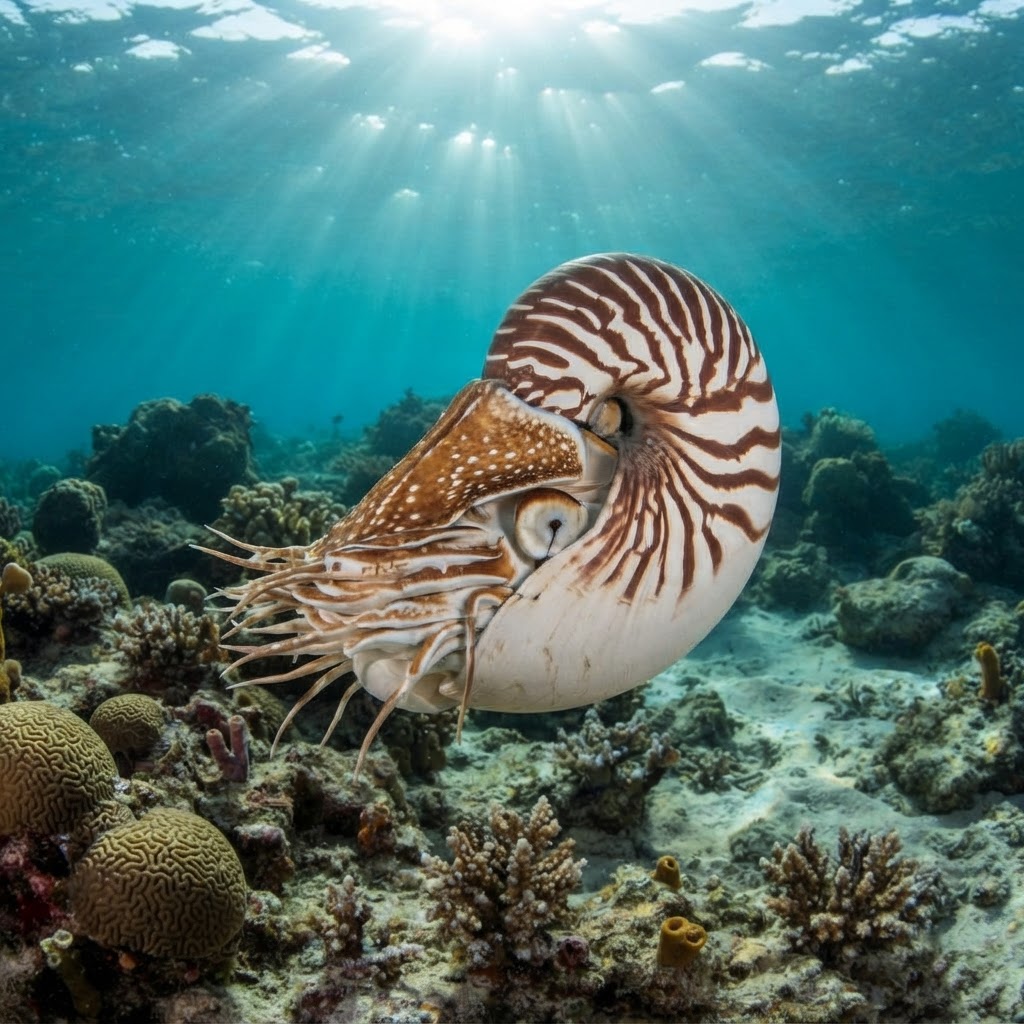
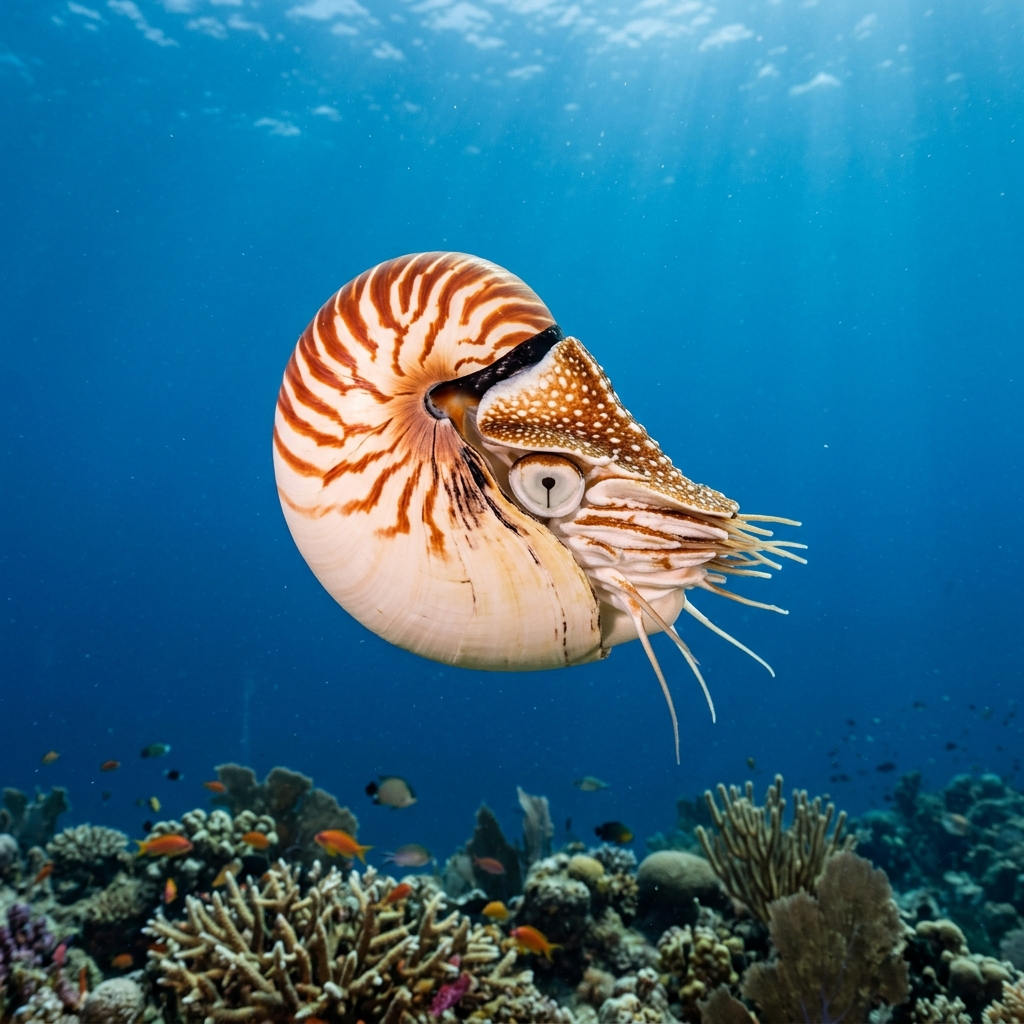
Recognisable by its coiled, tan-and-cream striped shell, roughly the size of a fist at about 12 cm across, with a cluster of thin tentacles and simple pinhole eyes poking from the shell opening. It swims by squirting water from a tube (siphon) near the head, moving in slow, deliberate hovers rather than darting like a squid or octopus. The striping on this species tends to run in fairly regular bands down the shell, which is one of the few visual cues separating it from close relatives.
Most encounters happen at night or at dawn and dusk, when it rises from deeper water up reef walls to forage, then retreats to depth as light increases. It moves slowly and shows little reaction to divers, drifting or gently jetting along the wall rather than fleeing. Look for it hovering close to the substrate rather than out in open water.
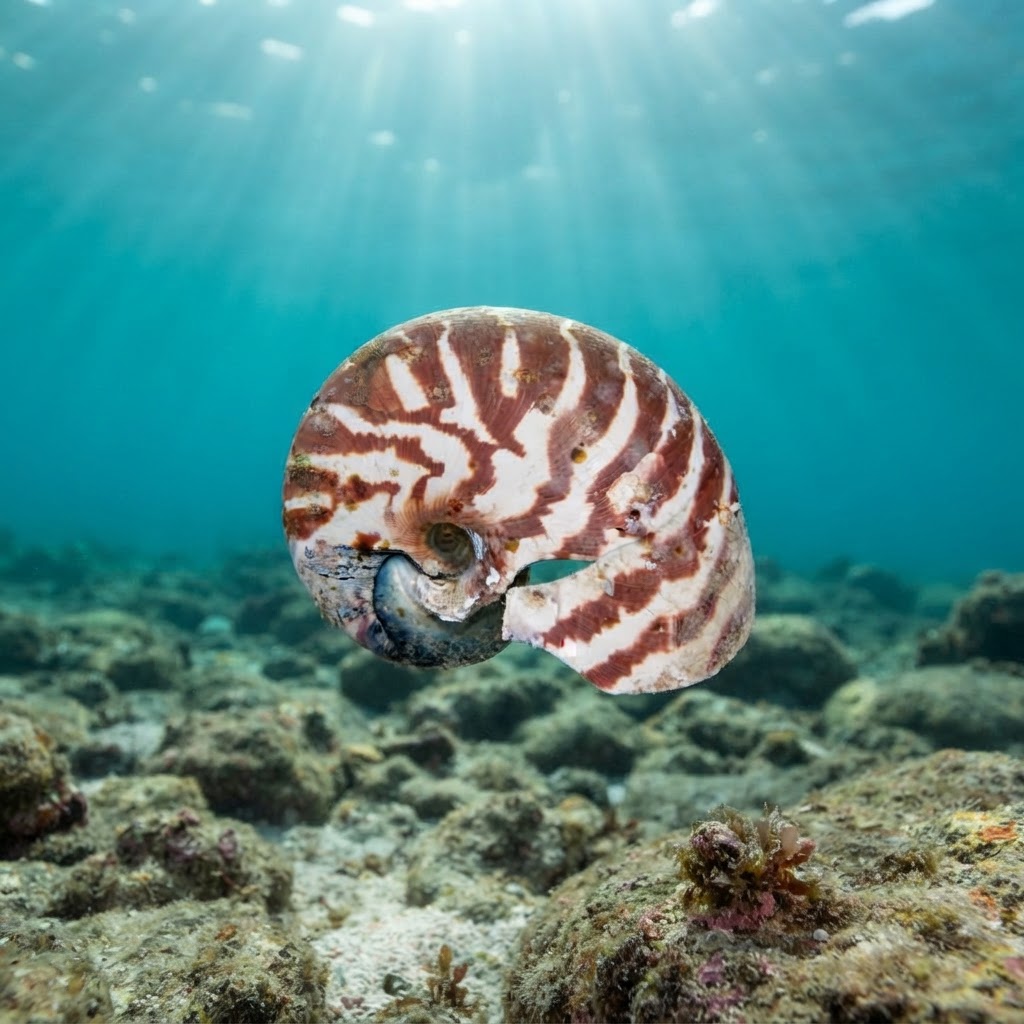
Its shell is internally divided into gas-filled chambers that it uses to control buoyancy, a design that has changed little in hundreds of millions of years of nautilus evolution.
No clear seasonal pattern shows up in sighting data, and its comfort range of 20.3 to 26.3C is met year-round on the reefs it inhabits, so any month is fair game. Night dives improve your odds regardless of season, since this is when it moves up from deeper water to feed.
Reef neighbours a diver could mistake it for. Use the identification notes above to tell them apart.
Solid diver data on exact sites is thin for this species, so treat sightings as a bonus rather than a target dive. Where it has been logged, it tends to turn up on steep reef walls and slopes in the tropical Indo-Pacific, within its known temperature range of 20.3 to 26.3C.
Mapping where Chambered Nautilus is logged…
Confirmed sightings are limited, but this species is associated with tropical Indo-Pacific reef walls where water sits between 20.3 and 26.3C. Night dives on steep drop-offs give the best chance of an encounter.
There is no detected seasonal pattern, so sightings are treated as possible year-round. Diving at night or during dawn and dusk hours matters far more than the calendar, since that is when it moves up from depth.
Look for a coiled, striped shell around 12 cm across with fine tentacles and small pinhole eyes at the opening. It moves with slow jet propulsion rather than swimming actively, usually close to a reef wall.
They reach around 12 cm across the shell, making them one of the more compact members of the nautilus family.
Its shell is split into gas-filled internal chambers that let it fine-tune buoyancy as it moves between deep water and shallower reef walls, a feature it shares with all living nautiluses.
Site and sighting data is aggregated from diver logs, iNaturalist and GBIF. For taxonomy and conservation status: