Panulirus cygnus
Western Rock Lobster sightings concentrate in Dec, Mar in Western Australia. Know what to look for and where to find it on WA reefs.
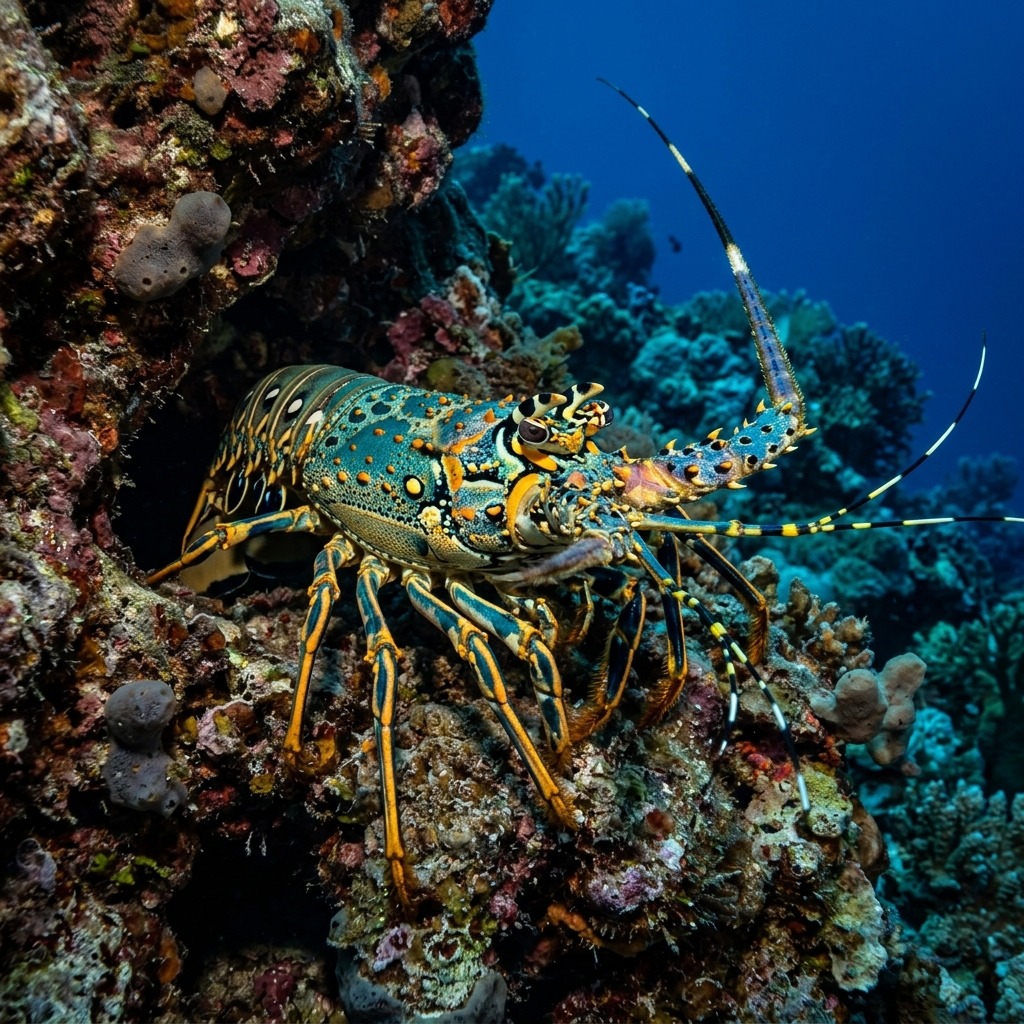
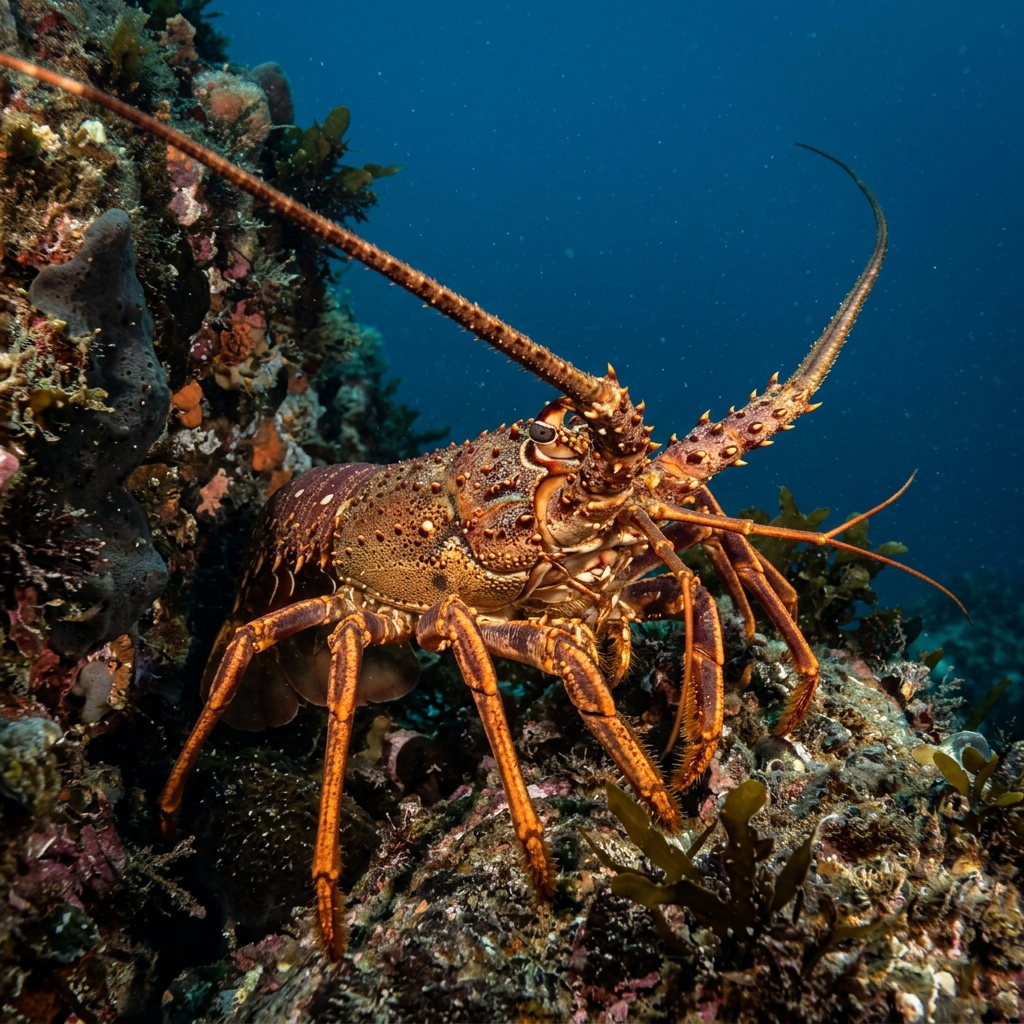
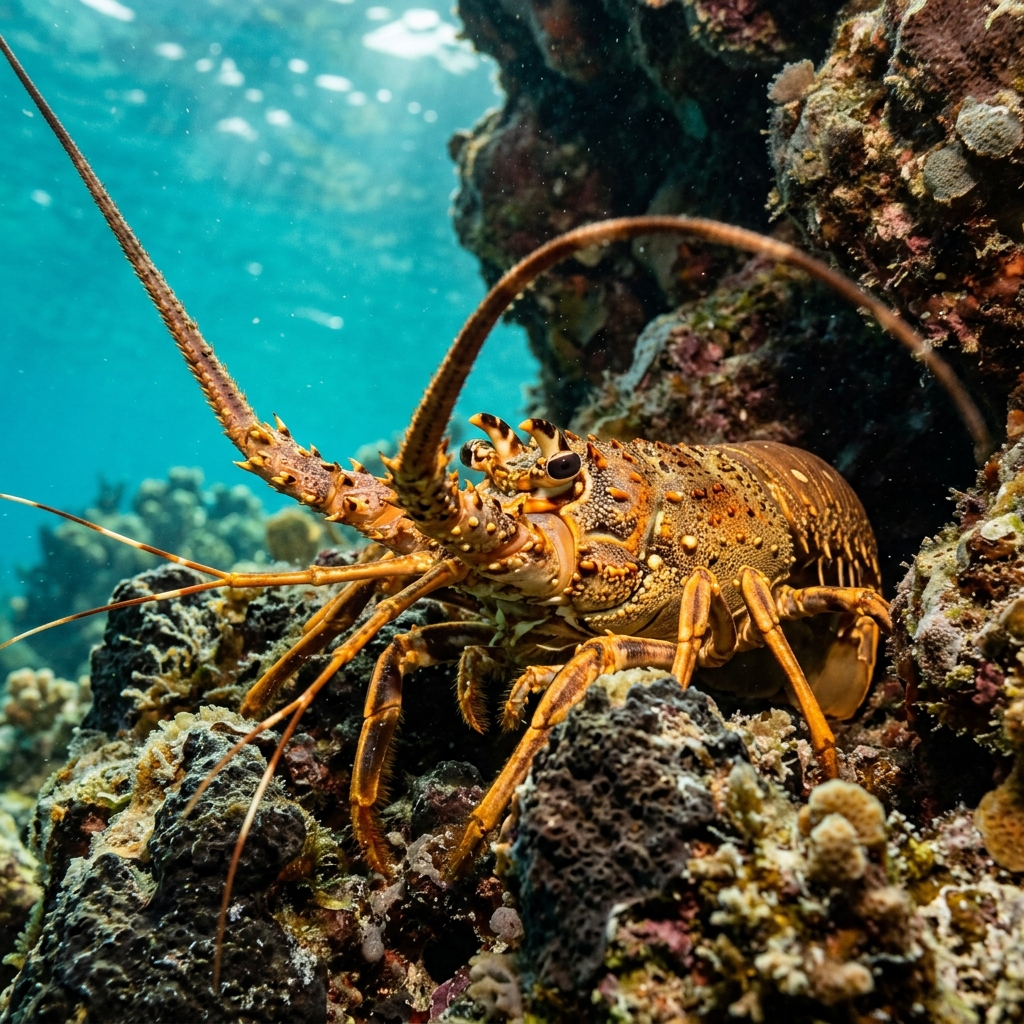
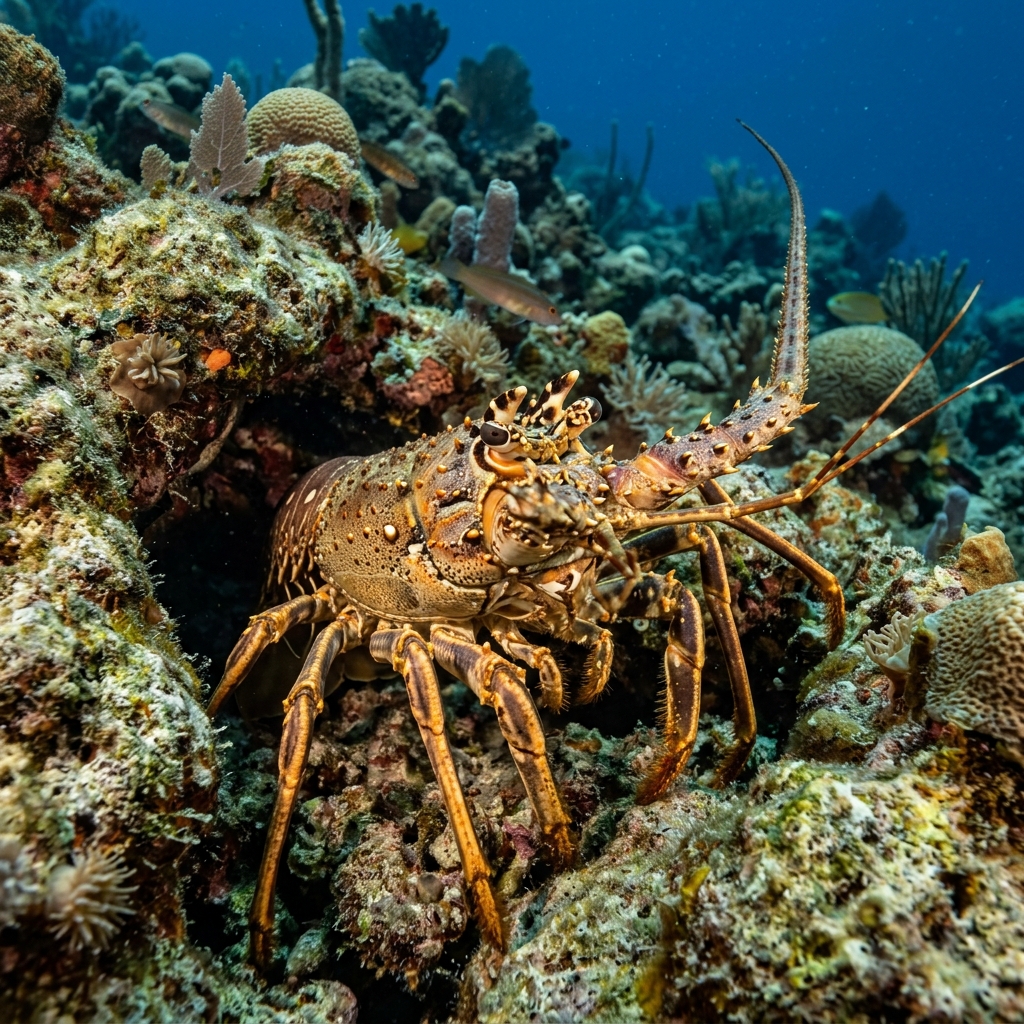
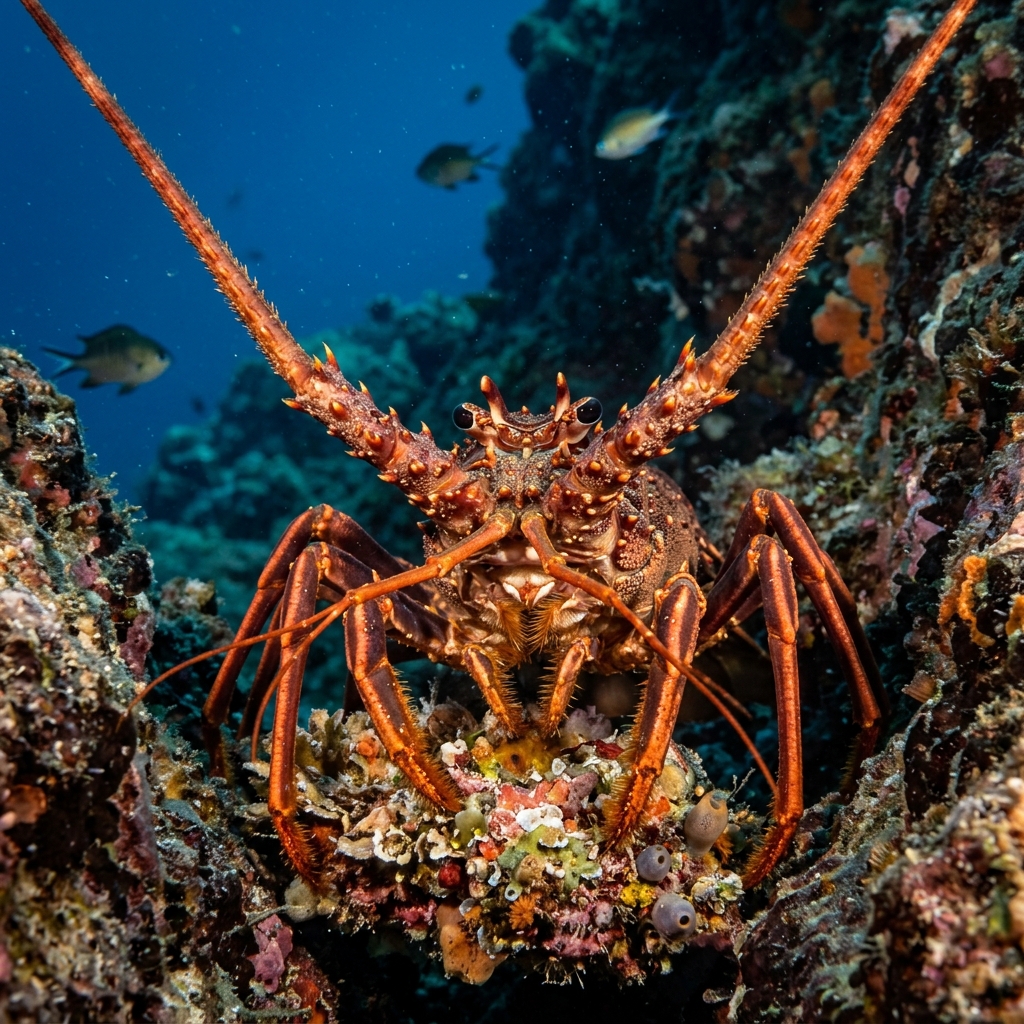
A large, clawless spiny lobster (palinurid) with a heavily spined, reddish-brown to brick-orange carapace and long, whip-like antennae that extend well beyond its body. Look for the two prominent spines at the front of the head and the pale cream spots scattered across the carapace and tail segments, which are the clearest field marks underwater. Females show a noticeably wider, fan-shaped tail and small feathery appendages on the underside of the abdomen when viewed from below.
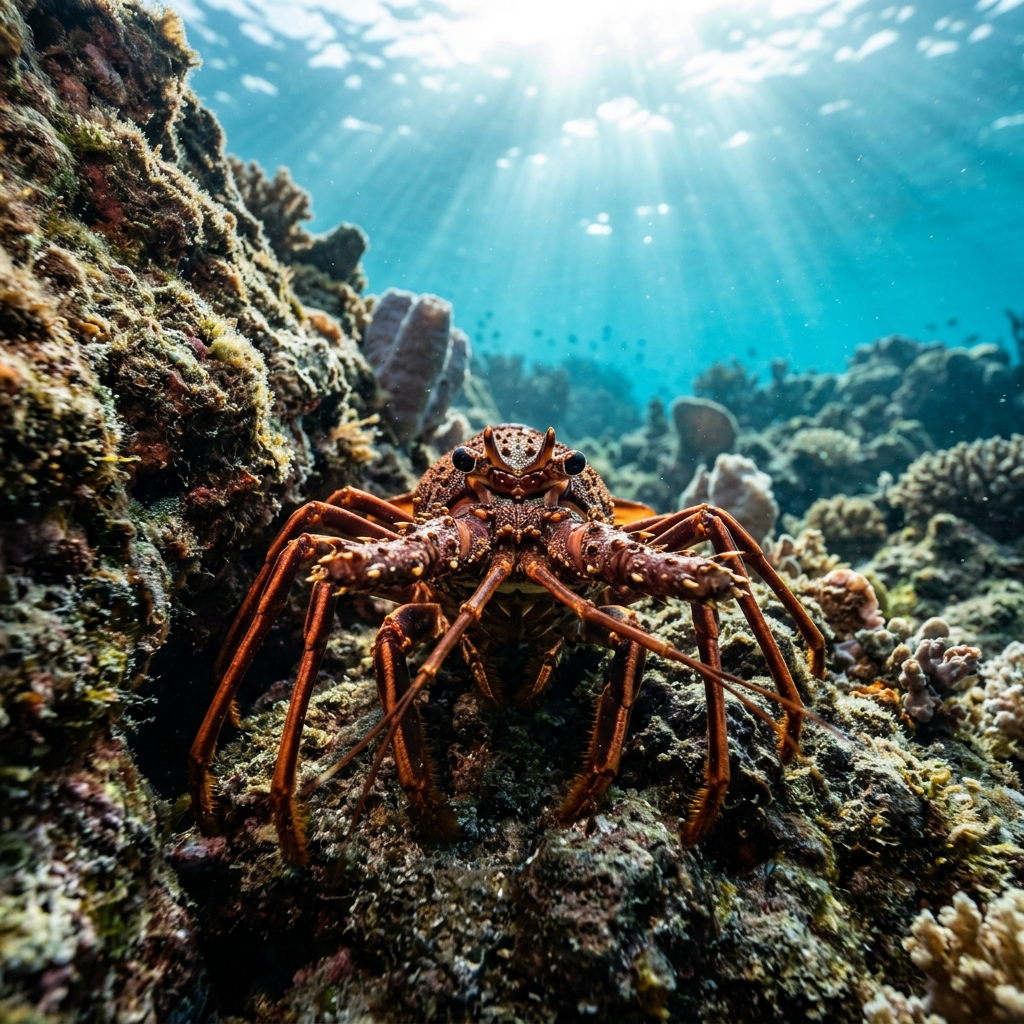
Expect to find western rock lobsters tucked into reef crevices, under ledges, or wedged between boulders, typically facing outward with antennae extended. They are most active after dark and are much more conspicuous on night dives, when they emerge to forage across the reef. When approached, they tend to back slowly into cover rather than bolt, giving a patient diver a decent look.
Each year, juvenile western rock lobsters perform one of the most remarkable migrations in the crustacean world, travelling hundreds of kilometres from offshore nursery areas back to coastal reefs in large, coordinated groups called 'queues', marching in single file across the seabed.
Sightings in the Southern Hemisphere concentrate from December through March, which aligns with the austral summer and the warmer end of the observed temperature range of around 20 to 23.5°C along Western Australian reefs.
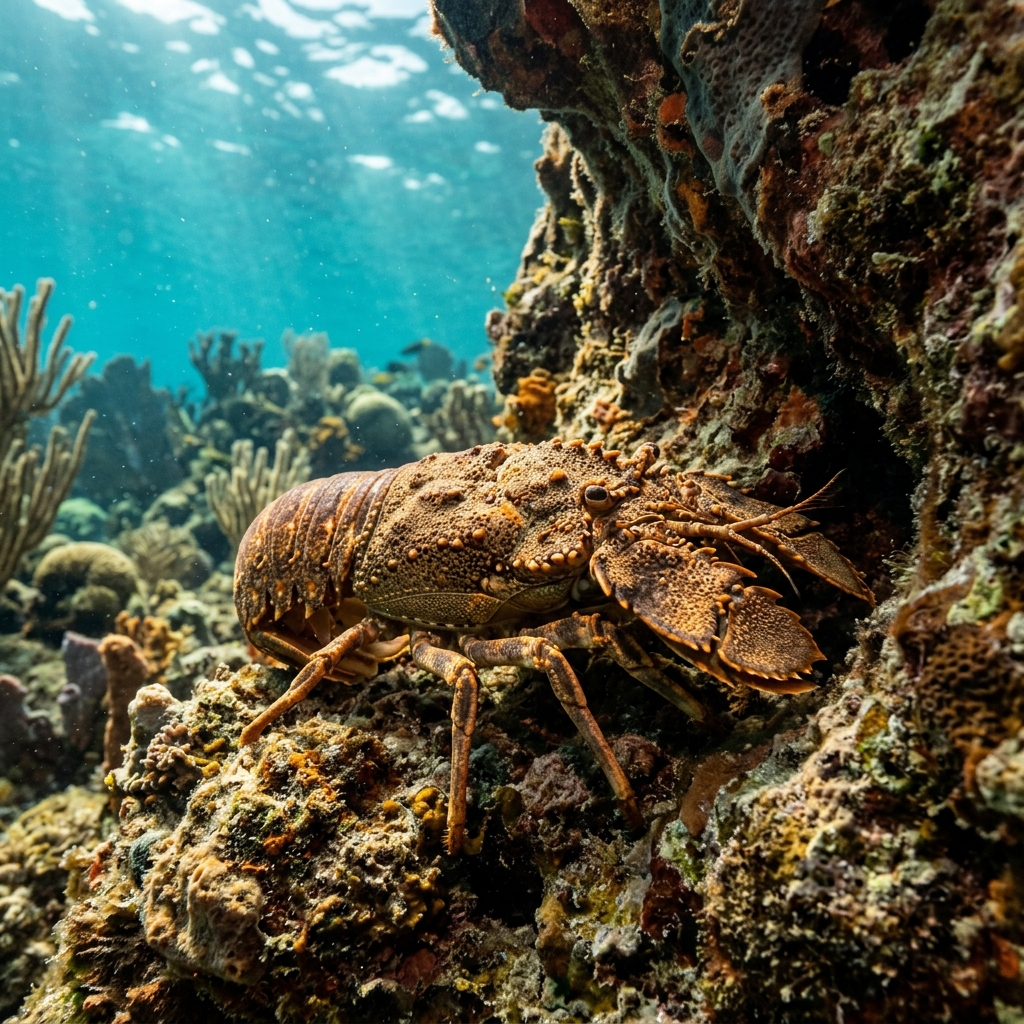
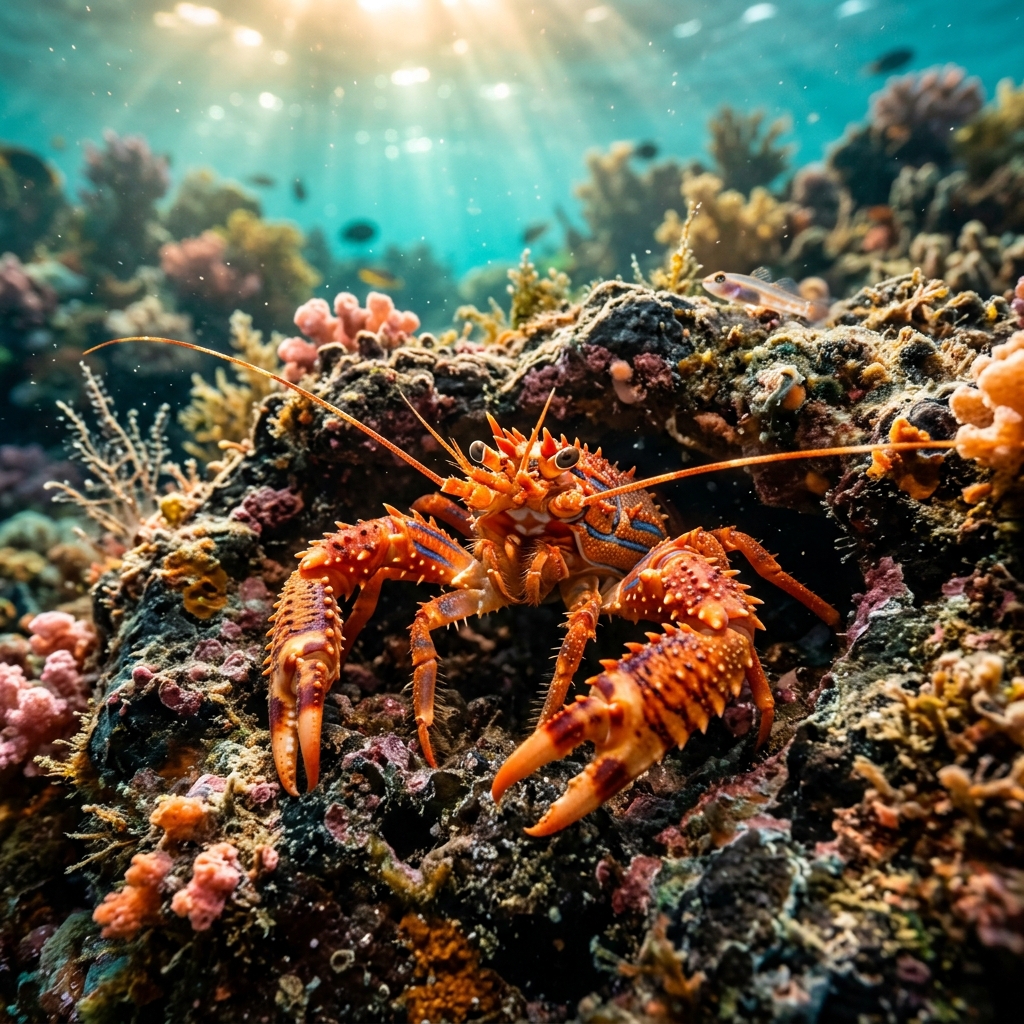
Reef neighbours a diver could mistake it for. Use the identification notes above to tell them apart.
All logged sightings come from Australia, with every site concentrated in Western Australia. This is effectively a WA endemic, so if you want to dive with it, Western Australia is your only reliable destination.
Mapping where Western Rock Lobster is logged…
Western Rock Lobster is found exclusively in Australian waters, with all known dive sites concentrated in Western Australia. It is an endemic species to this region, so WA reefs are your only option for encountering one in the water.
Diver sightings concentrate between December and March, the austral summer months, along Western Australian reefs. Water temperatures in the observed sighting range sit between roughly 20 and 23.5°C, so look for these conditions when planning your dive.
Key marks are the reddish-brown spiny carapace scattered with pale cream spots, very long whip-like antennae, and the complete absence of claws. The two large spines at the front of the head are a reliable close-up feature. Females also show a noticeably wider tail fan than males of the same size.
Adults can reach a carapace (body shell) length of around 15 cm, making the whole animal with tail and antennae appear quite imposing on the reef. Commercially fished individuals are typically smaller, so fully grown animals are a rewarding sight for divers.
Juveniles migrate from offshore nursery grounds back to coastal reefs in coordinated single-file processions called queues, covering hundreds of kilometres. This group-marching behaviour is thought to help them navigate using the Earth's magnetic field, making it one of the more remarkable feats in invertebrate biology.
Site and sighting data is aggregated from diver logs, iNaturalist and GBIF. For taxonomy and conservation status:
Caribbean Spiny Lobster
2,209 sites