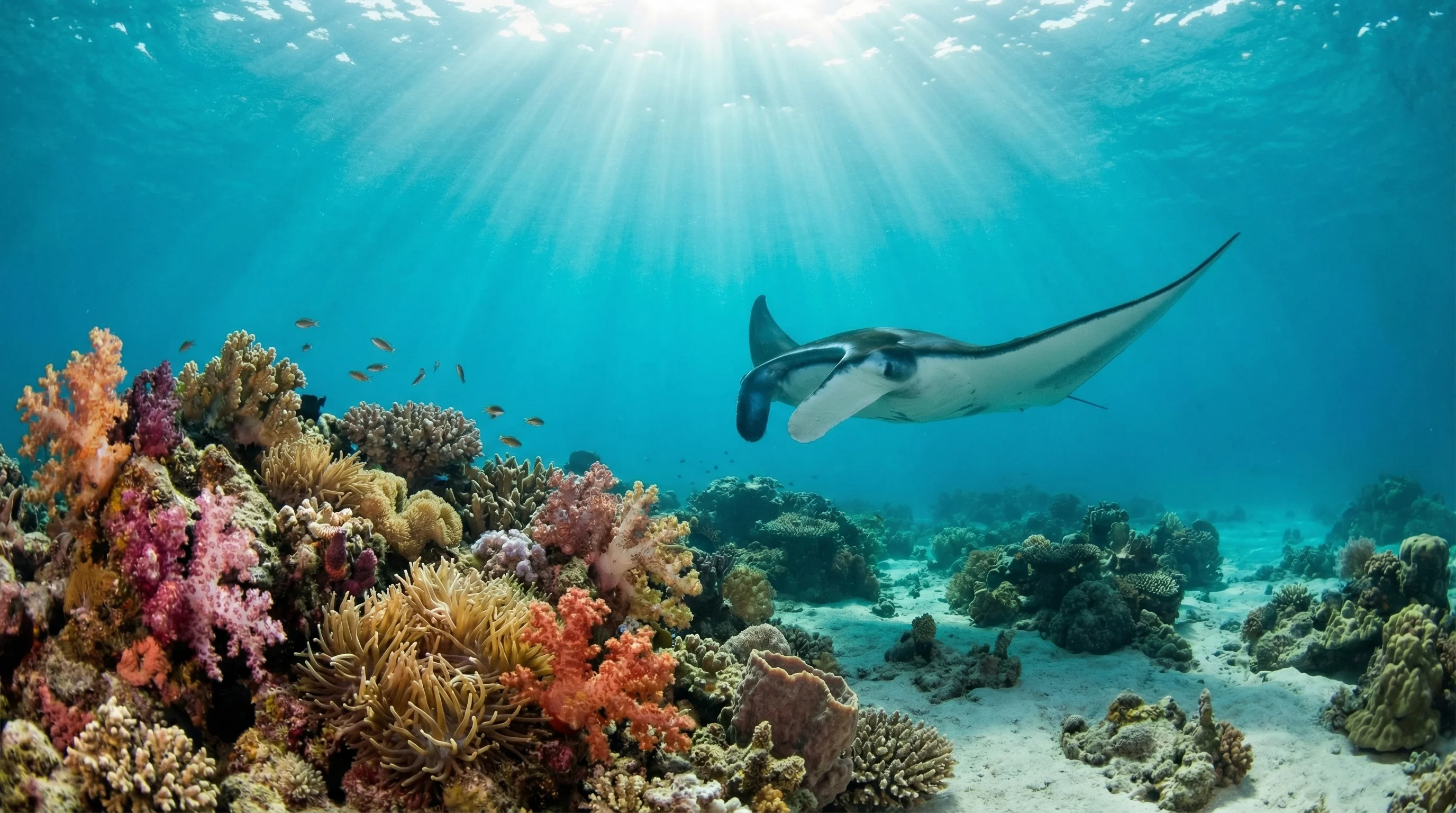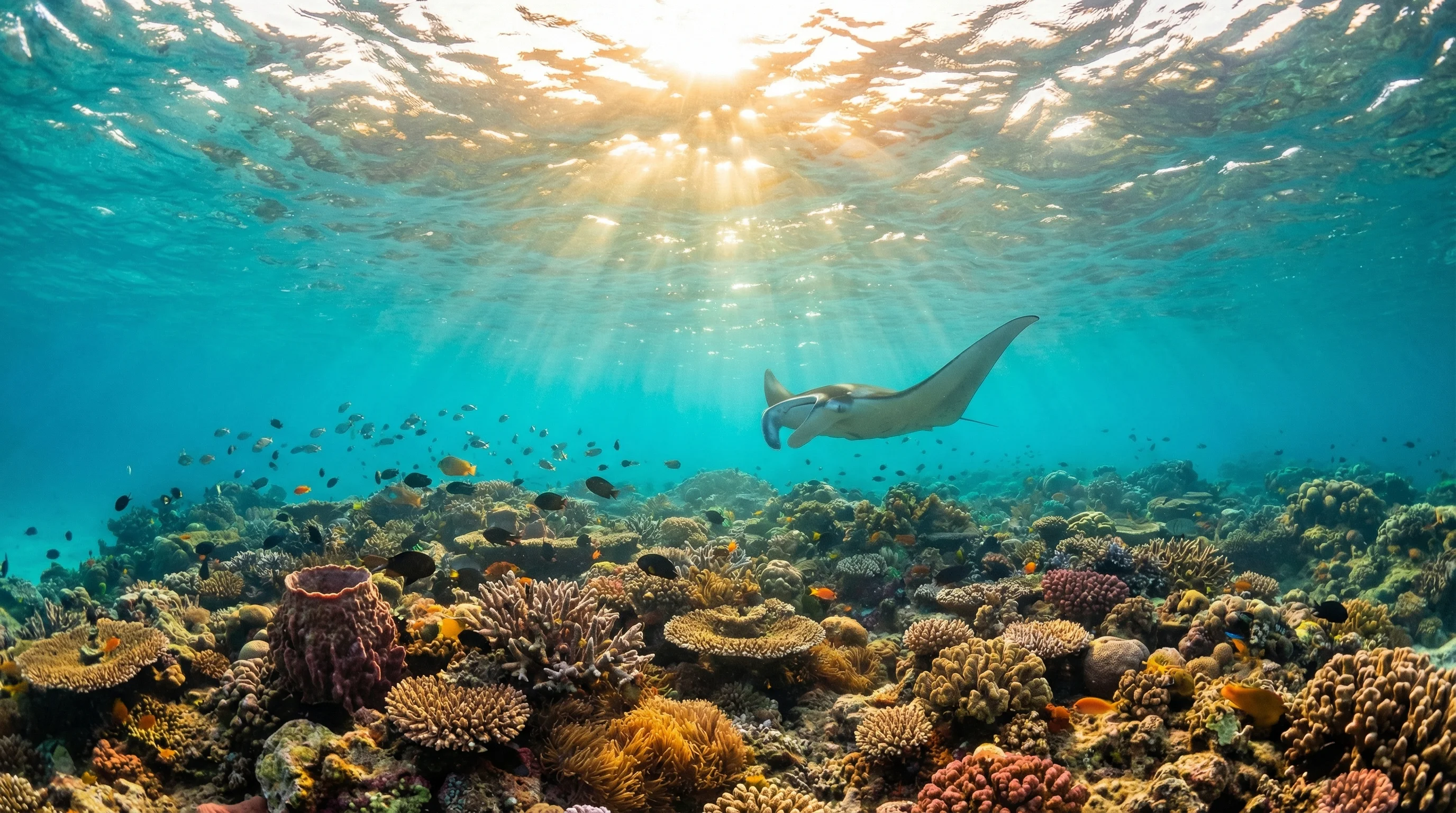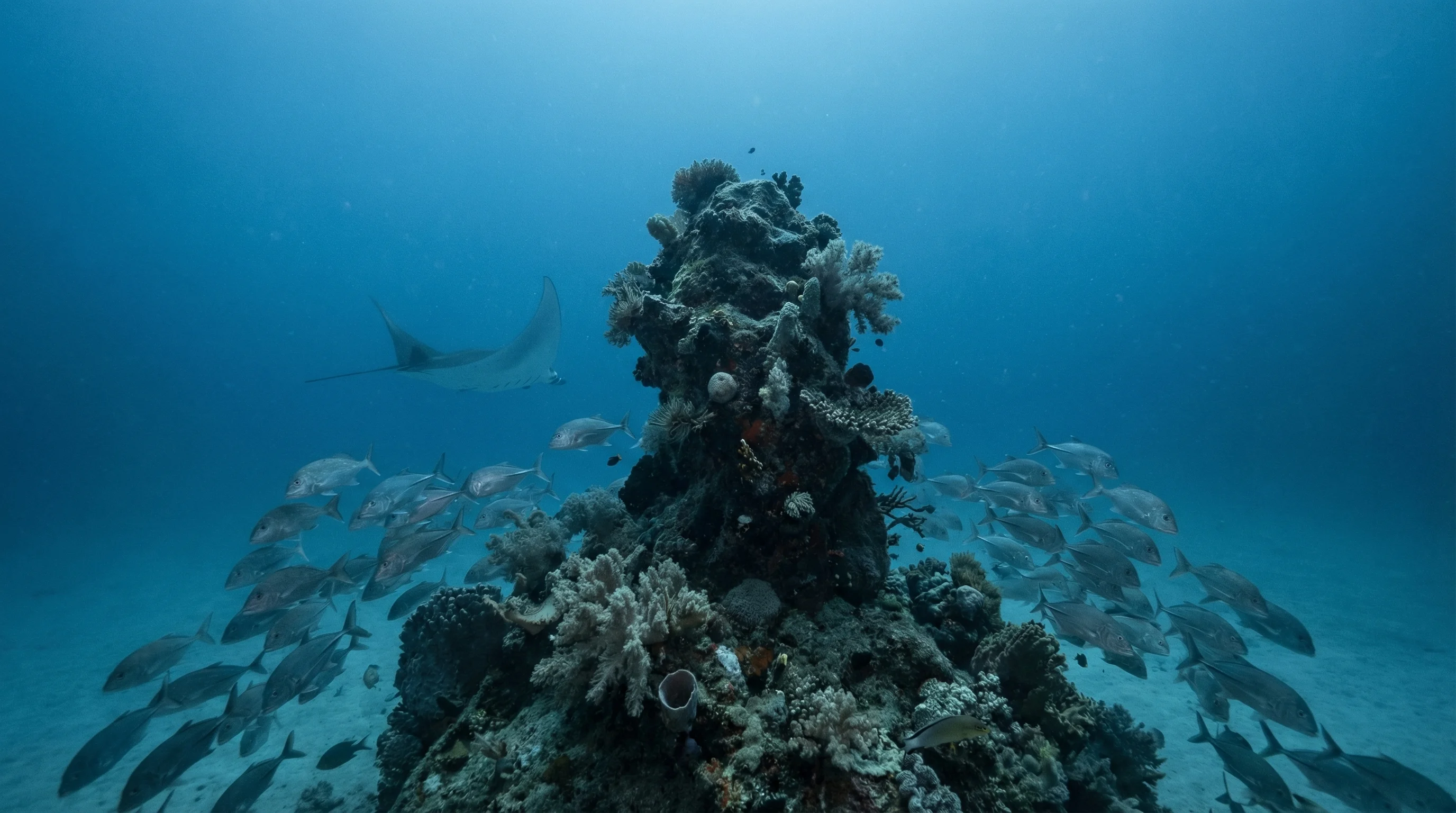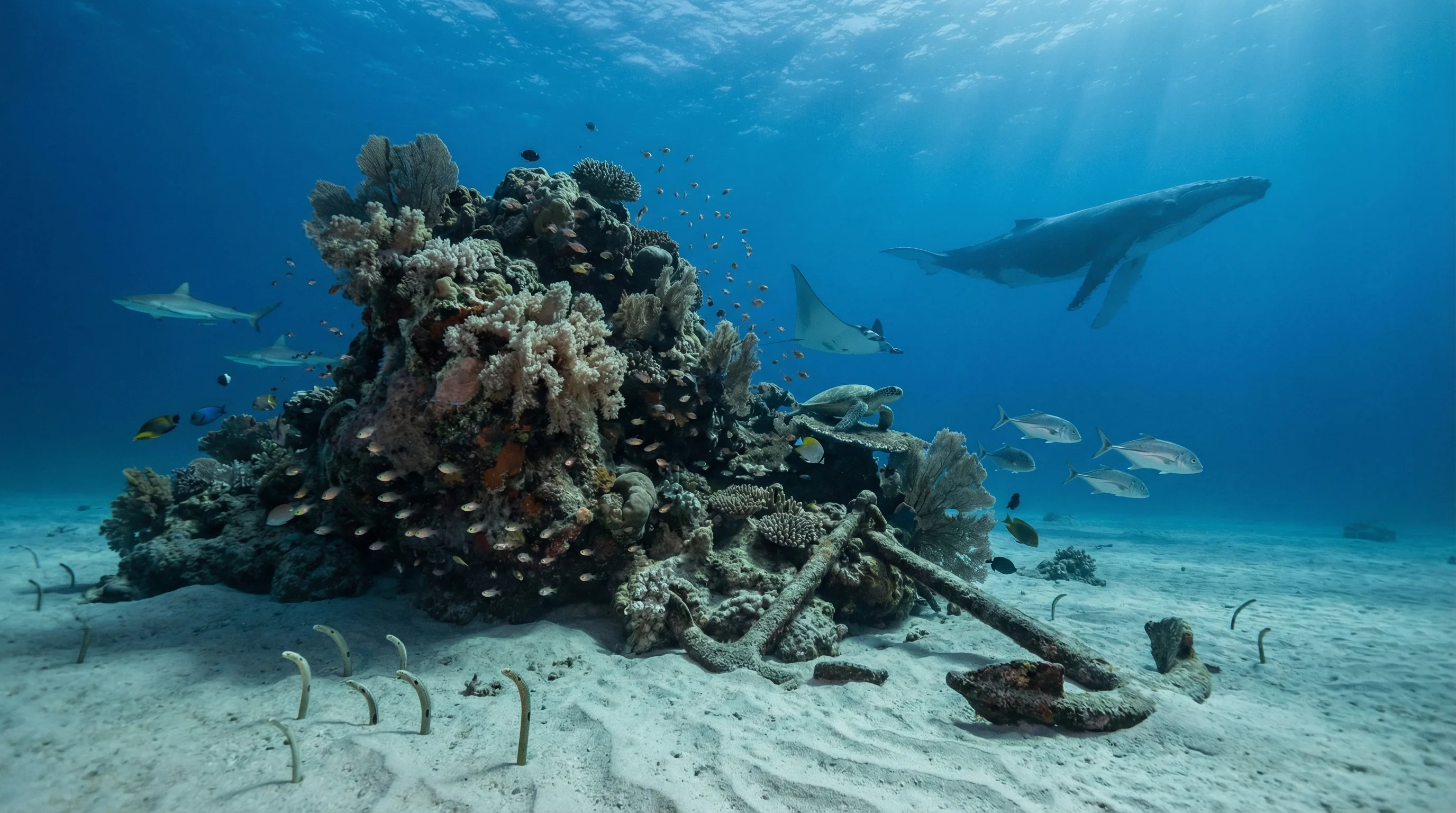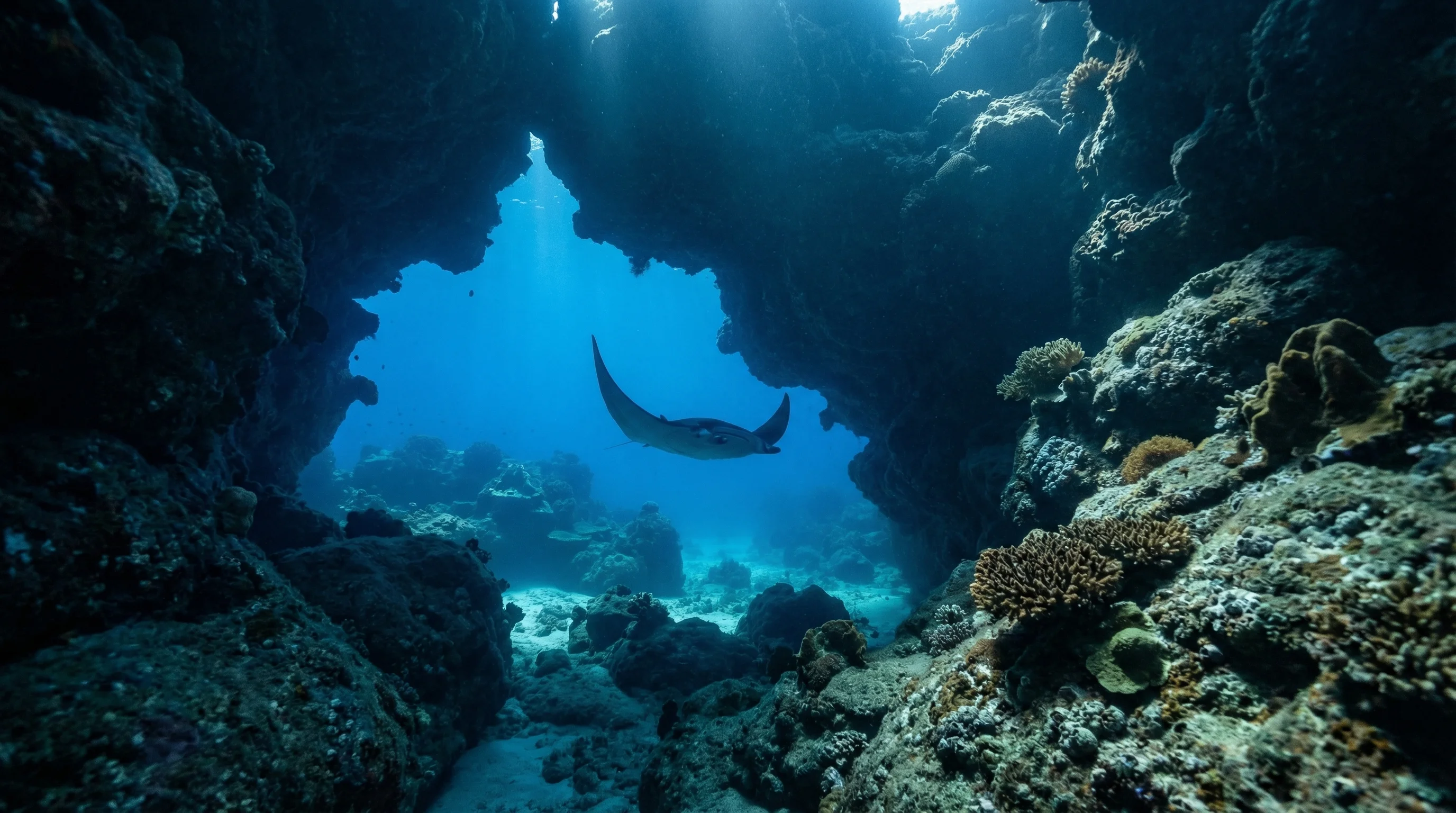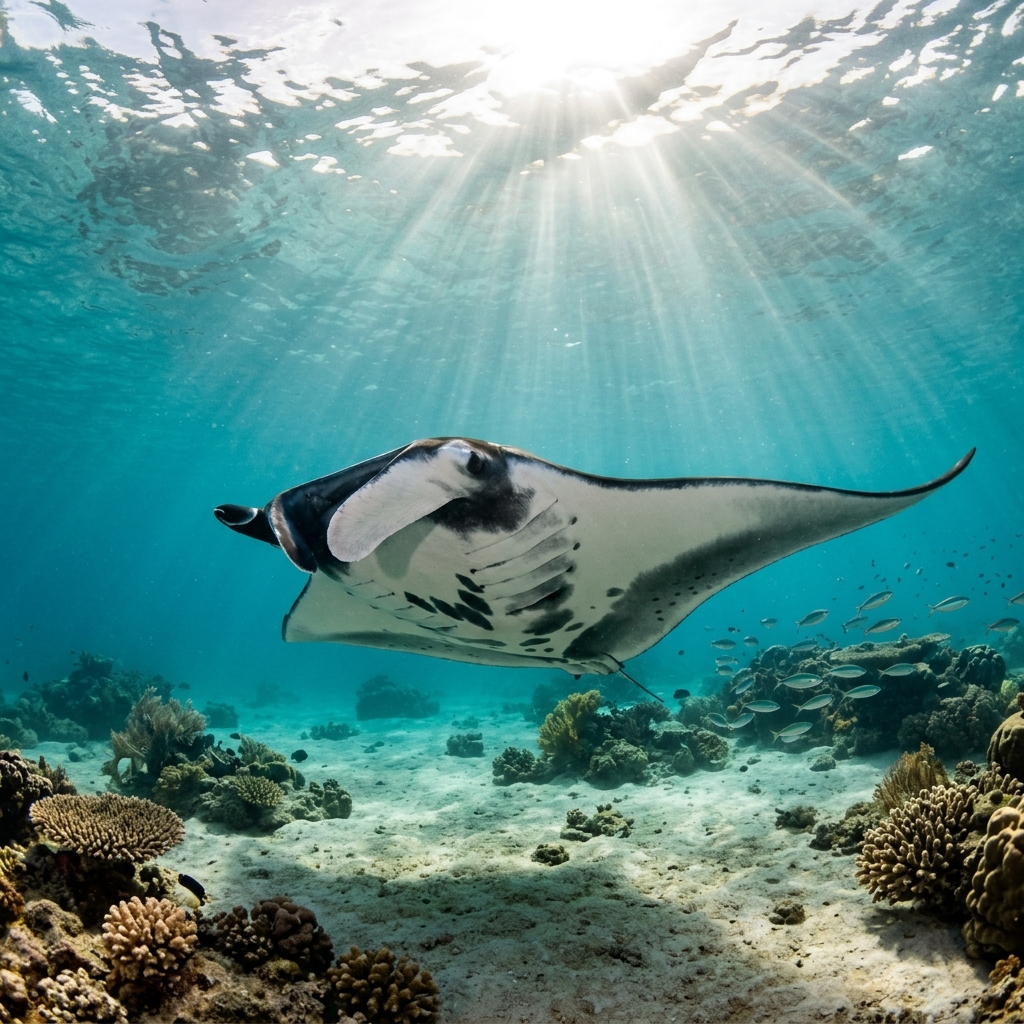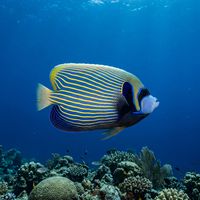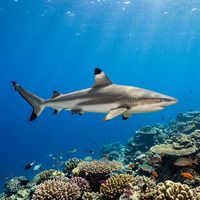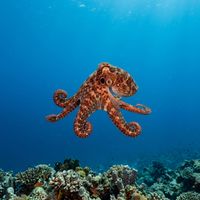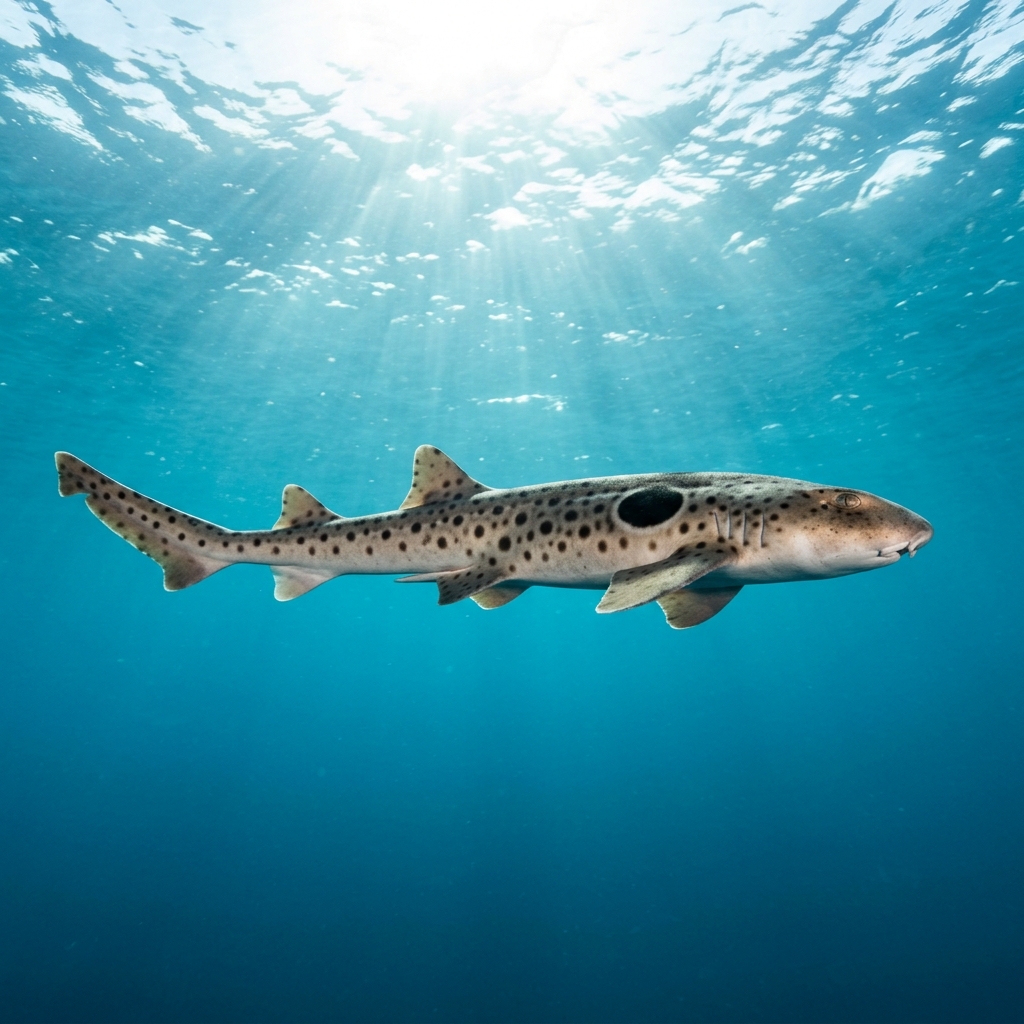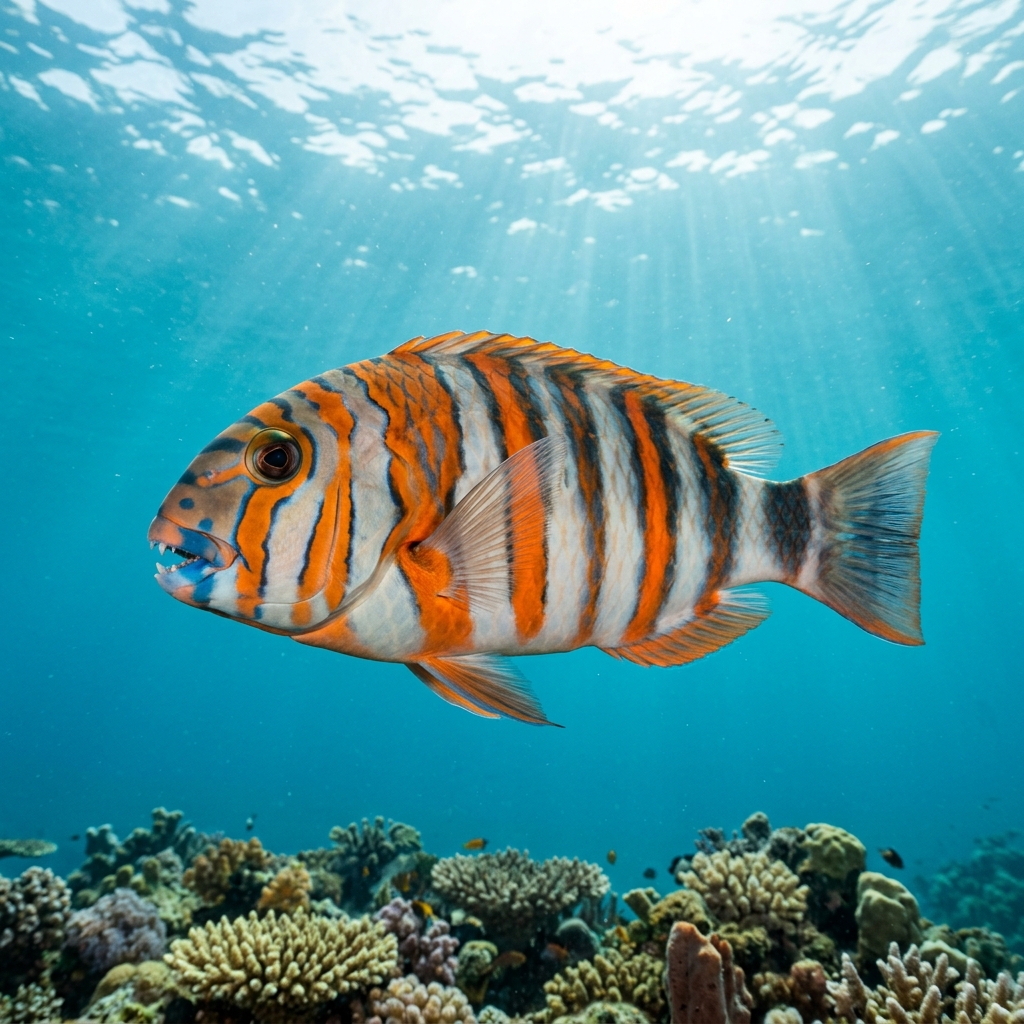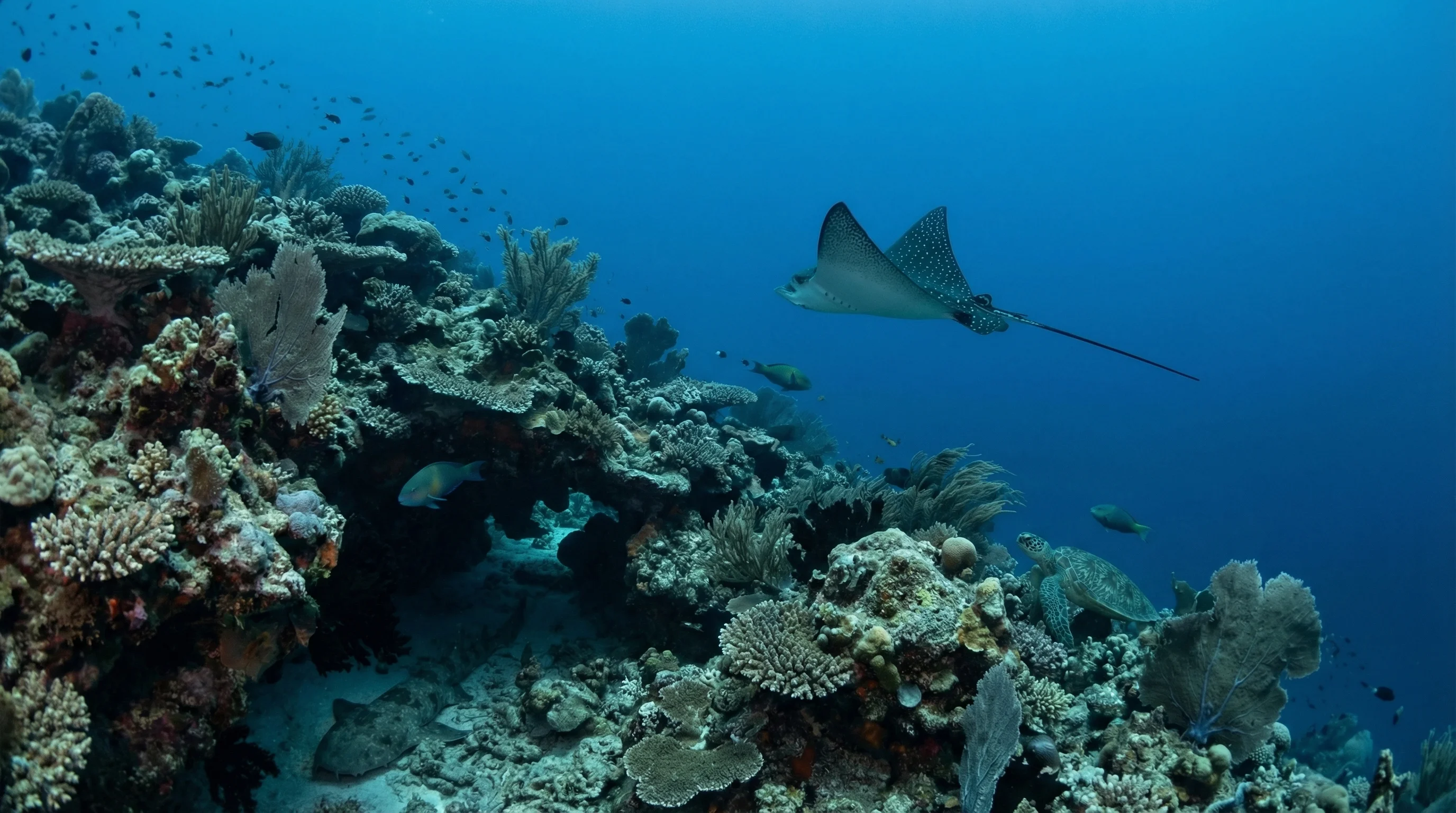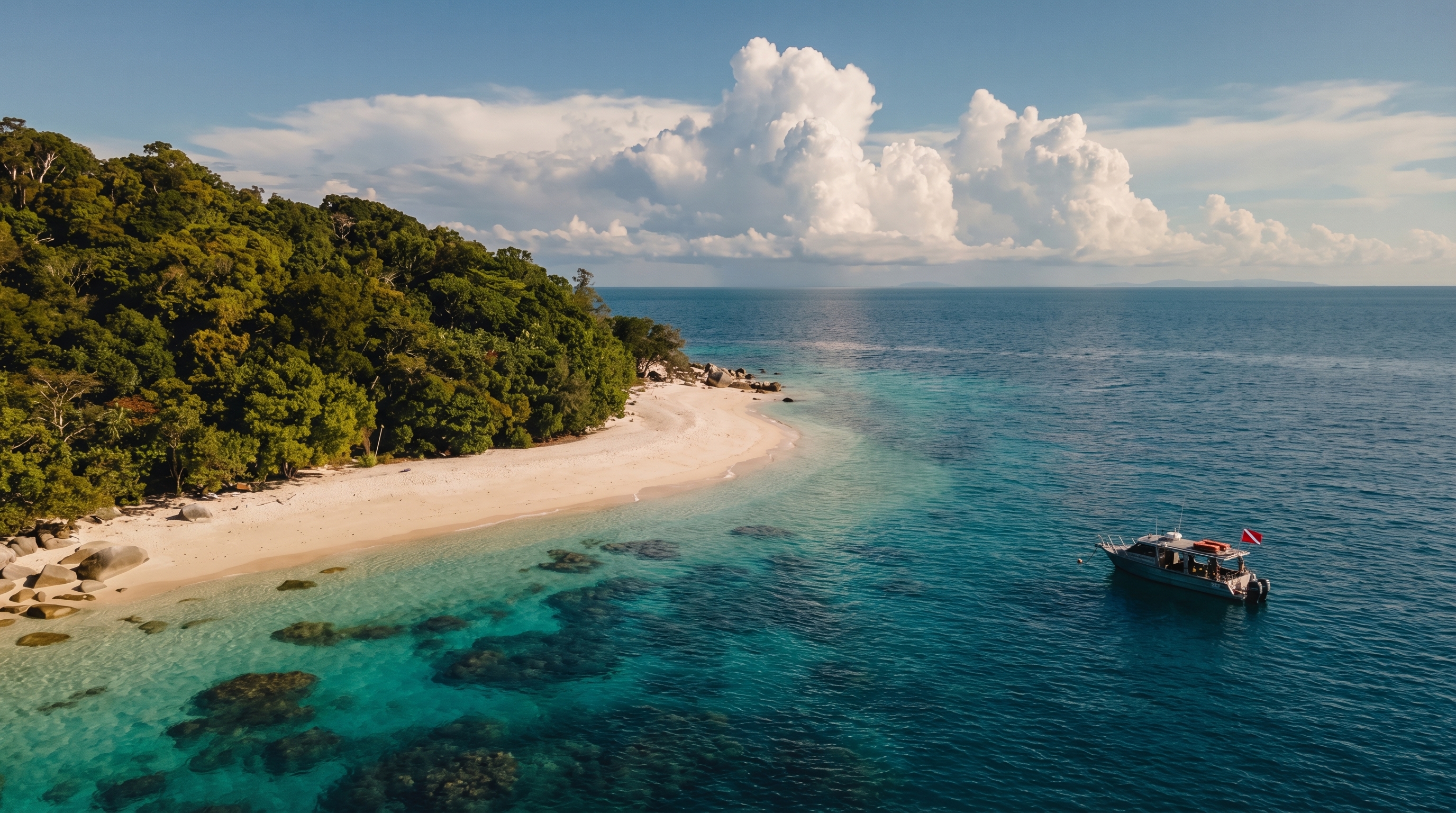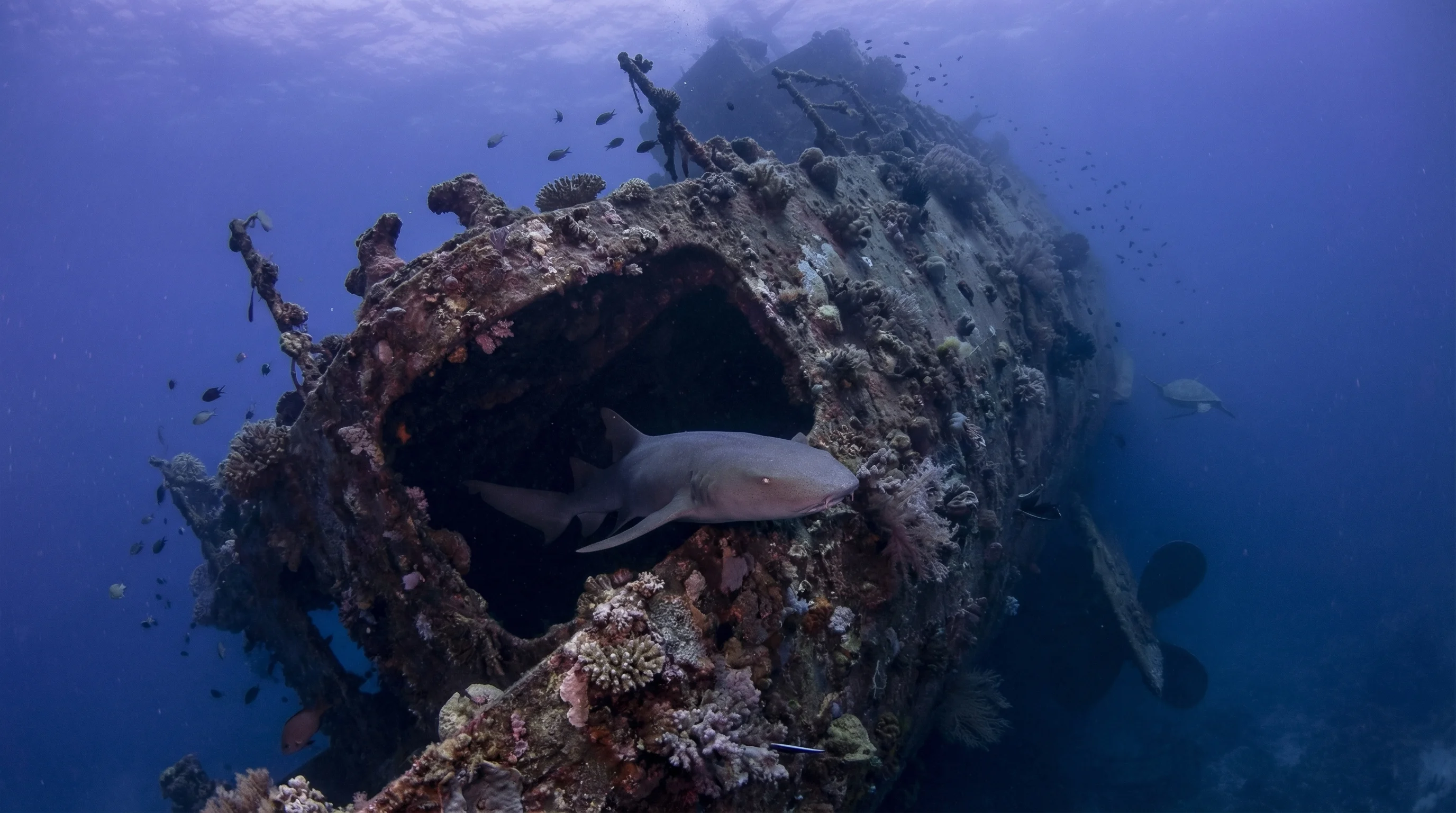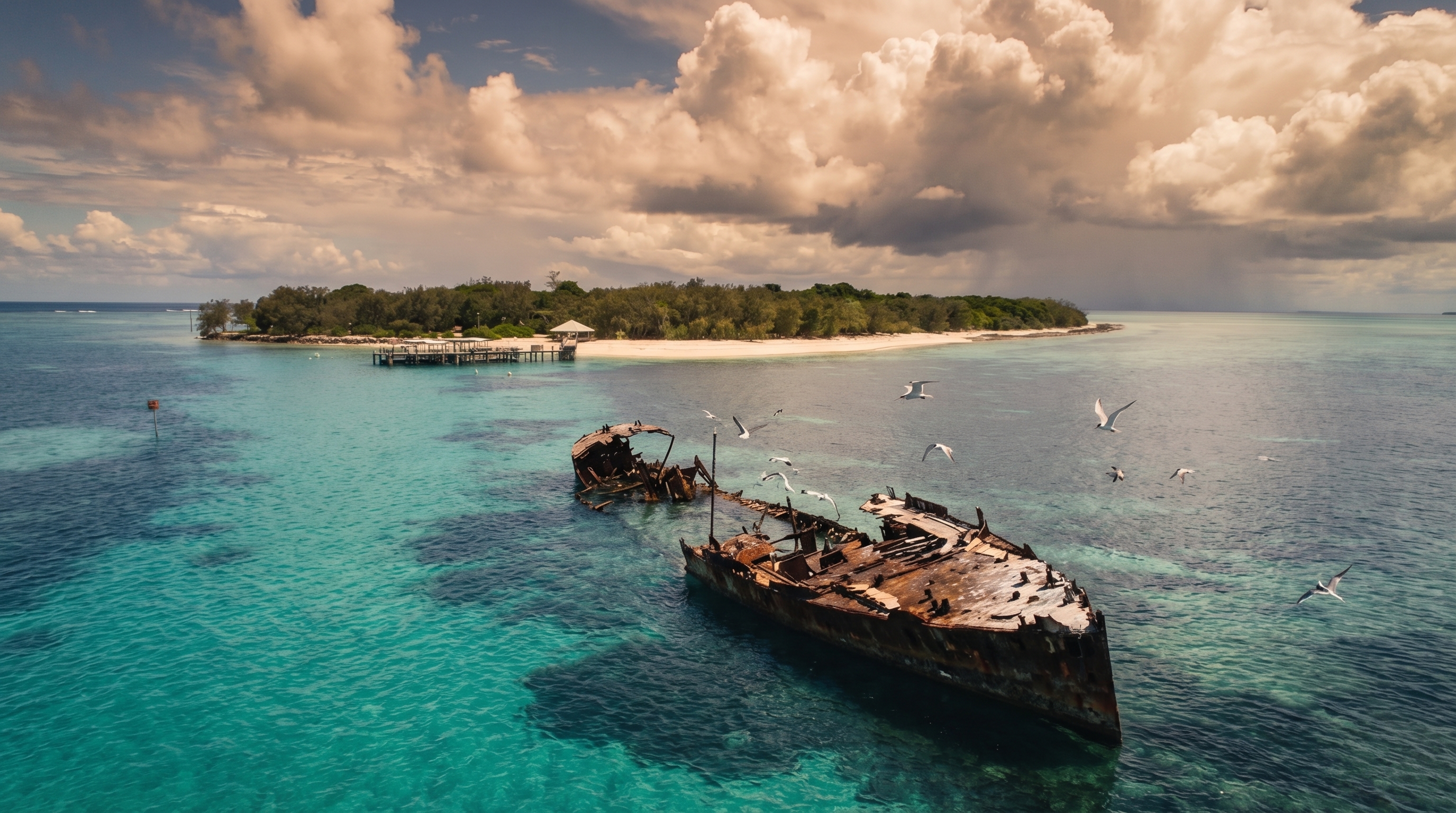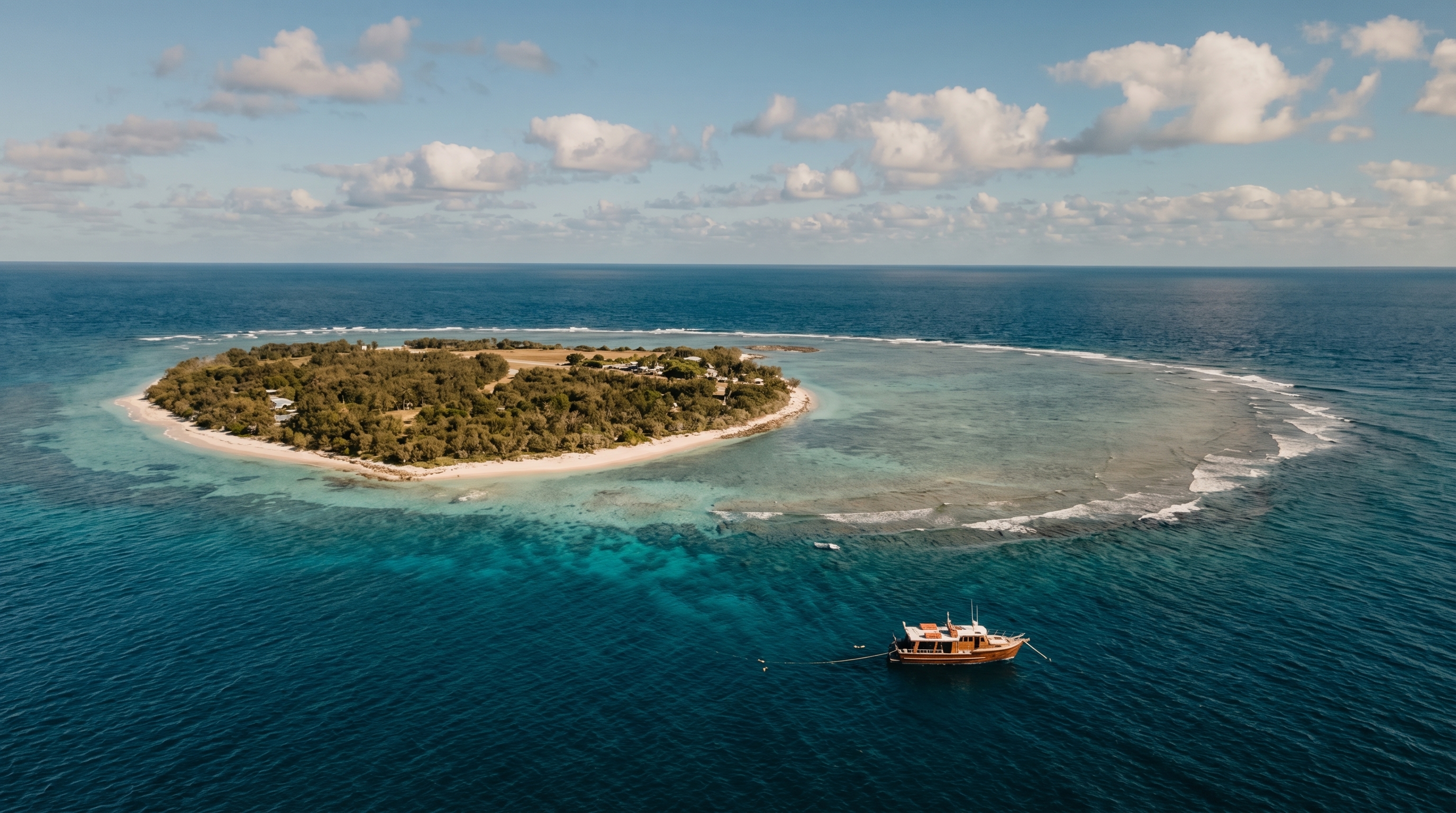
Lady Elliot Island sits at the southern tip of the Great Barrier Reef, reached only by air. The island is best known as a manta ray destination, with cleaning stations drawing mantas reliably from late autumn through mid-winter. Sites range from the shallow Coral Gardens, where snorkellers and beginners work at a few metres, to the boat-access cave dive at Blow Hole and the deeper pinnacles of Lighthouse Bommie. Visibility across the sites runs high, frequently between twenty and forty metres. Green sea turtles, whitetip and blacktip reef sharks, bluespotted fantail rays, and bumphead parrotfish are among the regularly recorded species. The island sits within a fully protected Green Zone, and diving is managed by a single on-site resort operator.
Monthly water temperature across Lady Elliot Island's sites, from satellite sea-surface data corrected for depth. The band shows the site-to-site spread.
Water temperatures drop to their coolest from mid-winter through early spring, which coincides with the peak manta season and typically the clearest conditions. Warmer water returns through the summer months, when turtle nesting activity increases on the island. Diving is possible year-round, but the May-to-September window offers the most settled weather.
1 operator
Water temperature around Lady Elliot Island ranges from about 22°C in July to 28°C in February, based on satellite sea-temperature data for its dive sites.
In the warm season (about 28°C) a rash guard or 3mm shorty is comfortable in Lady Elliot Island; in the coldest months (about 22°C) step up to a 3mm full suit.
Fin maps 5 sites in Lady Elliot Island (5 scuba diving sites and 1 snorkelling spots, with some suited to both).
Across Lady Elliot Island's dive sites, May, June, July, August and September are most often reported as the best months to visit.