Nebrius ferrugineus
Reef sharks that snooze in caves by day: find tawny nurse sharks year-round in the Maldives, Queensland and the Philippines.
Safety warning
Bites are rare and almost always the result of a diver grabbing the tail or cornering one in a cave, since it's slow and non-aggressive by nature. Give it space to retreat and never hand-feed or tail-tug for a photo; a startled nurse shark has a strong, sudden bite.
If you're bitten
BiteGeneral first-aid guidance, not a substitute for professional medical care. In an emergency, call your local emergency number.
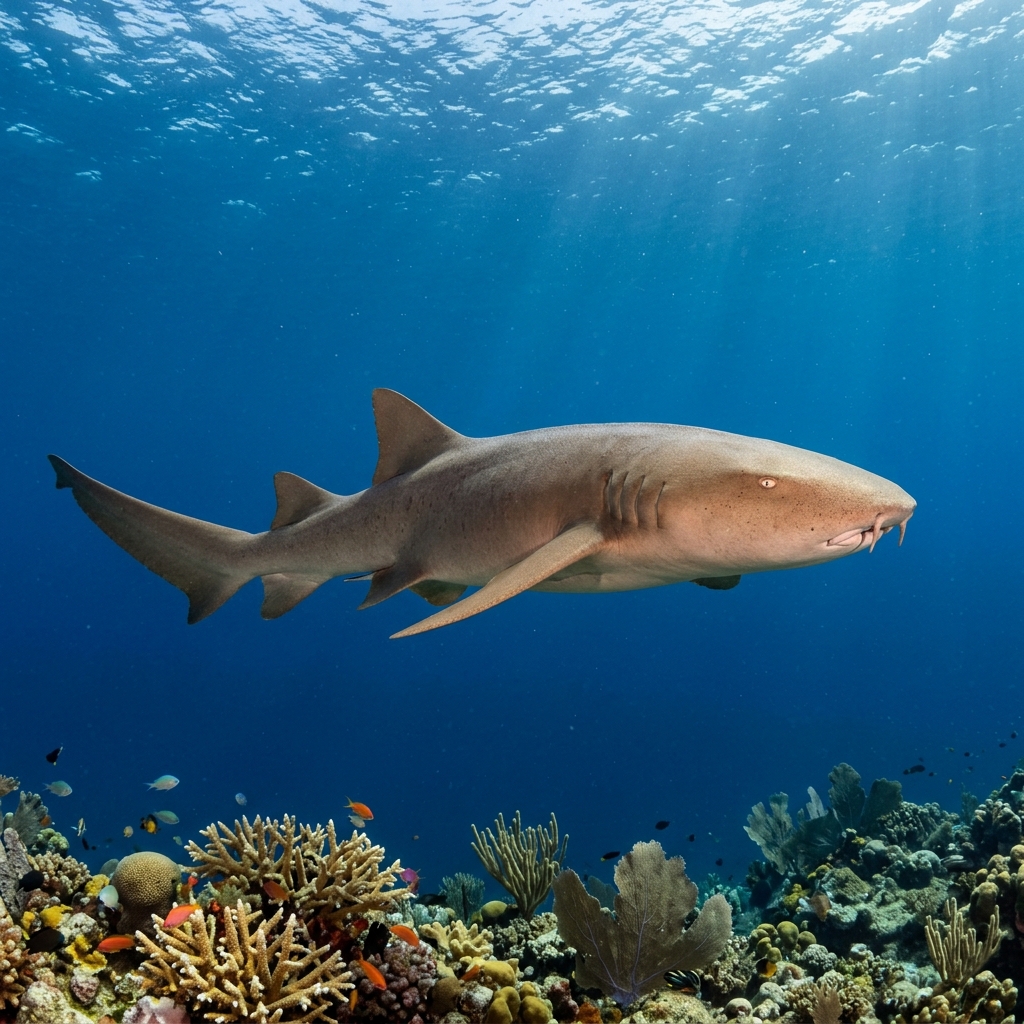
Thick, smooth-skinned body in plain grey-brown to yellowish-tan, usually seen motionless on sand or wedged under a ledge rather than swimming in open water. Look for the small barbels (whisker-like feelers) hanging from the nostrils and a long, low tail fin that makes up a good chunk of the total 2.2 metre length. The mouth sits well forward and slightly underslung, built for suction rather than the gaping jaws of a wobbegong.
Expect to find it parked under a coral ledge or piled up with other nurse sharks in a cave, motionless and easy to swim straight past if you're not looking low on the reef. It's a night-active hunter that spends daylight hours resting, so daytime dives mostly mean spotting a still body rather than watching it feed. Generally unbothered by divers at a respectful distance, though it will move off if crowded or touched.
Feeds by clamping its mouth onto crevices and sucking out hidden prey with enough force to pull octopus and small reef fish from their hiding spots, a technique that relies on suction rather than speed or teeth.
Sightings show no clear season, and with a comfortable range of roughly 22 to 29 C it stays on tropical reefs year-round rather than migrating with temperature.
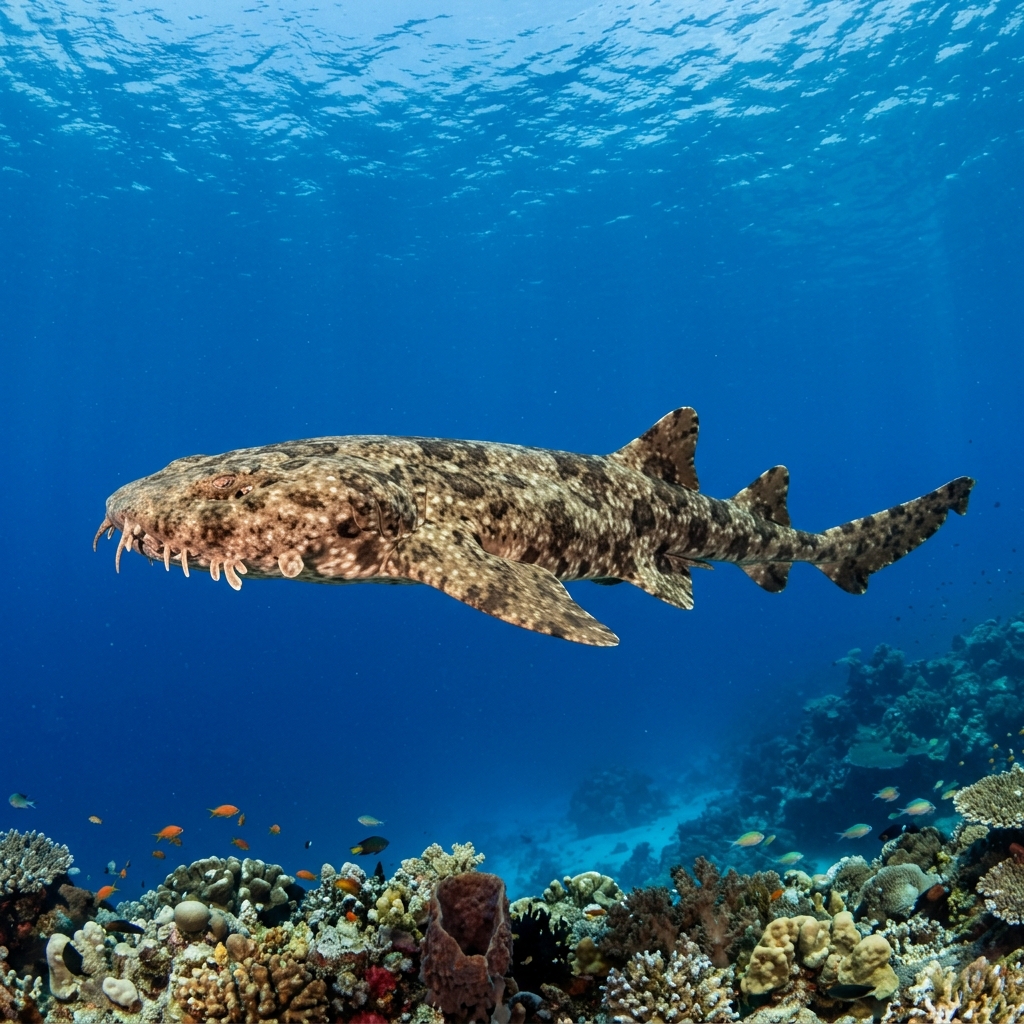
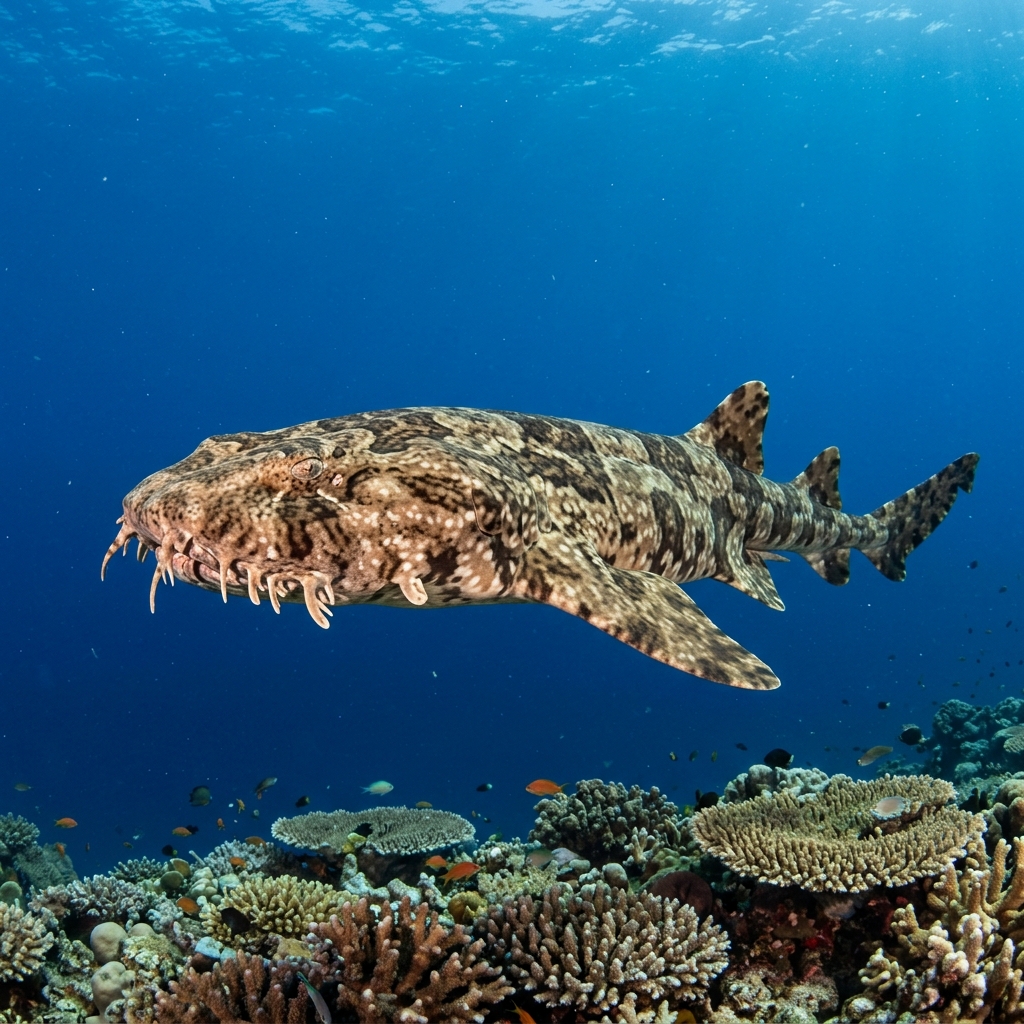
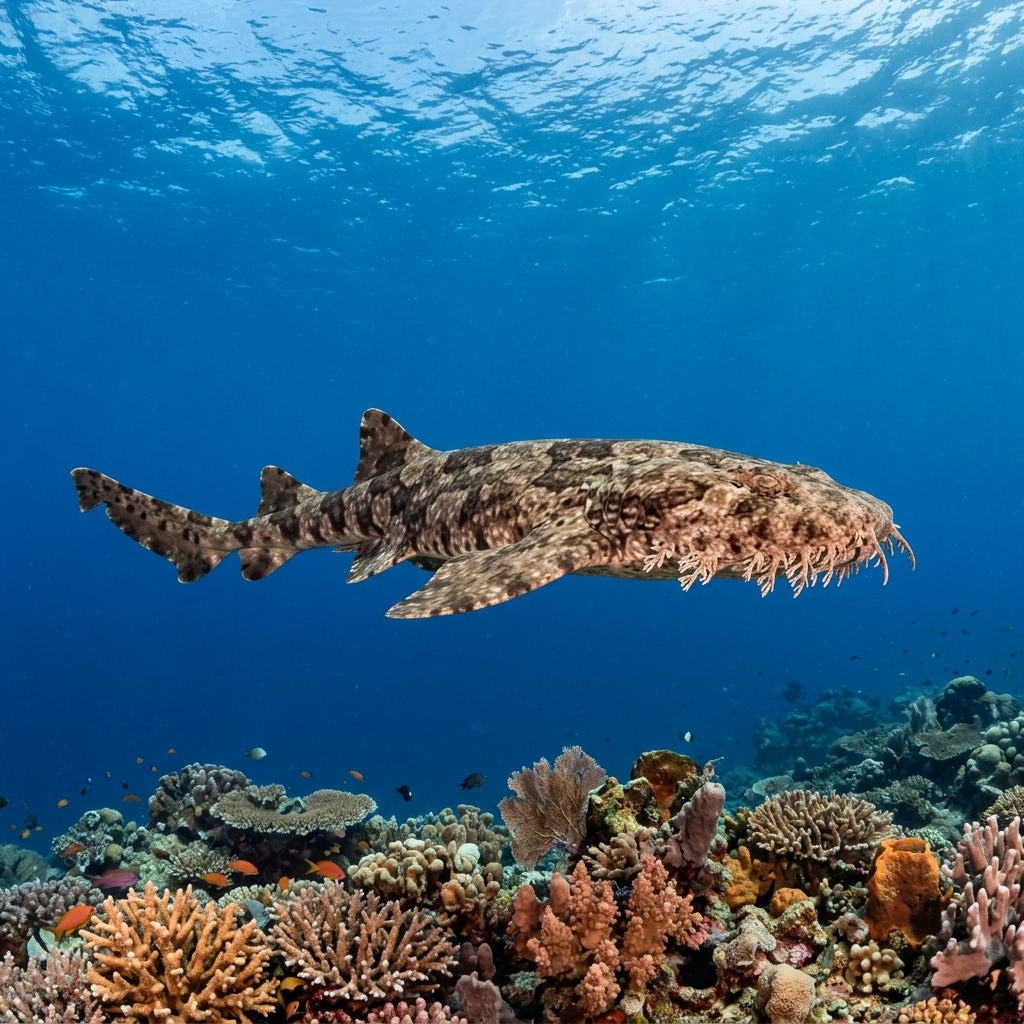
Reef neighbours a diver could mistake it for. Use the identification notes above to tell them apart.
Most reliably found across the Maldives, in both the Northern and Southern Atolls, and widely reported through Queensland and Western Australia. It also turns up consistently on reefs in the Philippines (Luzon and Palawan), Indonesia's Sulawesi, and the Egyptian Red Sea.
Mapping where Tawny Nurse Shark is logged…
The Maldives is the most consistent spot, especially the Northern and Southern Atolls, alongside Queensland and Western Australia. Reefs in the Philippines, Indonesia's Sulawesi and the Egyptian Red Sea also produce regular sightings.
There's no strong seasonal pattern, they're logged year-round on warm reefs between about 22 and 29 C. Any month works on a trip to the Maldives, Queensland or the Philippines.
They're placid and slow-moving, and incidents are rare, but they can bite hard if grabbed or cornered. Keep hands off and give resting sharks room to swim away.
Look for a plain grey-brown body around 2 metres long, resting still on sand or under a ledge, with small barbels near the nostrils and a long trailing tail fin. It lacks the fringed, mottled skin of a wobbegong.
Typically around 2.2 metres, making them one of the larger bottom-resting sharks divers encounter on tropical reefs.
They hunt at night, using powerful mouth suction to pull octopus, crustaceans and small fish straight out of reef crevices rather than chasing prey in open water.
Site and sighting data is aggregated from diver logs, iNaturalist and GBIF. For taxonomy and conservation status:
Gulf Wobbegong
199 sites