Hemiscyllium ocellatum
Spot epaulette sharks in Queensland, Australia from September to January in warm 24-28 °C water. Here's where divers actually find them.
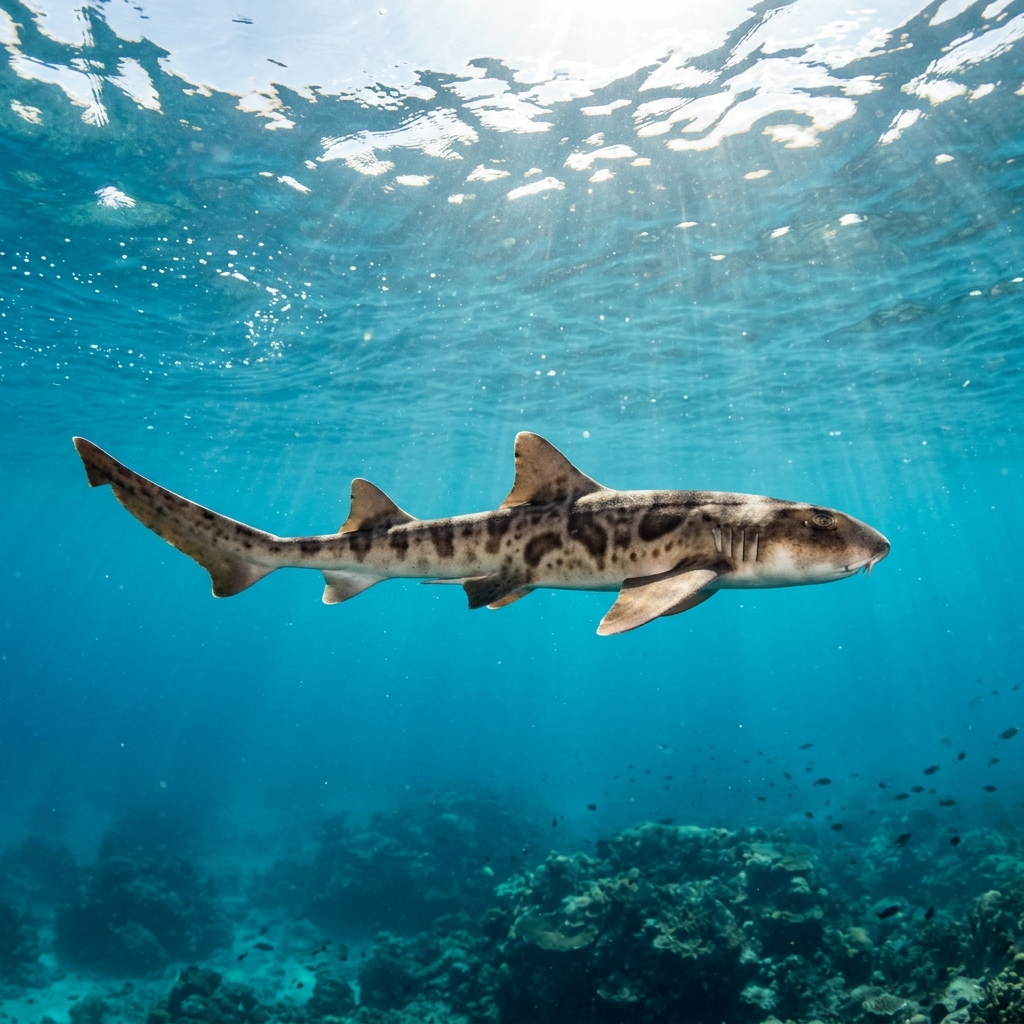
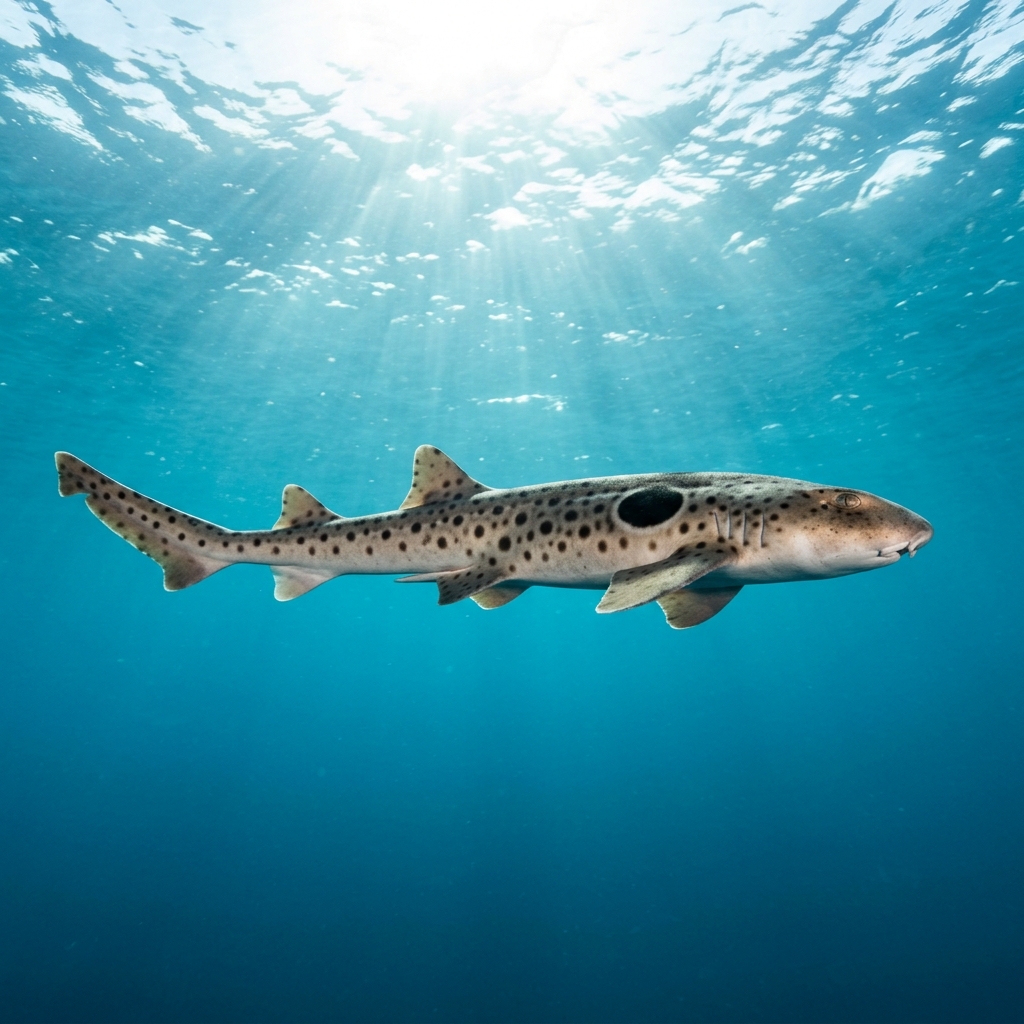
A slender, small shark that moves across the reef using its pectoral and pelvic fins almost like legs. The giveaway mark is a large, black, white-ringed spot (the 'epaulette') sitting just behind each pectoral fin, impossible to miss once you know it. The body is pale beige with scattered small dark spots. You will almost always find it close to the bottom, crawling rather than swimming.
Epaulette sharks are nocturnal hunters that spend the day wedged under coral ledges or lying motionless on sandy patches; night dives or twilight dives dramatically improve your chances of seeing one active. They are famous for 'walking' across reef flats using their paired fins, sometimes in water barely deep enough to cover them. They show little concern for divers and will generally continue foraging or resting without bolting.
Epaulette sharks can survive complete oxygen deprivation for up to an hour, a remarkable physiological trick that lets them hunt in tide pools long after the water has become hypoxic, outlasting every fish that could compete with them for prey.
In the Southern Hemisphere, sightings concentrate between September and January, the Austral spring and early summer, so that window is the best time to plan a Queensland trip.
Reef neighbours a diver could mistake it for. Use the identification notes above to tell them apart.
The overwhelming majority of sightings come from Queensland, Australia, making it the place to be for anyone targeting this species. A small number of sites in Papua New Guinea, around Port Moresby, also have records. Outside this region, range-model sites exist but real diver observations are sparse.
Mapping where Epaulette Shark is logged…
Queensland, Australia is far and away the best place, accounting for the vast majority of real diver sightings. A handful of sites around Port Moresby, Papua New Guinea, also have confirmed records. Shallow reef flats and rocky inshore areas are the most productive habitat.
In Queensland and surrounding Australian waters, sightings peak between September and January. Night dives and late-afternoon dives within that window give you the best shot, as the species becomes most active after dark.
Look for the large black spot ringed in white just behind each pectoral fin, that's the 'epaulette' the name refers to and it's unique to this species among Australian reef sharks. The body is pale with small scattered spots, and it moves by crawling rather than swimming, which is a dead giveaway at close range.
Adults typically reach around 90 to 107 centimetres in length. On the reef they look compact and slender, more like a large lizard in the way they move than a conventional shark.
They do not leave the water entirely, but they can use their paired fins to crawl across exposed reef flats and survive in severely low-oxygen conditions for up to an hour. This lets them exploit tidal pools that other predators cannot tolerate, which is one of their most remarkable biological traits.
Site and sighting data is aggregated from diver logs, iNaturalist and GBIF. For taxonomy and conservation status: