Choerodon fasciatus
Spot the Harlequin Tuskfish across Queensland reefs in 22-28 °C water. Learn its bold markings and where divers actually log sightings.
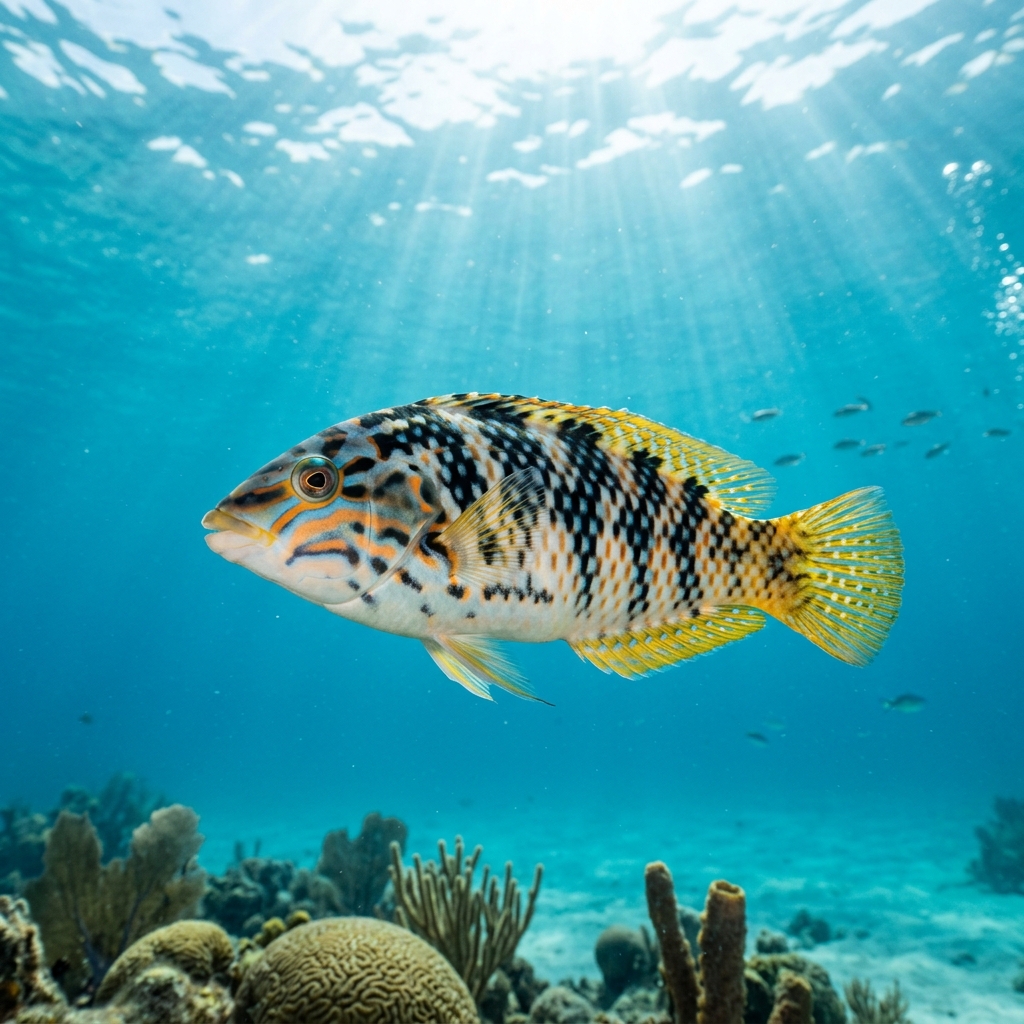
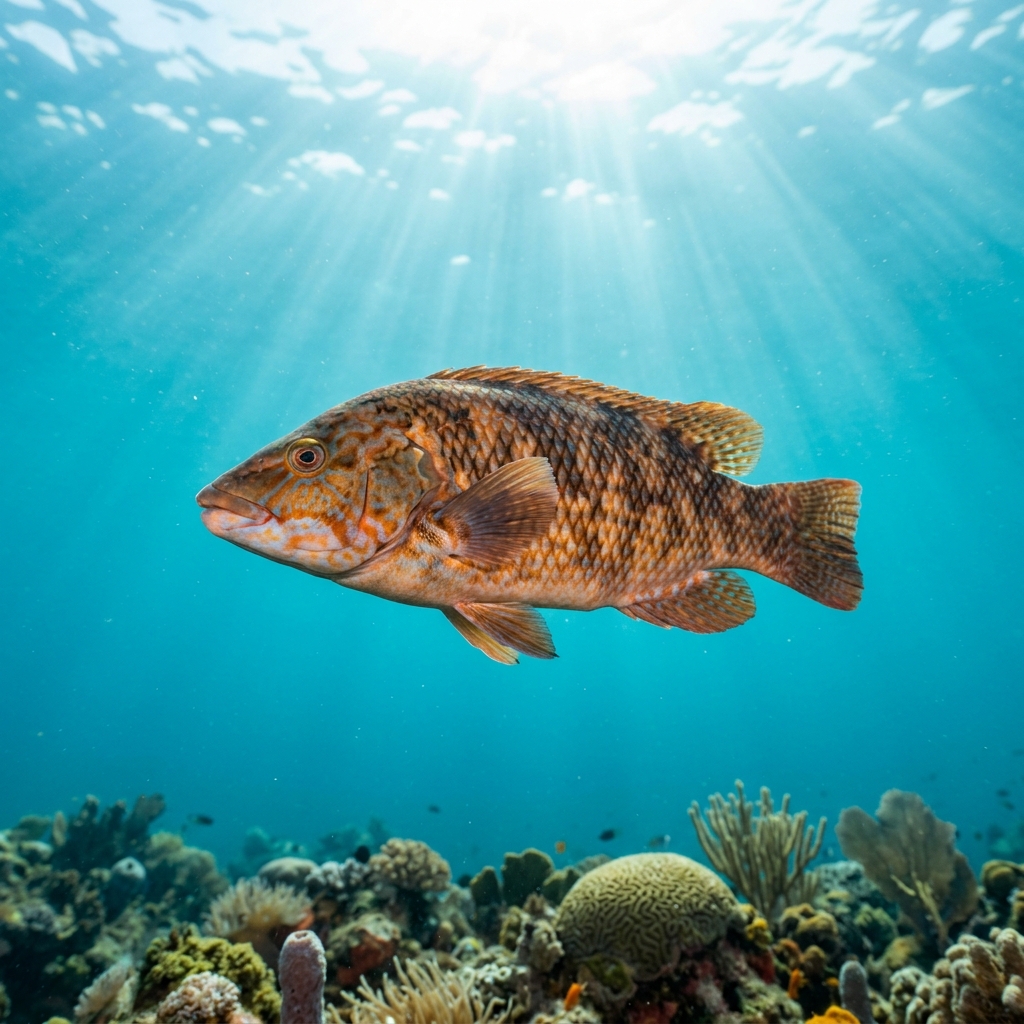
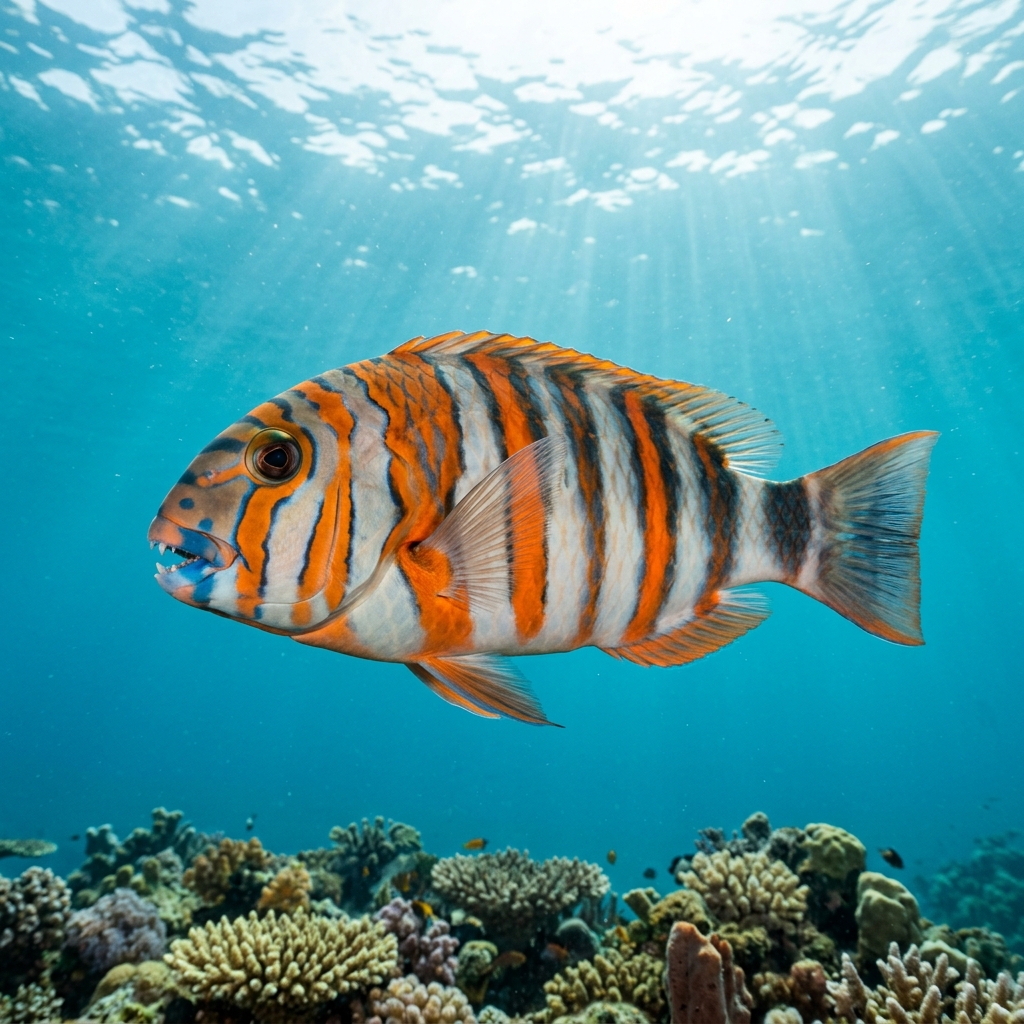
Few reef fish are as instantly readable as this one: broad orange-red vertical bands alternate with white stripes along the body, and the teeth are a startling electric blue, visible even from a few metres away. It is a stocky, thick-lipped wrasse with a rounded head, and at typical encountered sizes it feels substantial in the water rather than dart-like. Juveniles share the same banded pattern but are smaller and slightly more vivid, making age classes easier to separate than in many wrasses.
Divers typically encounter harlequin tuskfish moving purposefully along the reef rather than hovering, it hunts across rubble and coral, flipping debris with its jaws to expose invertebrates underneath. It tends to be wary rather than approachable, often angling away when a diver closes in, so slow neutral movements give the best views. Sightings are solitary; you are unlikely to see more than one adult in the same frame.
Those blue teeth are not just for show, they are fused and modified for crushing hard-shelled prey like urchins, molluscs, and crustaceans, a specialisation that makes the harlequin tuskfish one of the more powerful biters on the reef.
There is not enough monthly sighting data to define a peak season, so treat it as a year-round possibility. Observed water temperatures range from about 22 to 28 °C, consistent with Queensland's warm subtropical and tropical reef conditions throughout the year.
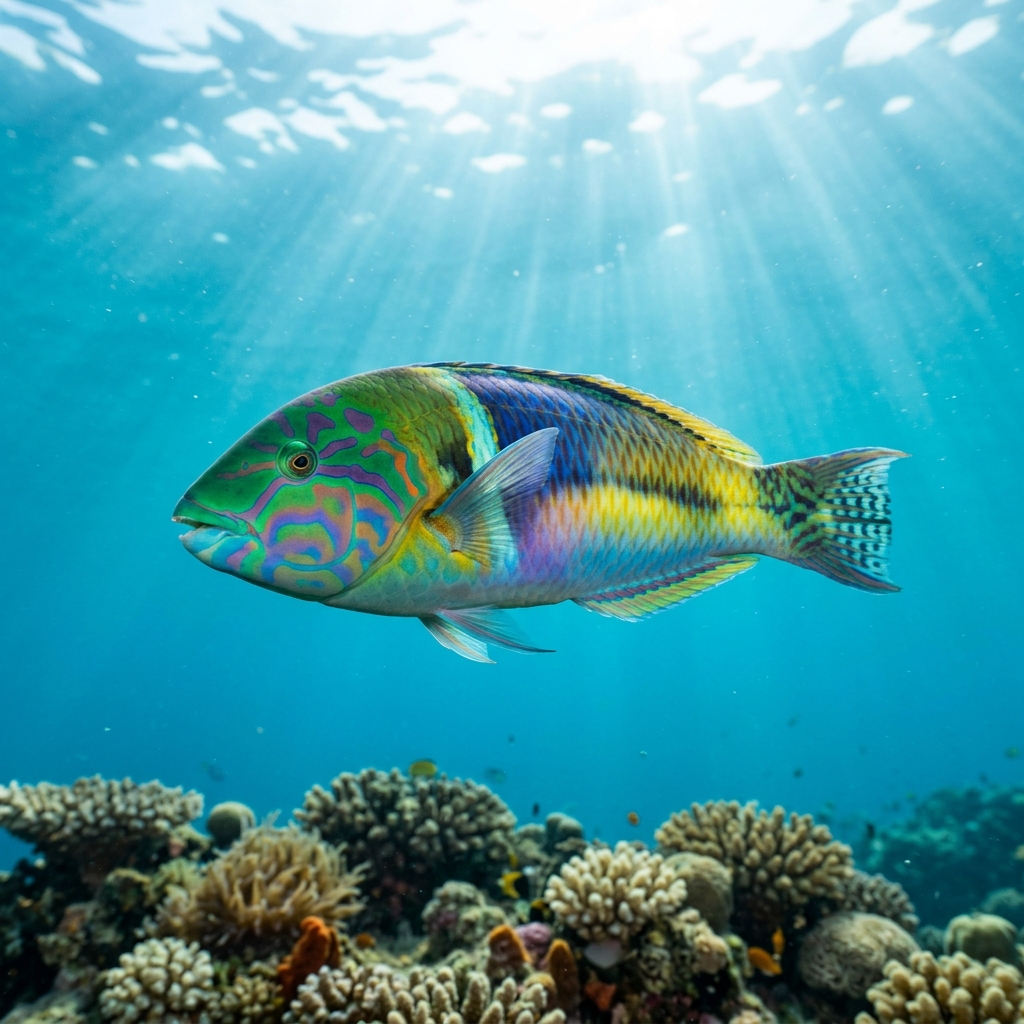
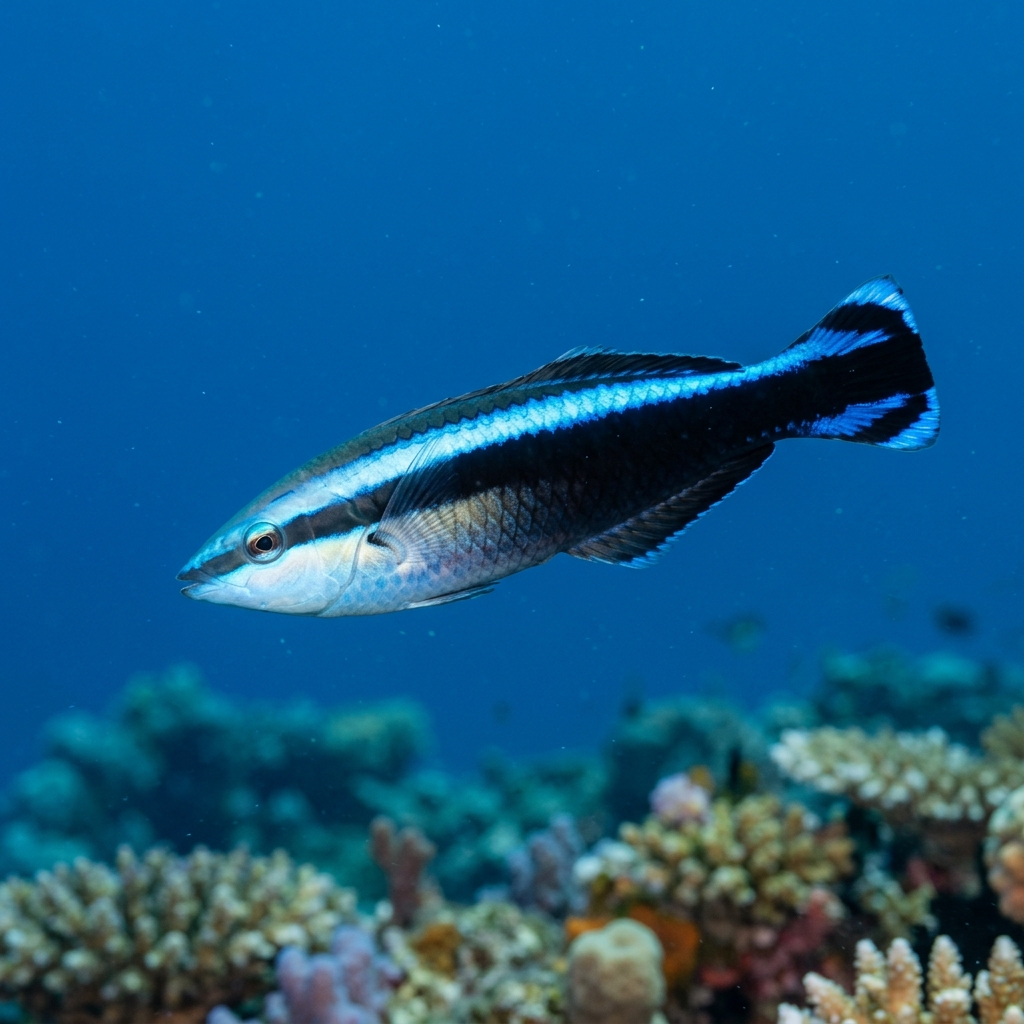
Reef neighbours a diver could mistake it for. Use the identification notes above to tell them apart.
Almost all logged sightings come from Queensland, Australia, making it a distinctly Australian animal in divers' experience, with scattered records from Northern Taiwan suggesting a wider Indo-Pacific range that diver coverage has yet to fill in. Within Australia, Queensland's coral reefs are the practical place to look, from the Great Barrier Reef south to nearshore reefs.
Mapping where Harlequin Tuskfish is logged…
Queensland, Australia is by far the most reliable place, with sightings spread across coral and rubble reefs. A small number of records also exist from Northern Taiwan. If Queensland reefs are your destination, you have the best realistic chance of an encounter.
No clear seasonal peak has emerged from diver data, so sightings appear possible year-round. Queensland's reef temperatures sit within the species' observed range of roughly 22 to 28 °C across most months, so there is no obvious off-season to avoid.
Look for a stocky wrasse with alternating orange-red and white vertical bands and distinctly blue teeth, that colour combination is unique on Australian reefs. The thick lips and rounded head add to the impression of a robust, purposeful fish rather than a slender reef cruiser.
Expect a rare to uncommon encounter. At most sites where divers have logged them, sightings are infrequent, so spotting one is a real highlight rather than a routine tick. Patience and slow reef exploration improve your odds.
No. They pose no threat to divers. They can be shy and will usually move away before you get too close, but there is no recorded risk of aggression or injury.
Site and sighting data is aggregated from diver logs, iNaturalist and GBIF. For taxonomy and conservation status:
Bird Wrasses
3,632 sites