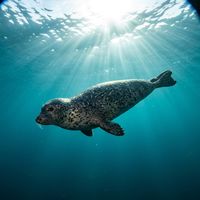
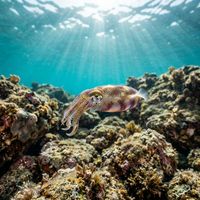
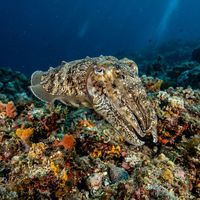
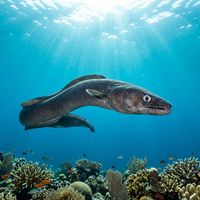
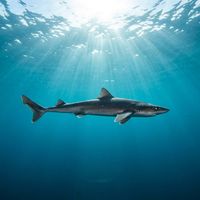
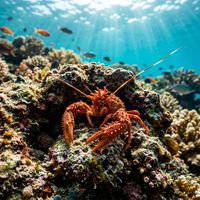
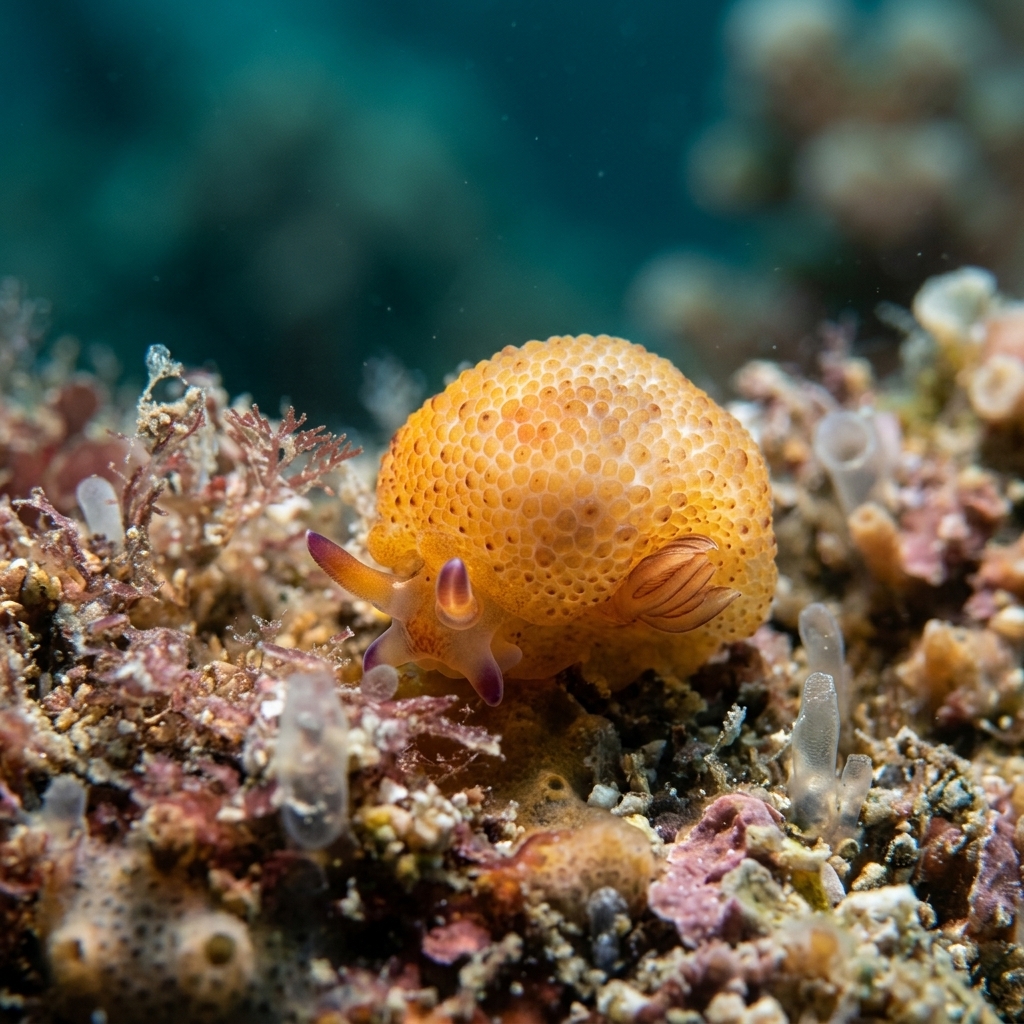
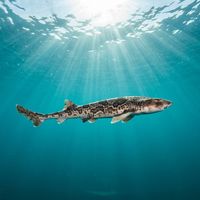
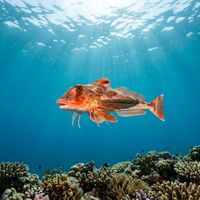
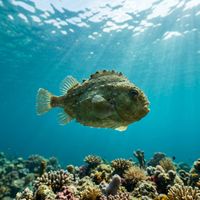
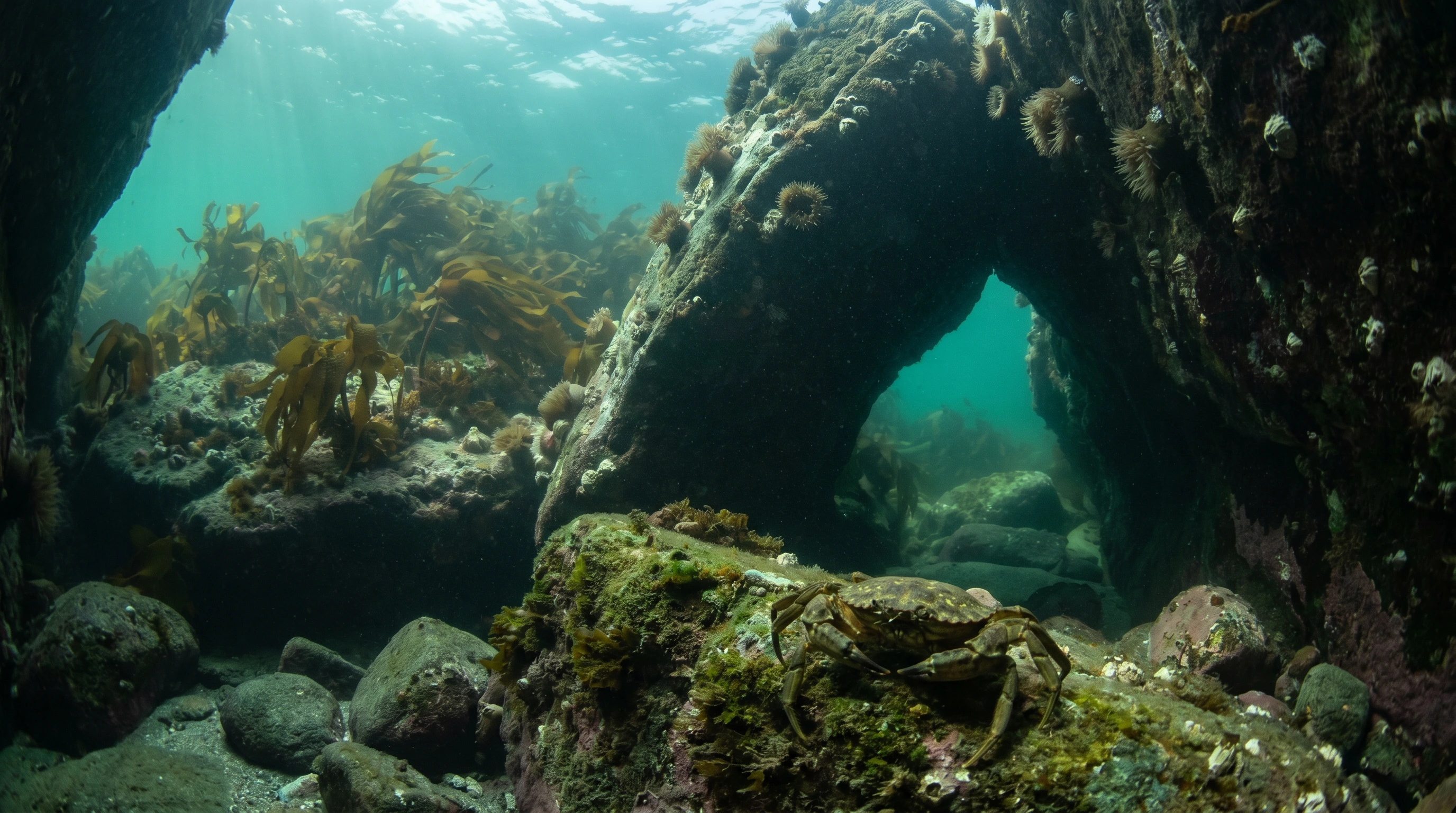
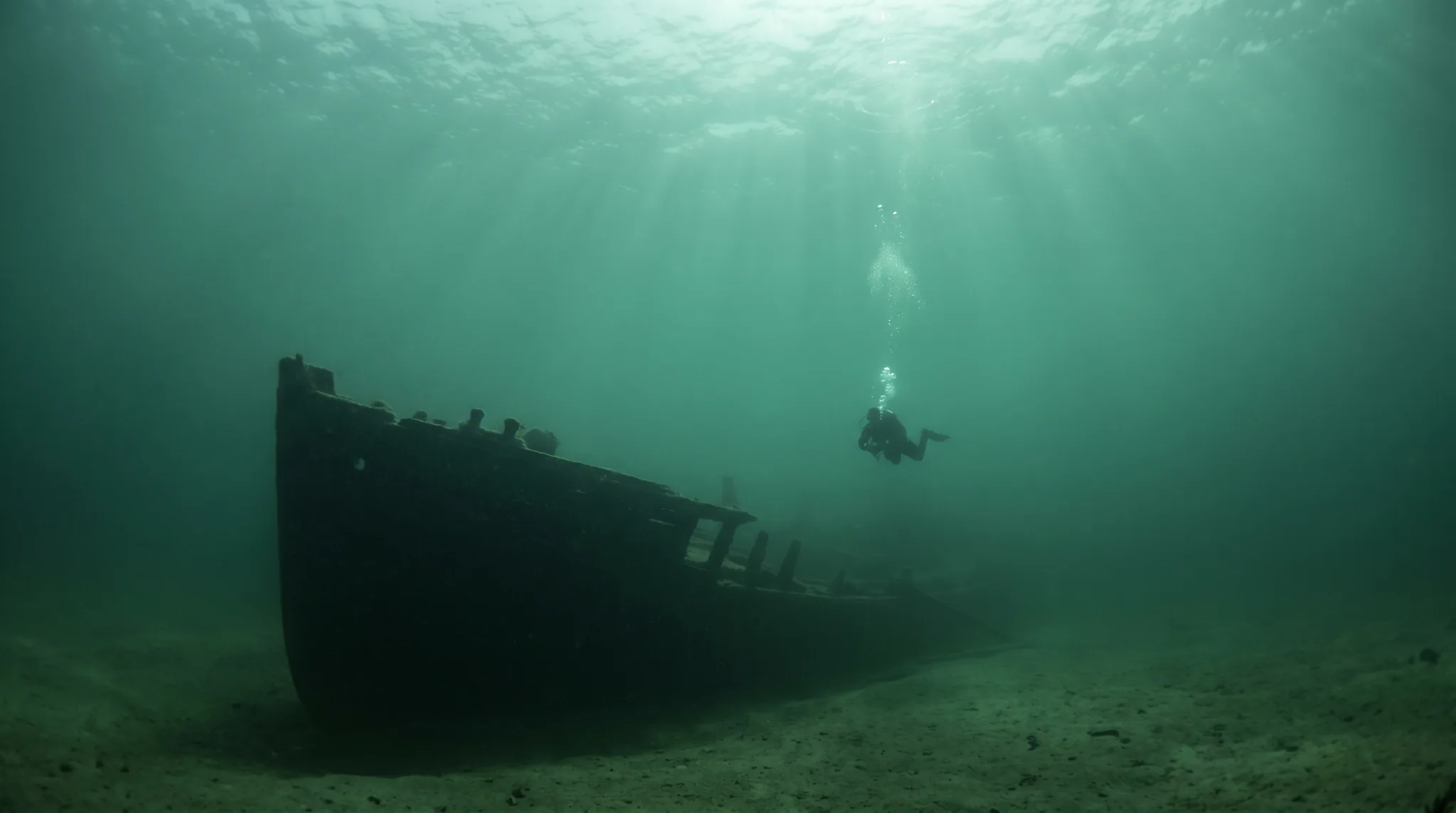
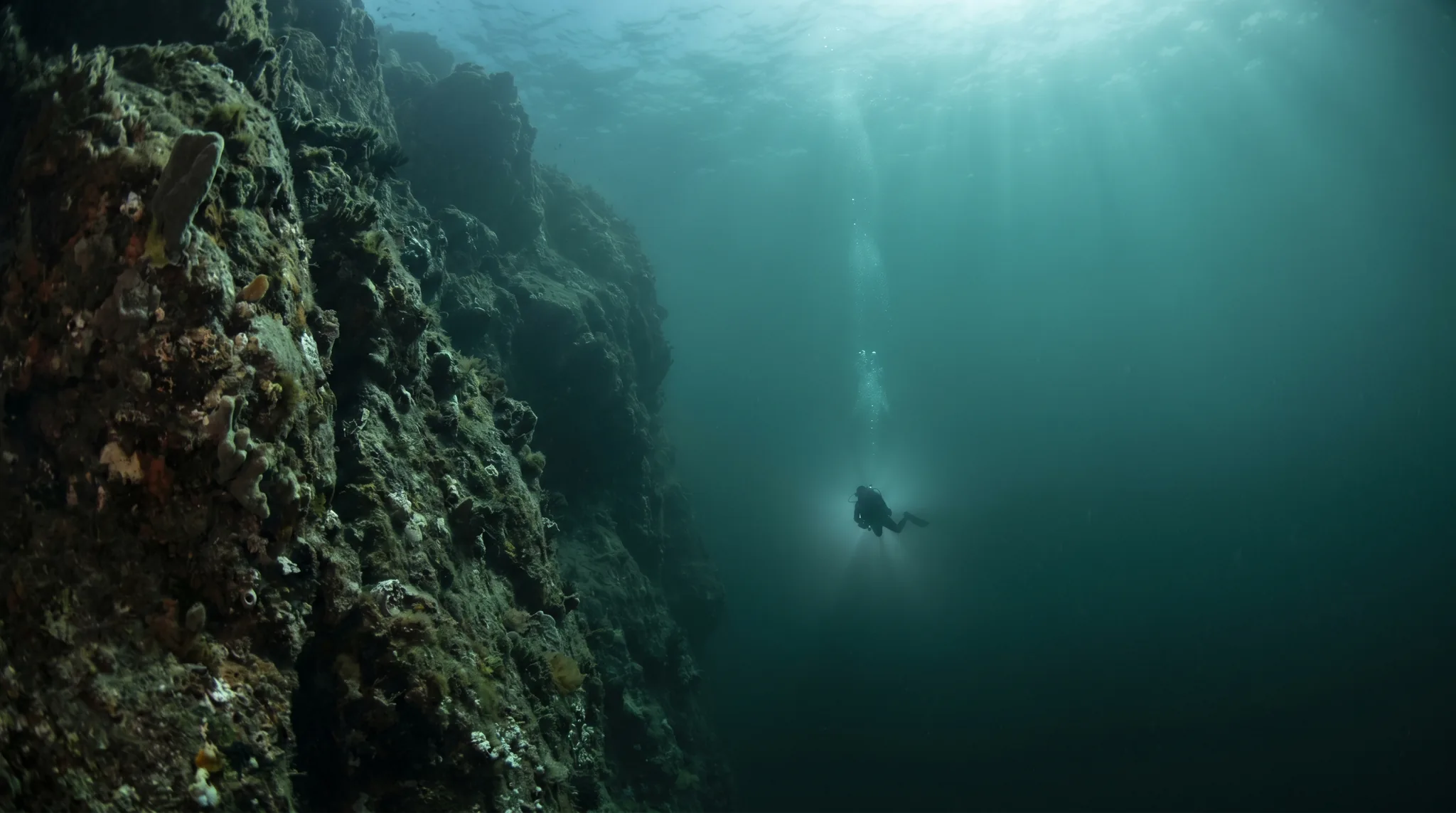
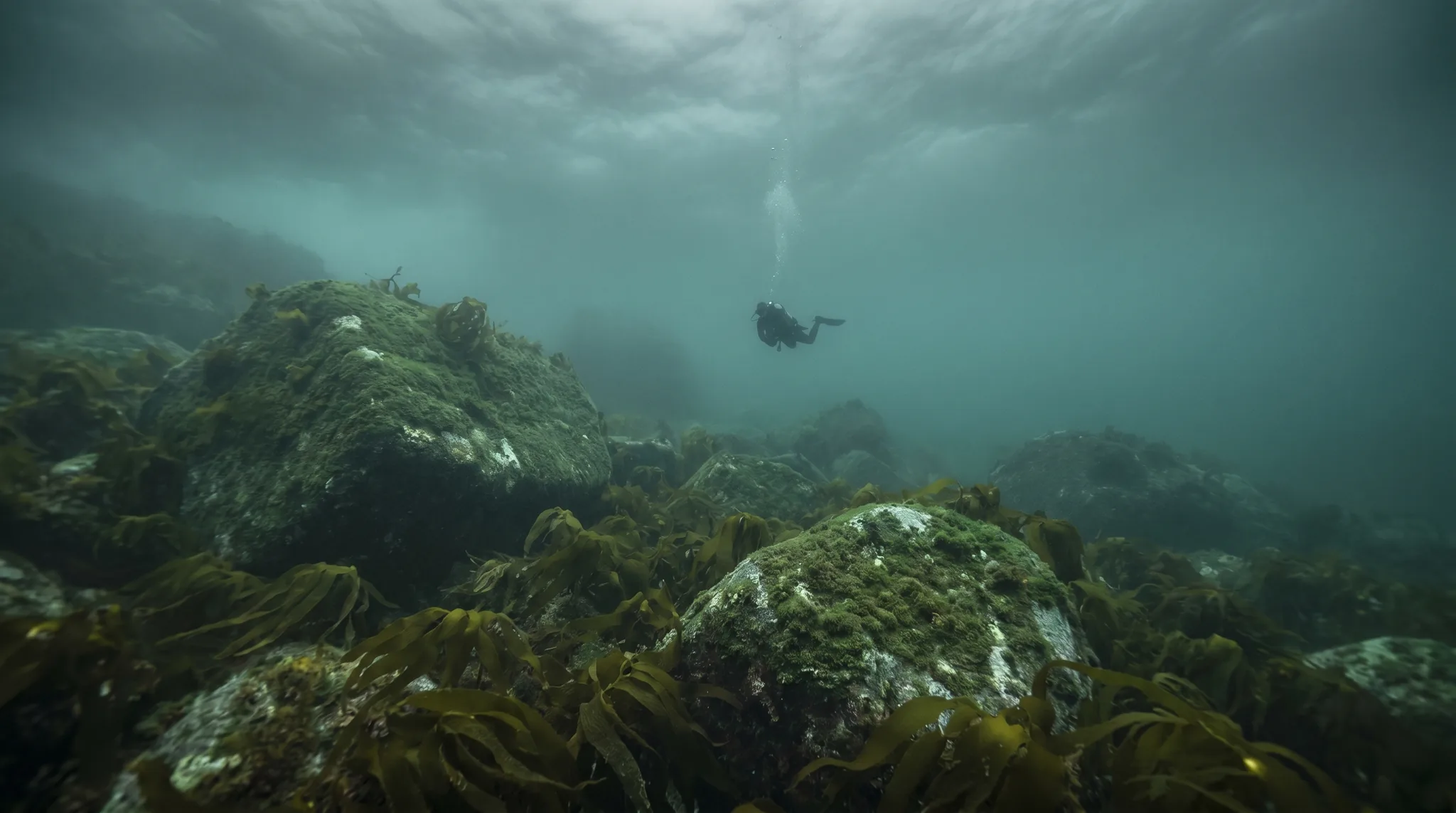
The West Highlands offers a remarkable mix of wall dives, reef dives, wrecks, and muck sites spread across sheltered lochs and open coastal waters. The Sound of Mull Wrecks sub-area alone accounts for a large portion of sites, ranging from accessible shore entries to challenging deep dives. Catshark, Conger Eel, and Brittle Star are encountered with great regularity, while Harbor Seal, Bobtail Squid, and European Common Cuttlefish are signature finds. Conditions reward divers across all skill levels, from shallow granite reefs to technical-depth walls.
1 areas
Monthly water temperature across West Highlands's sites, from satellite sea-surface data corrected for depth. The band shows the site-to-site spread.
Water temperatures rise through late spring and peak in summer, making June through September the most comfortable period for diving without heavy exposure protection. Winter months see temperatures drop to their coldest, suiting experienced divers happy in thick wetsuits or drysuits. The mix of sheltered loch sites and more exposed coastal locations means conditions vary considerably depending on where you dive.
28 operators
United Kingdom
United Kingdom
34 more sites to explore
A wreck-focused diving region in Scotland's West Highlands, with sites for all levels and prolific marine life including Harbor Seal and Cuttlefish.
Water temperature around West Highlands ranges from about 8°C in February to 15°C in August, based on satellite sea-temperature data for its dive sites.
In the warm season (about 15°C) a 7mm or semi-dry suit is comfortable in West Highlands; in the coldest months (about 8°C) step up to a drysuit.
Fin maps 46 sites in West Highlands (38 scuba diving sites and 13 snorkelling spots, with some suited to both).
Across West Highlands's dive sites, May, June, July, August and September are most often reported as the best months to visit.
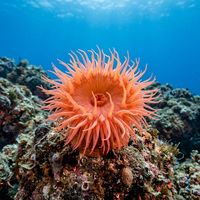
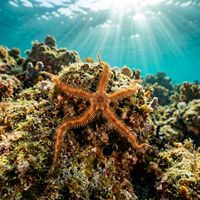
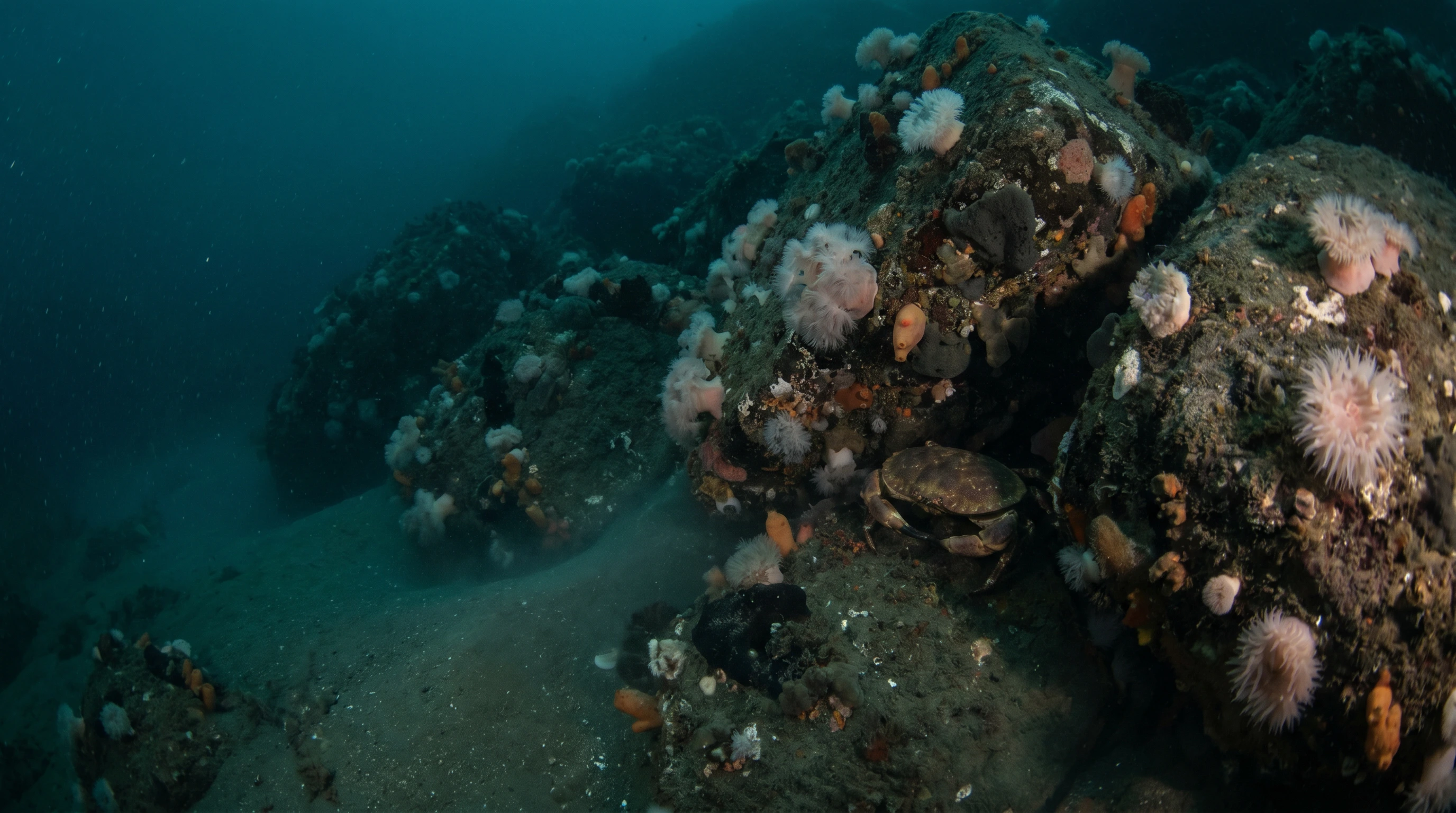
The West Highlands is particularly strong for Catshark and Conger Eel, both observed very commonly across sites. Harbor Seal, Bobtail Squid, and European Common Cuttlefish are signature species here. Invertebrate life is prolific too, with Brittle Star, Common Sea Star, Plumose Anemone, Feather Star, and Sea Slug all regularly recorded.
Yes, a good number of sites are rated for beginners, including Gallanach Reef, Anchor Point, Carnoch Bay, and Craggen. Most of these are shore dives with calm entries and shallow sections that allow new divers to build confidence. Intermediate and advanced sites are also well represented, so more experienced divers will find plenty of challenge.
The majority of sites listed in the West Highlands are shore-accessible, which makes the area practical for independent divers and club trips without the need to book a boat for every dive. A small number of sites, including the SS Rondo, require a boat entry. Some sites offer both options depending on conditions and preference.
The Sound of Mull Wrecks is the largest sub-area within the West Highlands and concentrates a high density of sites including wrecks, walls, reefs, and an artificial reef. Sites like MOD Reef, Drishaig, and Kenmore Point sit within this cluster and lean toward intermediate skill levels with deeper profiles. Outside this sub-area, sites tend to be more spread across lochs with a broader range of site types and skill levels.