Triglidae spp.
Spot gurnards in Brittany, the Kvarner Gulf or Nova Scotia. These bottom-walkers thrive in cold water and are most often logged rare, here's how to find one.
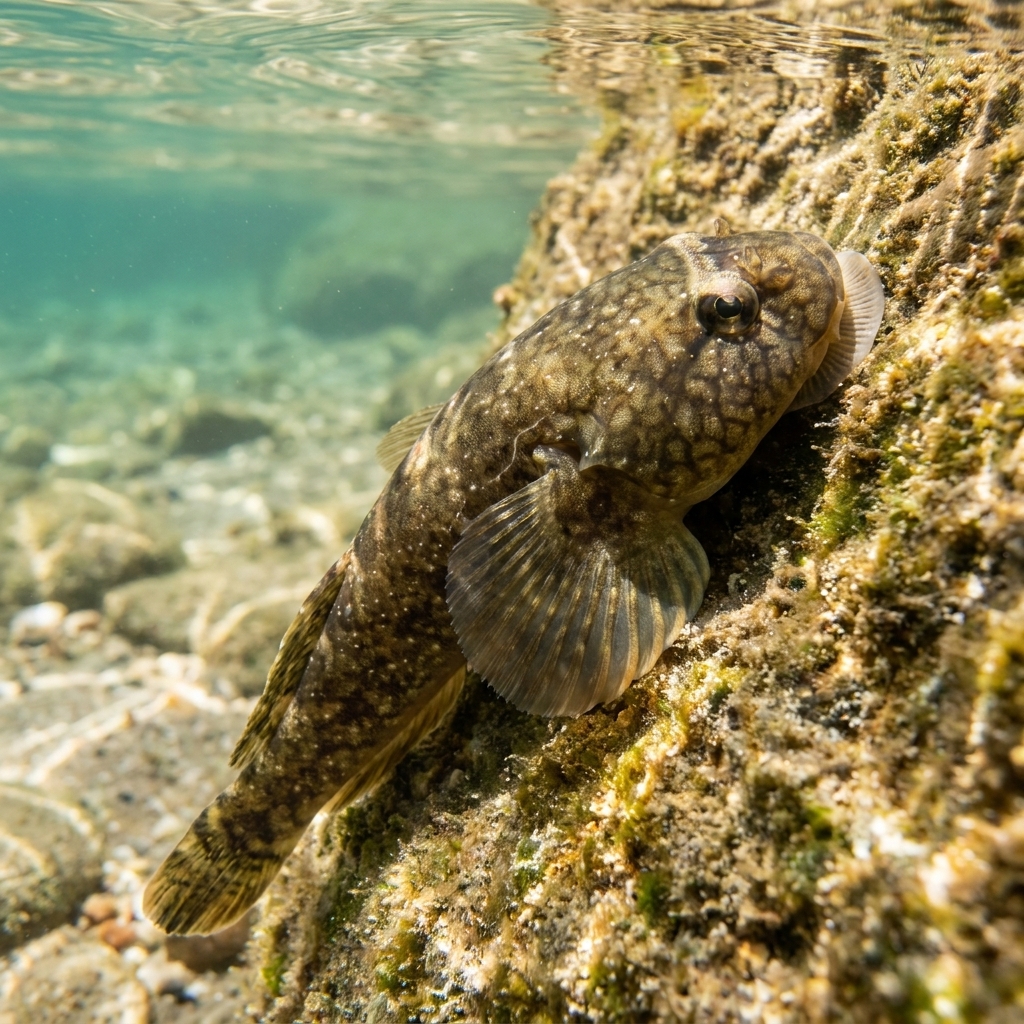
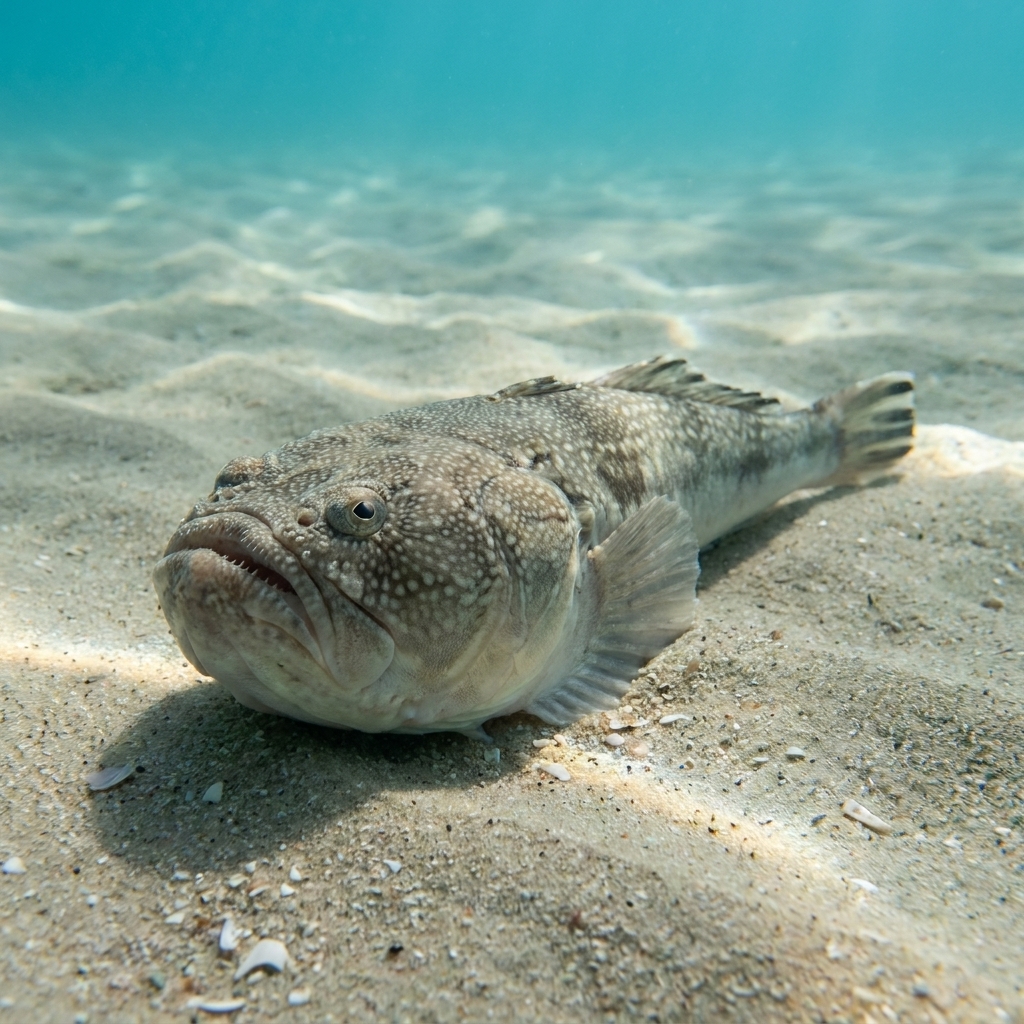
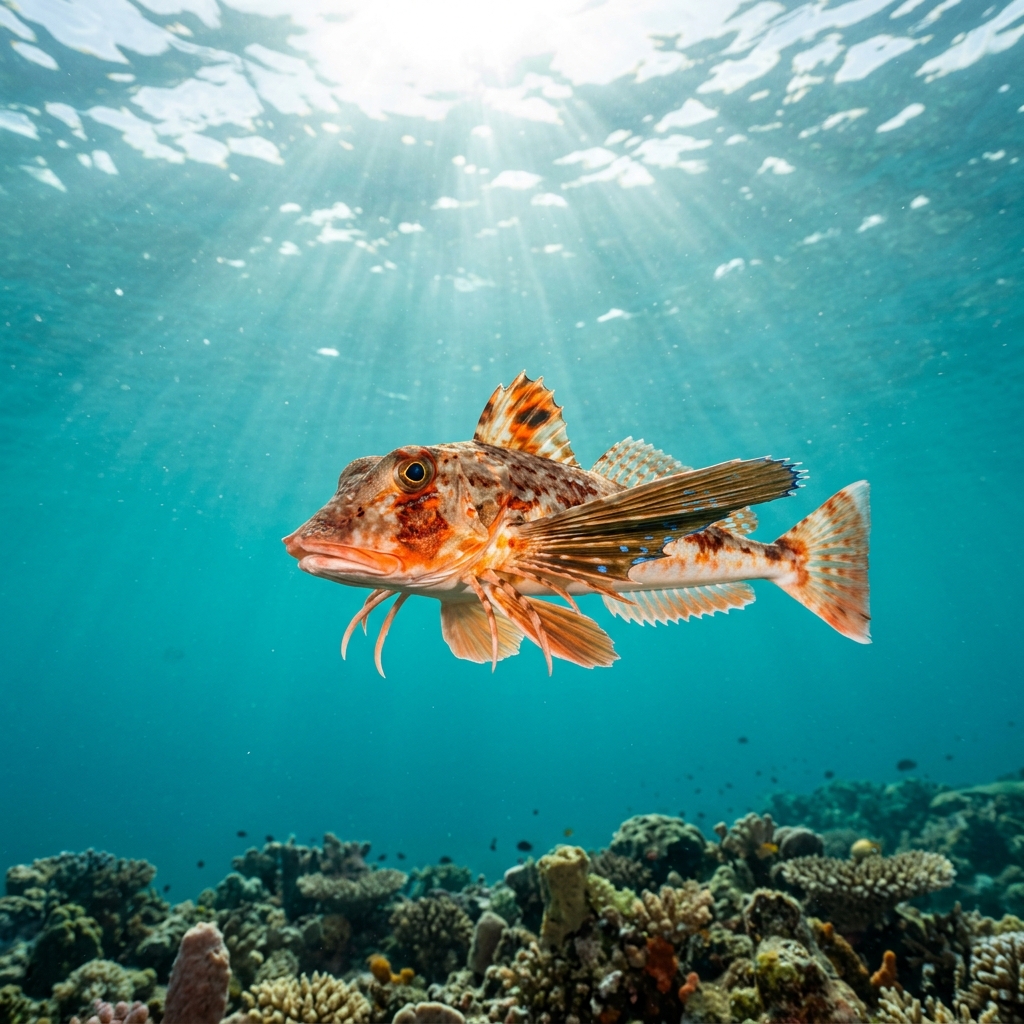
Gurnards are unmistakable once you know what to look for: a heavily armoured, bony head that looks almost sculptural, a tapering body, and enormous fan-shaped pectoral fins that can be spread wide in vivid colours ranging from deep red and orange to grey-green with electric blue or green trim along the fin edges. Most species rest or slowly walk along sandy and muddy bottoms using modified pectoral fin rays as leg-like feelers (these are actually detached lower fin rays that probe the sediment for prey). Colouration varies between species but the body-plan is consistent enough across the family that you are unlikely to mistake a gurnard for anything else once the pectoral fins are spread.
Gurnards spend most of their time on or just above soft-sediment bottoms, sand, gravel, or mud, where they walk slowly using their feeler-like fin rays to flush out small crustaceans and fish. When a diver approaches, they often hold their position and spread the pectoral fins wide, which can look like a defensive display but may simply be a reaction to disturbance. Sightings tend to be solitary animals sitting still, which is exactly why patient, slow divers find them more often than those who rush.
Some gurnards produce audible grunting sounds by vibrating the swim bladder with specialised muscles, the name 'gurnard' is thought to derive from the French word for grunt. These sounds are used in communication and may be what you hear before you see one.
Sightings are spread across all months with no concentrated season, so gurnards can be encountered year-round wherever they occur. Their observed water-temperature range runs from around 7 to nearly 20 °C, meaning they favour cool to cold temperate seas rather than tropical ones, and are present as long as those conditions hold.
Gurnards are logged across a wide spread of countries, with the strongest representation in Europe, Spain, the United Kingdom, France, Italy, Croatia, and Greece all rank highly, with the Kvarner Gulf in Croatia and Brittany and Normandy in France being particularly well-represented regions. Outside Europe, Nova Scotia and the Bay of Fundy in Canada and sites in the southeastern United States are reliable areas. Florida and the Southeast US region also contributes a notable share of sightings, reflecting the family's broad temperate Atlantic range.
Mapping where Gurnard is logged…
Gurnards are most commonly logged in European temperate waters, with strong representation in Spain, the UK, France, Italy, and Croatia. The Kvarner Gulf in Croatia, Brittany and Normandy in France, and Nova Scotia in Canada are among the top regions. They are also recorded along the southeastern coast of the United States.
There is no single best season, sightings occur throughout the year with no clear peak. Gurnards favour cool temperate water, so they are present year-round in the cold-water regions where they are most commonly logged, such as northern European seas and Atlantic Canada.
Look for a bony, angular head, a body that tapers sharply towards the tail, and, most distinctively, large fan-shaped pectoral fins that often show vivid colour along their edges. The modified lower fin rays used for walking along the bottom are unique to this family and are a clincher for identification. Most are seen resting motionless on sandy or gravelly seabeds.
Size varies between species within the family. Many of the commonly dived species reach around 30 to 60 cm in length, though some can grow larger. In the water they often appear smaller because they sit flat and compact against the bottom.
The 'legs' are actually modified lower rays of the pectoral fins that have separated from the main fin and evolved into sensory feelers. Gurnards use them to walk slowly across soft sediment and to probe for buried invertebrates and small fish, essentially tasting and feeling the seafloor as they move.
Site and sighting data is aggregated from diver logs, iNaturalist and GBIF. For taxonomy and conservation status:
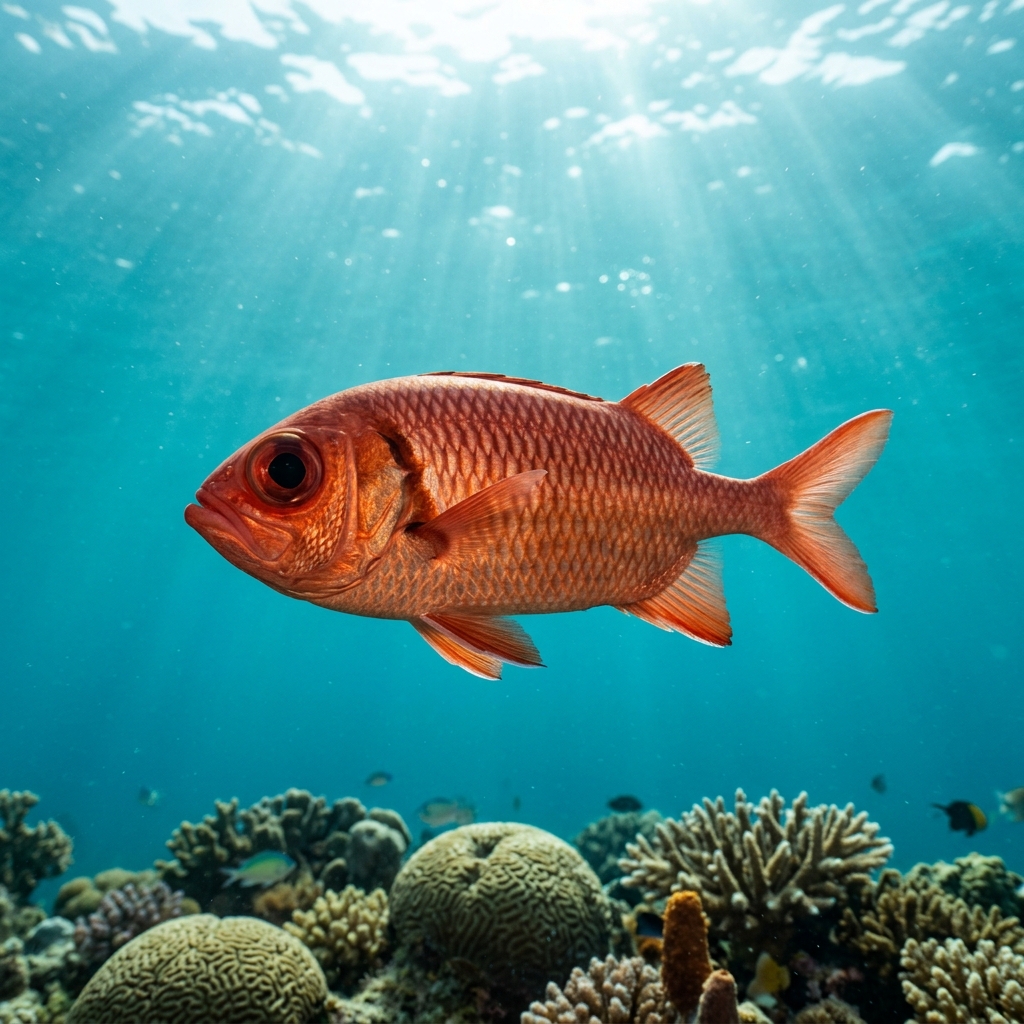
Soldierfish
3,612 sites