Ophiuroidea spp.
Spot brittle stars year-round from the Florida coast to the Philippine Visayas. Here's how to recognise them underwater and where divers log them most.
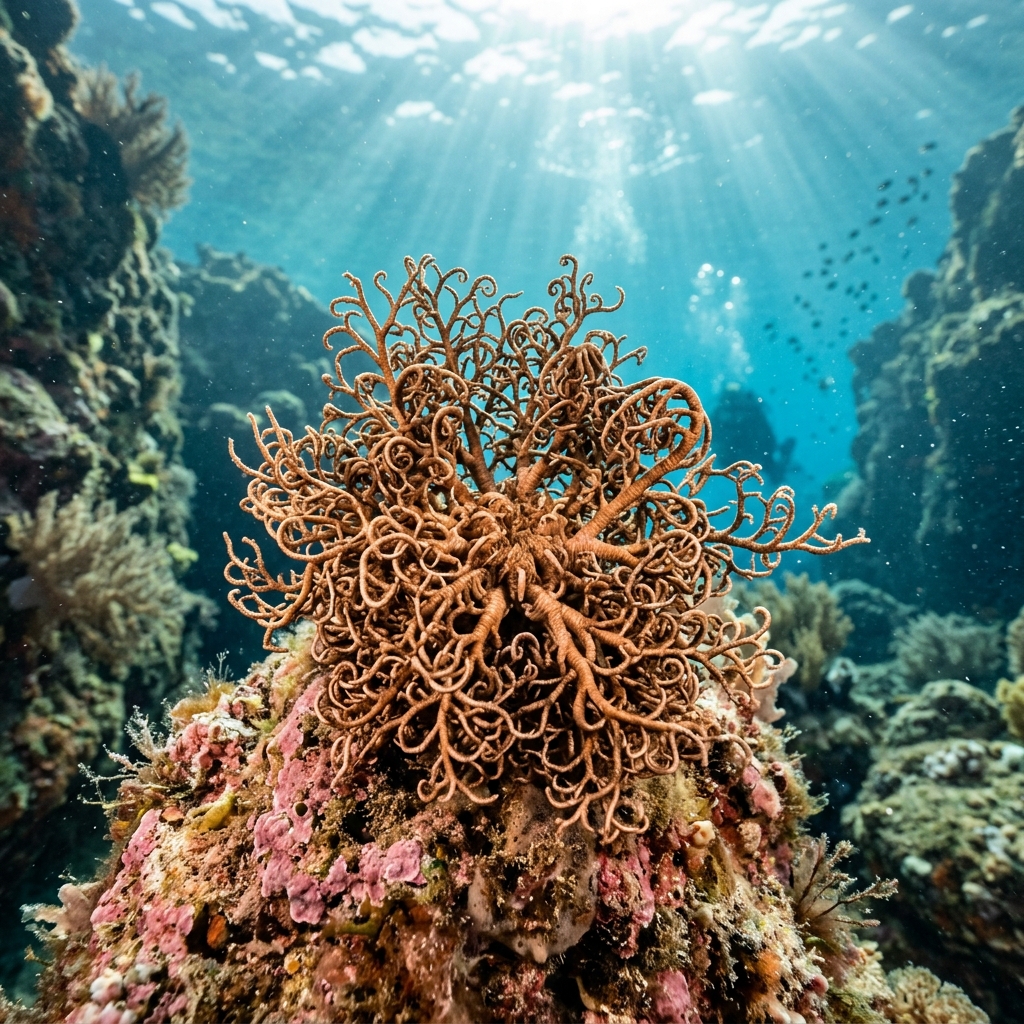
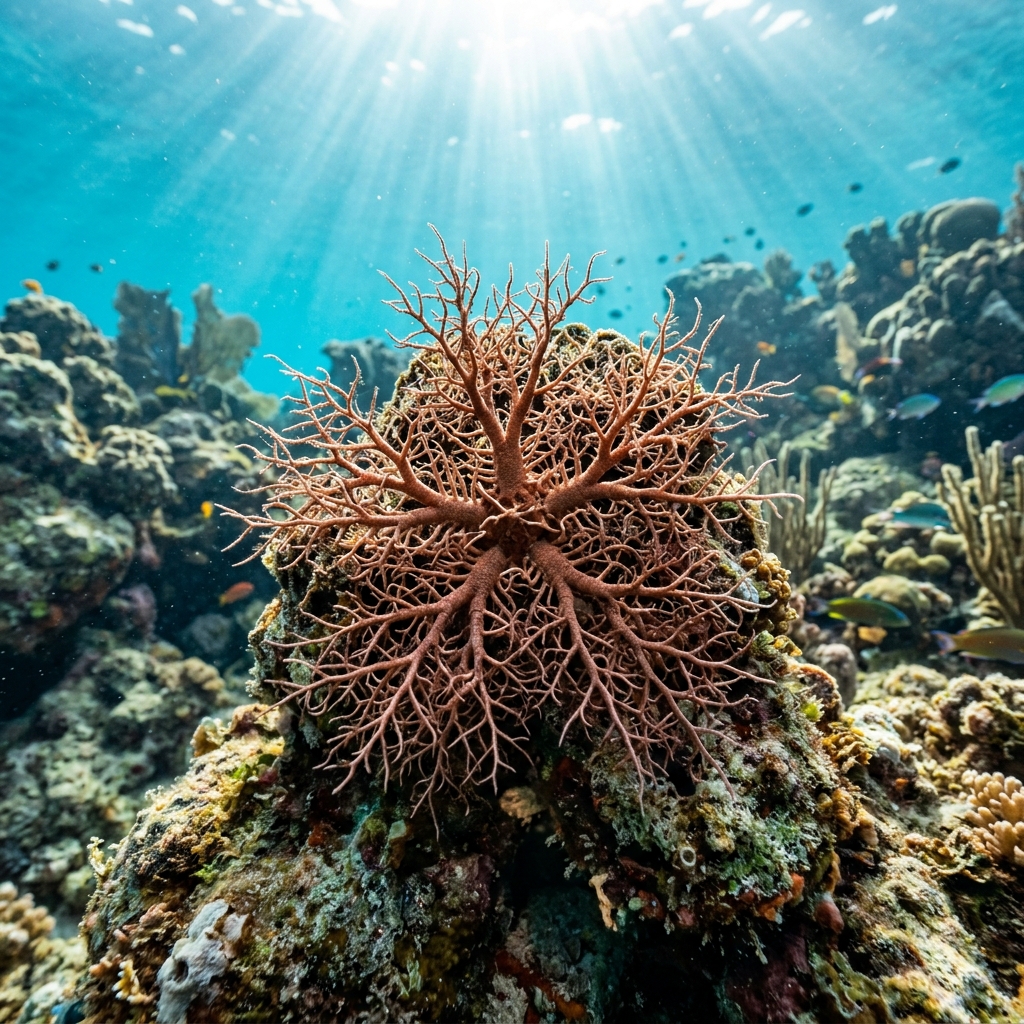
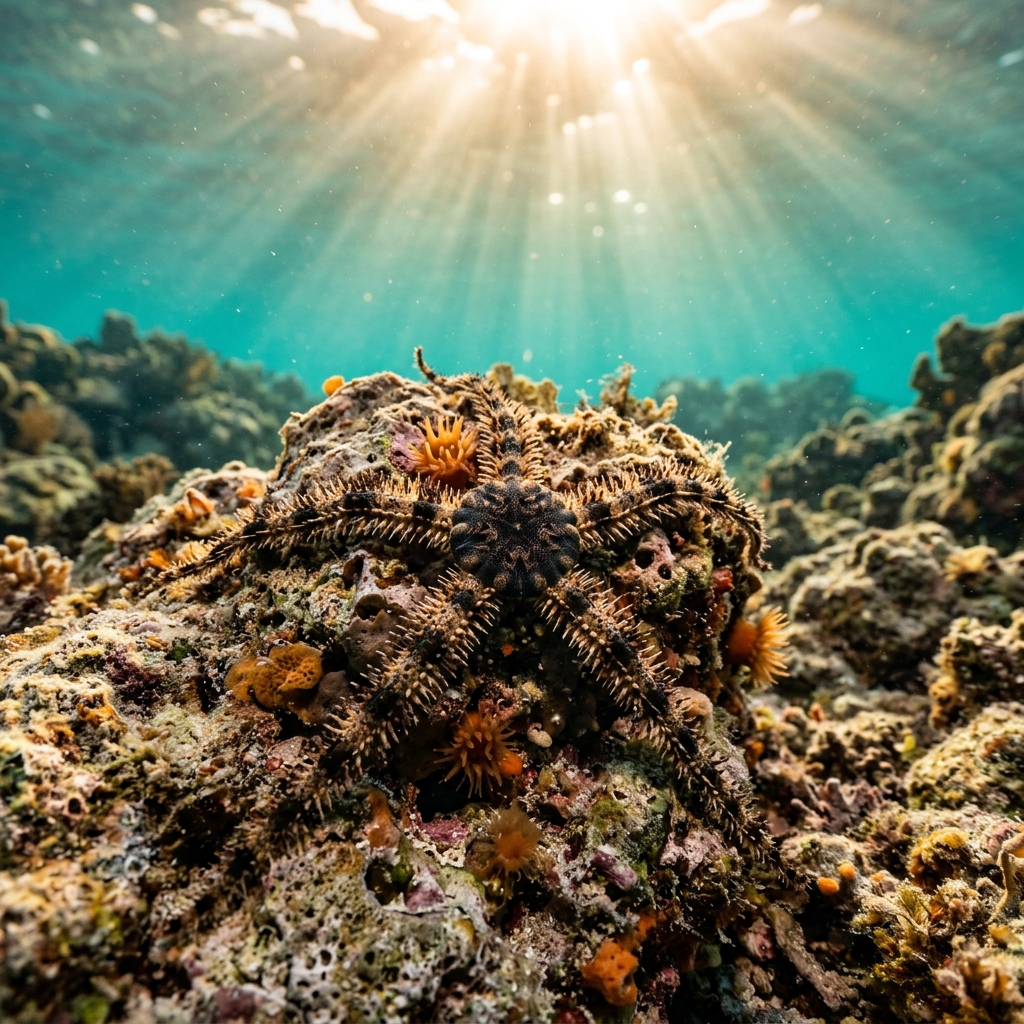
Five long, distinctly segmented arms radiate from a small, flattened central disc, giving the body a star shape that looks almost skeletal compared to a true sea star. The arms are noticeably slender and wiry, often banded or mottled in browns, greys, greens, or reds depending on species, and they move in a fluid, serpentine wriggling motion that is unlike anything else on the reef. That active, snake-like arm movement is the single easiest field mark underwater.
Most sightings happen when a brittle star is tucked into a crevice or under rubble, with only the sinuous arms visible, weaving slowly to gather detritus and small particles from the water. Disturb one and it retreats fast, pulling those long arms back into the rock with surprising speed. At night or on deeper reef slopes they become bolder, sometimes climbing up onto sponges or coral heads to suspension-feed in the current.
Brittle stars can shed one or more arms when grabbed by a predator, a defence called autotomy, and then slowly regrow what they lost. Some species can even regenerate from a single arm if part of the central disc remains attached.
Brittle stars are present year-round in both the Northern and Southern Hemispheres with no concentrated season. Their tolerance for water temperatures from around 3°C to over 27°C means they turn up on cold-water temperate reefs and warm tropical ones alike, so any time of year is worth looking.
Brittle stars are logged across a remarkable spread of dive destinations, with the United States, France, the United Kingdom, Spain, and Canada among the most represented countries. Strong sighting records come from Florida and the Southeast US, the French Riviera and Provence, Brittany and Normandy, and the Visayas in the Philippines. Zeeland in the Netherlands and the Costa Brava in Spain are also reliable regions for encounters.
Mapping where Brittle Star is logged…
Brittle stars are logged across a huge range of destinations worldwide. Some of the strongest concentrations of sightings come from Florida, the French Riviera, Brittany and Normandy, the Visayas in the Philippines, Zeeland in the Netherlands, and the Costa Brava in Spain. They appear on both cold temperate and warm tropical reefs.
There is no single best season. Brittle stars are recorded year-round in both hemispheres, thriving anywhere from near-freezing sub-polar water to warm tropical seas around 27°C. Any dive, any month, in suitable rocky or reef habitat gives you a reasonable chance.
Look for five very slender, segmented arms attached to a small central disc. Unlike a sea star, the arms are sharply defined from the disc and move in an active, wriggling, snake-like motion. Colouration varies widely by species, from banded brown and grey to red or green, but that wiry, animated arm movement is the giveaway.
Brittle stars are a large group spanning many species, so size varies considerably. Most species a diver encounters have an arm span of roughly 10 to 30 cm, with the central disc itself often only a few centimetres across. A few deep-water species grow larger.
They practise autotomy, deliberately shedding one or more arms when threatened by a predator. The discarded arm keeps wriggling, distracting the attacker while the brittle star escapes. Lost arms are gradually regrown over weeks to months, making it common to spot individuals with one noticeably shorter arm.
No. Brittle stars pose no risk to divers. They are small, shy, and retreat quickly when approached. Avoid handling them, as this stresses the animal and may trigger arm loss, but they will not sting, bite, or harm you.
Site and sighting data is aggregated from diver logs, iNaturalist and GBIF. For taxonomy and conservation status: