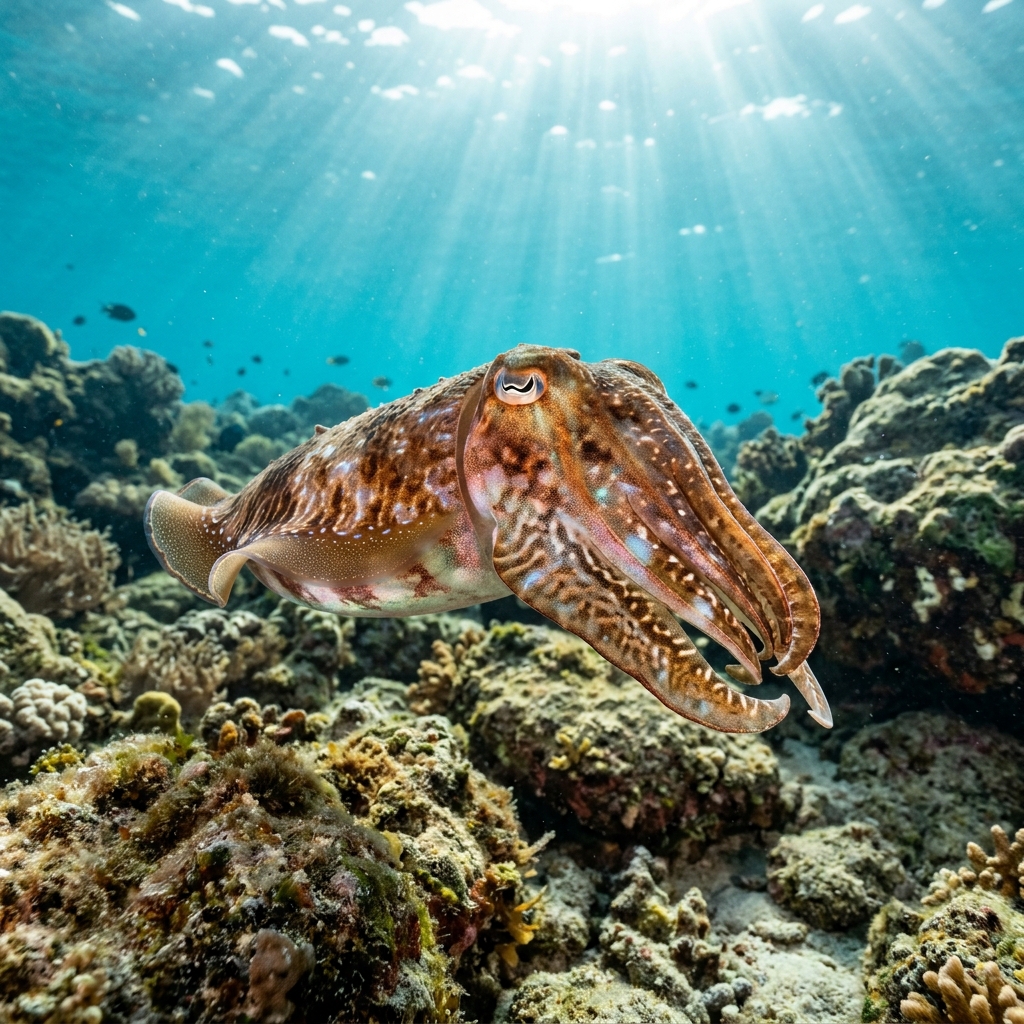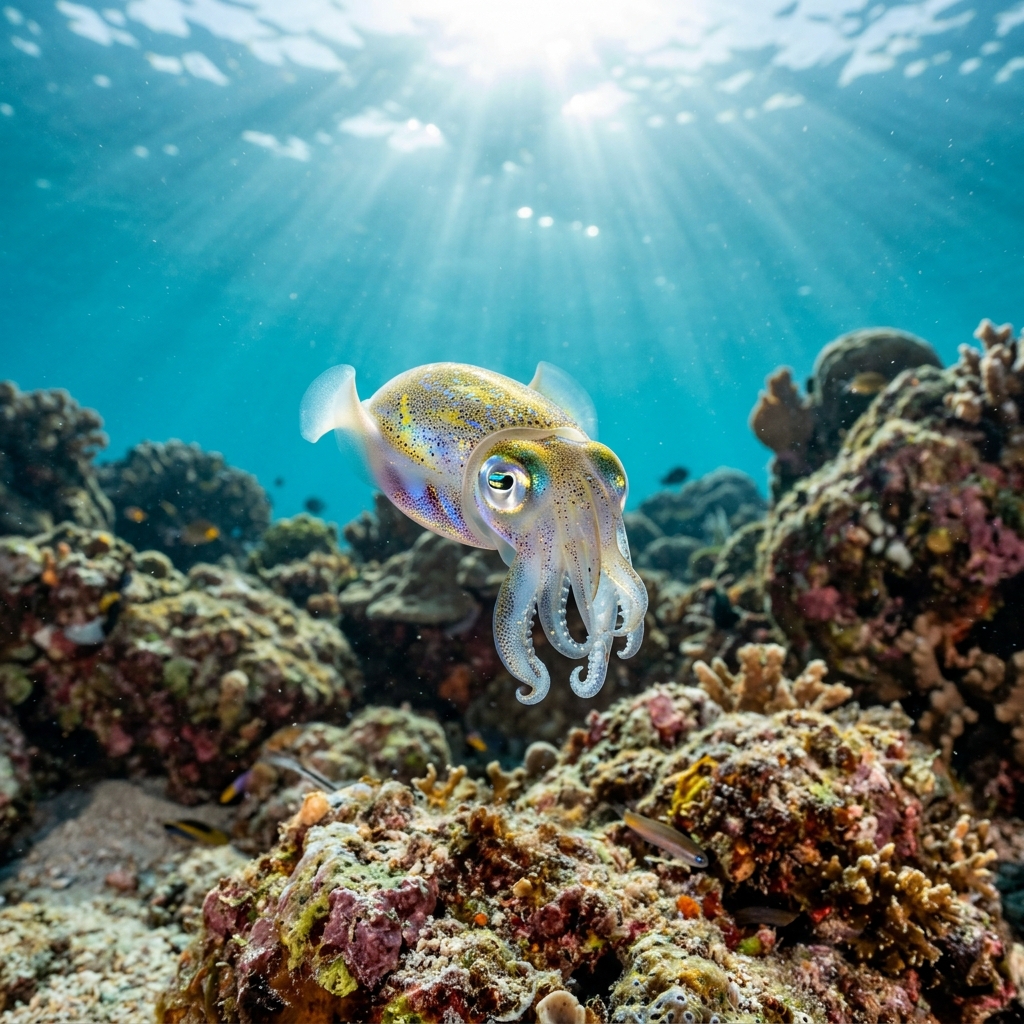
Sepiolidae spp.
Spot bobtail squid from the Izu Peninsula in Japan to Western Australia. Best sightings run Aug, Feb in water as cool as 6.5°C.
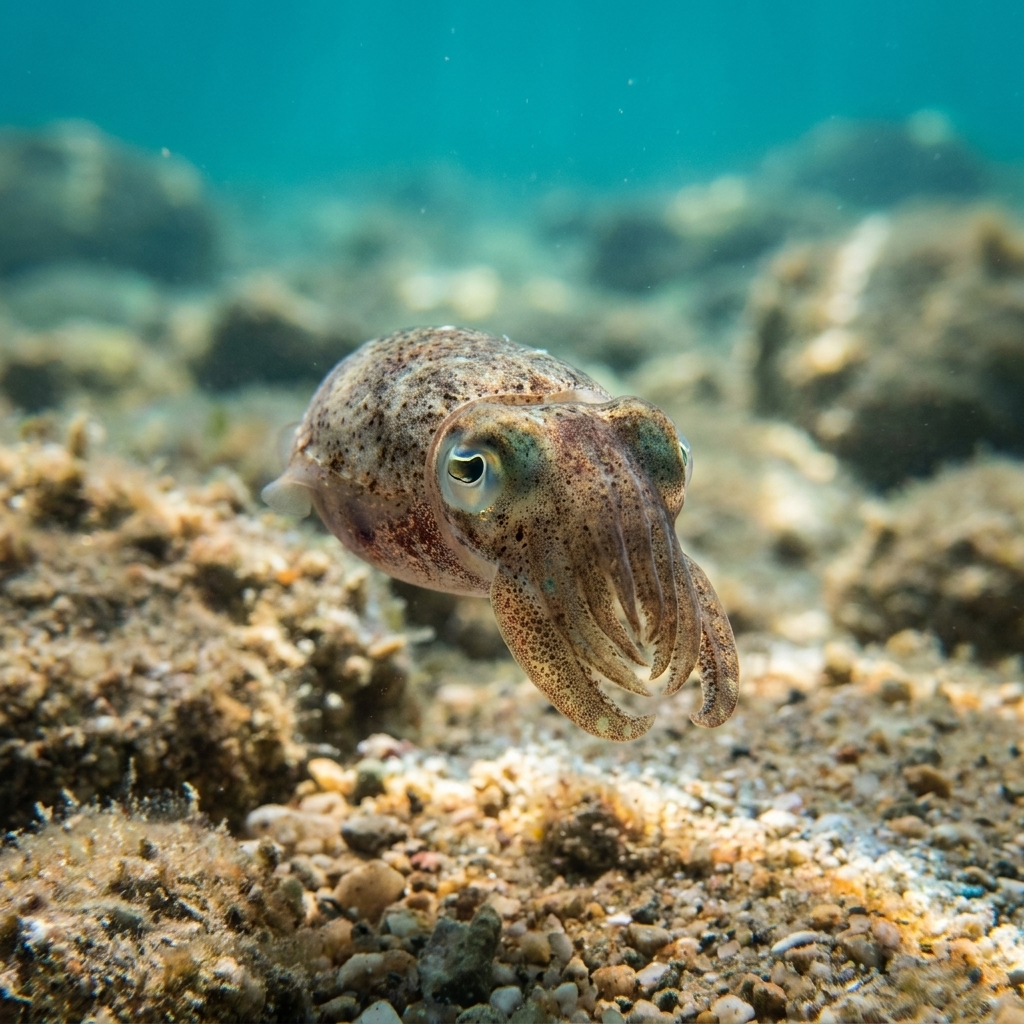
Bobtail squid are tiny, rounded cephalopods with a stubby, almost globe-shaped mantle (the main body sac) that sets them apart from the more elongated true squid. Large, prominent eyes dominate the head, and a pair of small rounded fins sits near the rear of the mantle rather than running its full length. Their skin cycles rapidly through speckled browns, creams, and sandy tones, making them remarkably hard to pick out against a sandy or rubble bottom. Because this is a family entry covering many species, size and patterning vary, but the compact, oval shape is the consistent field clue.
Bobtail squid are predominantly nocturnal and most sightings happen on night dives, when they emerge from the sand or rubble to hunt small crustaceans and fish. When a diver's torch catches them they often freeze, relying on rapid colour and texture changes to blend in, before jetting away with a short burst if approached too closely. During the day they typically bury themselves in soft sediment with only their eyes visible, so slow, methodical finning over sandy patches is the best search strategy.
Many bobtail squid host bioluminescent (light-producing) bacteria in a specialised light organ on their underside. The squid regulates the glow to match downwelling moonlight, effectively erasing its own shadow from predators hunting below.
In the Northern Hemisphere, sightings concentrate from August through February, suggesting late summer into winter is the most productive window. The family tolerates a wide temperature range, from around 6.5°C to nearly 24°C, so they are present in cool temperate waters well into the colder months.
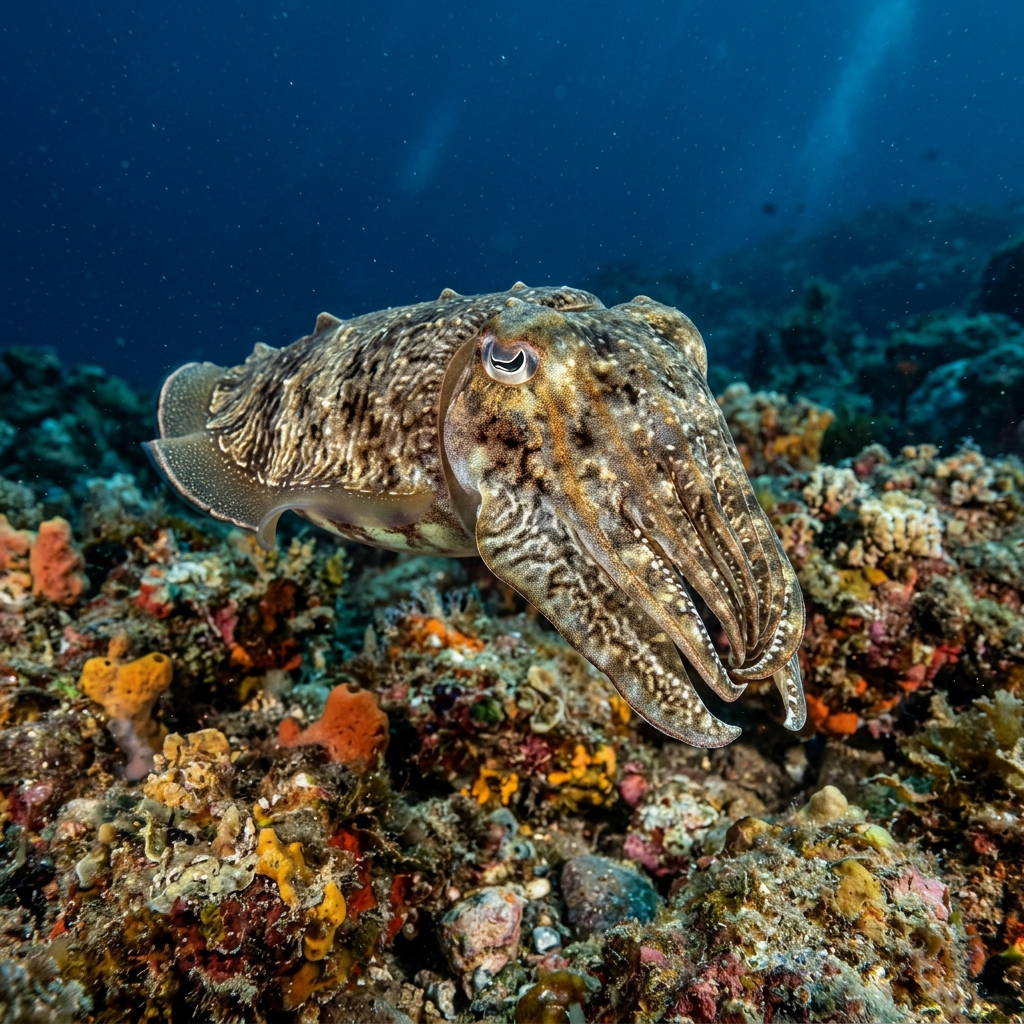
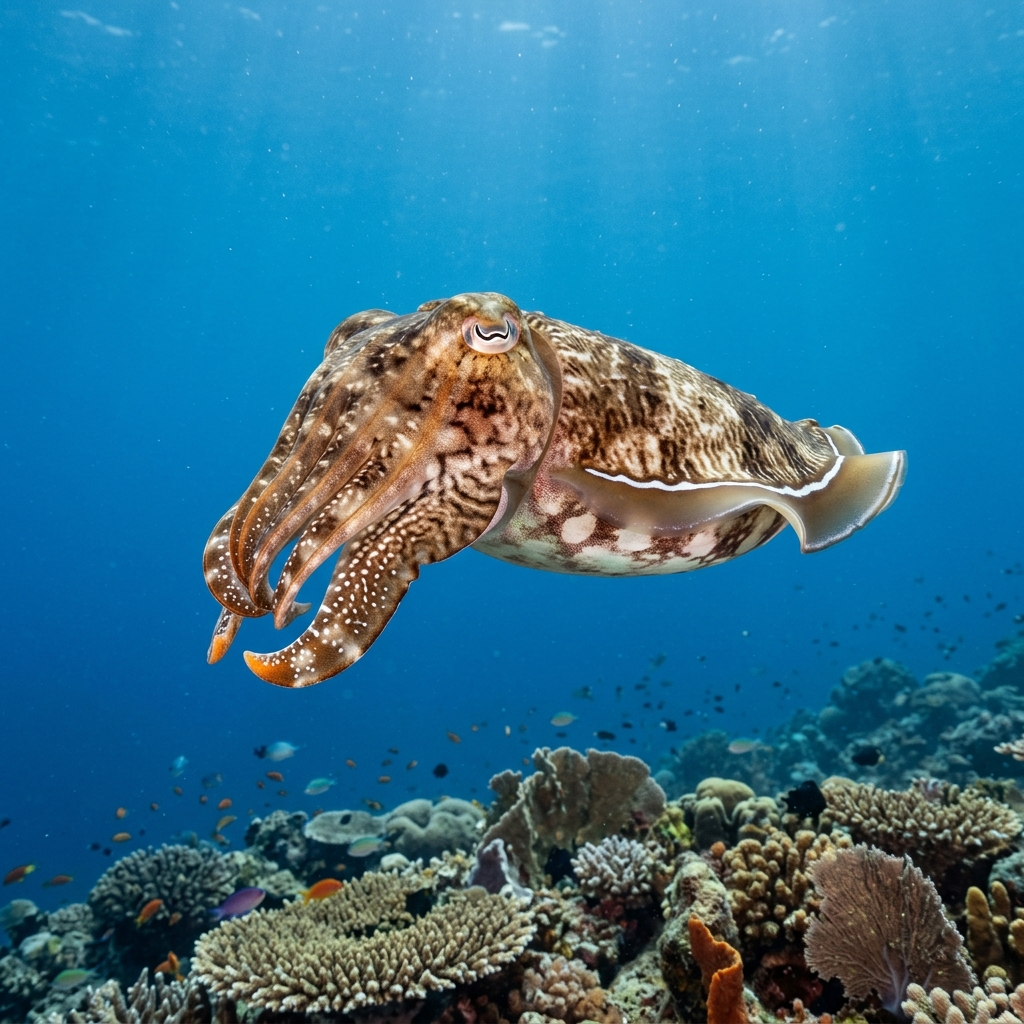
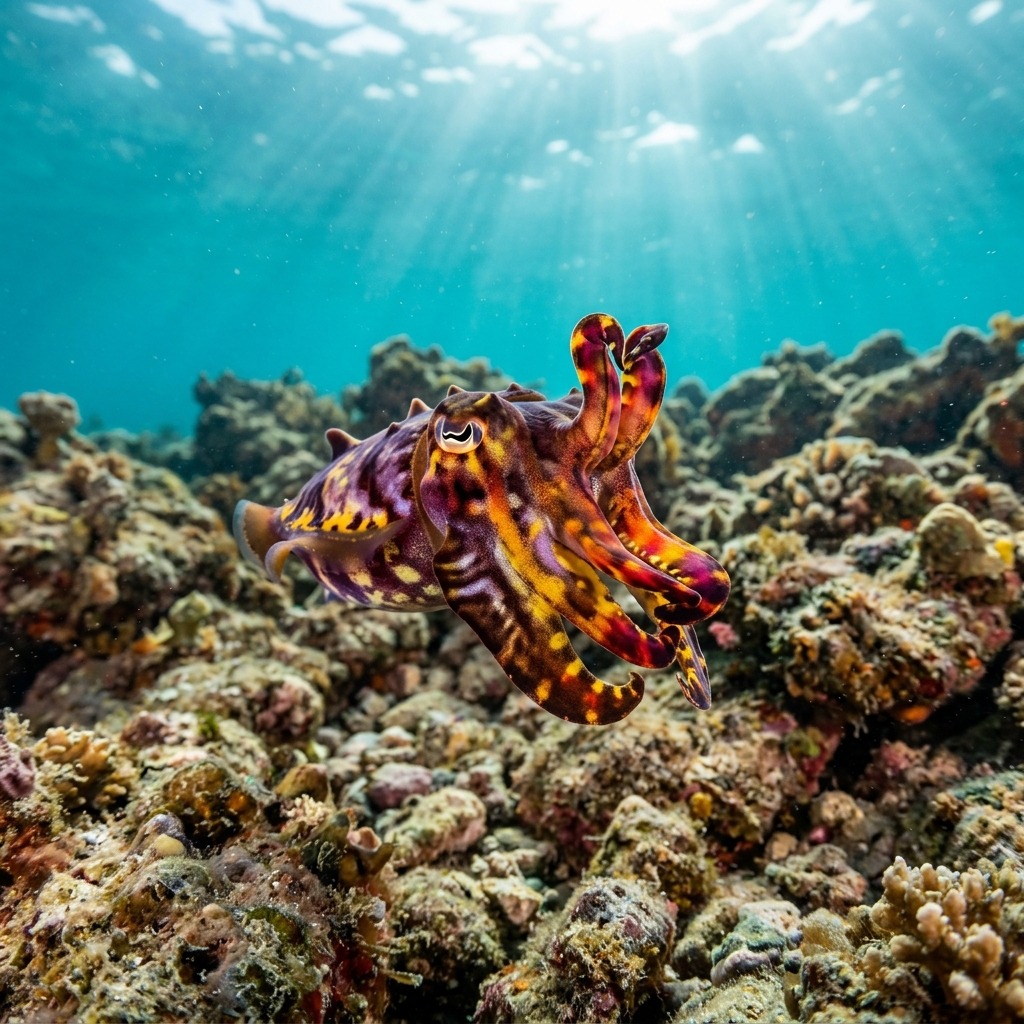
Reef neighbours a diver could mistake it for. Use the identification notes above to tell them apart.
Bobtail squid are logged across a wide spread of temperate and subtropical seas, with the strongest site coverage in the United States, Canada, Italy, Greece, the United Kingdom, France, and Australia. Within those countries, divers encounter them most often around Florida and the Southeast, Brittany and Normandy in France, the Izu Peninsula in Japan, Nova Scotia and the Bay of Fundy in Canada, and Western Australia. Mediterranean sites in Attica, Greece and along the Italian coast also show a solid number of recorded locations.
Mapping where Bobtail Squid is logged…
Bobtail squid are logged at dive sites across many countries, with the strongest coverage in the United States, Canada, Italy, Greece, the UK, France, and Australia. Productive regions include the Izu Peninsula in Japan, Brittany and Normandy in France, Western Australia, and the Florida coast. Mediterranean sites around Attica, Greece and Italy are also well represented.
In the Northern Hemisphere, sightings are most concentrated from August through February. Because the family tolerates cool water down to around 6.5°C, they remain active into autumn and winter in temperate locations, making a mid-winter night dive a perfectly reasonable strategy.
Look for a very small cephalopod with a compact, rounded mantle rather than the elongated body of a true squid. The large, forward-facing eyes and small rear fins are key clues. Skin colour shifts quickly through browns, creams, and sandy patterns. The closest look-alike is Sepiola, a closely related genus that shares the same stubby shape and is best separated by range and species-level features.
Size varies across the family, but most bobtail squid are small enough to sit comfortably in a human palm, with mantles typically ranging from under a centimetre in the smallest species to around five centimetres in larger ones. Their compact body makes them easy to overlook against a sandy bottom.
No. Bobtail squid pose no threat to divers whatsoever. They are small, cryptic animals that will retreat or bury themselves if approached. The main risk is accidentally disturbing one you didn't see, so slow, careful buoyancy near sandy bottoms is good practice.
Many bobtail squid harbour bioluminescent bacteria inside a dedicated light organ on their underside. The squid controls the intensity of this glow to match downwelling moonlight or starlight, a trick called counter-illumination that removes their shadow and makes them much harder for predators below to detect.
Site and sighting data is aggregated from diver logs, iNaturalist and GBIF. For taxonomy and conservation status:
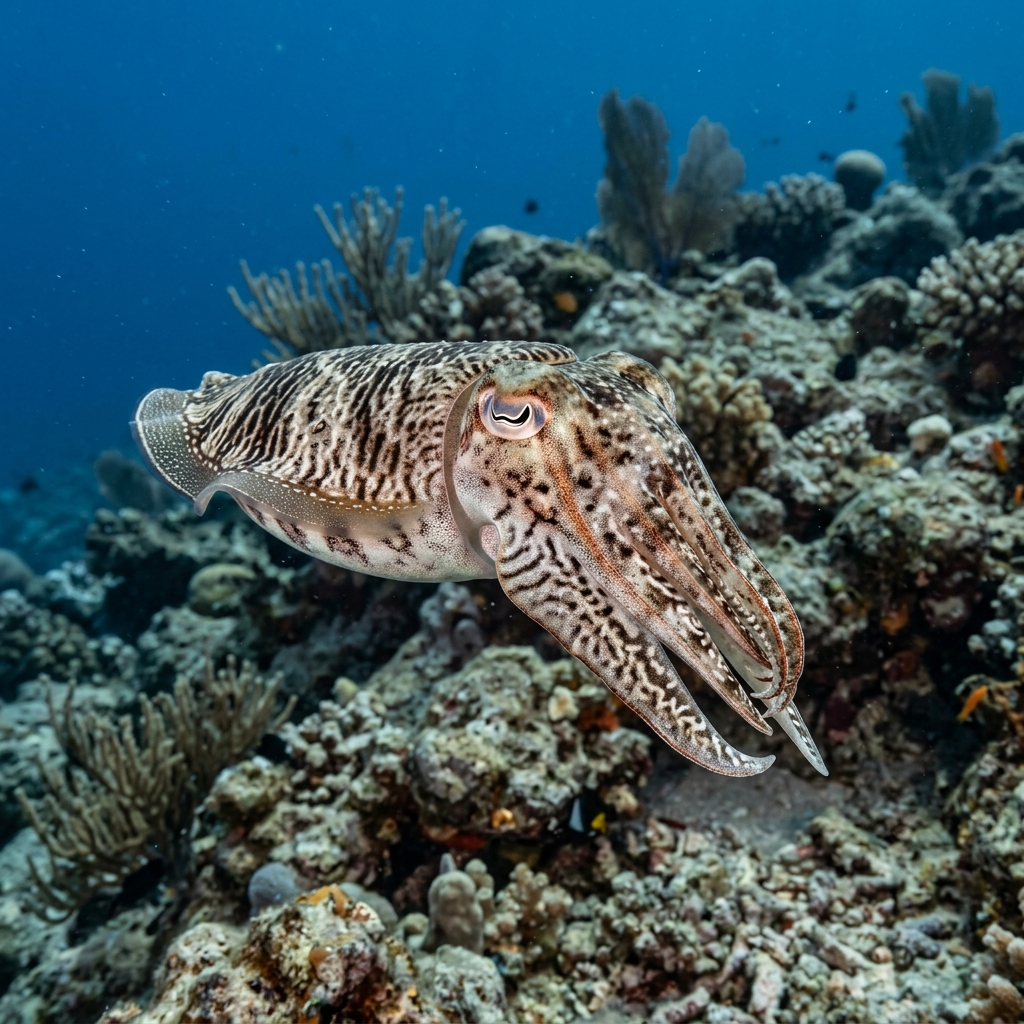
Pharaoh Cuttlefish
925 sites