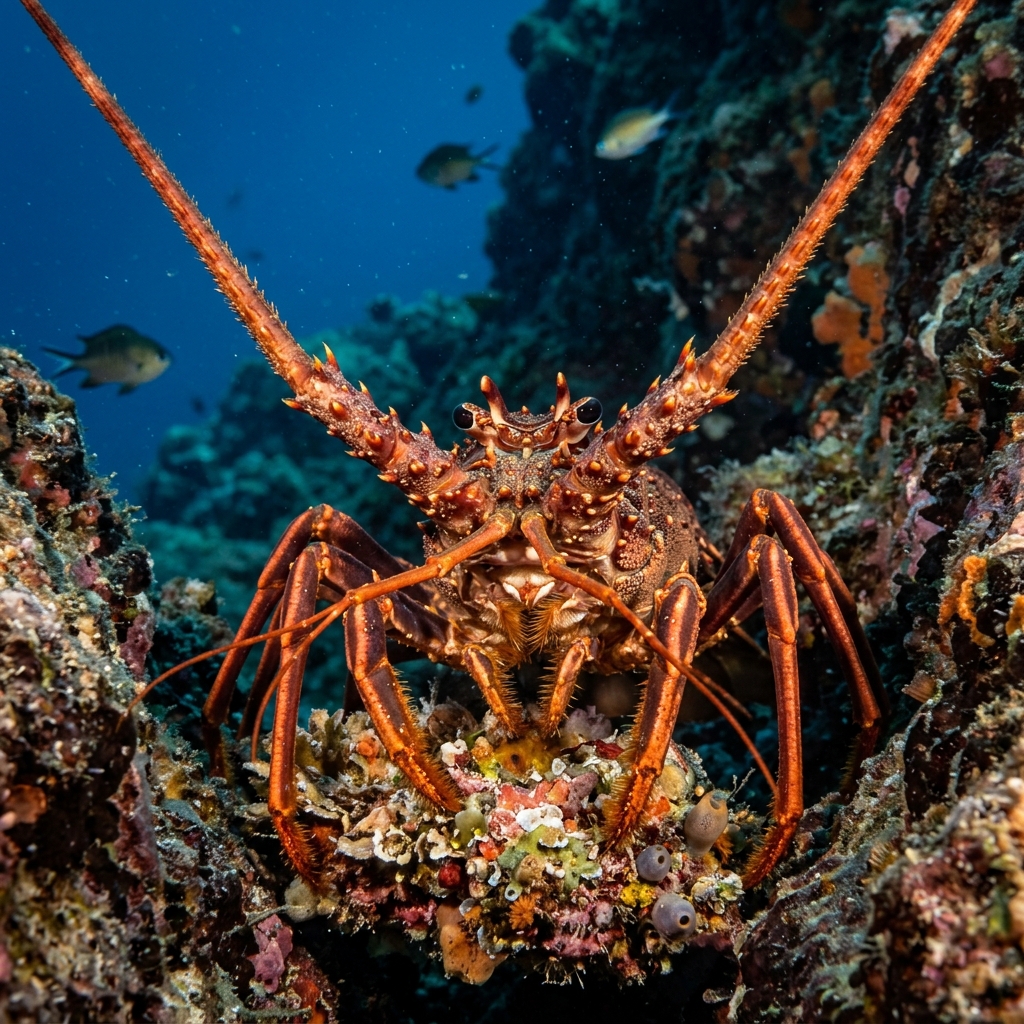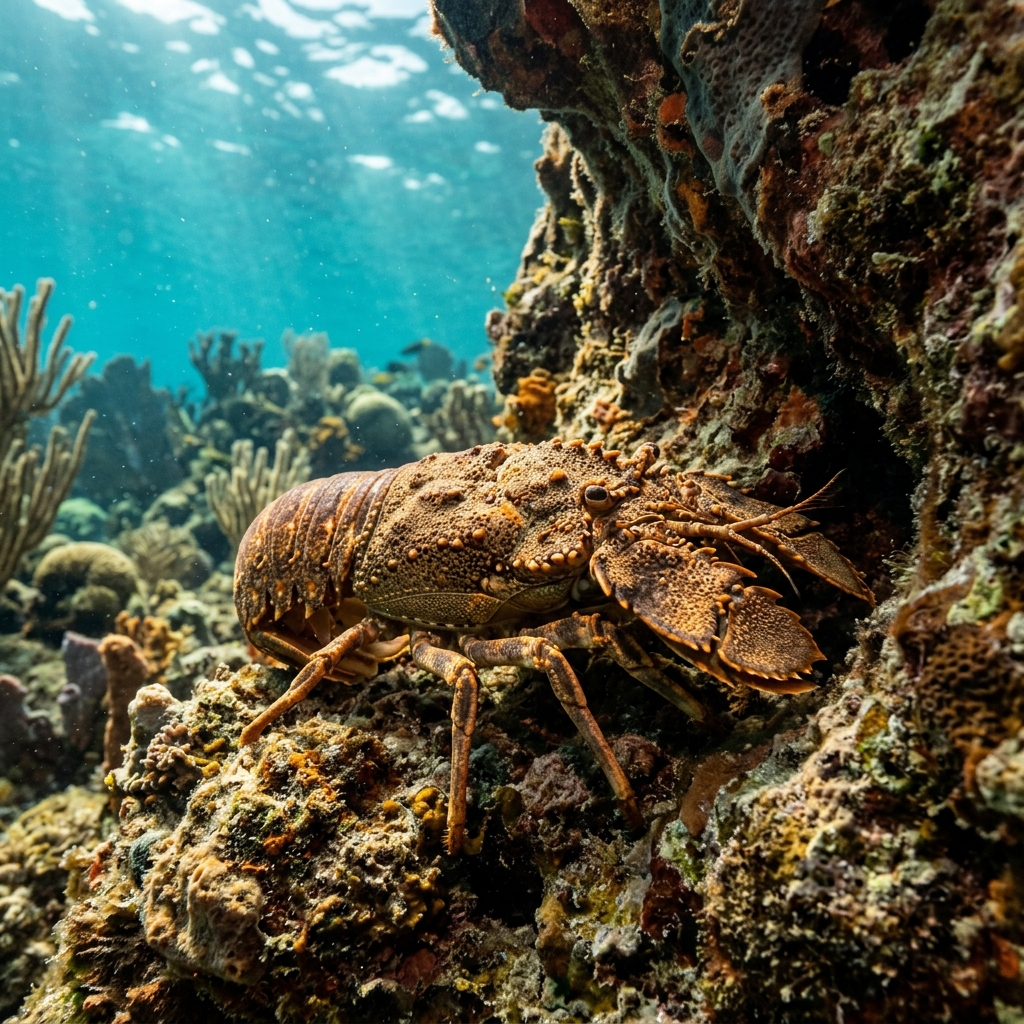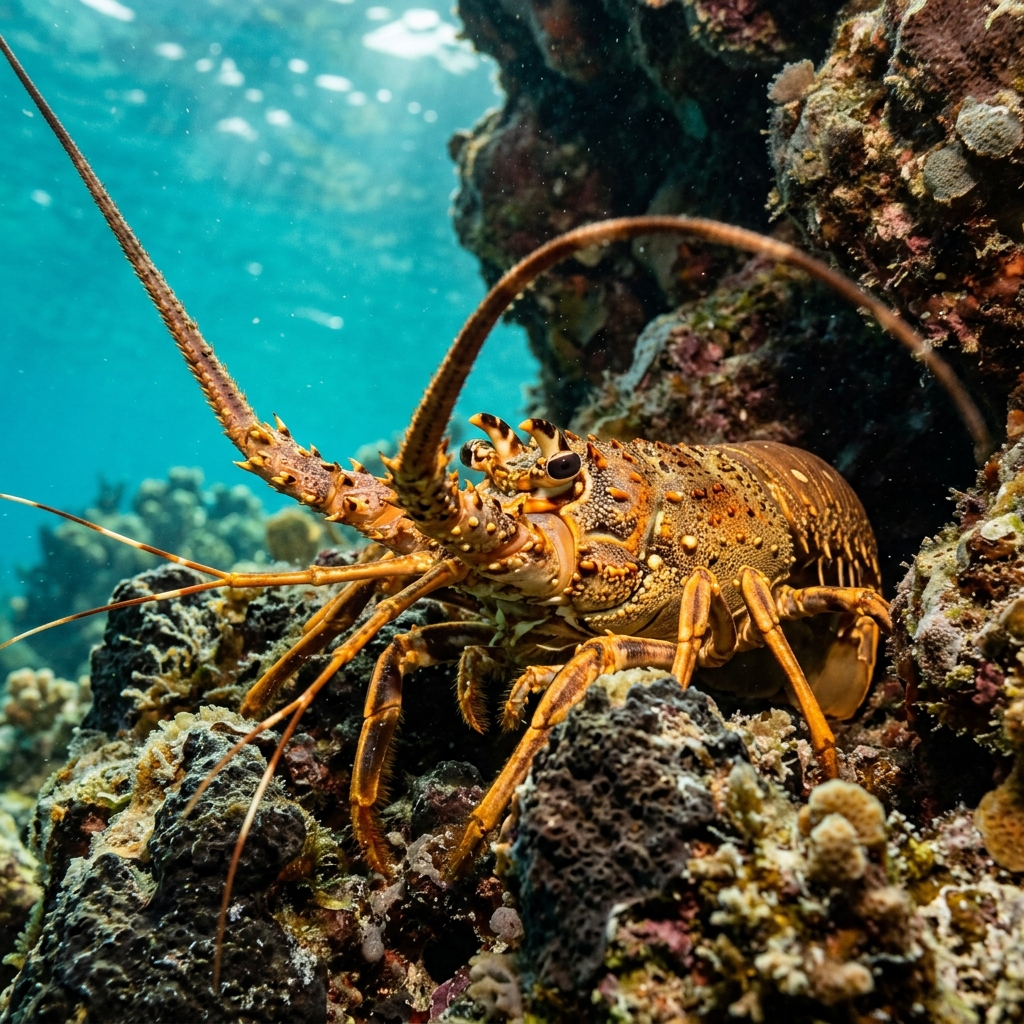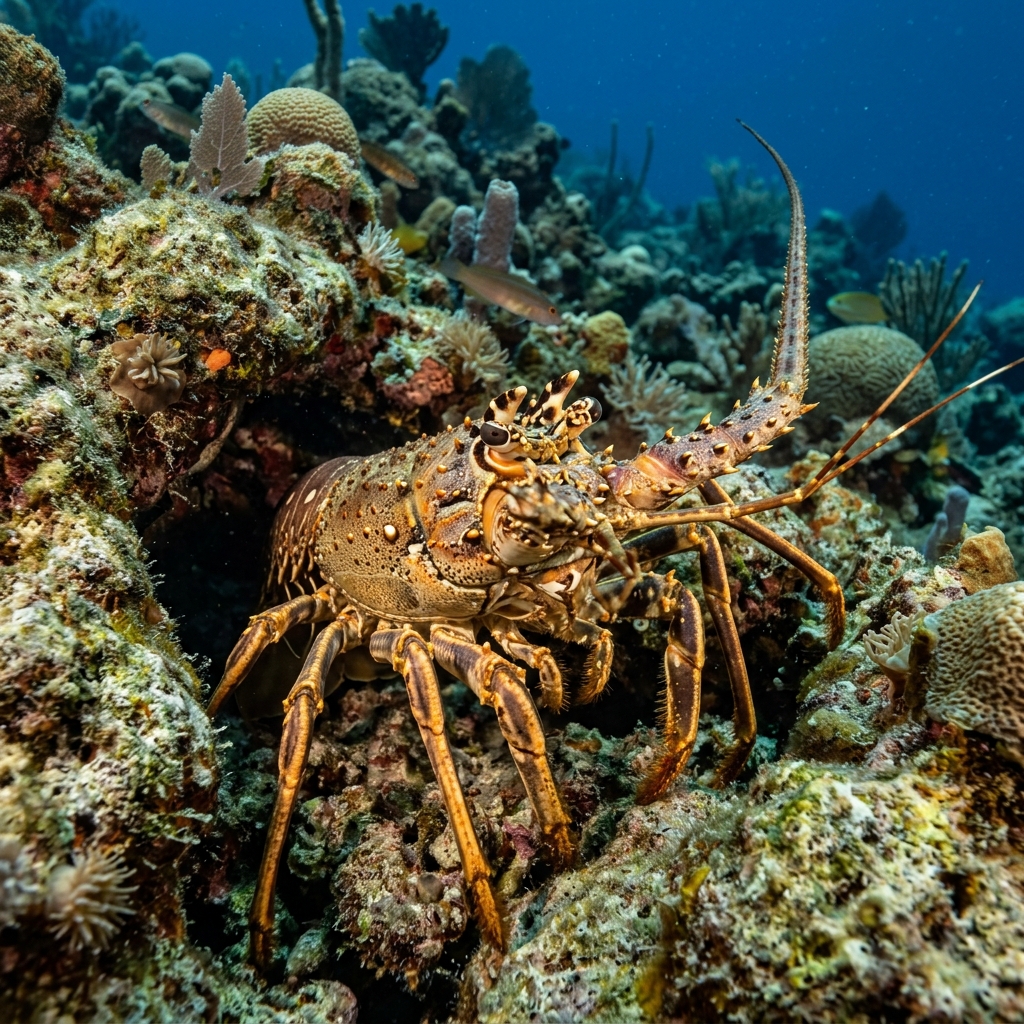
Galatheidae spp.
Spot spiny squat lobsters from Florida to the French Riviera, year-round in the Northern Hemisphere. Here's where to look and how to ID them.
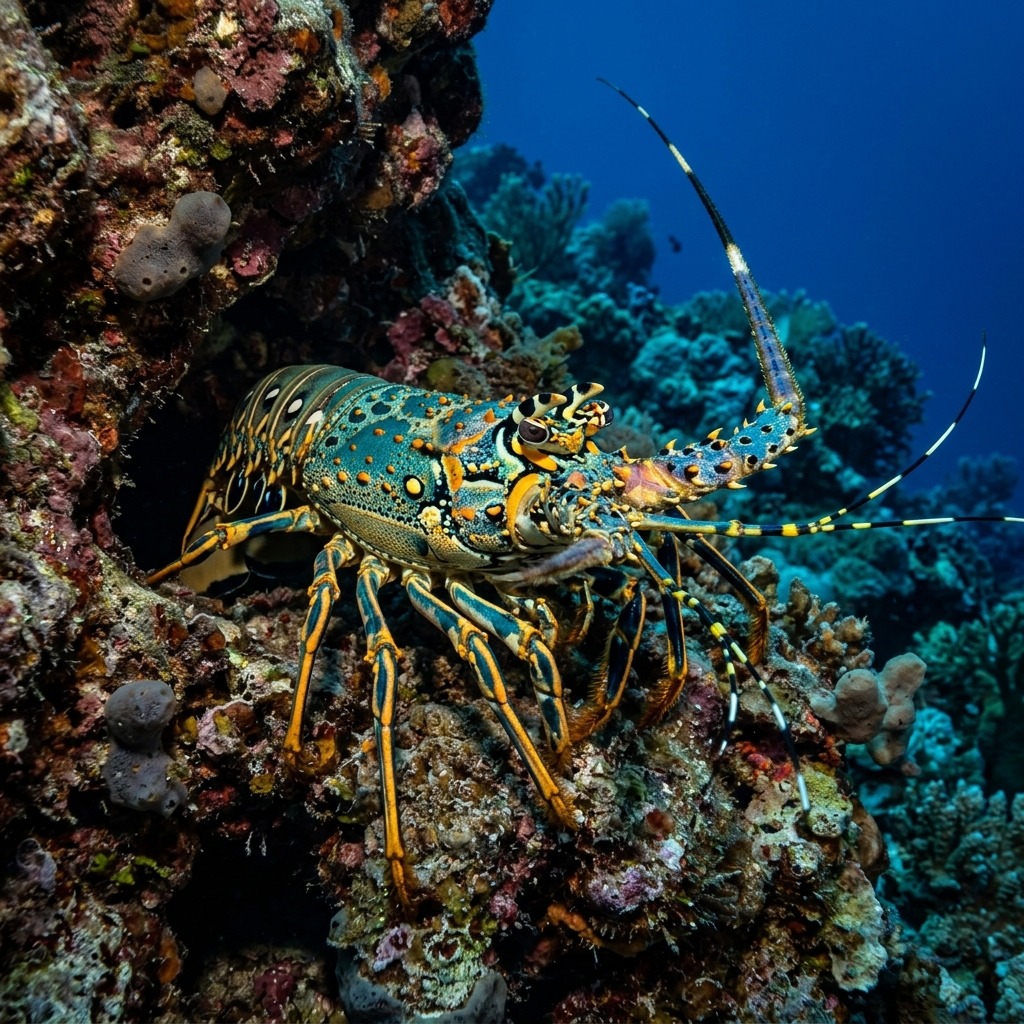
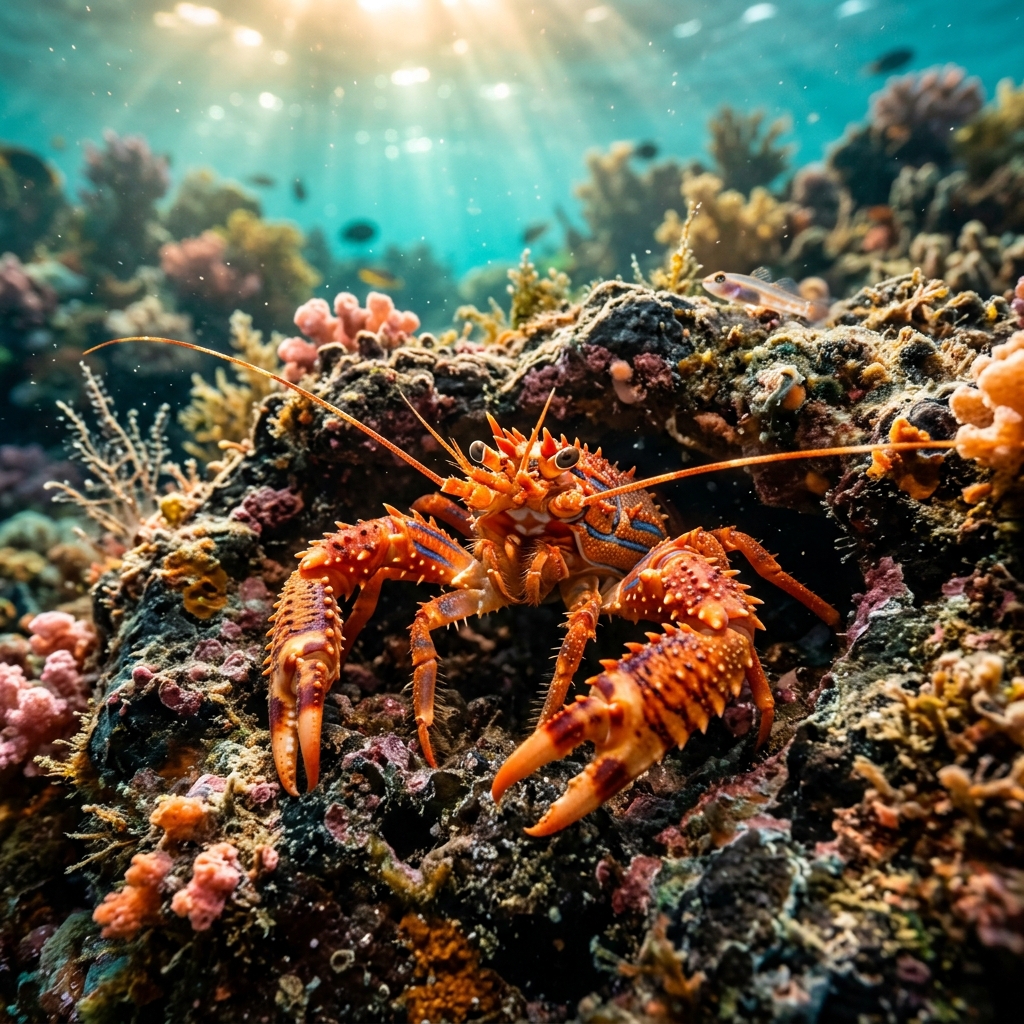
Spiny squat lobsters are compact, flattened crustaceans with a broad, shield-like carapace (the hardened upper shell) covered in small spines, giving them a rough, armoured texture. Colouration varies across the family but typically runs through shades of reddish-brown, orange, and cream, often with spotted or mottled patterning. Their front claws (chelipeds) are notably long and held out in front of the body, and their tail is permanently tucked underneath rather than extended like a true lobster. Look for them wedged into crevices or nestled under overhangs on rocky or reef substrate.
Most encounters happen when a diver slows down and checks the dark spaces: rock crevices, under ledges, and among coralline algae are typical haunts. They tend to hold their ground when approached carefully, raising their long claws in a defensive posture rather than fleeing immediately. Sightings are often solitary, though males and females may be found in proximity during the breeding season.
Despite the name, spiny squat lobsters are not true lobsters at all; they belong to the family Galatheidae and are more closely related to hermit crabs and porcelain crabs than to the lobsters they superficially resemble.
In the Northern Hemisphere, spiny squat lobsters are present year-round with no concentrated peak season, which aligns with their wide temperature tolerance from around 8.5°C to 27.7°C, spanning cool-water sites in Scotland and the Netherlands through to warm Mediterranean and Florida waters. In the Southern Hemisphere, the limited data points to encounters concentrated between December and April.
Reef neighbours a diver could mistake it for. Use the identification notes above to tell them apart.
Spiny squat lobsters are most commonly logged in the United States, France, and the United Kingdom, with particularly strong sighting records in Florida and the Southeast, Brittany and Normandy, and the French Riviera and Provence. Australia, Italy, Spain, Croatia, and Greece all return solid encounter rates, and sightings extend as far as Queensland and the Izu Peninsula of Japan, making this a group you can realistically seek out across a huge range of temperate and subtropical dive destinations.
Mapping where Squat Lobster is logged…
They turn up at dive sites across a wide range of countries, with the strongest sighting records in the United States (especially Florida), France (Brittany, Normandy, and the French Riviera), and the United Kingdom. Croatia, Greece, Italy, Spain, and Australia also have well-documented populations.
In the Northern Hemisphere, they are present year-round with no single best season. Their tolerance for water temperatures from around 8.5°C to 27.7°C means they persist through cold-water winters in the UK and Netherlands as well as warm Mediterranean summers. In the Southern Hemisphere, December to April appears to be the most productive window based on available data.
Look for a small, flattened crustacean with a spiny, shield-shaped carapace and disproportionately long front claws held forward. The tail is folded under the body rather than extended. Colouration is typically reddish-brown to orange with mottled patterning. They are almost always found tucked into crevices or sheltering under overhangs.
No. Spiny squat lobsters pose no threat to divers. They may raise their claws defensively if approached closely, but they are small animals focused on avoiding predators rather than confronting them. Observing from a short distance without disturbing their shelter is all that is needed.
Not really. Despite the name, spiny squat lobsters belong to the family Galatheidae and are more closely related to hermit crabs and porcelain crabs than to true lobsters. The resemblance is convergent: a similar body plan evolved independently in animals that share a similar reef and crevice lifestyle.
Site and sighting data is aggregated from diver logs, iNaturalist and GBIF. For taxonomy and conservation status:
European Spiny Lobster
1,951 sites