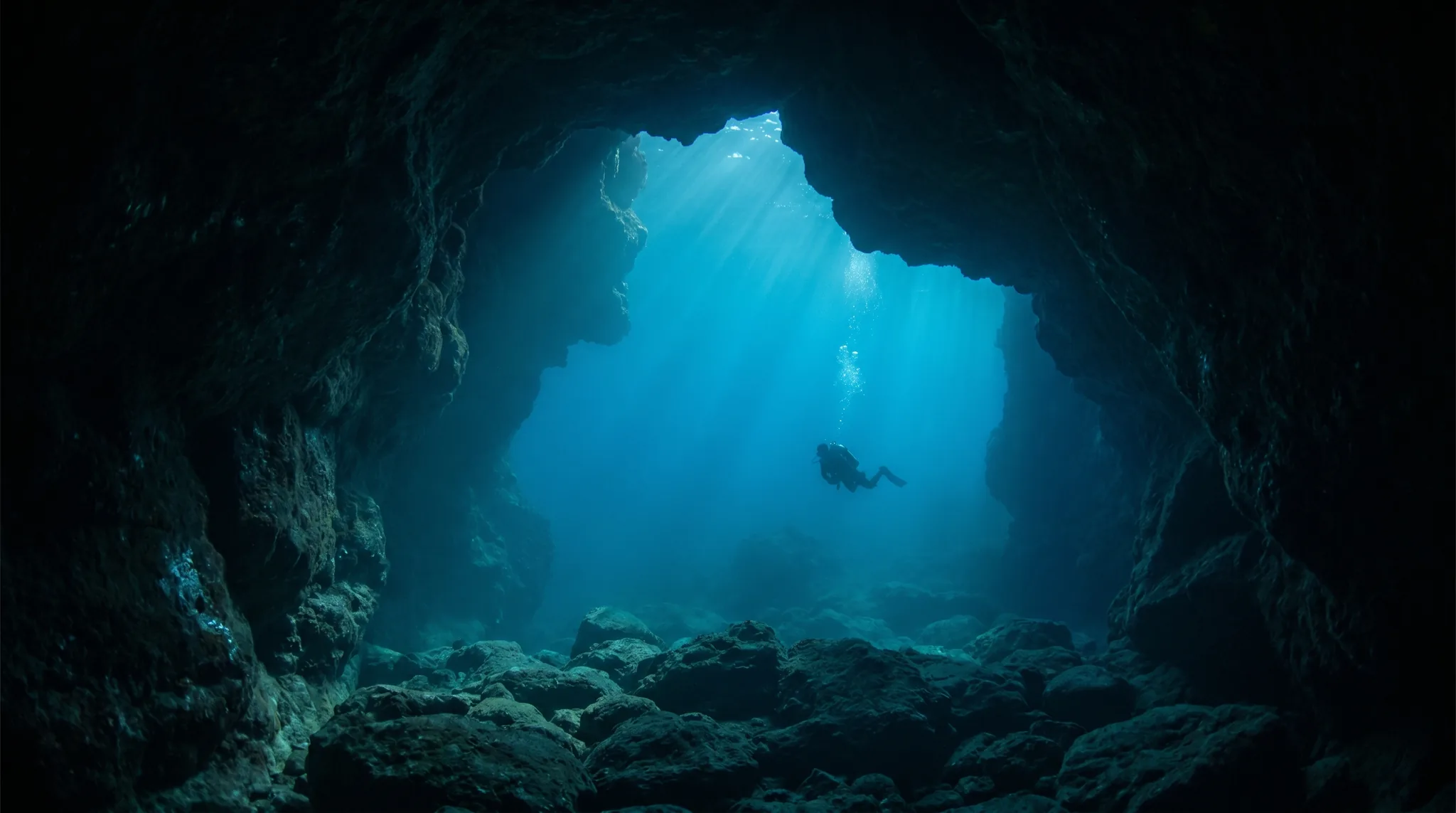
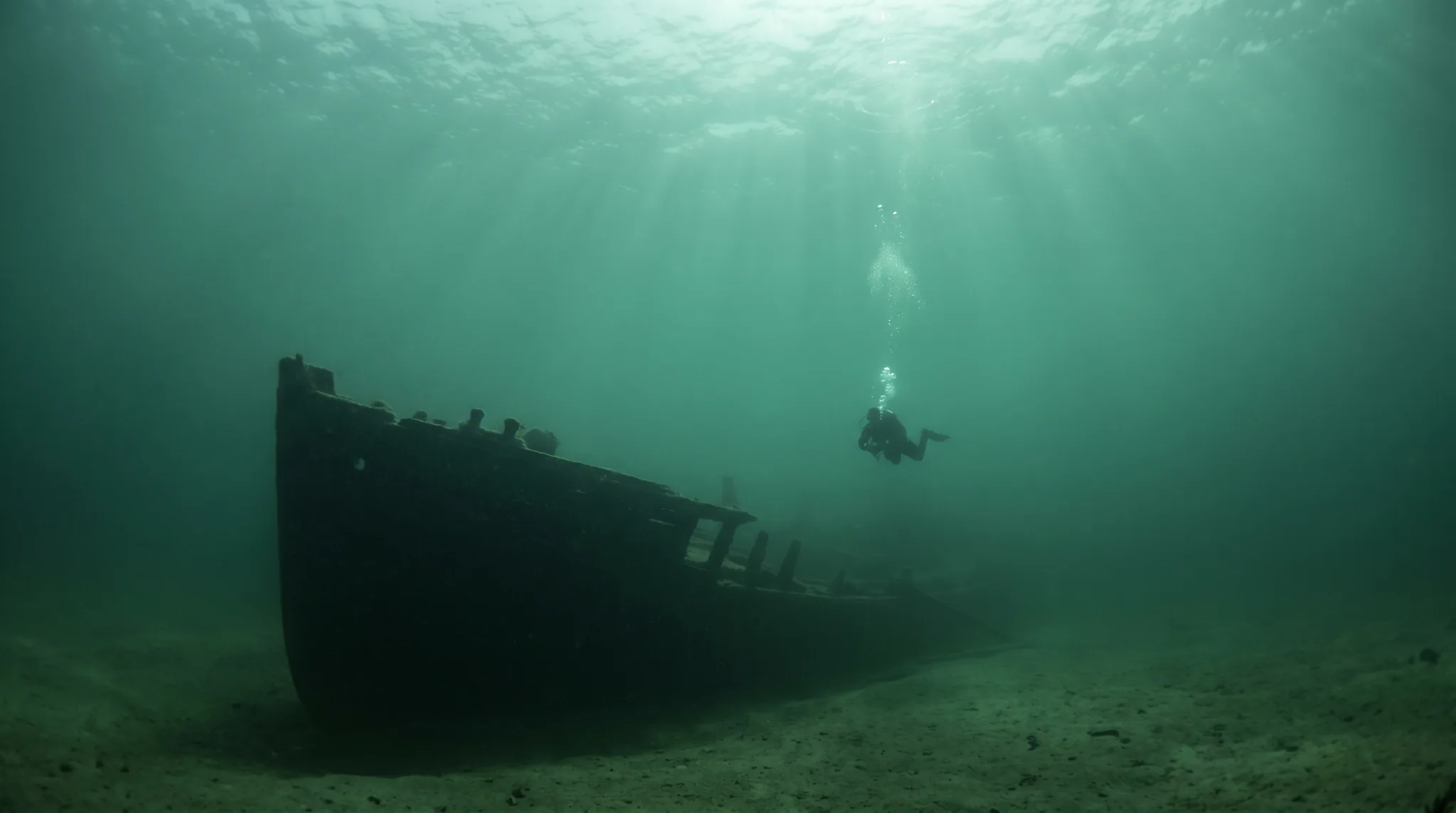
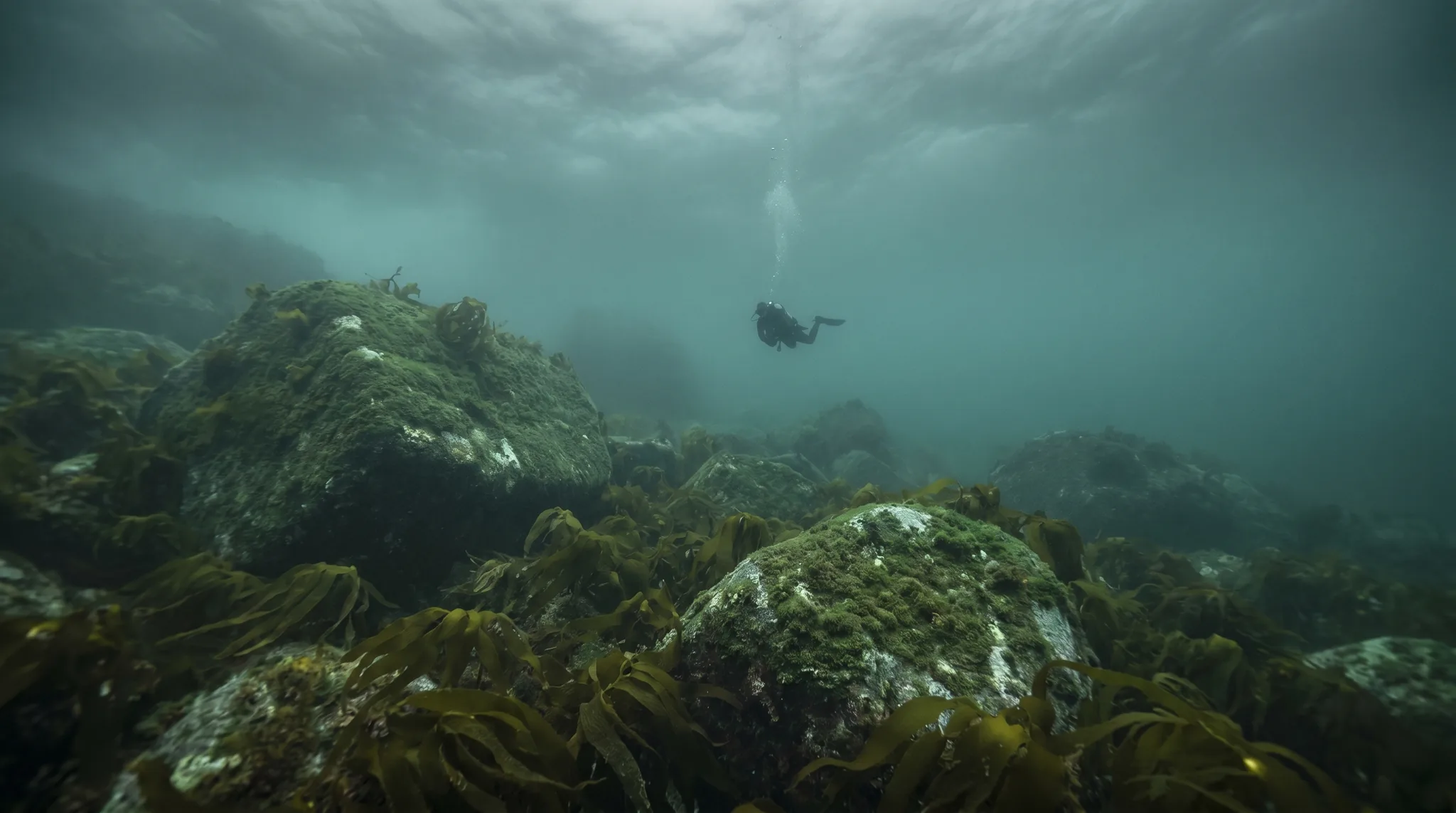
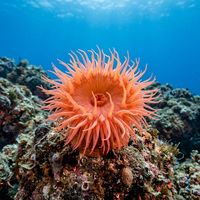
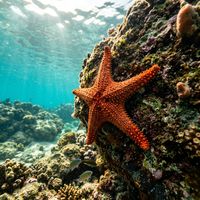
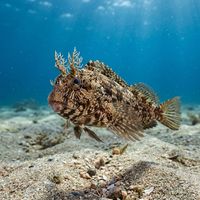
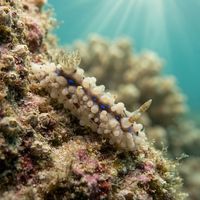
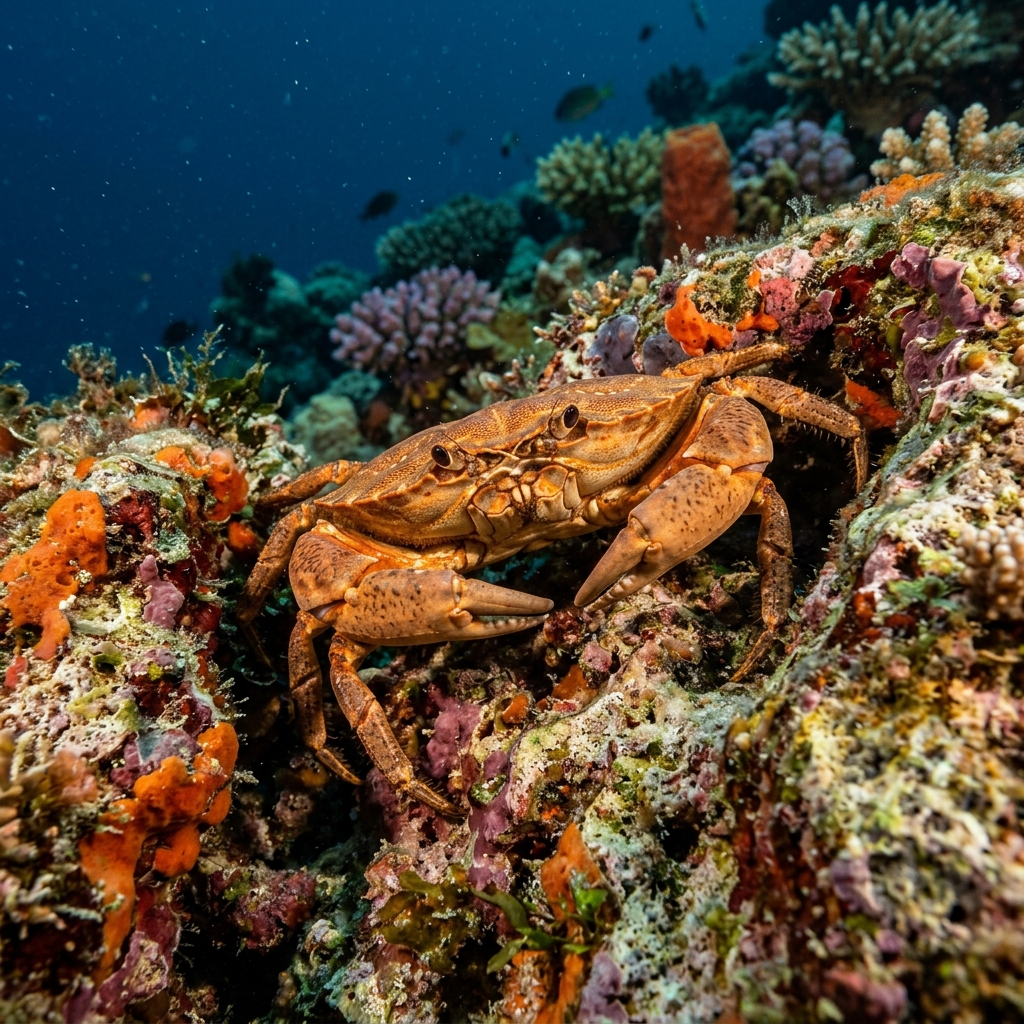
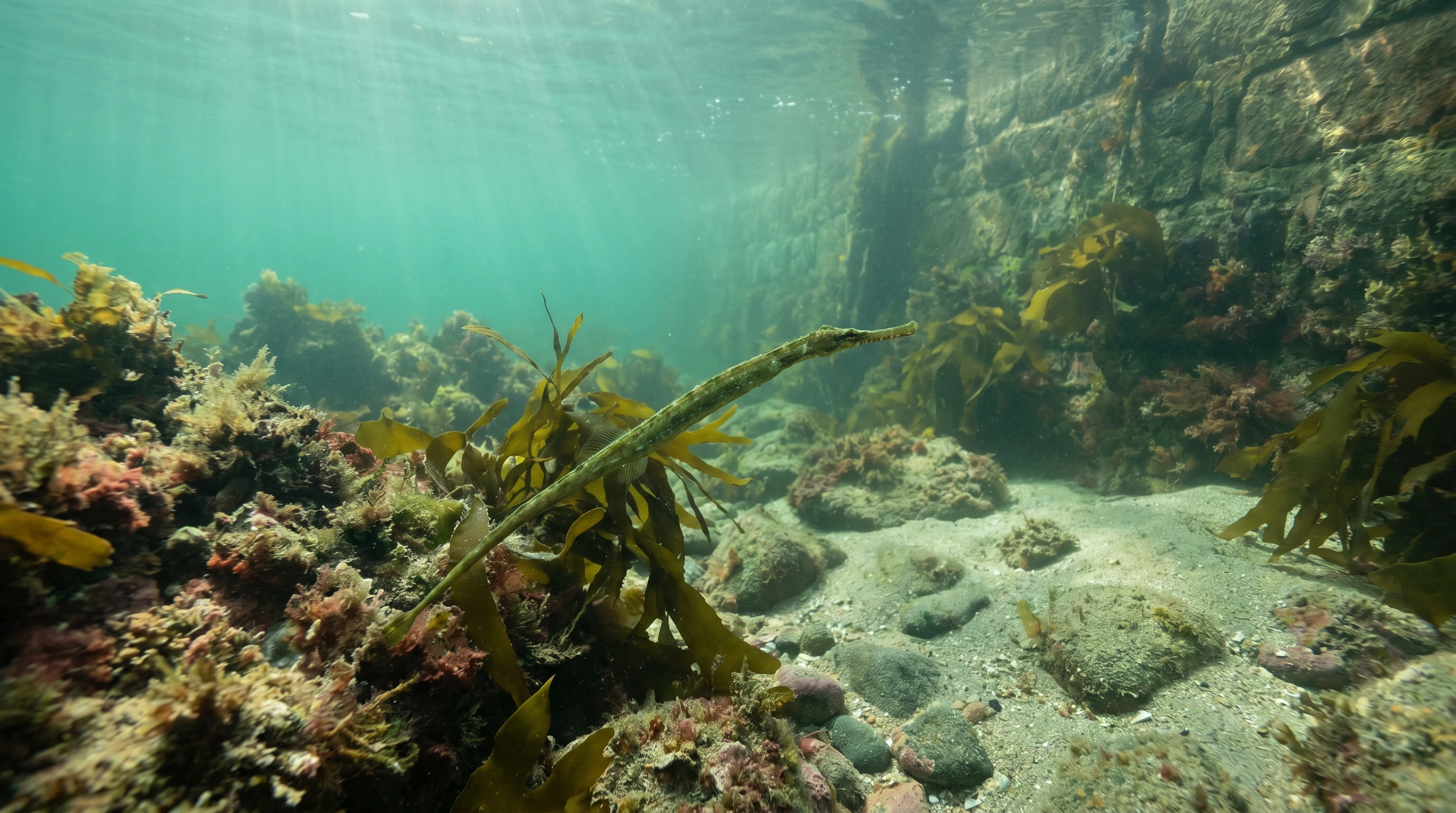
Rigdon Bank lies off the south-west coast in the Channel Islands and holds three sites suited to intermediate and advanced divers: the Rigdon Bank wall dive itself, Guillot Caves, and the wreck of the Shockland. The wall features gullies and bombies and is tidal in character, requiring dives to be planned around small tides. Guillot Caves combine cave penetration with drift diving and sharp reef topography. The Shockland is an upright, largely intact shipwreck with cargo holds still containing original contents. Species recorded include gorgonians, European spiny lobster, squat lobster, pollack, wrasses, dogfish, and nudibranchs. All sites are accessed by boat.
Monthly water temperature across Rigdon Bank's sites, from satellite sea-surface data corrected for depth. The band shows the site-to-site spread.
Temperatures follow a clear seasonal pattern, coldest in late winter and warmest in late summer and early autumn. Tidal streams are a defining factor: the wall and cave sites require careful timing, and the area demands boat access throughout the year.
Water temperature around Rigdon Bank ranges from about 10°C in February to 18°C in September, based on satellite sea-temperature data for its dive sites.
In the warm season (about 18°C) a 5mm suit is comfortable in Rigdon Bank; in the coldest months (about 10°C) step up to a drysuit.
Fin maps 3 sites in Rigdon Bank (3 scuba diving sites).