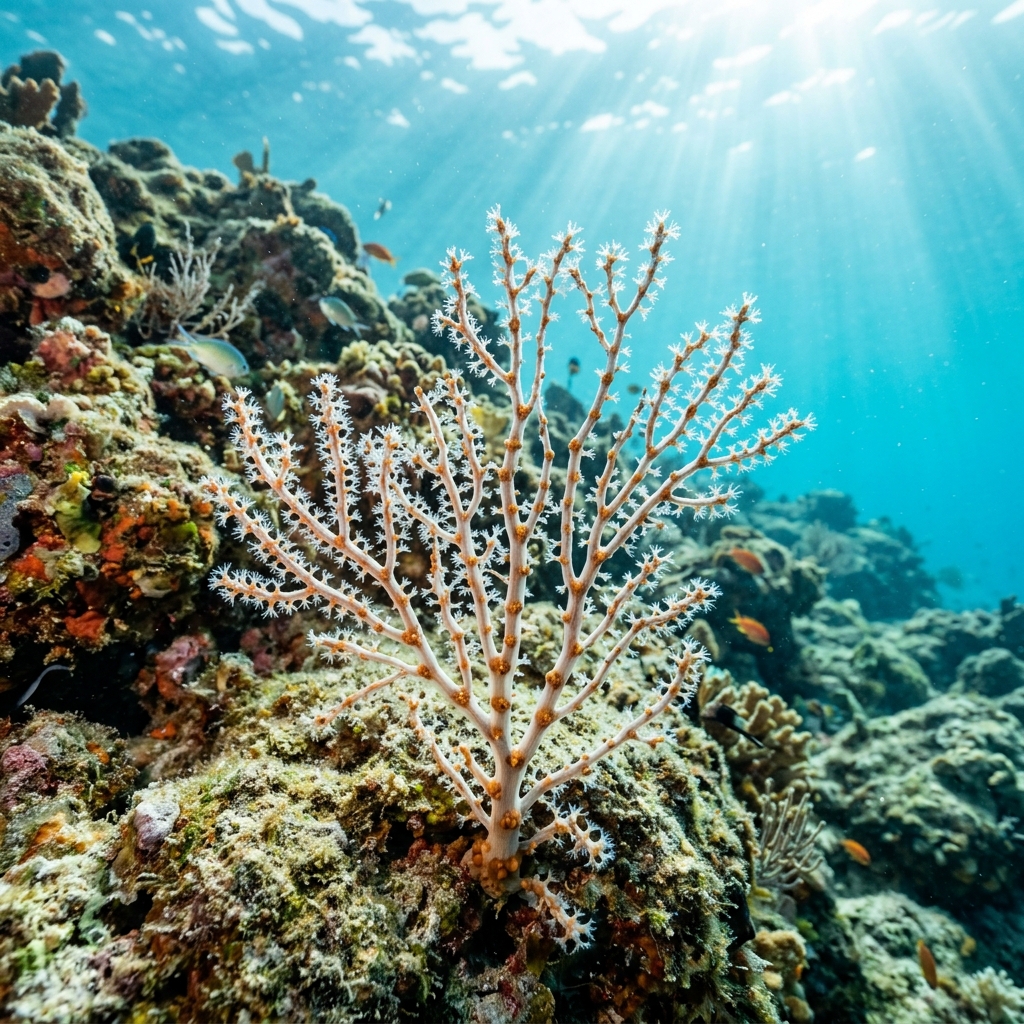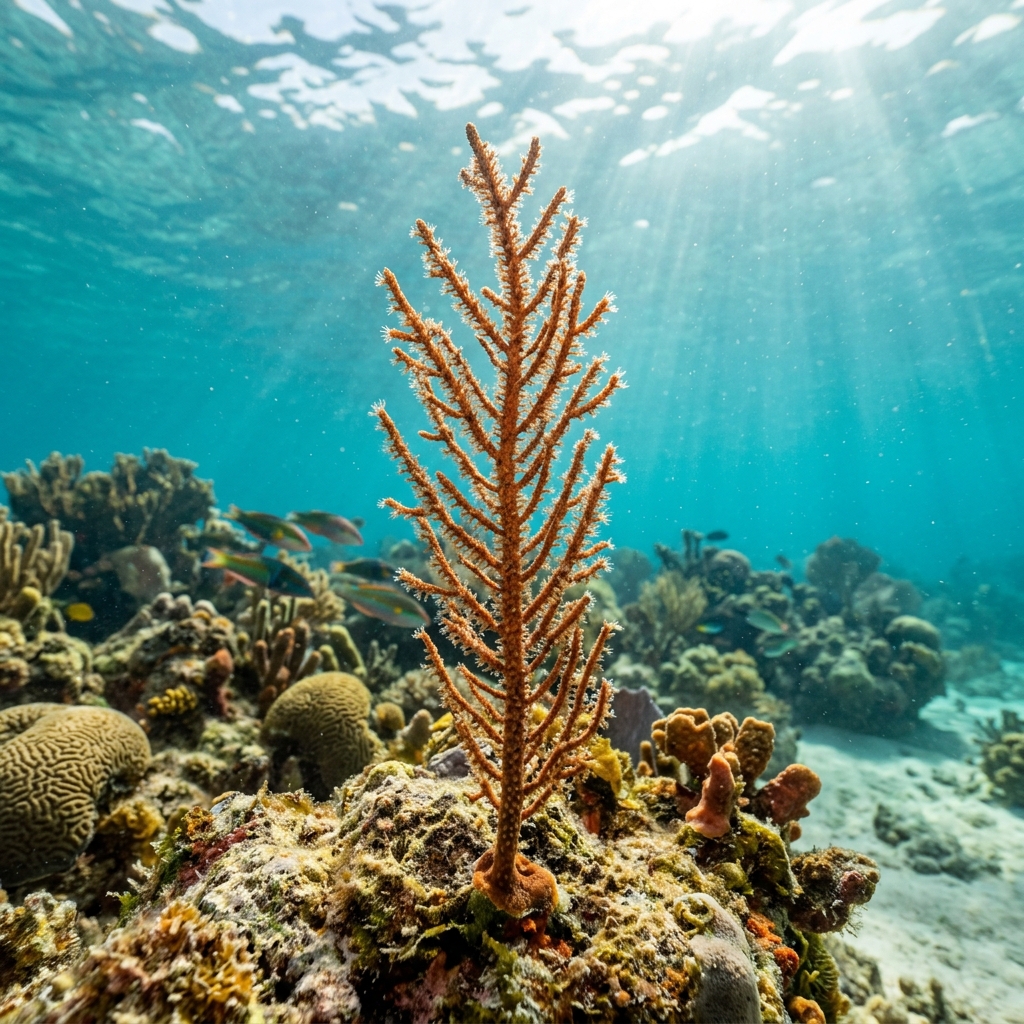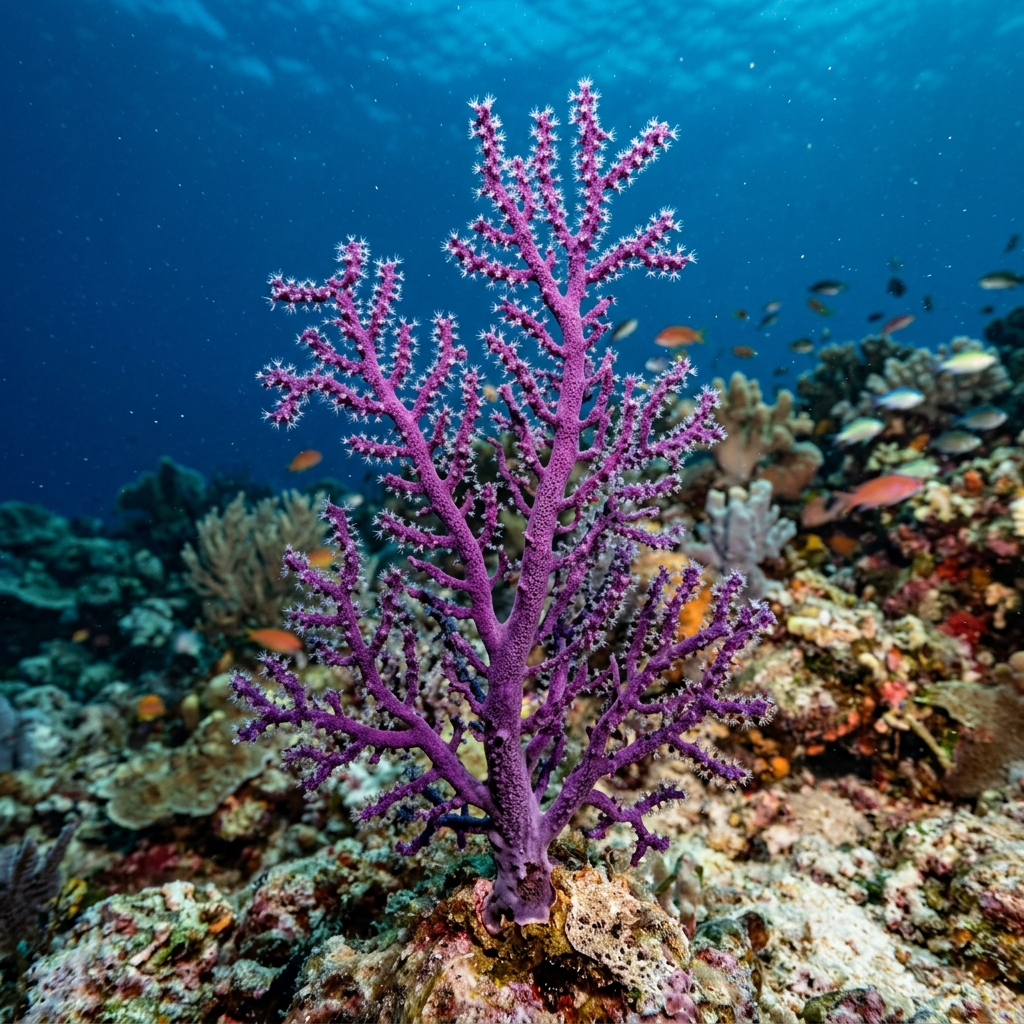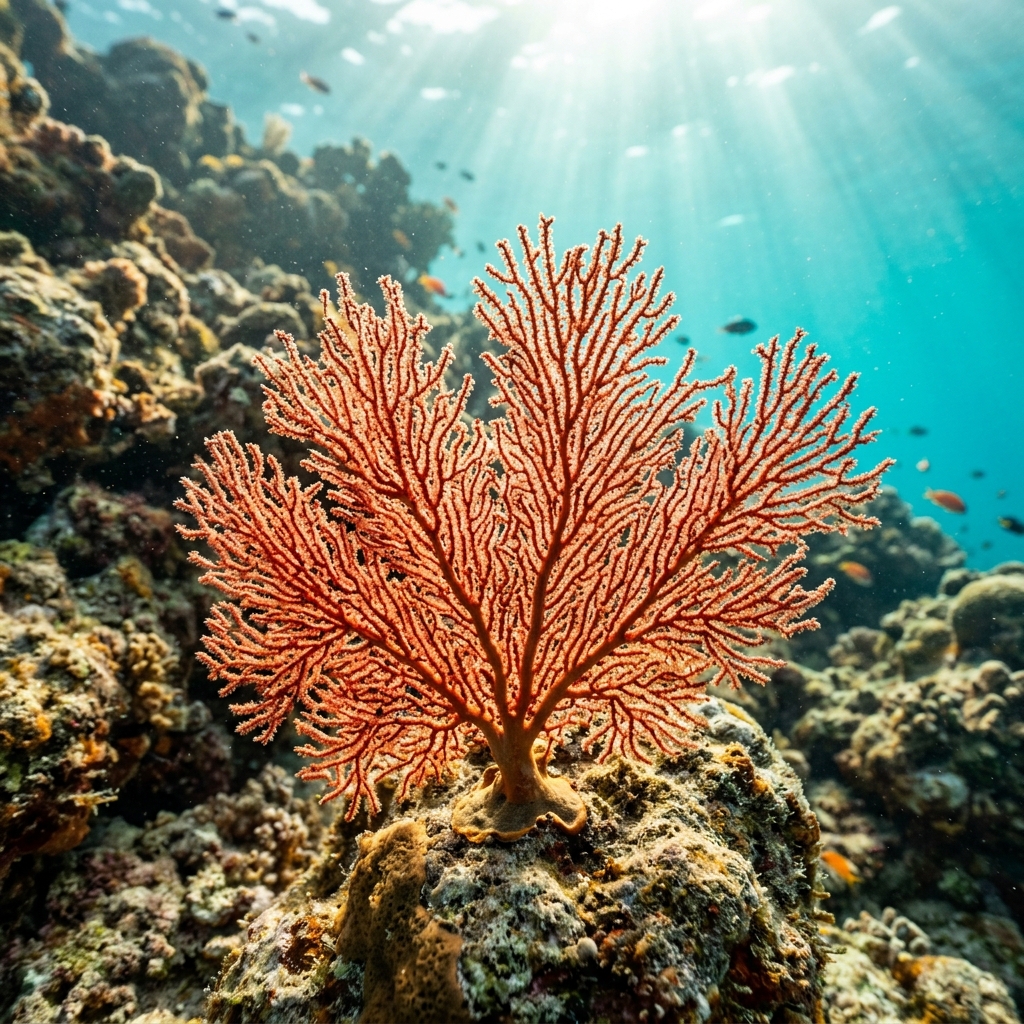
Acanthogorgiidae spp.
Fan coral grows from Florida to the Maldives in water as cold as 8°C. Here's how to spot them and where divers log them most often.
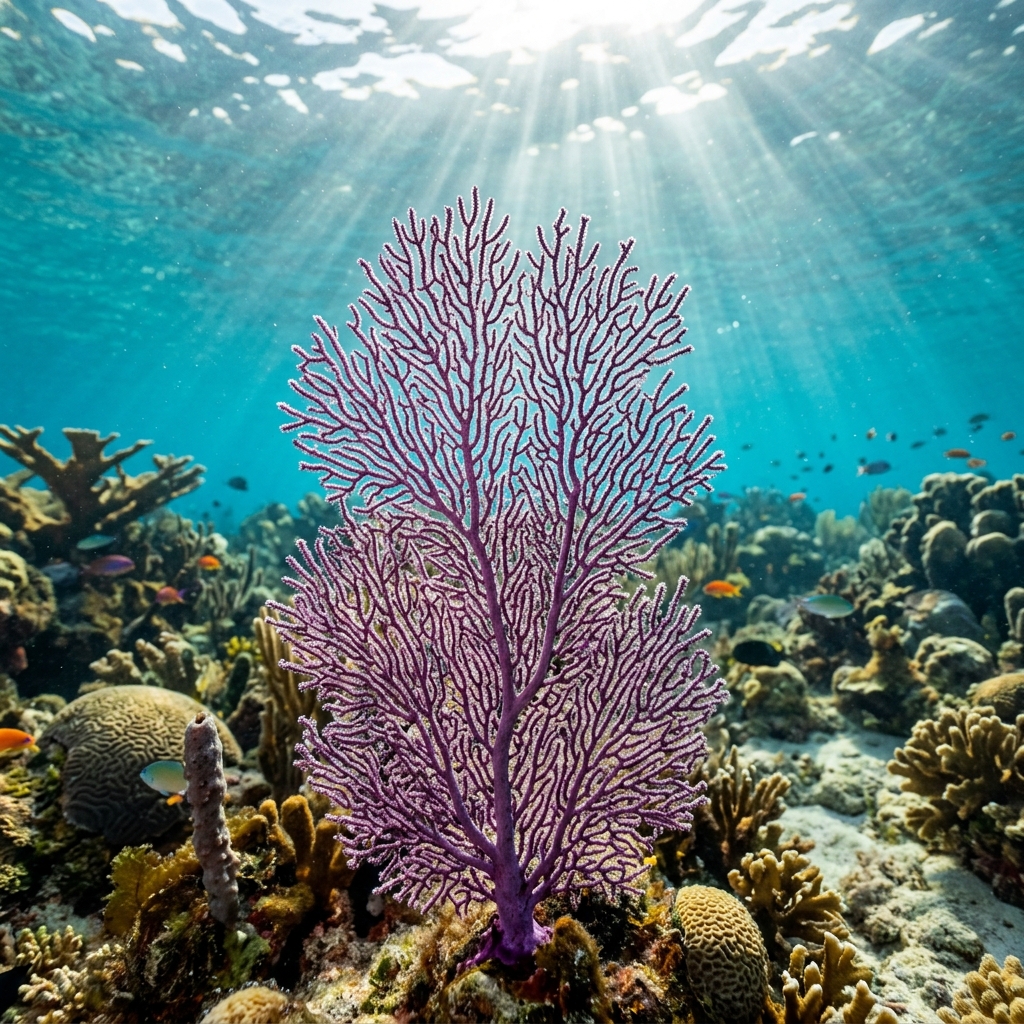
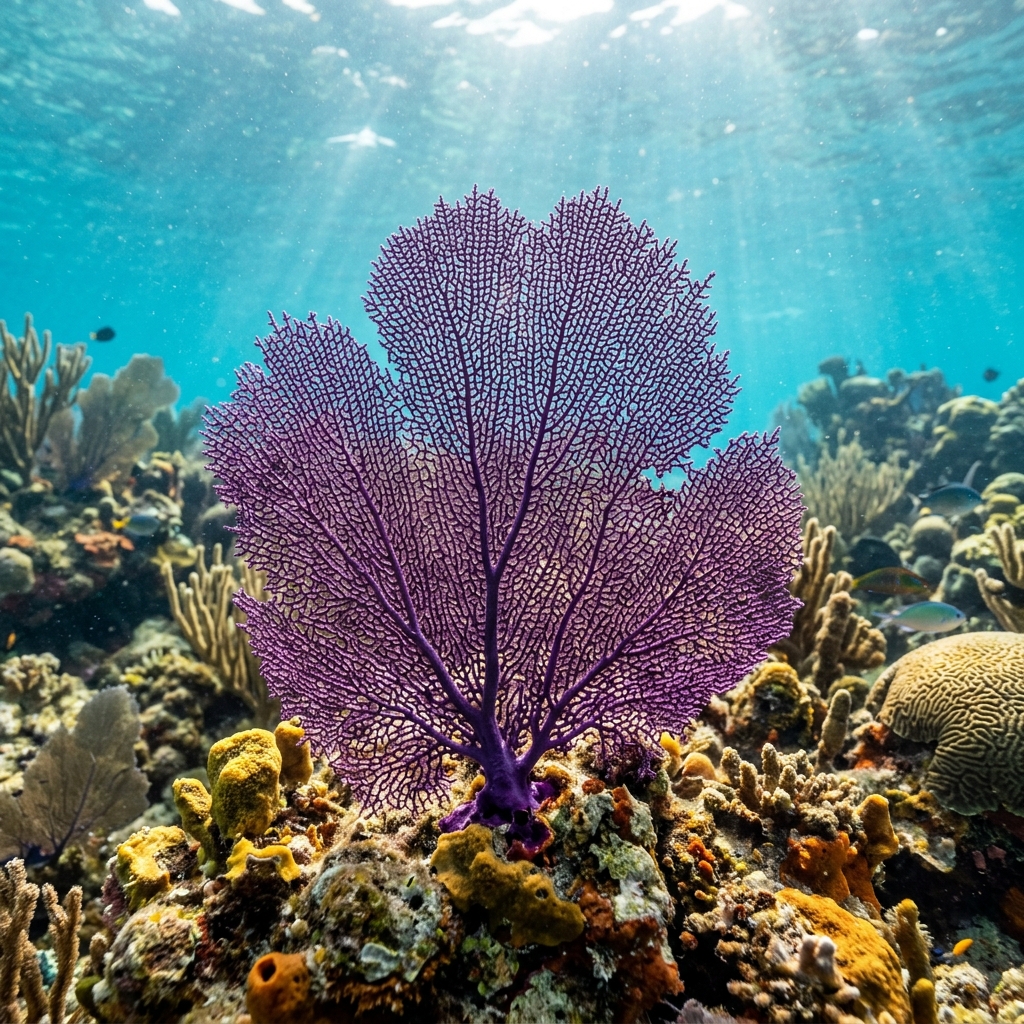
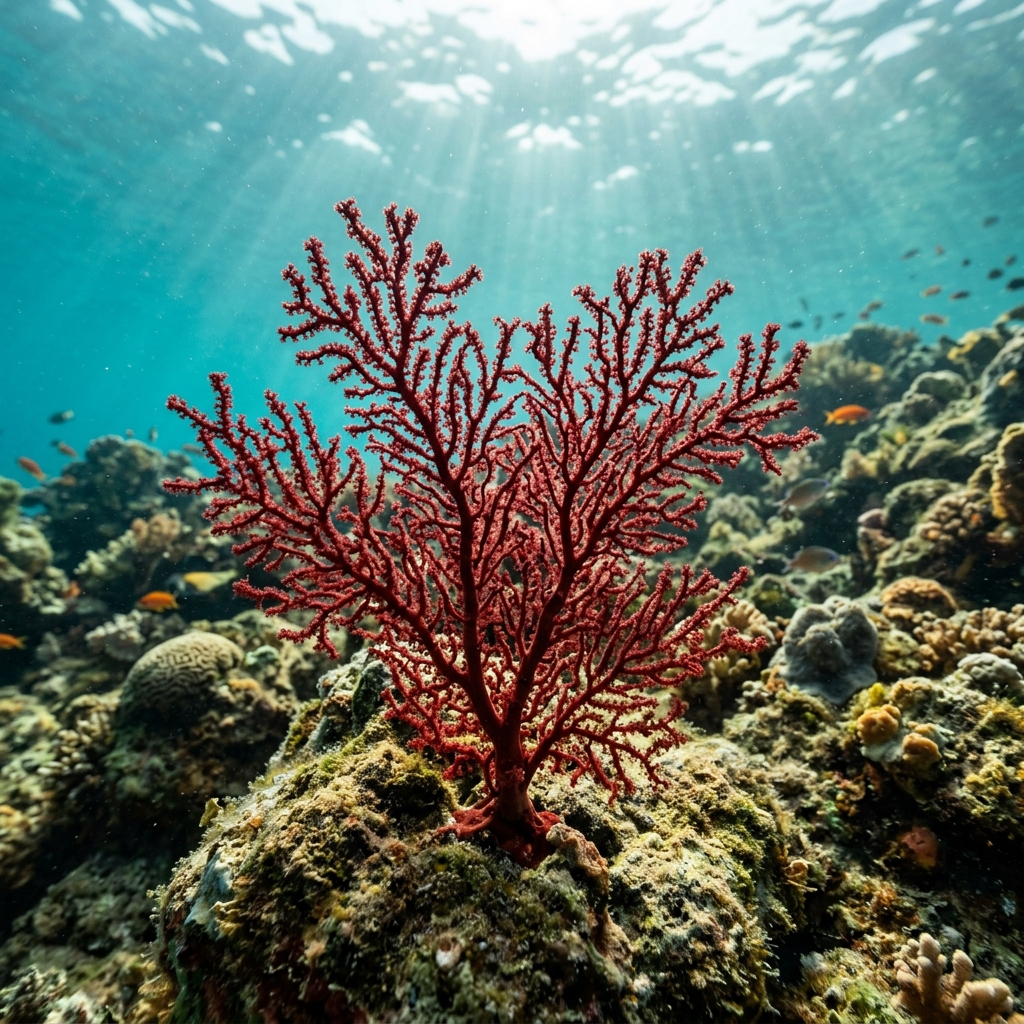
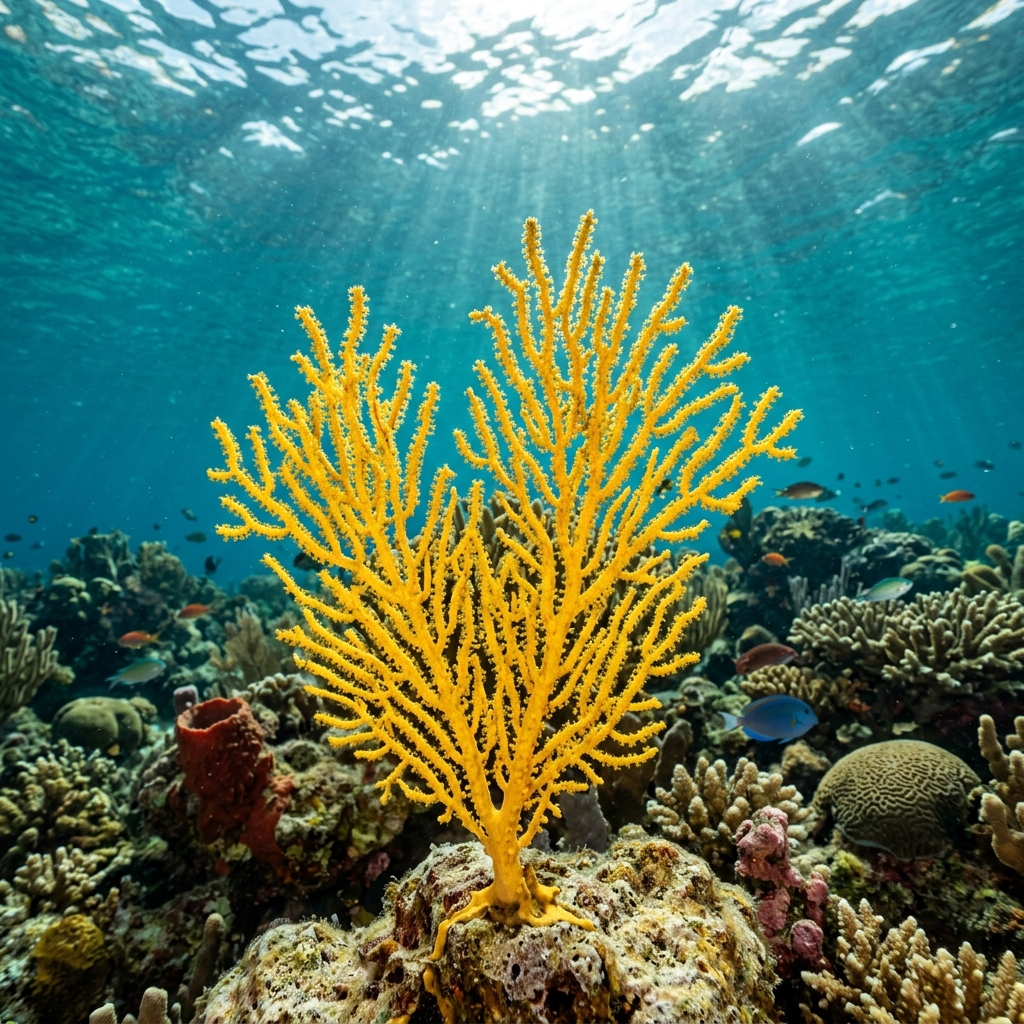
Fan corals grow as flat, plate-like colonies with a branching, net-like lattice of interconnected stems, picture a tree pressed into two dimensions and anchored to a wall or slope. Colonies range from vivid orange and yellow through to deep purple and red depending on the species and region. They orient themselves perpendicular to the prevailing current, which is the single most useful field clue underwater. Individual polyps are tiny and often visible as fuzzy bumps along the branches when the animal is actively feeding.
Fan corals are sessile (fixed in place) filter feeders, so they are not going anywhere when you find them, they extend their polyps into the water column to capture plankton and organic particles carried on the current. You will nearly always find them on walls, drop-offs, or current-swept ridges where water movement is reliable, typically with the flat face of the colony angled across the flow. They pose no risk to divers and do not react to your presence, but brushing against the delicate branches can break or damage them.
The flat fan orientation is not random, colonies actively grow perpendicular to the dominant current direction, maximising the surface area exposed to passing food particles. Over years, a single colony can grow large enough to act as a nursery habitat for small fish and invertebrates that shelter within its framework.
Northern Hemisphere sightings concentrate between April and July, making spring and early summer the prime window for destinations like Florida, the Mediterranean, and Japan. Their wide temperature tolerance, observed from around 8°C up to nearly 29°C, means they persist on temperate as well as tropical reefs, so sightings outside peak months are certainly possible.
Reef neighbours a diver could mistake it for. Use the identification notes above to tell them apart.
Fan corals from the Acanthogorgiidae family show up across a remarkable spread of dive destinations. They are most commonly logged in the United States, particularly across Florida and the Southeast, and appear strongly in the North and Central Atolls of the Maldives and Queensland, Australia. The Mediterranean is also a reliable region, with France, Italy, and Greece all featuring well, and the Izu Peninsula in Japan rounds out a strong Indo-Pacific presence.
Mapping where Fan Coral is logged…
Fan corals from this family are logged across a wide range of destinations worldwide. Strong sighting areas include Florida and the Southeast United States, the North and Central Atolls of the Maldives, Queensland in Australia, and the Mediterranean, particularly France, Italy, and Greece. The Izu Peninsula in Japan is also a notable hotspot.
In the Northern Hemisphere, sightings peak between April and July. Because this family tolerates a broad temperature range, from around 8°C in cold temperate waters up to nearly 29°C on tropical reefs, fan corals can be encountered year-round in many destinations, even outside peak season.
Look for flat, lattice-like colonies anchored to walls or current-swept slopes, with branching stems forming a net-like grid. The key field clue is orientation: the fan always faces across the current. Colours vary widely from orange and yellow to purple and red. Tiny polyps along the branches may appear as a fuzzy texture when the animal is feeding.
Size varies considerably across the species in this family and is not well-defined from dive observations alone. In general, fan coral colonies can range from hand-sized to well over a metre across, with larger colonies typically found in deeper, calmer water where they have had more time to grow undisturbed.
The flat, two-dimensional colony shape is an adaptation for filter feeding. By growing perpendicular to the dominant current, the colony maximises the area of branching polyps exposed to water flow, increasing the amount of plankton and organic particles it can capture. This is why you almost always find them on current-swept walls and ridges rather than sheltered bays.
Site and sighting data is aggregated from diver logs, iNaturalist and GBIF. For taxonomy and conservation status:
Eunicella cavolini
Sea Whip
3,016 sites