Brachyura spp.
Crabs are logged year-round from the French Riviera to the Philippines. Here's how to spot, identify, and find them on your next dive.
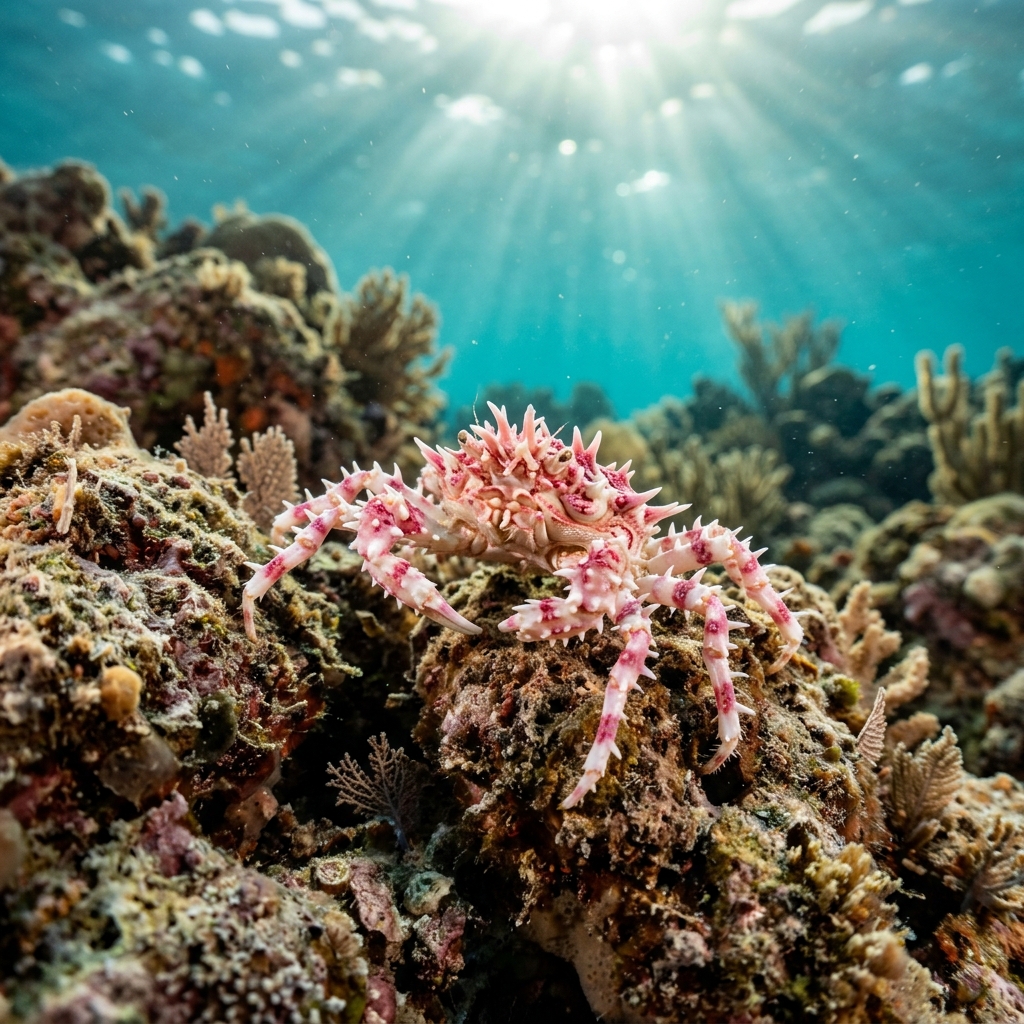
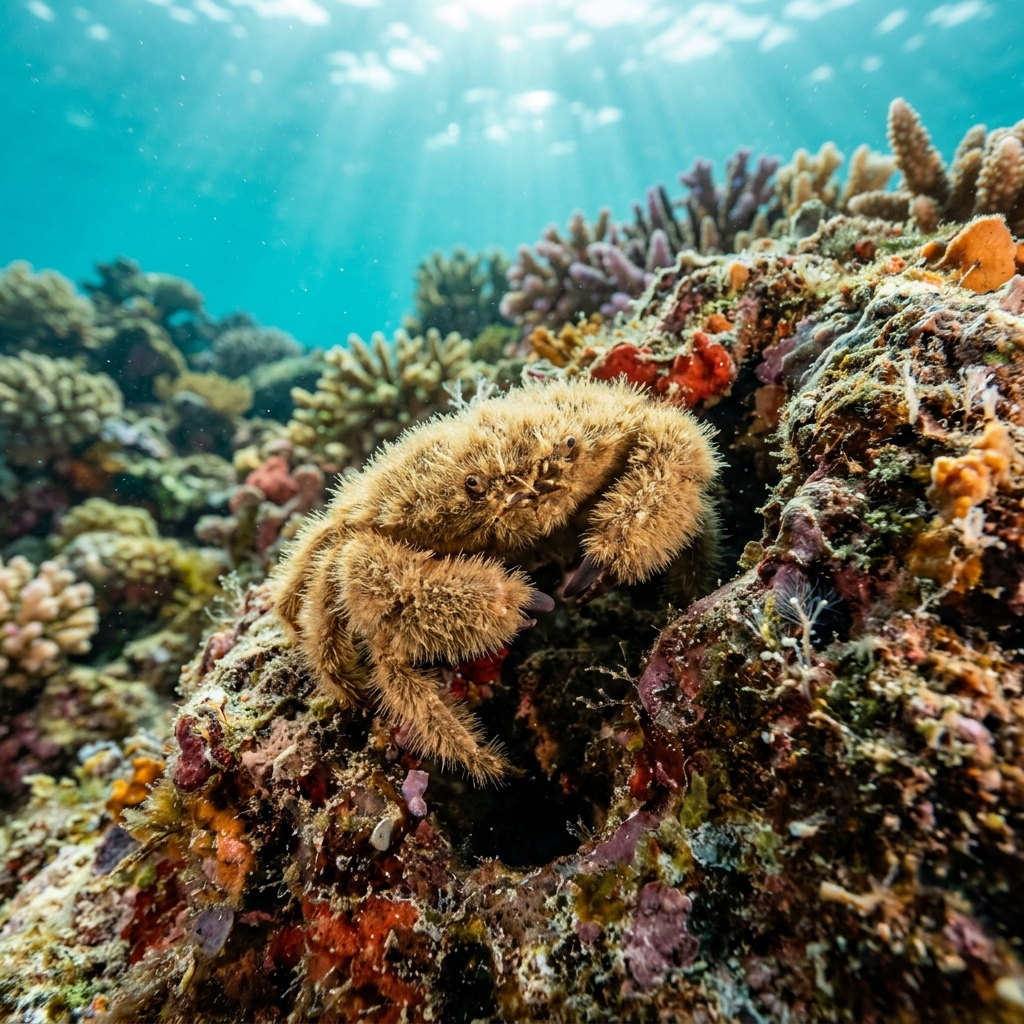
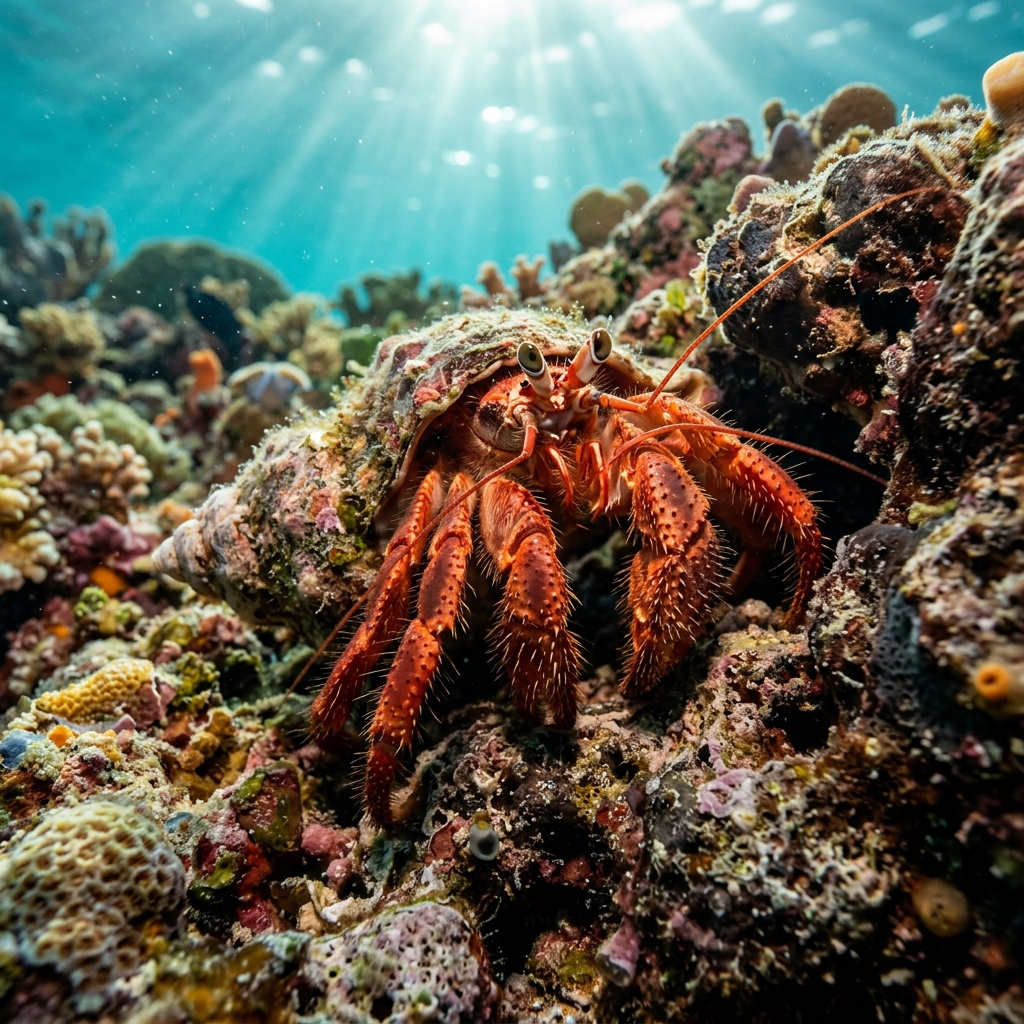
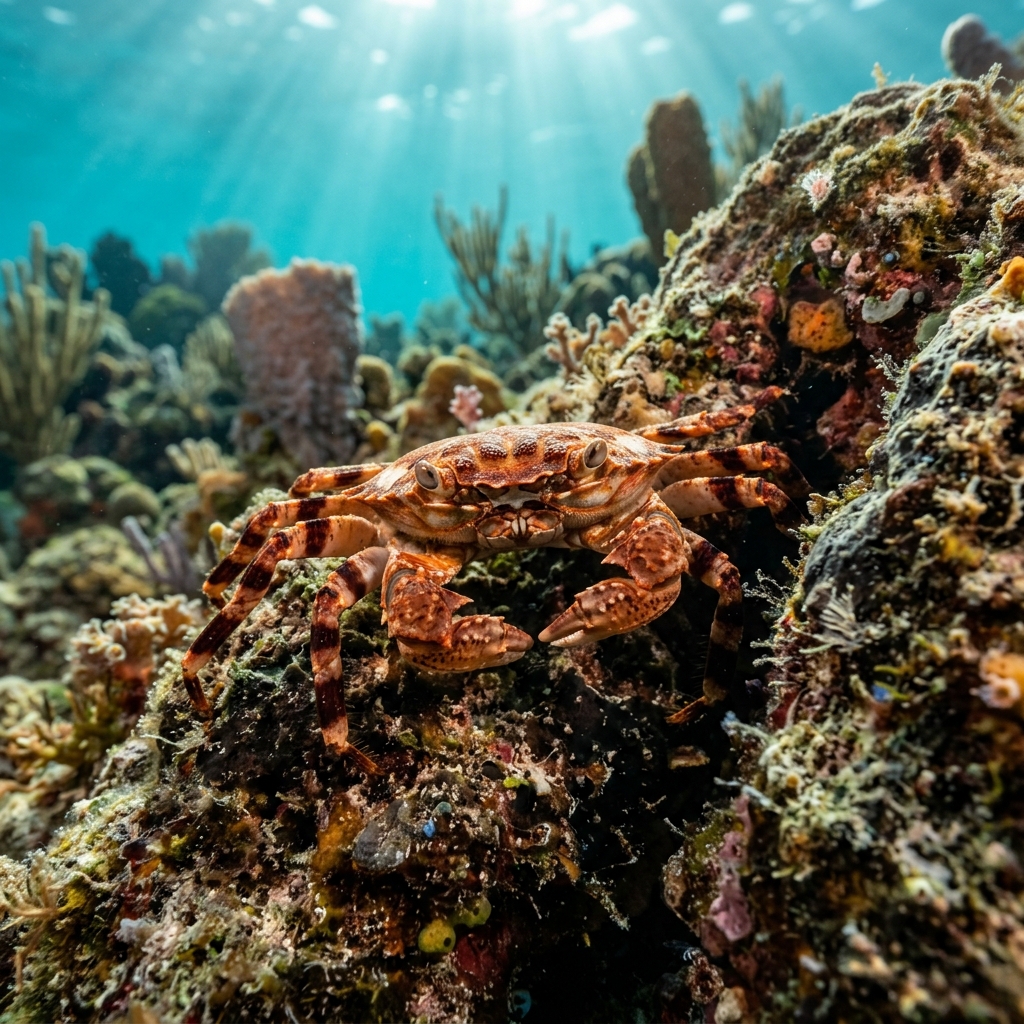
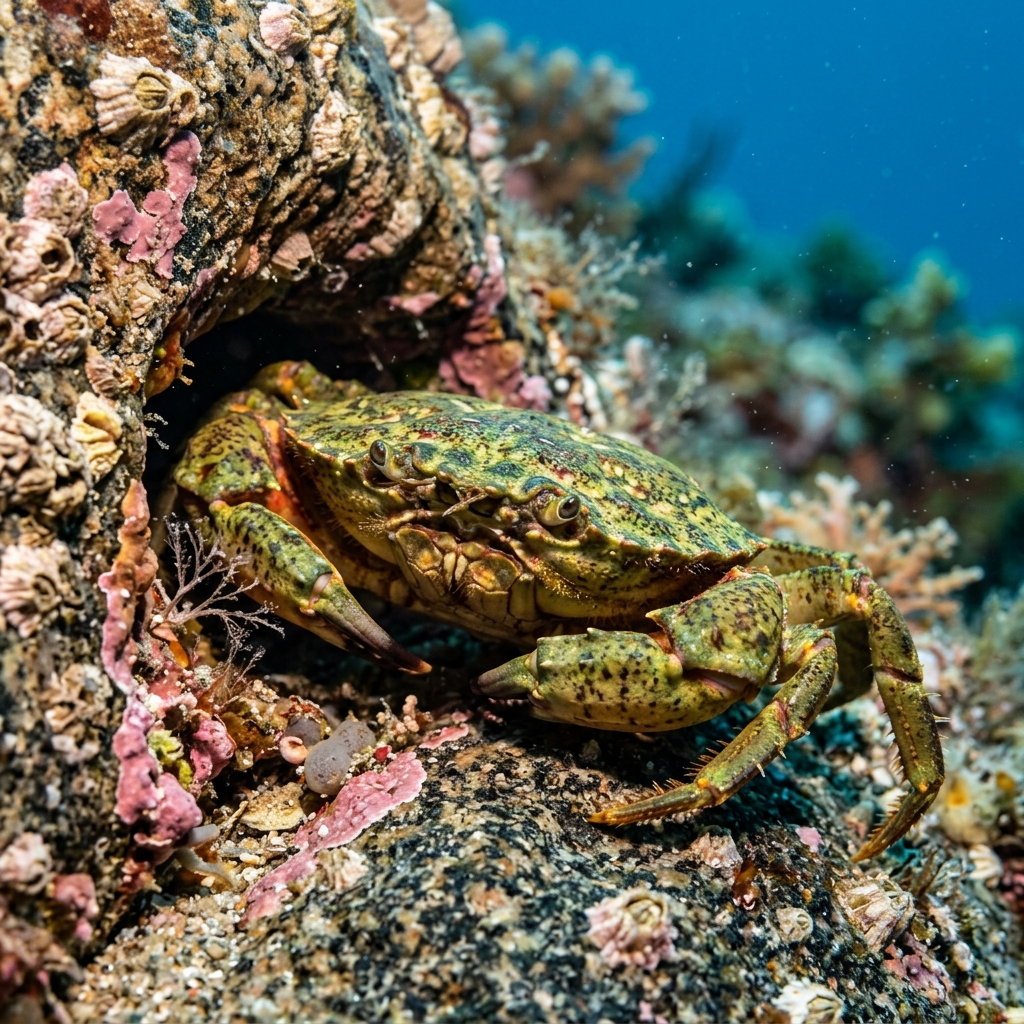
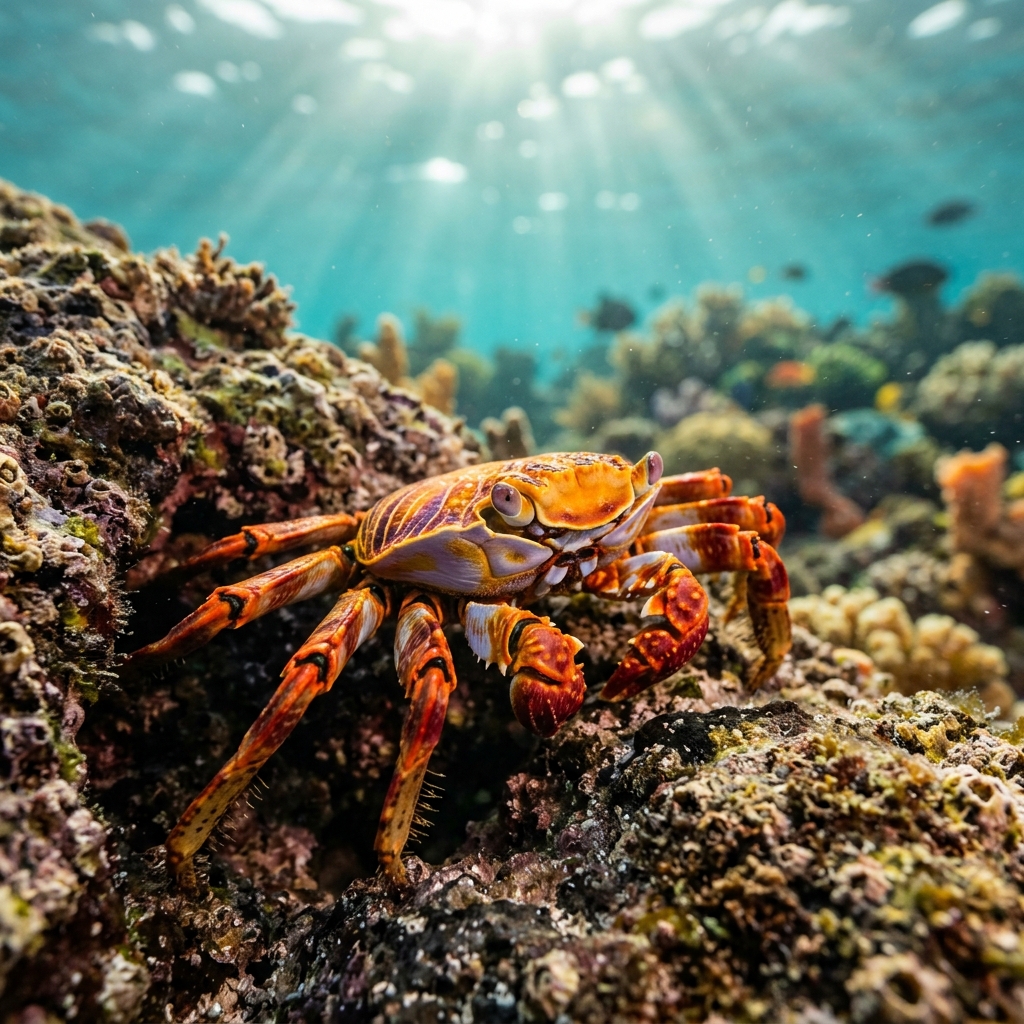
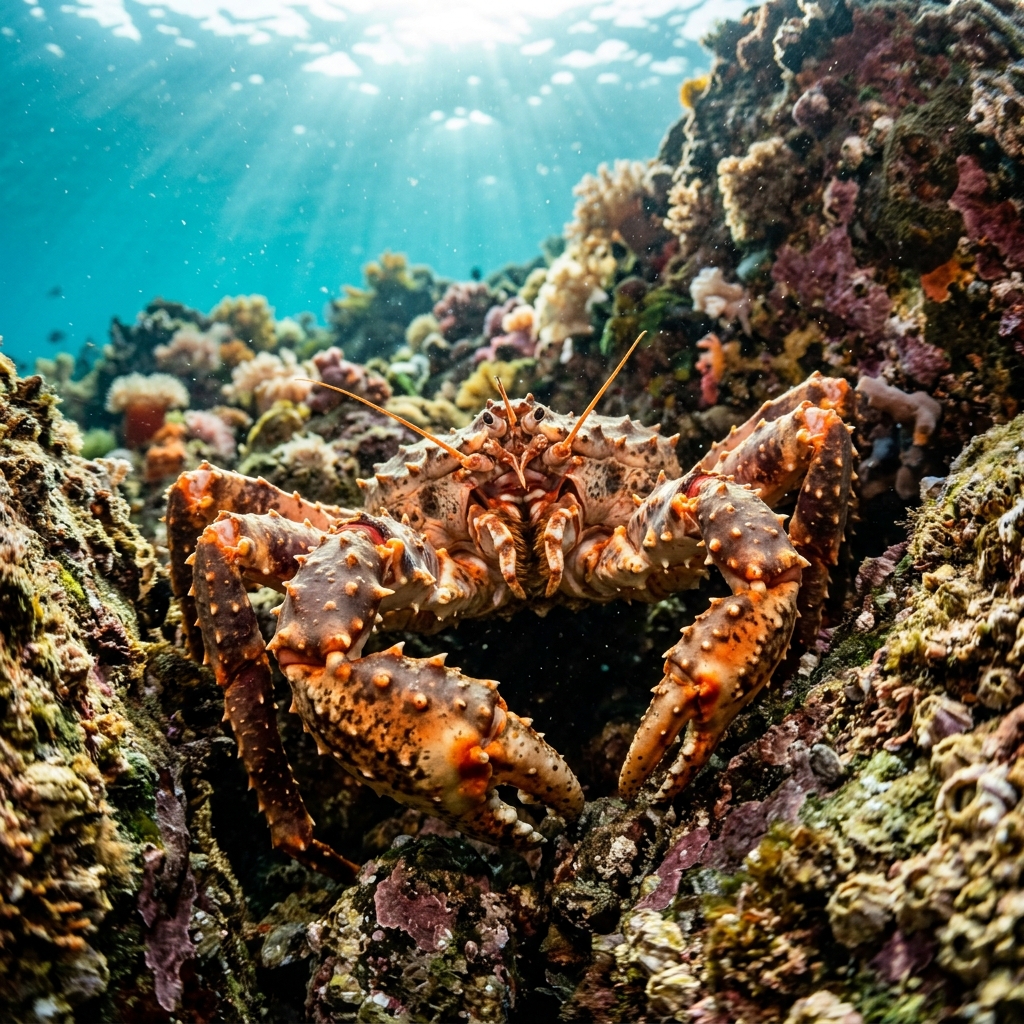
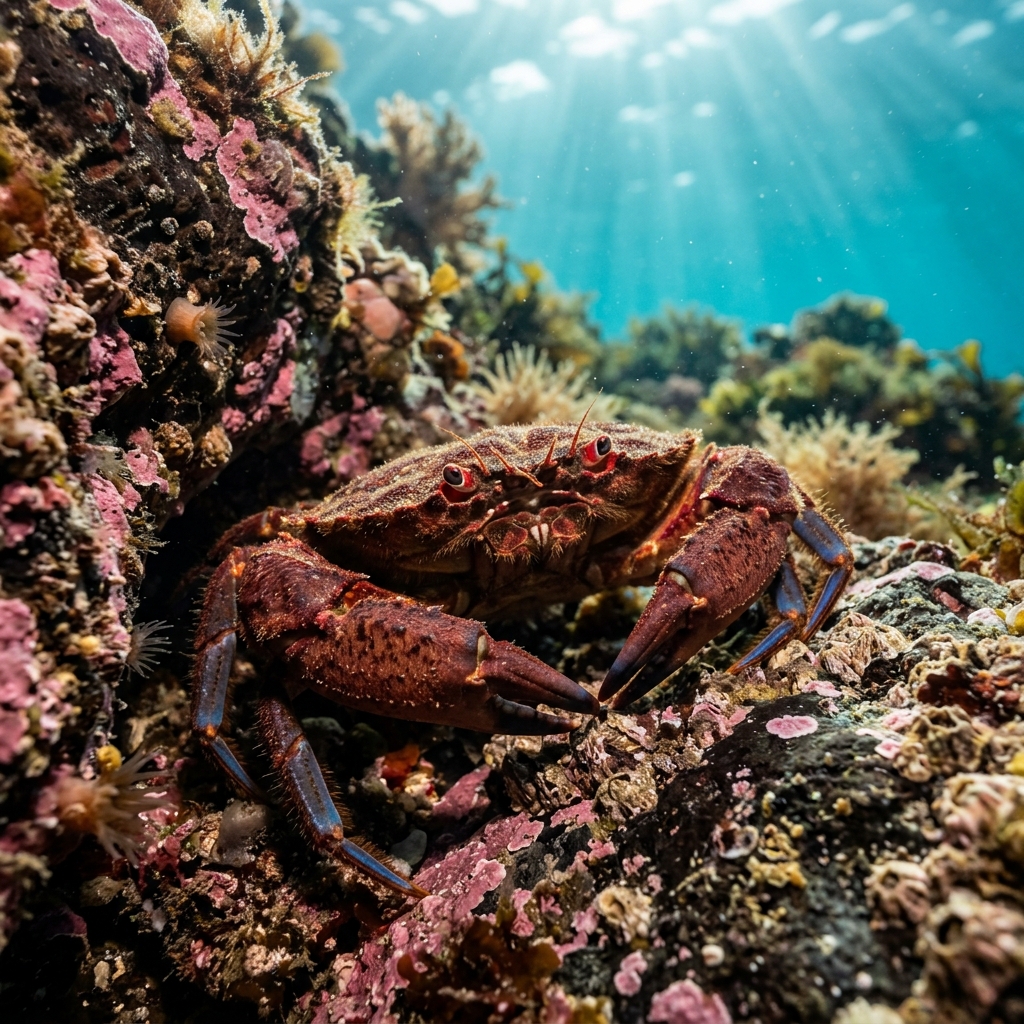
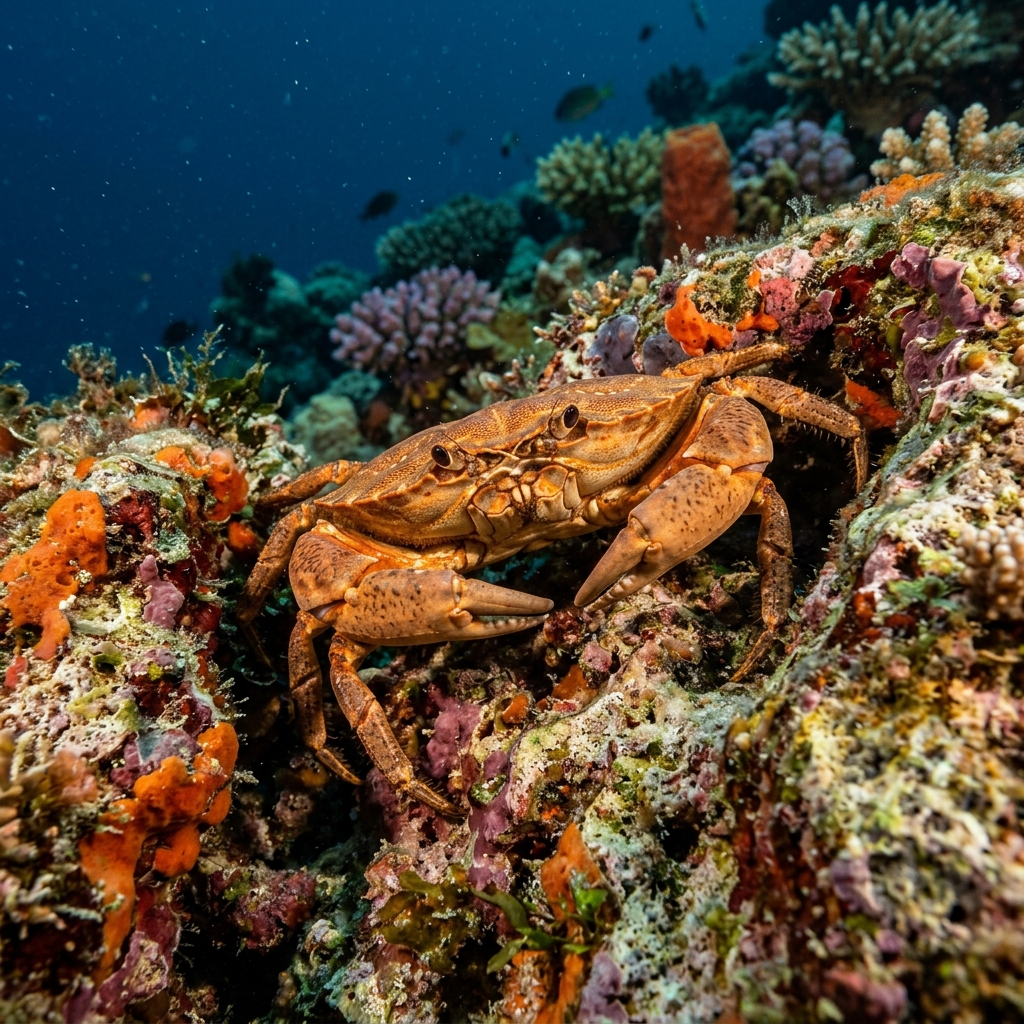
Look for the broad, flattened shell (carapace) flanked by five pairs of legs, with the front pair modified into claws. Colours vary enormously across species, from mottled brown and orange to vivid red, yellow, or near-transparent, but the sideways scuttle and hunched posture are consistent give-aways. Most species press themselves close to the substrate, tucking into crevices, under ledges, or among coral rubble. Size ranges from thumbnail-sized porcelain crabs to large-clawed species spanning 20 cm or more.
Most crabs are encountered tucked into reef crevices, under coral heads, or sheltering among urchin spines, especially during daylight hours when they tend to be less active. When a diver approaches, the typical response is to freeze, retreat sideways into cover, or press hard against the substrate rather than swim away. Night dives often reward patient observers with crabs moving more openly across the reef in search of food.
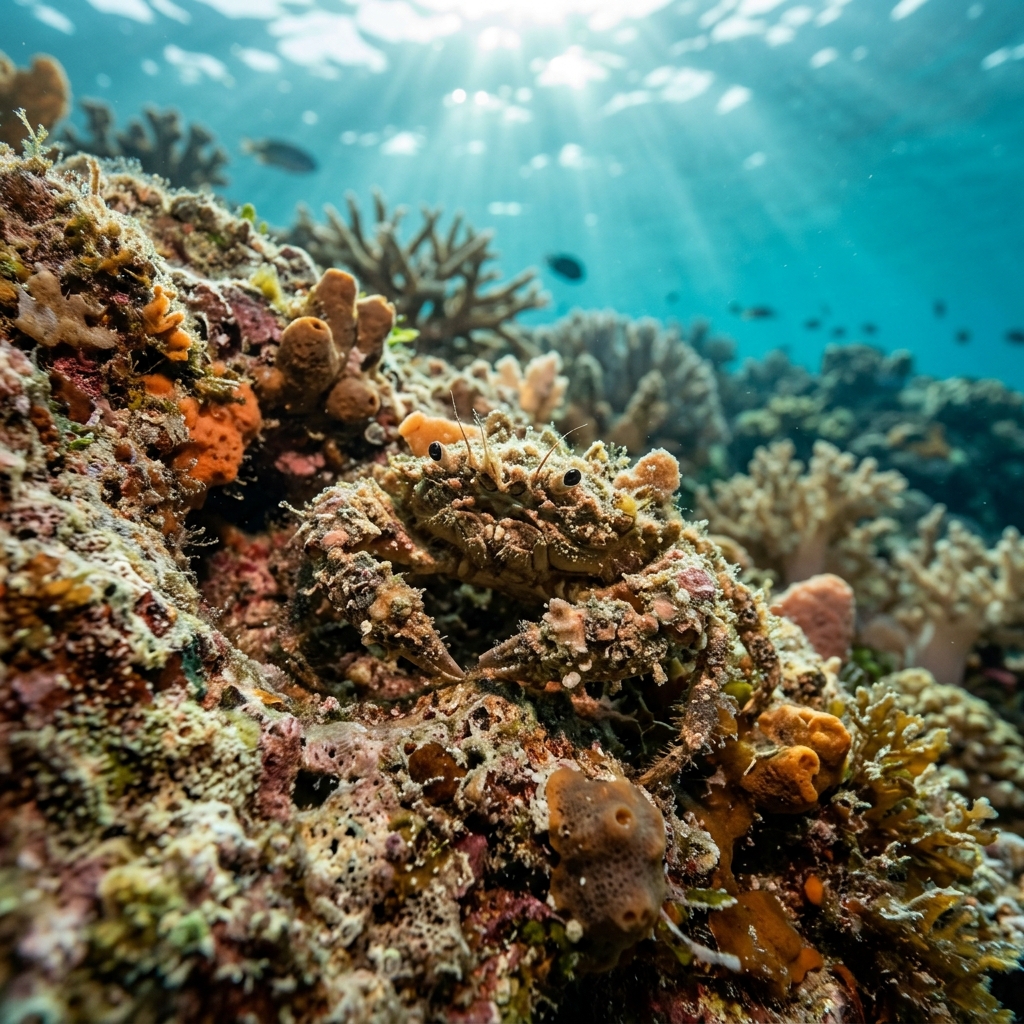
Some species in this group practise active camouflage by attaching living sponges, algae, and other organisms to hooked hairs on their carapace, making decorator crabs among the most effective disguises on the reef.
Crabs are present year-round in both hemispheres, with no concentrated season recorded in the data. Their observed temperature range of 9.4 to 28.2 °C means they turn up on cold temperate reefs just as readily as on warm tropical ones, so there is no single best month to target them.
Reef neighbours a diver could mistake it for. Use the identification notes above to tell them apart.
Crabs are among the most widely distributed crustaceans in diving, logged at sites across the United States, Spain, France, Australia, and the Philippines, among many others. The French Riviera and Provence, Florida, the Maldives, and the Costa Brava all stand out as regions where divers log them particularly often. Tropical reef systems in the Visayas and the Yucatán Peninsula are equally reliable hunting grounds.
Mapping where Crab is logged…
Crabs are logged at dive sites across more than a hundred countries. Top spots include the French Riviera, Florida, the Maldives atolls, the Costa Brava, and reef systems across the Philippines and Australia. They are one of the few crustacean groups reliably found on both tropical and cold temperate reefs.
There is no peak season, crabs are active year-round in both hemispheres. Night dives tend to offer better sightings, as many species move more openly across the reef after dark. Their wide temperature tolerance means cold-water and warm-water destinations both produce encounters.
The key features are a broad, rounded or fan-shaped hard shell, five pairs of legs with the front pair forming claws, and a characteristic sideways movement. Unlike lobsters or shrimp, crabs have a very short, tucked abdomen not visible from above. Colour and shell texture vary hugely by species, so body shape and gait are your most reliable ID tools.
Crabs are not considered dangerous to divers. Larger species can deliver a pinch if handled or cornered, but their instinct is to retreat rather than confront. The safest approach is to observe without touching, which also avoids disturbing their camouflage or shelter.
Crabs moult their entire hard shell periodically to grow, leaving behind a perfect hollow ghost of themselves on the reef. Freshly moulted crabs are soft and vulnerable for several hours, which is why they hide so effectively. Finding a shed exoskeleton on a dive is a sign a crab has recently grown nearby.
Site and sighting data is aggregated from diver logs, iNaturalist and GBIF. For taxonomy and conservation status:
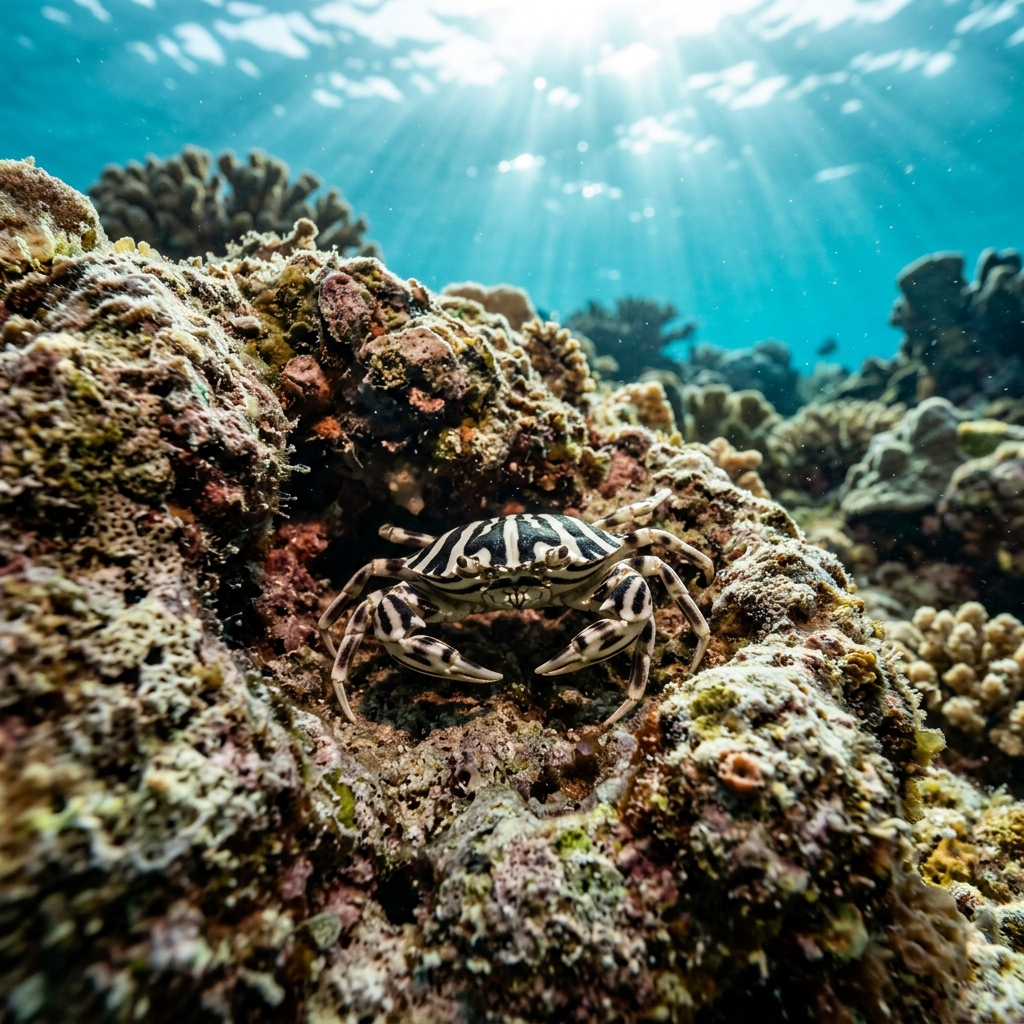
Zebrida adamsii
Sally Lightfoot Crab
2,422 sites