Parablennius gattorugine
Spot tompot blennies peering from rocky crevices across the French Riviera, Costa Brava and Croatia. Present year-round in waters from 10 to 20 °C.
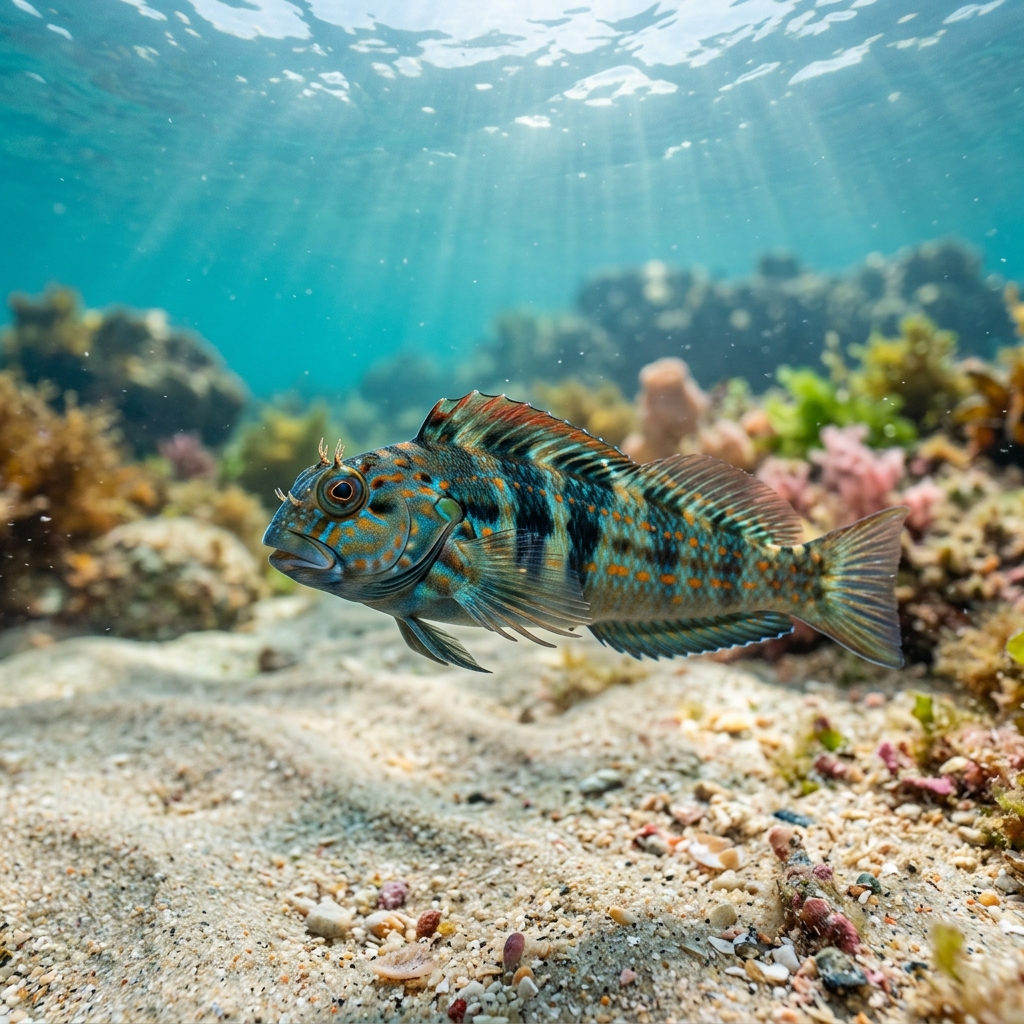
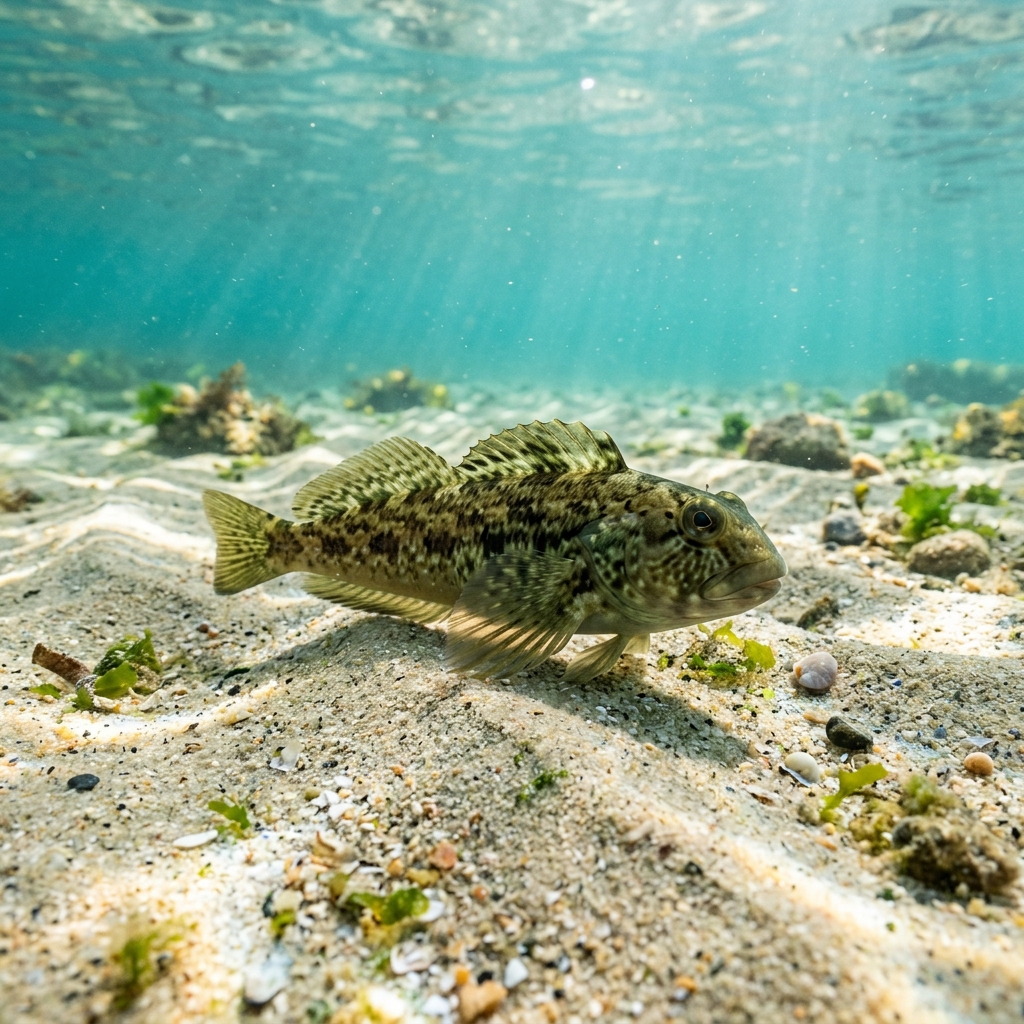
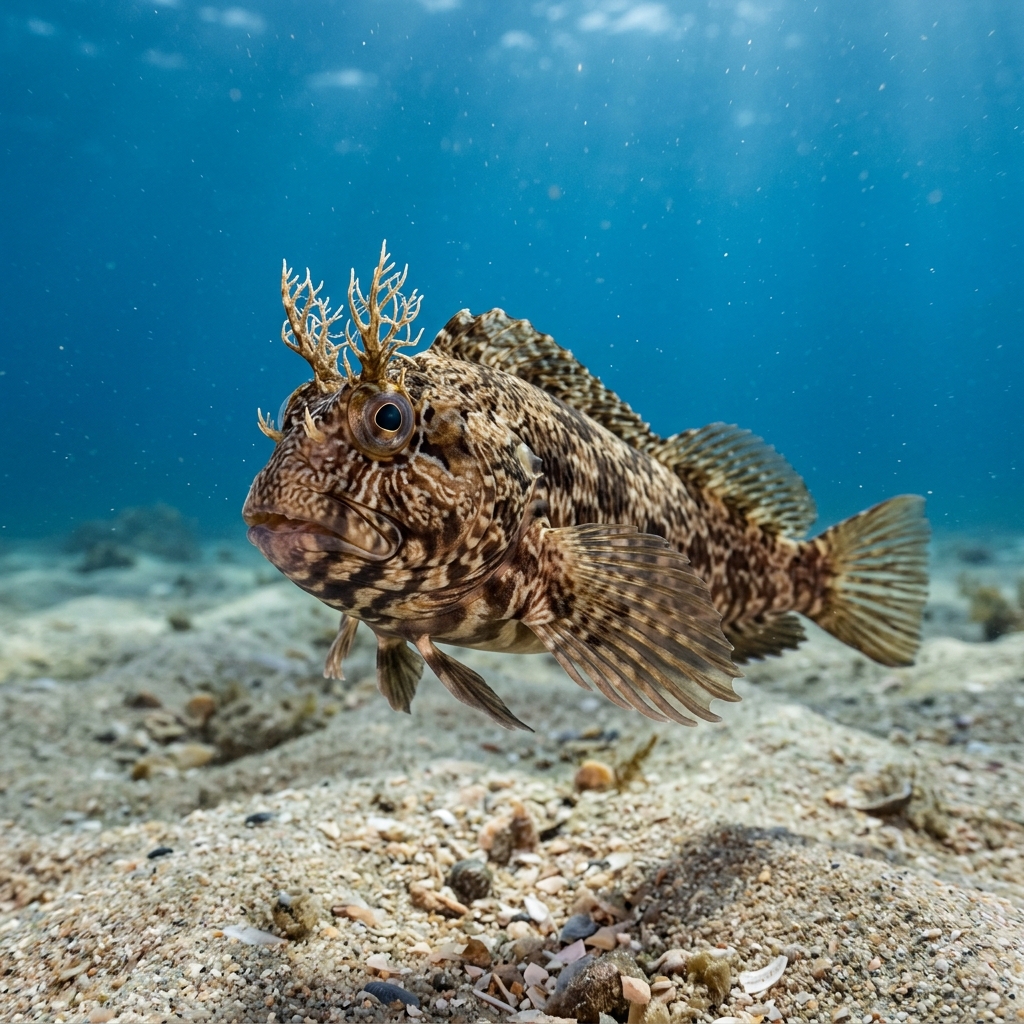
A chunky, big-headed fish about 20 cm long, the tompot blenny sits propped on its pectoral fins in crevices and on rocky surfaces. The most reliable field mark is the pair of elaborate, branched tentacles (cirri) sprouting above each eye, no other common blenny in its range wears such pronounced head decorations. Background colour is brown with darker vertical bands across the body, though breeding males flush to a vivid reddish-orange with intensified banding, while females stay comparatively plain and muted.
Expect to find one framed in the entrance of a rocky hole or wedged between boulders, watching you back with an almost comically inquisitive expression. Approach slowly and it may duck inside, but patience usually pays off as curiosity wins and the fish reappears within moments to size you up. Males hold territories on the reef, particularly during the breeding season, and will flare and display towards rival males, a behaviour worth watching for if two are in close proximity.
During the breeding season, males guard their eggs, which are laid in rocky crevices and under boulders. A male may tend eggs from several females simultaneously, fanning them with his fins to keep them oxygenated until they hatch.
Tompot blennies are present year-round wherever they occur, with no concentrated season in the Northern Hemisphere data. Their temperature niche of roughly 10 to 20 °C fits temperate rocky reefs through every month of the year.
Reef neighbours a diver could mistake it for. Use the identification notes above to tell them apart.
Most consistently logged across the Mediterranean, with Spain, France, Italy, Croatia and Greece making up the bulk of sightings. The French Riviera and Provence, Costa Brava and the Kvarner Gulf in Croatia are the standout regions. Outside the Mediterranean, populations extend along Atlantic coasts including the United Kingdom and Portugal, and the Canary Islands are also well represented.
Mapping where Tompot Blenny is logged…
They are most reliably found across the Mediterranean, particularly along the French Riviera and Provence, the Costa Brava in Spain, and the Kvarner Gulf in Croatia. Atlantic sites in the United Kingdom, Portugal and the Canary Islands also host strong populations on rocky reef ground.
They are present year-round with no concentrated season. Their preferred temperature range of around 10 to 20 °C means temperate Mediterranean and Atlantic rocky reefs hold them through every season, though the breeding season brings out more active territorial and courtship behaviour worth watching for.
Look for a stocky brown fish with dark vertical body bands sitting propped on its pectoral fins inside a rock crevice. The two elaborate branched tentacles above its eyes are the clinching feature, no other blenny you are likely to encounter in European waters has cirri quite that prominent.
They typically reach around 21 cm, making them one of the larger blennies in European waters. In the water they appear compact and broad-headed, often seeming to fill whatever crevice they have claimed as home.
Not at all. Tompot blennies pose no risk to divers. They are curious rather than aggressive towards people, and while a territorial male may display towards other males, that behaviour is not directed at divers.
Site and sighting data is aggregated from diver logs, iNaturalist and GBIF. For taxonomy and conservation status:
Rusty Blenny
2,605 sites