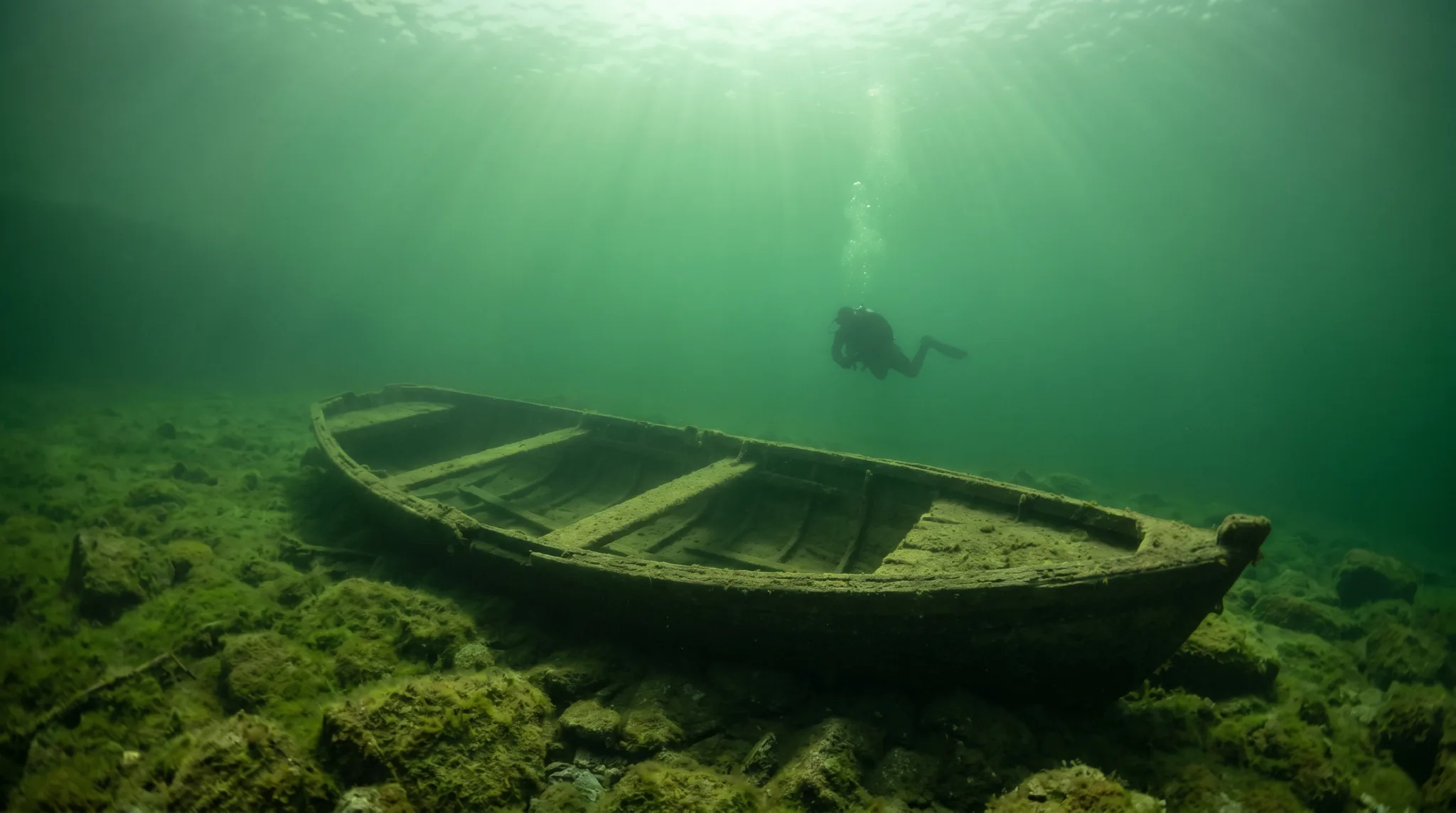
East Anglia faces the North Sea, offering shore-accessible sites that range from chalk reefs and rock pools to historic shipwrecks and purpose-built artificial reefs. Sites such as West Runton Chalk Reef, Overstrand Chalk Reef, and the SS Rosalie sit within reach of the shoreline, while Gildenburgh Water provides a freshwater quarry option inland. Water temperatures are cold for much of the year, warming into the mid-to-upper teens only in high summer, so a drysuit is wise outside the warmest months. Visibility is variable and at its best during slack water and when plankton levels are low.

Monthly water temperature across East Anglia's sites, from satellite sea-surface data corrected for depth. The band shows the site-to-site spread.
Water temperatures drop to single figures through winter and early spring, rising to the mid-to-upper teens in July and August before falling again through autumn. Visibility is most reliable at slack tide and during periods of lower plankton, which broadly aligns with the warmer months.
12 operators

Ipswich, United Kingdom
United Kingdom
Water temperature around East Anglia ranges from about 6°C in February to 17°C in August, based on satellite sea-temperature data for its dive sites.
In the warm season (about 17°C) a 7mm or semi-dry suit is comfortable in East Anglia; in the coldest months (about 6°C) step up to a drysuit.
Fin maps 8 sites in East Anglia (6 scuba diving sites and 3 snorkelling spots, with some suited to both).
Across East Anglia's dive sites, July, August and September are most often reported as the best months to visit.
6 more sites to explore