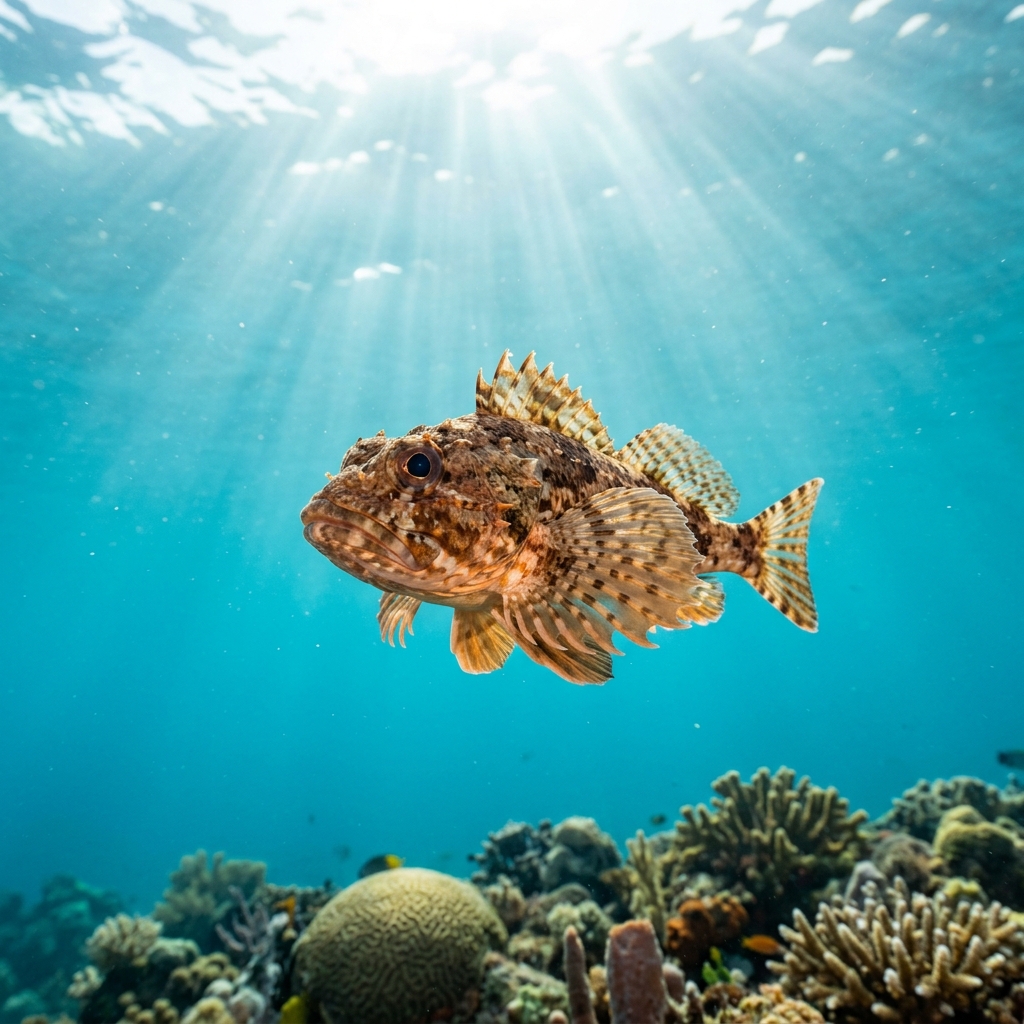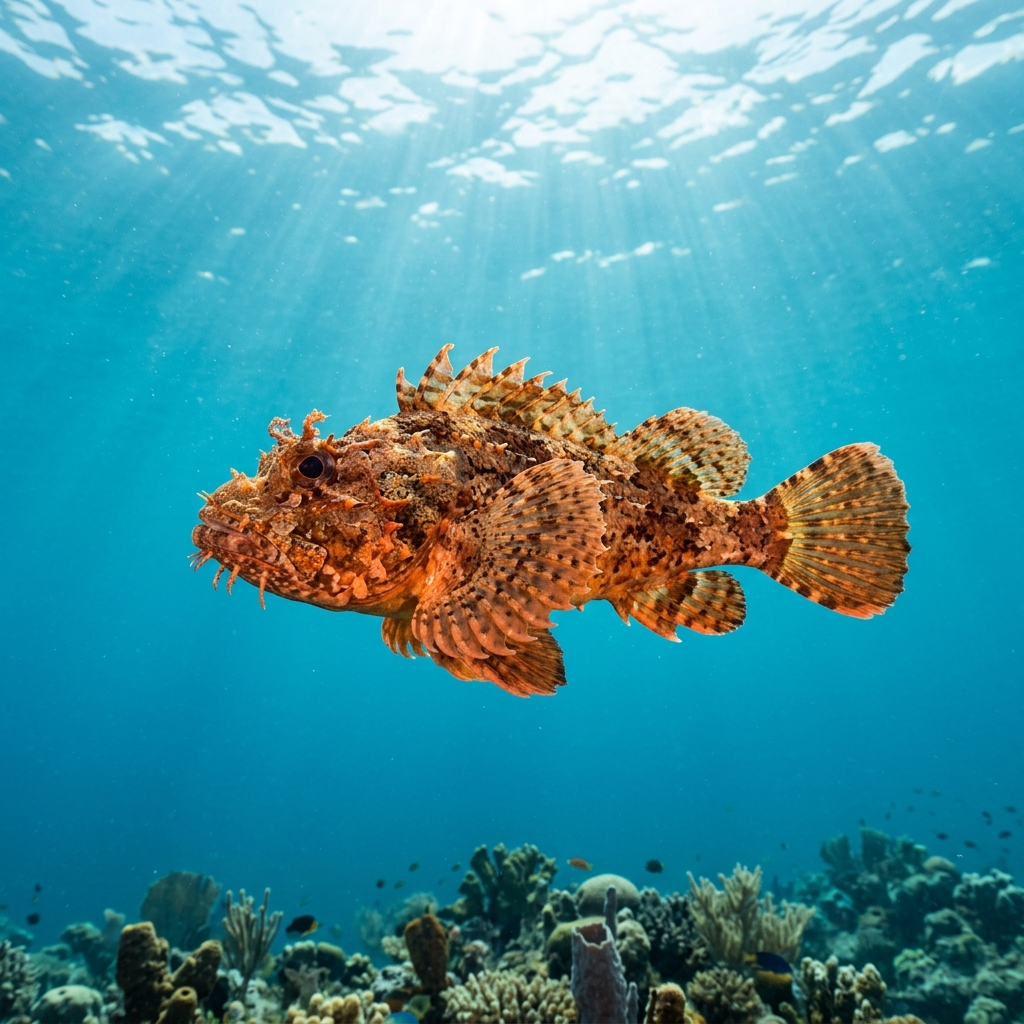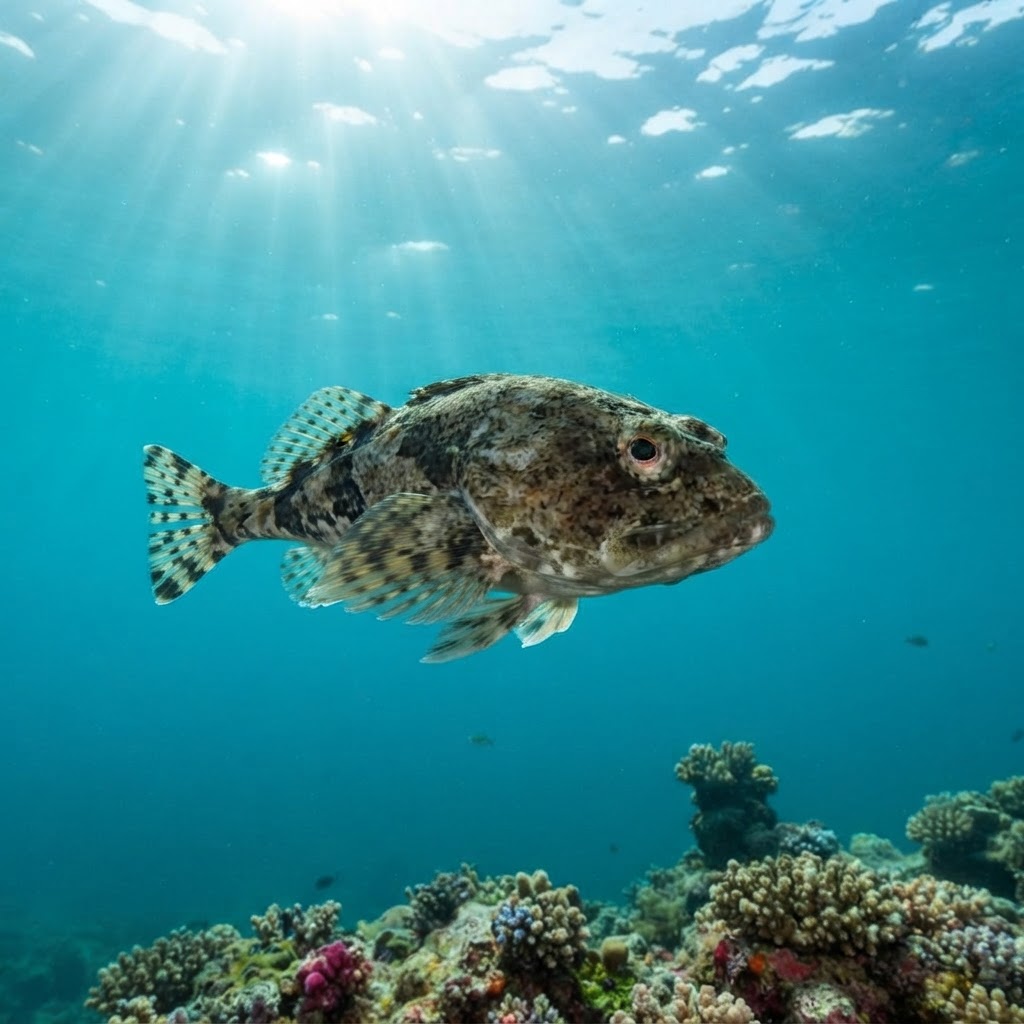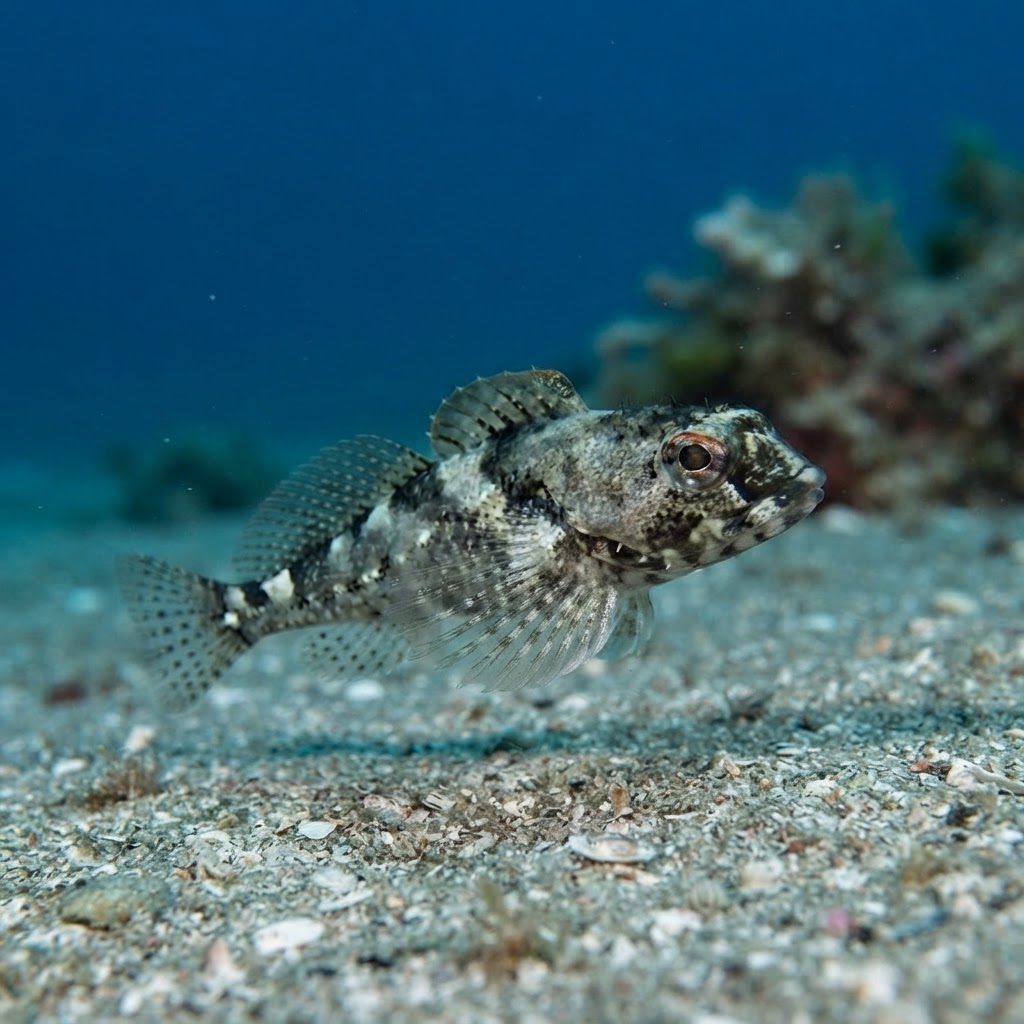
Taurulus bubalis
Spot this spiky, mottled bottom-dweller in Zeeland's cold waters or England's shorelines, most often logged uncommon between 7 and 12°C.
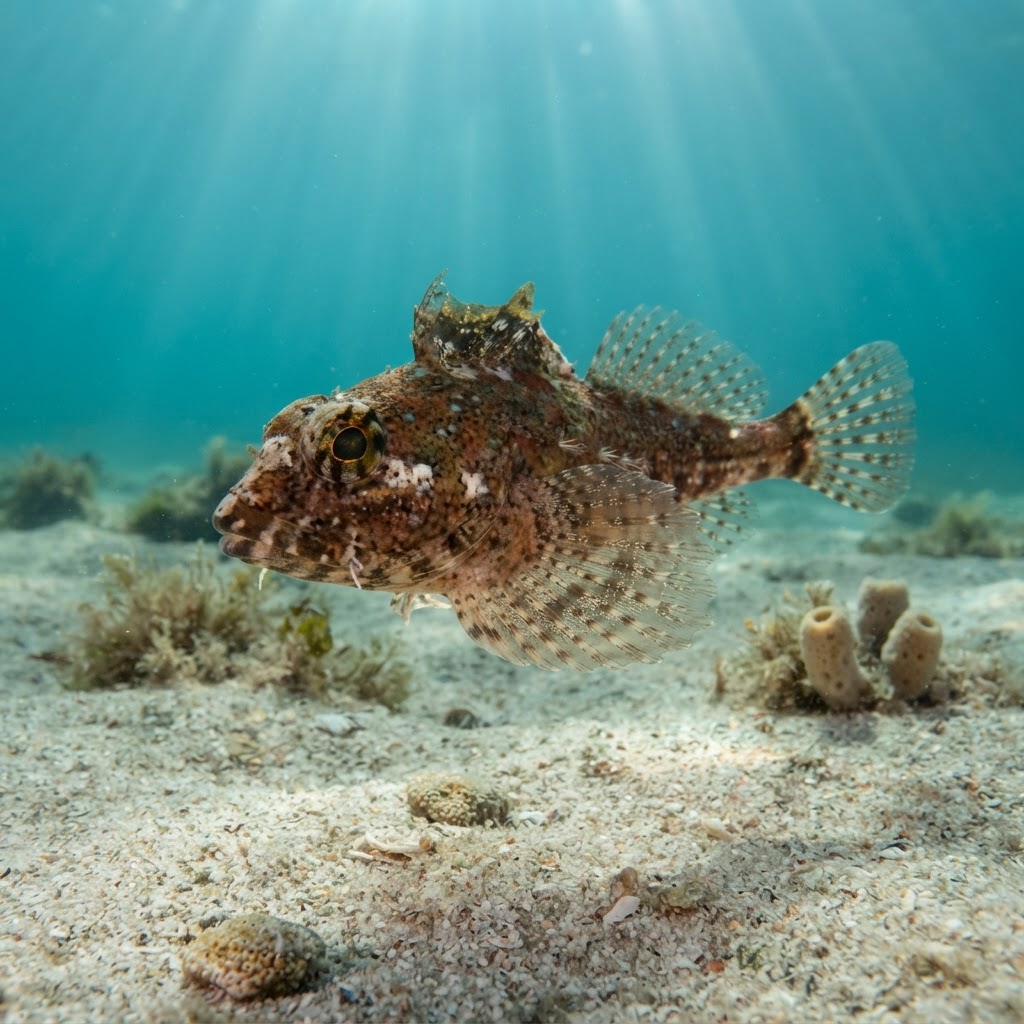
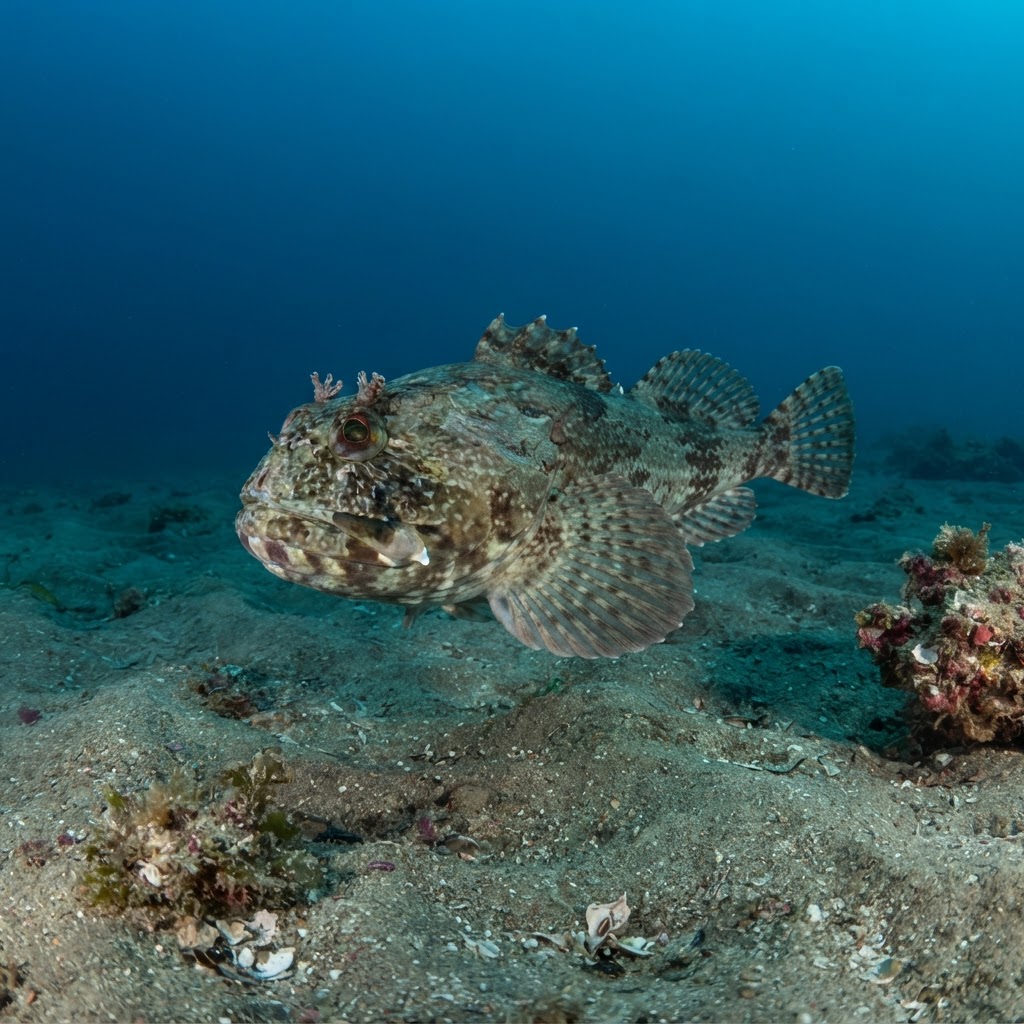
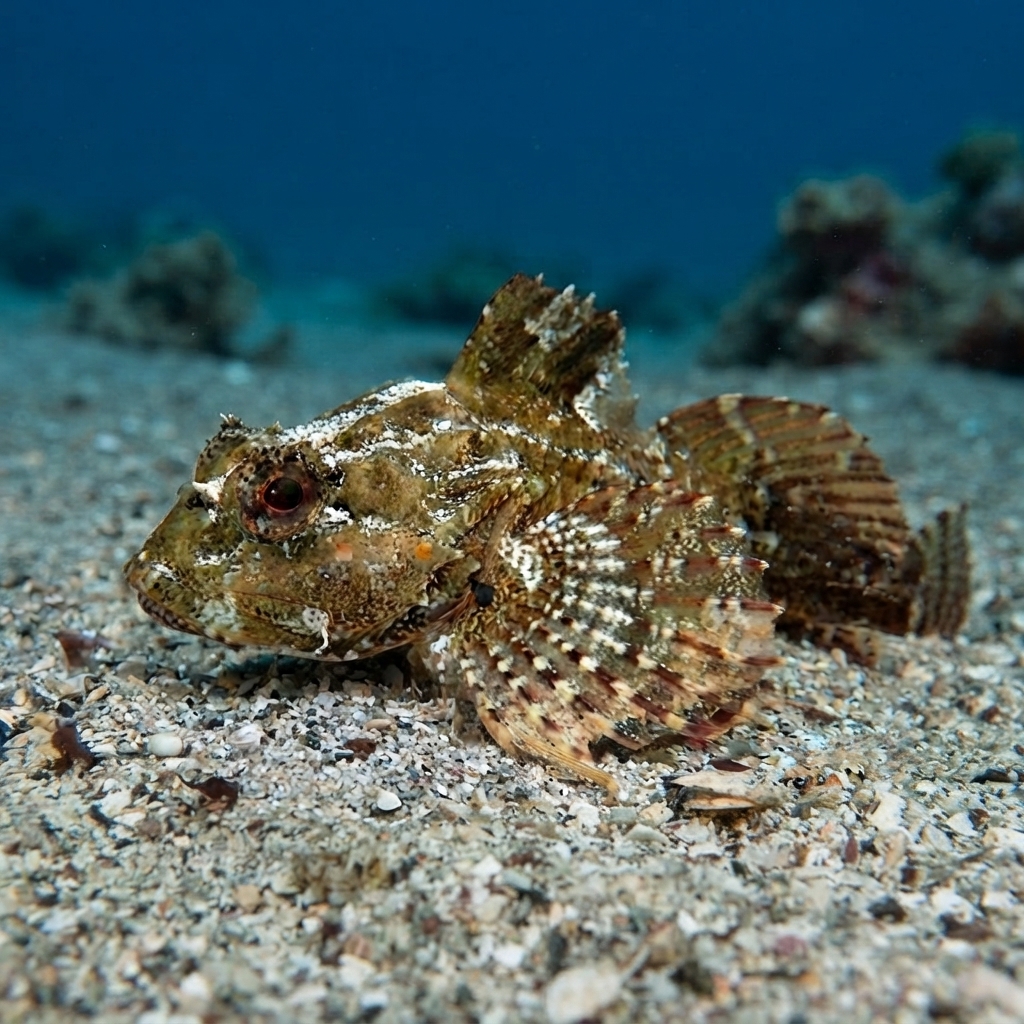
Small, squat fish around 11 cm with a heavily mottled brown, orange and cream pattern that breaks up its outline against rock and gravel. Look for the spiny head and cheek ridges and the long spine behind the eye that gives it its name. It sits motionless on the bottom rather than swimming in open water, so divers usually spot it by the shape first, not movement.
Sits still on rock, gravel or amongst weed on the seabed, relying on its camouflage rather than fleeing when divers approach. Most sightings come from slow, close-focus looks along rocky bottoms and under ledges rather than mid-water encounters. It's logged as uncommon at most sites, so patient scanning of the substrate pays off more than a quick swim-by.
Despite the name and spiny look, it has no venomous sting to worry about; the spines are mostly for camouflage and wedging into crevices, not defence against divers.
No clear seasonal pattern shows up in the data, and its comfort range of 7 to 12°C matches the cool coastal waters it lives in year-round, so it's a fair sighting on any dive in these regions regardless of month.
Most reliably logged in Zeeland in the Netherlands and across England and Northern Ireland in the UK, with a strong secondary presence in Brittany, France. Smaller numbers turn up in Kerry (Ireland), Scotland, Wales, Schleswig-Holstein (Germany), and scattered sites in Norway, Portugal and Sweden.
Mapping where Longspined Sea-scorpion is logged…
Zeeland in the Netherlands and coastal England and Northern Ireland in the UK are the most reliable regions, with Brittany in France also a solid bet. It also turns up in Kerry, Scotland, Wales and Schleswig-Holstein.
There's no strong seasonal pattern in sightings, and it tolerates the 7 to 12°C range typical of these cool coastal waters year-round, so any month is worth a look.
Look for a small, mottled brown and orange fish around 11 cm long, sitting motionless on rock or gravel. The spiny head and the long spine behind the eye are the key giveaways once you spot the camouflaged outline.
They're small, typically reaching about 11 cm, and stay close to the seabed rather than growing into anything conspicuous in open water.
No. They aren't considered dangerous to divers; the spines aid camouflage and wedging into crevices rather than delivering any venomous sting.
It relies almost entirely on mottled camouflage and staying still rather than fleeing, blending into rocky, weedy seabeds so effectively that most divers walk past several before spotting one.
Site and sighting data is aggregated from diver logs, iNaturalist and GBIF. For taxonomy and conservation status:
Tidepool Sculpin
205 sites