Cancer pagurus
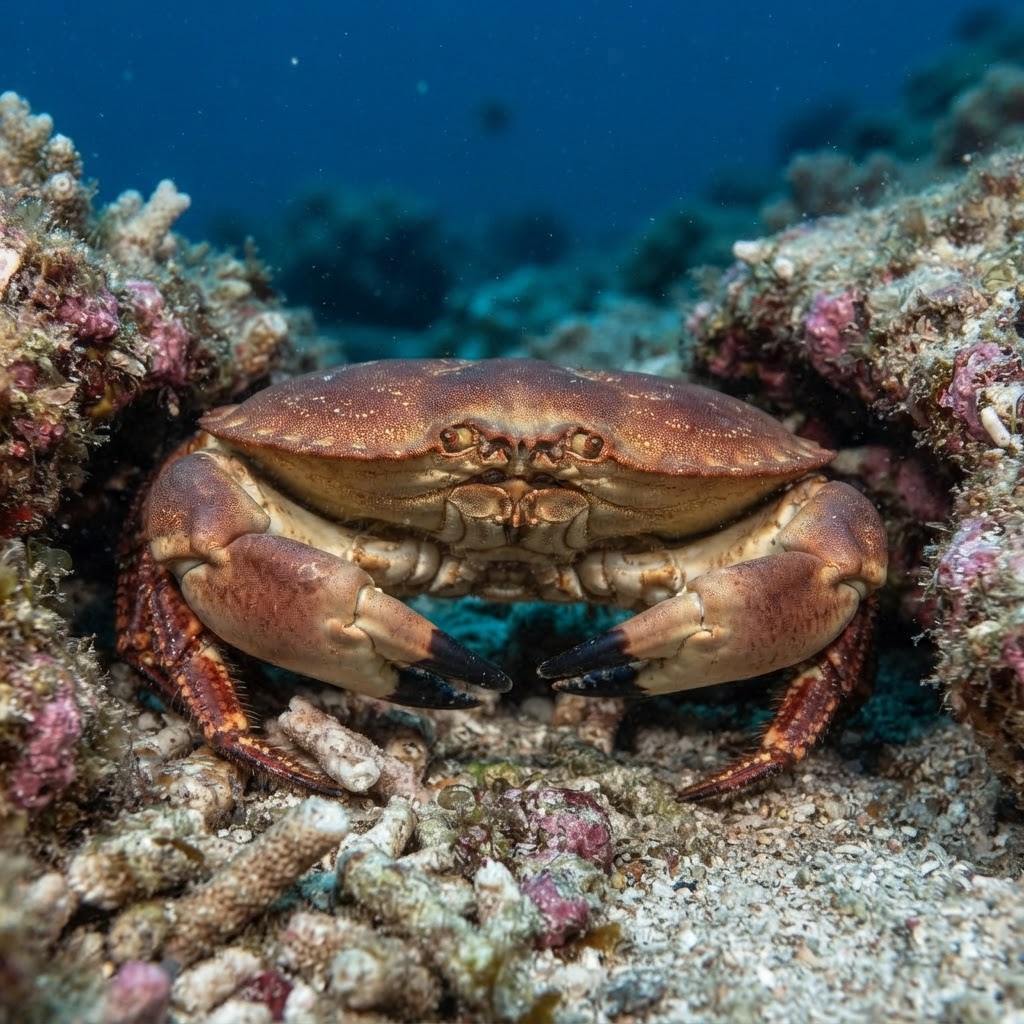
Reddish shell, black-tipped claws, found on cool reefs from Zeeland to Brittany at 8.5-14.5C, year-round and usually uncommon.
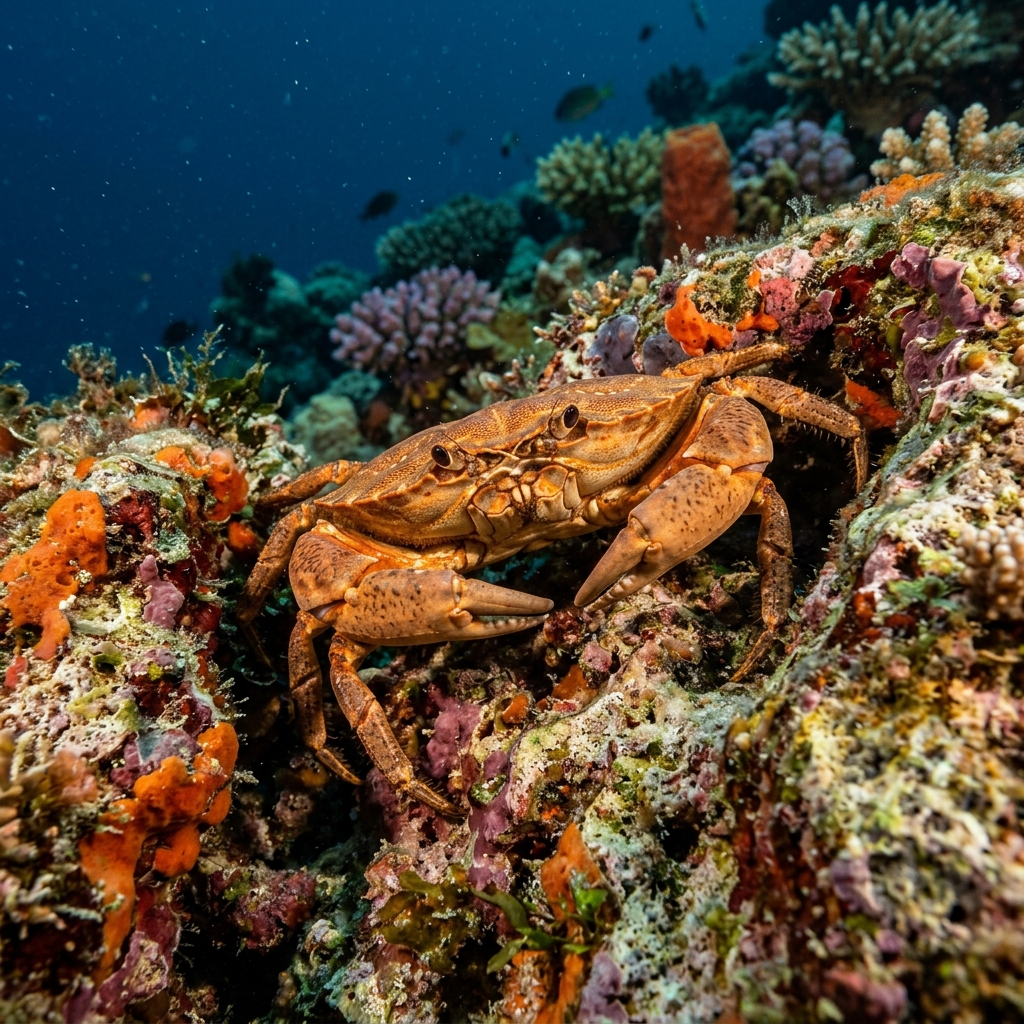
Look for a broad, pie-crust-edged shell in reddish-brown to purplish tones, usually around 14 cm across but capable of getting much larger. The claws are thick and oval with distinctive black tips, a giveaway even at a distance in low visibility. Its shell has a rounded, scalloped front margin that looks almost pastry-crimped, unlike the smoother or more angular shells of other local crabs.
Usually found tucked into rocky crevices, under ledges or partly buried in sand and gravel on the seabed, often only the claws and eyestalks visible. It tends to sit tight rather than flee when divers approach, relying on its shell and strength rather than speed. Most active foraging happens at night, so daytime encounters are often crabs resting up in shelter.
Its shell is tough enough that it will happily crush shellfish and even smaller crabs, making it one of the more capable predators on cooler European seabeds despite looking like a slow-moving lump of rock.
Sightings are spread across the year with no strong seasonal peak in the data, and its comfort range of 8.5 to 14.5C matches the cool coastal waters it favours through most seasons. Expect a similar chance of finding one whether you dive in summer or winter at these sites.
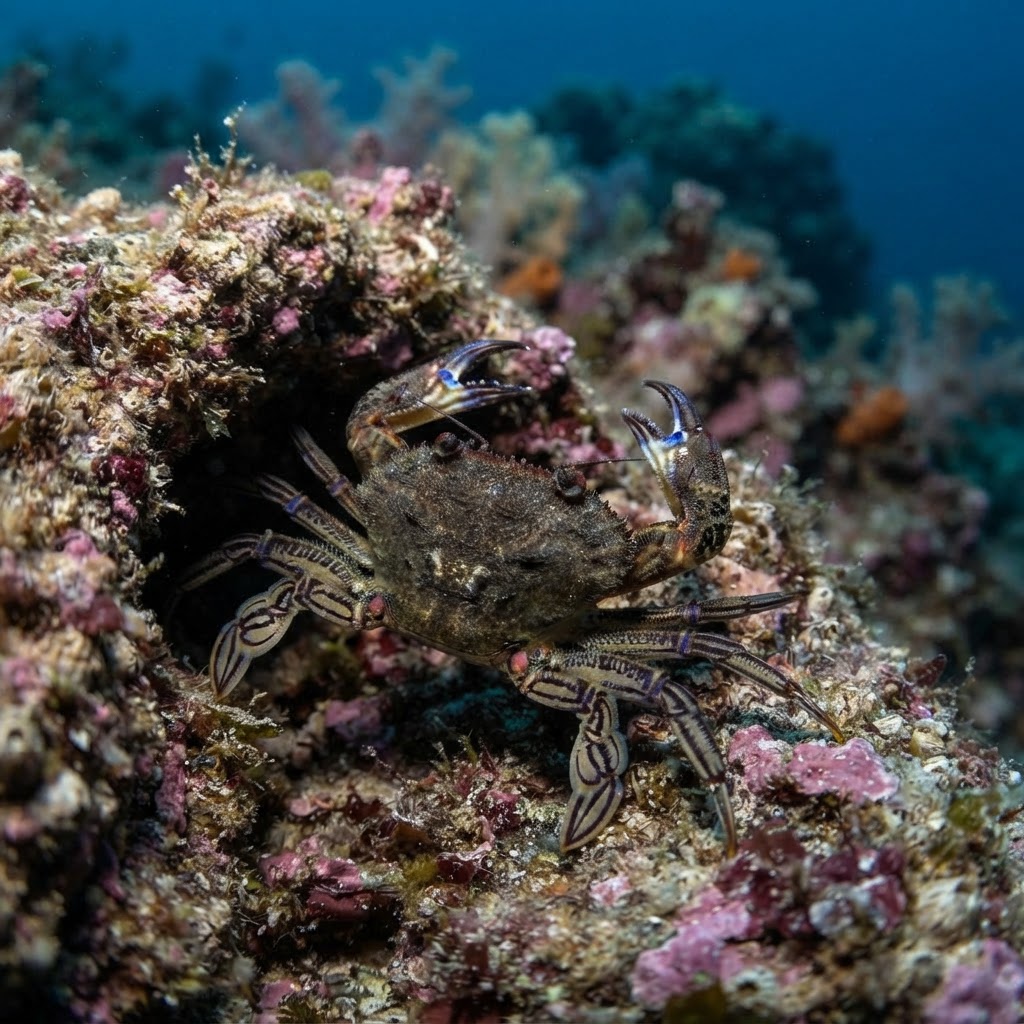
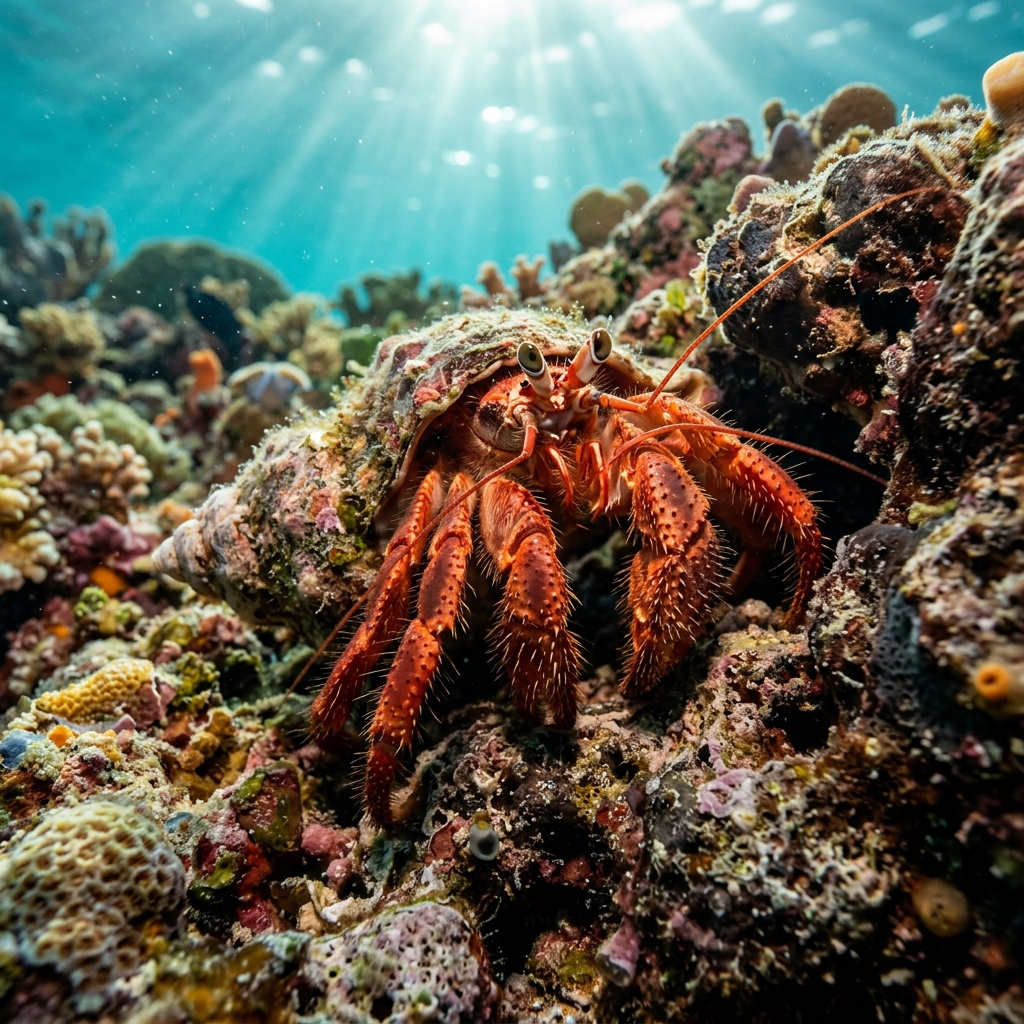
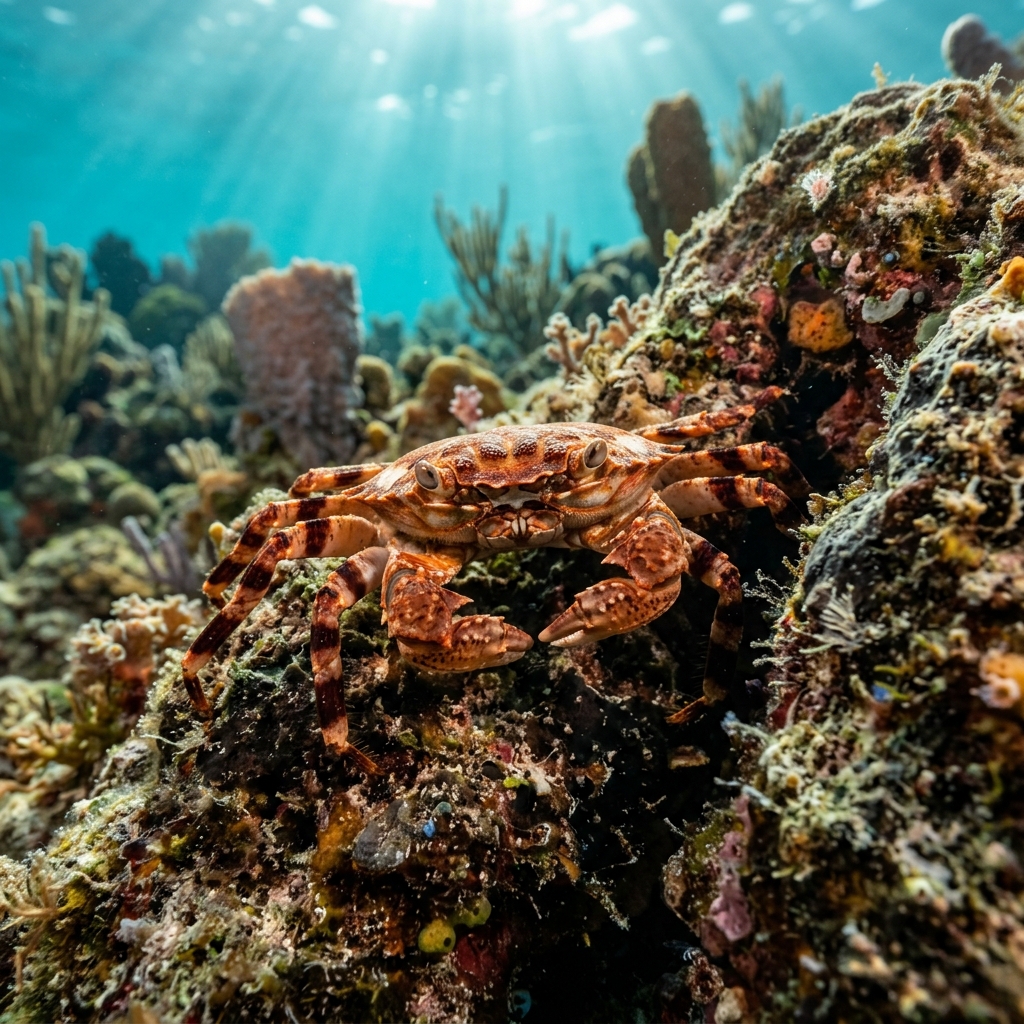
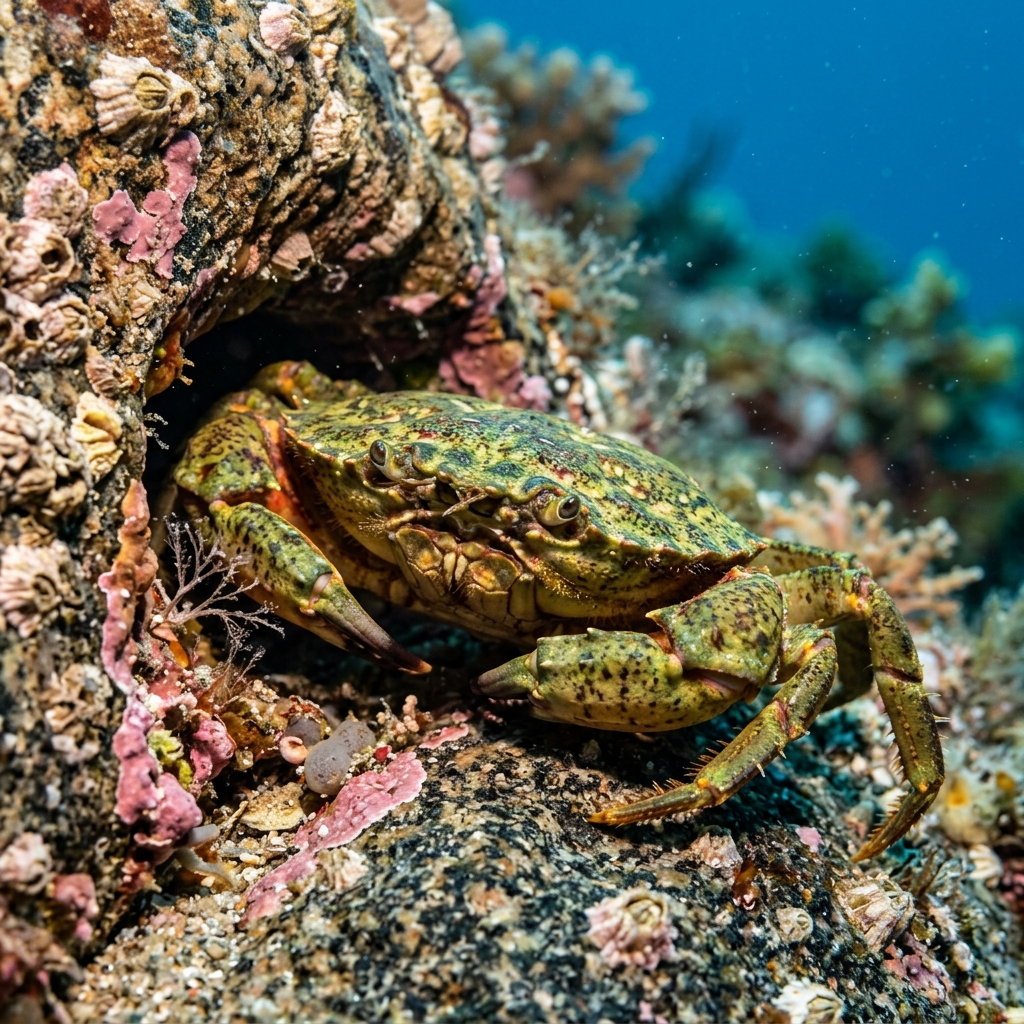
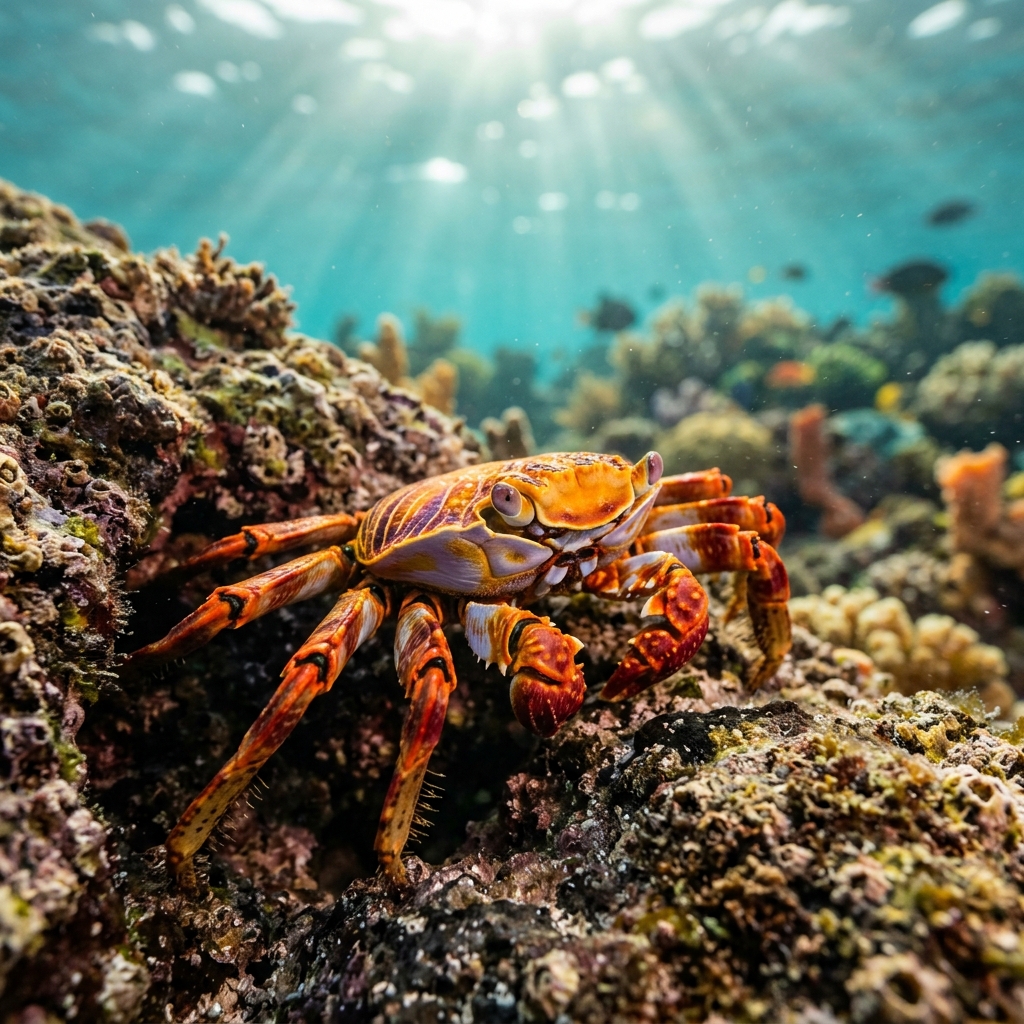
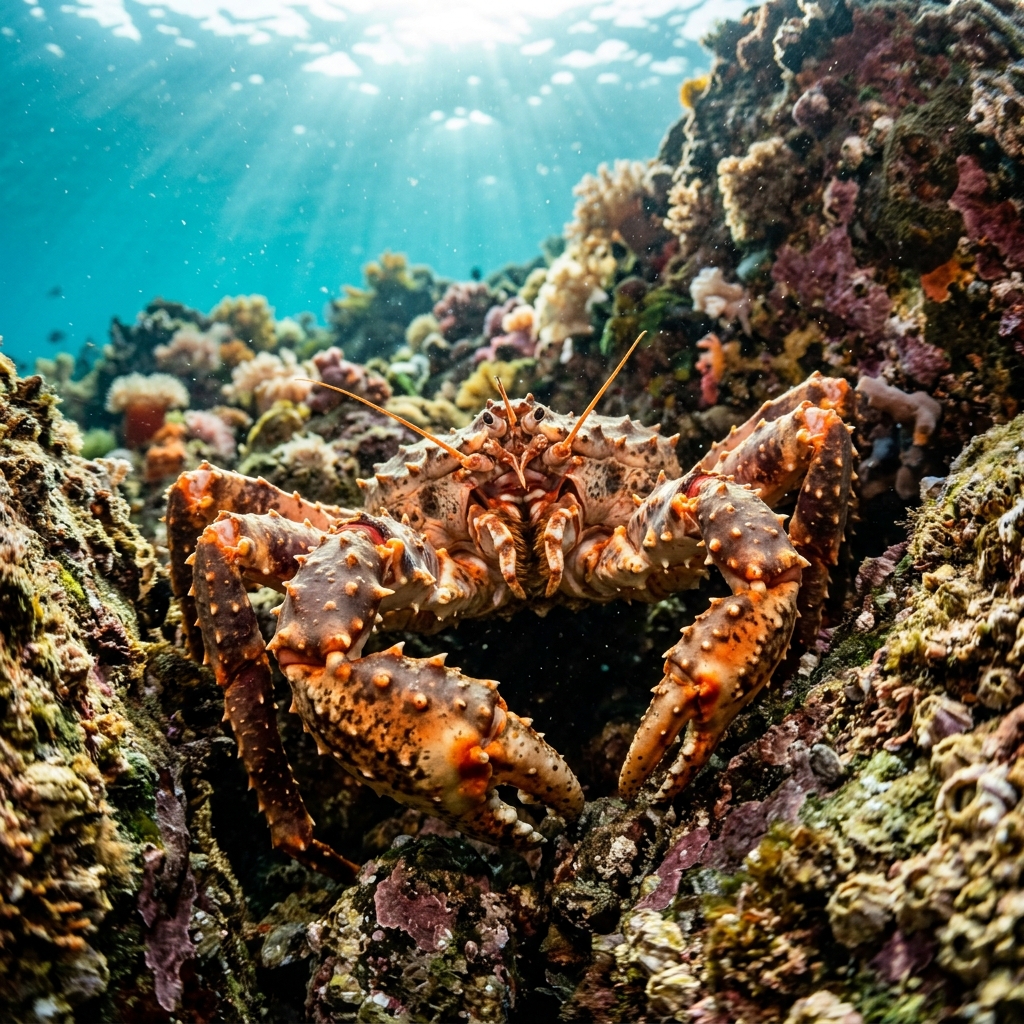
Reef neighbours a diver could mistake it for. Use the identification notes above to tell them apart.
Most reliably logged around the UK, especially England, Northern Ireland, Wales and Scotland, and in Zeeland in the Netherlands. Strong numbers also turn up in Brittany, France, the Algarve in Portugal, and Bohuslän in Sweden, with smaller but regular sightings in Ireland, Spain and Norway.
Mapping where Brown Crab is logged…
Best chances are around the UK coastline, particularly England, Northern Ireland, Wales and Scotland, plus Zeeland in the Netherlands and Brittany in France. It also shows up regularly in the Algarve, Ireland, Spain, Sweden's Bohuslän coast and Norway.
There's no strong season in the sightings data, so it's a year-round find at these cool-water sites. Its comfort range of roughly 8.5 to 14.5C covers most of the diving calendar in these regions.
Check for a reddish-brown shell with a scalloped, pastry-edge front margin and oval claws with black tips. It sits low against rock or sand rather than swimming off when disturbed.
Divers typically log them around 14 cm across the shell, though this species can grow noticeably larger in the wild given enough time and food.
No, they pose no real threat to divers. They tend to hold their ground in shelter rather than approach, so simply give them space and avoid handling the claws.
Site and sighting data is aggregated from diver logs, iNaturalist and GBIF. For taxonomy and conservation status:
European Green Crab
2,469 sites