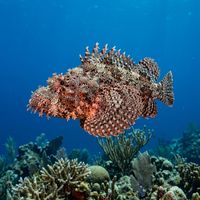
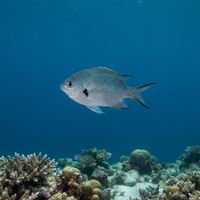
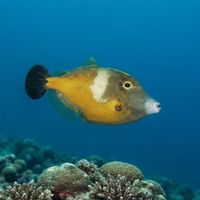
Tobago offers a concentrated mix of reef, wall, drift, wreck, and cave diving split between two distinct sub-areas. Speyside, centred on Little Tobago, is the current-driven, deeper hub, where sites like Black Jack Hole, Flying Manta, and TDE Special reward intermediate and advanced divers with sharp drop-offs, sea fans, and complex topography. Crown Point, to the southwest, is more accessible, with shallower beginner-friendly reefs and seagrass at Buccoo Reef alongside drift dives like Flying Reef. Across both areas, parrotfish, angelfish, Pacific Trumpetfish, and occasional Green Sea Turtle and Nurse Shark define the marine character. Water stays warm year-round, and visibility is frequently excellent.
2 areas

Monthly water temperature across Tobago's sites, from satellite sea-surface data corrected for depth. The band shows the site-to-site spread.
Water temperature remains warm throughout the year, nudging slightly higher through the mid-year and autumn months. The best-months data points clearly toward the dry season, from January through April, when conditions are most settled and visibility tends to peak. Speyside sites carry strong currents year-round, so timing dives to the current is important regardless of season.
16 operators
Roxborough, Trinidad and Tobago
Trinidad and Tobago
Scarborough, Trinidad and Tobago
Mucurapo, Trinidad and Tobago
Laventille, Trinidad and Tobago
1 more site to explore
Water temperature around Tobago ranges from about 27°C in January to 29°C in July, based on satellite sea-temperature data for its dive sites.
With water around 27–29°C, a rash guard or 3mm shorty works in Tobago year-round.
Fin maps 31 sites in Tobago (25 scuba diving sites and 11 snorkelling spots, with some suited to both), organised into 2 areas.
Across Tobago's dive sites, January, February, March and April are most often reported as the best months to visit.
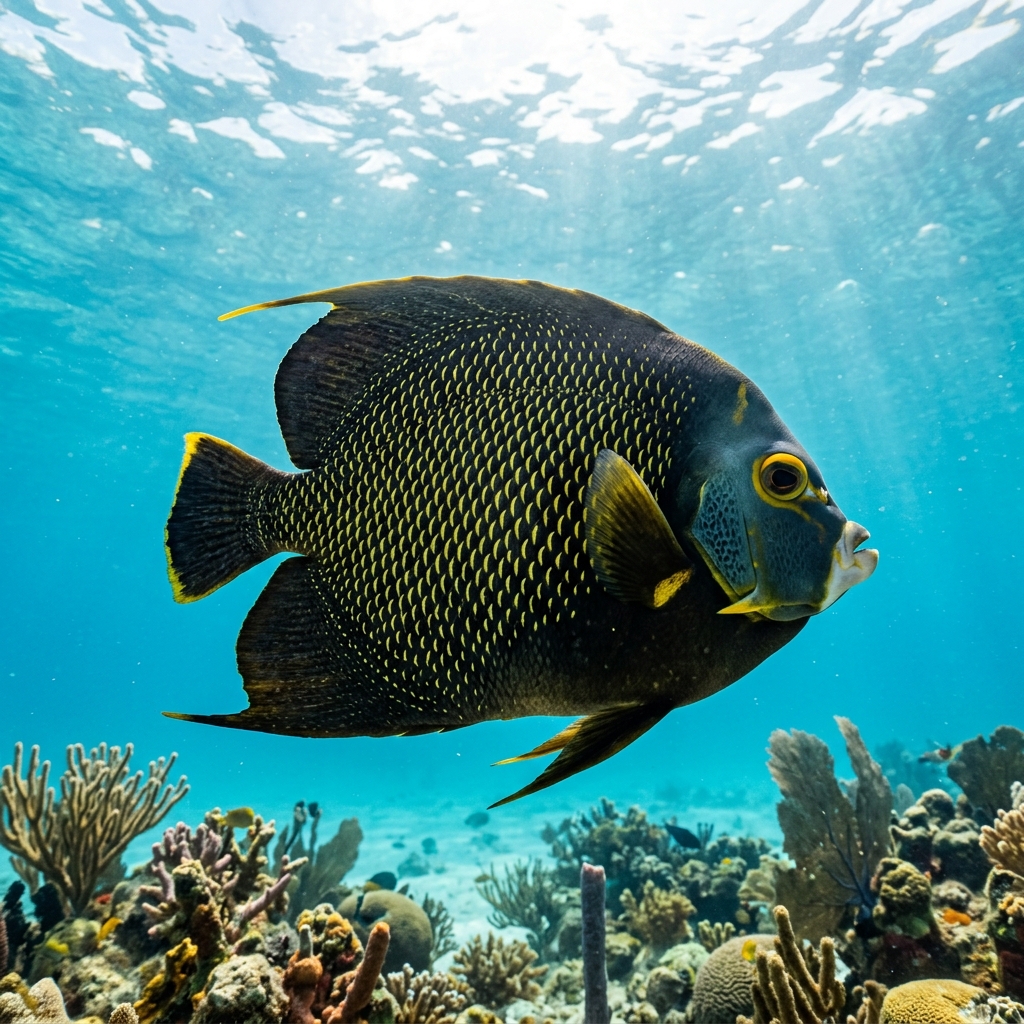
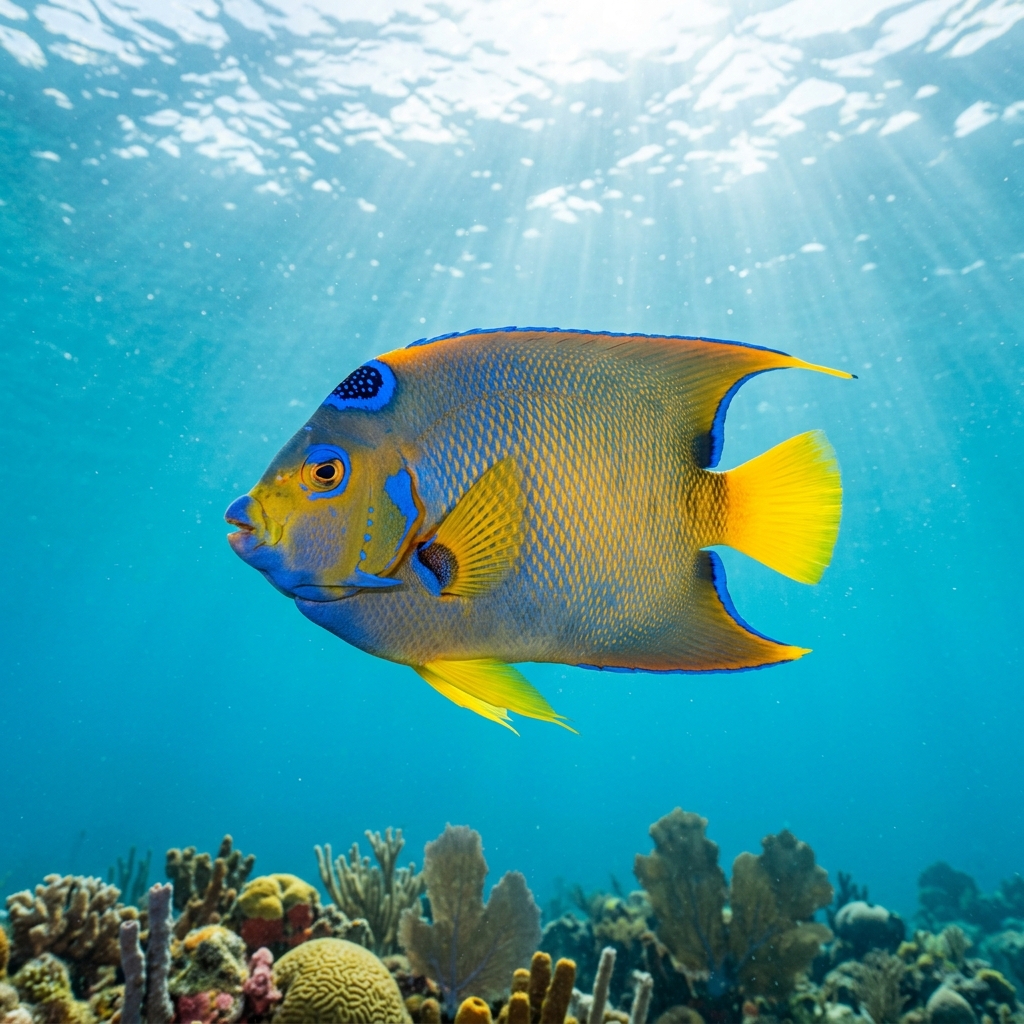
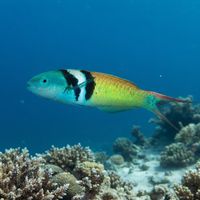
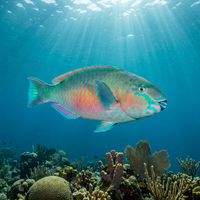
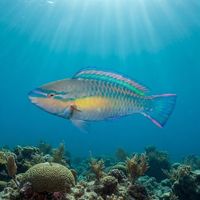
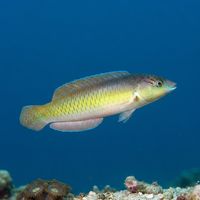
Tobago's reefs host a broad range of observed species. Pacific Trumpetfish, Stoplight Parrotfish, and Wrasses are very commonly encountered, while French Angelfish and Queen Angelfish are regular presences on most reef sites. More patient divers may spot Nurse Shark, Spotted Moray, Spotted Scorpionfish, and Green Sea Turtle, all of which have been recorded across the island's sites.
Tobago caters to a range of skill levels, though the majority of its sites are pitched at intermediate or advanced divers. Buccoo Reef near Crown Point is specifically listed as beginner-friendly, with shallow depths and calm conditions. Beginners planning to dive in Speyside should be aware that currents there are strong, and most sites in that sub-area require solid buoyancy and current experience.
Speyside, centred around Little Tobago, concentrates the more demanding diving: deep walls, drift dives, cave passages, and a wreck, most requiring intermediate or advanced certification. Crown Point, at the southwest of the island, offers shallower reef and seagrass sites that are more beginner-friendly and accessible. Divers visiting Tobago with a mixed experience group would typically base beginner dives around Crown Point and reserve Speyside for the more experienced.
The large majority of dive sites in Tobago require boat access, which is the norm across both Speyside and Crown Point. Operators including Manta Lodge and Dive Centre, Extra Divers, Tobago Frontier Divers Ltd, and several others run regular boat departures covering sites across the island. A small number of sites offer the option of either boat or shore entry.