Scorpaena plumieri
Spotted scorpionfish haunt Caribbean and Atlantic reefs from Florida to Brazil. Learn to spot them on Roatán, Bonaire, and Grand Cayman year-round.
Safety warning
The dorsal, pelvic, and anal spines all carry venom. A sting is not fatal but delivers intense, immediate pain and can cause swelling, nausea, and localised tissue damage. The risk comes almost entirely from accidental contact, typically a diver grabbing the reef without looking or putting a hand down on a fish that has been completely invisible. Keep hands off the reef, watch where you fin near the bottom, and if stung, immerse the affected area in hot water (as hot as bearable) and seek medical attention.
If you're stung
Venomous spinesGeneral first-aid guidance, not a substitute for professional medical care. In an emergency, call your local emergency number.
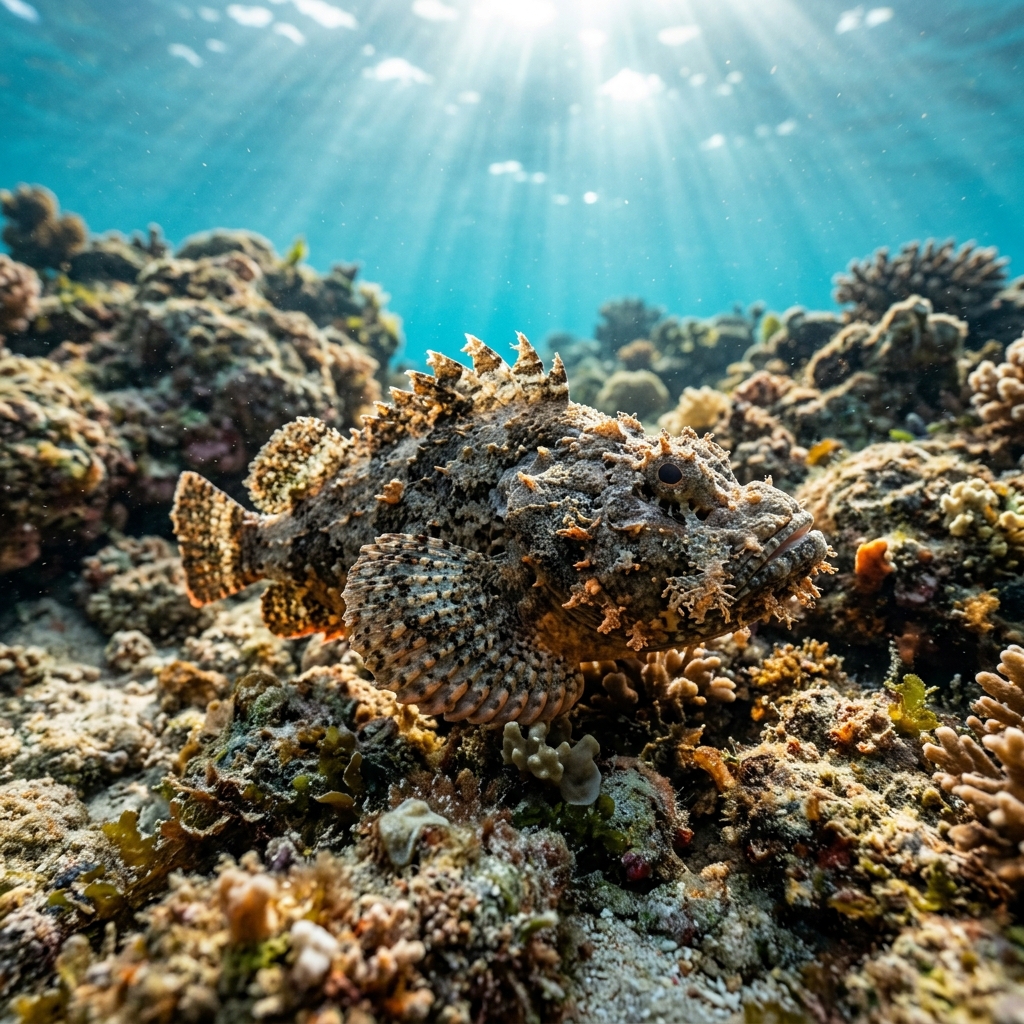
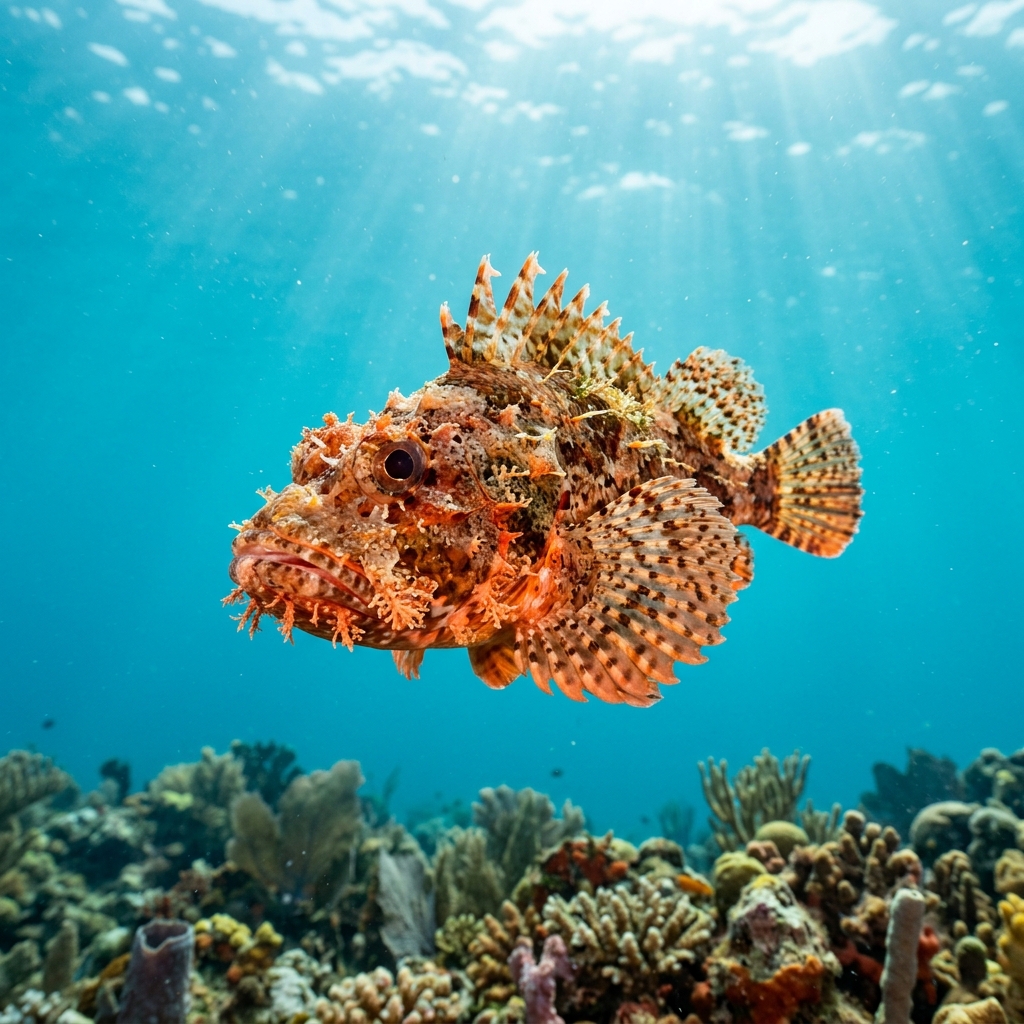
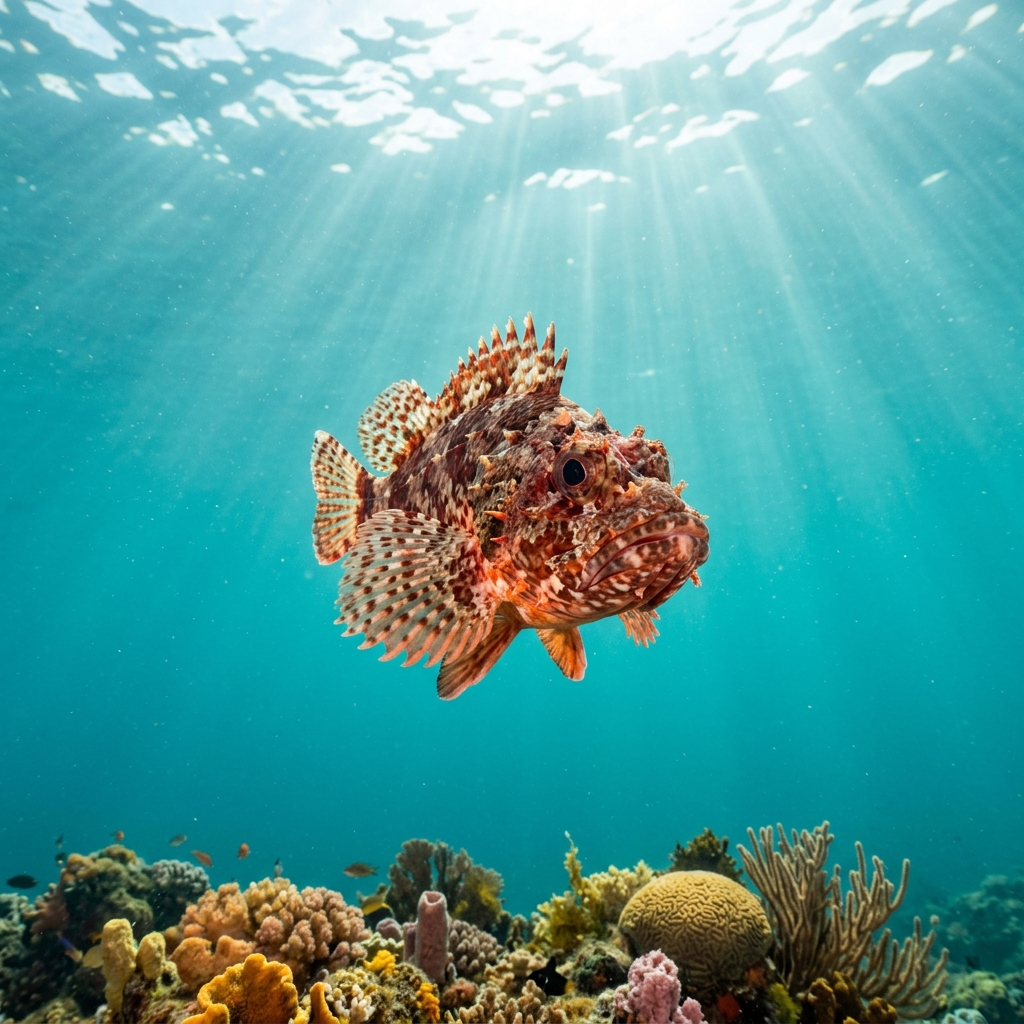
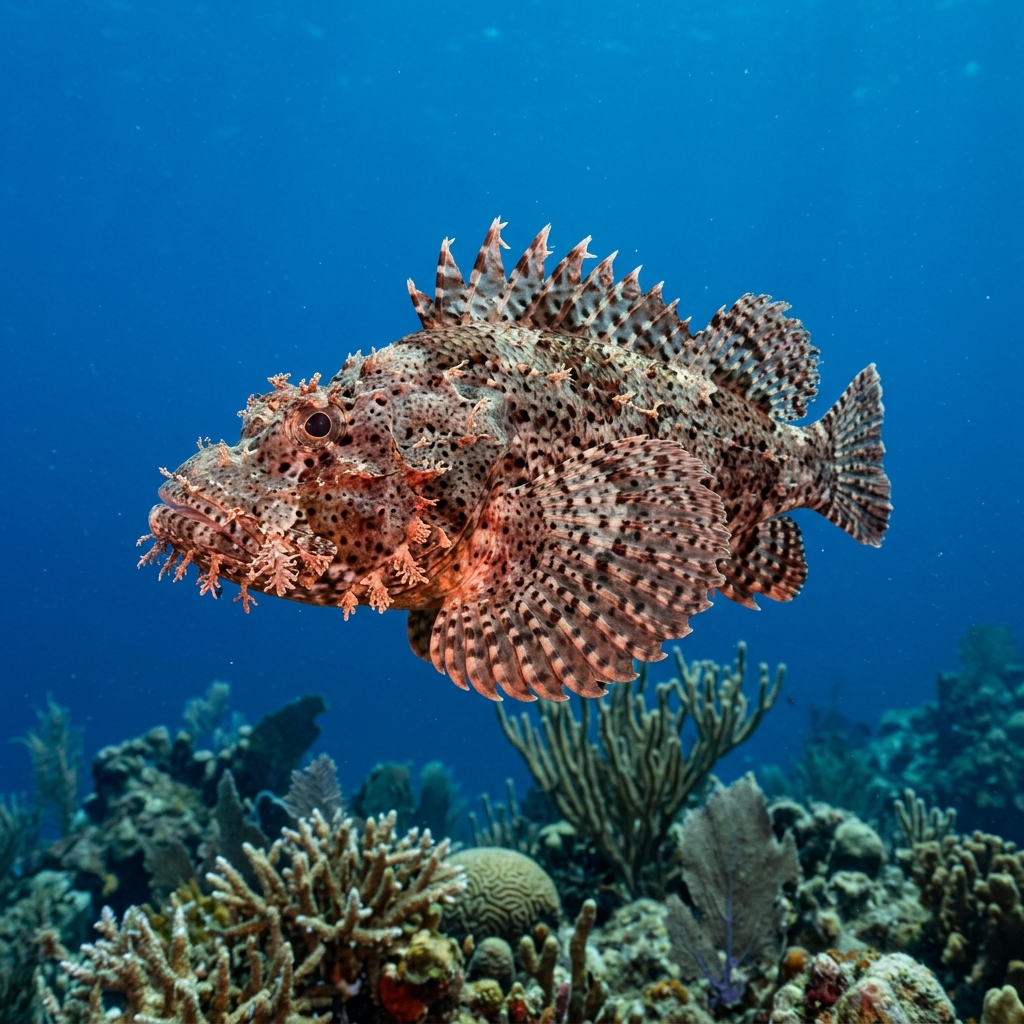
Roughly 30 cm long, this fish looks more like a lump of reef than an animal. The body is heavily mottled in browns, reds, whites, and blacks, with a pattern of pale spots that breaks up its outline against rubble or encrusted rock. The giveaway, once you train your eye, is the large, upturned mouth and the fan of spiny dorsal rays arching above a slightly hunched back. Look closely at the underside of the pectoral fins, which flash a distinctive pattern of dark spots on a pale background when the fish extends them.
Almost every encounter is the same: a motionless fish sitting on rubble, a coral head, or a shaded ledge, trusting completely in its camouflage while you swim right past it. Slow down, scan the bottom methodically, and you will find them during daylight hours resting in shaded spots. They are ambush predators that hunt at night, so daytime sightings are rarely of active feeding; the fish simply sits and waits, and will typically hold position unless you close to within a few centimetres.
When it does strike, the spotted scorpionfish moves faster than the eye can follow, engulfing prey in a single explosive lunge that can happen in under twenty milliseconds.
Present on its reefs year-round with no concentrated season, which matches its observed temperature range of roughly 22 to 28 °C across consistently warm tropical and subtropical waters.
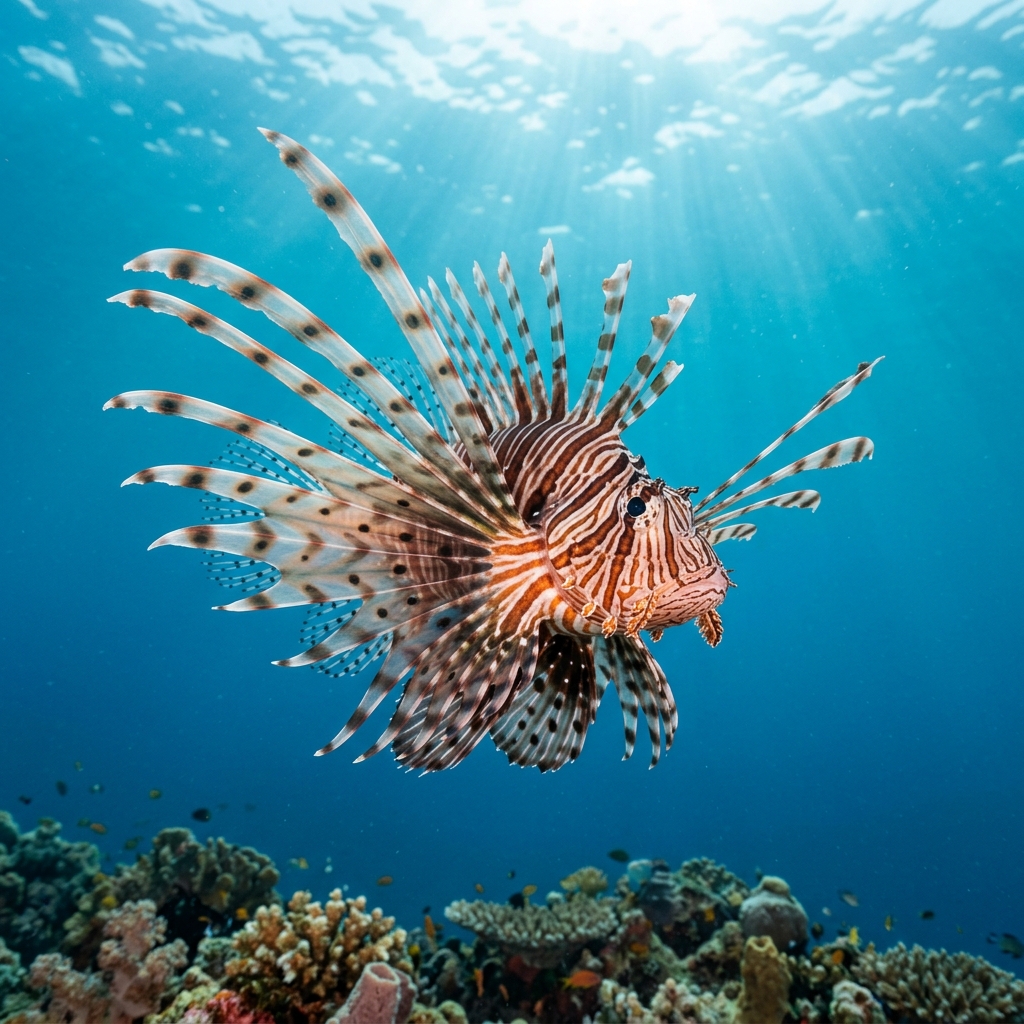
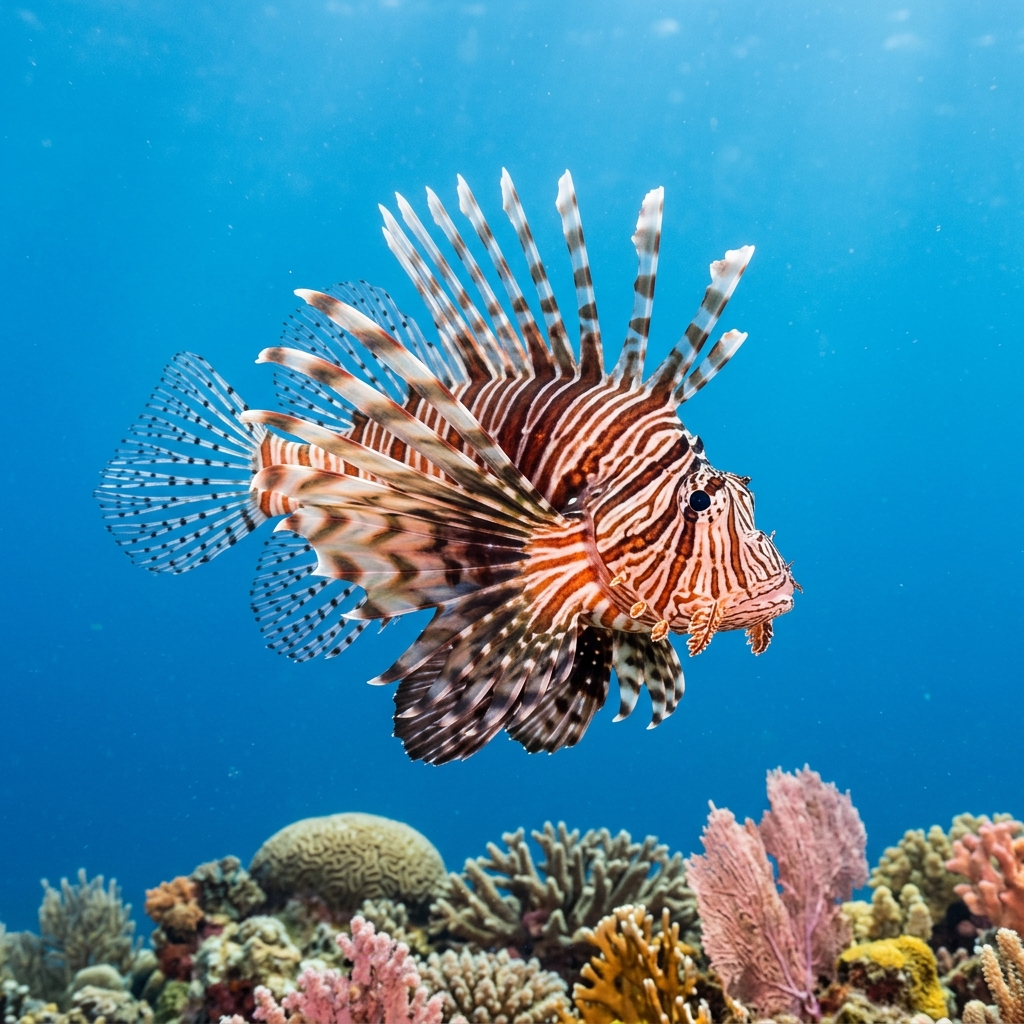
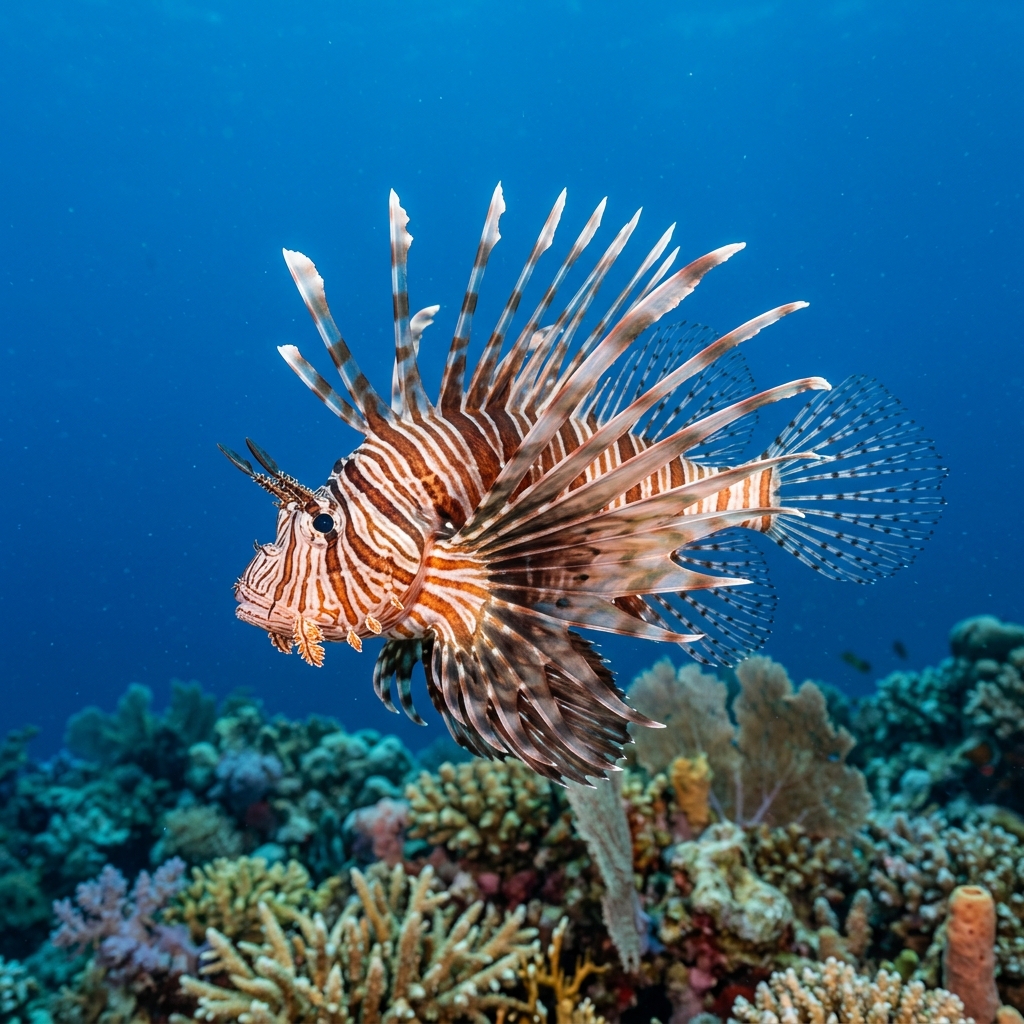
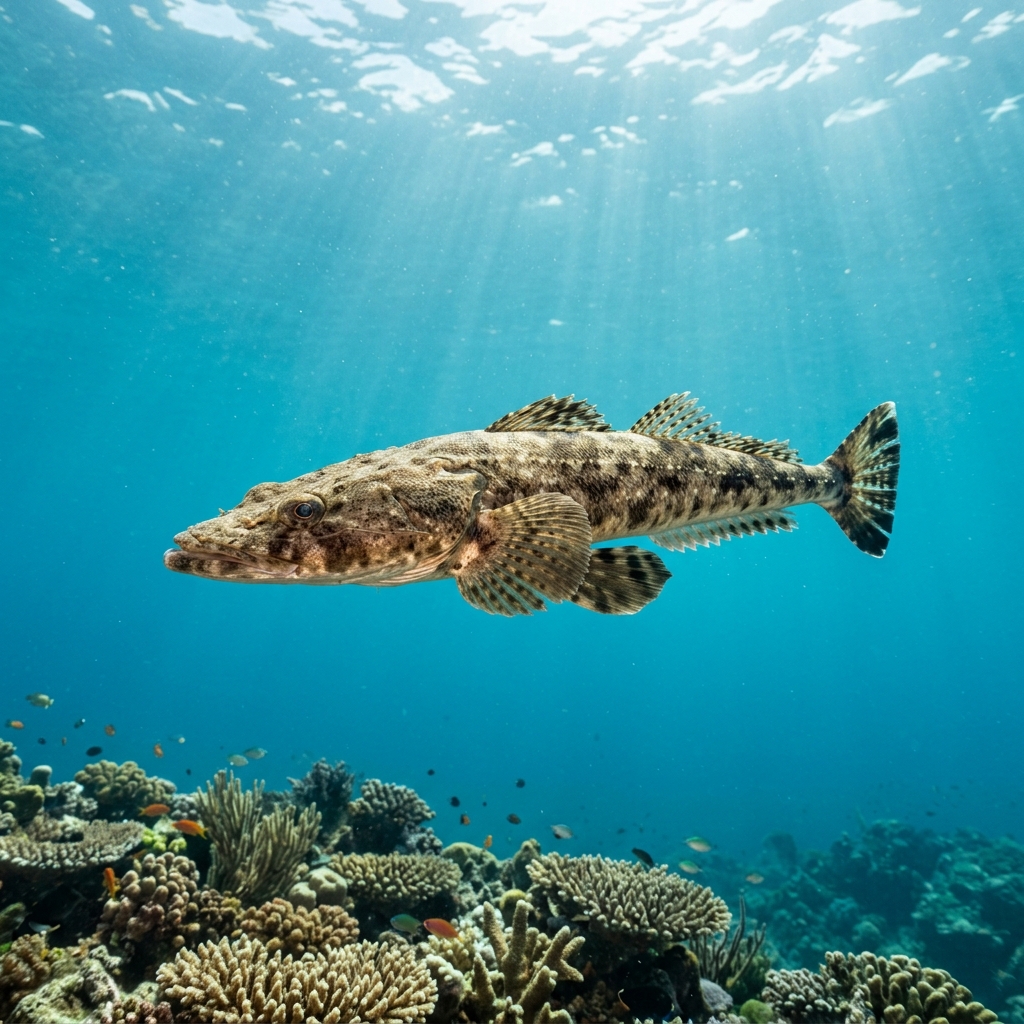
Reef neighbours a diver could mistake it for. Use the identification notes above to tell them apart.
Most commonly logged across the wider Caribbean and western Atlantic, with the strongest sighting records in Florida and the US South-East, Roatán in Honduras, and the Yucatán Peninsula in Mexico. Bonaire, Grenada, Grand Cayman, and the coast of Rio de Janeiro and São Paulo in Brazil also produce regular sightings, making this essentially a pan-Caribbean species with a healthy Brazilian presence.
Mapping where Spotted Scorpionfish is logged…
They are a Caribbean and western Atlantic species with strong sighting records across Florida, Roatán in Honduras, the Yucatán Peninsula in Mexico, Bonaire, Grenada, and Grand Cayman. Brazil's south-east coast around Rio de Janeiro and São Paulo also produces reliable encounters.
They are present year-round throughout their range. Their preferred water temperature sits between roughly 22 and 28 °C, which describes most Caribbean and tropical Atlantic reefs in every season, so there is no single peak month to target.
Yes. Their dorsal spines are venomous and a sting causes sharp, prolonged pain along with possible swelling and nausea. They pose no threat to divers who keep hands off the reef, because the fish will not chase or attack. The danger is purely accidental contact with a well-camouflaged animal sitting in plain sight.
Look for a roughly 30 cm fish sitting completely still on the reef floor, with a heavily mottled brown and white body, a noticeably large upturned mouth, and a row of spiny dorsal rays. The clearest field mark is the pectoral fin underside, which shows bold dark spots on pale skin when the fish fans it open.
A typical adult is around 30 to 31 cm, though larger individuals are recorded. Their compact, hunched profile makes them look smaller than they are when sitting tight against the reef.
It is a pure ambush predator. The fish waits motionless, relying on camouflage to appear invisible to passing prey. When a fish or crustacean comes within range, it lunges and opens its large mouth to create a vacuum that sucks the prey in, all in a fraction of a second. Divers almost never witness this strike because it is over before the brain registers the movement.
Site and sighting data is aggregated from diver logs, iNaturalist and GBIF. For taxonomy and conservation status:
Madeira Rockfish
2,773 sites