Scarus vetula
Spot Queen Parrotfish year-round across Bonaire, Roatán and Florida reefs in 26-28 °C water. Learn how to tell terminal males from females underwater.
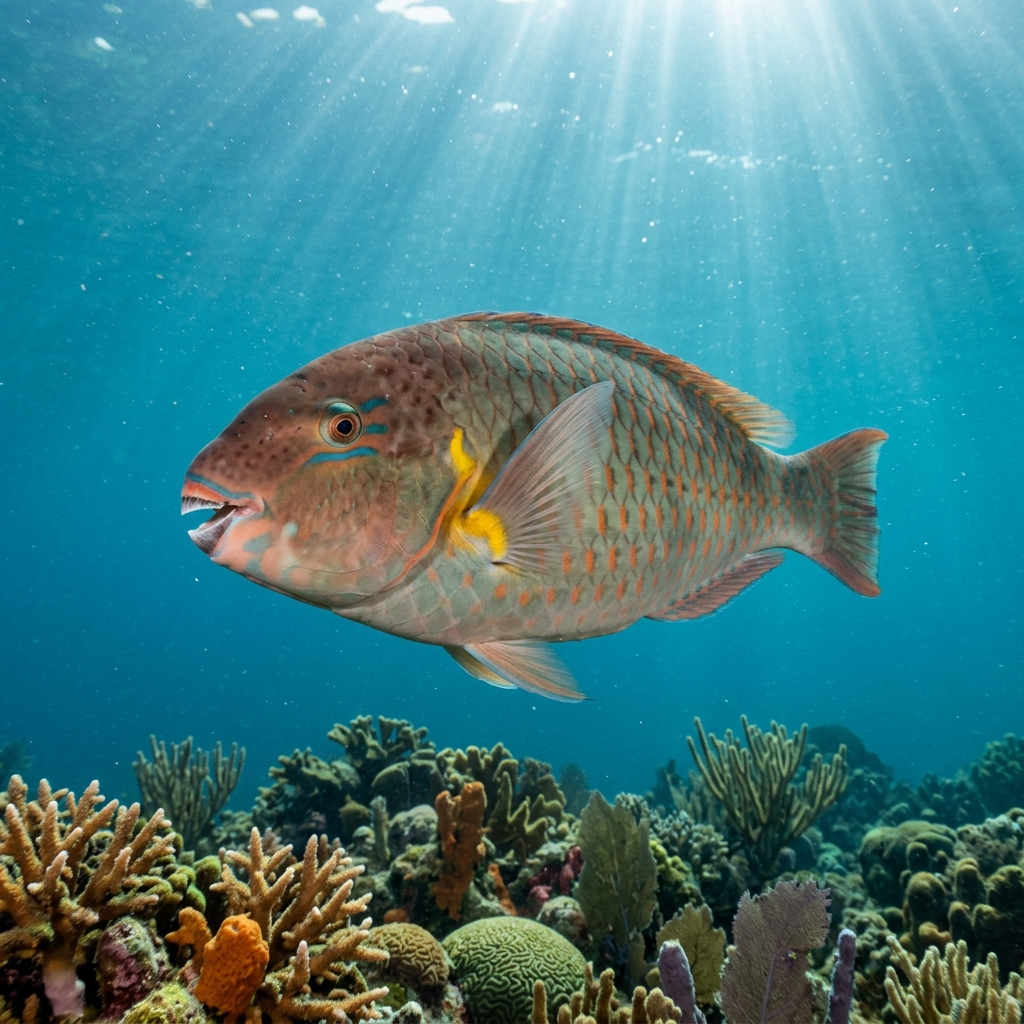
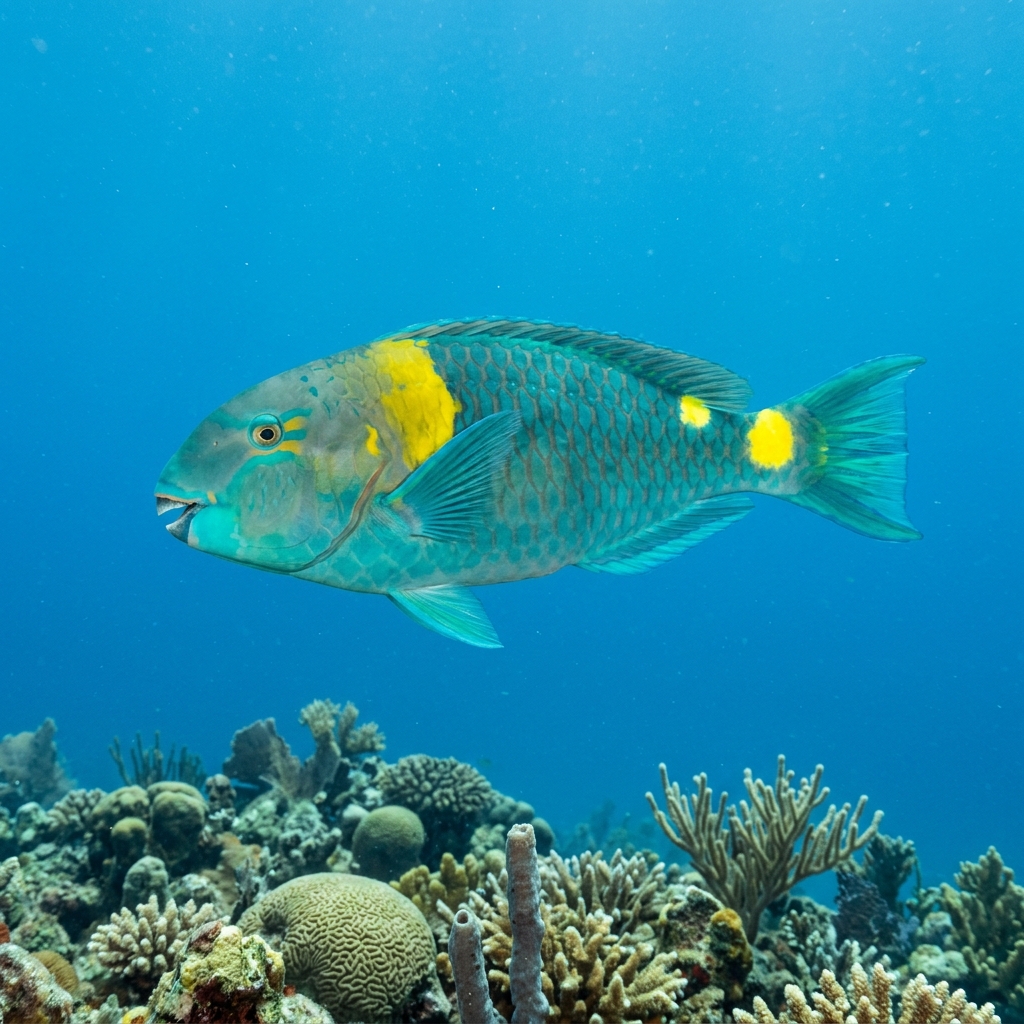
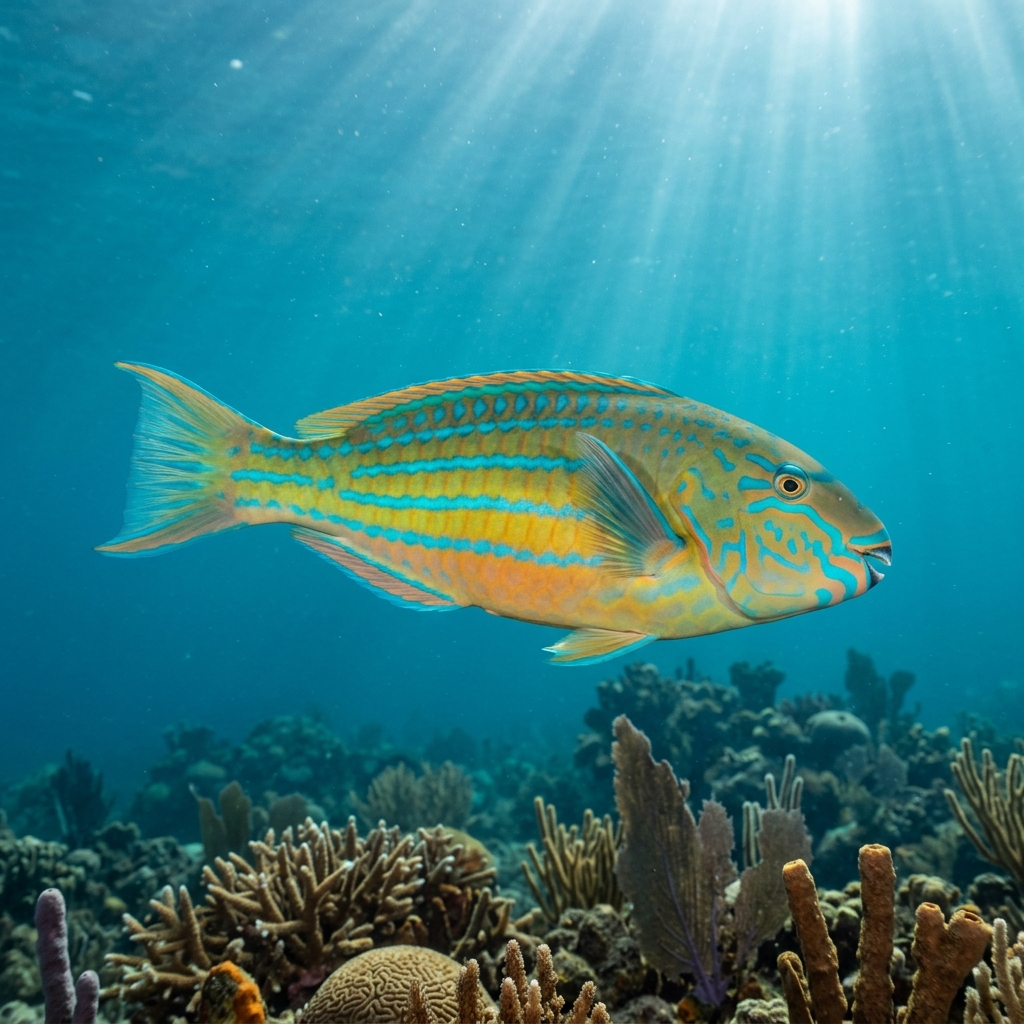
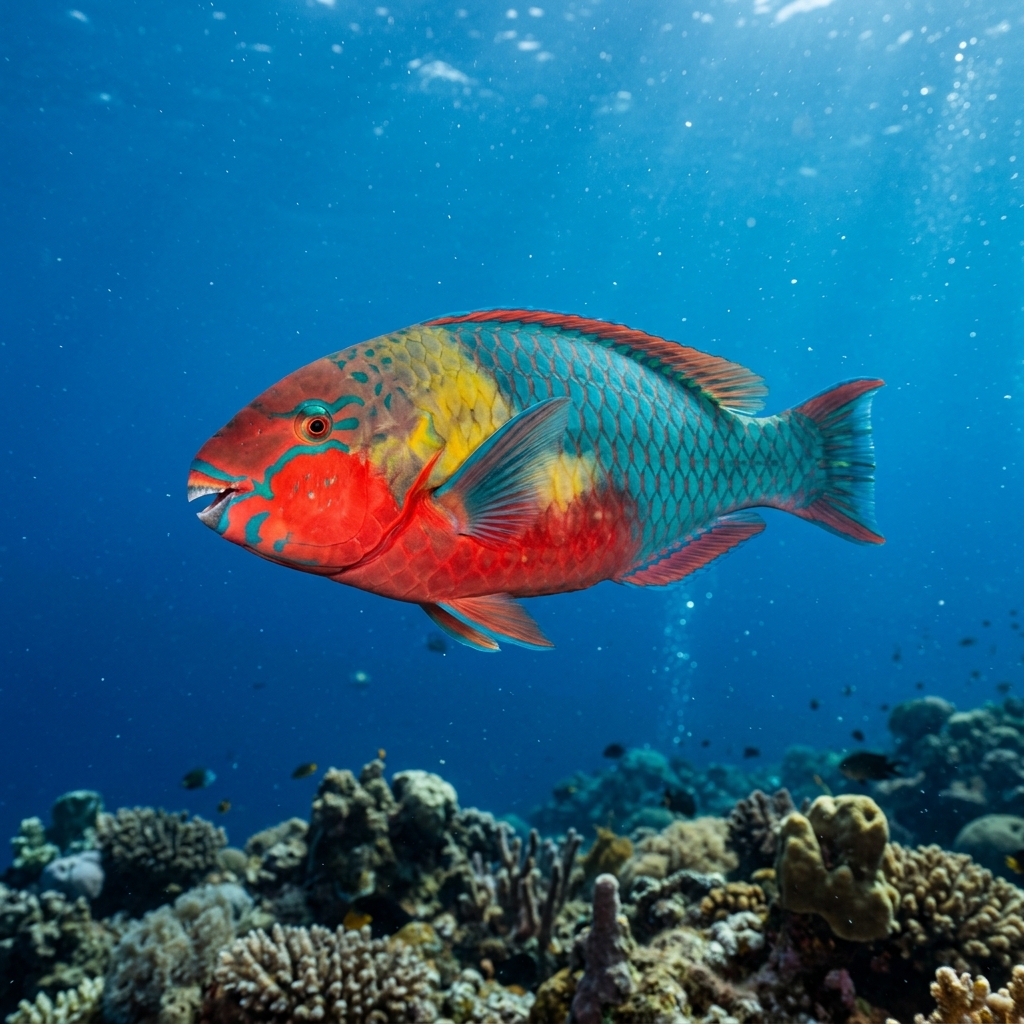
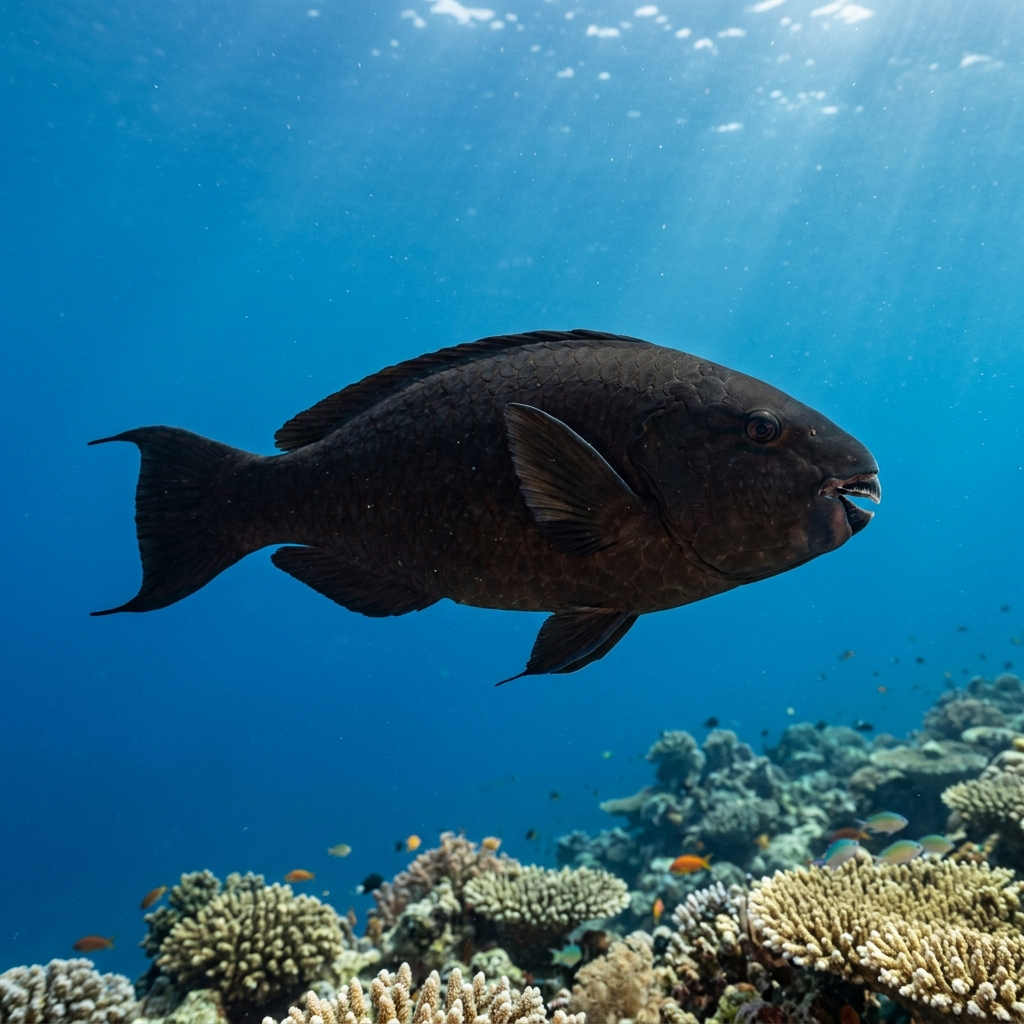
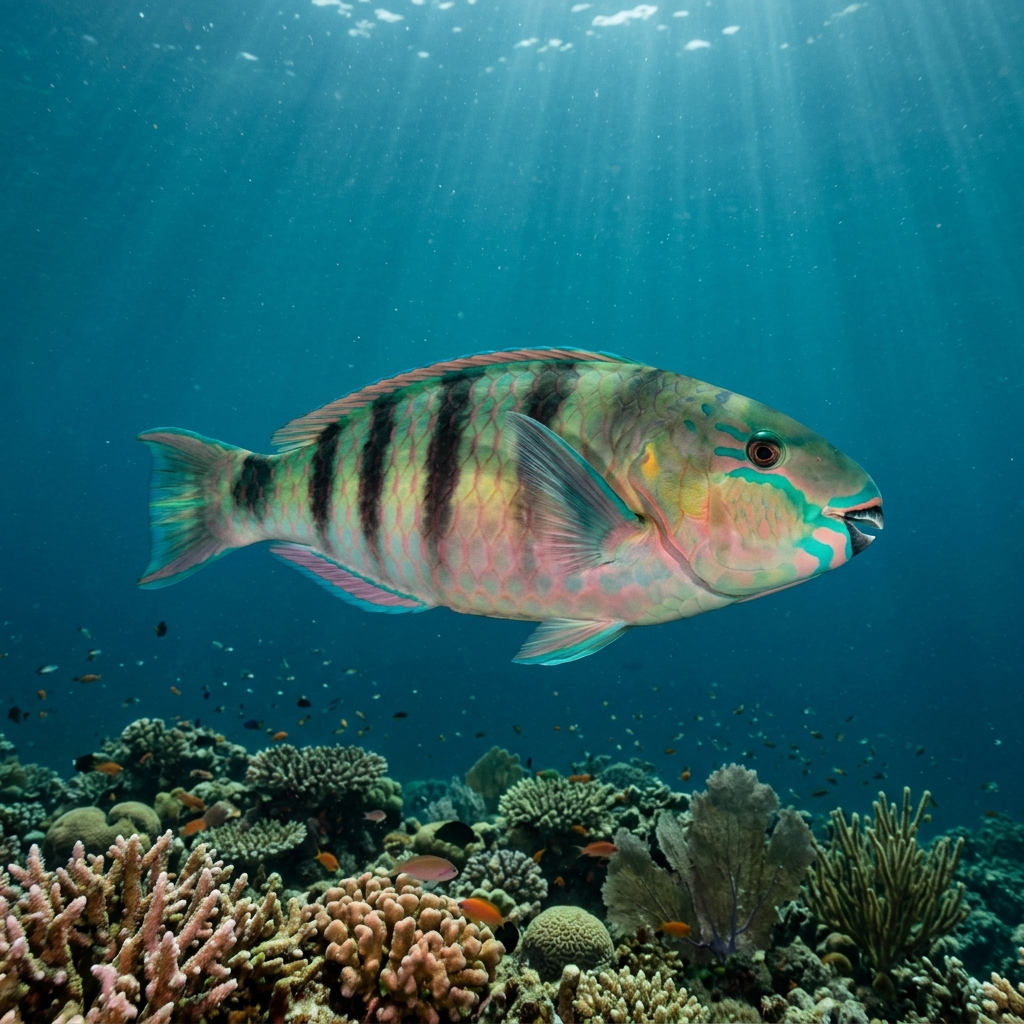
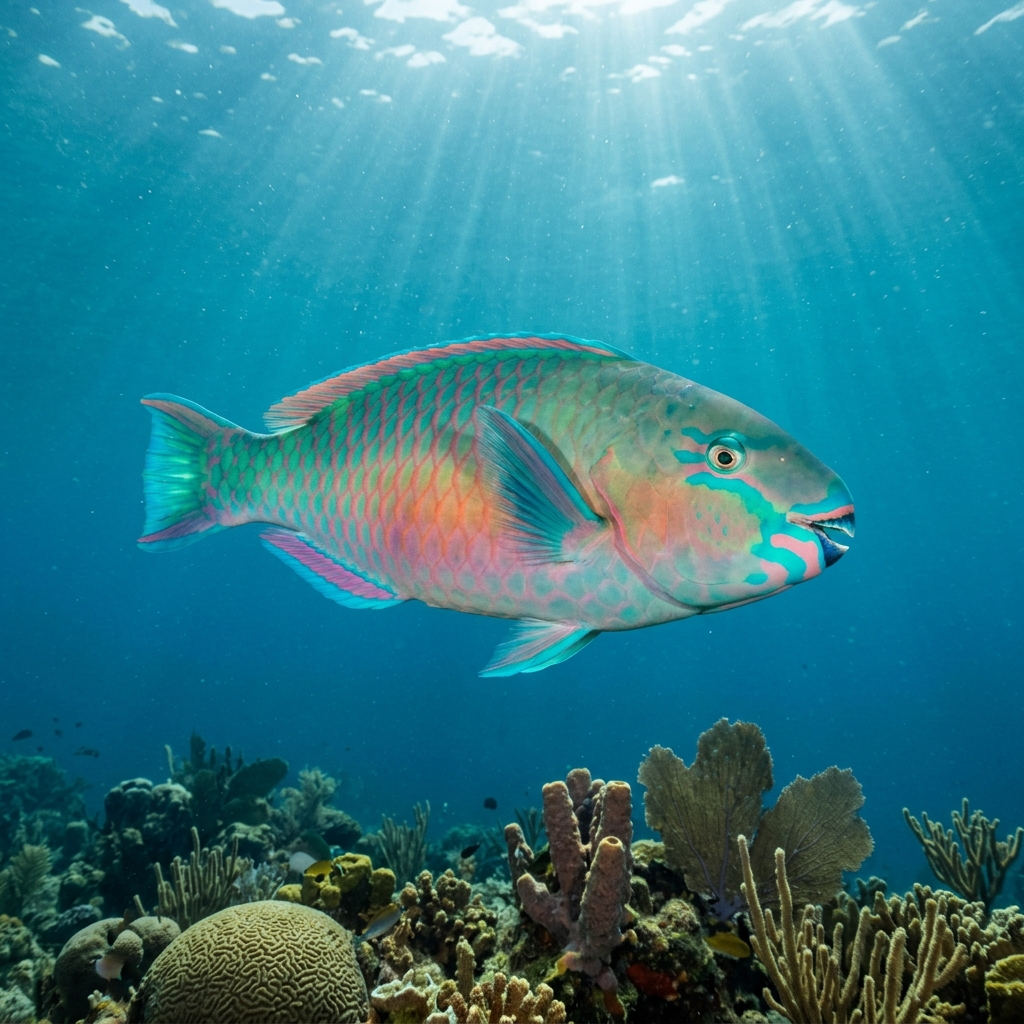
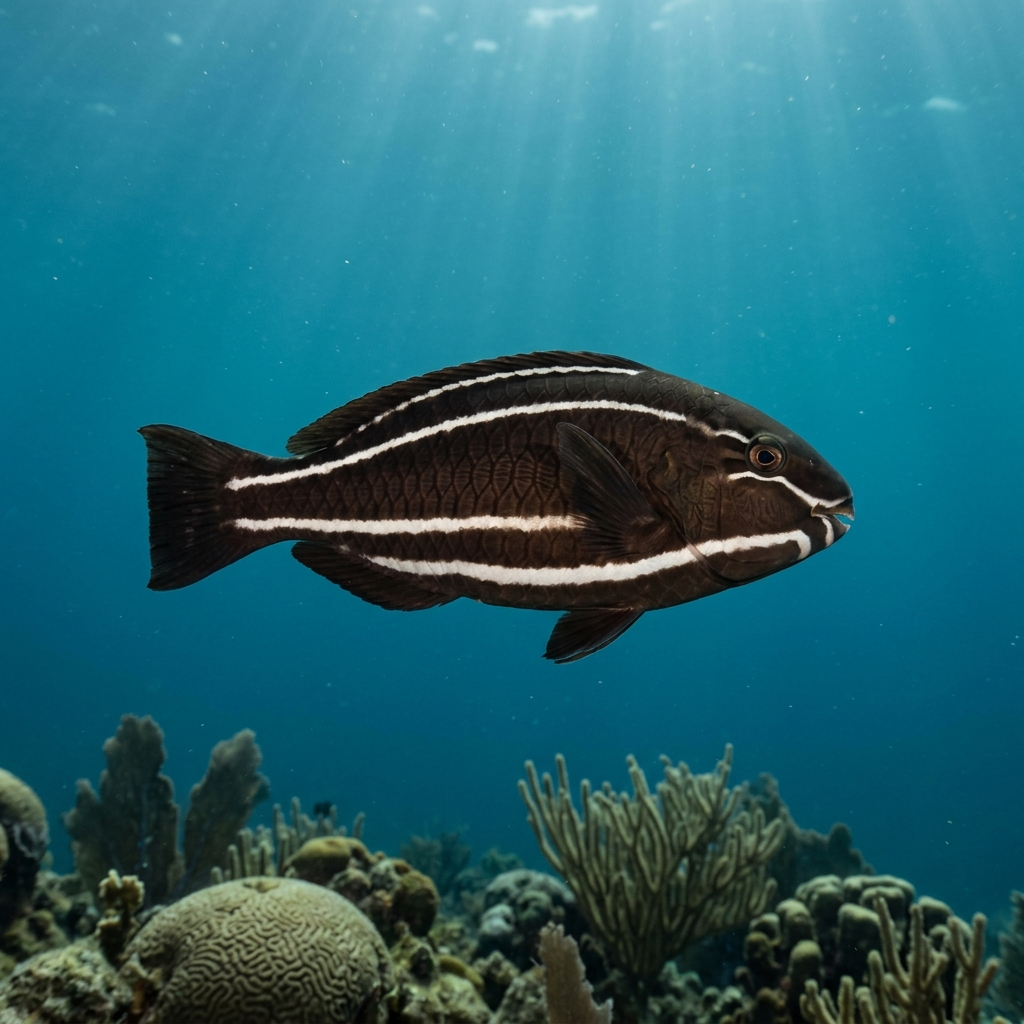
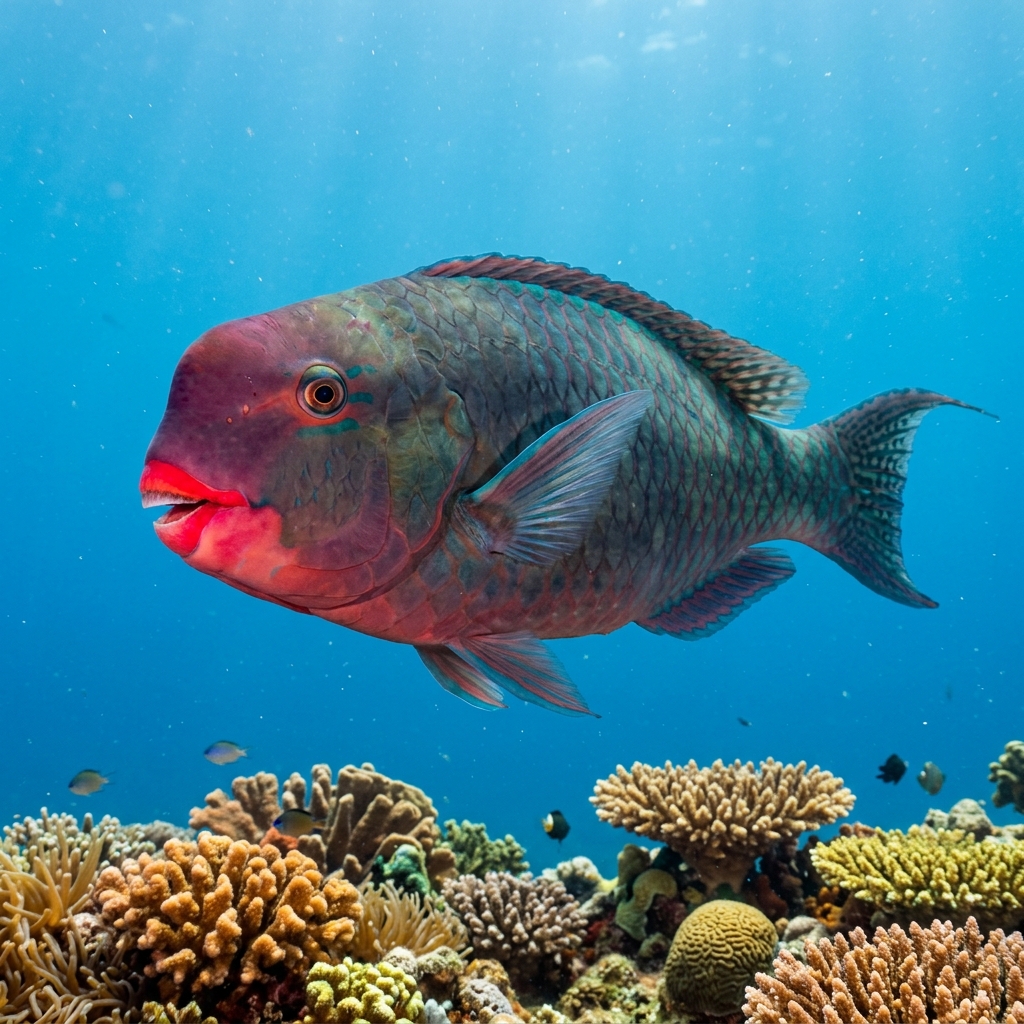
Terminal-phase (adult male) individuals are hard to miss: vivid blue-green overall with striking orange and green patterning around the face and beak-like fused teeth. Initial-phase fish, females and some males, are reddish-brown with a clear white horizontal stripe along the mid-body, and look like an entirely different species at first glance. At roughly 40 cm they are mid-sized for a Caribbean parrotfish, stocky and deep-bodied. The distinctive parrot-beak mouth, fused into a biting plate visible even at distance, is the single best field mark across all phases.
You will almost always find them actively grazing, scraping algae from hard coral and rock with that unmistakable beak, a behaviour that produces the faint crunching sound audible underwater. They are relaxed around divers and snorkellers and will carry on feeding with little concern about your presence, making for unhurried observation. Most sightings are of individuals or small loose groups; larger terminal males occasionally chase rival parrotfish away from a feeding patch but show no interest in divers.
All that scraping produces a surprising by-product: the fine white sand that blankets Caribbean beaches is largely composed of coral rubble and crustose algae ground up and excreted by parrotfish like this one, at a rate that can reach hundreds of kilograms per individual per year.
Present year-round wherever suitable reef habitat exists, the species sits comfortably in the 26 to 28 °C water that defines Caribbean tropical reefs through all seasons, and Northern Hemisphere data show no concentrated peak month.
Reef neighbours a diver could mistake it for. Use the identification notes above to tell them apart.
Most commonly logged across the Caribbean, with the strongest presence in the United States (especially Florida), Bonaire, the Bahamas, Curaçao, Cuba, and Honduras. Top regional hotspots include Klein Bonaire, Roatán, Tortola and the Southern BVI islands, Grenada Island, and the reefs around New Providence and Saint Thomas. Venezuela and Grenada also contribute solid sighting records.
Mapping where Queen Parrotfish is logged…
They are a Caribbean species logged across a wide sweep of the region. Bonaire, the Bahamas, Curaçao, Honduras (especially Roatán), Cuba, and Florida's reefs are among the most reliable spots, along with the British Virgin Islands, US Virgin Islands, Venezuela, and Grenada.
Any time of year works. They live year-round on Caribbean reefs in water between roughly 26 and 28 °C, and sighting records show no seasonal peak. Daytime dives are best since they are active grazers by day and shelter at night.
Look for the beak-like fused teeth first, that narrows it to parrotfish. Adult males are vivid blue-green with orange and green face markings. Initial-phase fish are reddish-brown with a bold white mid-body stripe. Both phases are stocky and around 40 cm long.
They typically reach around 42 cm in length, mid-sized for Caribbean parrotfish. Terminal males tend to be the largest individuals you will encounter.
They are major reef architects. By scraping algae from coral and rock, they keep reef surfaces clear for coral recruitment. The coral rubble they digest and excrete contributes significantly to the production of Caribbean white sand beaches.
Site and sighting data is aggregated from diver logs, iNaturalist and GBIF. For taxonomy and conservation status:
Redlip Parrotfish
2,789 sites