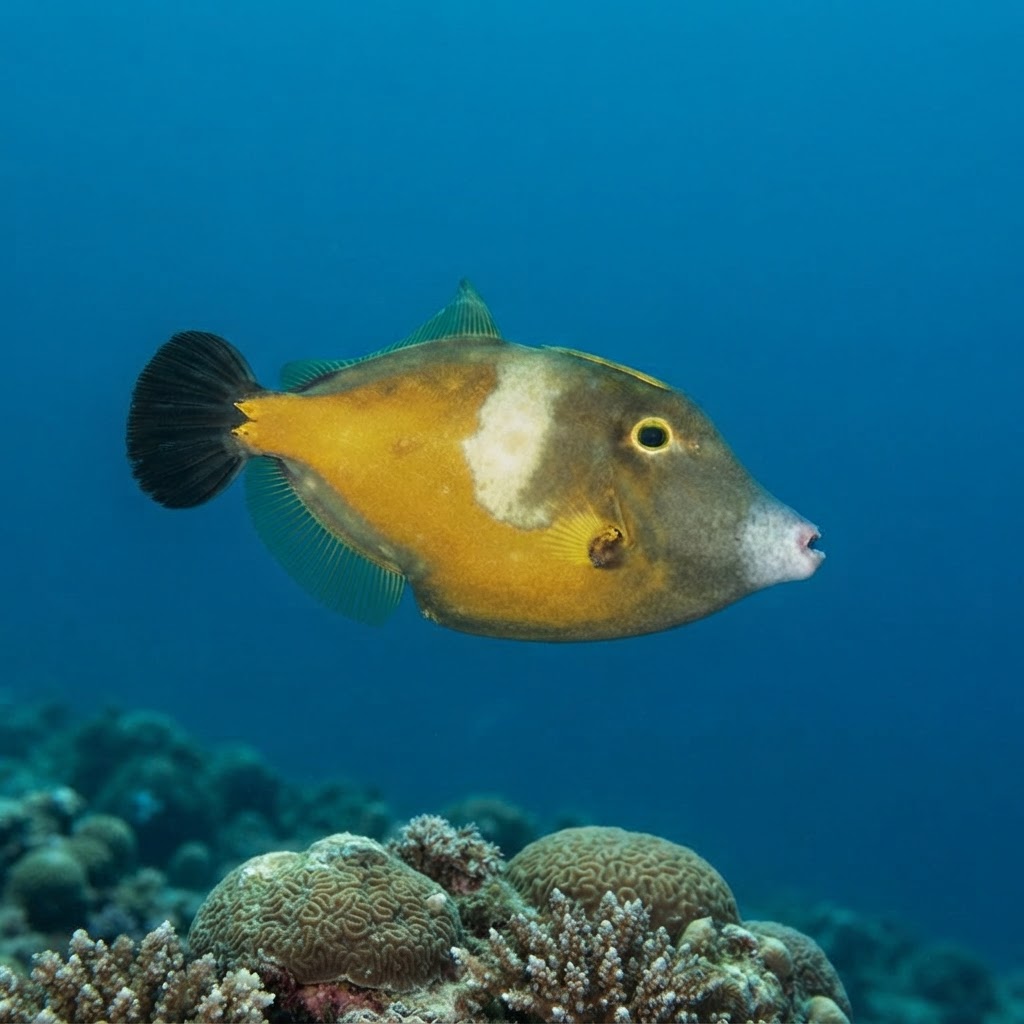
Cantherhines macrocerus
Oval-bodied reef fish with pale spots, most often logged uncommon on Yucatán and Bonaire reefs in 25-28°C water year-round.
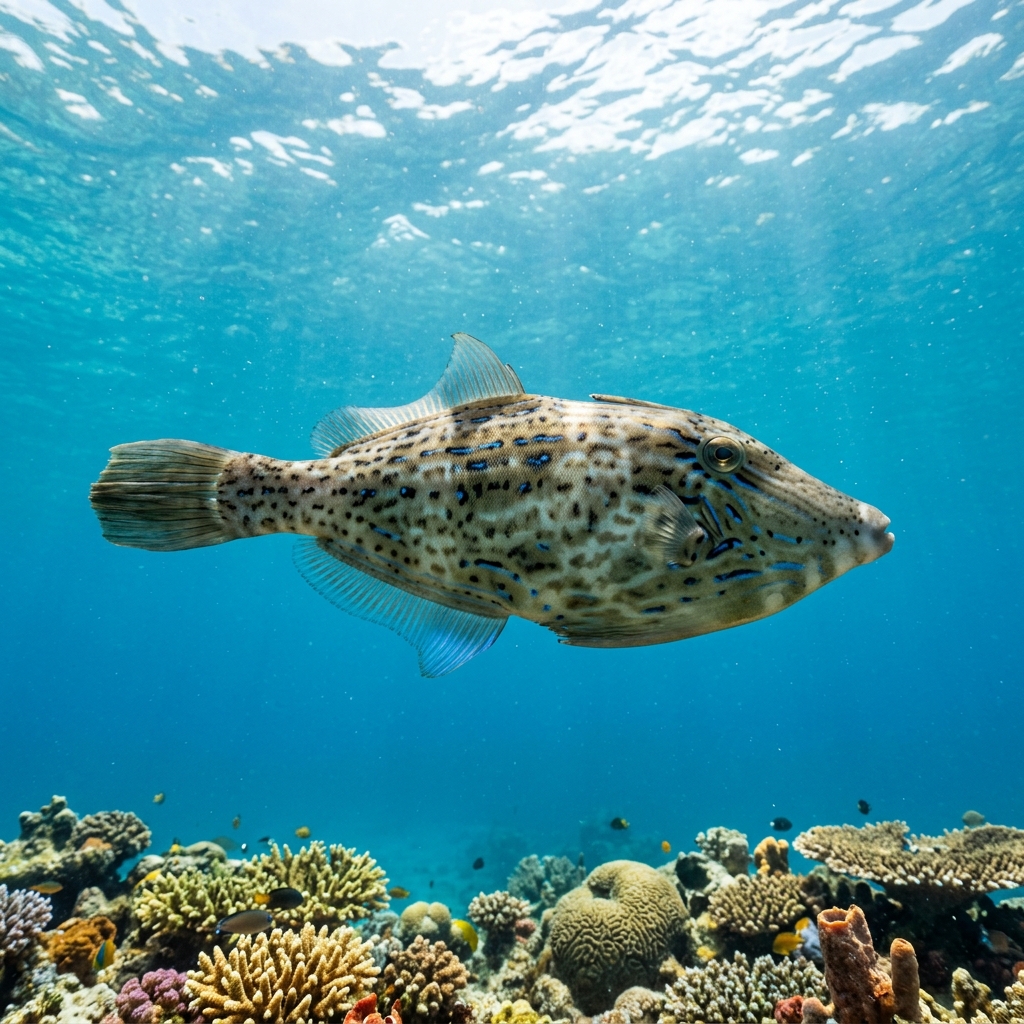
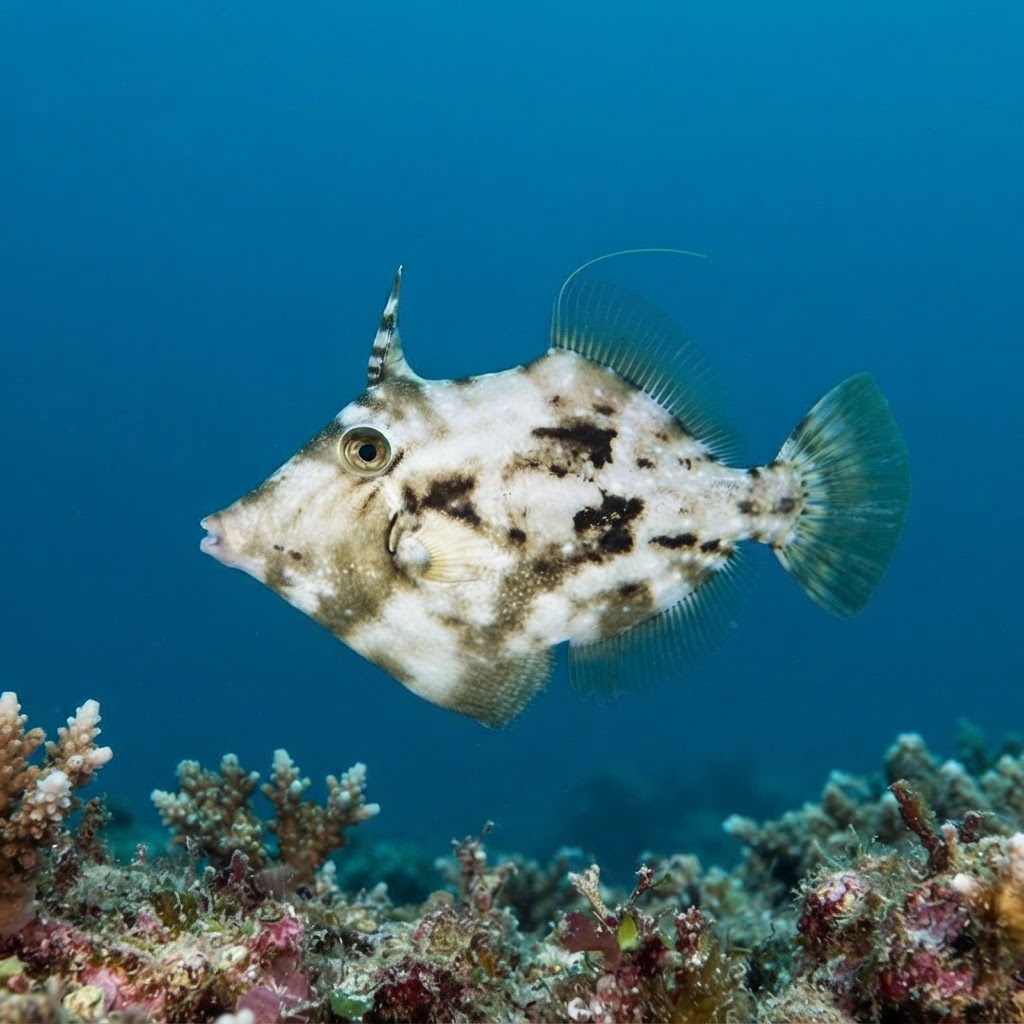
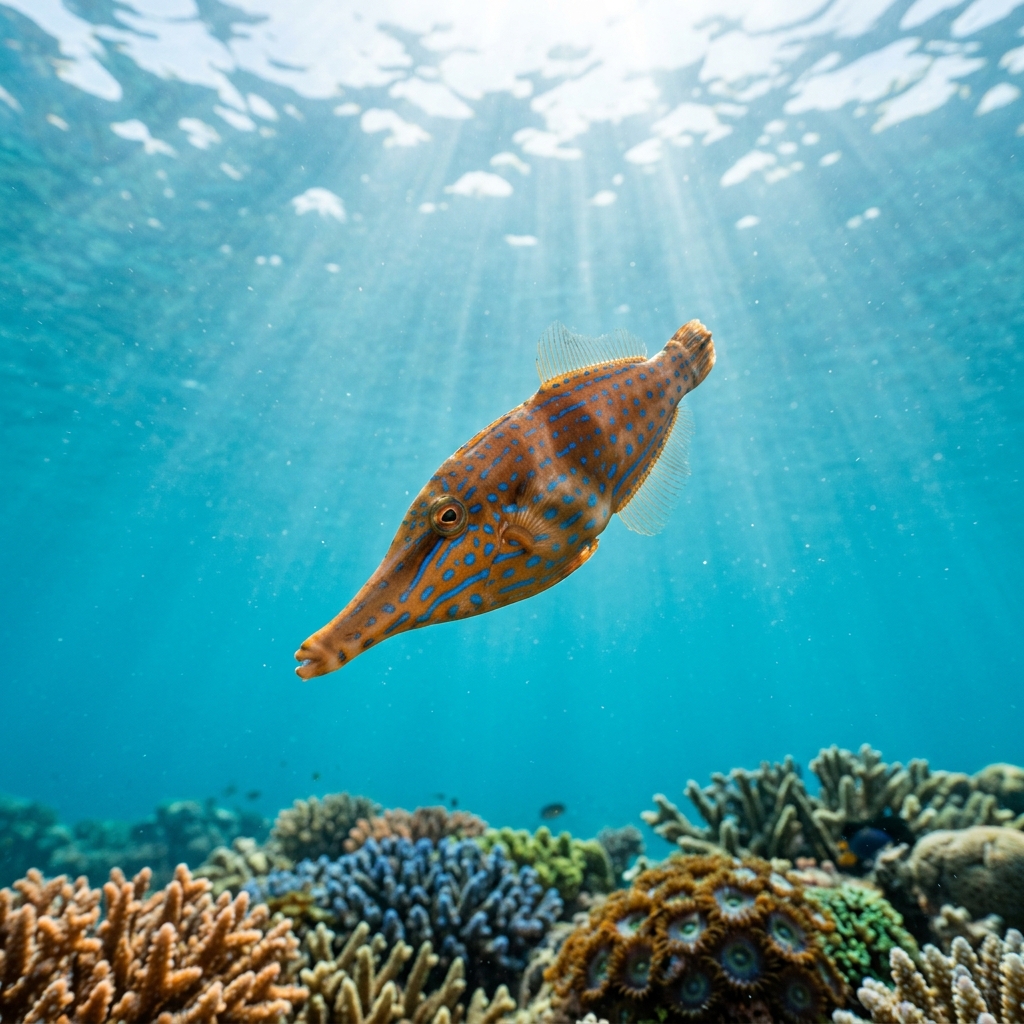
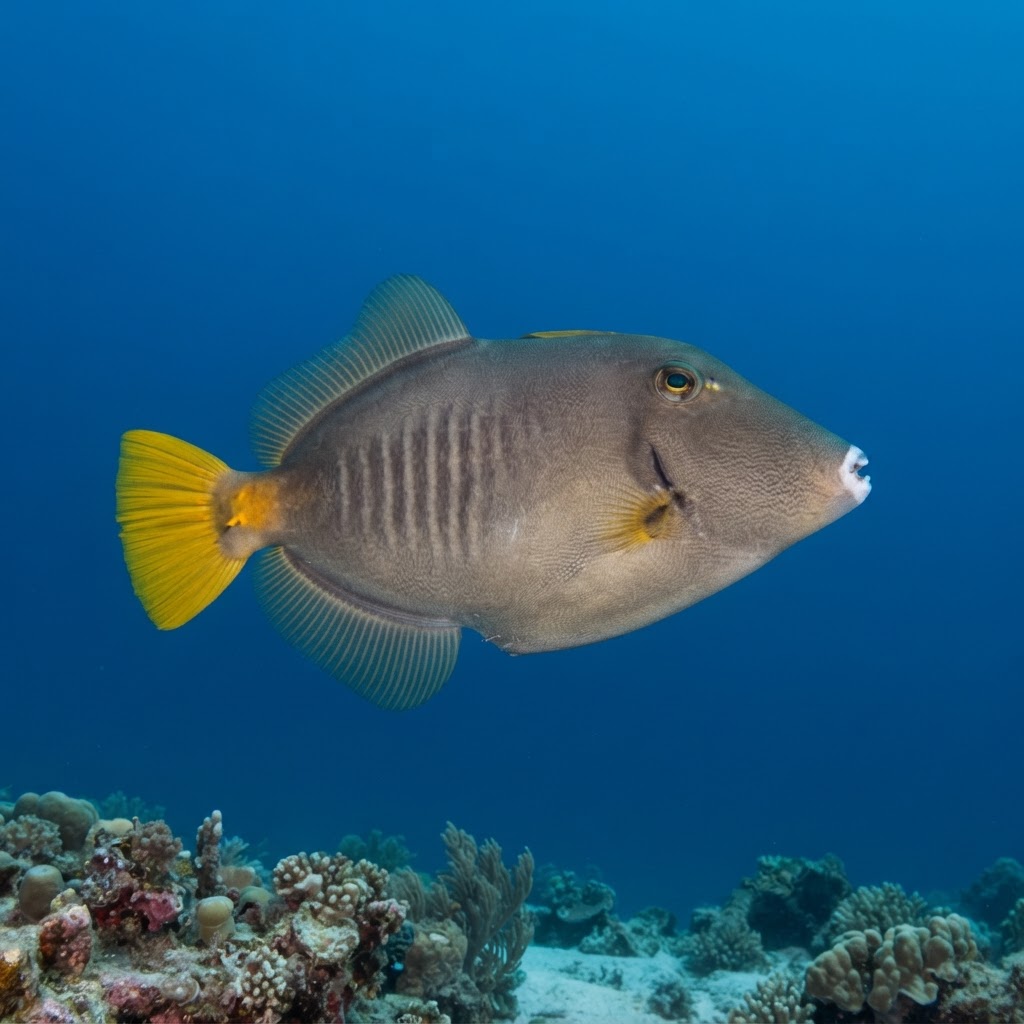
Look for a deep, oval, laterally flattened body around 32 cm long, mottled brown to grey with scattered pale white spots that give it its name. A small, upturned mouth and a spiny first dorsal ray sit forward on a body that tapers to a narrow tail, and it often swims with a slow, almost hovering wobble as it tilts to peer into crevices. Colour can shift with mood and background, but the pale spotting over a rough, sandpaper-textured skin is the giveaway.
Divers usually spot it drifting alone or in loose pairs over reef structure, nosing into sponges and soft coral for a bite before angling off with that slow, tilting swim. It tends to hold a cautious distance rather than bolt, often turning to face divers head-on or slipping behind a coral head if approached too fast. Most sightings are logged as uncommon rather than common, so a calm, unhurried drift past reef ledges gives the best chance of a good look.
Like other filefish, it can lock a stiff dorsal spine upright and wedge itself into a crevice, making it very hard for a predator, or a diver's hand, to pull it out.
No clear seasonal pattern shows up in the data, and with a comfortable range of about 25 to 28°C, reefs across its range stay within that band all year, so it's a fair year-round sighting wherever it's found.
Reef neighbours a diver could mistake it for. Use the identification notes above to tell them apart.
Most reliably logged on the Yucatán Peninsula in Mexico and along Bonaire's Leeward Coast, with strong numbers also around Tortola and the Southern Islands of the British Virgin Islands and off Grenada Island and Carriacou. Good populations also turn up in Honduras's Bay Islands, St Martin/Sint Maarten, and Fernando de Noronha in Brazil, making it a widespread Caribbean and western Atlantic reef fish rather than a specialty sighting.
Mapping where Whitespotted Filefish is logged…
Best bets are the Yucatán Peninsula in Mexico and Bonaire's Leeward Coast, plus the British Virgin Islands, Grenada, and Honduras's Bay Islands. It's a widespread Caribbean and western Atlantic reef species rather than a rare specialty find.
There's no strong seasonal signal in sighting data, and with water in the 25-28°C range across its range for most of the year, it's a fair year-round encounter on tropical reefs.
Look for an oval, flattened body about 32 cm long, mottled brown or grey with scattered pale white spots, a small upturned mouth, and a slow, tilting swim near reef structure.
They typically reach around 32 cm in length, a modest, hand-sized reef fish rather than anything imposing.
It can lock a stiff dorsal spine upright and jam itself into a crevice, a defence trick shared with other filefish that makes it almost impossible to dislodge once wedged in place.
Site and sighting data is aggregated from diver logs, iNaturalist and GBIF. For taxonomy and conservation status:
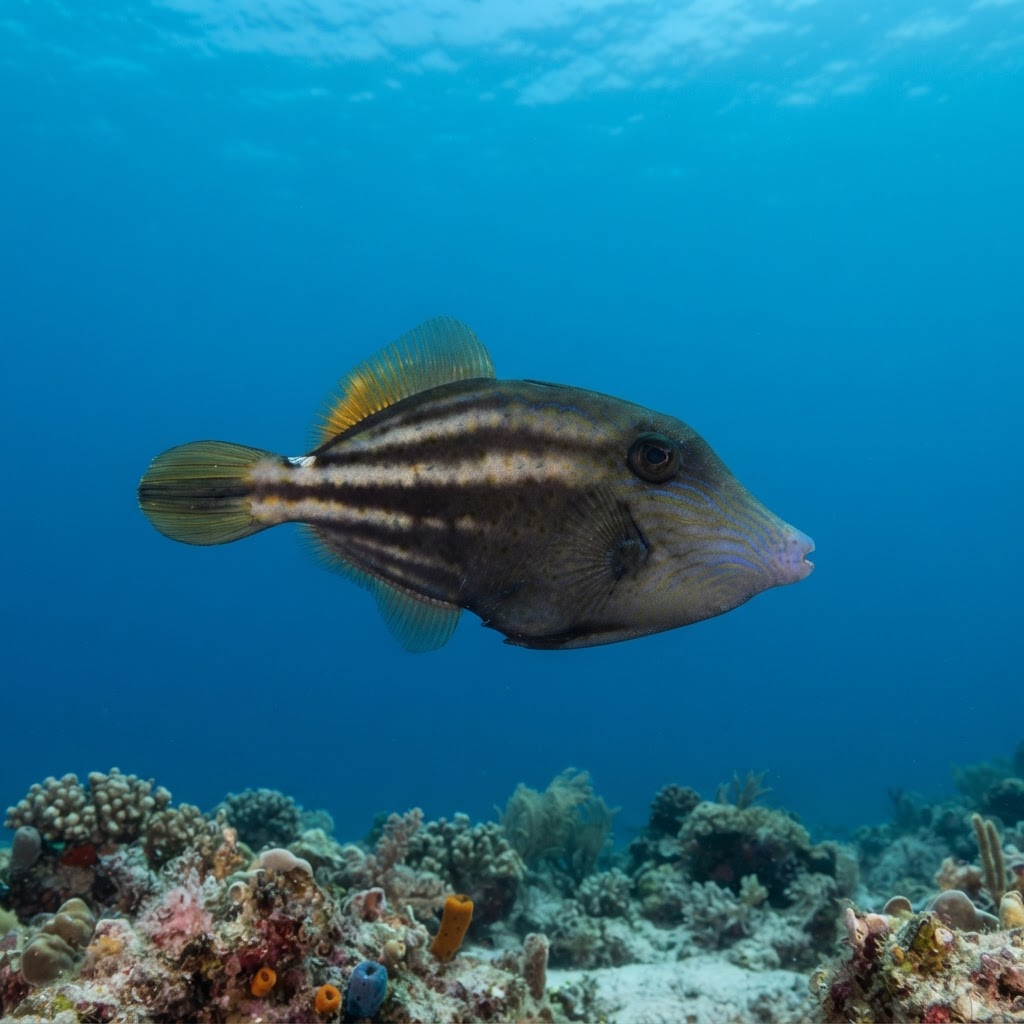
Orangespotted Filefish
836 sites