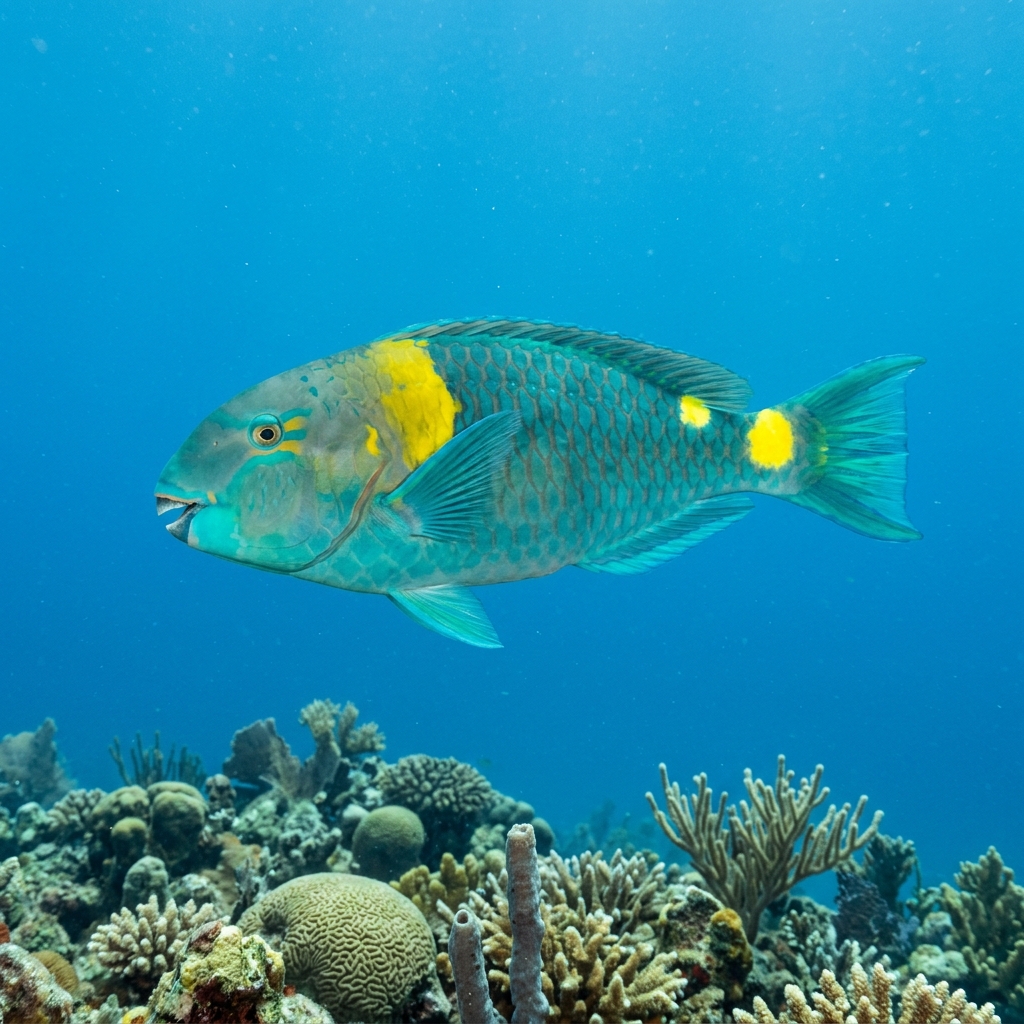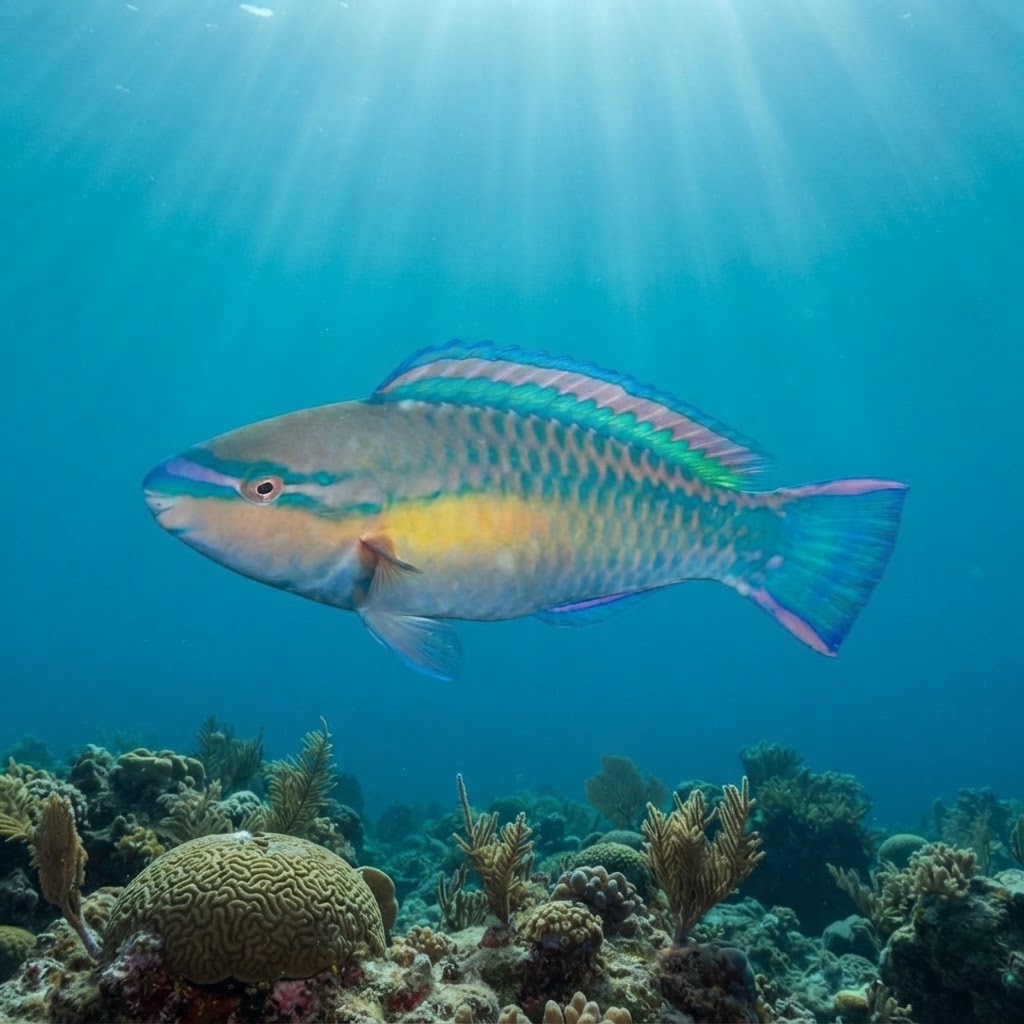
Scarus taeniopterus
Common on Bonaire's Leeward Coast and Grand Cayman reefs at 26-28C, year-round and easy to mistake for other parrotfish.
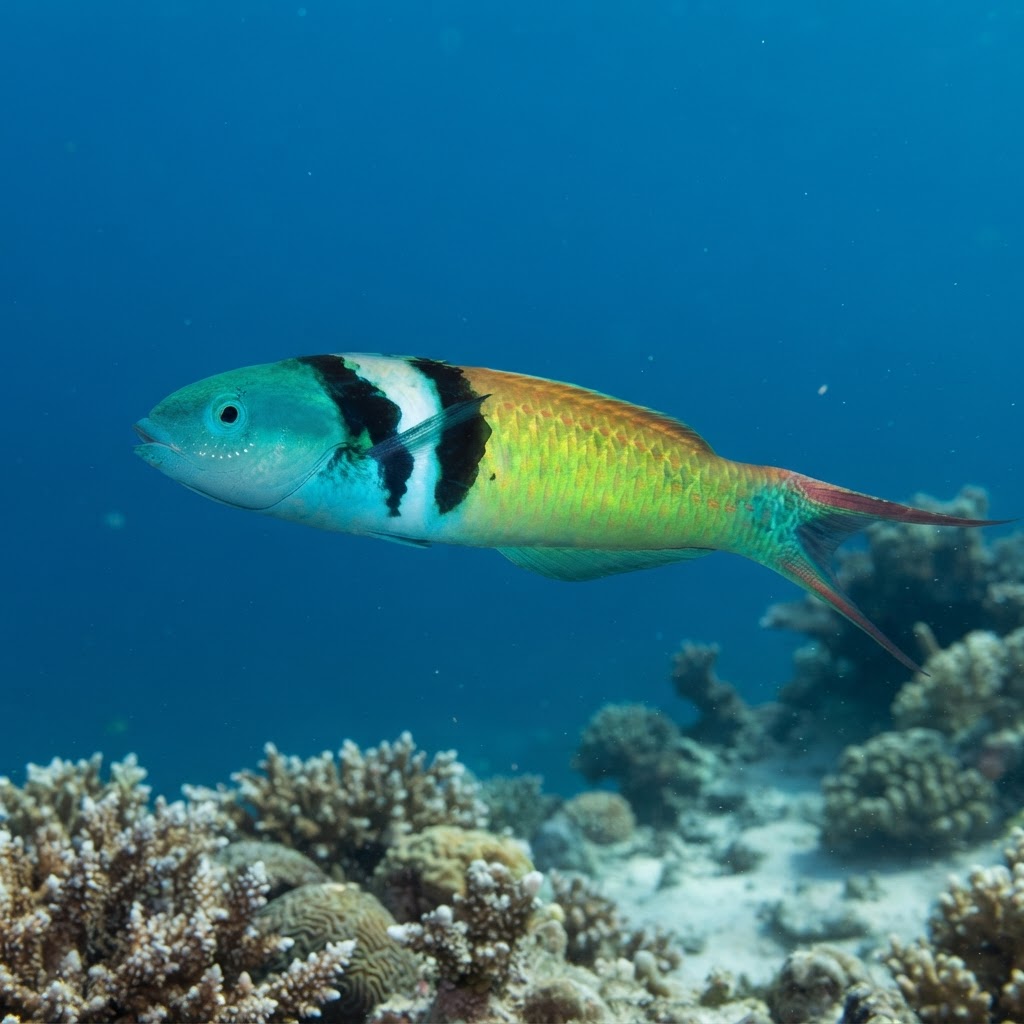
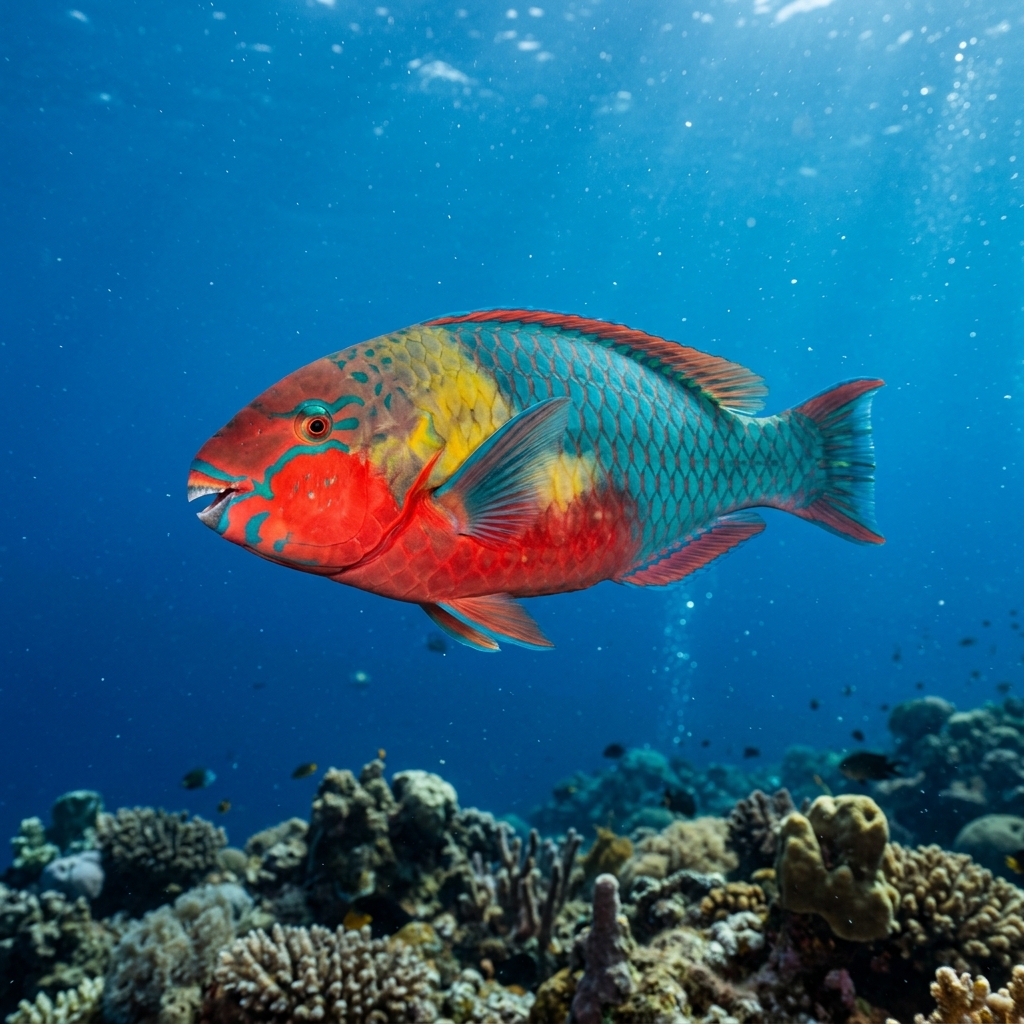
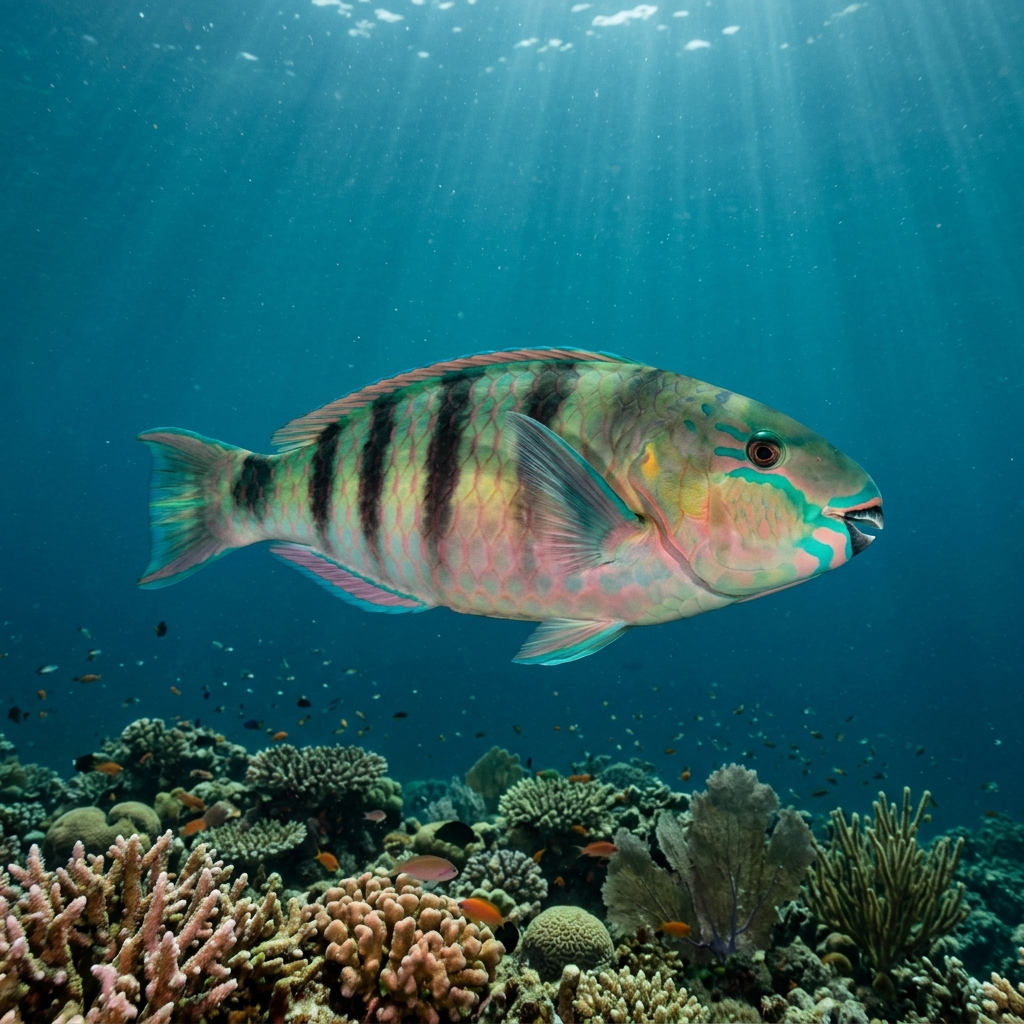
Grows to around 24 cm, a compact oval body that colour-shifts between two main phases: a drab grey-brown juvenile/initial phase with pale stripes, and a blue-green terminal phase (males) washed with orange-pink bands along the flank. Look for the pale saddle patch behind the head and the fused, parrot-like beak used to scrape algae off the reef. Terminal-phase males are the showier, more solid blue-green fish; initial-phase fish are duller and easier to overlook among other small parrotfish.
Expect to find it grazing steadily over reef flats and rubble, using that beaked mouth to scrape algae off rock and dead coral, often in loose groups of mixed colour phases. It is generally unbothered by divers, holding its feeding line rather than bolting, though it will drift off a short distance if approached too directly. Most sightings come from shallow to mid-depth reef, matching its 2 to 25 m range, during normal daytime reef hours.
Like other parrotfish, it grinds up the reef rock it scrapes algae from and excretes it as fine sand, meaning a healthy population is quietly manufacturing some of the sand on the reef you are diving.
No clear seasonal pattern shows up in the data, and with a comfortable range of roughly 26 to 28 C on Caribbean reefs, it is present and diveable all year round.
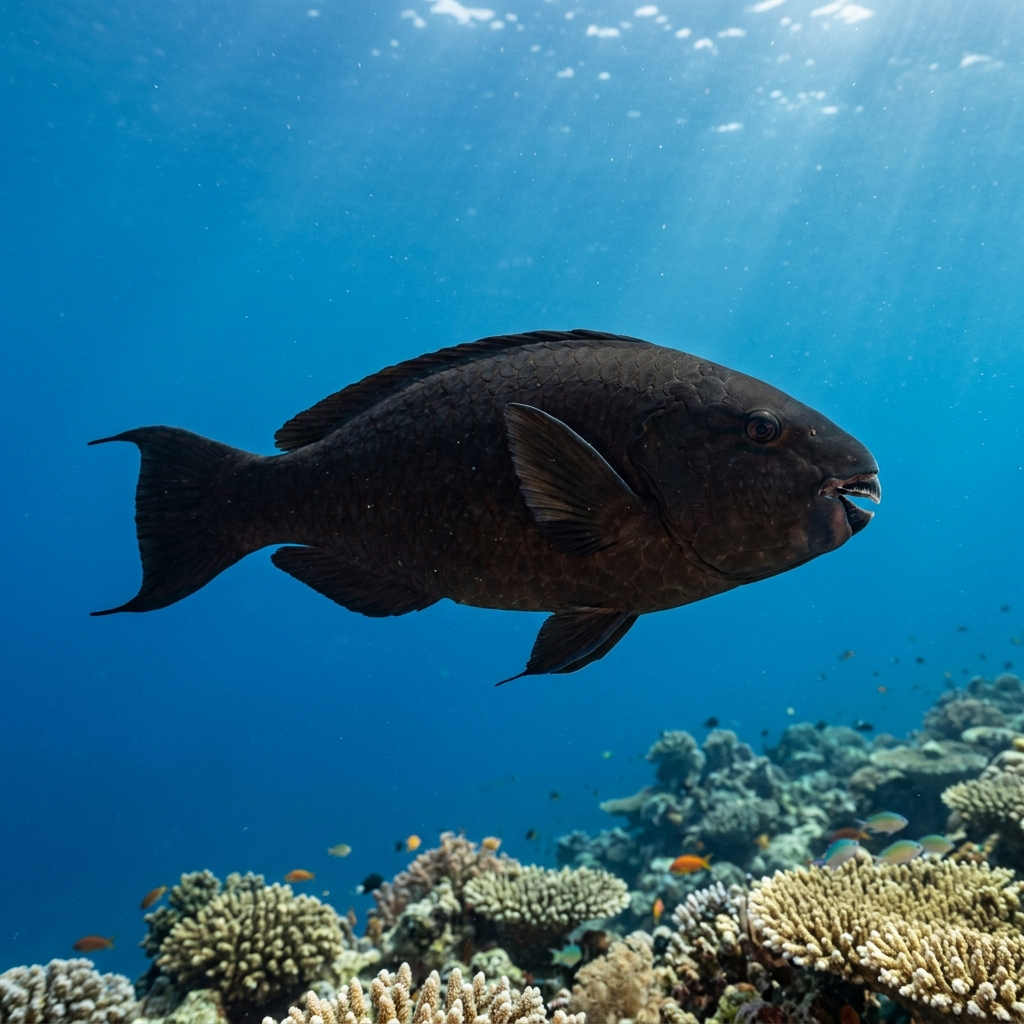
Reef neighbours a diver could mistake it for. Use the identification notes above to tell them apart.
Most reliably logged along Bonaire's Leeward Coast and around Grand Cayman in the Cayman Islands, with strong numbers also reported from Curacao's Willemstad and South Coast area, the British Virgin Islands around Tortola, and Grenada Island. Further sightings come from the US Virgin Islands, Colombia's Caribbean coast, the Bay Islands of Honduras, and reefs off Florida, making this a wide-ranging Caribbean regular rather than a specialty sighting.
Mapping where Princess Parrotfish is logged…
Best odds are on Bonaire's Leeward Coast and around Grand Cayman, with good numbers also in Curacao, the British Virgin Islands, and Grenada. It also turns up regularly in the US Virgin Islands, Colombia, Honduras's Bay Islands, and Florida.
There is no strong season in the sighting data, and water temperatures across its Caribbean range stay in a comfortable 26 to 28 C band year-round, so it is a reliable sighting on any dive trip.
Look for a small parrotfish, about 24 cm, with a fused beak-like mouth. Terminal males show blue-green bodies with orange-pink stripes and a pale saddle behind the head, while initial-phase fish are duller grey-brown with pale stripes.
They typically reach around 24 cm, putting them among the smaller reef parrotfish rather than the larger species that grow well over 30 cm.
No, they pose no danger to divers and simply continue grazing algae off the reef as you pass, at most drifting a short distance away if you get too close.
They pass through distinct colour phases as they grow and change sex, from a drab striped juvenile/initial phase to a brighter blue-green terminal male phase, which is why two very different-looking fish can be the same species.
Site and sighting data is aggregated from diver logs, iNaturalist and GBIF. For taxonomy and conservation status:
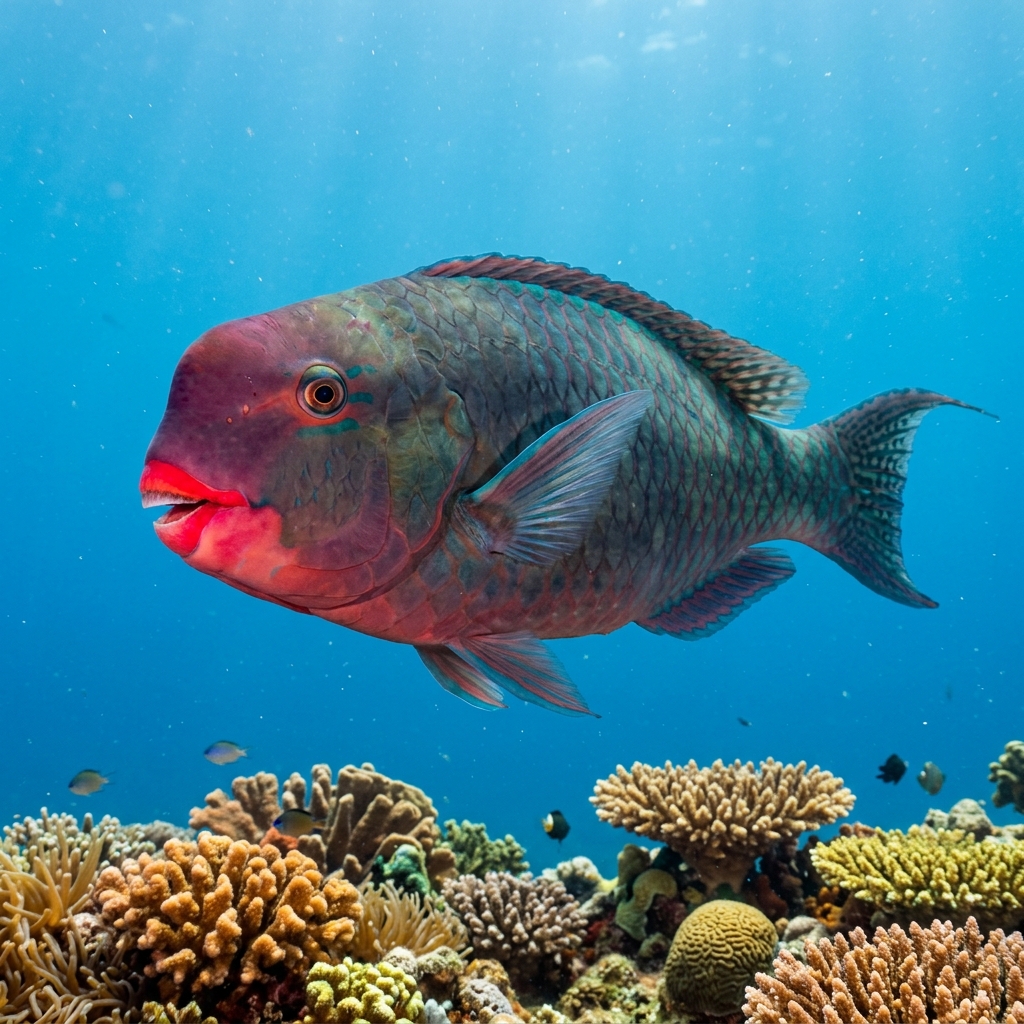
Redlip Parrotfish
2,789 sites