Aulostomidae spp.
Trumpetfish are logged year-round across Tenerife, Gran Canaria, and Cape Verde. Here's how to spot and identify them underwater.
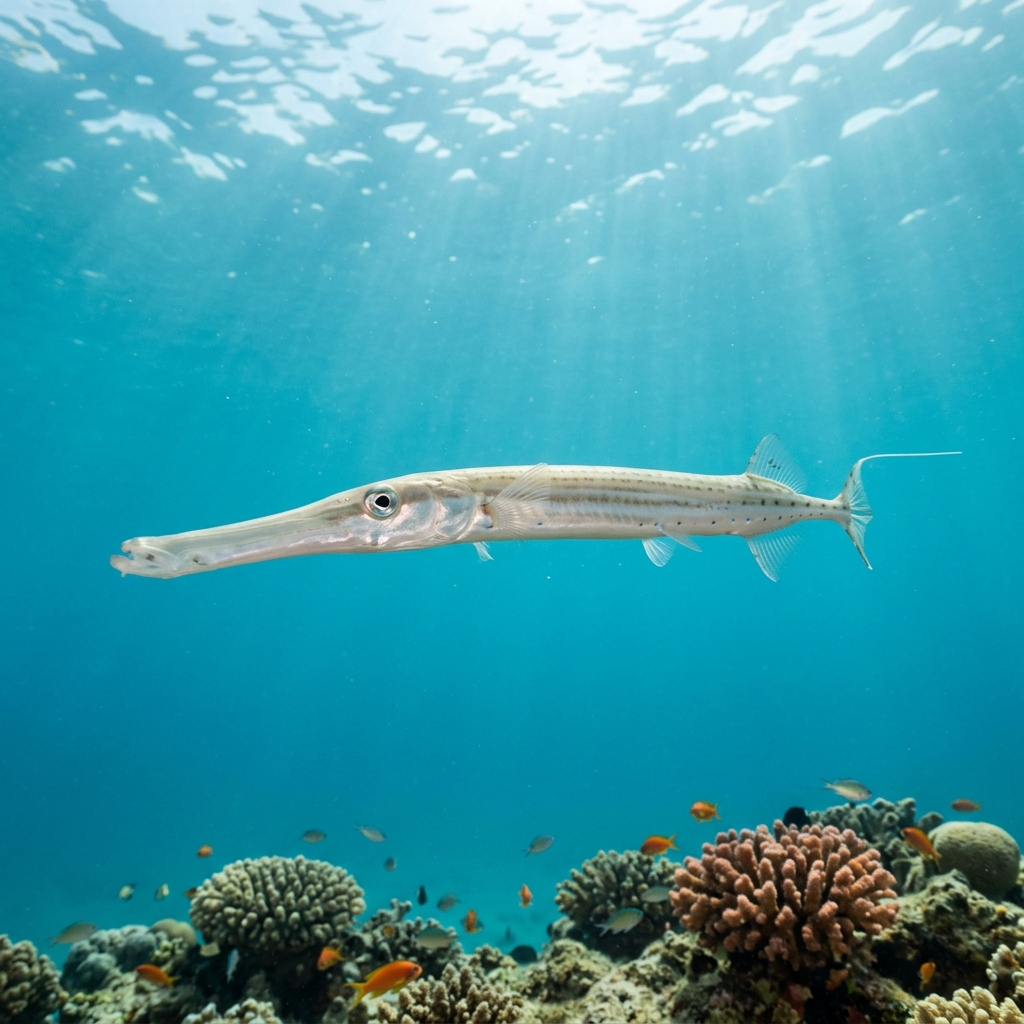
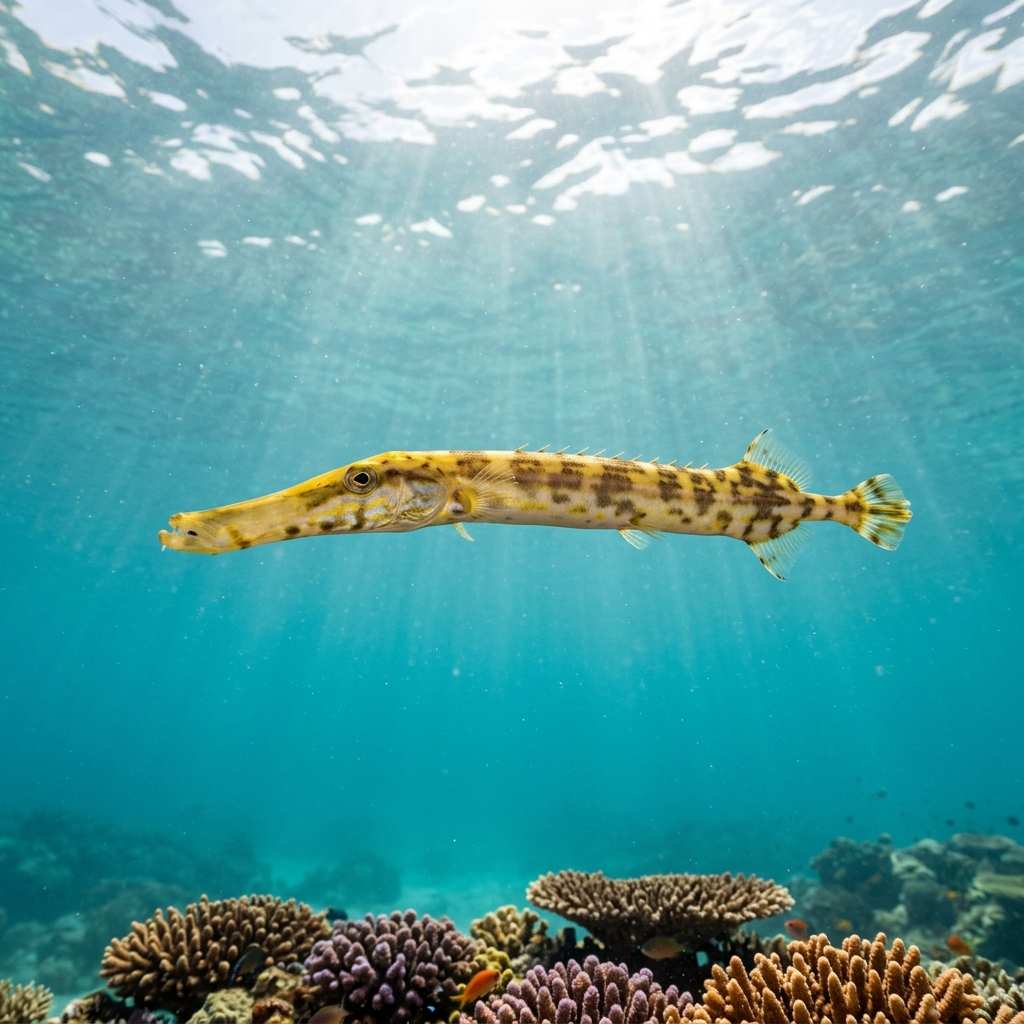
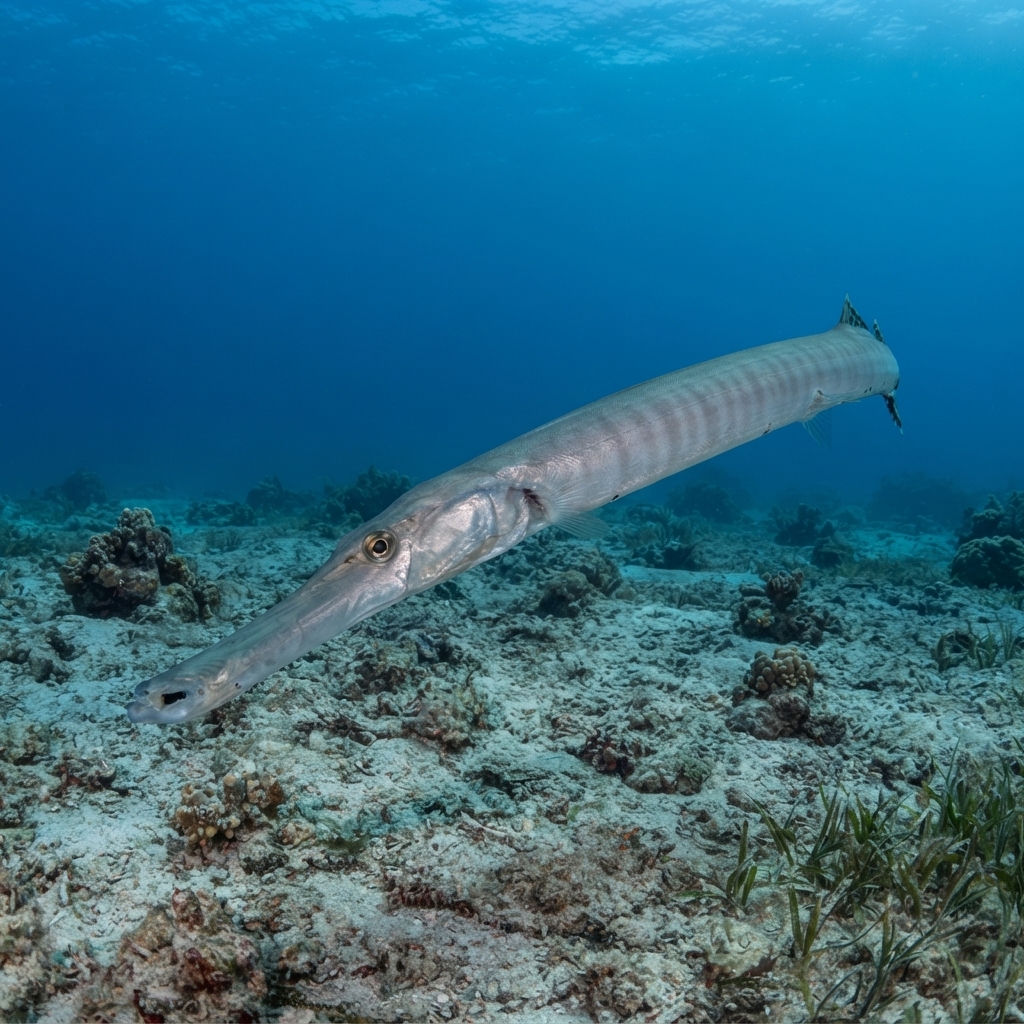
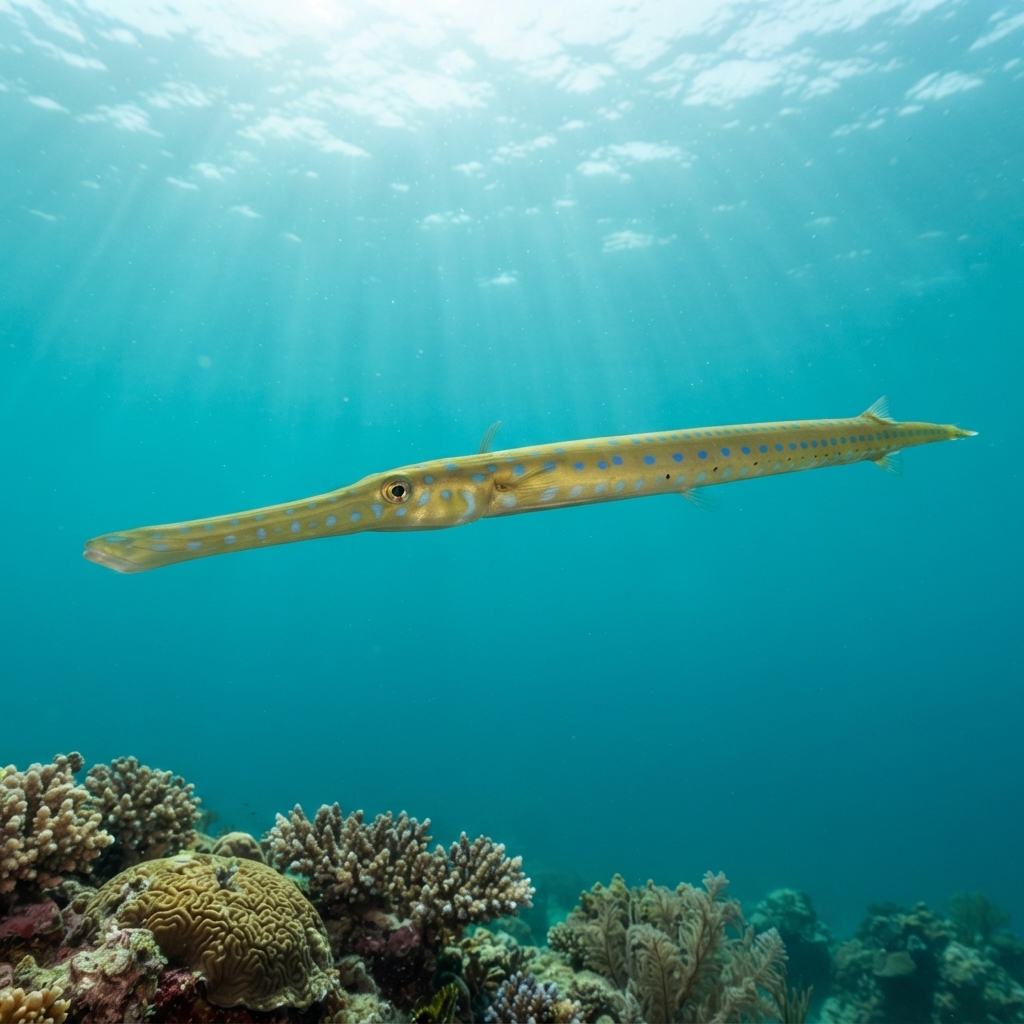
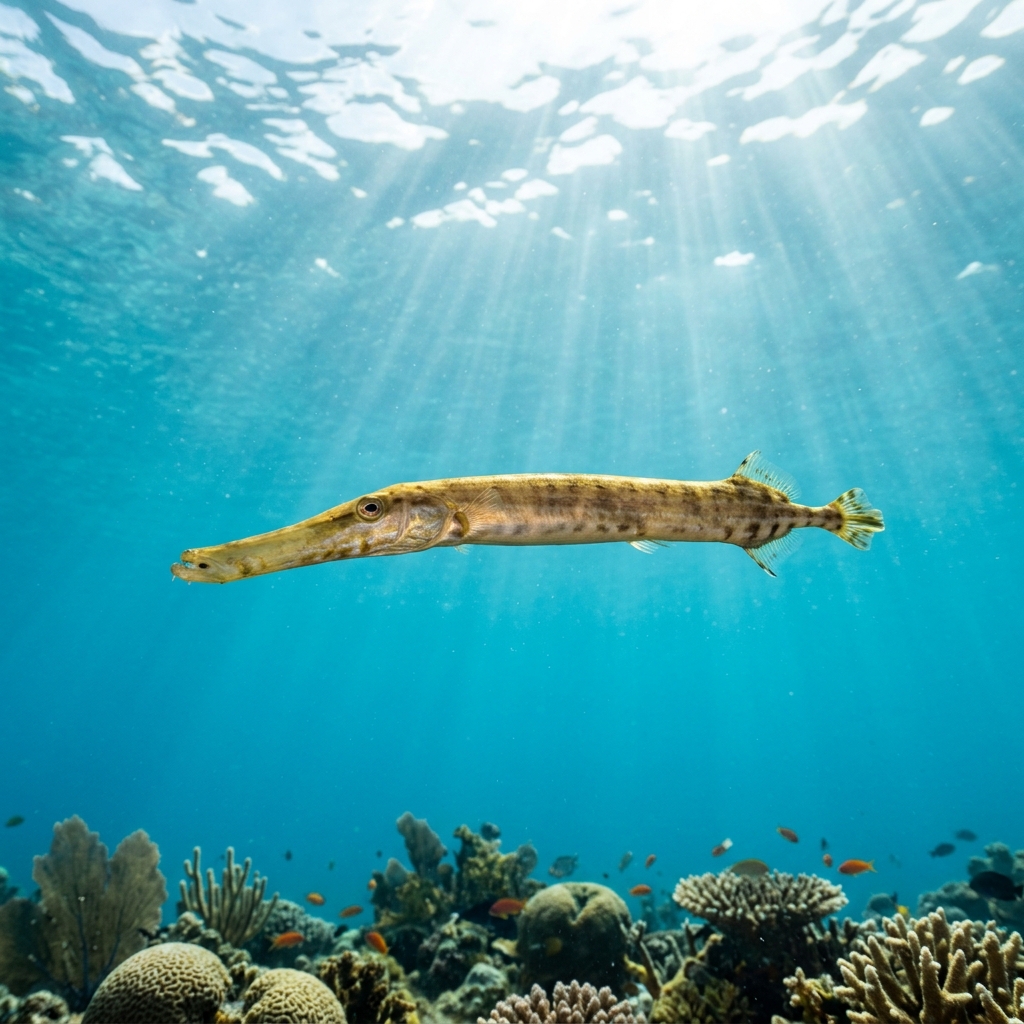
Long, pipe-like body is the give-away, trumpetfish are unmistakably slender, often stretching 60 to 80 cm, with a tubular snout that makes up a good portion of that length. Colouration ranges from mottled brown and tan to yellowish or pale grey, and they can shift shade to blend with their surroundings. Look for the small, upturned mouth at the very tip of the snout and the dorsal spines spaced along the back well before the tail fin. They hang at odd angles in the water column, head-down, diagonal, or drifting alongside larger fish, which is another instant clue.
When you encounter one, it is usually hovering almost motionless or drifting very slowly, relying on its stick-like outline to pass unnoticed near reef edges, sea fans, or beds of algae. A favourite trick is shadowing a larger, non-threatening reef fish to sneak within range of small prey, watch for one tucked alongside a wrasse or parrotfish. They tend to ignore divers who move slowly, but will angle away or retreat behind structure if approached quickly.
Trumpetfish are ambush predators that hunt almost entirely through stealth and camouflage: that long snout works like a pipette, creating a sudden vacuum to suck in small fish and shrimp from surprisingly far away.
Sighting records show trumpetfish present year-round with no concentrated season, which matches their comfort in water temperatures from around 23 to 29 °C, conditions that persist across the Canary Islands, Cape Verde, and Madeira throughout the year.
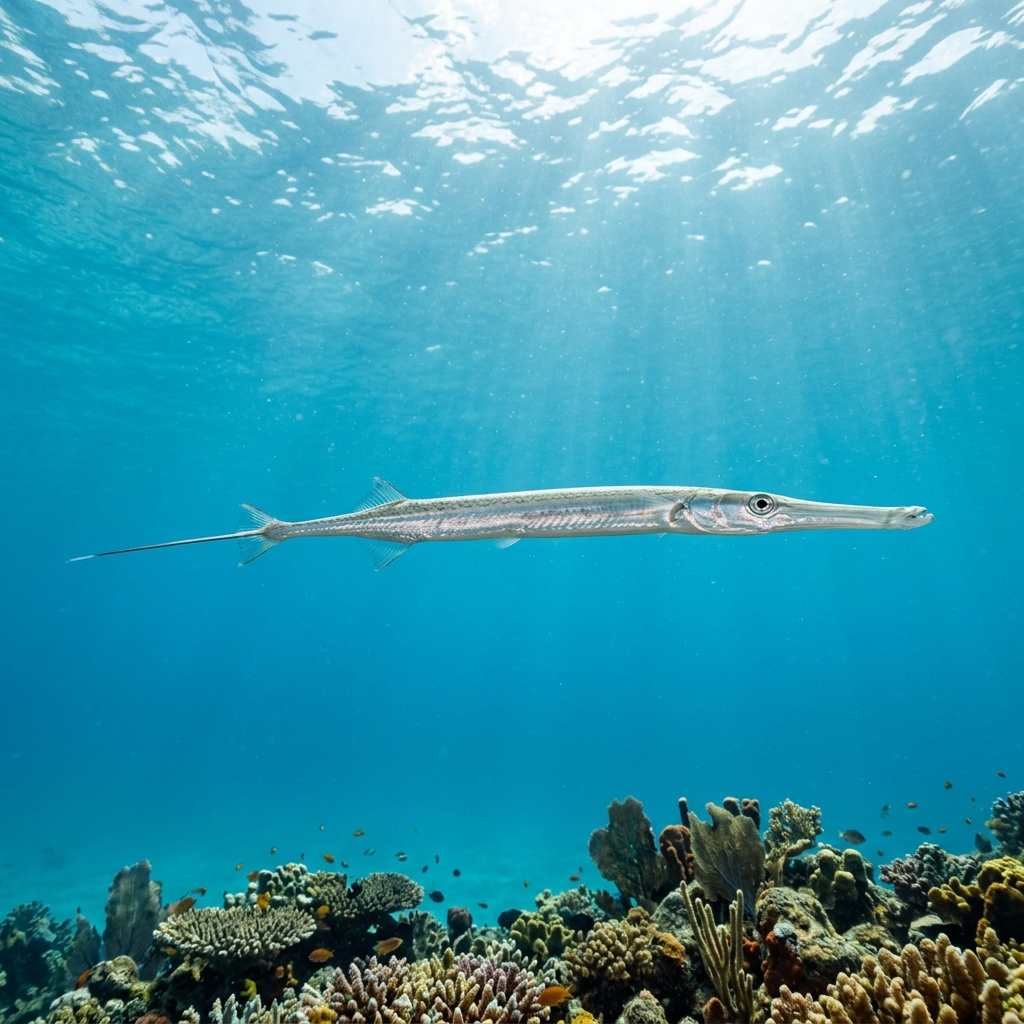
Reef neighbours a diver could mistake it for. Use the identification notes above to tell them apart.
Most commonly logged across the Canary Islands, with the strongest sighting records in Tenerife, Gran Canaria, Lanzarote, Fuerteventura, El Hierro, and La Palma. Cape Verde, particularly Sao Vicente and Santo Antao, is another reliable destination, and Madeira Island rounds out the Atlantic cluster. All three territories sit in warm eastern Atlantic waters that suit this family well.
Mapping where Trumpetfish is logged…
The strongest records come from the Canary Islands, especially Tenerife and Gran Canaria, along with Cape Verde and Madeira. All three are warm eastern Atlantic destinations where trumpetfish are consistently logged across a wide range of reef and rocky dive sites.
Trumpetfish are present year-round across the Canary Islands, Cape Verde, and Madeira. Because they live comfortably in water between about 23 and 29 °C, temperatures that hold in these destinations across all seasons, there is no single peak month to aim for.
The long, rigid, pipe-like body and tiny upturned mouth at the end of a tubular snout make trumpetfish hard to mistake once you know the shape. They frequently hover head-down or at a diagonal angle rather than swimming horizontally, and their colour can shift between brown, tan, and pale yellow to match nearby structure.
Members of the trumpetfish family commonly reach 60 to 80 cm in length, though some Atlantic individuals can exceed one metre. Most of that length is body and snout, they remain very slender throughout.
This behaviour is called 'shadowing' or 'riding'. A trumpetfish tucks alongside a larger, harmless reef fish so that small prey ignores the approaching threat. When close enough, it snaps open that long snout and vacuums in the target. It is one of the more clever ambush strategies on the reef and something divers often witness in the Canaries and Cape Verde.
Site and sighting data is aggregated from diver logs, iNaturalist and GBIF. For taxonomy and conservation status:
Atlantic Cornetfish
464 sites