Azurina multilineata
Small silvery-brown damselfish drifting in reef clouds from Bonaire to Cape Verde, comfortable in 24.5-28C year-round.
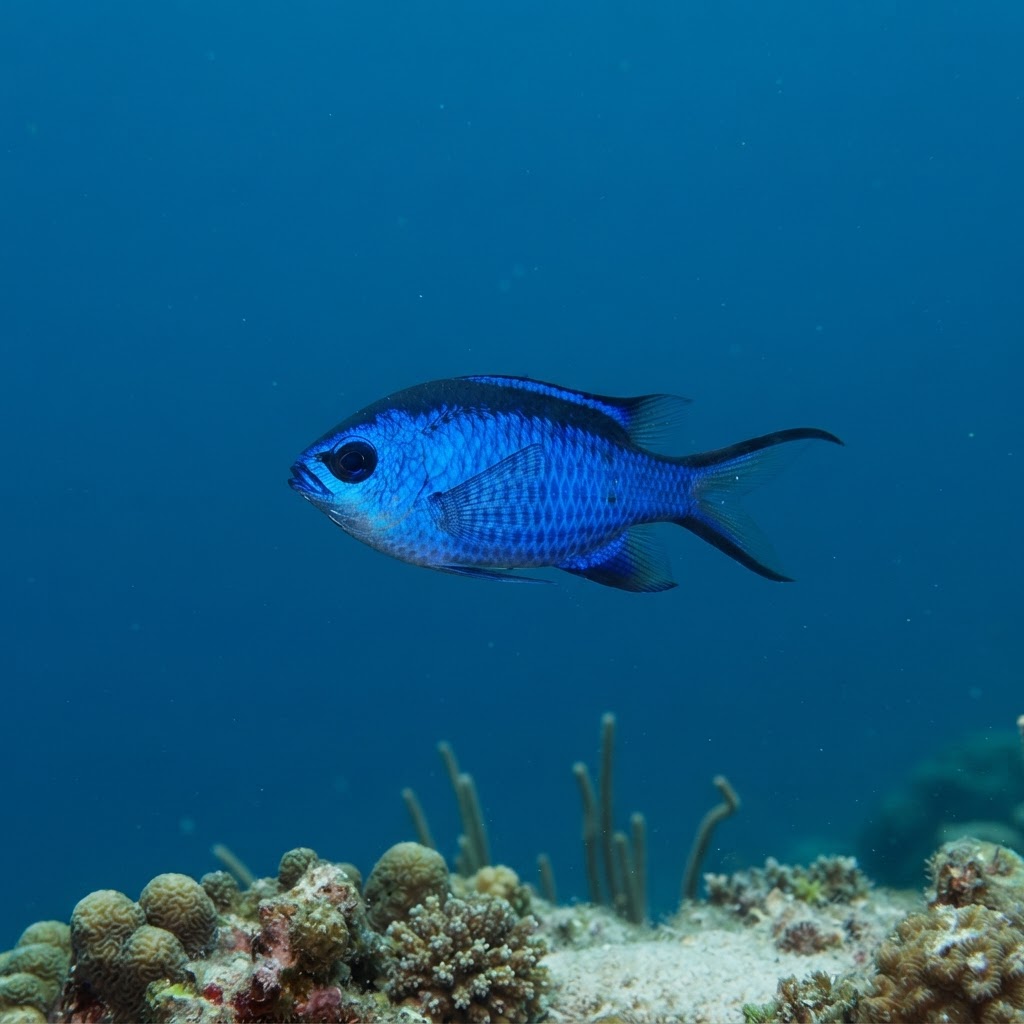
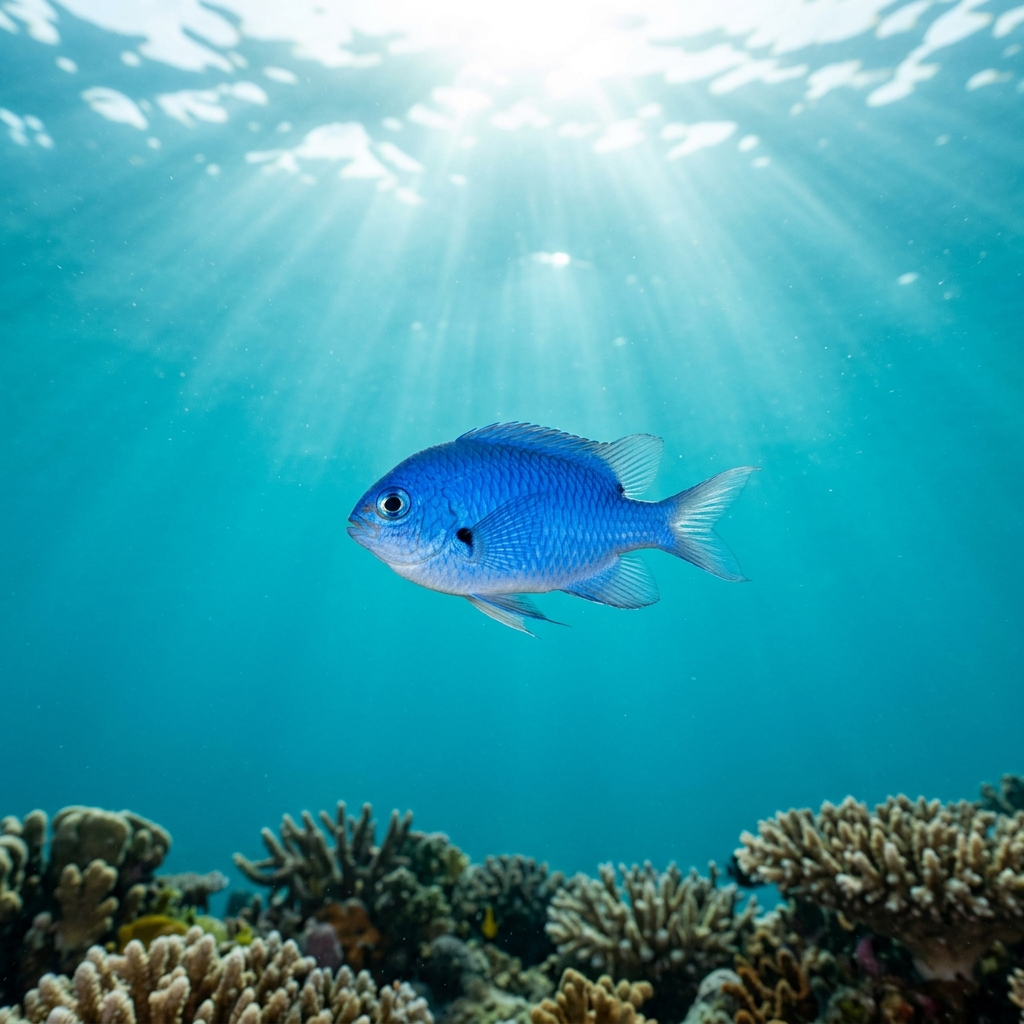
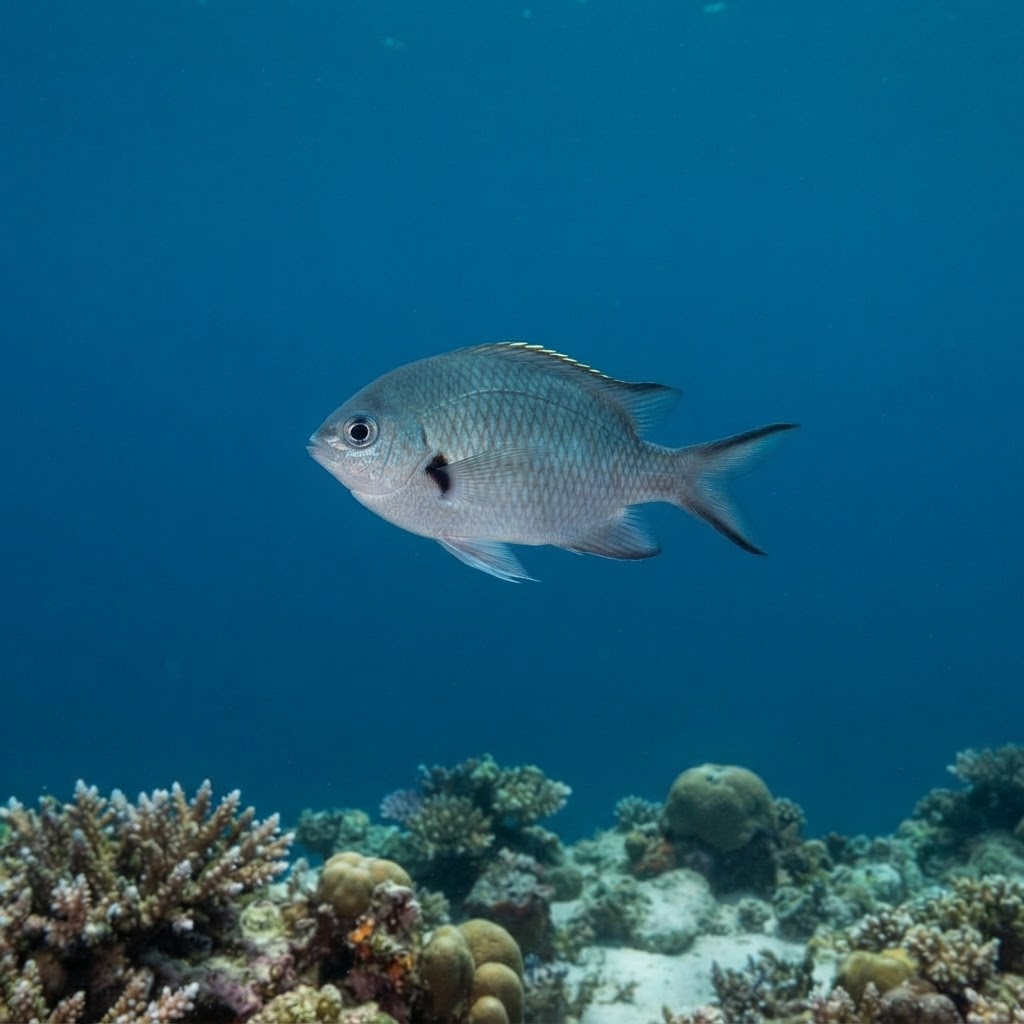
Slim, oval-bodied damselfish around 14 cm, coloured a soft silvery brown that darkens toward the tail, with a faint dusky spot at the base of the pectoral fin. The tail is deeply forked and often shows a pale, almost translucent edge. You will usually see them hovering in loose clouds just off the reef rather than sitting still, which is often the fastest way to tell them apart from bolder, more territorial damselfish nearby.
Look up rather than down: brown chromis spend most of the dive suspended in loose, drifting groups a metre or two above the reef, picking plankton out of the current. They pay divers little attention and rarely dart for cover the way bottom-dwelling damselfish do, making them easy to hang near and watch for a while. Activity tends to be steady through the day, with fish thinning out toward dusk as they tuck closer to reef structure for the night.
Feeding almost entirely on drifting plankton rather than algae, brown chromis fill a different niche from their more aggressive, algae-guarding damselfish relatives, which is part of why they tolerate divers hovering nearby without fuss.
No real seasonal pattern shows up in the sightings data, and with a comfortable range of 24.5 to 28C, reefs across its range stay warm enough for them year-round. Expect them on any dive at the right depth rather than during a specific window.
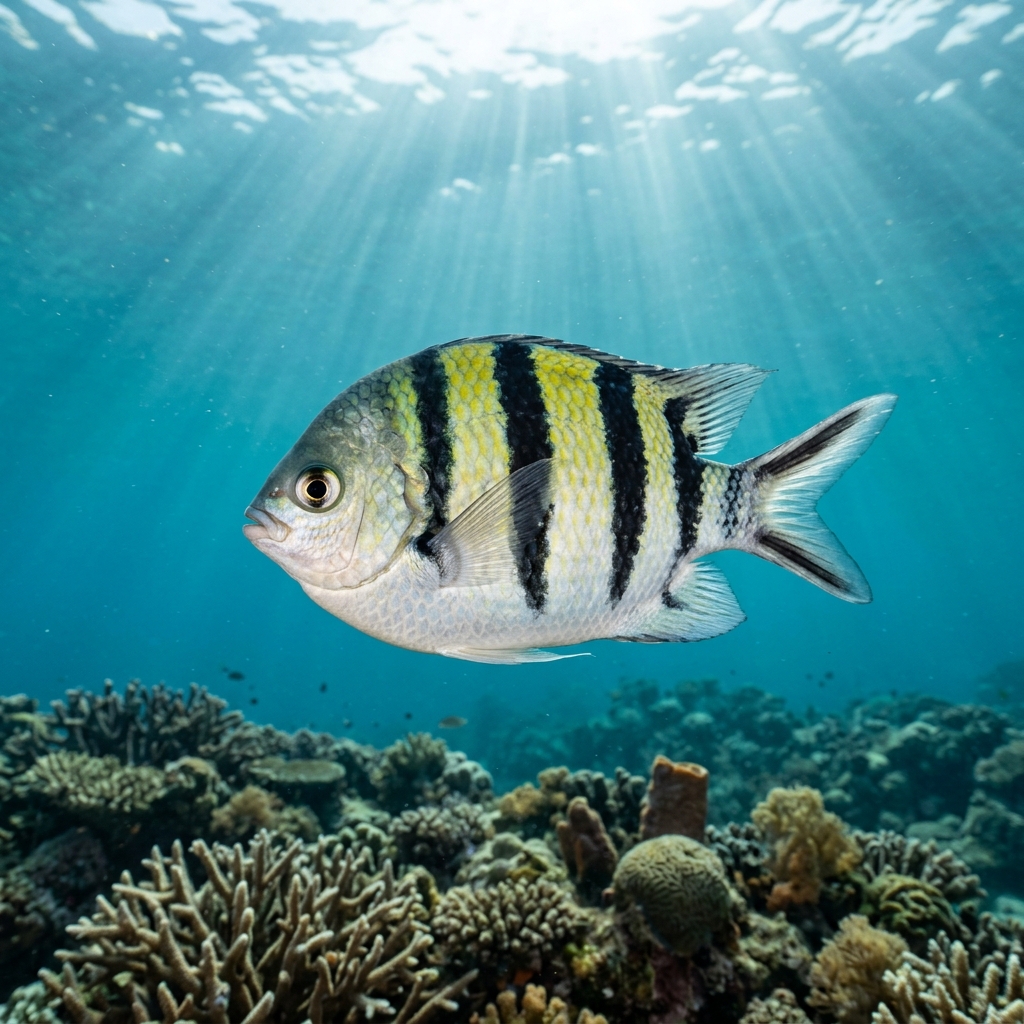
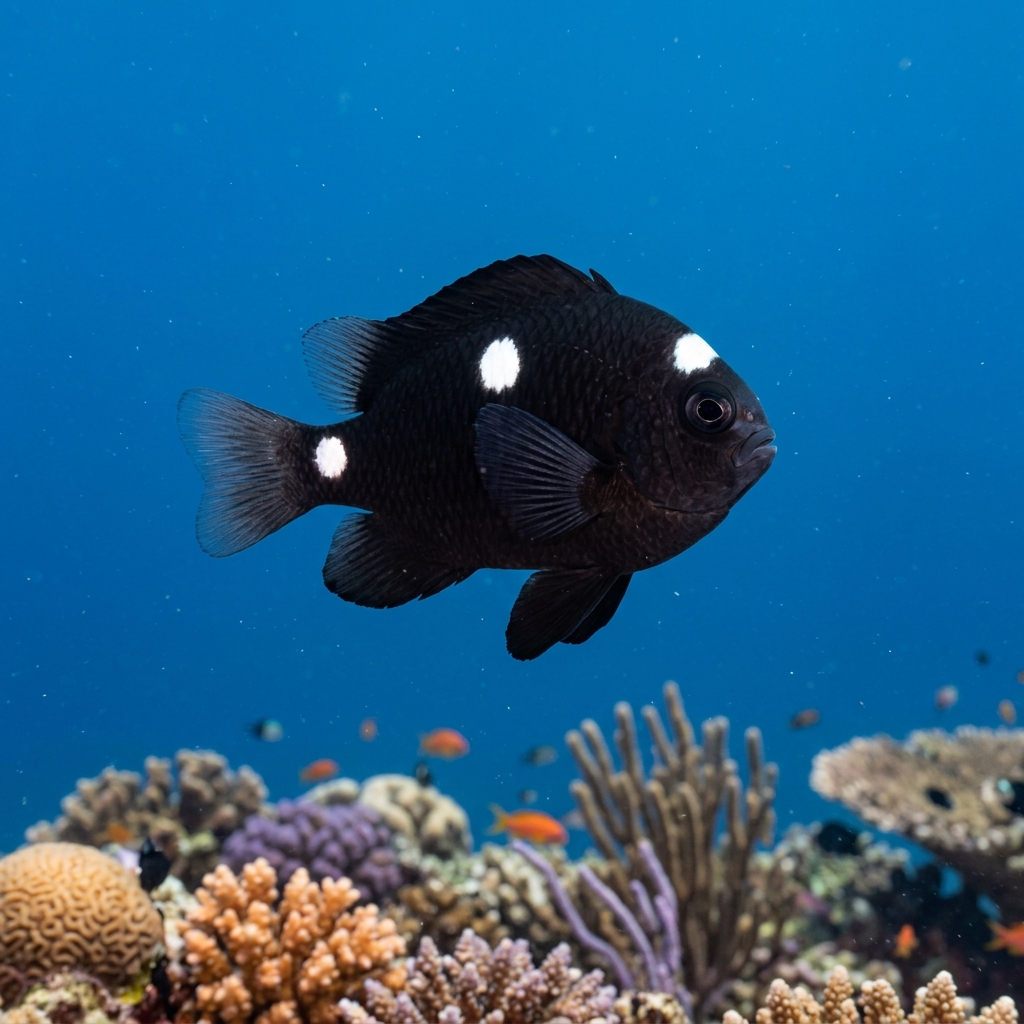
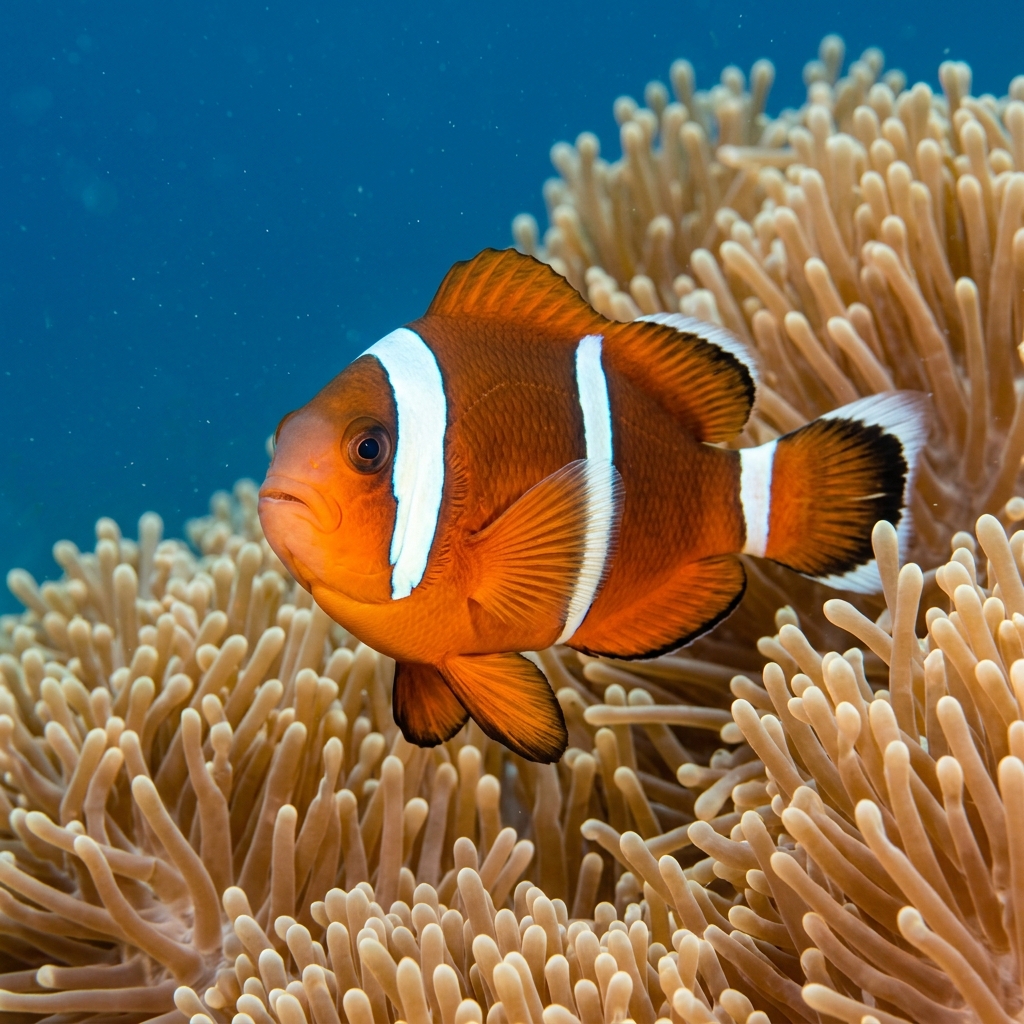
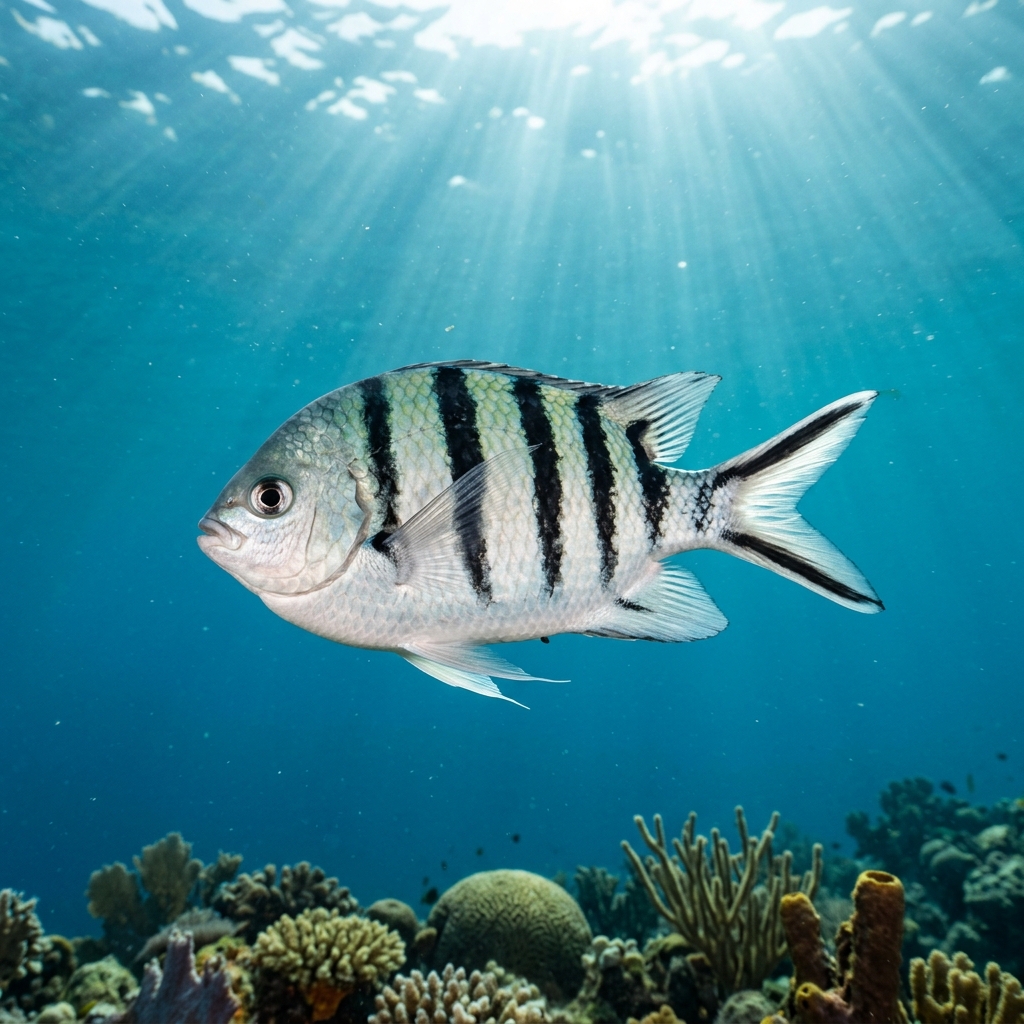
Reef neighbours a diver could mistake it for. Use the identification notes above to tell them apart.
Most reliably logged in Bonaire and Curacao, with strong numbers also across Florida in the United States, the British Virgin Islands, Grenada, Guadeloupe and Cape Verde. Leeward Coast sites in Bonaire and the Tortola area of the BVI are particularly consistent spots to find them hovering over reef structure.
Mapping where Brown Chromis is logged…
Bonaire and Curacao have the strongest populations, with Florida, the British Virgin Islands, Grenada, Guadeloupe and Cape Verde also reliable. Leeward Coast Bonaire and Tortola in the BVI are especially consistent.
There is no clear season in the sightings data. They stay within a warm 24.5 to 28C band year-round, so any time you are diving their range is a good time.
Look for a slim, silvery-brown damselfish around 14 cm with a forked tail and a faint dark mark at the pectoral fin base, hovering in loose groups above the reef rather than perching on it.
They reach about 14 cm, a small, slender fish typically seen in groups rather than alone.
No. They are harmless plankton feeders that ignore divers and pose no risk at all.
Site and sighting data is aggregated from diver logs, iNaturalist and GBIF. For taxonomy and conservation status:
Dascyllus
3,697 sites