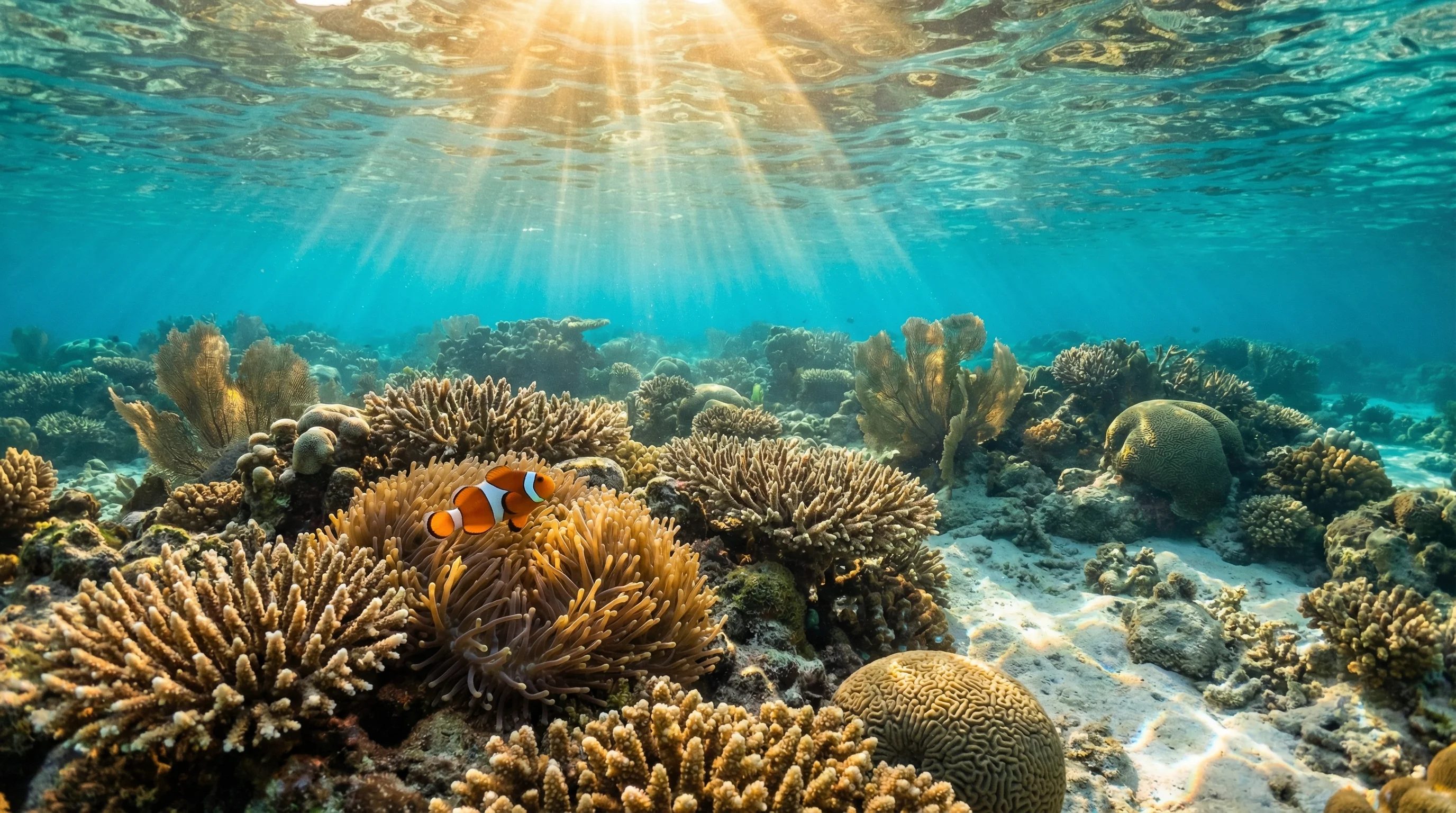
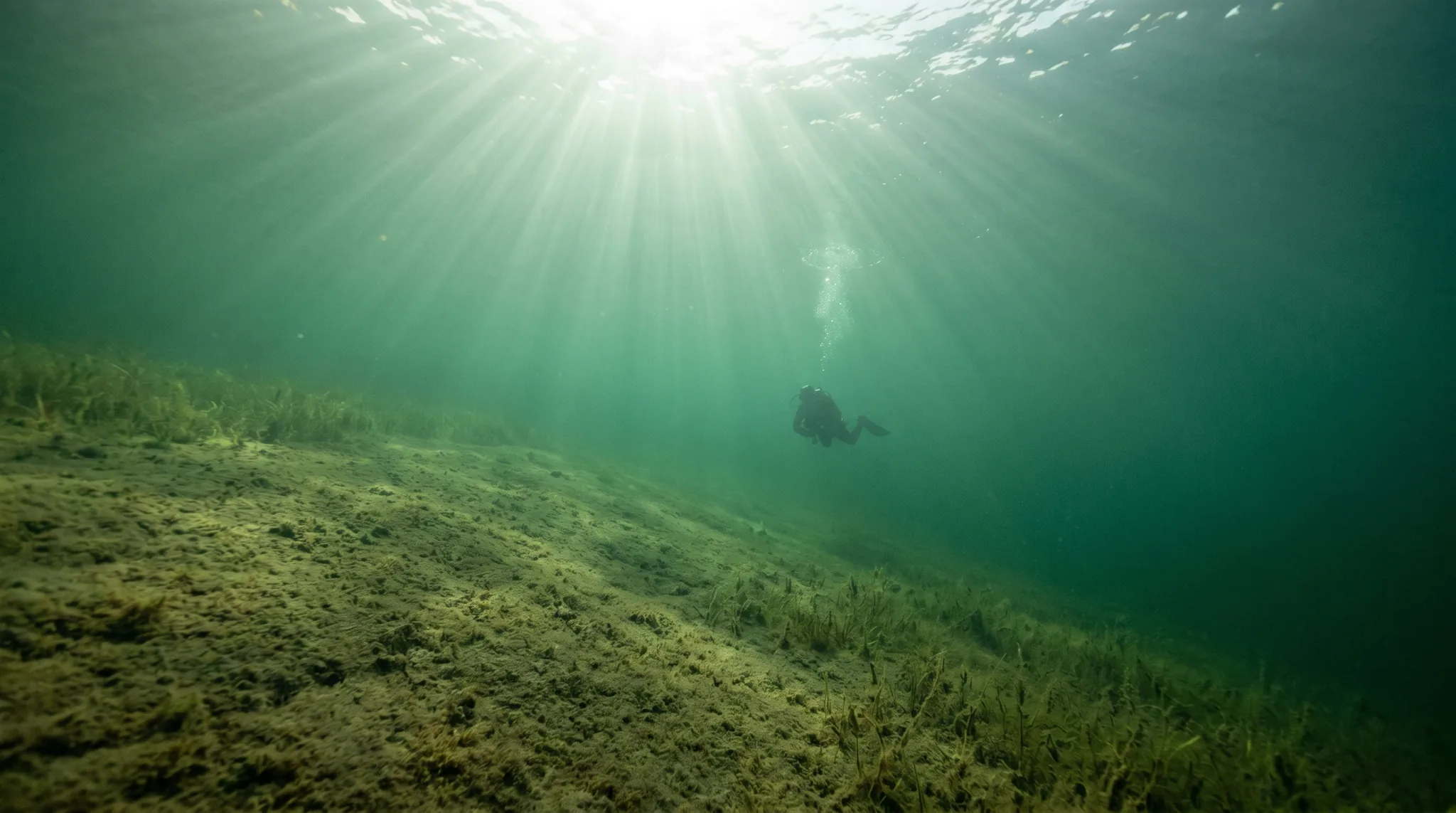
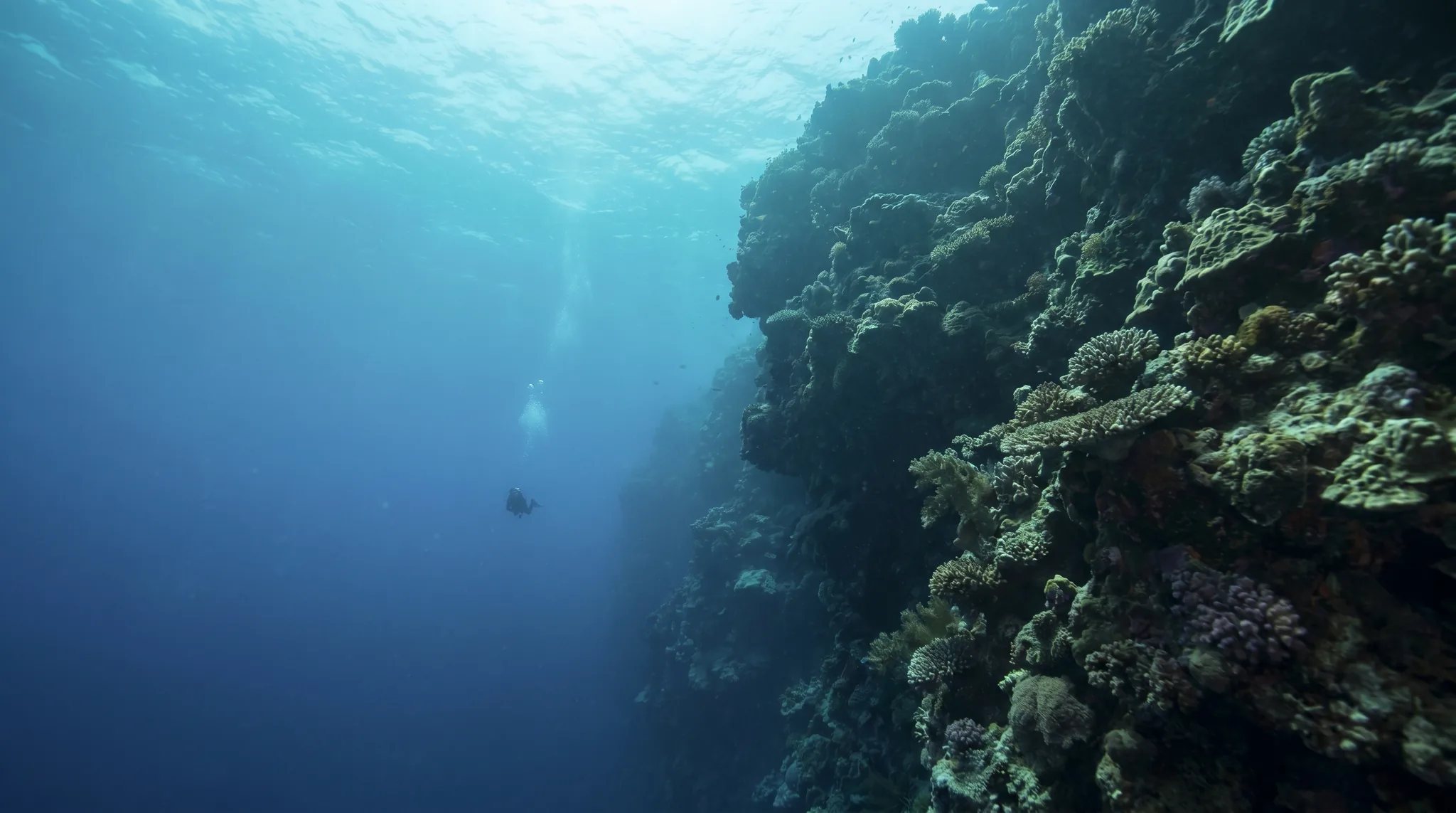
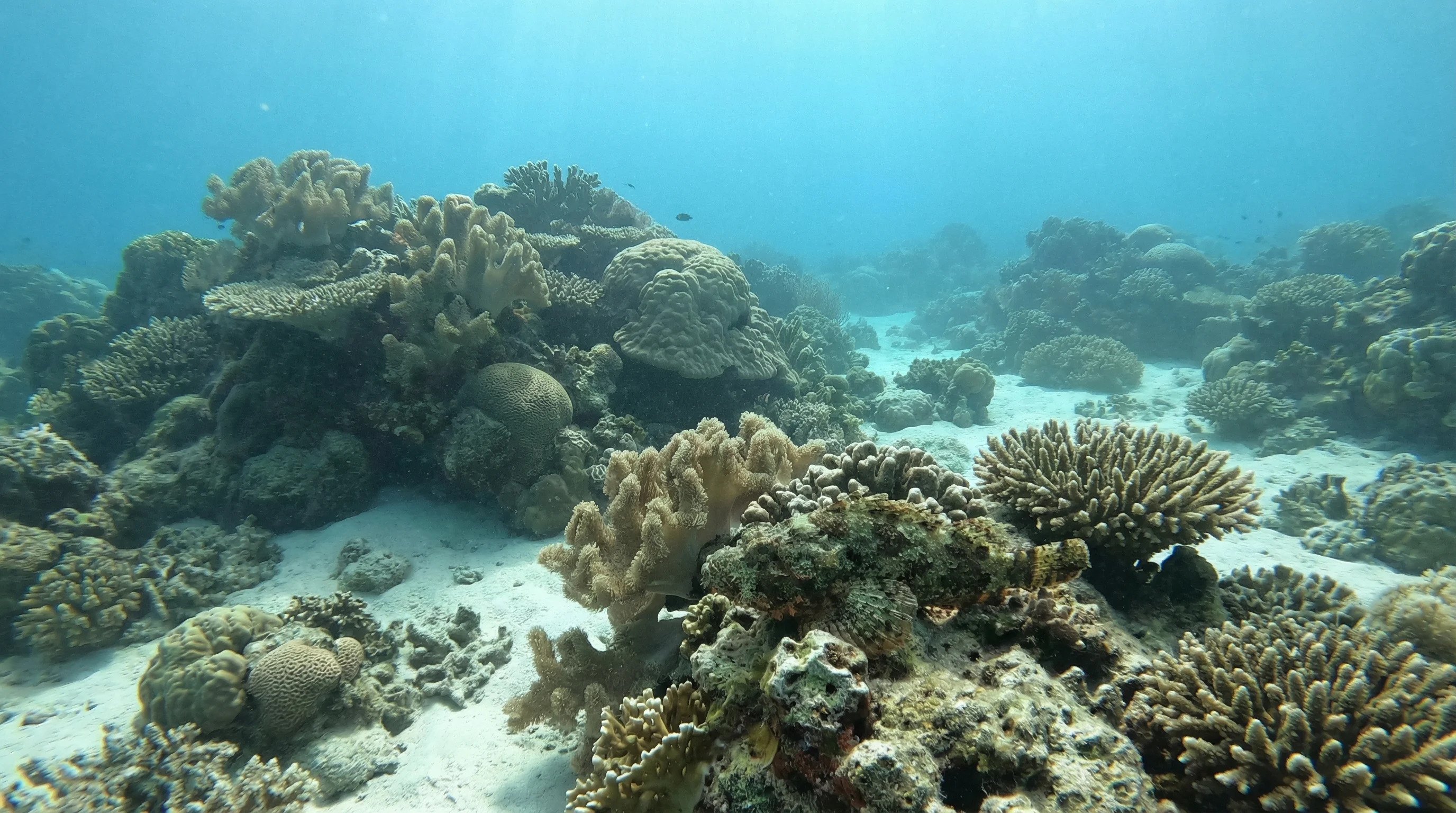
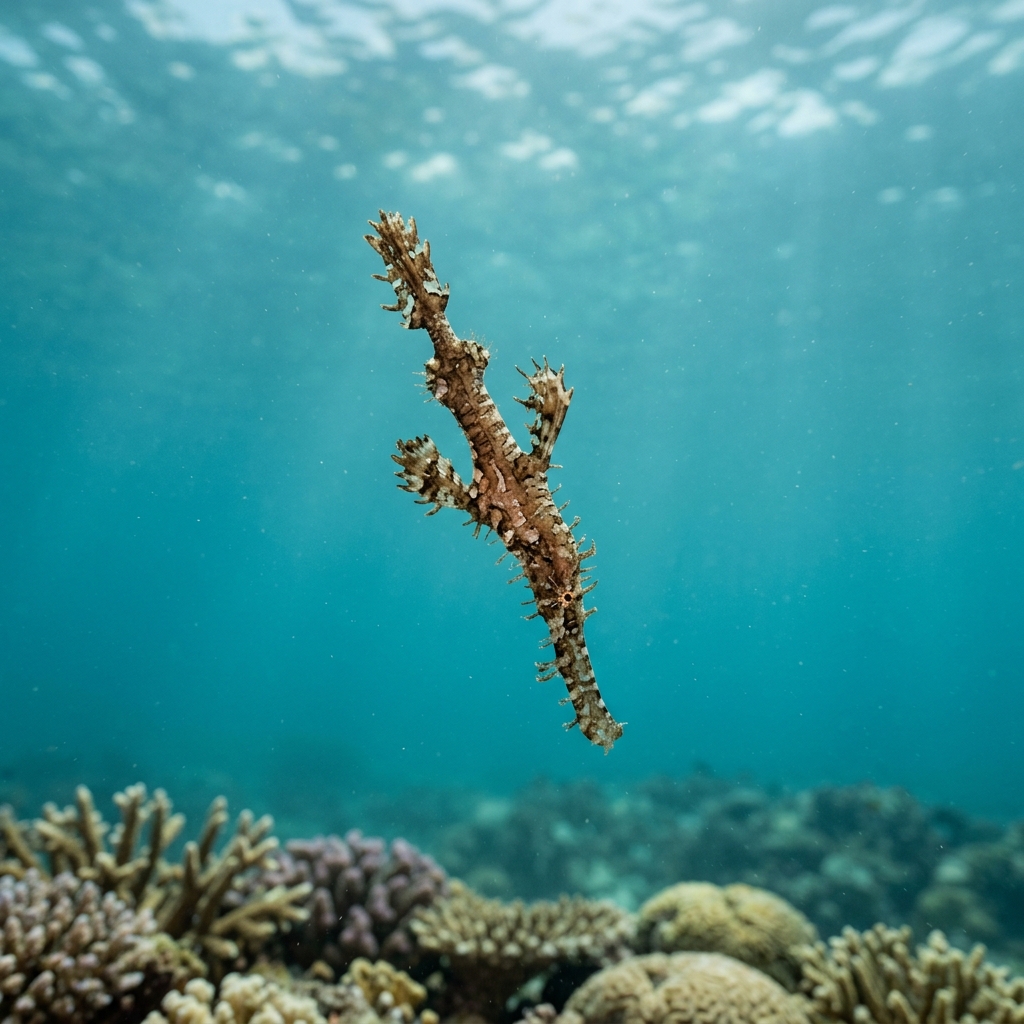
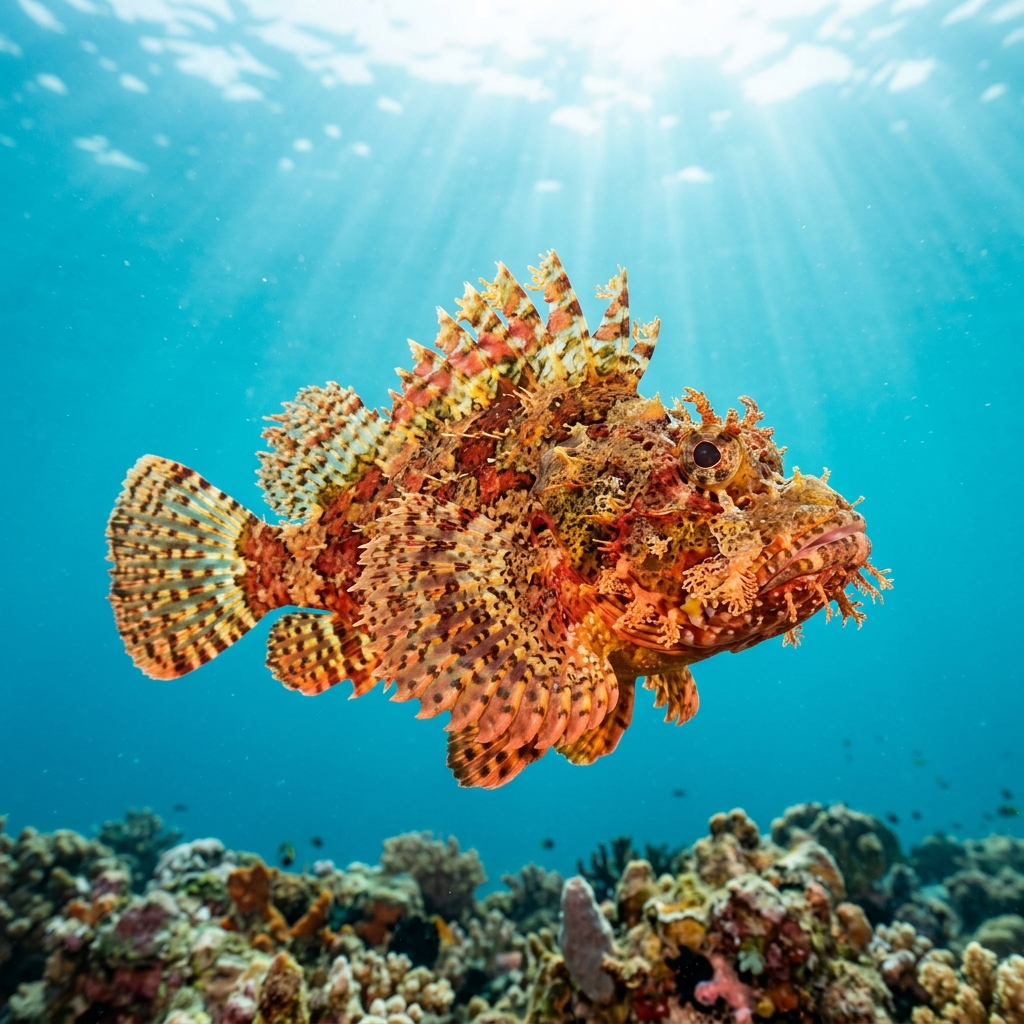
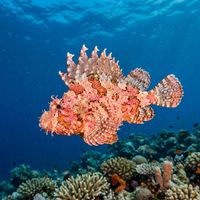
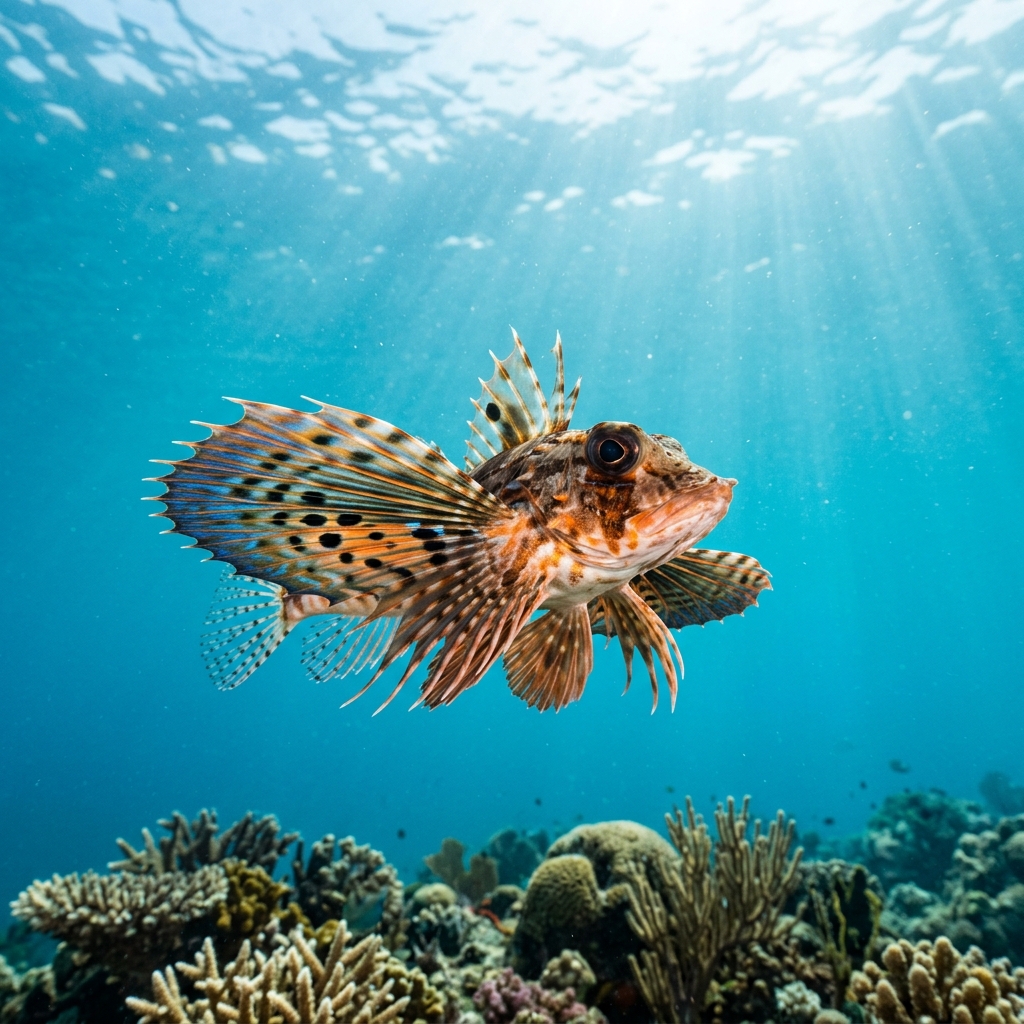
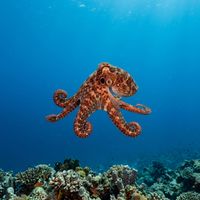
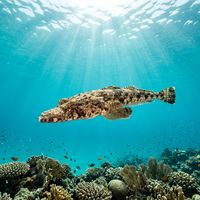
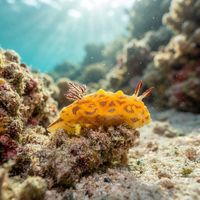
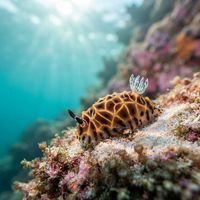
Nungwi's diving is built around shallow to mid-depth reef sites, all accessed by boat. The reefs range from flat bommie fields at sites like Nankiville and Mbwangawa to sloping drift dives at Kichafi, giving a varied experience within a broadly beginner-friendly skill range. The signature marine life leans heavily towards cryptic and macro species: Chromodoris Nudibranch, Leaf Scorpionfish, Oriental Flying Gurnard, and Peacock Mantis Shrimp are recorded across virtually every site, while Robust Ghost Pipefish and Crocodilefish reward attentive divers.

Monthly water temperature across Nungwi's sites, from satellite sea-surface data corrected for depth. The band shows the site-to-site spread.
Water stays warm throughout the year, dipping slightly during the cooler mid-year months before climbing back through the year's end. The histogram of diver activity points clearly to the early months of the year, particularly February and March, as the peak period. Conditions tend to be calmer and clearer in this window, making it the most reliable time to catch strong visibility on the barrier reef sites.
18 operators


Nungwi, Tanzania
14 more sites to explore
Water temperature around Nungwi ranges from about 26°C in July to 29°C in February, based on satellite sea-temperature data for its dive sites.
In the warm season (about 29°C) a rash guard or 3mm shorty is comfortable in Nungwi; in the coldest months (about 26°C) step up to a 3mm full suit.
Fin maps 21 sites in Nungwi (18 scuba diving sites and 5 snorkelling spots, with some suited to both).
Across Nungwi's dive sites, January, February and March are most often reported as the best months to visit.
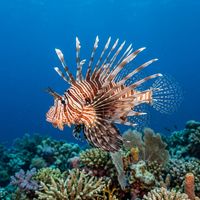
Nungwi leans strongly towards cryptic and macro species. Chromodoris Nudibranch, Indian Lionfish, Leaf Scorpionfish, and Oriental Flying Gurnard are observed across the sites consistently. More sought-after finds include Robust Ghost Pipefish, Peacock Mantis Shrimp, Crocodilefish, and the occasional Giant Frogfish or Emperor Angelfish.
Yes. The majority of Nungwi's dive sites are rated beginner level, with shallow to moderate depths across sites such as Ametatu, Maziwe Island, and Nankiville. Even the drift dives at Kichafi and Mbwangawa fall within beginner parameters, making the area accessible to newly certified divers.
All of Nungwi's dive sites are boat-access only. There are no shore-entry dives listed in the area, so divers will need to arrange boat transport, typically through a local dive operator.
Nungwi offers a range of reef formats within a generally shallow depth band. Sites like Nankiville and Haji Reef are flat reef systems with large coral bommies, while Kichafi and Mbwangawa are drift dives with sloping reef walls. Shane's Reef adds a muck element alongside its reef structure, making it a good choice for macro hunting.