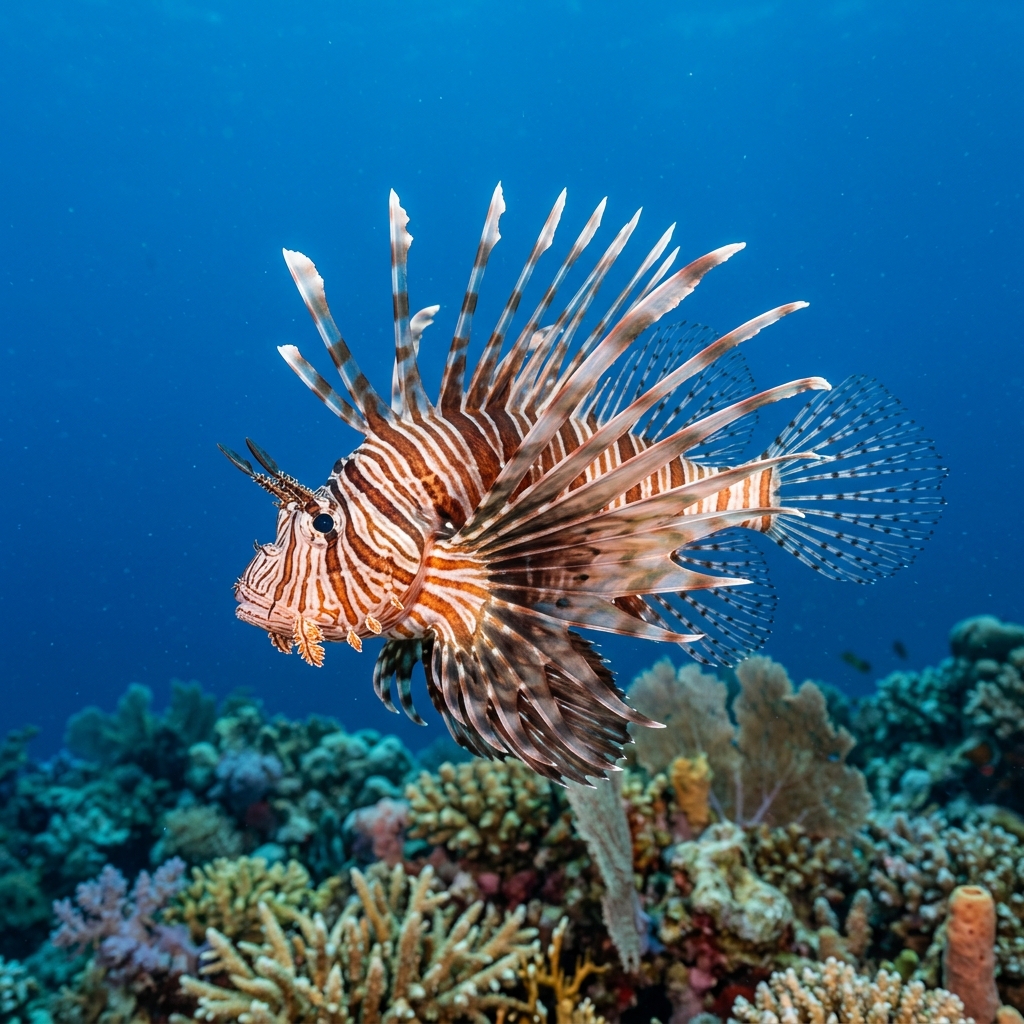
Pterois miles
Spot Indian Lionfish in the Red Sea, Maldives and beyond. Recognise those bold red-and-white striped fins, and know where and when to find one.
Safety warning
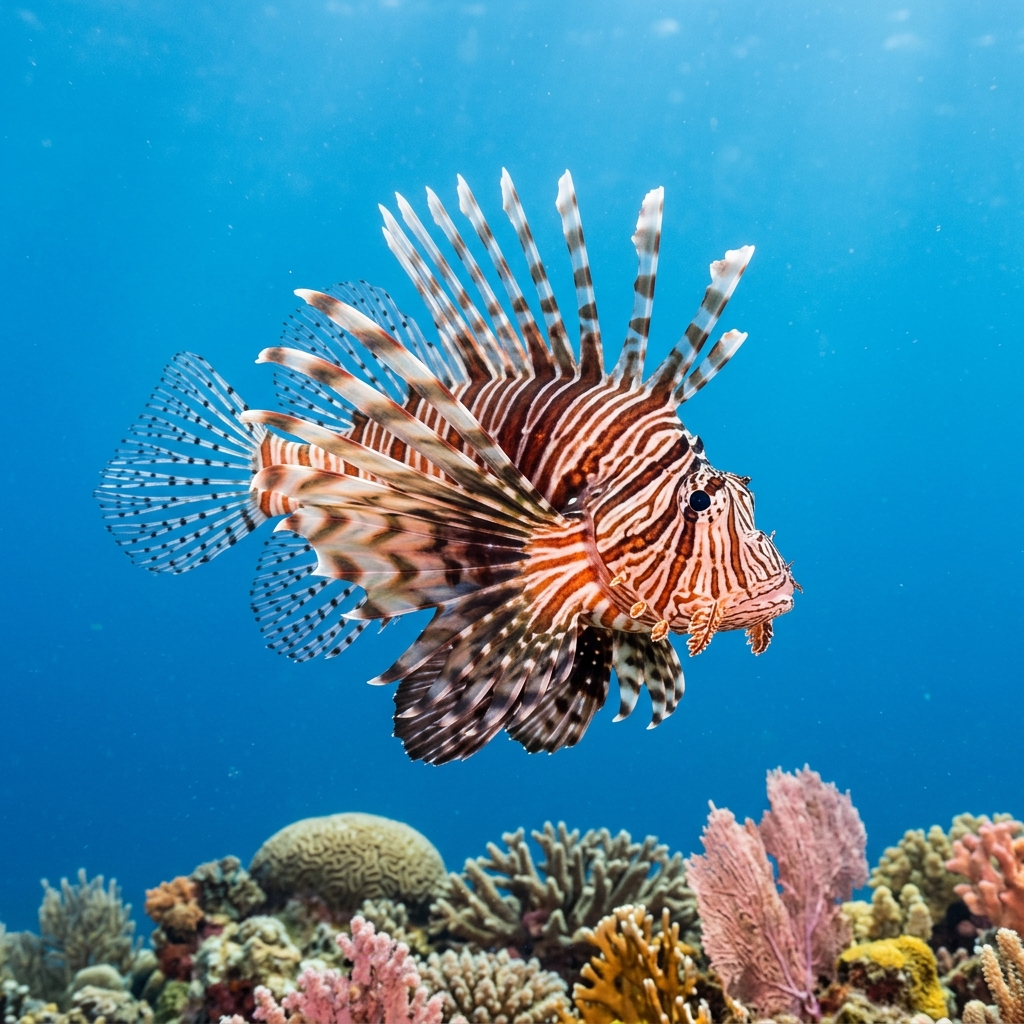
Each of those long dorsal spines is venomous and capable of causing intense, immediate pain, swelling and in rare cases a systemic reaction. Respect the fish's personal space, keep hands and knees away from the reef where one might be resting unseen, and never attempt to handle it. If stung, immerse the affected area in hot (not scalding) water as quickly as possible and seek medical attention.
If you're stung
Venomous spinesGeneral first-aid guidance, not a substitute for professional medical care. In an emergency, call your local emergency number.
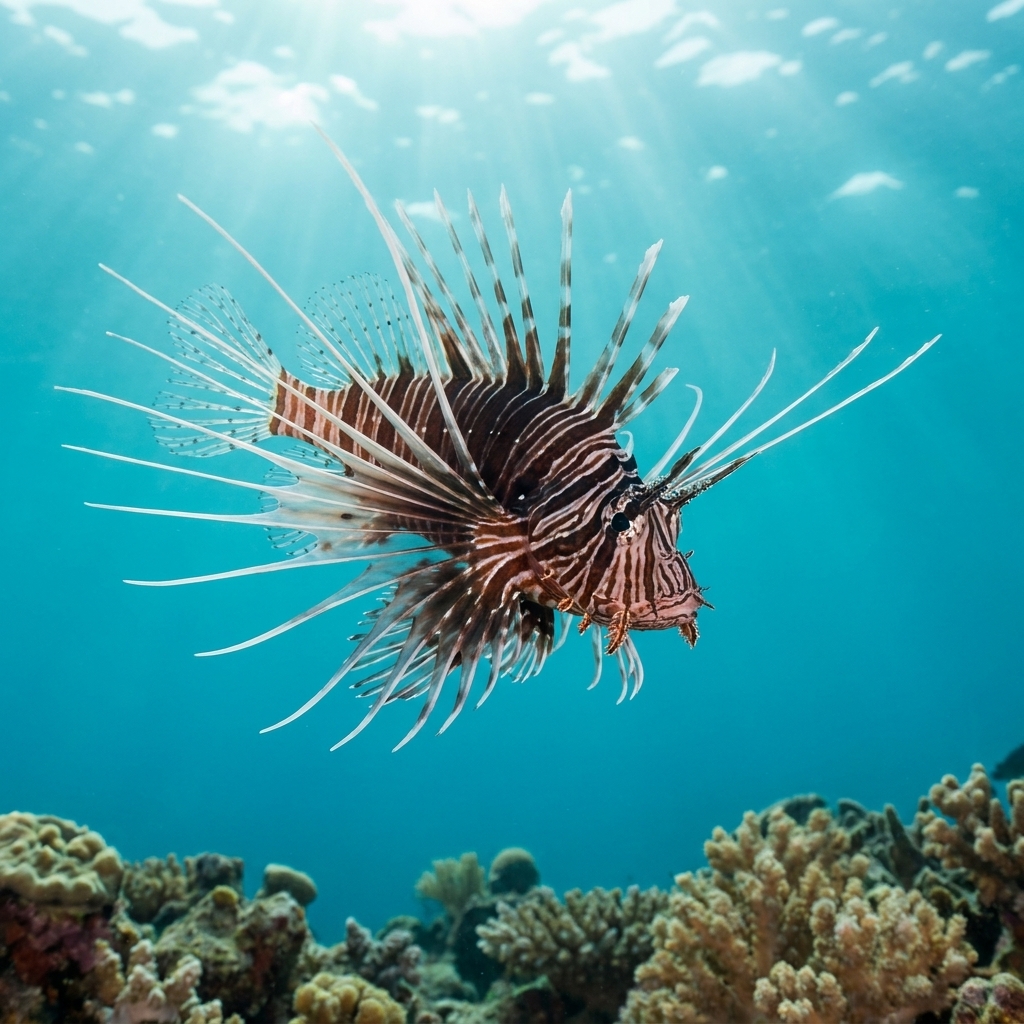
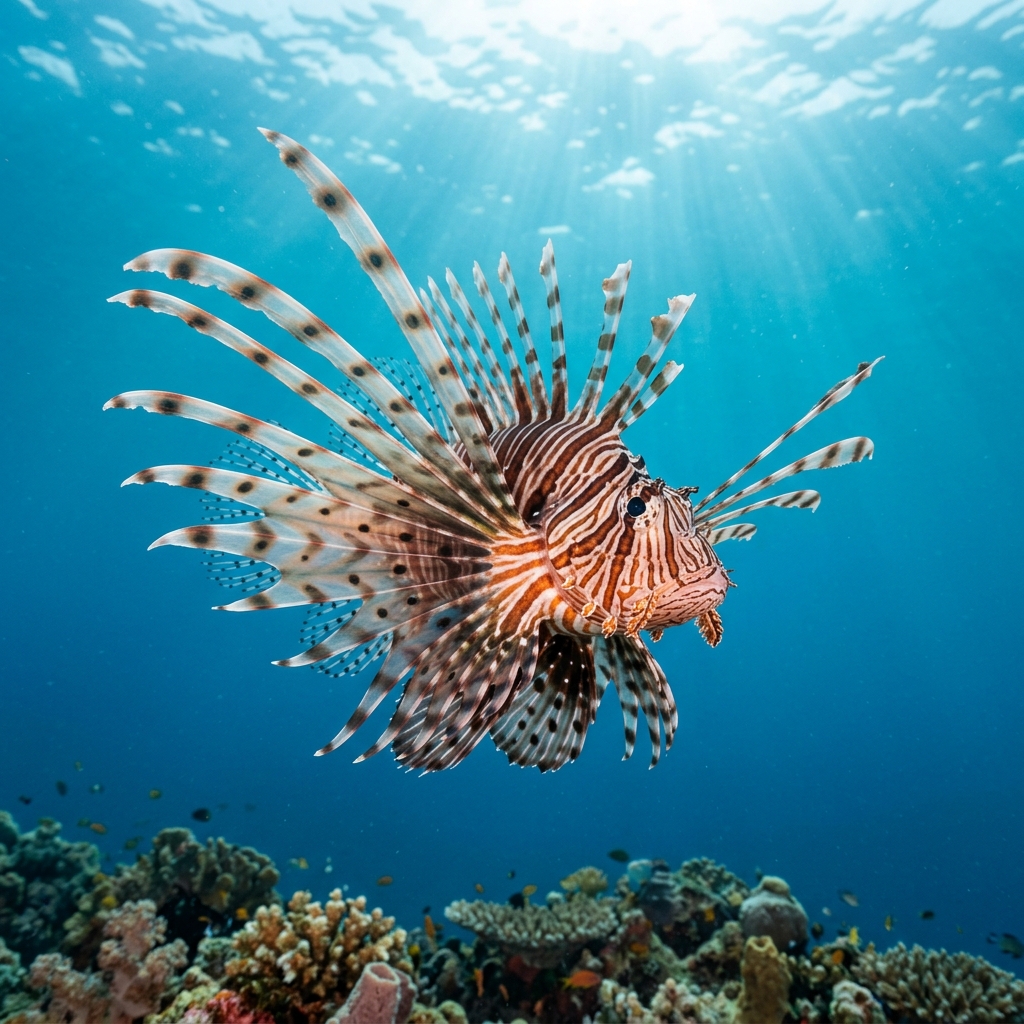
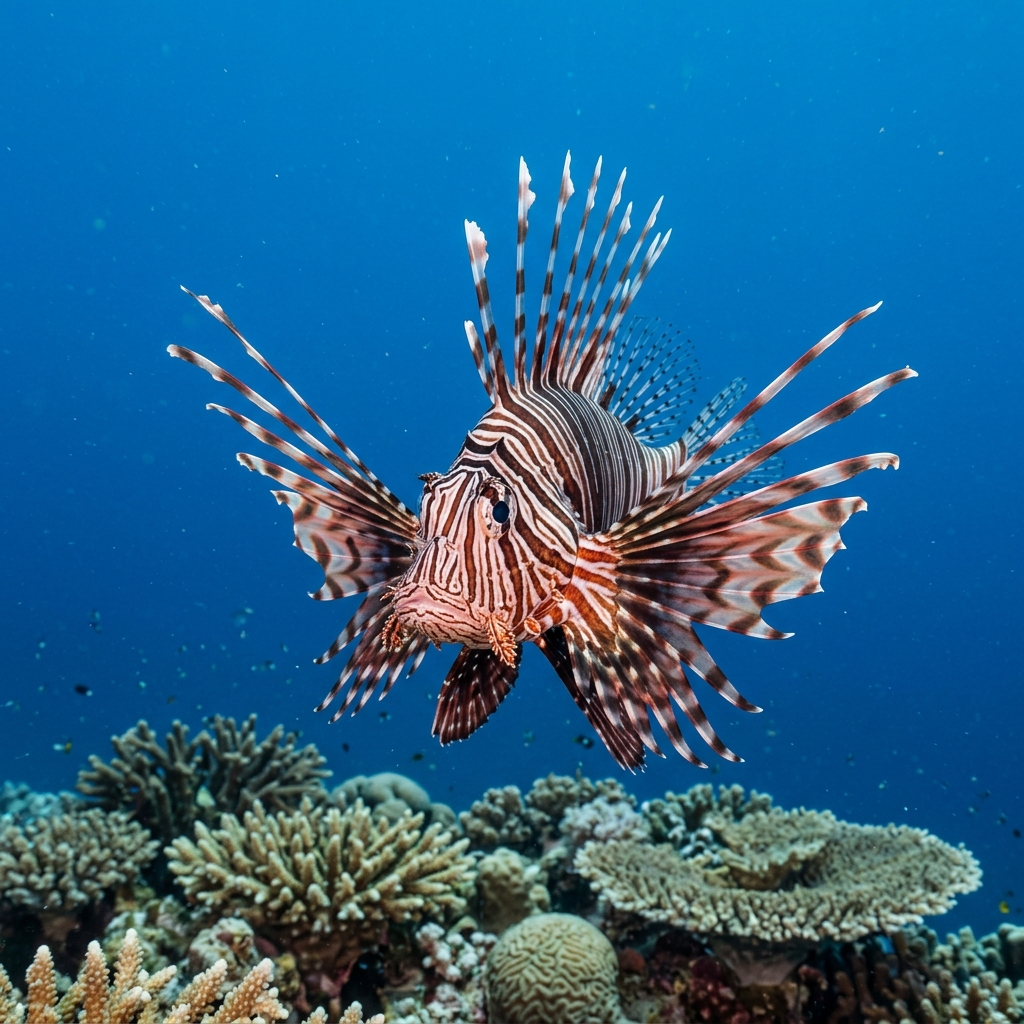
Bold vertical bands of red, white and brown alternate along the body, and the oversized, fan-like pectoral fins spread wide when the fish feels watched. At around 30 cm it is noticeably larger than most lionfish you will encounter on a reef. The long, separated dorsal spines fanning above the back are the single most reliable marker underwater. Juvenile fish carry the same banding pattern as adults but can be mistaken for the closely related devil firefish at a glance.
Most encounters find it hovering motionless in a crevice or tucked under an overhang, relying on camouflage rather than flight when a diver approaches. At dawn and dusk it becomes more active, stalking small fish and crustaceans and using its broad pectoral fins to herd prey into corners before a rapid, almost imperceptible strike. It is generally solitary and will hold its position rather than retreat, though it may slowly reorient to face you.
Outside its native Indo-Pacific range, the Indian Lionfish has established breeding populations across the Mediterranean Sea and the wider Atlantic, making it one of the more significant marine invasive species currently tracked by researchers.
In the Northern Hemisphere it is present year-round with no concentrated season, which makes sense given its comfortable temperature niche of roughly 24 to 29 °C across tropical reefs. Southern Hemisphere divers see a concentration of sightings roughly from October through March and again in June to August.
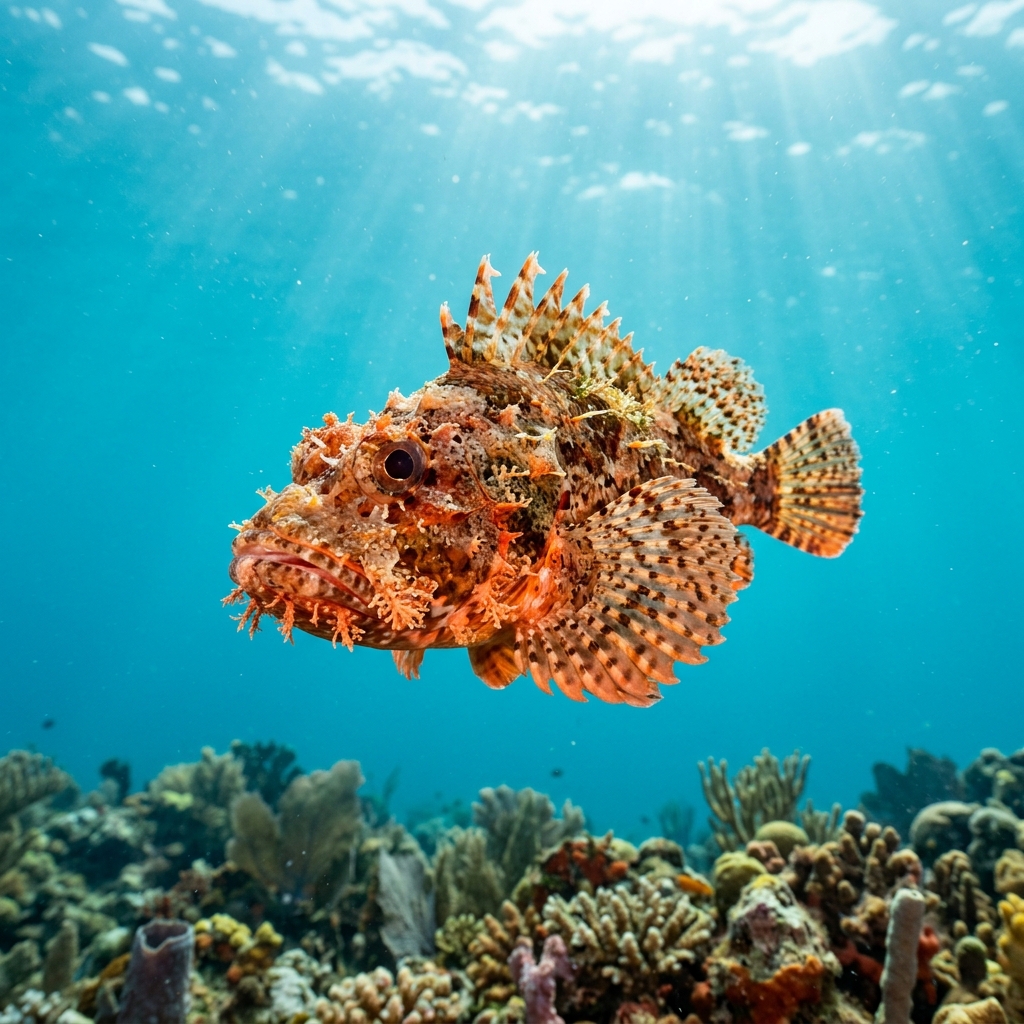
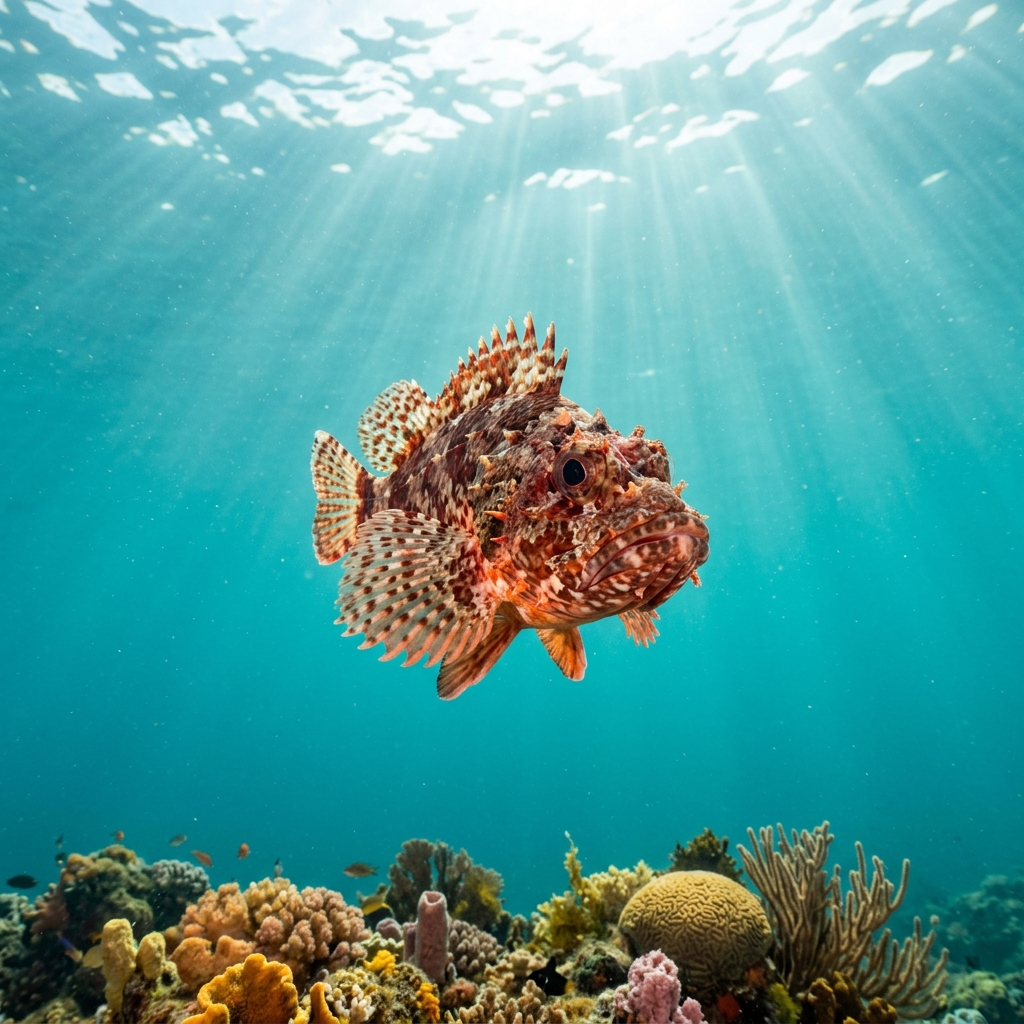
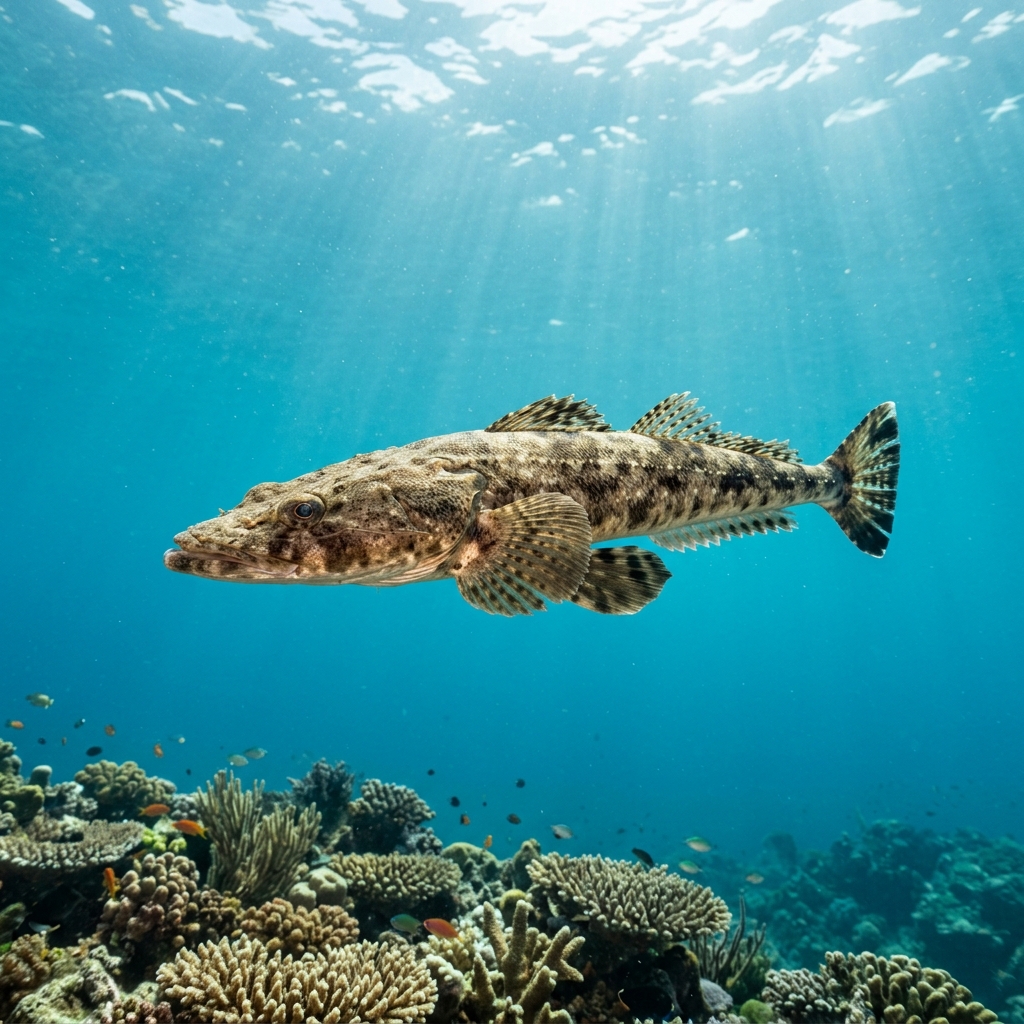
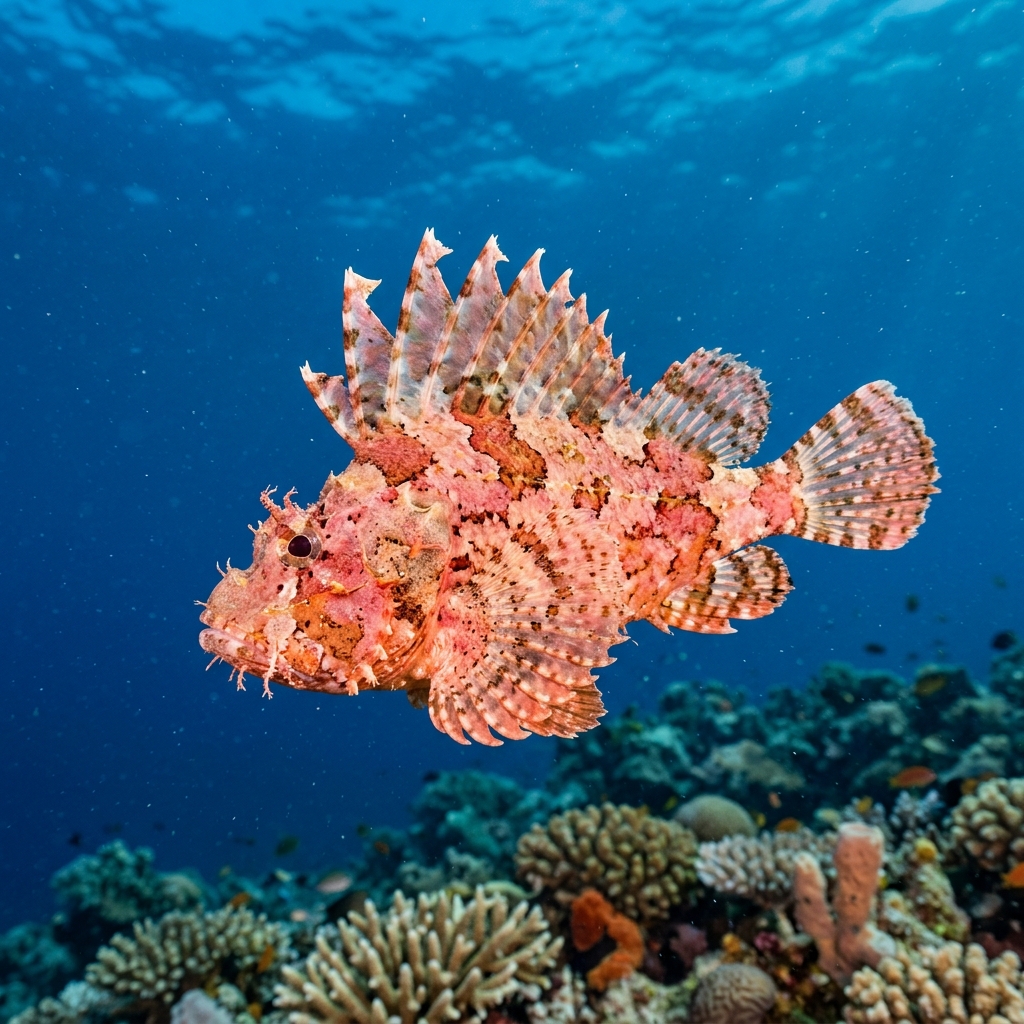
Reef neighbours a diver could mistake it for. Use the identification notes above to tell them apart.
Most commonly logged in Egypt (particularly Sharm el Sheikh and Marsa Alam) and throughout the Maldives atolls, where sightings are reported across a wide spread of sites. Strong populations also exist in the Philippines, Indonesia, and Thailand, while a notable cluster of records in Mexico and Honduras points to its well-documented presence as an invasive species in the Caribbean and Gulf of Mexico. Whether you are diving the Indo-Pacific or the Atlantic side, this species turns up across a remarkable range of countries.
Mapping where Indian Lionfish is logged…
They are most reliably encountered in the Egyptian Red Sea (especially Sharm el Sheikh and Marsa Alam) and across the Maldives atolls. The Philippines, Indonesia, Thailand and Malaysia also hold strong populations. They have additionally established themselves in the Caribbean, with regular sightings around the Yucatán Peninsula, Roatán and Grand Cayman.
In the Northern Hemisphere they are present year-round because tropical reefs consistently sit within their preferred temperature range. Southern Hemisphere divers tend to log the most sightings between October and March, with a secondary window in June and August.
Yes. The dorsal, pelvic and anal spines all carry venom that delivers a painful sting if touched. The fish will not chase you, but it holds its ground and can be difficult to spot when resting against coral. Keep a safe distance, never reach into crevices blind, and treat any sting with hot-water immersion and prompt medical attention.
The Clearfin Lionfish (Pterois radiata) has a largely transparent pectoral fin membrane with only thin rays visible, giving it a spidery look, while the Indian Lionfish has a full banded membrane filling those fins. The Clearfin also typically shows two horizontal white stripes on its caudal peduncle that the Indian Lionfish lacks.
Adults commonly reach around 30 cm in length, making them one of the larger lionfish species you are likely to encounter on a reef dive. Their broad, spread pectoral fins can make them appear considerably bigger in the water than their body length alone suggests.
They are very closely related and were long considered the same species. Pterois miles (Indian Lionfish) is native to the Indian Ocean and Red Sea, while Pterois volitans (Red Lionfish) is native to the Pacific. Both have colonised the Atlantic as invasives, and the two can be distinguished mainly by a spine and ray count difference that is hard to verify underwater.
Site and sighting data is aggregated from diver logs, iNaturalist and GBIF. For taxonomy and conservation status:
Madeira Rockfish
2,773 sites