Dactyloptena orientalis
Spot Oriental Flying Gurnard across the Philippines, Indonesia and Queensland. Warm-water species logged in 23-29°C reefs. Rare but unmistakable.
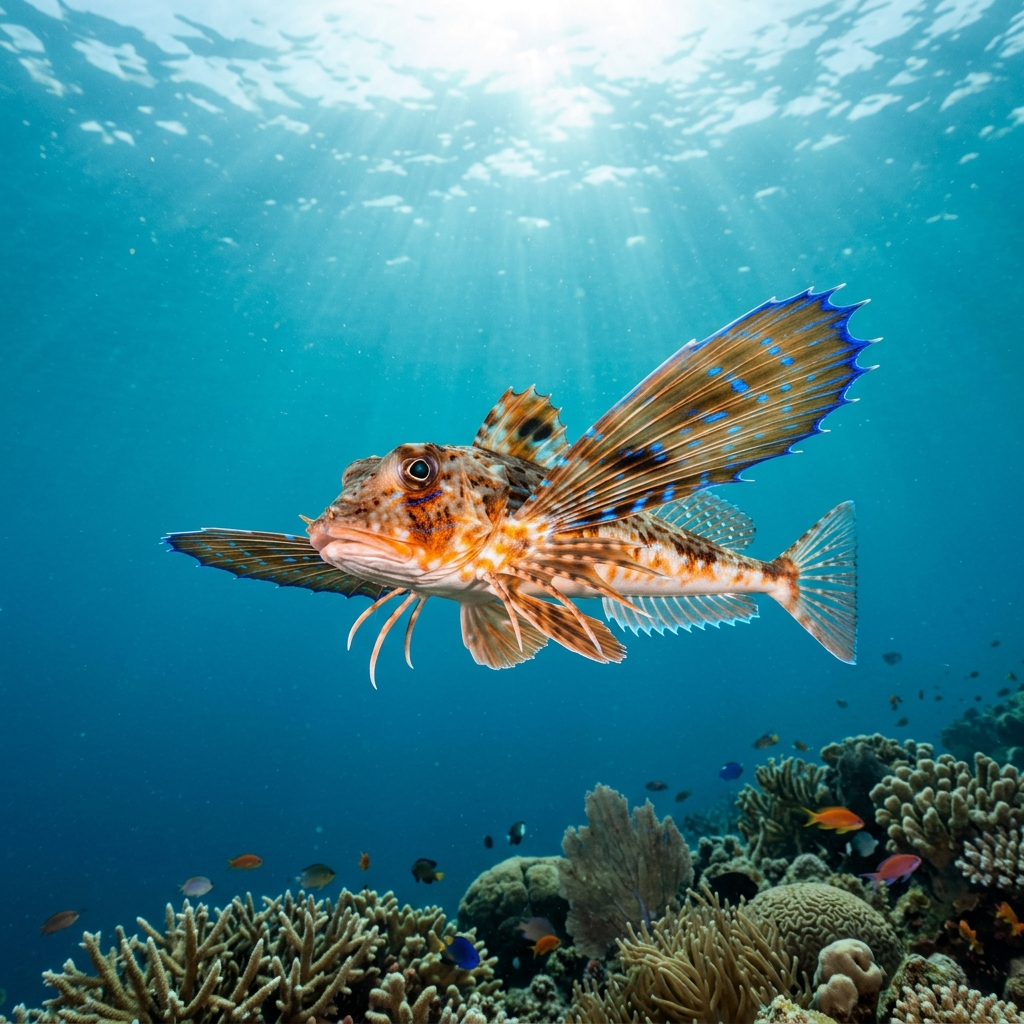
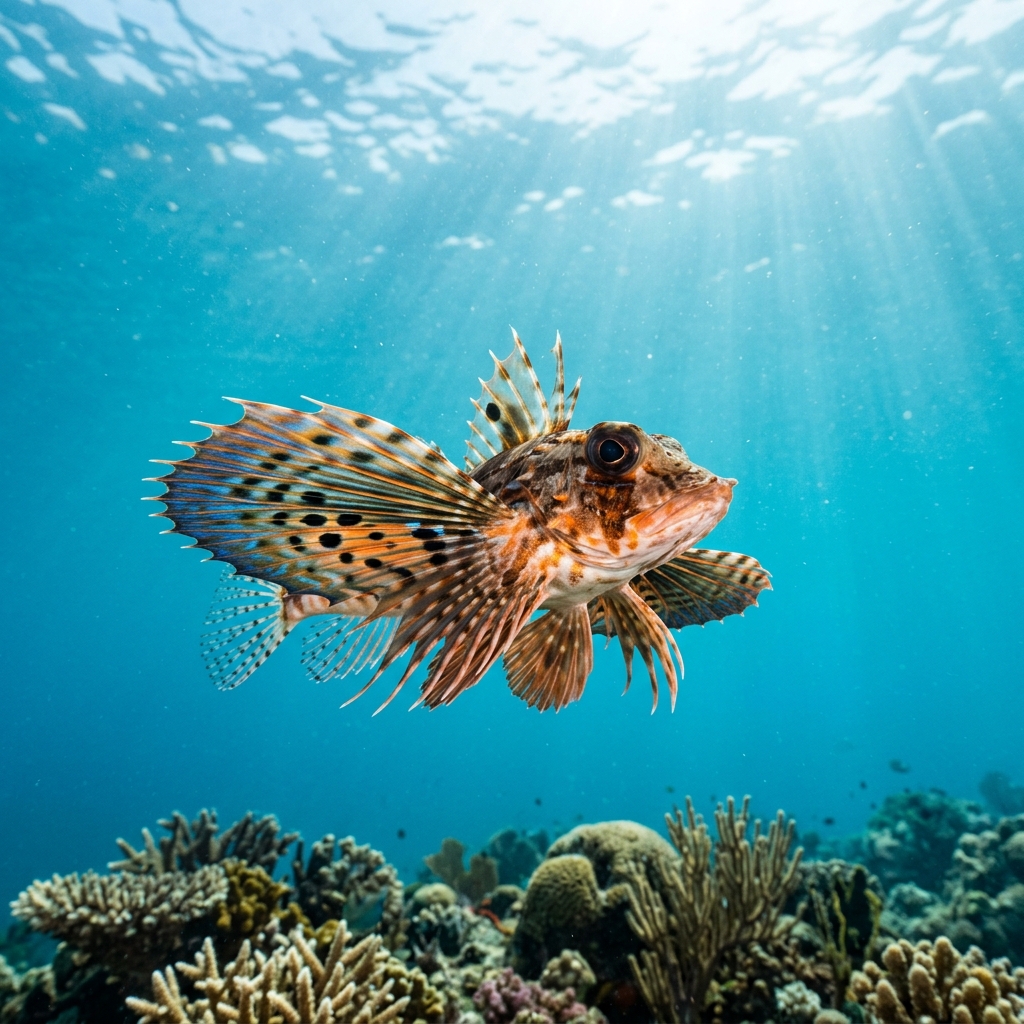
When its enormous pectoral fins (the large side fins that spread like wings) are fanned out, this fish is unlike almost anything else on the reef: each fin is broad and rounded, patterned with vivid blue spots and lines on a tan to brownish base. At rest with fins folded, it looks like a chunky, armour-plated bottom-dweller walking on its small, finger-like pelvic fins. The head is boxy and blunt, and the body tapers sharply towards the tail. Juveniles lack the full wing-span drama of adults and may initially be overlooked as plain bottom fish.
Oriental flying gurnards are encountered on sandy or rubble bottoms, typically moving slowly along the seafloor on their stiffened pelvic fins, probing the substrate for small invertebrates. When threatened or startled, they abruptly fan out their huge pectoral fins to startle potential predators, then fold them back and continue walking as if nothing happened. They are generally unfazed by slow, calm divers but will spread those wings if you approach too quickly.
The fan display is not just for show: the vivid blue eyespots on the pectoral fins are thought to startle predators and may signal to rival males, making this one of the few reef fish that uses its fins both as a locomotion aid and as a full-colour warning billboard.
Northern-hemisphere sightings concentrate between August and December based on logged observations. Its preferred water temperatures of 23-29°C mean it is present on Indo-Pacific tropical reefs throughout much of the year, but austral summer months may offer additional opportunity for Queensland divers.
Reef neighbours a diver could mistake it for. Use the identification notes above to tell them apart.
Most logged across the Philippines, Indonesia, and Australia, with the strongest site coverage in Queensland, Luzon, the Visayas, and Palawan and Apo Reef. Good populations are also recorded in Thailand's Gulf of Thailand sites, Malaysia, Japan, Micronesia, and Tanzania. The Philippines alone holds the greatest concentration of logged sites, making it the go-to destination for divers targeting this species.
Mapping where Oriental Flying Gurnard is logged…
The Philippines, Indonesia, and Australia are the most reliably logged locations, with Queensland, Luzon, the Visayas, and Palawan and Apo Reef standing out as top regions. Thailand, Malaysia, Japan, Micronesia, and Tanzania also have solid site records. Sandy and rubble reef areas across the Indo-Pacific are the habitat to target.
Logged northern-hemisphere sightings peak between August and December. The species prefers water temperatures of 23-29°C, so warm-season diving across tropical Indo-Pacific reefs gives the best odds. For Queensland, Australian summer months are worth timing a trip around.
Look for a chunky, boxy-headed fish walking along sandy bottoms on finger-like pelvic fins. If it fans its pectoral fins, the broad blue-spotted wings are definitive. Folded up, it can resemble the closely related Flying Gurnard; the key difference is in the exact patterning of the pectoral fins, which on the oriental species shows brighter blue spots on a brownish field.
Honest answer: rare to uncommon at most sites. The majority of dive logs rate it as rare, with only a small number of sites where divers call it common. Going in with low expectations and searching sandy rubble patches between coral heads gives you the best shot. Patience and slow movement on the bottom pay off.
Site and sighting data is aggregated from diver logs, iNaturalist and GBIF. For taxonomy and conservation status: