Solenostomus cyanopterus
Spot robust ghost pipefish in the Visayas and Sulawesi. Learn how to ID this rare camouflage master and when to look for it.
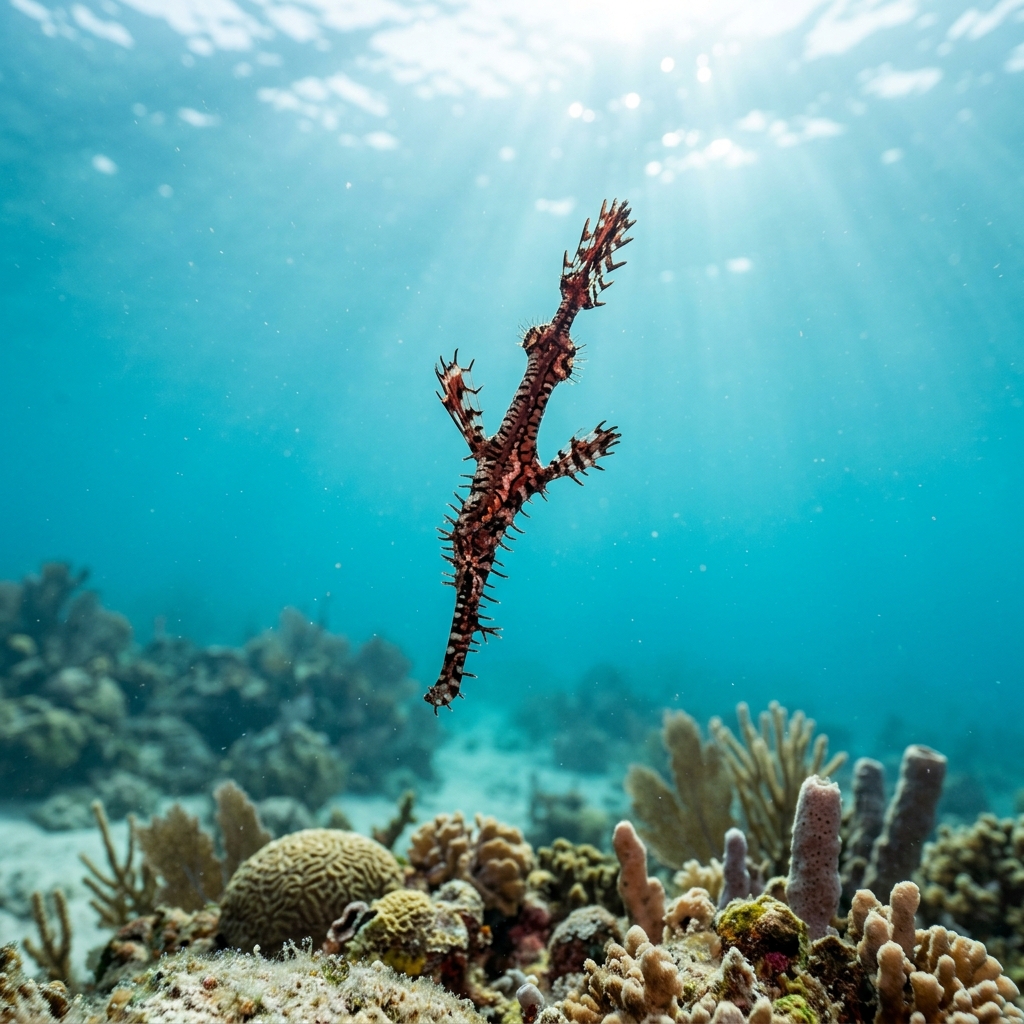
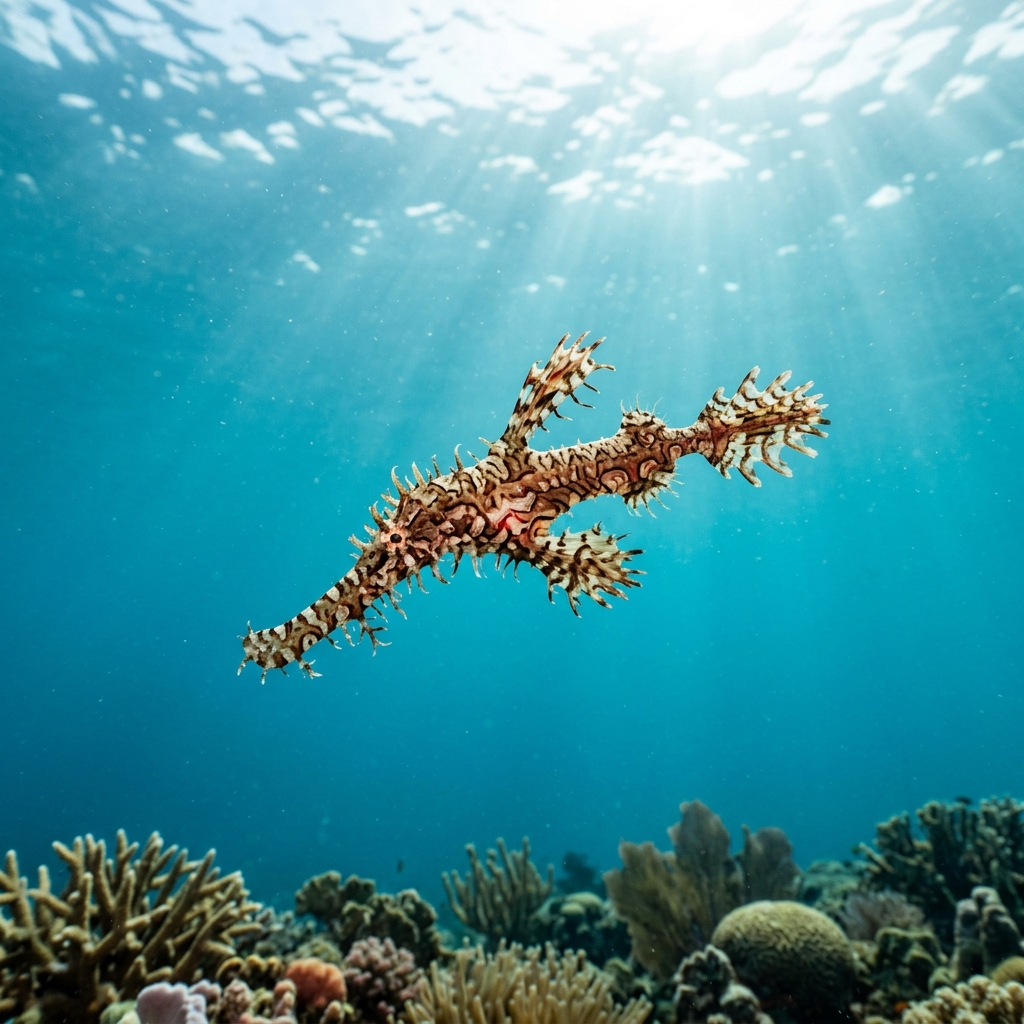
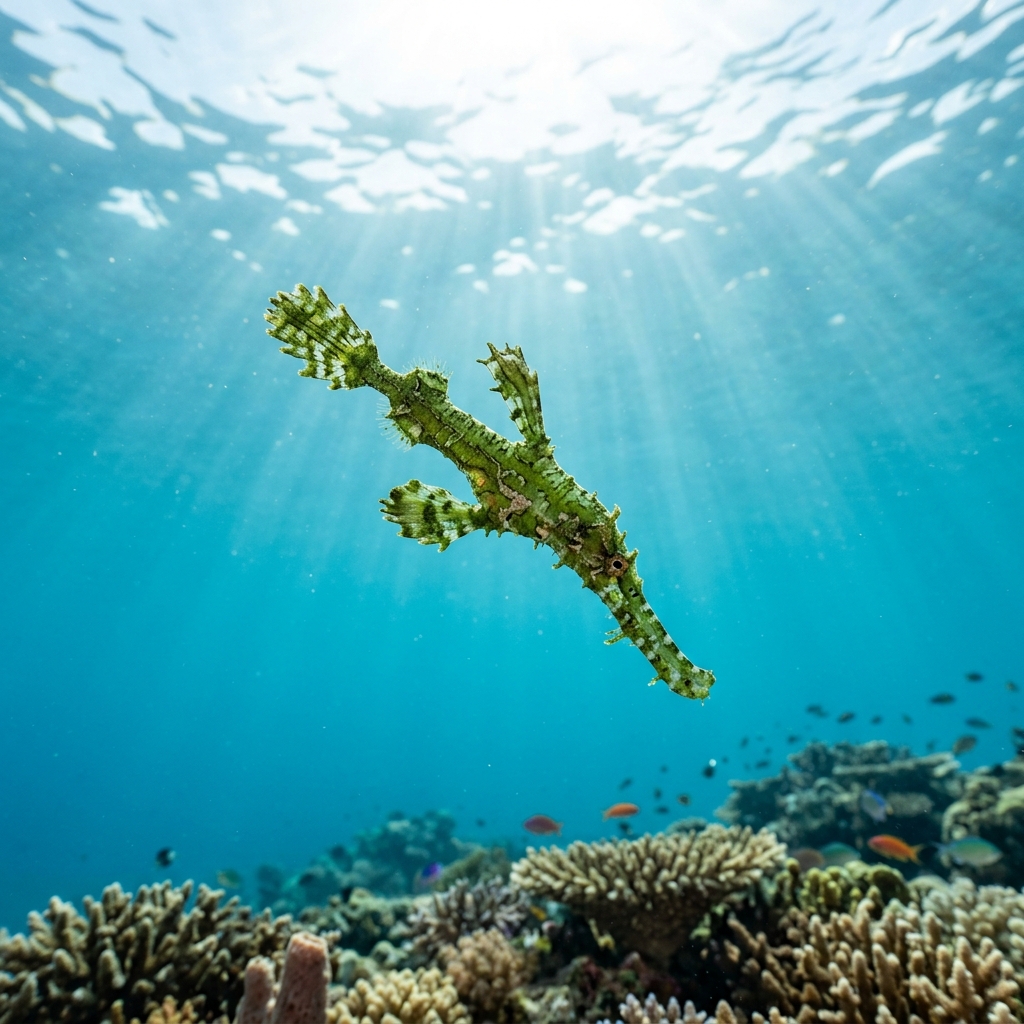
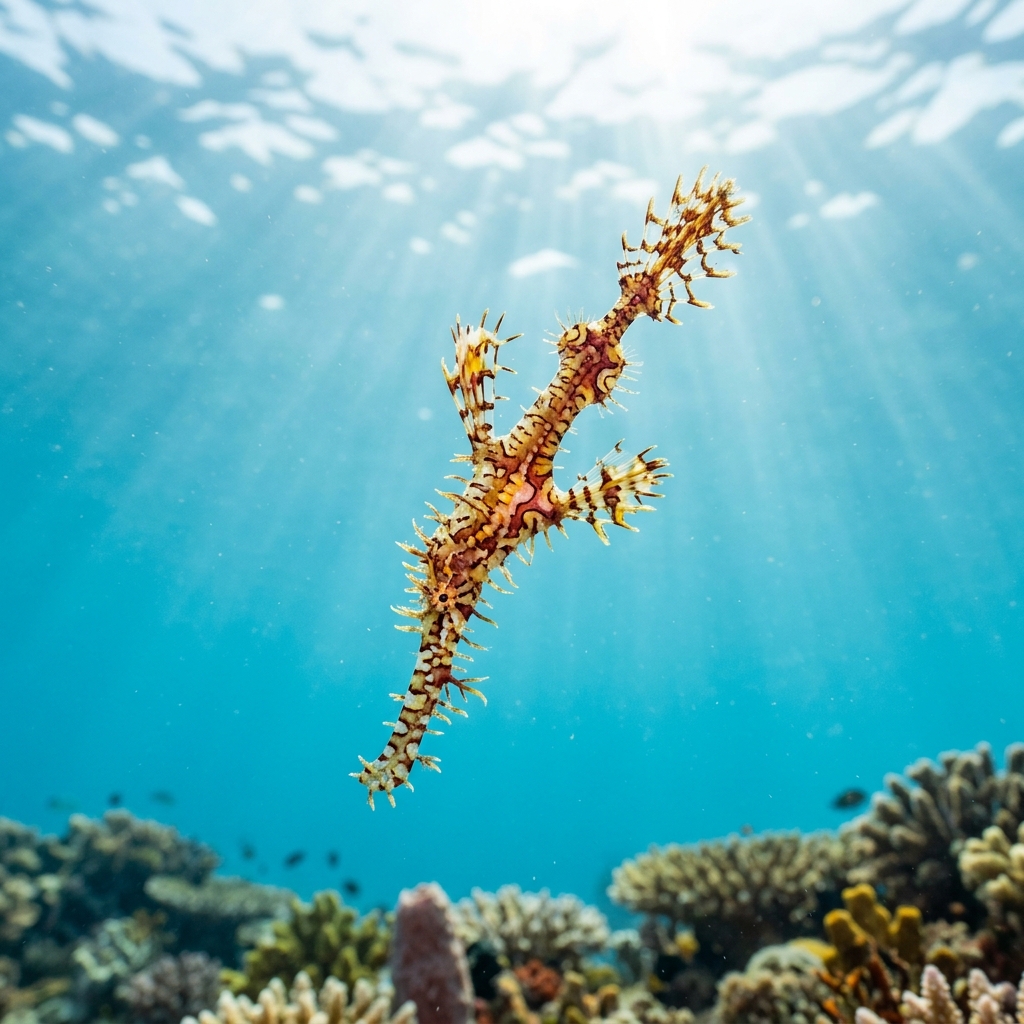
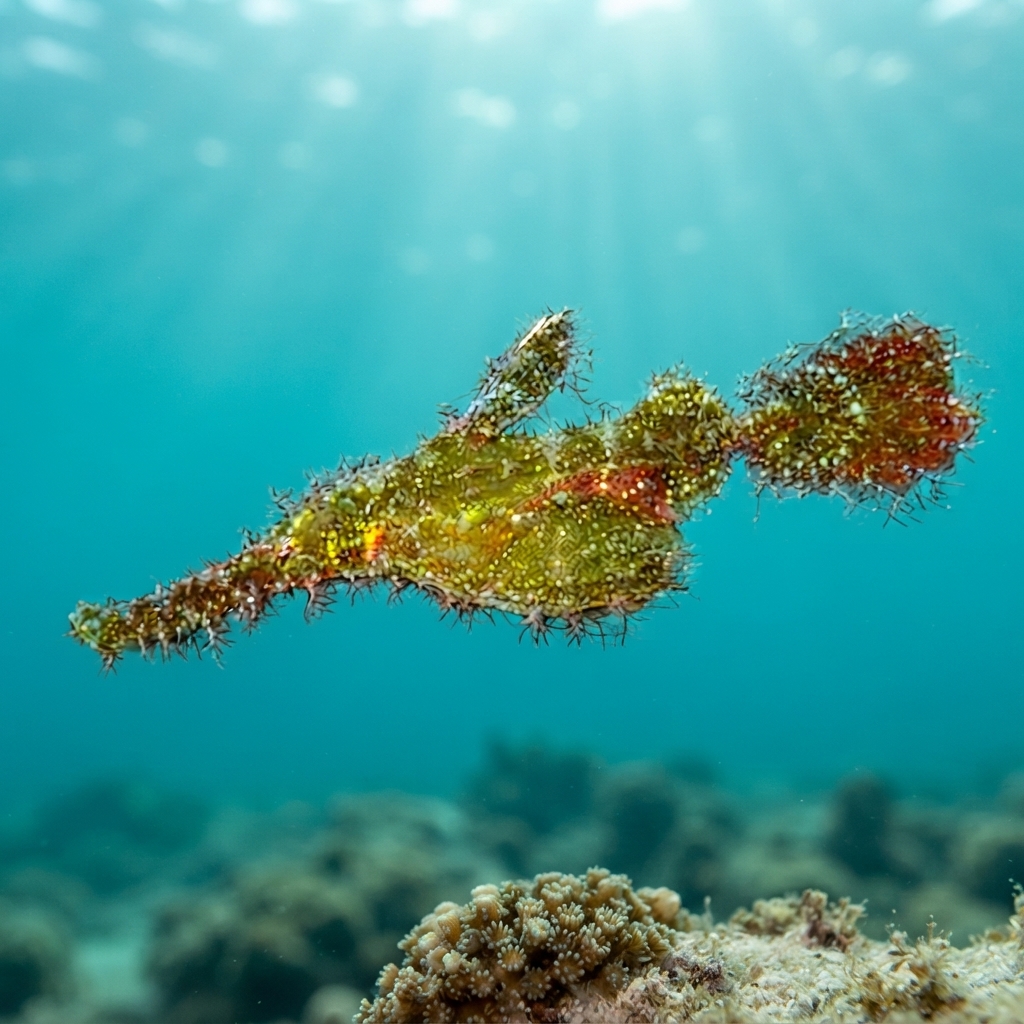
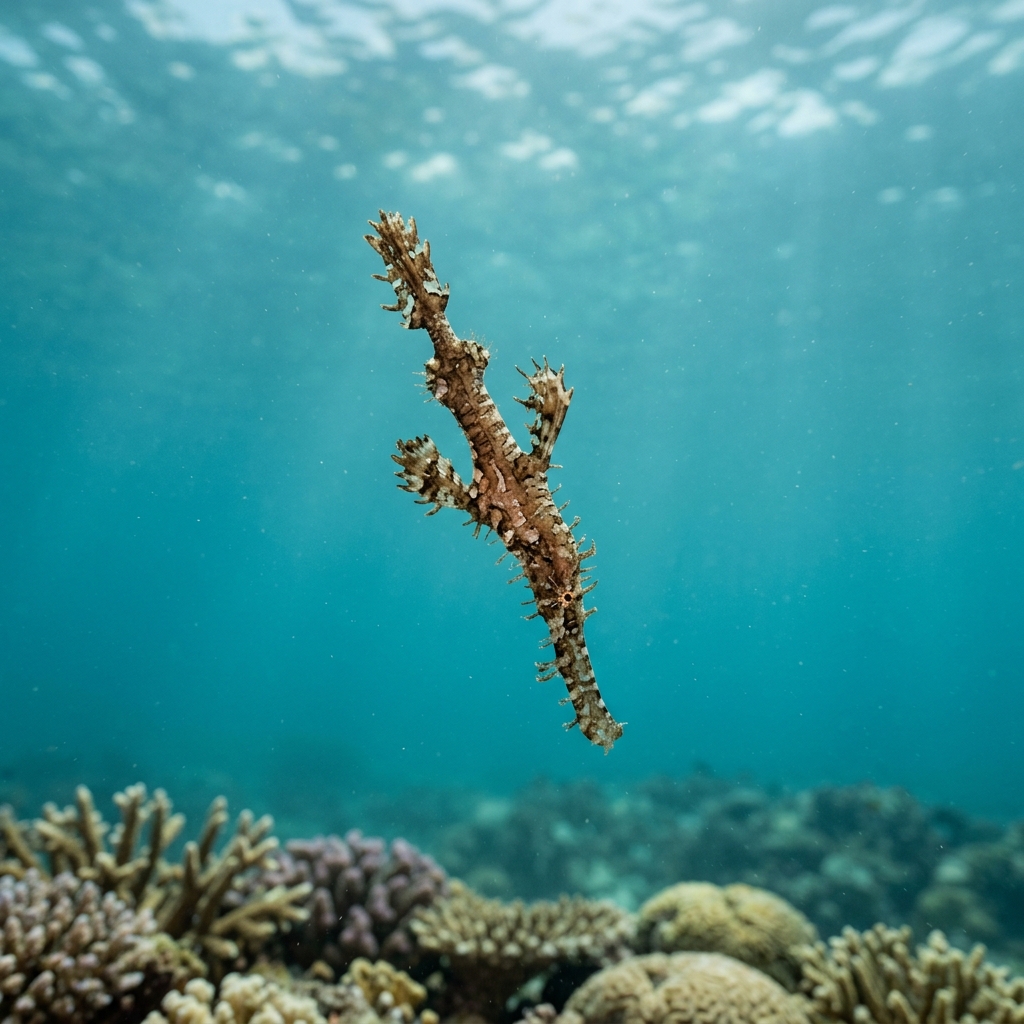
A slender, laterally compressed fish that drifts head-down among seagrass, algae, or crinoids, blending in with uncanny precision. Colouration is highly variable, ranging from pale straw-yellow to deep olive-green or reddish-brown, always matching the surrounding habitat. The large, leaf-like pelvic fins are the key field mark: in females they are fused to form a brood pouch, visibly fuller and broader than in males. At typical dive depths it is most often spotted by its silhouette rather than any pattern.
When you find one, it is almost always stationary or barely drifting, holding a near-vertical head-down posture that mirrors a strand of vegetation or a crinoid arm. Approach slowly: it tends to ignore divers who move deliberately, but will glide a short distance if it feels cornered. Pairs or small groups are sometimes found sharing the same patch of habitat, particularly seagrass beds and algae-draped rubble slopes.
Like all ghost pipefish, males brood the eggs: the female deposits them into a pouch formed by her enlarged, fused pelvic fins, and he carries them until they hatch. This reversed-from-seahorse arrangement means the conspicuously plump individual is usually the one with the eggs.
In Northern Hemisphere destinations such as the Philippines and Japan, sightings concentrate from December through May. In tropical sites where water temperatures stay comfortably between 22 and 29 °C year-round, encounters are possible at any time but follow local season patterns for seagrass and algae beds.
Reef neighbours a diver could mistake it for. Use the identification notes above to tell them apart.
Most commonly logged across the Philippines, particularly in the Visayas Central, Visayas East and North, and Palawan and Apo Reef regions. Indonesia is the next strongest country, with solid records from Sulawesi and Maluku and Papua. Australia, Japan, Malaysia, Thailand, South Africa, and Tanzania also host populations, making this a wide Indo-Pacific species with a clear core in Philippine and Indonesian waters.
Mapping where Robust Ghost Pipefish is logged…
The Philippines is the strongest destination, especially the Visayas Central, Visayas East and North, and Palawan and Apo Reef regions. Indonesia is a close second, with reliable records from Sulawesi and Maluku and Papua. The species also turns up in Australia, Japan, Malaysia, Thailand, South Africa, and Tanzania.
In the Philippines and other Northern Hemisphere sites, records cluster from December to May. At tropical Indo-Pacific sites the water stays within the species' preferred 22 to 29 °C range all year, so encounters outside that window are possible, though less frequent.
Look for a slender fish hanging head-down and nearly motionless in seagrass, algae, or crinoids. Colouration shifts from pale yellow to deep green or reddish-brown to match the background. The large, prominent pelvic fins are the clincher: in females they form a visible brood pouch. The overall shape is leaf-like rather than tubular.
Robust ghost pipefish are typically recorded up to around 17 cm in length, making them one of the larger ghost pipefish species. In practice, divers often underestimate their size because the animal is stretched vertically and pressed against vegetation.
The female deposits eggs into a brood pouch formed by her enlarged, fused pelvic fins, but it is the male who then carries and tends them until hatching. This is the opposite arrangement to seahorses, where the male has the pouch. A noticeably rounded belly on an individual usually signals active brooding.
Site and sighting data is aggregated from diver logs, iNaturalist and GBIF. For taxonomy and conservation status:
Ghost Pipefish
249 sites