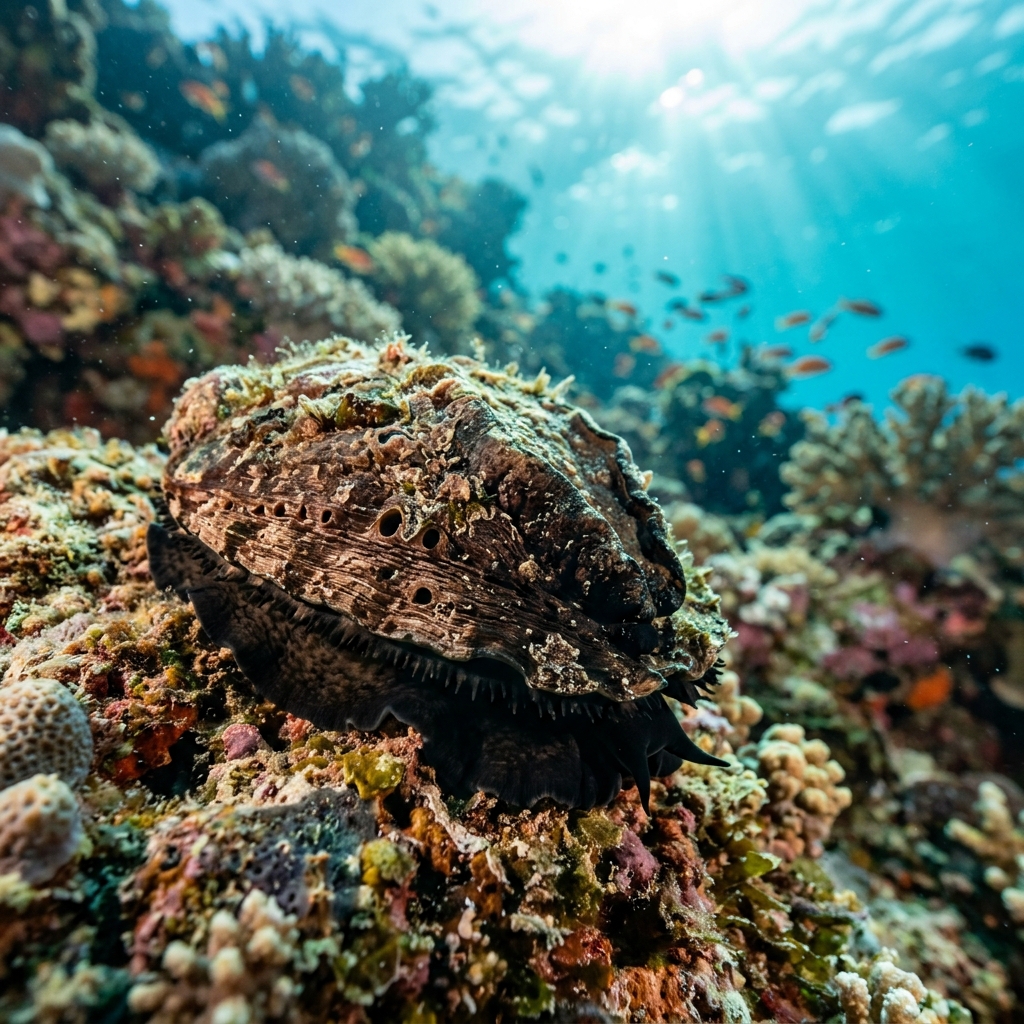
Conus spp.
Common across Okinawa, the Visayas and the Maldives at 22-29C reefs, cone snails are a year-round find if you know where to check sand and rubble.
Safety warning
This animal carries a powerful venom delivered by a bite or a harpoon-like sting, and it can be fatal. Never handle it or pick up its shell, even one that looks empty.
If you're stung
Venomous stingGeneral first-aid guidance, not a substitute for professional medical care. In an emergency, call your local emergency number.
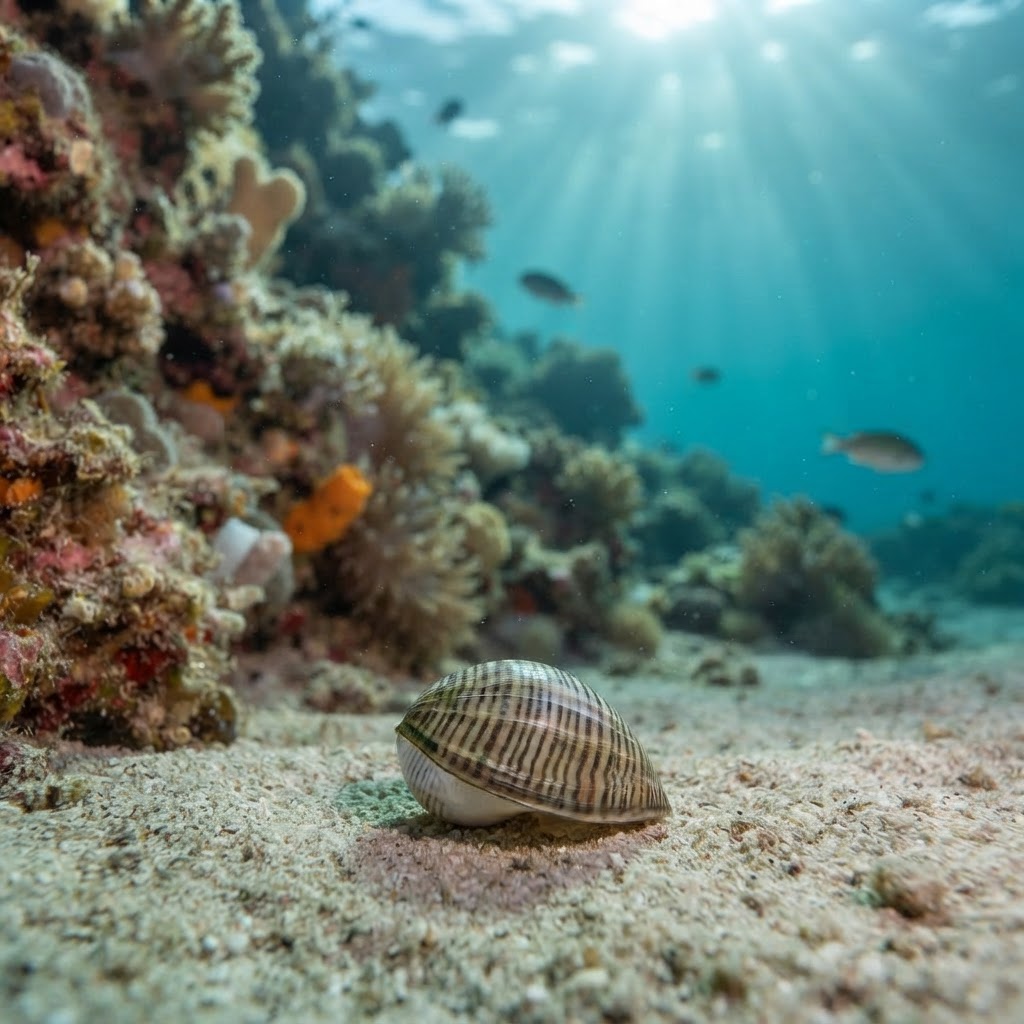
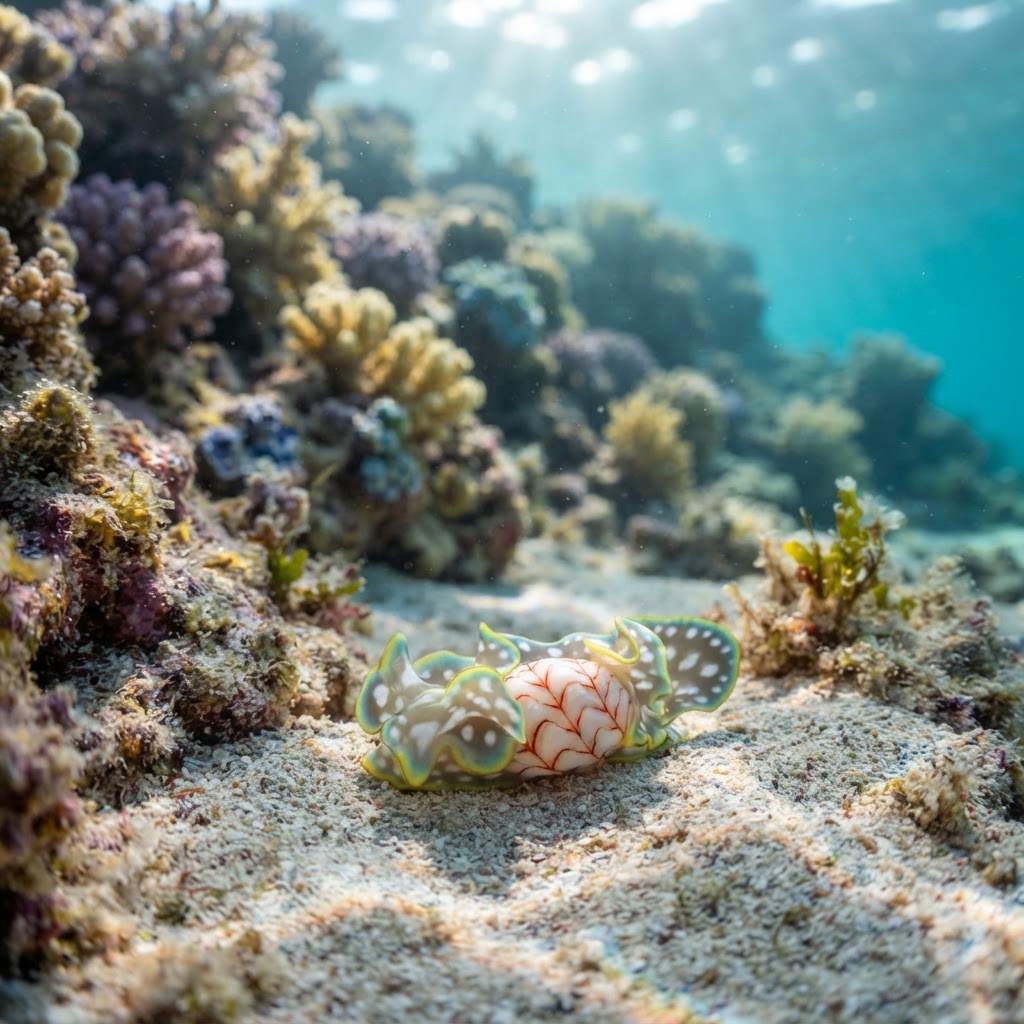
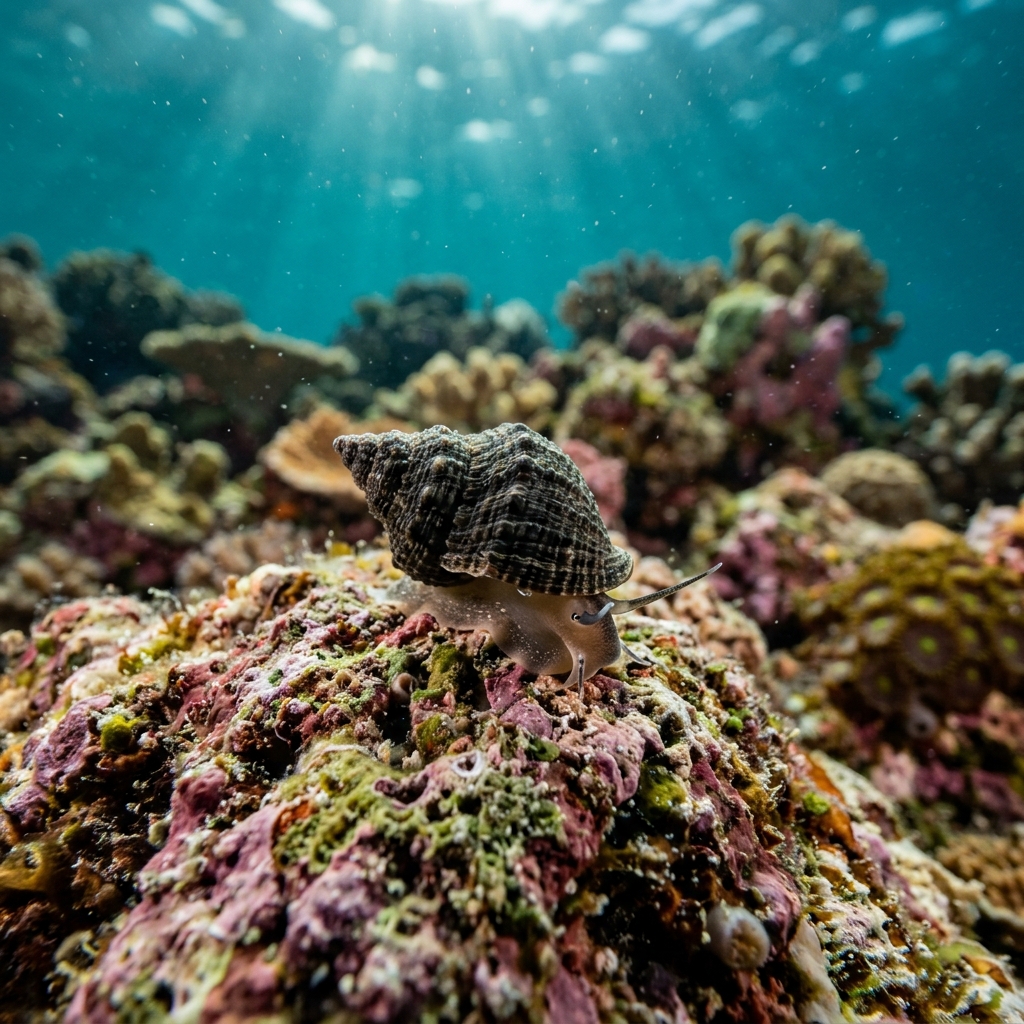
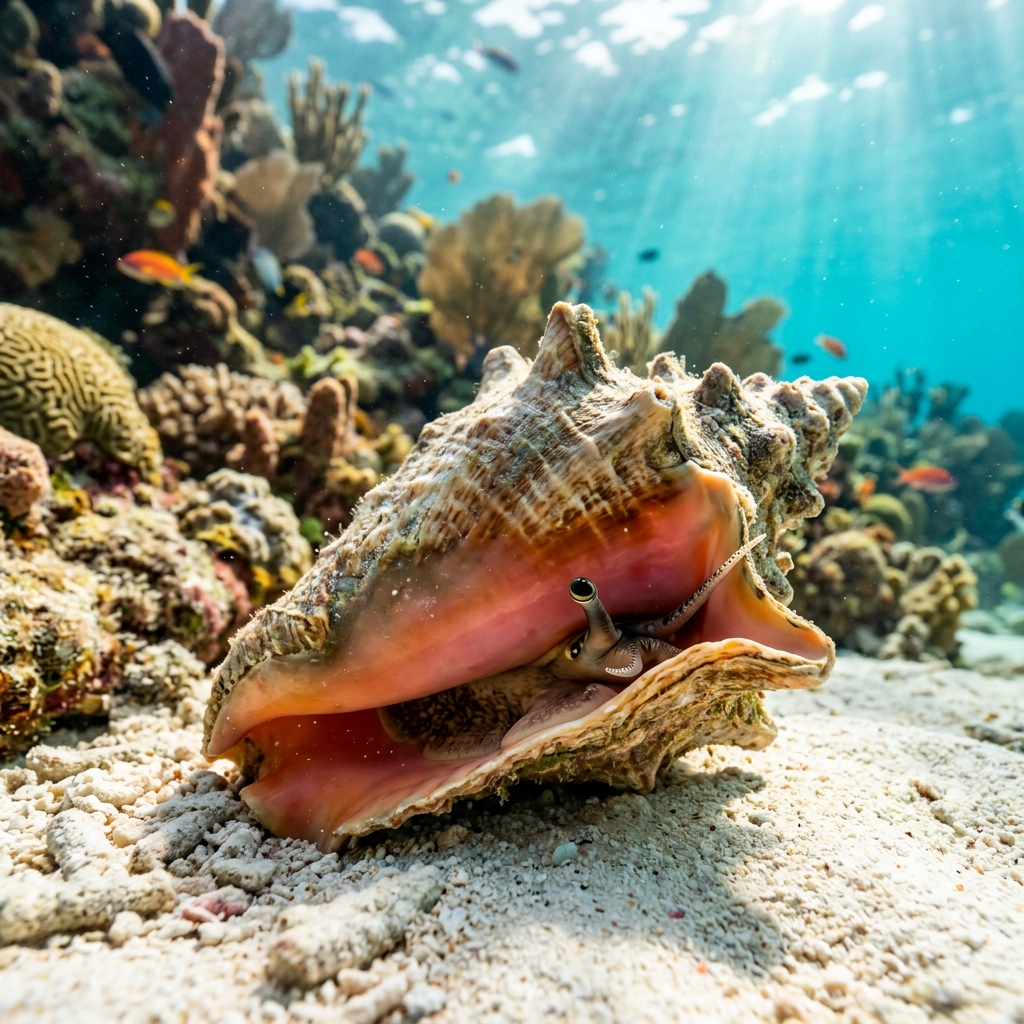
Look for a hard, cone-shaped shell, tapered at one end and flared at the other, usually patterned with mottled spots, bands or a woven-looking mesh in browns, creams or oranges. Most species sit half-buried in sand or wedged into rubble and coral crevices, so divers usually spot just the shell's curve or tip poking above the substrate. Size and exact pattern vary hugely by species within the genus, so treat the cone shape itself as the giveaway rather than any one colour.
Divers most often find them motionless or slowly ploughing just under the sand surface, hunting worms, molluscs or small fish depending on the species. They are slow-moving and generally ignore passing divers, staying tucked into sand, rubble or coral crevices rather than out in the open on the reef face. Night dives tend to turn up more activity, since many species feed after dark.
Cone snails hunt with a modified, harpoon-like tooth that injects venom to immobilise prey, and this venom is complex enough that researchers have studied it for use in pain medicine.
No clear seasonal pattern shows up in the data, and with a comfortable range of roughly 22 to 29C on tropical reefs, cone snails turn up year-round rather than in a particular month.
Reef neighbours a diver could mistake it for. Use the identification notes above to tell them apart.
Most commonly logged across the Indo-Pacific, with strong numbers in Okinawa and the Ryukyu Islands in Japan, the Visayas in the Philippines, and both the Northern and Central Atolls of the Maldives. Also a reliable find in Hawaii, the Carolinas and Florida in the United States, plus reef sites across Queensland and French Polynesia.
Mapping where Cone Snail is logged…
They turn up across the Indo-Pacific, with especially strong logging in Okinawa and the Ryukyu Islands in Japan, the Visayas in the Philippines, and the Maldives' Northern and Central Atolls. Hawaii, Florida and Queensland are also solid bets.
There's no strong seasonal pattern in the sightings data, and they're comfortable across a wide 22 to 29C range, so they're a year-round find on tropical reefs rather than a seasonal target.
Only if you handle one. A cone snail never approaches a diver, but several species carry a venom that can stop a person breathing, and the harpoon goes through a glove. The dangerous species are not reliably told apart from the harmless ones underwater, so treat every cone-shaped shell as one of them. Look and photograph, never pick up, including shells that look empty.
Check for the classic cone-shaped shell, narrow at one end and wider at the other, often patterned with mottled or banded markings. Most are found half-buried in sand or tucked into rubble, so you're usually looking at just part of the shell rather than the whole animal.
Size varies a lot between the many species grouped under Conus, from small centimetre-scale shells to noticeably larger ones, so there's no single typical size for the genus as a whole.
Cone snails fire a harpoon-like tooth loaded with venom to stun prey such as worms, molluscs or small fish. The venom's compounds are complex enough that they've drawn scientific interest well beyond the reef.
Site and sighting data is aggregated from diver logs, iNaturalist and GBIF. For taxonomy and conservation status:
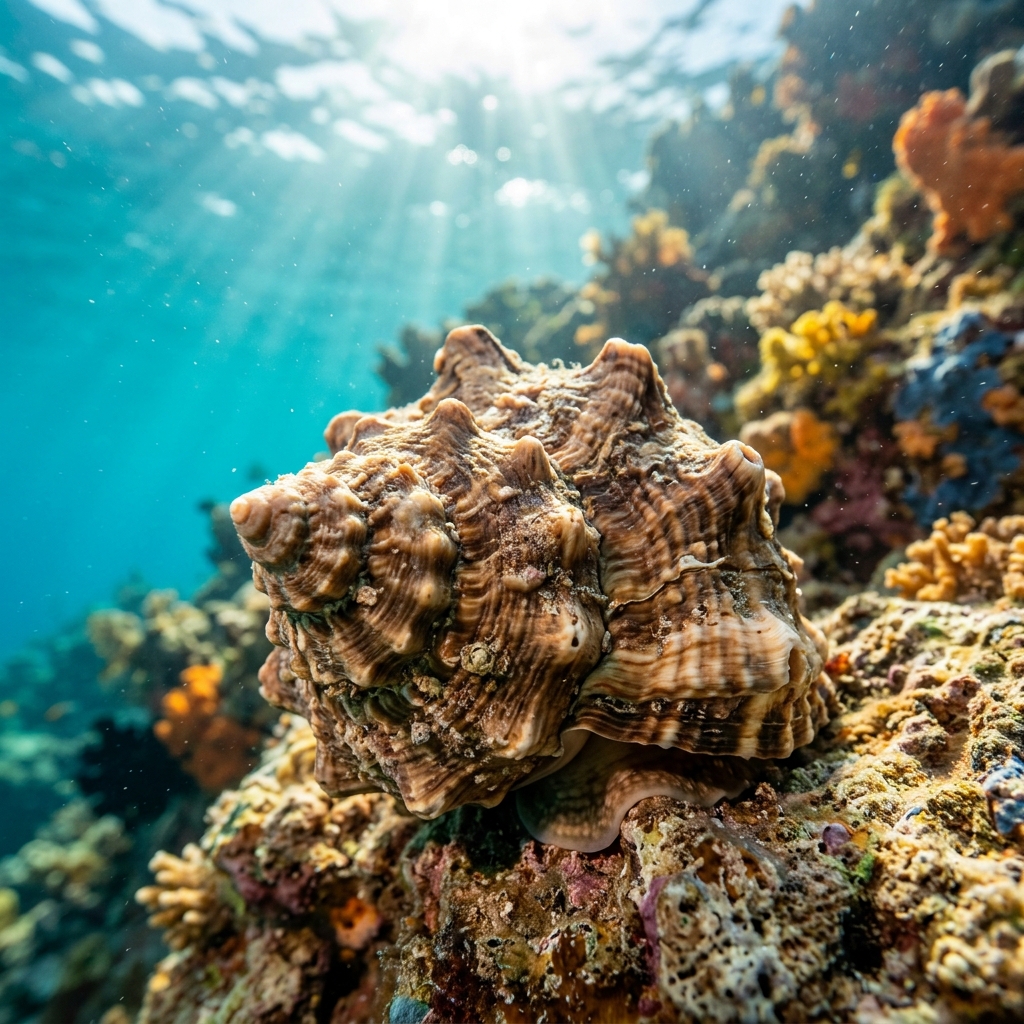
Knobbed Triton
1,496 sites