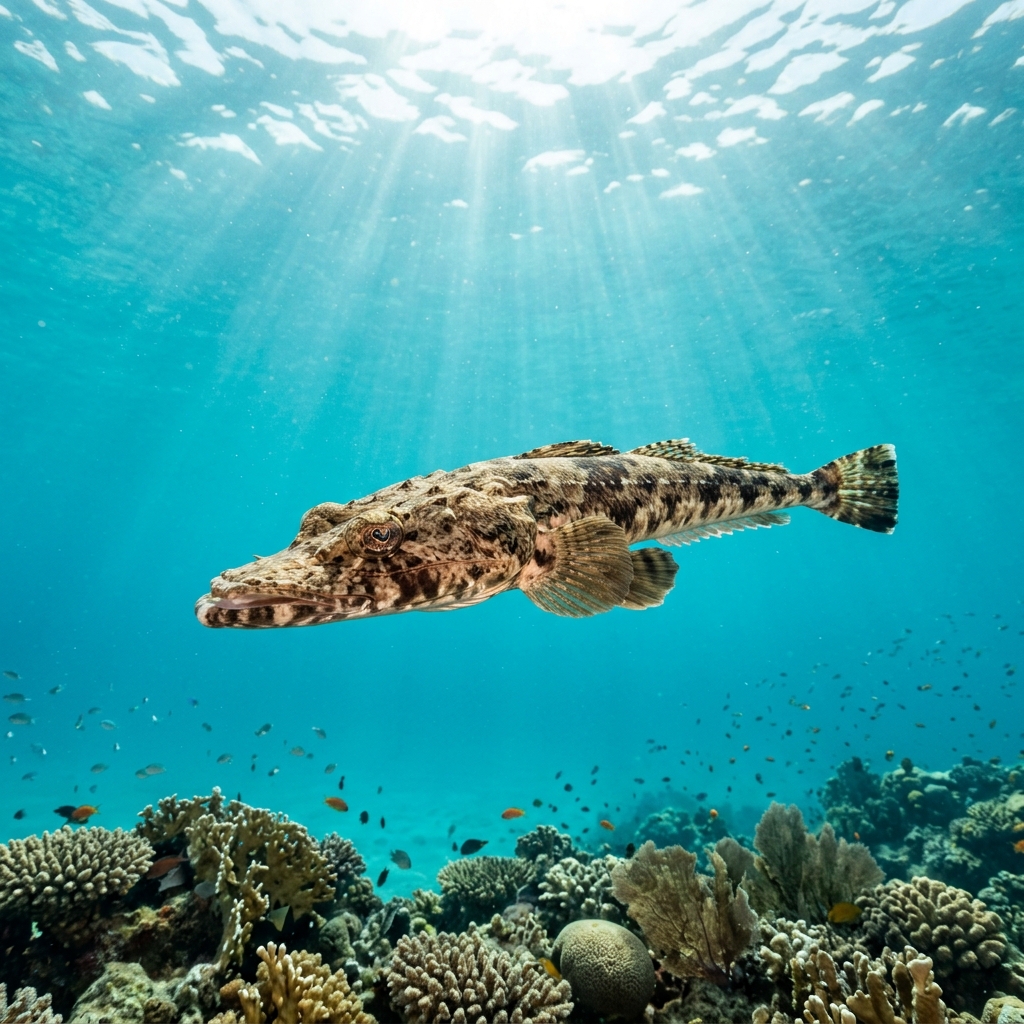
Papilloculiceps longiceps
Spot the Crocodilefish on Red Sea reefs around Sharm el Sheikh and Marsa Alam. A master of camouflage, most active Apr, Dec in warm shallow water.
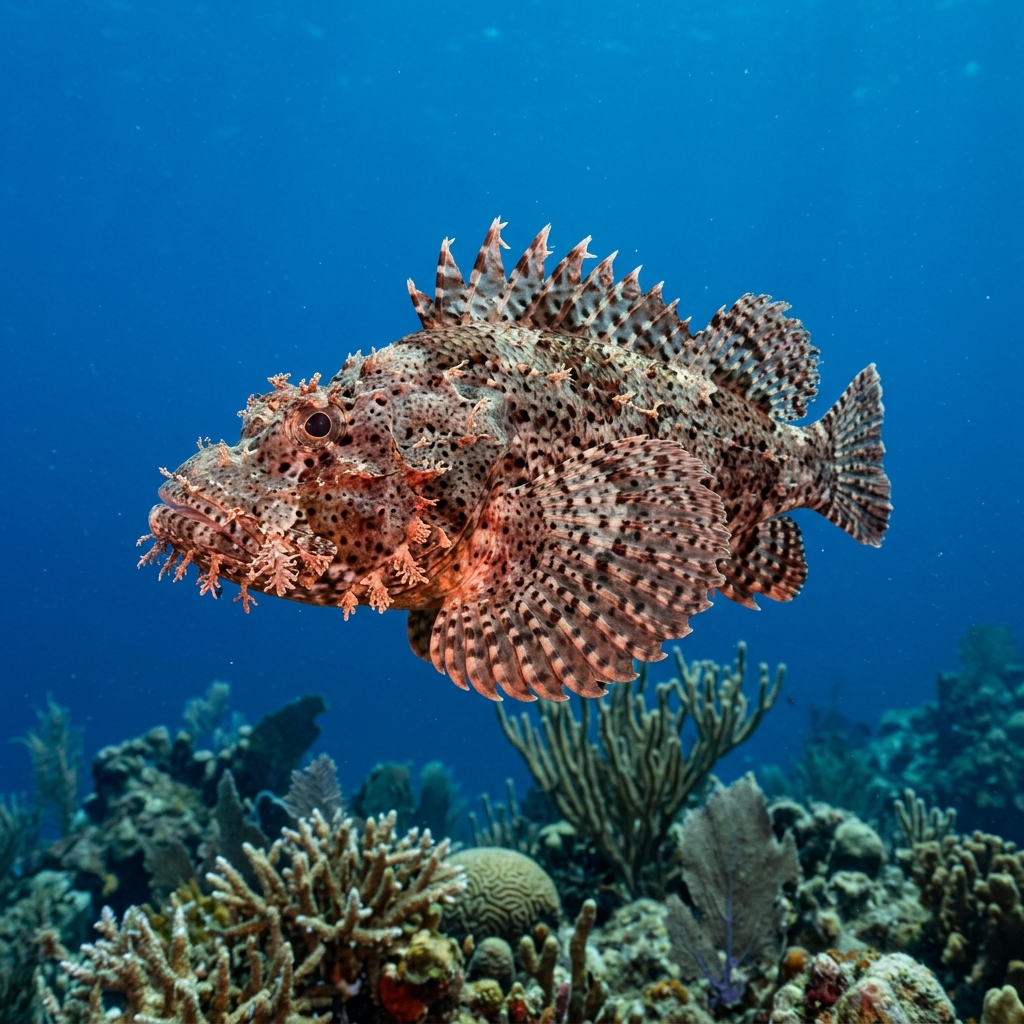
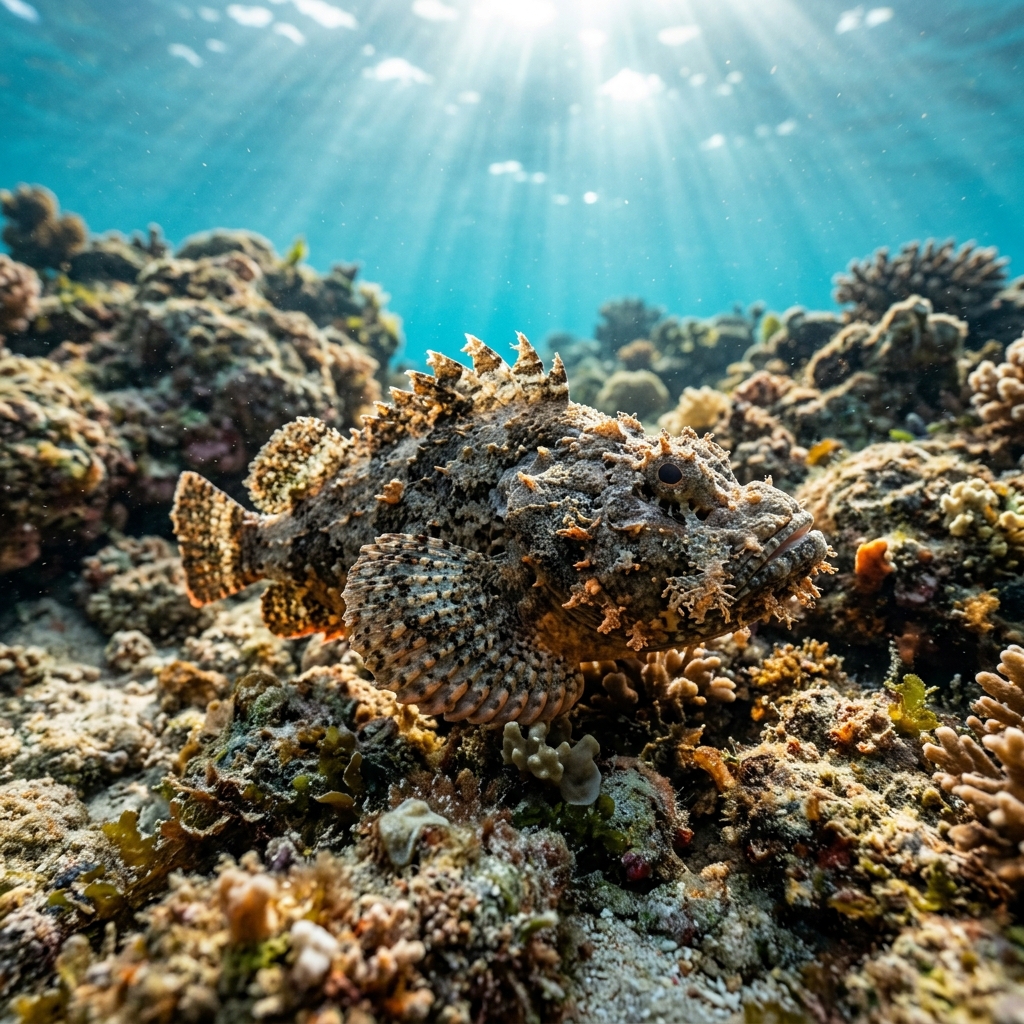
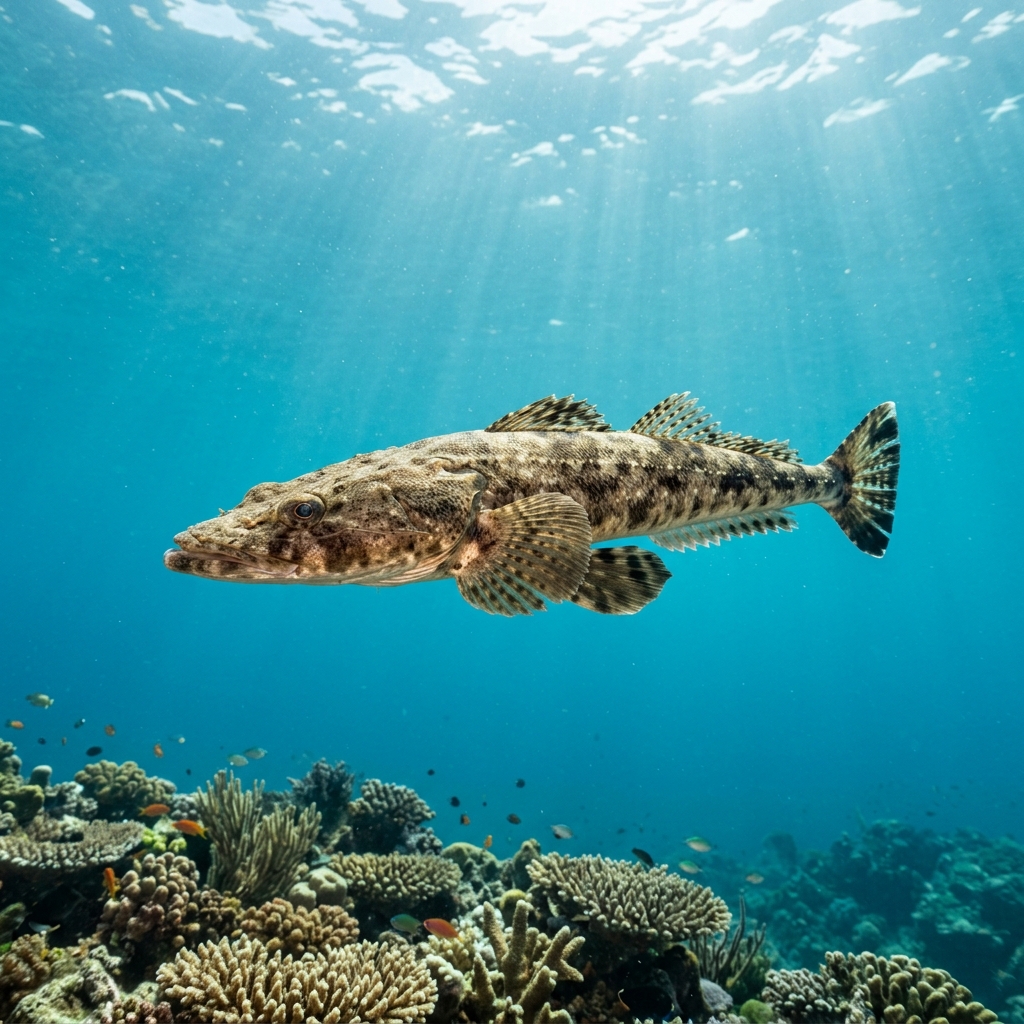
Reaching close to half a metre, this is a large, completely flat fish with a elongated crocodilian snout and a heavily mottled brown, beige, and grey body that matches sand and rubble almost perfectly. The most reliable underwater clue is its fringed iris (lappet), a frilly flap over each pupil that breaks up the eye's outline and helps the animal disappear even when you're looking straight at it. It rests motionless on the bottom with pectoral fins splayed out like elbows, and its body rarely reads as 'fish' until it moves.
Almost every encounter is the same: the fish is lying perfectly still on sand, rubble, or a patch of dead coral, relying entirely on camouflage rather than flight. It tolerates slow, non-threatening approaches well and will hold position even as divers get close, making it ideal for photography. Occasionally one will make a short, sudden lunge at prey, revealing just how fast that sluggish-looking body can move.
Those fringed, lace-like flaps over the pupils are unique among flathead fishes and are thought to be one of the most elaborate iris camouflage structures in any vertebrate, preventing the eye from giving the fish away even in bright shallow water.
In the northern hemisphere sites where seasonality data exists, sightings concentrate from April through December. The species sits comfortably in water between roughly 25 and 29 °C, which aligns with the Red Sea's warmer months and the year-round warmth of East African reefs.
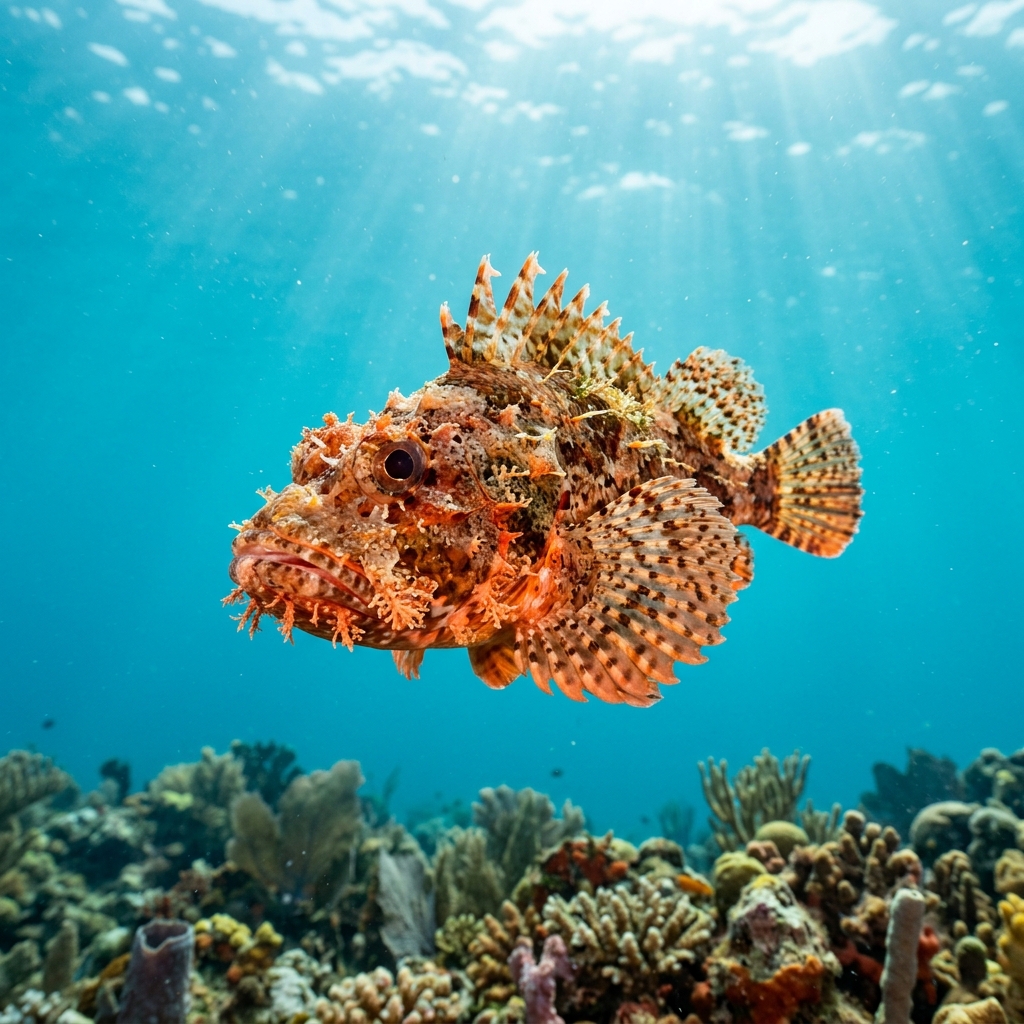
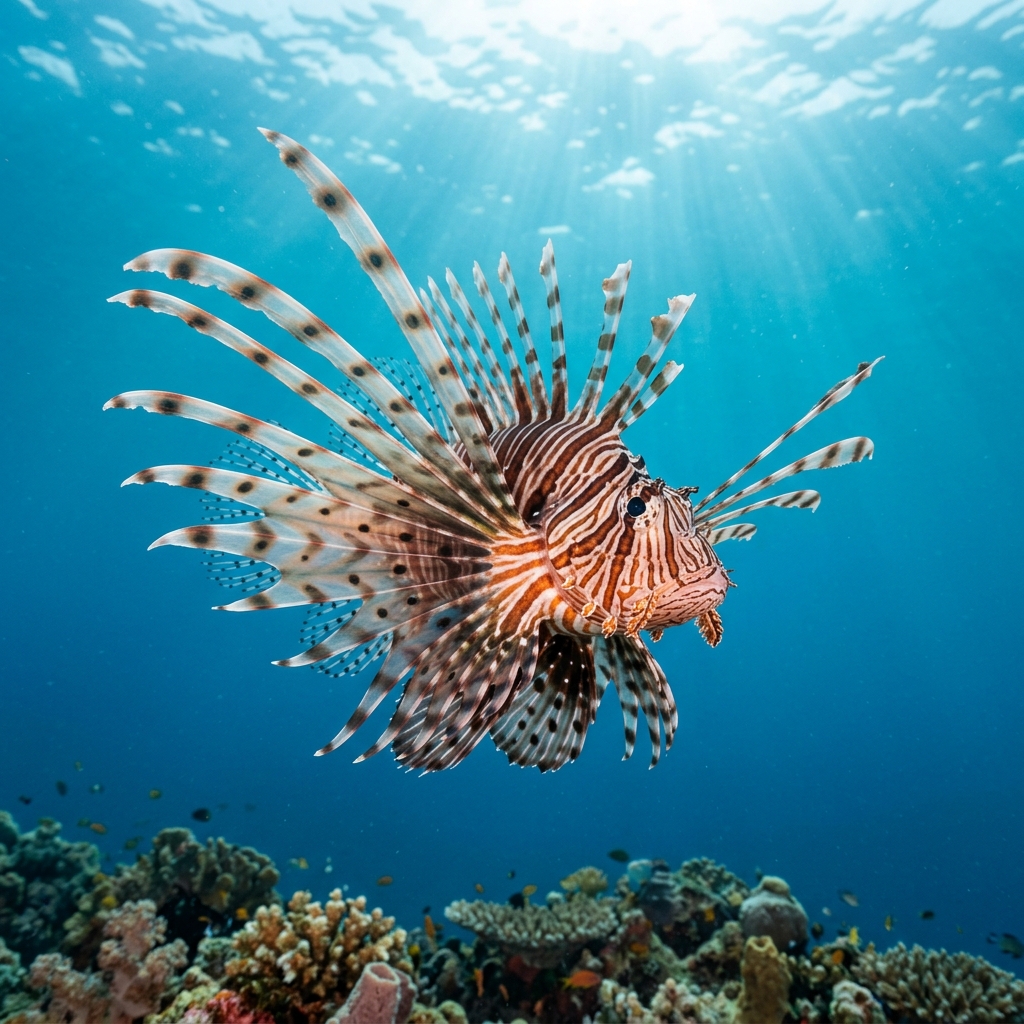
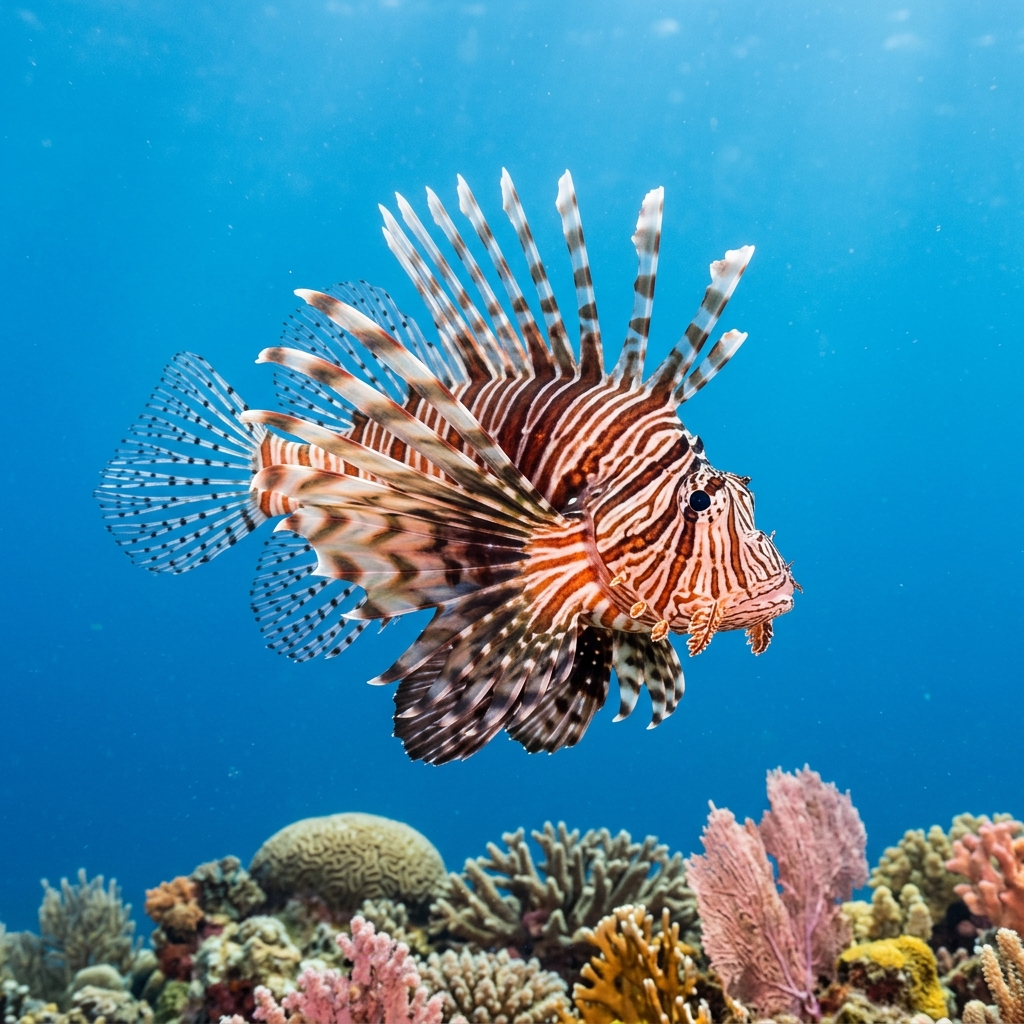
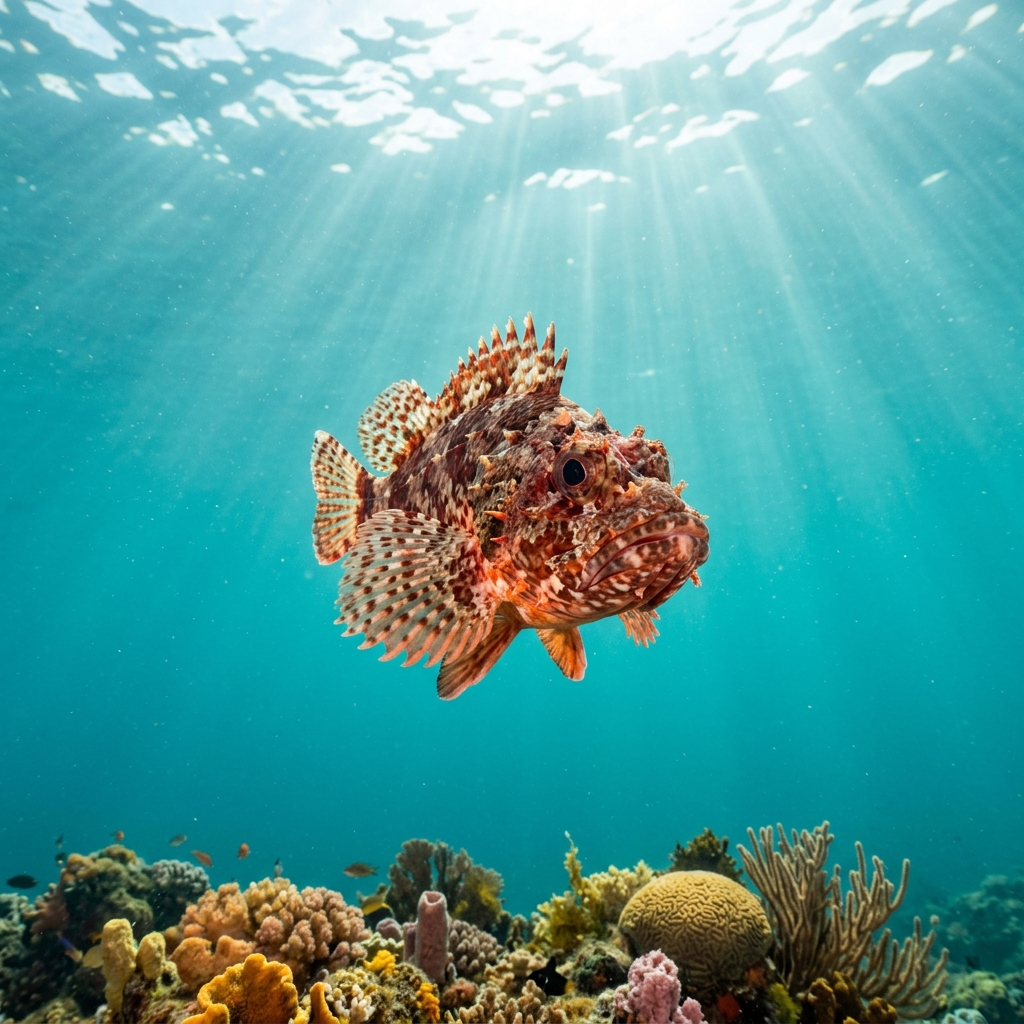
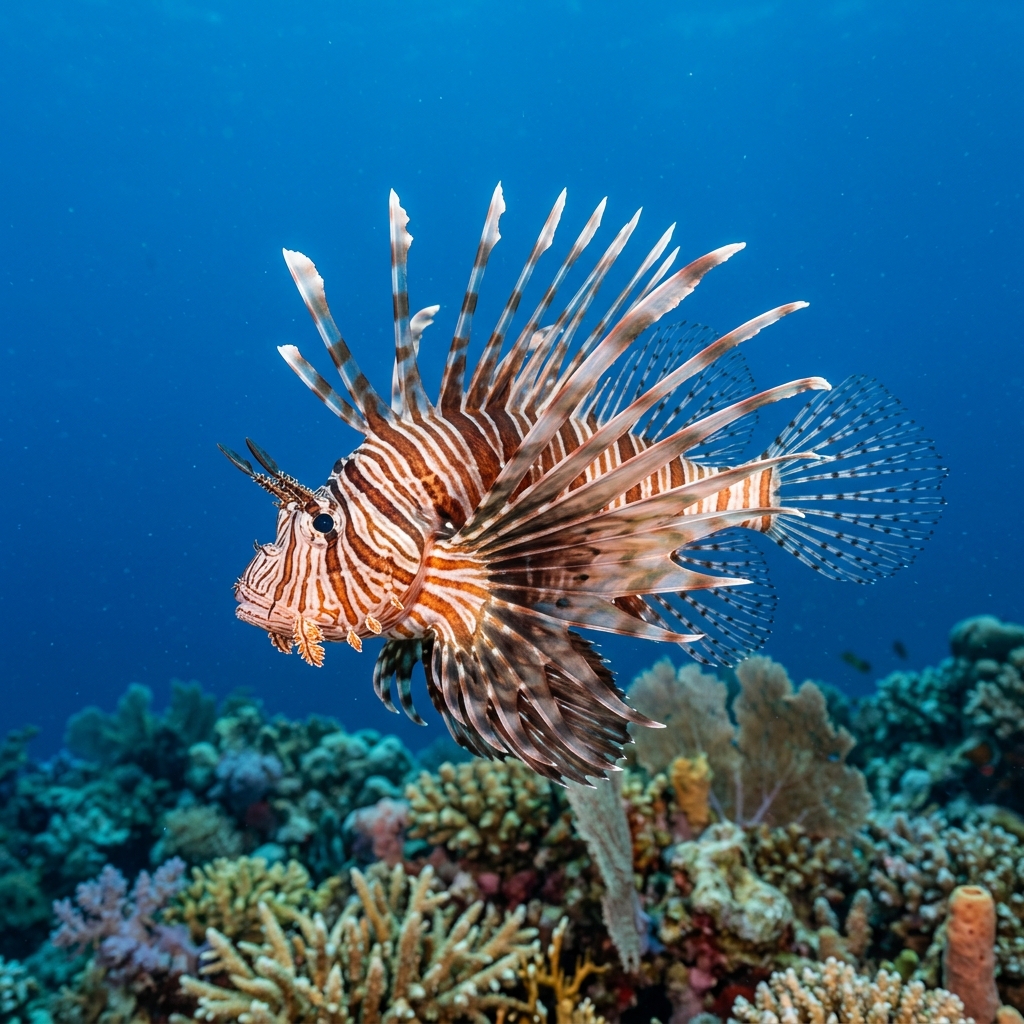
Reef neighbours a diver could mistake it for. Use the identification notes above to tell them apart.
The crocodilefish is most commonly logged across the Red Sea, with Egypt accounting for the lion's share of sightings; Sharm el Sheikh, Marsa Alam, and Safaga are the top regions to look. Strong records also come from Sudan's Port Sudan area and the Tanzanian reefs around Zanzibar, with further sightings spread through Kenya, Mozambique, Madagascar, and Saudi Arabia's Jeddah coast.
Mapping where Indian Ocean Crocodilefish is logged…
The Red Sea is the best bet, with Sharm el Sheikh, Marsa Alam, and Safaga in Egypt leading sighting records, followed by Port Sudan in Sudan and Jeddah in Saudi Arabia. East Africa also produces consistent sightings, particularly around Zanzibar in Tanzania and the Diani and South Coast area of Kenya.
April through December sees the most sightings at northern hemisphere sites such as those along the Egyptian Red Sea coast. On East African reefs, the warm, stable water temperatures keep the species present for much of the year.
Look for a large, completely flat fish, close to half a metre long, lying motionless on sand or rubble with a long, flat snout and mottled brown patterning. The clincher is the fringed, lace-like flap over each eye. If the 'rock' you are looking at has those fringed pupils, it is a crocodilefish.
They typically reach around 49 cm, making them one of the larger ambush predators you will encounter in the shallows of Red Sea and Indo-Pacific reefs. That size, paradoxically, is part of why they are easy to walk past; your brain reads 'flat rock' rather than 'large fish'.
No, crocodilefish pose no threat to divers. Unlike stonefish or scorpionfish, they carry no venomous spines. The only realistic risk is accidentally placing a hand on one you did not notice, so look before you touch any sandy patch in shallow water.
Each eye is covered by an elaborate fringed flap called a lappet, which disguises the pupil's outline and prevents the eye from betraying the fish's presence. It is one of the most developed iris-camouflage structures known in any fish, and spotting it is the surest way to confirm your ID.
Site and sighting data is aggregated from diver logs, iNaturalist and GBIF. For taxonomy and conservation status:
Madeira Rockfish
2,773 sites