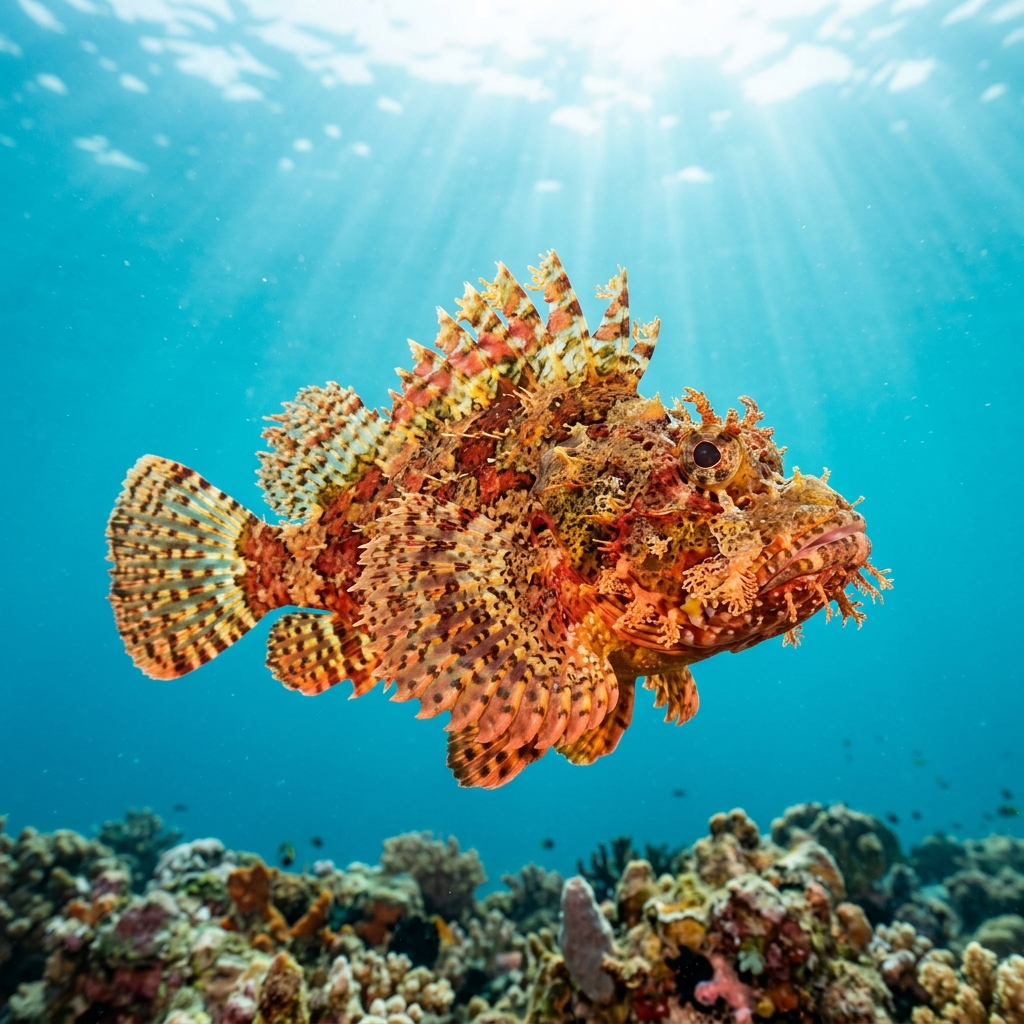
Rhinopias frondosa
Rare and heavily camouflaged, the weedy scorpionfish is most logged in Zanzibar and Ponta do Ouro. Here's where to find one and how to recognise it.
Safety warning
The spines carry venom and snap off easily in the skin. Do not touch it, and never rest a hand or knee on the reef near one; the spines drive in on the lightest contact.
If you're stung
Venomous spinesGeneral first-aid guidance, not a substitute for professional medical care. In an emergency, call your local emergency number.
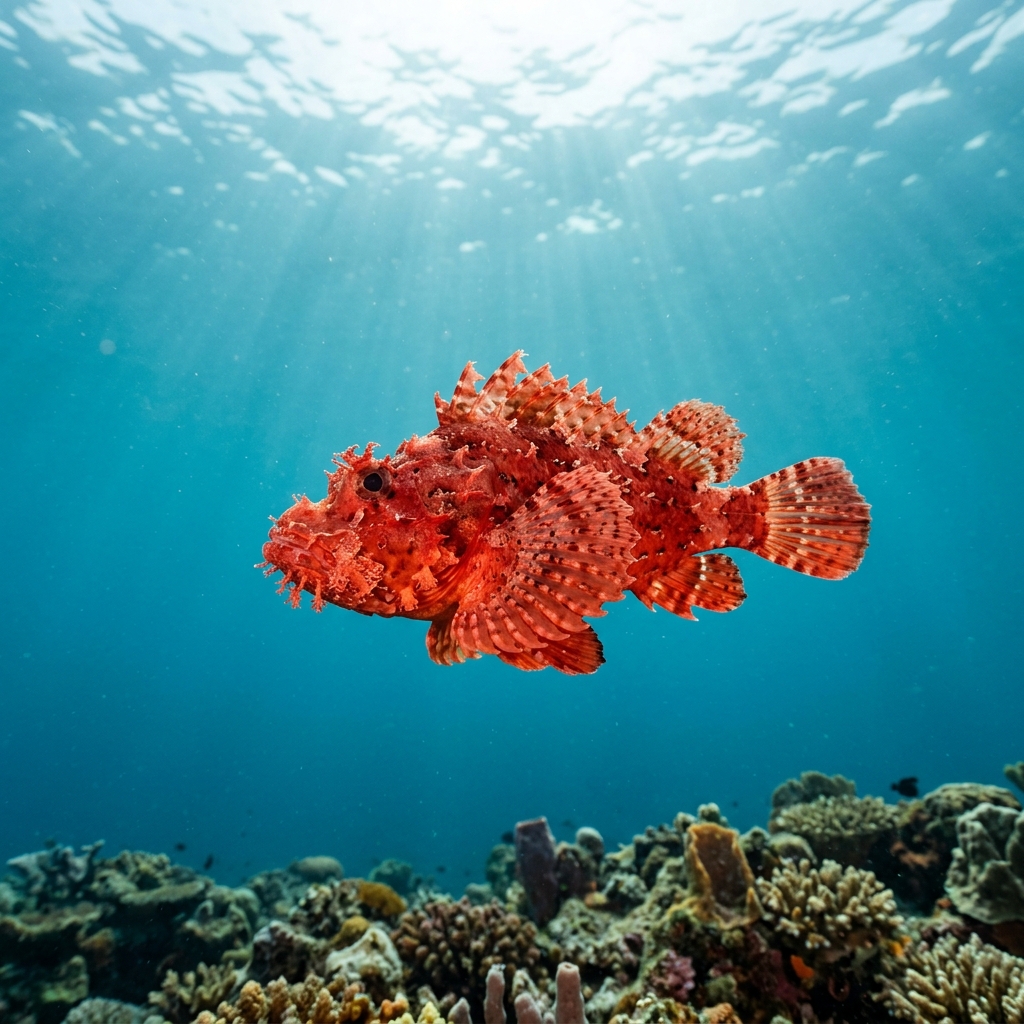
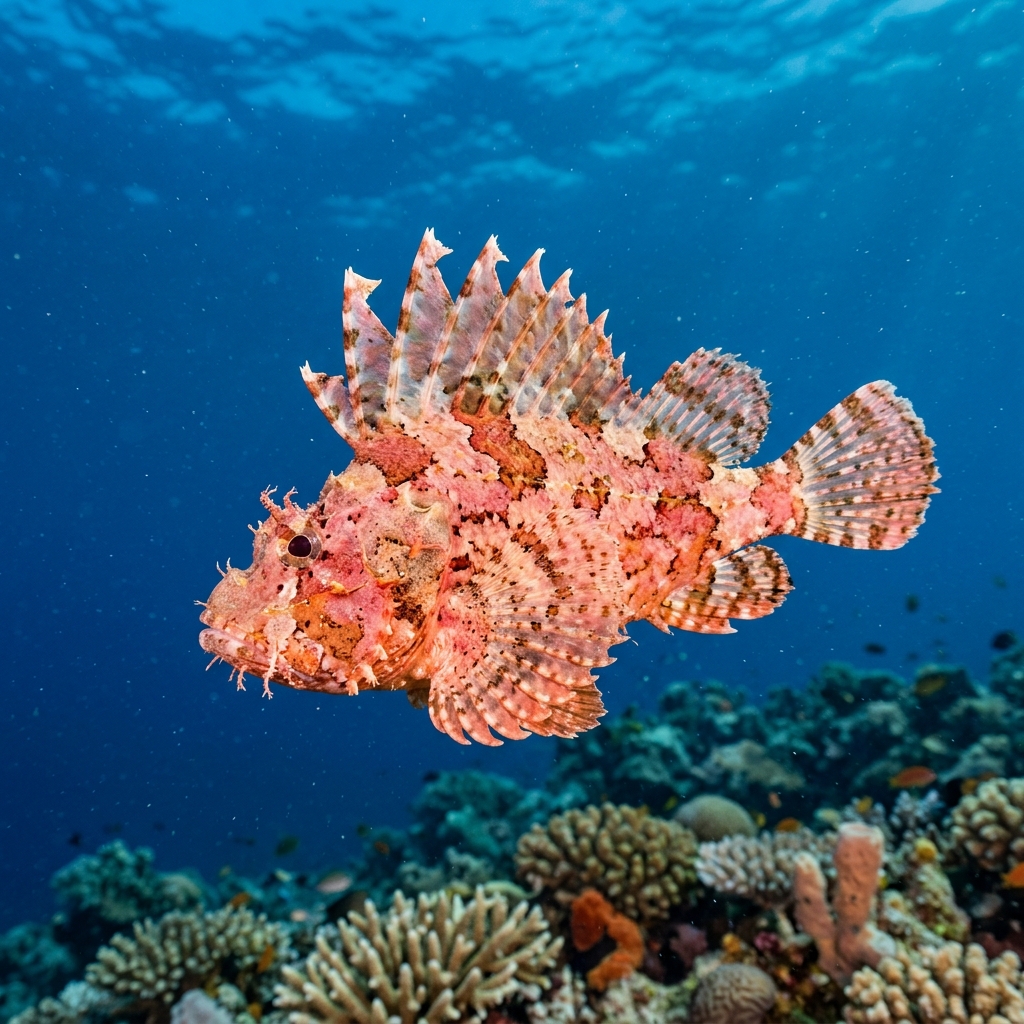
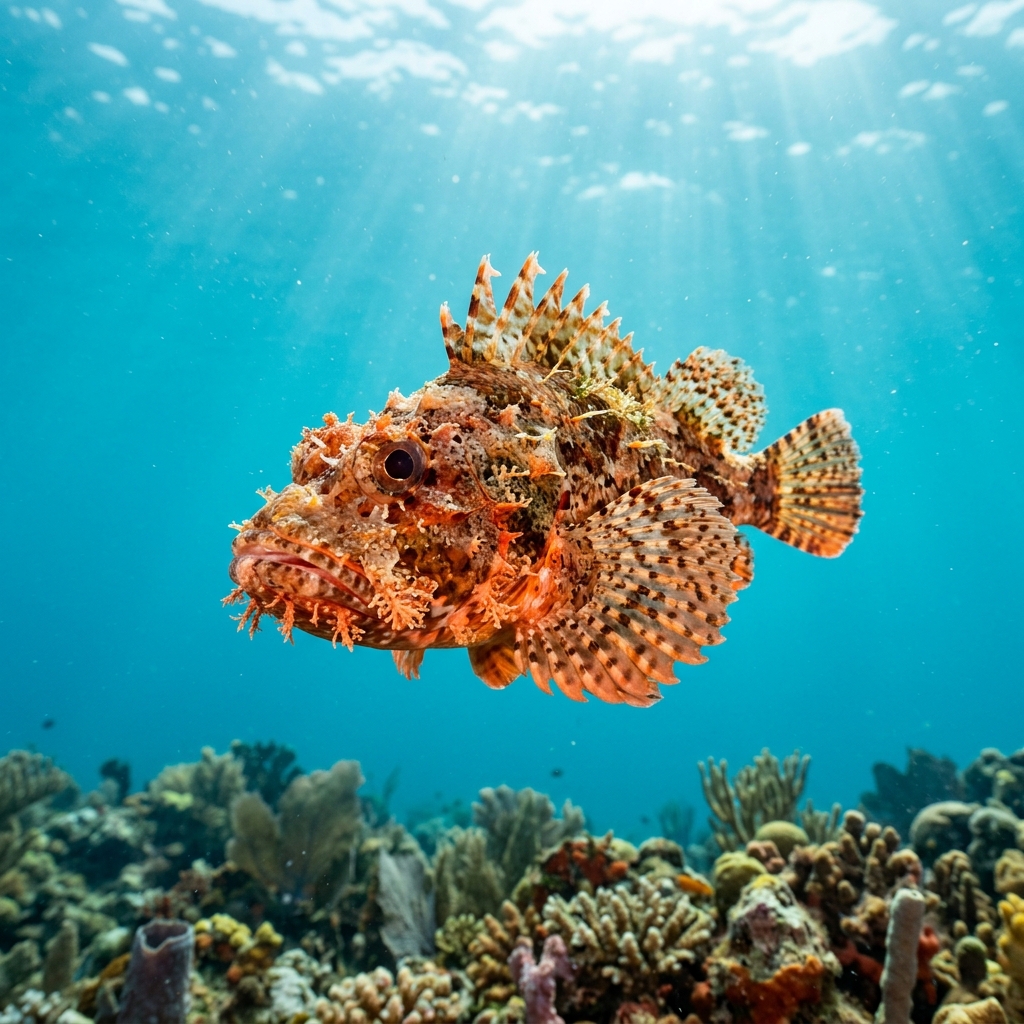
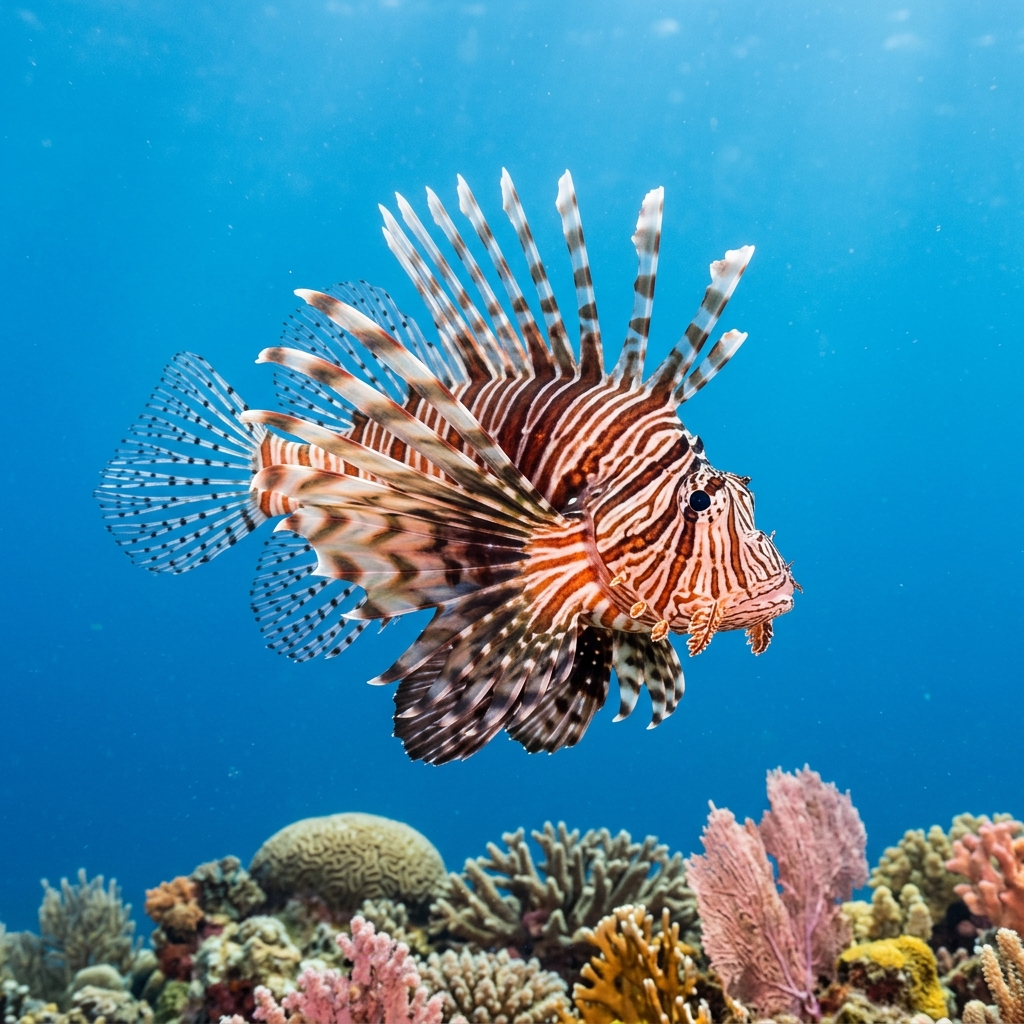
Covered in elaborate skin flaps (called cirri) that mimic algae or weed, this scorpionfish looks less like a fish and more like a piece of encrusted rubble that forgot to sink. Colouration varies widely from deep purple and burgundy to yellow or red-orange, often with pale speckles or a reticulated pattern across the body. The key field mark is the extraordinary fringing across the head and flanks combined with a large, upturned mouth, which no other common reef fish mimics so closely. It typically sits perfectly still, so spotting it is almost entirely about developing a search image rather than watching for movement.
Almost everything about this fish is designed to do nothing, and it does that brilliantly. It sits motionless on rubble, coral, or algae-covered substrate, usually in shallow to mid-water reef zones, relying entirely on camouflage rather than flight when approached. Divers who find one can often get very close before it slowly shuffles a few centimetres away, and it will occasionally sway gently to mimic drifting weed. It is a wait-and-ambush predator, so when it does move it is usually to reposition itself for a better hunting angle rather than to flee.
Like other rhinopias scorpionfish, it periodically sheds its outer skin layer, peeling it away to remove algae and fouling organisms that would compromise the very camouflage it depends on for hunting.
No clear seasonal pattern emerges from the available data, so it is treated as a year-round target. Observed water temperatures range from about 25 to 29 °C, pointing to warm tropical and subtropical reef systems where conditions remain suitable throughout the year.
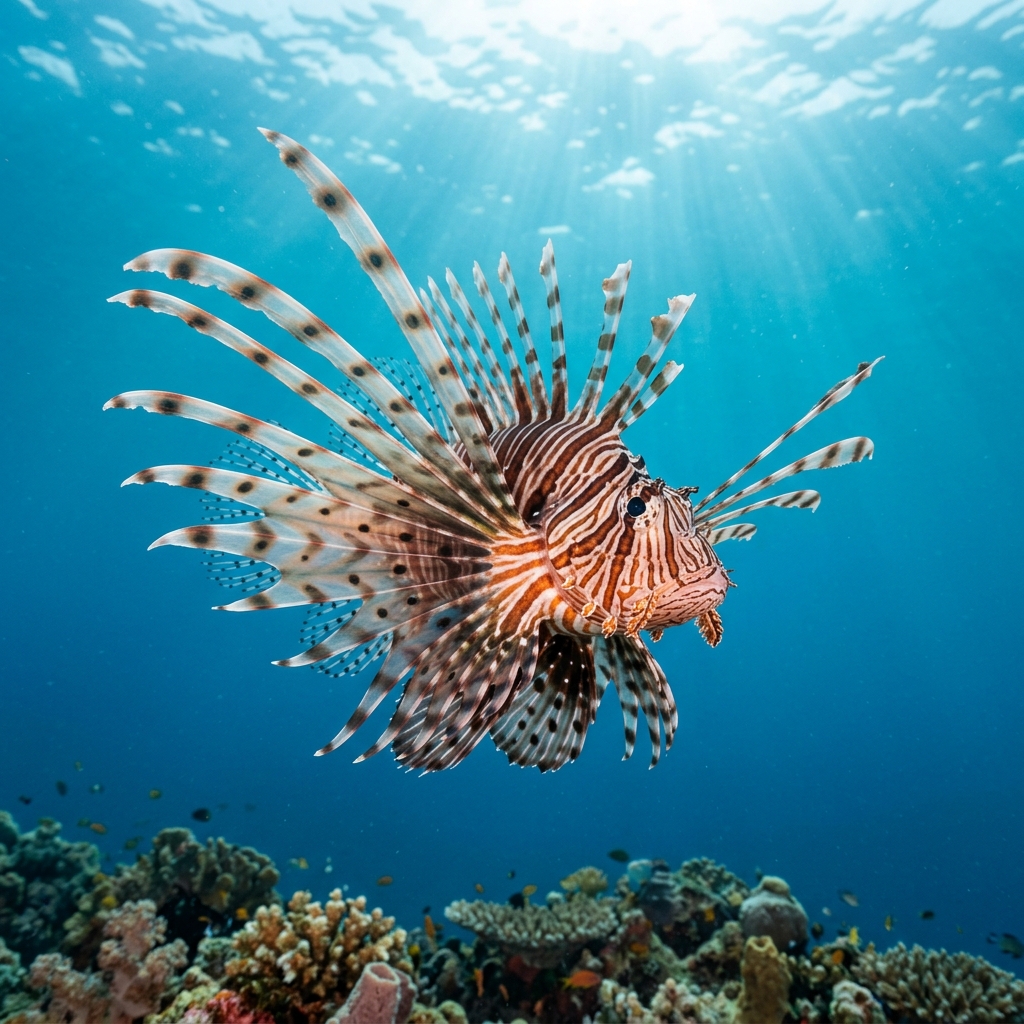
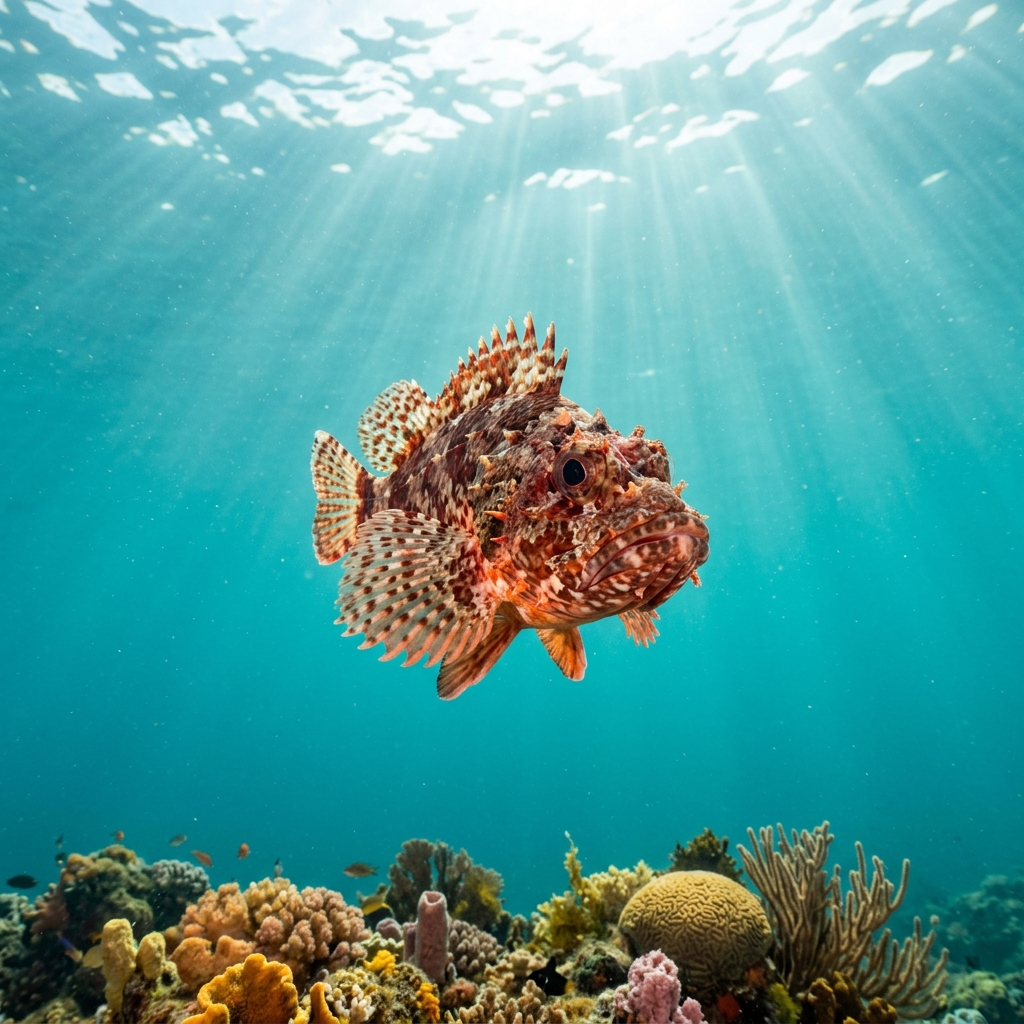
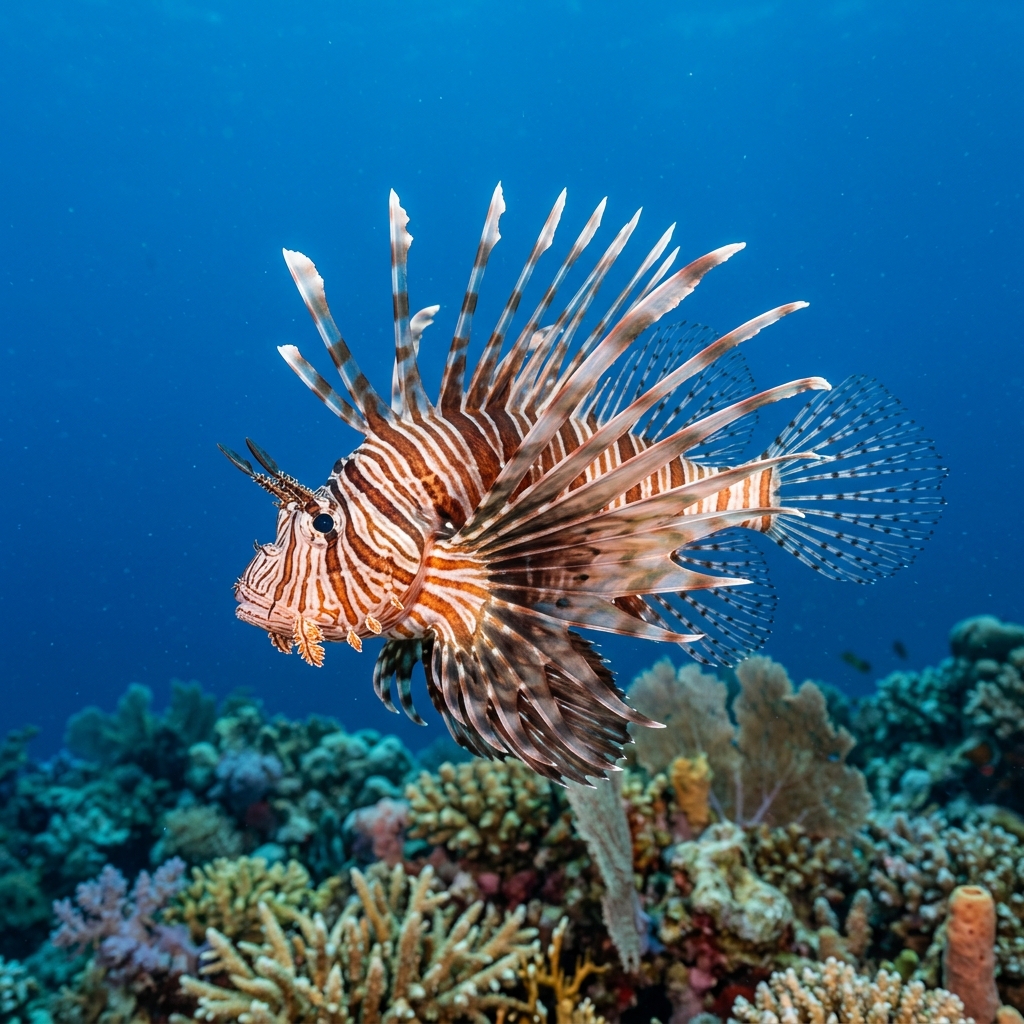
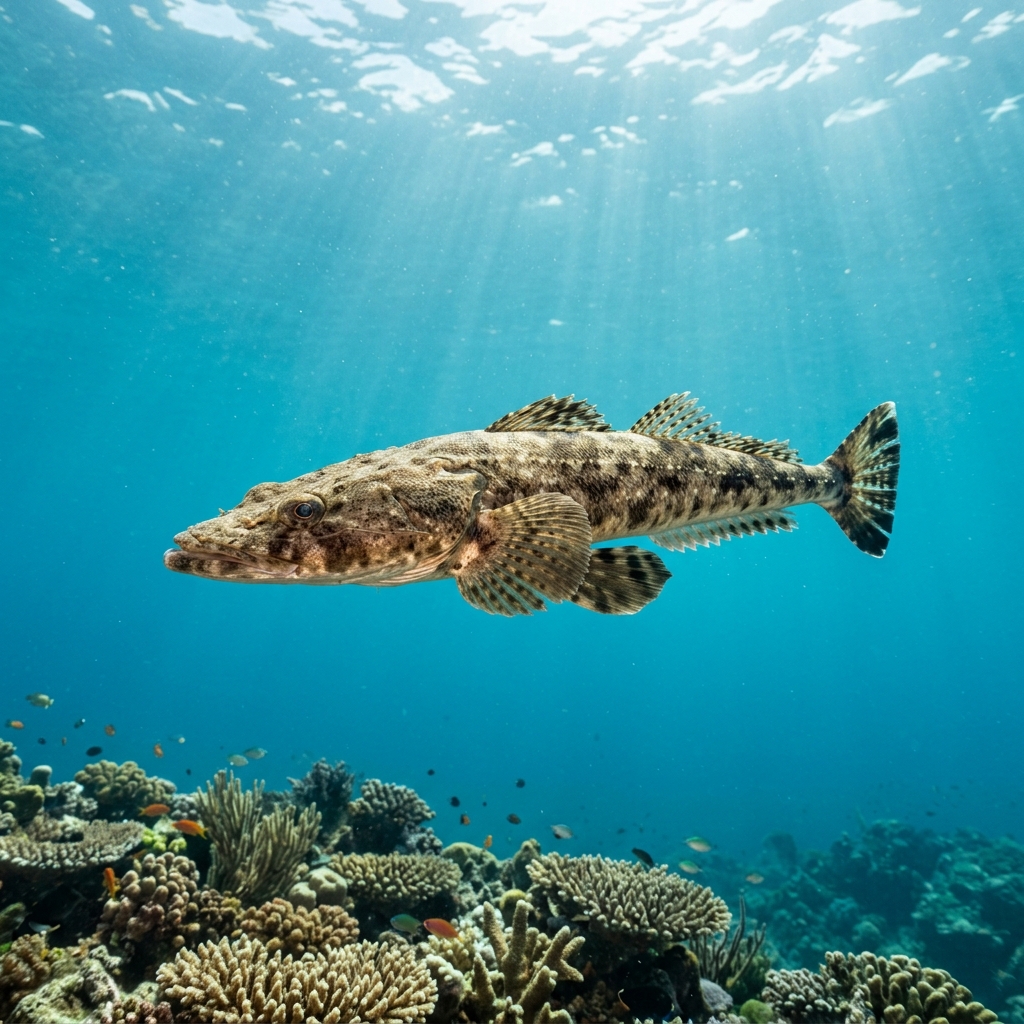
Reef neighbours a diver could mistake it for. Use the identification notes above to tell them apart.
Most sightings come from the western Indian Ocean, with Zanzibar in Tanzania and Ponta do Ouro in Mozambique leading the records, followed by the west coast of Mauritius. Indonesia, particularly the Maluku and Papua region and the Nusa Tenggara and Banda Sea area, provides strong Indo-Pacific coverage, while Durban and the North Coast of South Africa and Dili in Timor-Leste round out the confirmed range.
Mapping where Weedy Scorpionfish is logged…
The best-documented sites are in the western Indian Ocean, particularly Zanzibar in Tanzania, Ponta do Ouro in Mozambique, and the west coast of Mauritius. Indonesia's eastern regions, including Maluku, Papua, and the Banda Sea, are also productive, with additional records from Durban in South Africa and Dili in Timor-Leste.
No strong seasonal pattern has been detected in diver records, so any time of year is worth trying. The species is logged in warm tropical waters between roughly 25 and 29 °C, meaning suitable conditions persist year-round across most of its range.
Look for an upturned, wide mouth, a compact lumpy body, and an extraordinary covering of fleshy skin tabs along the head and flanks that break up the outline completely. Colouration ranges from purple and burgundy to yellow or orange, but the fringed texture is the constant feature. It will not move away, so take your time and scan slowly over weedy or encrusted rubble.
Like all scorpionfish they carry venomous dorsal spines, but they are not considered dangerous to divers under normal circumstances. They will not actively threaten you. The risk comes only from accidental contact, so the standard rule applies: look carefully before touching any reef surface and keep your buoyancy controlled.
Very rare. Across all the sites where it has been recorded, the majority log it as rare and most of the remainder only as uncommon. A sighting is a real find and usually results from a sharp-eyed guide or a diver who has specifically learned the search image for this heavily camouflaged fish.
Site and sighting data is aggregated from diver logs, iNaturalist and GBIF. For taxonomy and conservation status:
Madeira Rockfish
2,773 sites