
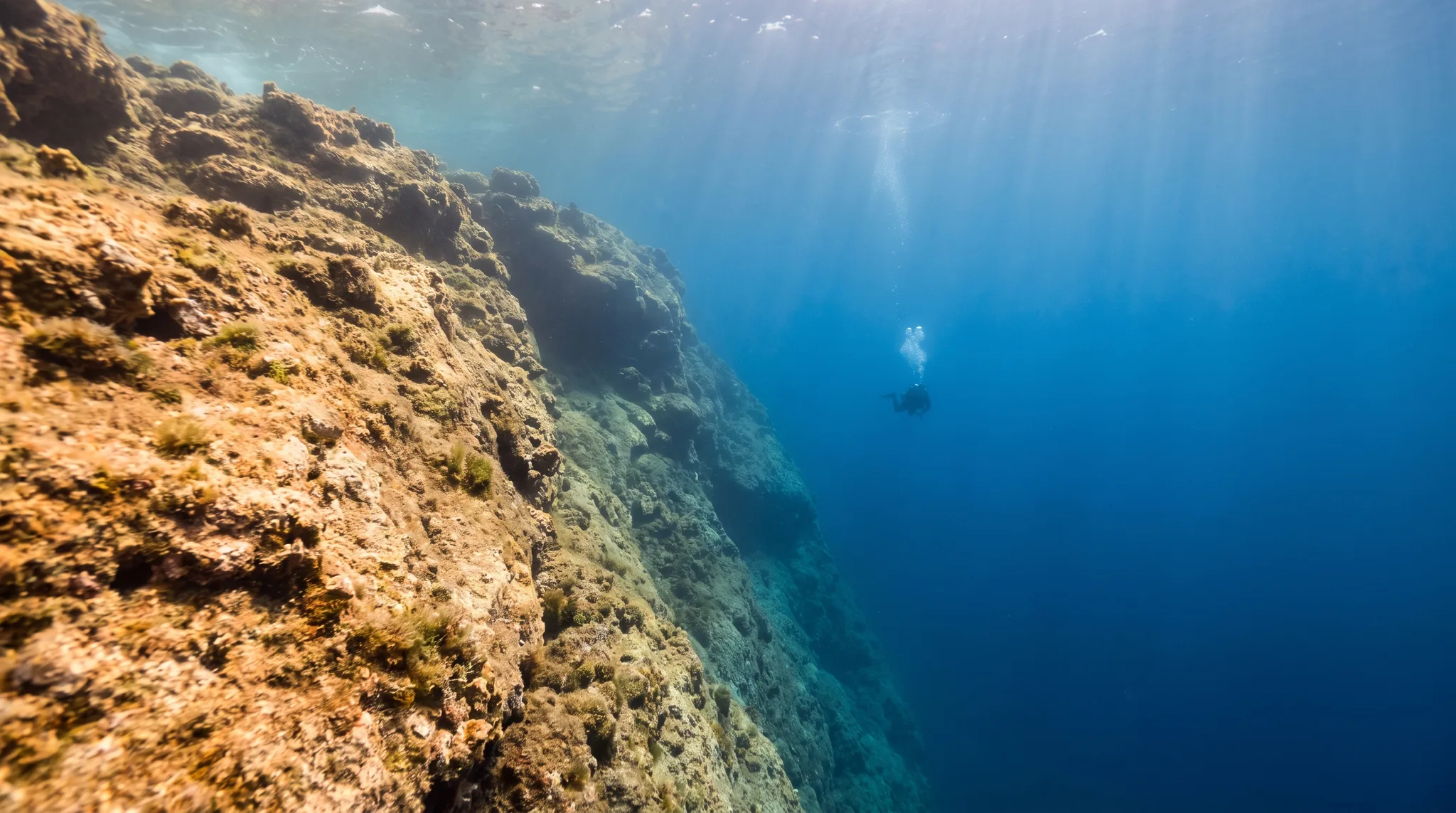
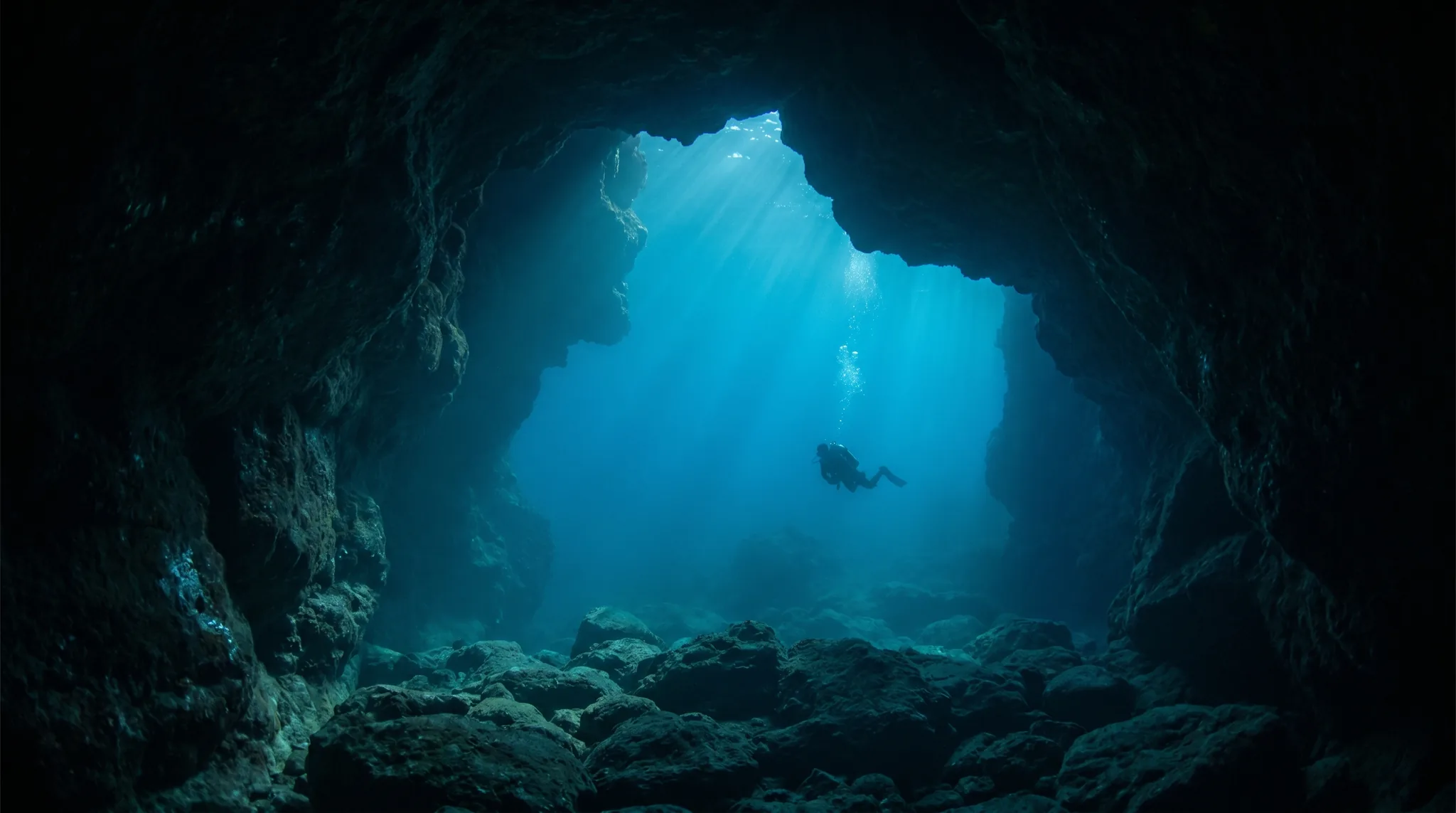
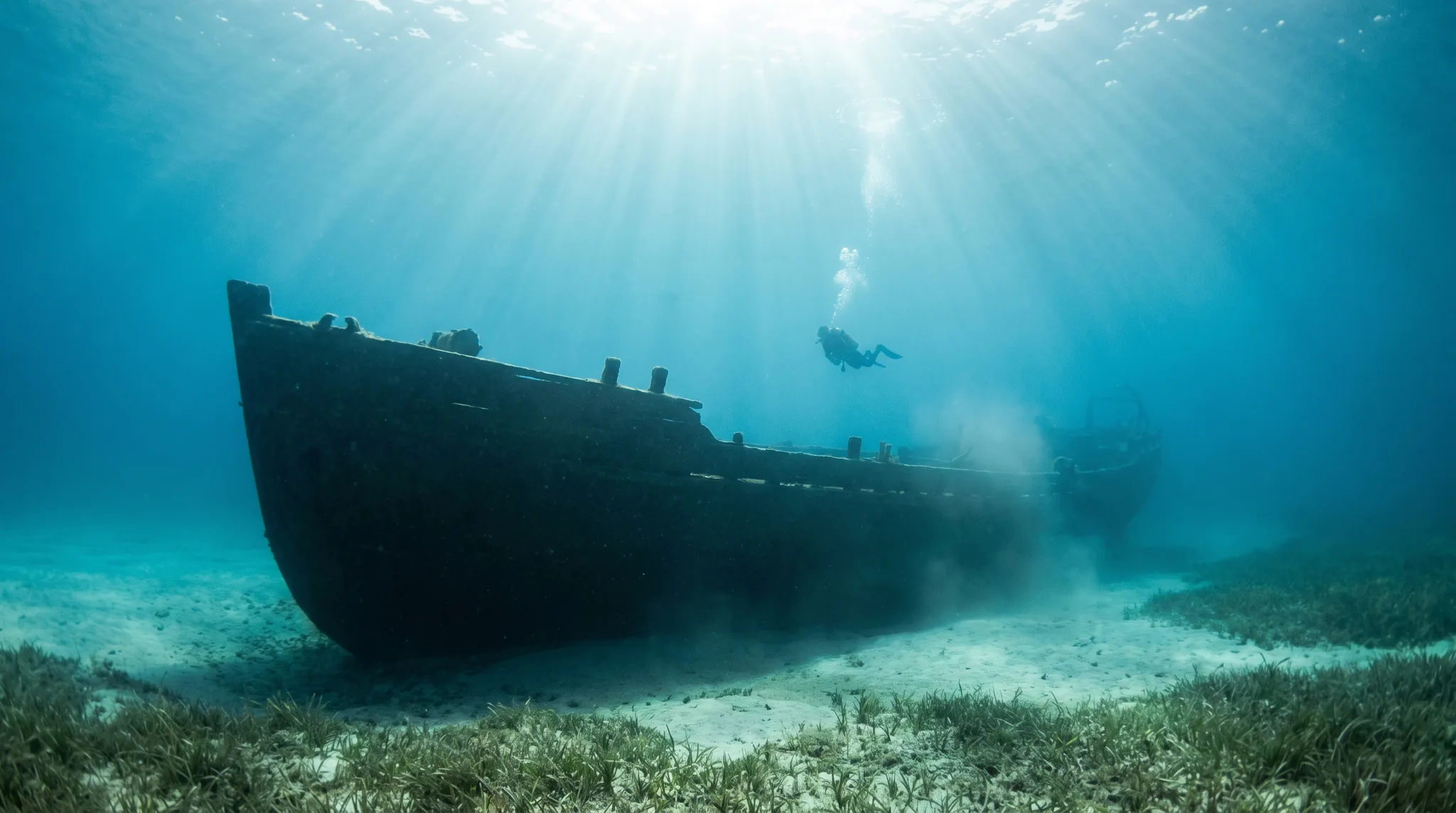
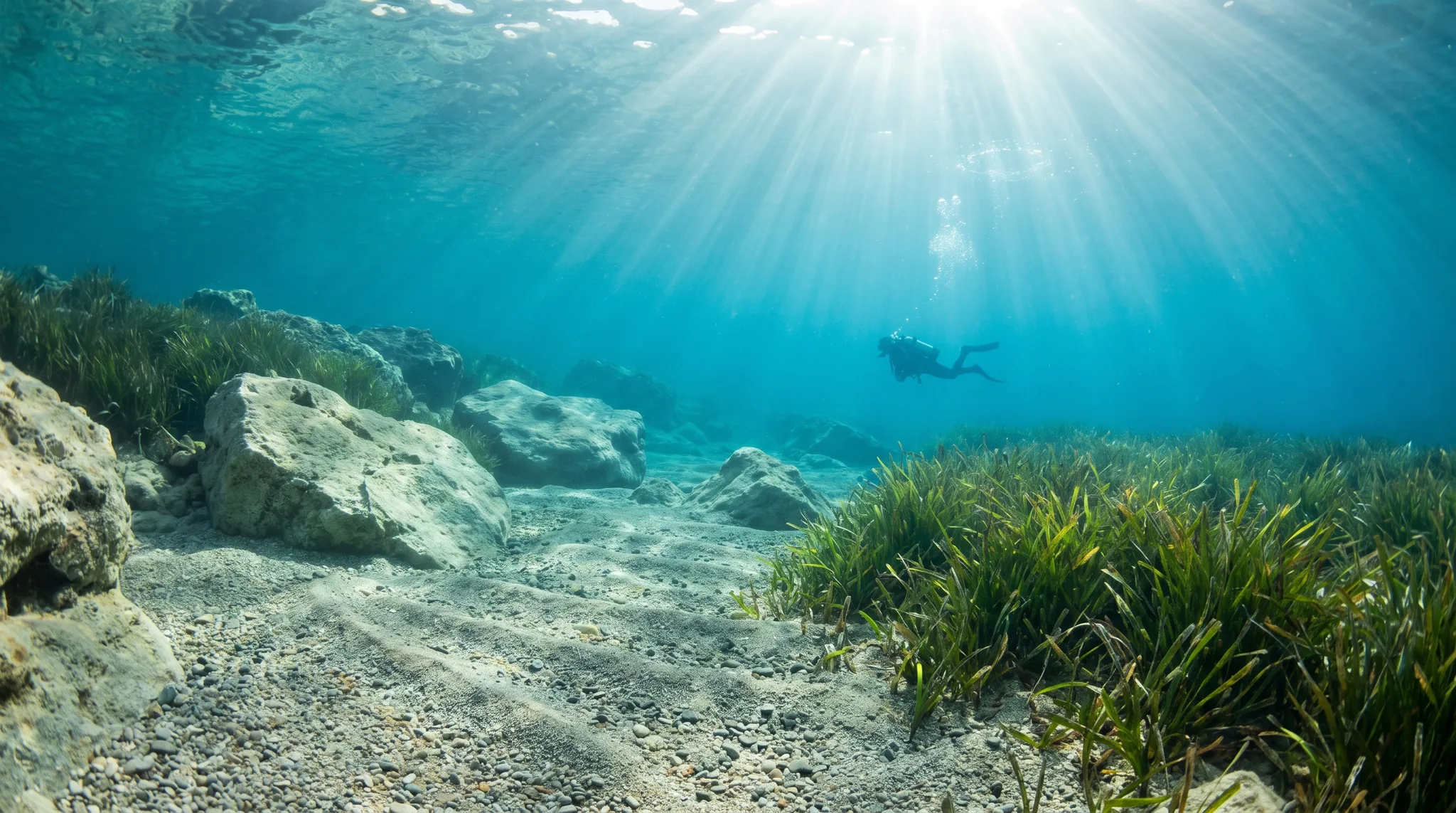
South Menorca's underwater character is defined by an unusually dense concentration of cave and cavern systems, clustered around the Cap d'en Font and Macaret area. Reef structures connect many of these sites, giving dives varied topography within a single descent. The site mix spans beginner-friendly shore reefs through to technical cave dives, with a wreck adding further variety. Common Octopus and Nudibranch are the signature species, alongside abundant wrasse, bream, and Castagnole.
Monthly water temperature across South Menorca's sites, from satellite sea-surface data corrected for depth. The band shows the site-to-site spread.
Water temperature rises steadily from spring into the warmest months of August and September, making late summer the most comfortable period for longer dives. Spring and autumn offer a productive window when conditions remain settled and visitor pressure is lower. Winter brings noticeably cooler water, which suits thicker exposure protection and rewards divers who enjoy quieter sites.

6 more sites to explore
Water temperature around South Menorca ranges from about 14°C in February to 26°C in August, based on satellite sea-temperature data for its dive sites.
In the warm season (about 26°C) a 3mm full suit is comfortable in South Menorca; in the coldest months (about 14°C) step up to a 7mm or semi-dry suit.
Fin maps 18 sites in South Menorca (15 scuba diving sites and 4 snorkelling spots, with some suited to both).
Across South Menorca's dive sites, May, June, September and October are most often reported as the best months to visit.
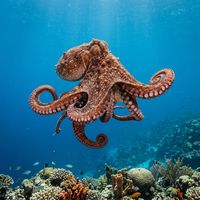
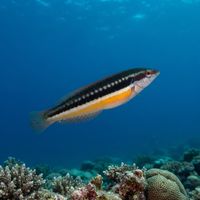
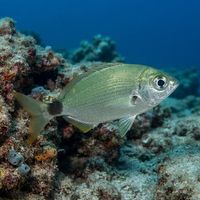
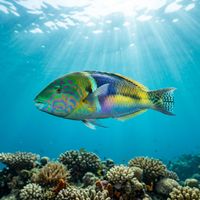
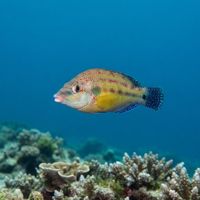
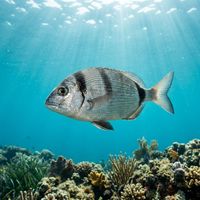
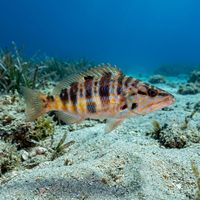
Common Octopus is observed consistently across sites and is considered a signature species for the area. Wrasse are represented by several species including Mediterranean Rainbow Wrasse, Turkish Wrasse, and Peacock Wrasse, all recorded as very common. Saddled Bream, Two-banded Seabream, Salema Porgy, and Painted Comber are frequently seen on the reefs, while Nudibranch, Conger Eel, Barracuda, and European Common Cuttlefish appear more selectively across different sites.
The area caters to a broad range of experience levels. Shore-entry reef sites such as Horse Shoe and Cala en Porter (West) are rated for beginners and offer accessible depths. Intermediate divers can explore cavern systems like La Catedral and Cap d'en Font. The more demanding sites, including Moon Pool, Fossil Cave, Organ Loft, and the deep wreck Ju-88, are reserved for advanced divers with relevant cave or technical qualifications.
Both entry types are available, giving divers flexibility depending on their setup. Several sites, including Horse Shoe and Cala en Porter (West), can be reached directly from shore. Many of the cave and cavern systems around Macaret and Cap d'en Font are accessible by boat, and some offer both options. Operators including Binibeca Diving, S'Algar Diving, Merak Diving, and Blue Islands Diving run guided boat dives throughout the season.
South Menorca holds a rare concentration of cave and cavern sites within a compact area. Sites such as Fossil Cave, Organ Loft, and Moon Pool feature distinct internal formations including stalactites, stalagmites, air chambers, and multi-level layouts. La Catedral is notable for its large cavern interior and spacious air chamber. Several sites are interconnected, with The Belltower linking to Organ Loft and other nearby passages, allowing experienced divers to navigate extended routes.