Serranus scriba
Spot the Painted Comber along the French Riviera, Costa Brava, and Croatian Dalmatia from April to November in waters around 15-21 °C.
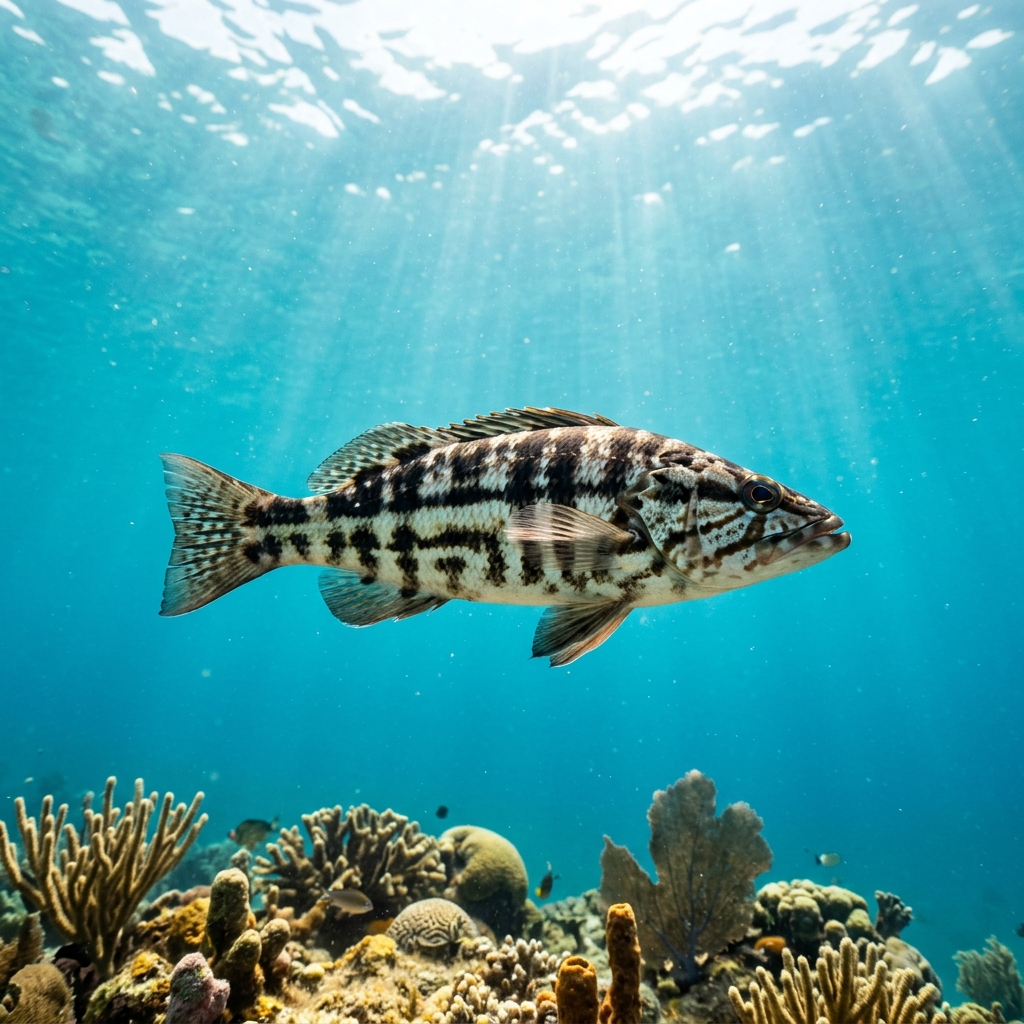
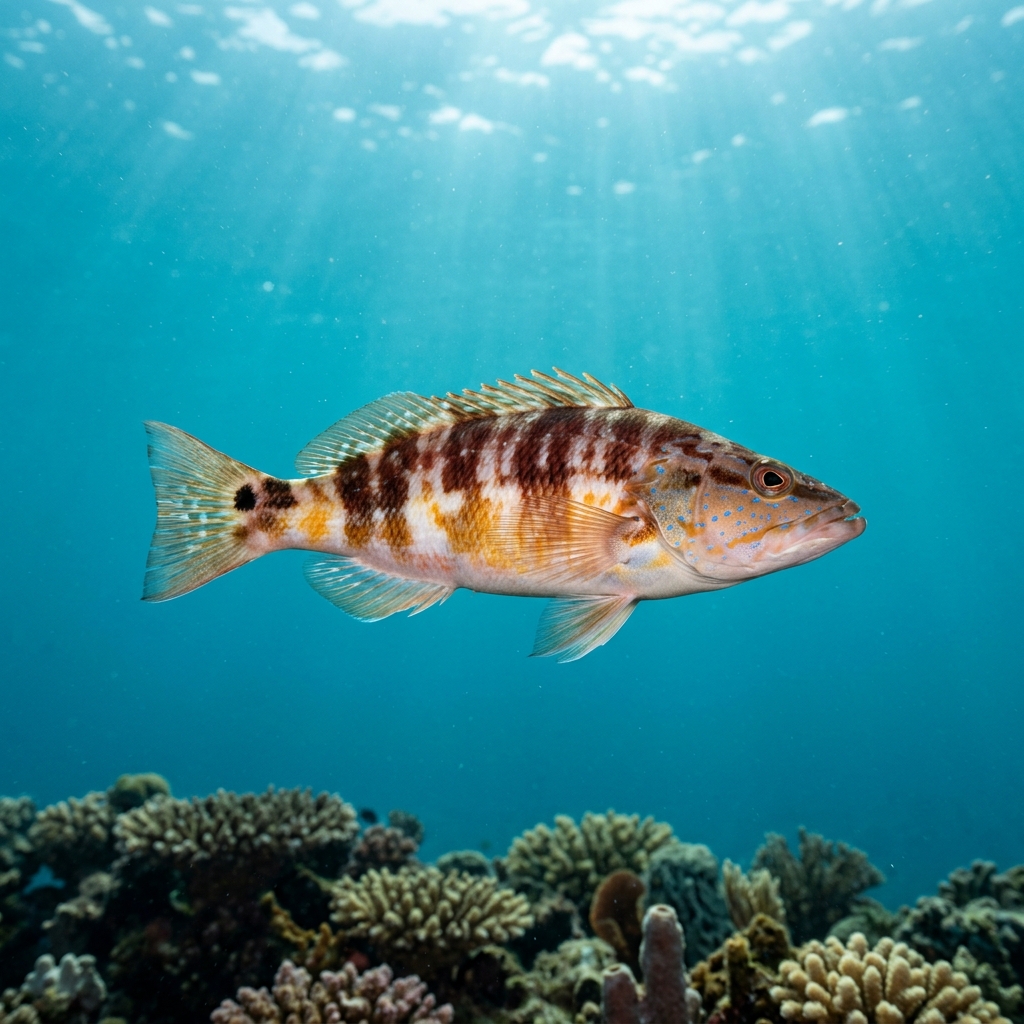
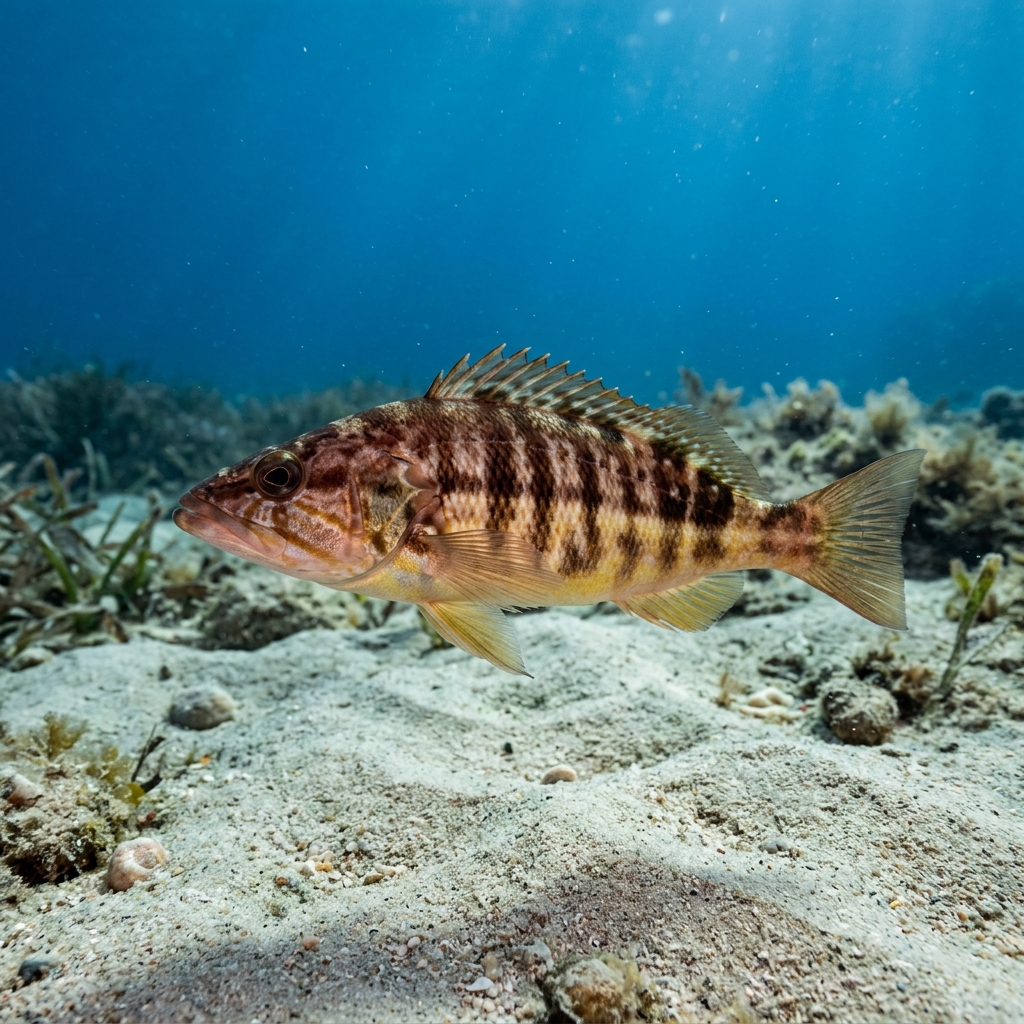
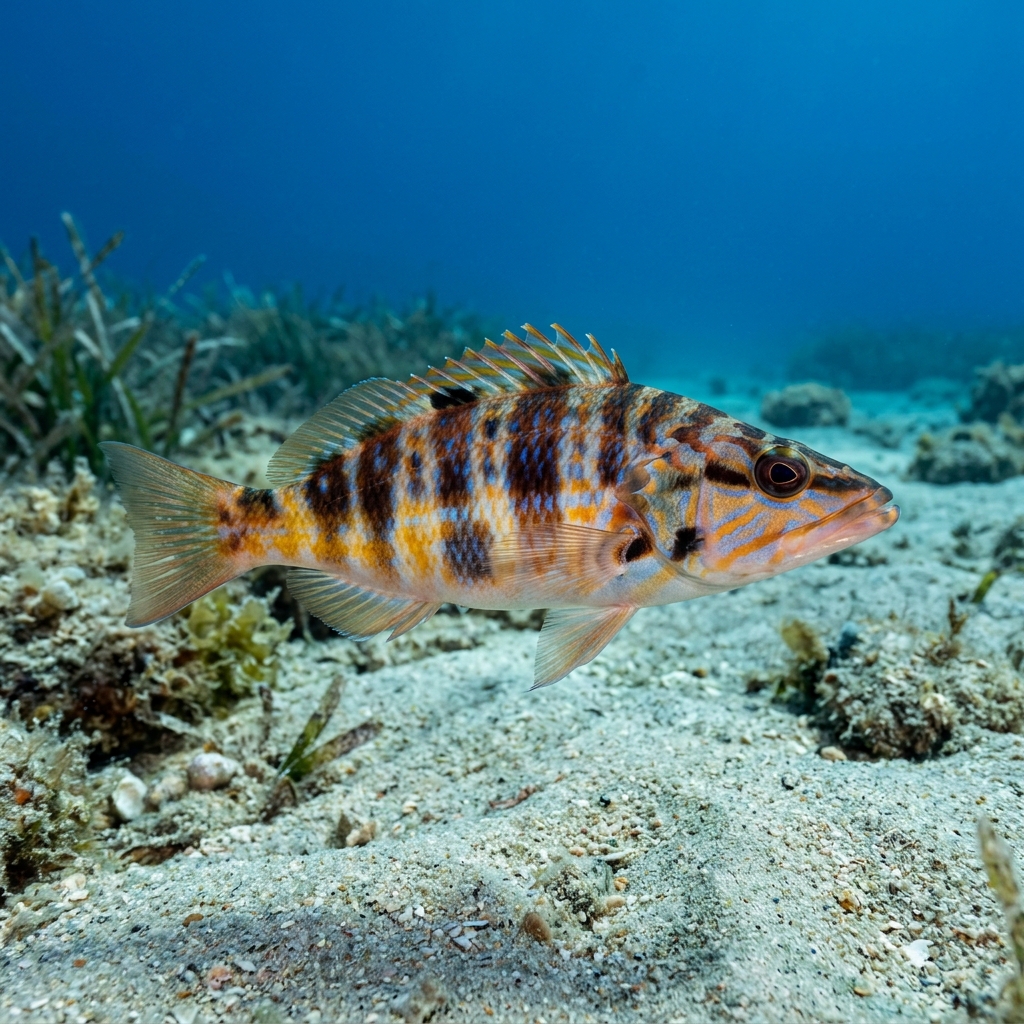
A small, slender-bodied grouper relative reaching about 25 cm, the painted comber is unmistakable once you know its palette: reddish-brown vertical bars across a pale body, overlaid with vivid blue squiggles and spots on the head and gill covers. That blue facial patterning, which looks almost hand-painted, is the single most reliable field mark underwater. At rest on the reef it often props itself slightly upright, scanning its surroundings with large, alert eyes.
You will usually find painted combers hovering just above the rocky reef, holding position with small fin adjustments as they scan for small fish and crustaceans below. They are curious animals and will often turn to watch you, especially if you slow down or stop moving; approach steadily and without rush and they may let you get quite close. During daylight hours you might catch a rapid, decisive lunge as one ambushes prey, but most encounters are of a fish sitting tight, watching the world go by.
Like all members of the Serranidae, the painted comber is a simultaneous hermaphrodite (an individual that carries both functional male and female reproductive tissue at the same time), allowing any two adults to spawn together regardless of their history.
Sightings concentrate from April through November in the Northern Hemisphere, aligning with the warmer end of this species' preferred temperature range of roughly 15-21 °C. Midsummer months through early autumn tend to offer the most active fish.
The painted comber is overwhelmingly a Mediterranean species, logged most widely across Spain, Italy, France, Croatia, and Greece. The strongest concentrations of sightings come from the French Riviera and Provence, the Costa Brava, the Balearic Islands, Sardegna, and Croatia's Dalmatian coast, all of which consistently rank as the most reliable regions. Malta, Turkey, and Sicily also hold good populations worth exploring.
Mapping where Painted Comber is logged…
The painted comber is a Mediterranean staple. The most reliable regions are the French Riviera, Costa Brava, Balearic Islands, Croatian Dalmatia, and Sardegna. You can also find them around Malta, mainland Greece, and the Turkish Aegean coast.
Sightings peak between April and November across Mediterranean dive sites. The species prefers cooler temperate water around 15-21 °C, so it is most active in spring through early autumn before water temperatures drop off sharply in winter.
Look for the vivid blue squiggles and spots covering the head and cheeks against a pale body with reddish-brown vertical bars. No other common Mediterranean reef fish shares that combination of markings. It is a small fish, typically around 25 cm, often seen hovering close to rocky substrate.
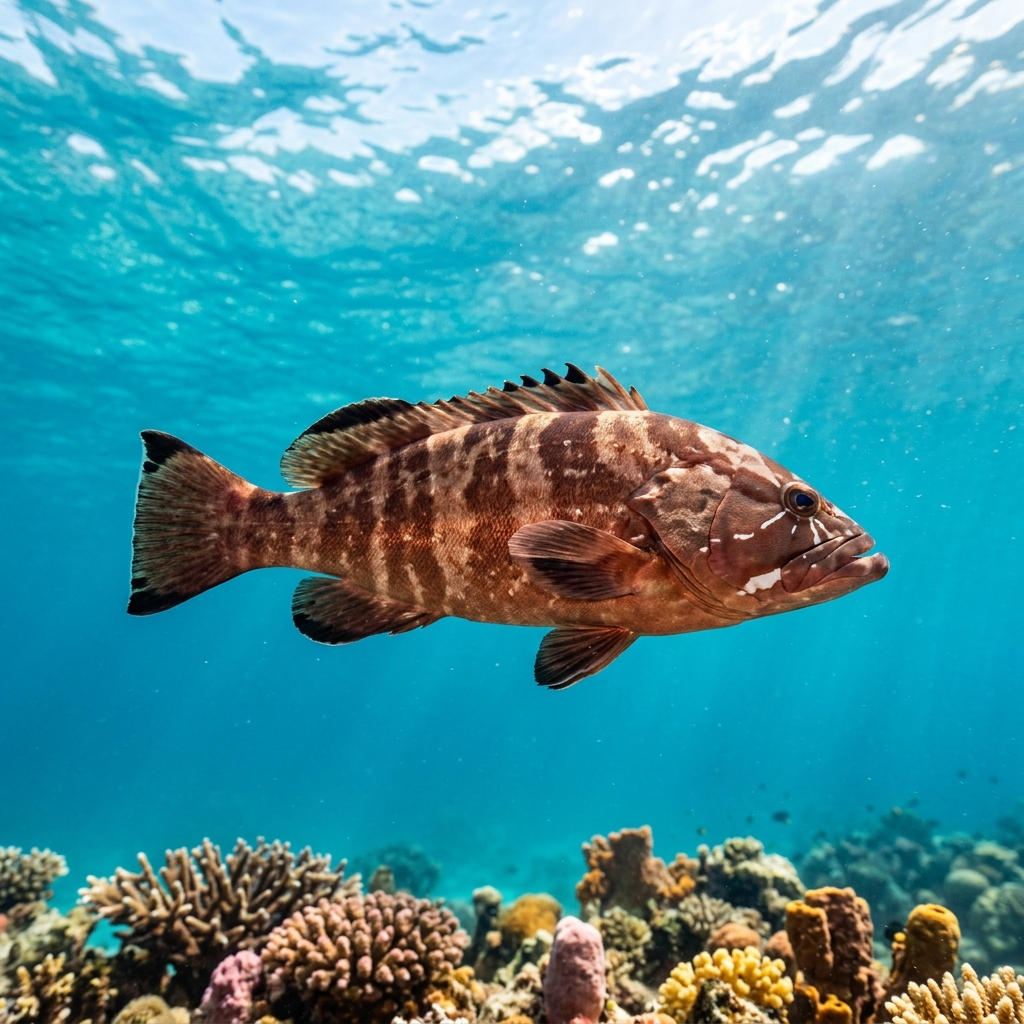
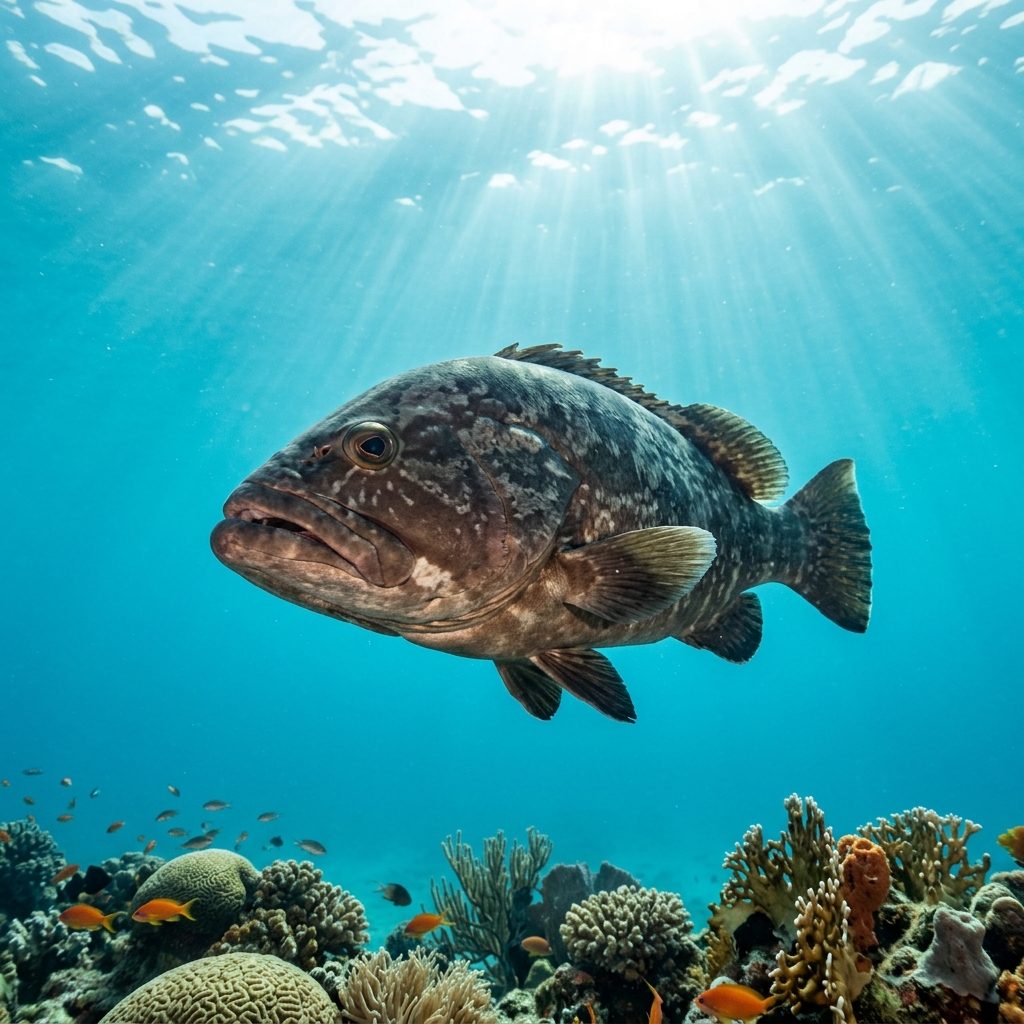
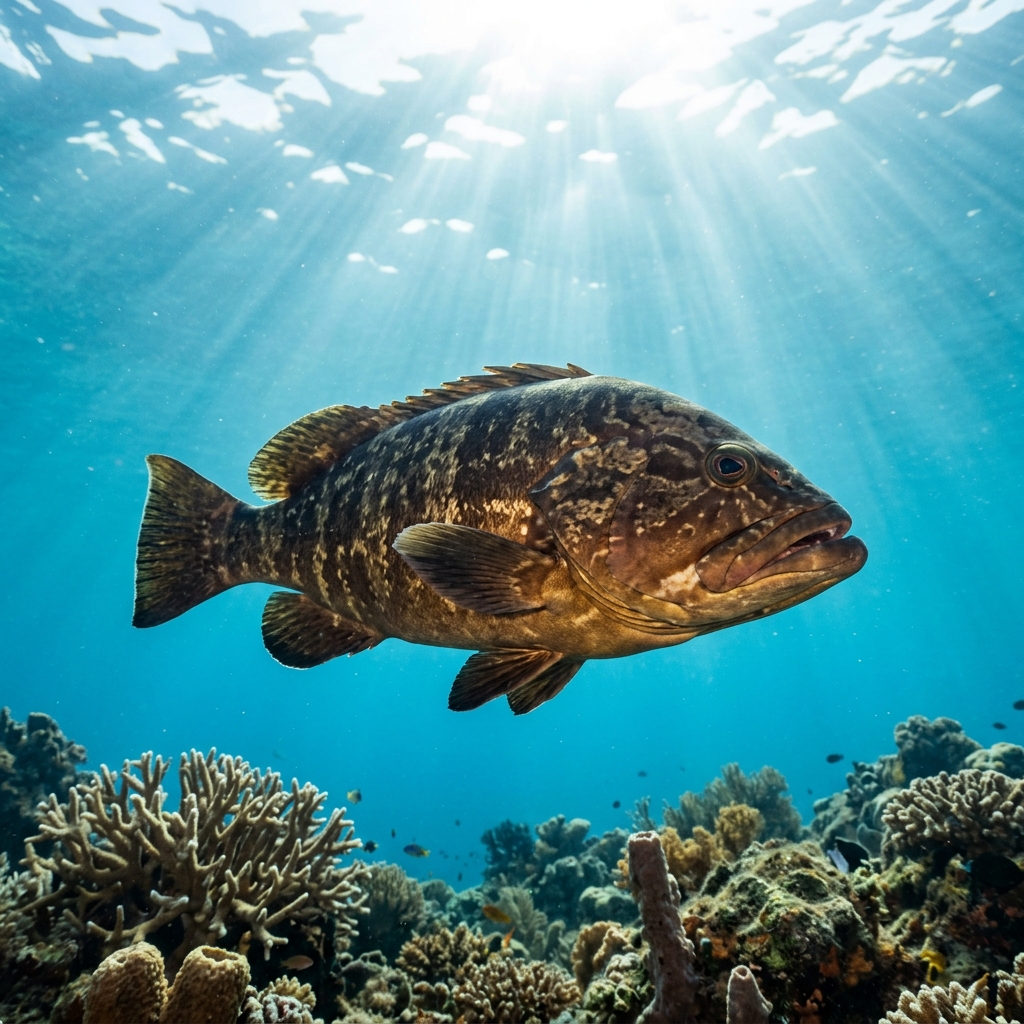
Most individuals you encounter will be around 25 cm. They are noticeably smaller and slimmer than the dusky grouper they sometimes share habitat with, which helps set expectations when scanning the reef.
No. Painted combers are not dangerous. They may dart away if approached quickly but pose no threat to divers whatsoever.
Yes. The painted comber is a simultaneous hermaphrodite, meaning each individual carries both male and female reproductive organs at the same time. This is a shared trait across the Serranidae family and means any two adults can pair up to spawn, which is thought to be an advantage when population densities are low.
Site and sighting data is aggregated from diver logs, iNaturalist and GBIF. For taxonomy and conservation status:
Groupers
2,234 sites