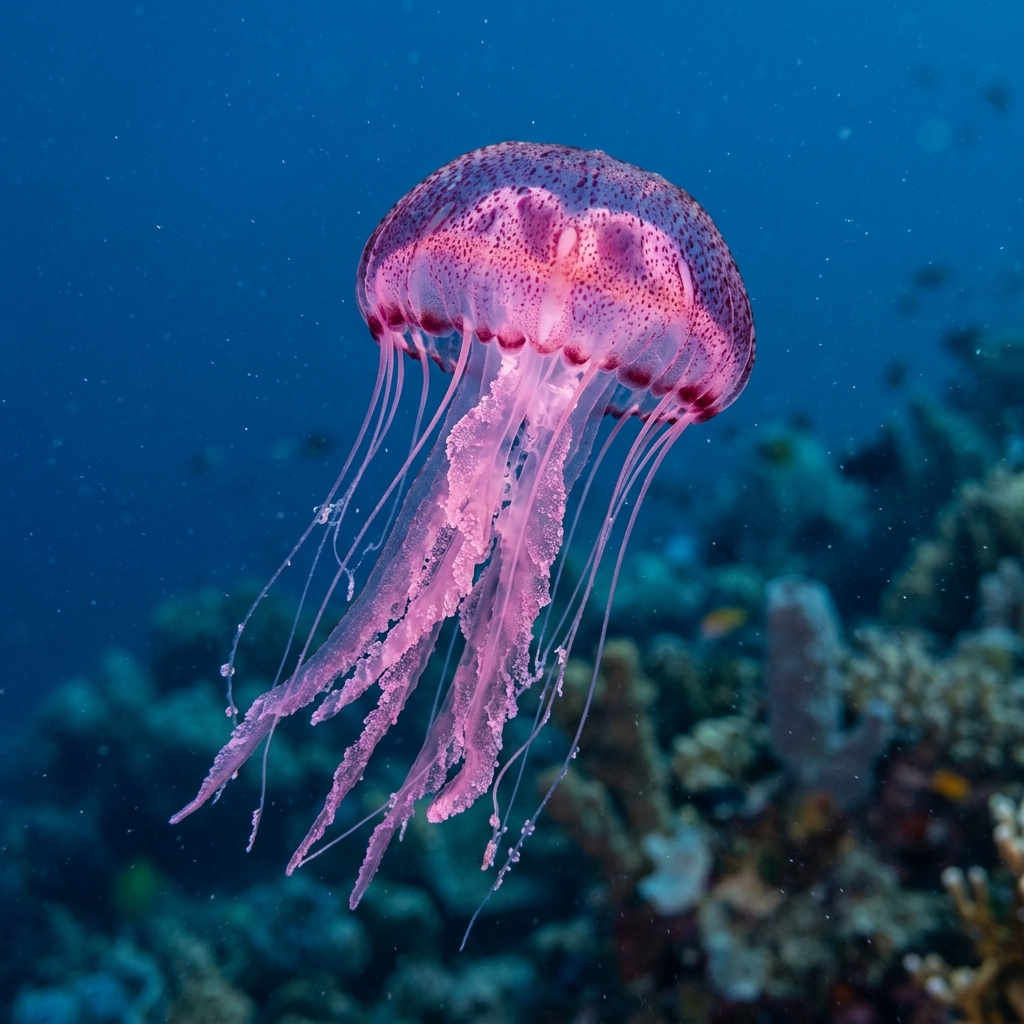
Pelagia noctiluca
Spot the glowing, tentacled Mauve Stinger across the French Riviera, Spanish coast and Italian waters. Present year-round with no fixed season.
Safety warning
This species can sting on contact with its tentacles, which may trail well beyond the body and can still sting after the animal is dead or washed up. Look but do not touch, and give it a wide berth.
If you're stung
Stinging tentaclesGeneral first-aid guidance, not a substitute for professional medical care. In an emergency, call your local emergency number.
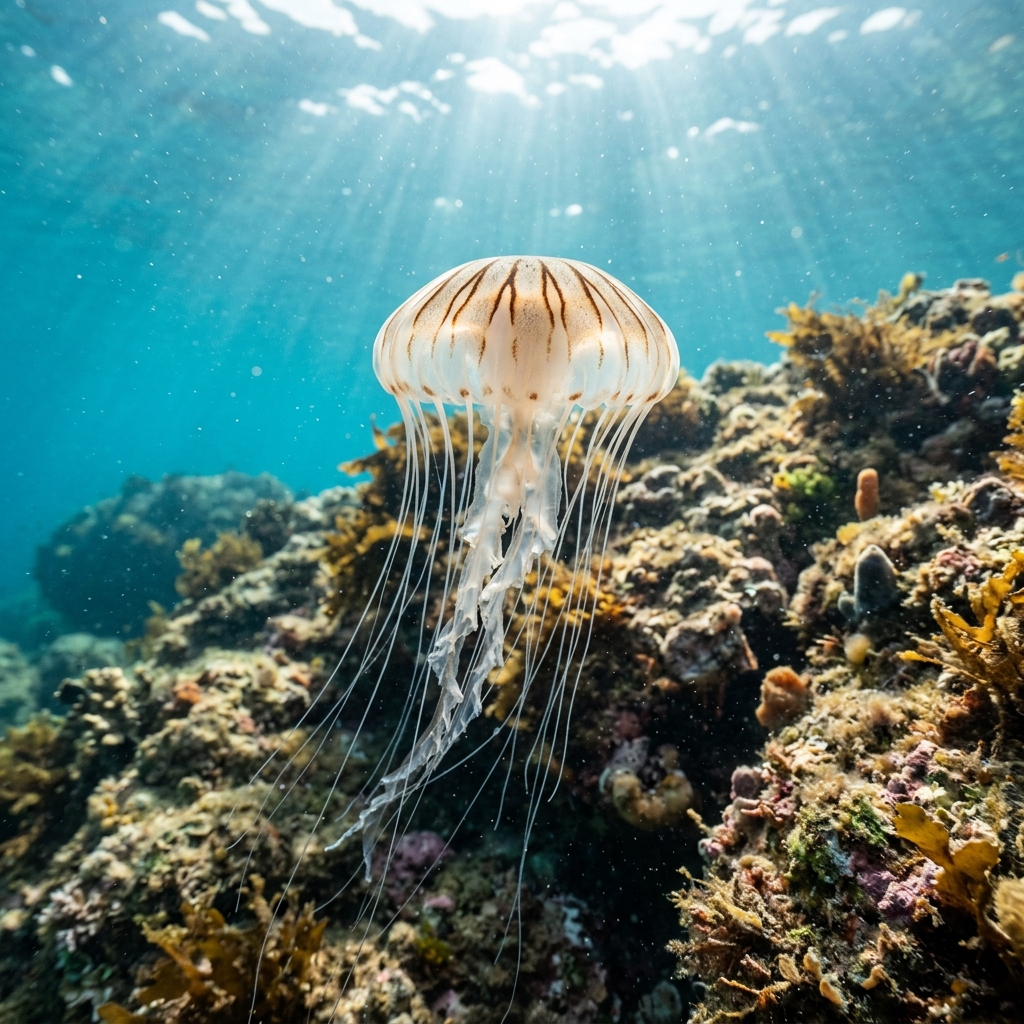
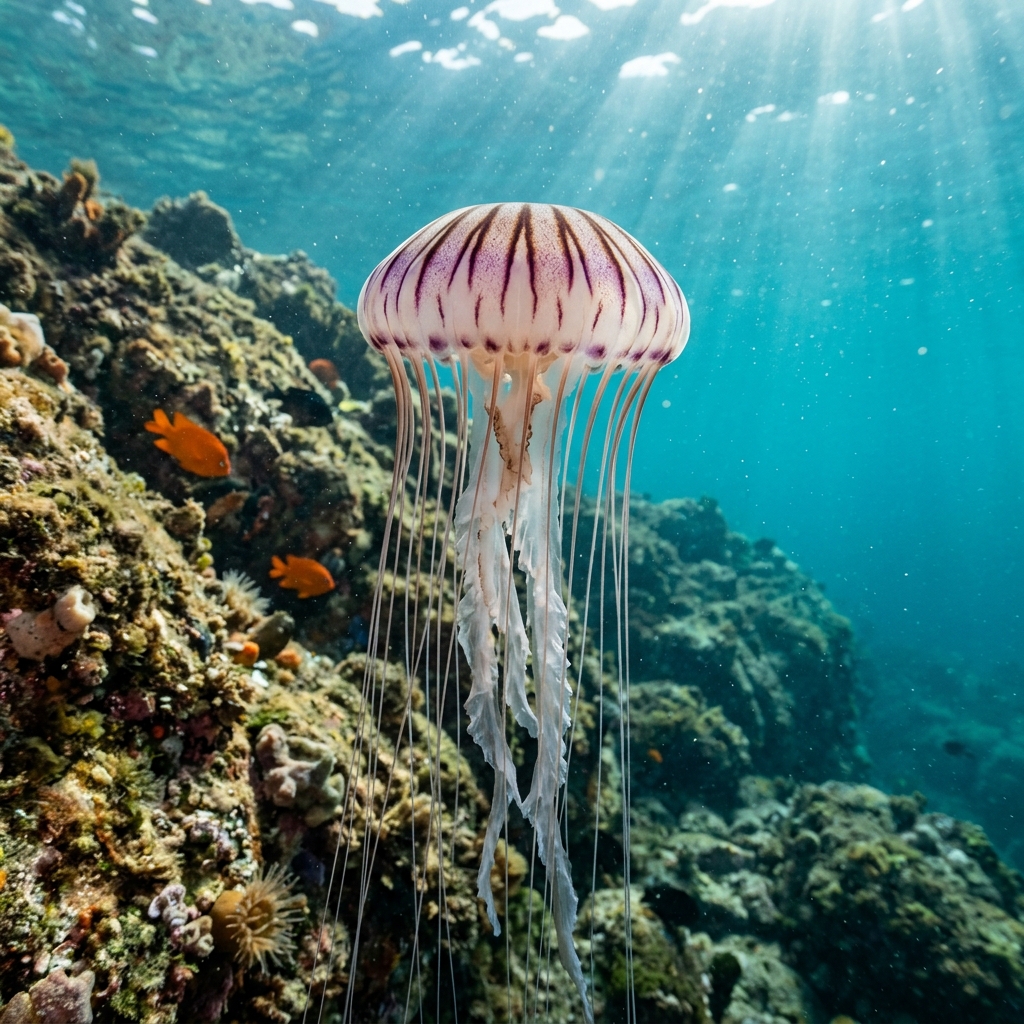
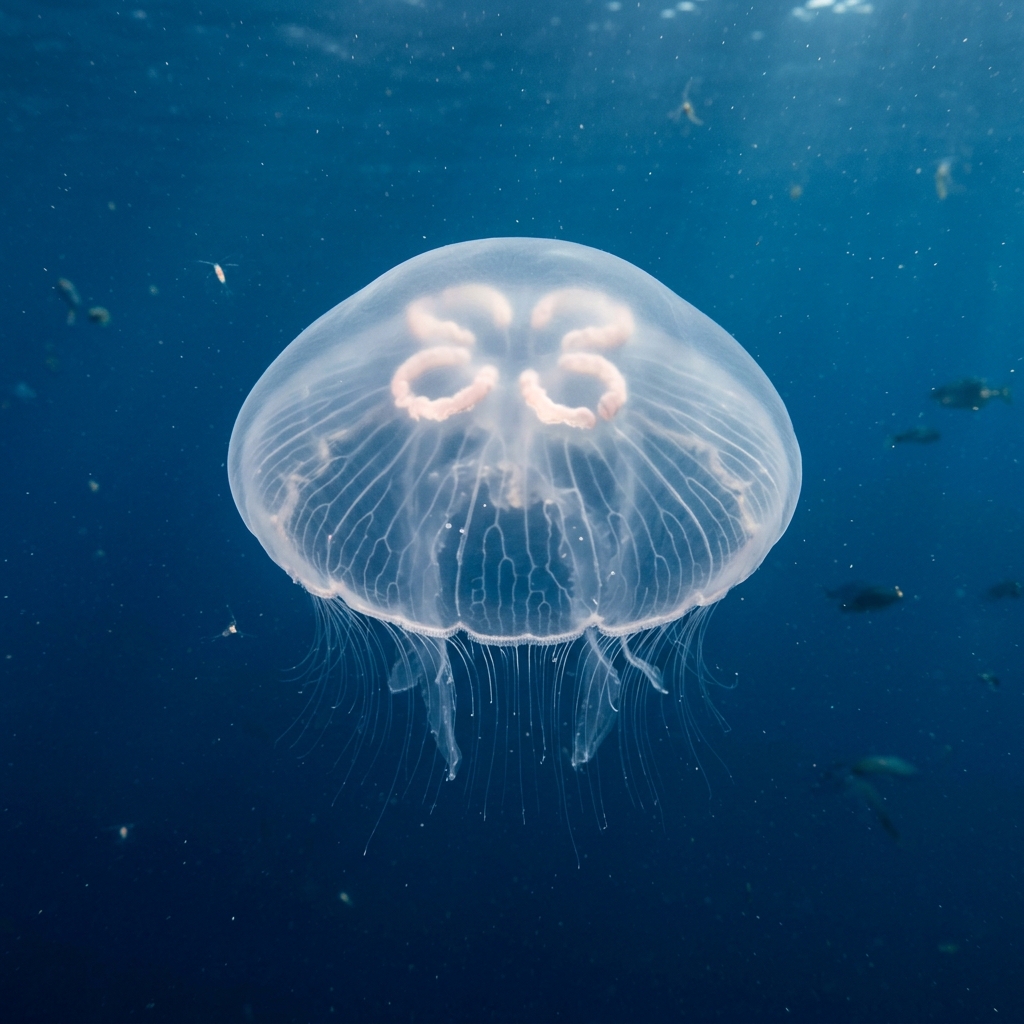
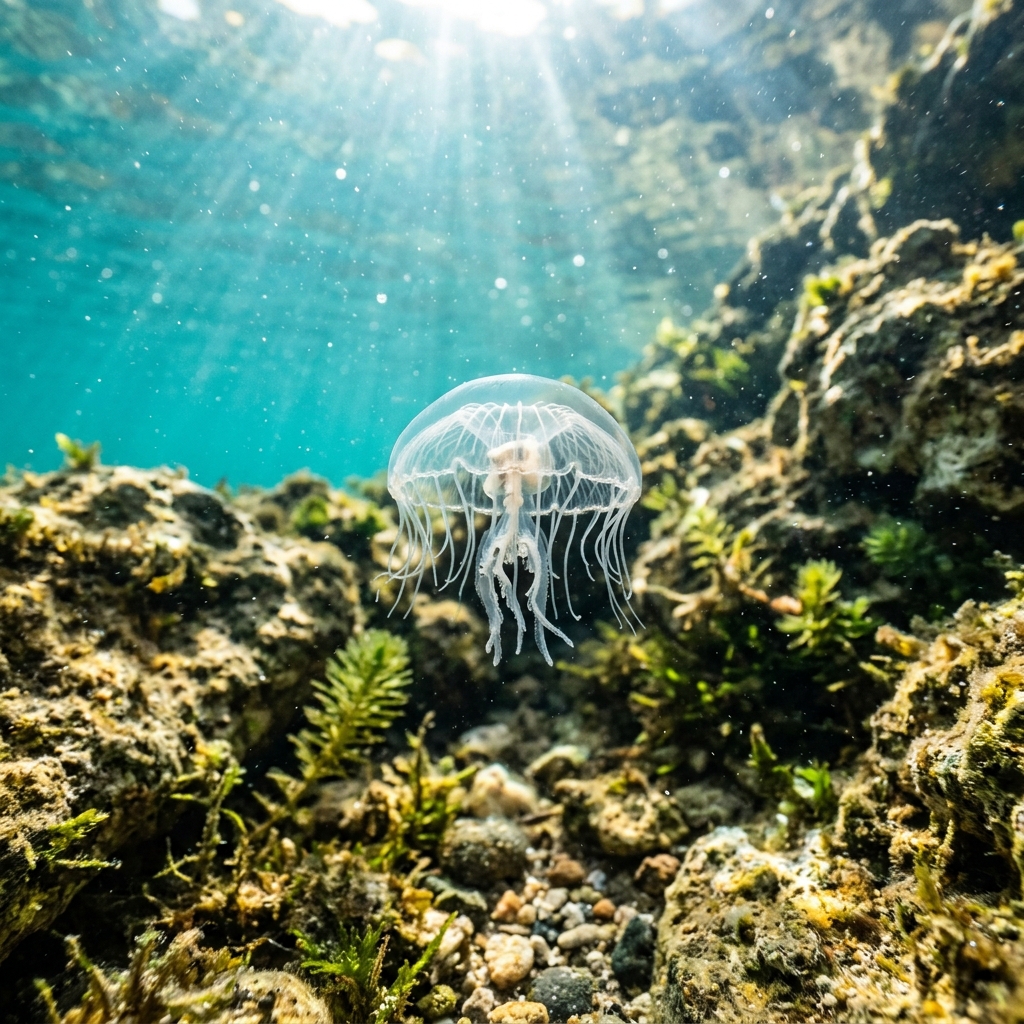
A small jellyfish, typically around 6 cm across the bell, with a distinctly pink to mauve (purple-pink) colouration and a surface covered in raised, pigmented warts and short marginal tentacles that give it a spiky-edged look. Four long, ribbon-like oral arms trail behind the bell alongside its thread-like tentacles, and in low light the bell produces a faint bioluminescence (the ability to produce its own light). That warty, textured bell surface combined with the rich purple tone is the key underwater identifier.
Pelagic drifters, mauve stingers go wherever the currents carry them and are typically encountered mid-water or at the surface rather than near the reef. They are completely indifferent to divers, neither retreating nor approaching, simply pulsing along and continuously filter-feeding on small organisms as they drift. Your best chances come during bloom events, when large aggregations appear suddenly, sometimes overnight, regardless of time of day.
Mauve stingers skip the polyp stage entirely, releasing larvae that develop directly into juvenile medusae, making them one of the few jellyfish able to rebuild a bloom population unusually fast after a collapse.
Sightings are recorded year-round with no concentrated season, which aligns with the species' broad temperature tolerance across roughly 12 to 25 °C. Encounter rates are more a matter of current-driven bloom events than any fixed calendar window.
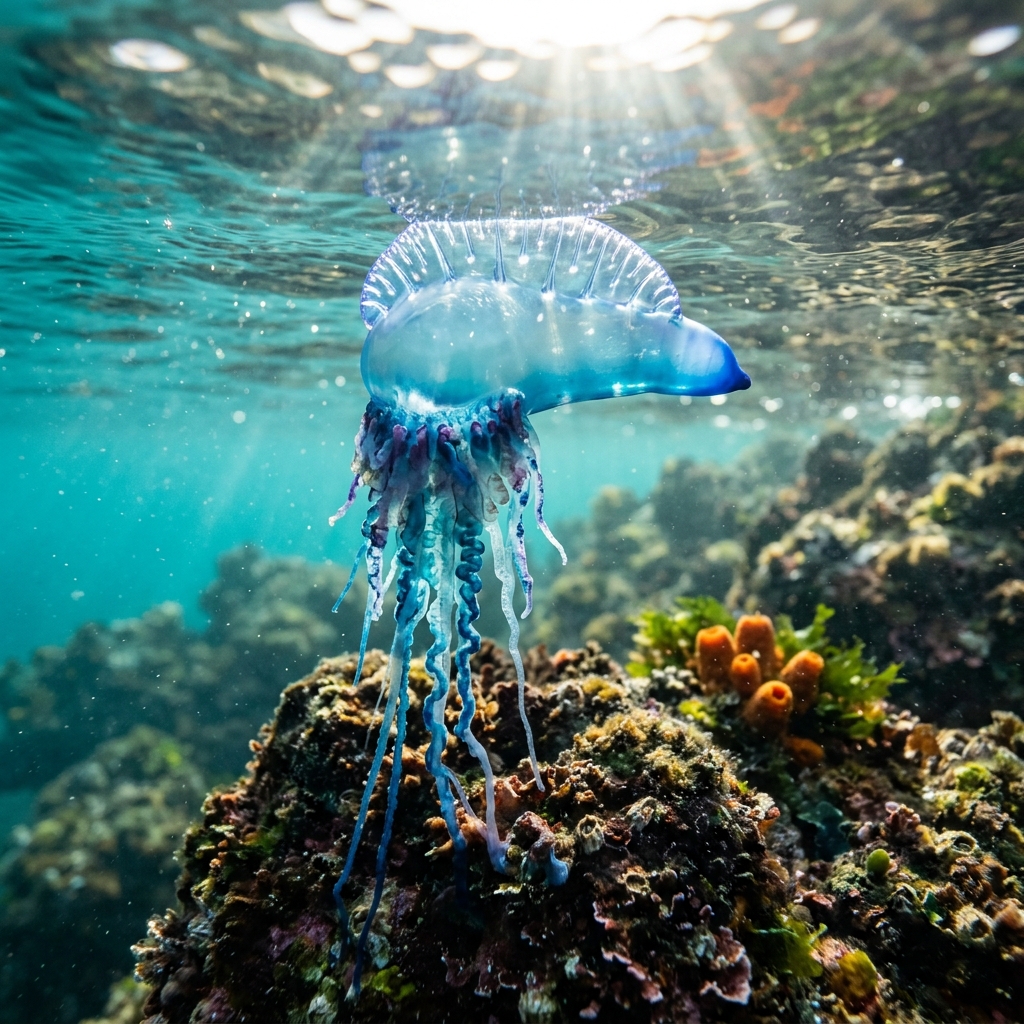
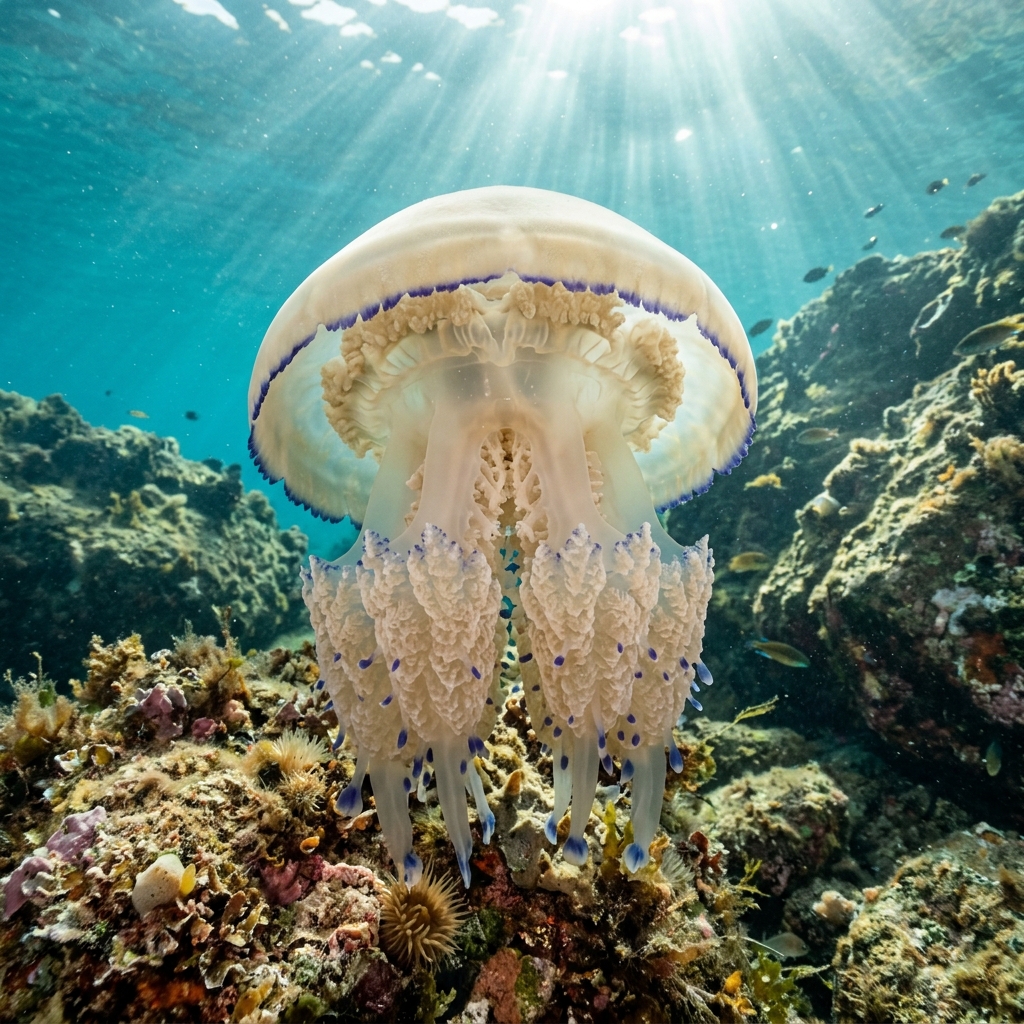
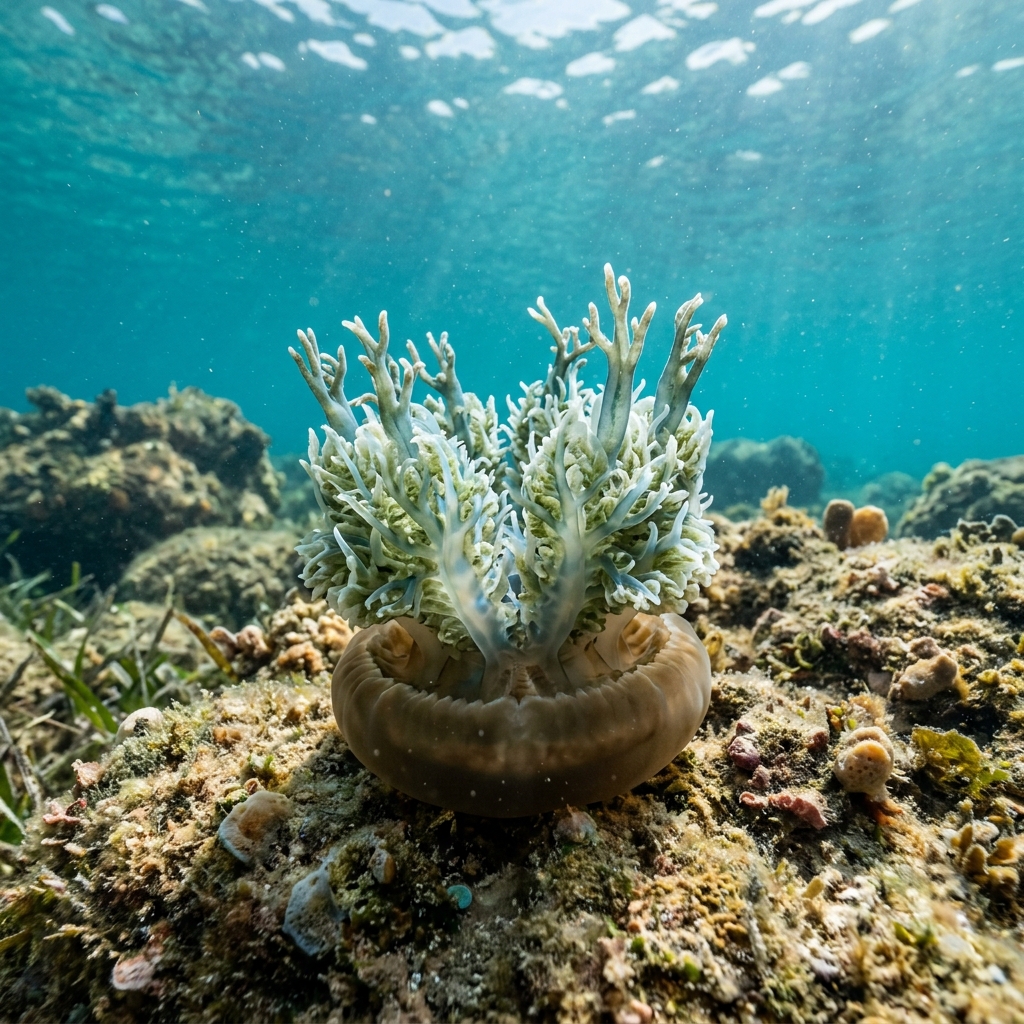
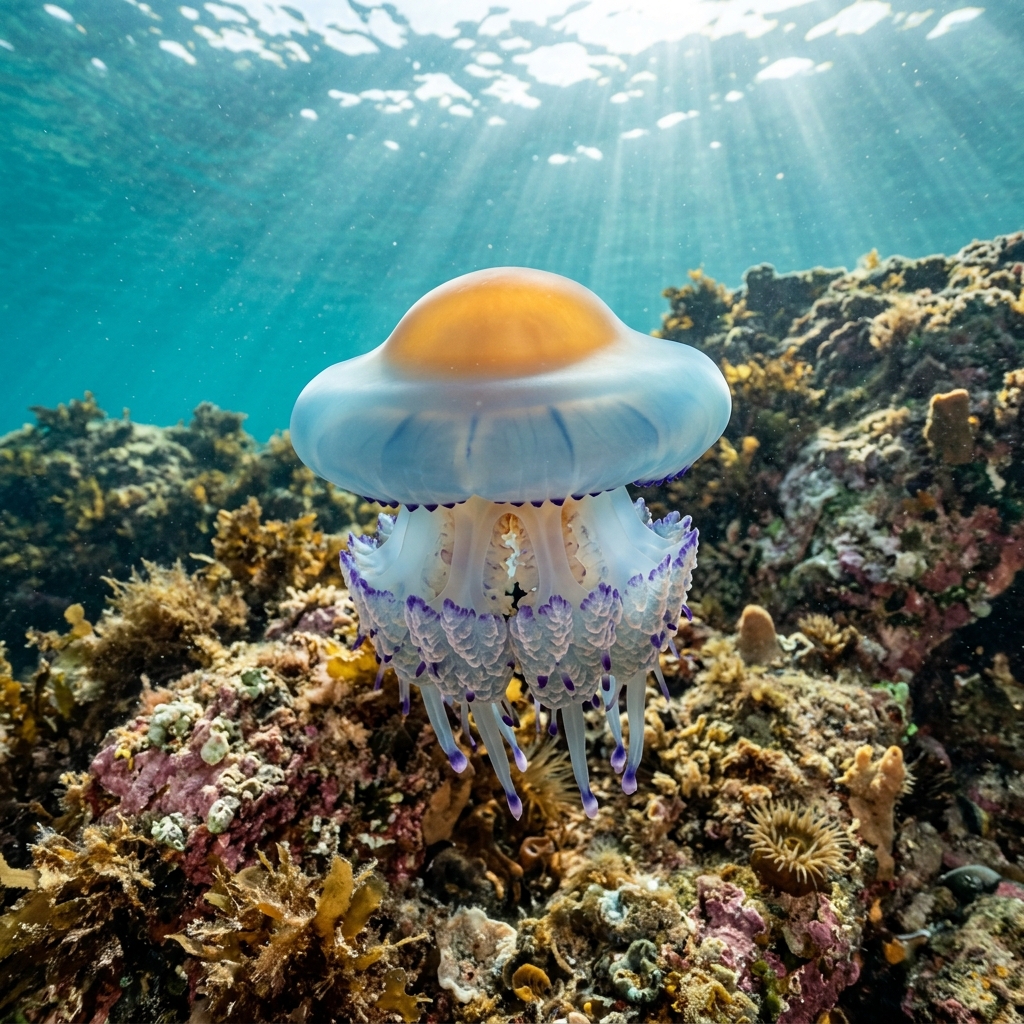
Reef neighbours a diver could mistake it for. Use the identification notes above to tell them apart.
Most commonly logged across the western and central Mediterranean, with Spain leading sightings, particularly along the Costa Blanca, the Balearic Islands, and the Costa Brava. France (especially the French Riviera and Provence) and Italy (notably Sardinia and Sicily) also see strong populations, and Greece, Croatia, Malta, and Turkey round out the Mediterranean presence. Outside the Mediterranean, Florida and the south-east United States coast contribute meaningful records.
Mapping where Mauve Stinger is logged…
The Mediterranean is the heartland for mauve stinger encounters, with Spain (Costa Blanca, Balearic Islands, Costa Brava), France (French Riviera), Italy (Sardinia, Sicily), Greece, Malta, and Croatia all returning regular sightings. They also appear in US waters around Florida and the south-east coast.
There is no single best month. Sightings are recorded throughout the year, and the species tolerates a wide range of water temperatures. Bloom events, which are the times most likely to produce striking encounters, are current-driven and essentially unpredictable.
They are not considered dangerous to divers. Their nematocysts (stinging cells) can irritate exposed skin, particularly on the face or forearms if you drift into a bloom, so a wetsuit offers practical protection. Treat them with the same respect you would any stinging jellyfish and avoid handling them.
Look for a small, distinctly pink-to-purple bell roughly the size of a tennis ball, covered in raised warty bumps along its surface. Long, trailing oral arms and fine tentacles stream behind it. That warty, textured bell combined with the rich purple colour separates it from most other jellyfish you will encounter in the Mediterranean.
The bell typically reaches around 6 cm in diameter, making this a small jellyfish. However the trailing tentacles and oral arms can extend considerably further, so the animal appears larger in the water than the bell measurement suggests.
Yes. Mauve stingers are bioluminescent, producing a blue-green glow when disturbed at night. This is one of the more reliably observed examples of bioluminescence in a Mediterranean jellyfish and is the origin of the species name noctiluca, meaning night light.
Site and sighting data is aggregated from diver logs, iNaturalist and GBIF. For taxonomy and conservation status:
Upside Down Jellyfish
1,622 sites