
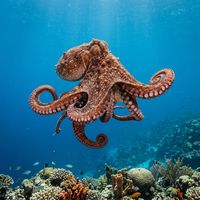
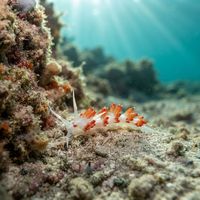
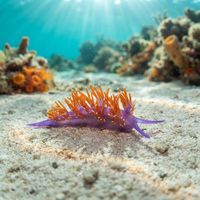
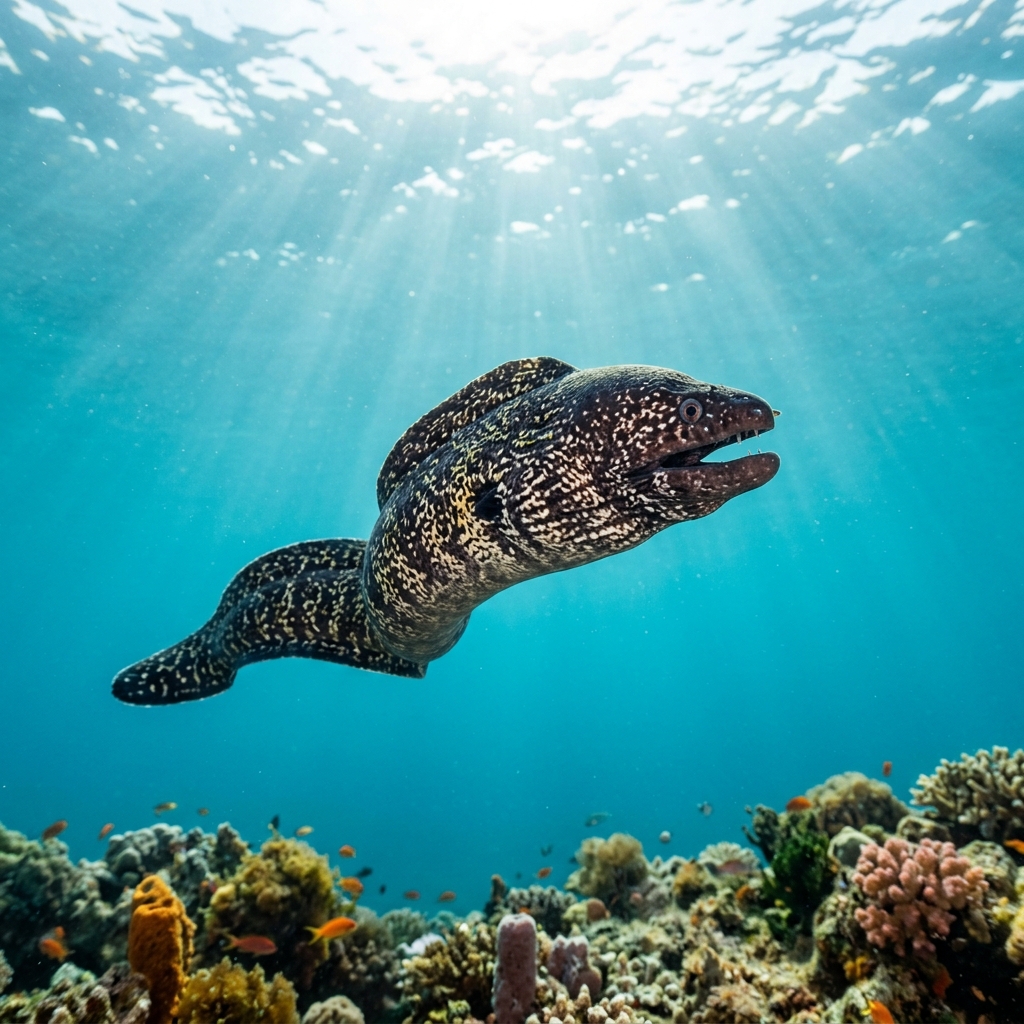
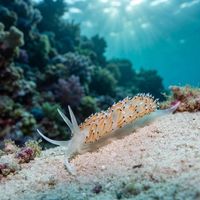
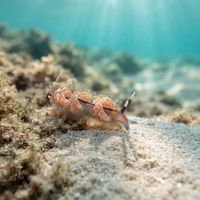
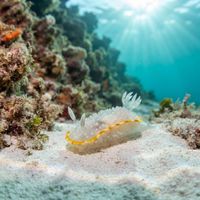
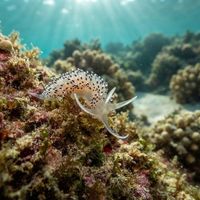
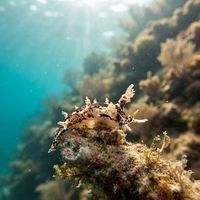
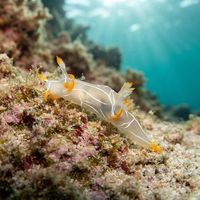
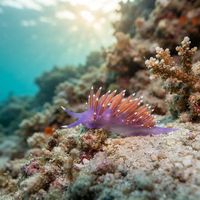
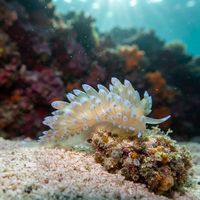
Palma Bay offers a varied diving landscape dominated by reef and wall sites, with wrecks and artificial reefs adding texture. Most sites are boat-accessed, spreading across a range of depths that accommodate beginners and intermediates alike. Shore entry is available at a handful of spots. Nudibranchs are a defining feature: species such as Flabellina Cavolini, Caloria Quatrefagesi and Facelina Rubrovittata are consistently observed across sites. Common Octopus, Mediterranean Moray and Great Barracuda complete a rewarding resident cast.
Monthly water temperature across Palma Bay's sites, from satellite sea-surface data corrected for depth. The band shows the site-to-site spread.
Water stays cool through winter and early spring, then climbs steadily from May onward, peaking in late summer. The warmest and most popular window runs from late spring through autumn, with October particularly favoured by the dive community. Winter diving remains viable for those comfortable in cooler water, and conditions across the bay are generally mild with manageable currents.
19 operators


34 more sites to explore
Water temperature around Palma Bay ranges from about 15°C in January to 25°C in September, based on satellite sea-temperature data for its dive sites.
In the warm season (about 25°C) a 3mm full suit is comfortable in Palma Bay; in the coldest months (about 15°C) step up to a 7mm or semi-dry suit.
Fin maps 46 sites in Palma Bay (46 scuba diving sites and 5 snorkelling spots, with some suited to both).
Across Palma Bay's dive sites, May, June, July, August, September and October are most often reported as the best months to visit.
Palma Bay stands out for its exceptional nudibranch diversity, with species including Flabellina Cavolini, Caloria Quatrefagesi, Facelina Rubrovittata and Diaphorodoris Alba observed consistently across sites. Common Octopus and Mediterranean Moray are reliably encountered, and Great Barracuda are a very common presence. Mediterranean Rainbow Wrasse, Peacock Wrasse and Saddled Bream round out the everyday reef fish.
A strong majority of sites in Palma Bay are rated beginner level, including popular spots such as Punta Marc, El Toro, Isla Sa Porassa, Cala Marmassen and Portalls Vells. Shallow starting depths and mild currents at many of these locations make the bay a comfortable environment for those early in their diving experience. Intermediate-rated sites like Punta Malgrats and La Mola are also available when divers are ready to progress.
The majority of sites in Palma Bay are boat-access only, and the bay is well served by a good number of local operators including Sietemares, Mallorca Diving Adventure, Diving Dragonera and Scuba Activa, among others. Shore entry is available at a smaller selection of sites, notably Cala Marmassen and Hausriff Bonanza Playa, the latter located directly off a hotel. Boat trips typically anchor on shallow plateaus before divers descend to the reef or wall.
Reefs and walls are the backbone of diving in Palma Bay, often combined at the same site to give varied profiles within a single dive. Wrecks and artificial reefs feature at sites such as Hausriff Bonanza Playa and Isla del Sec, offering a change of scenery. Cavern diving is available at Isla Sa Porassa, and drift conditions can be found at sites including Punta Cautius.
