Facelina rubrovittata
A small, uncommon nudibranch logged across the French Riviera, Balearics and Crete in waters as cool as 14.7 C. Here's what to look for.
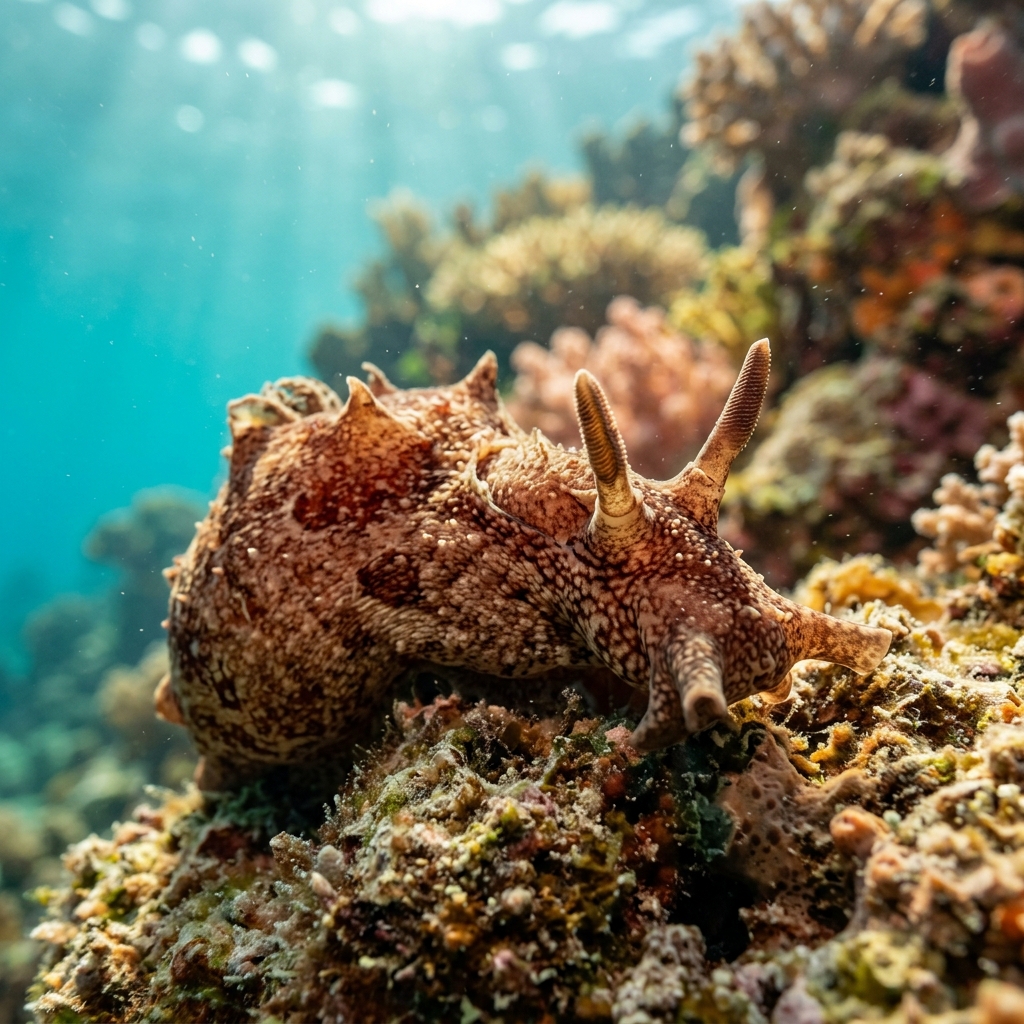
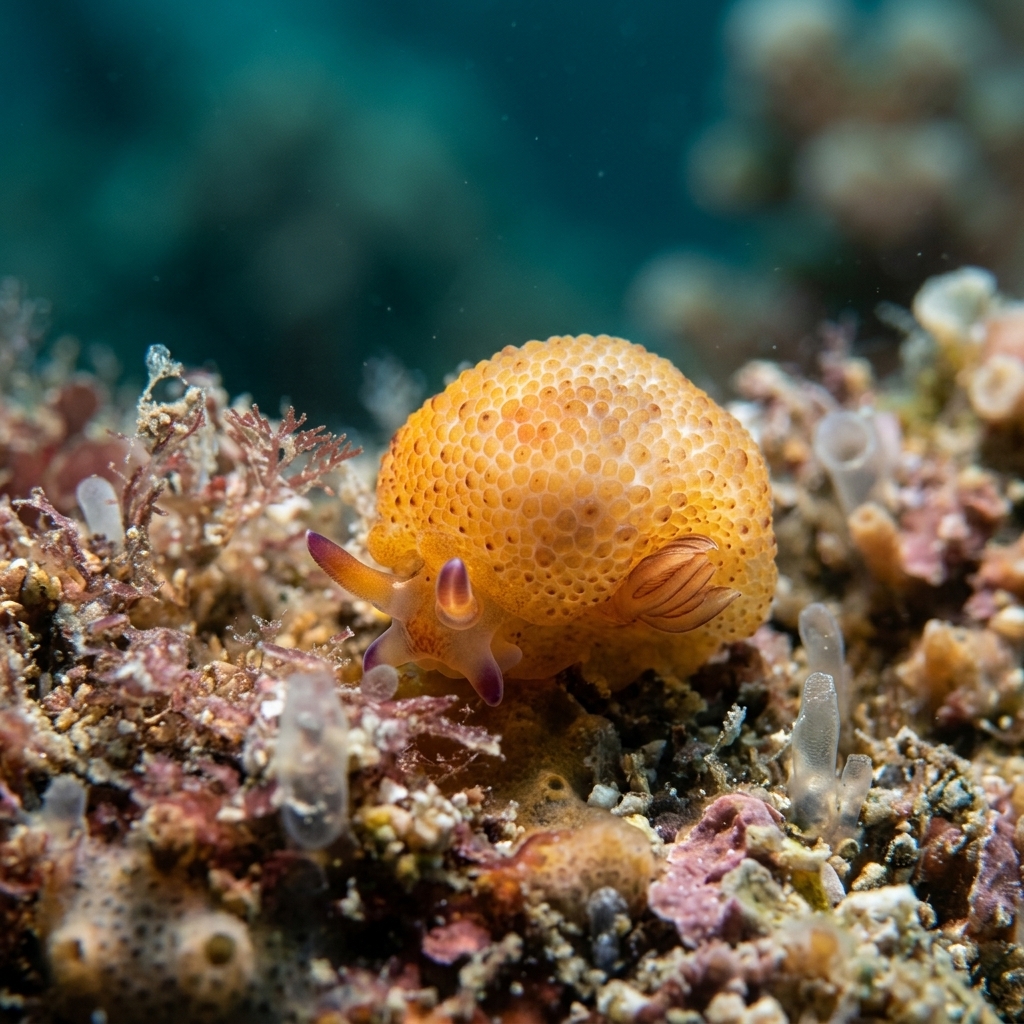
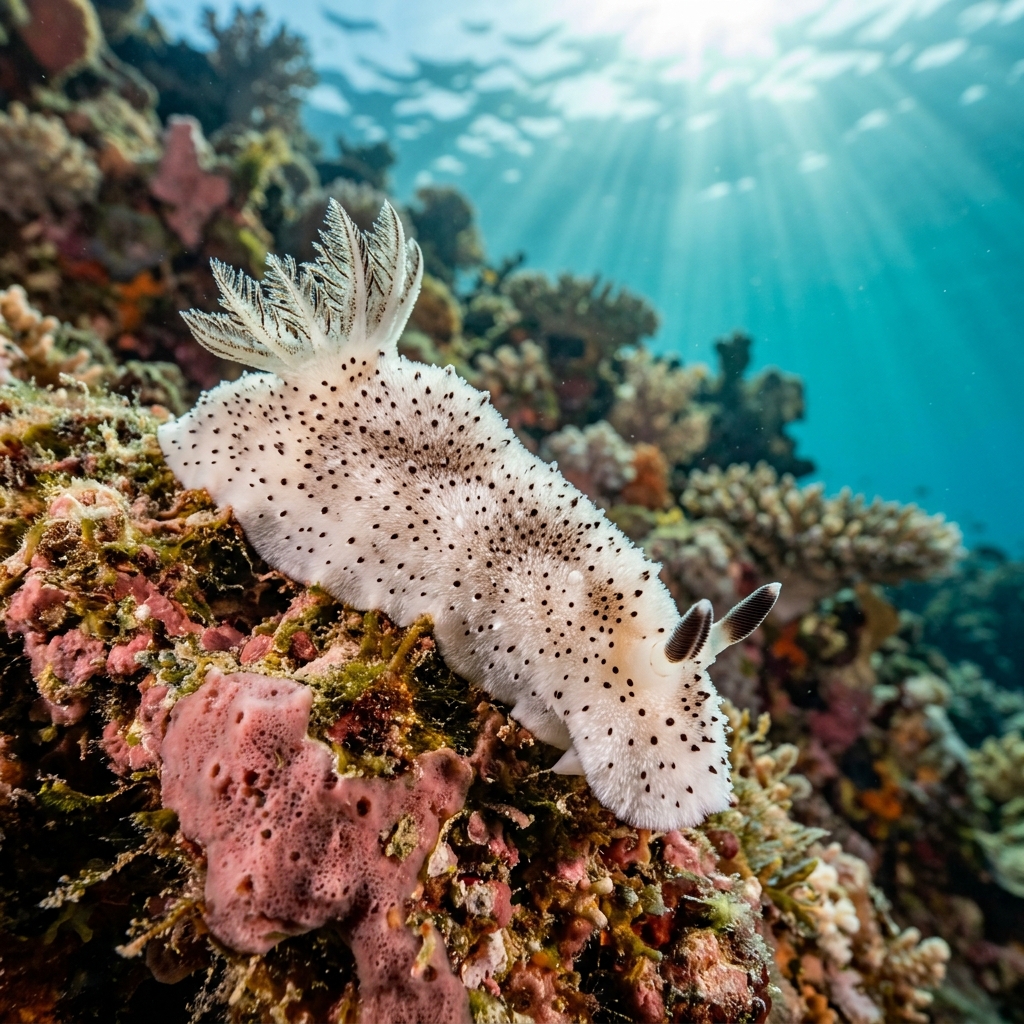
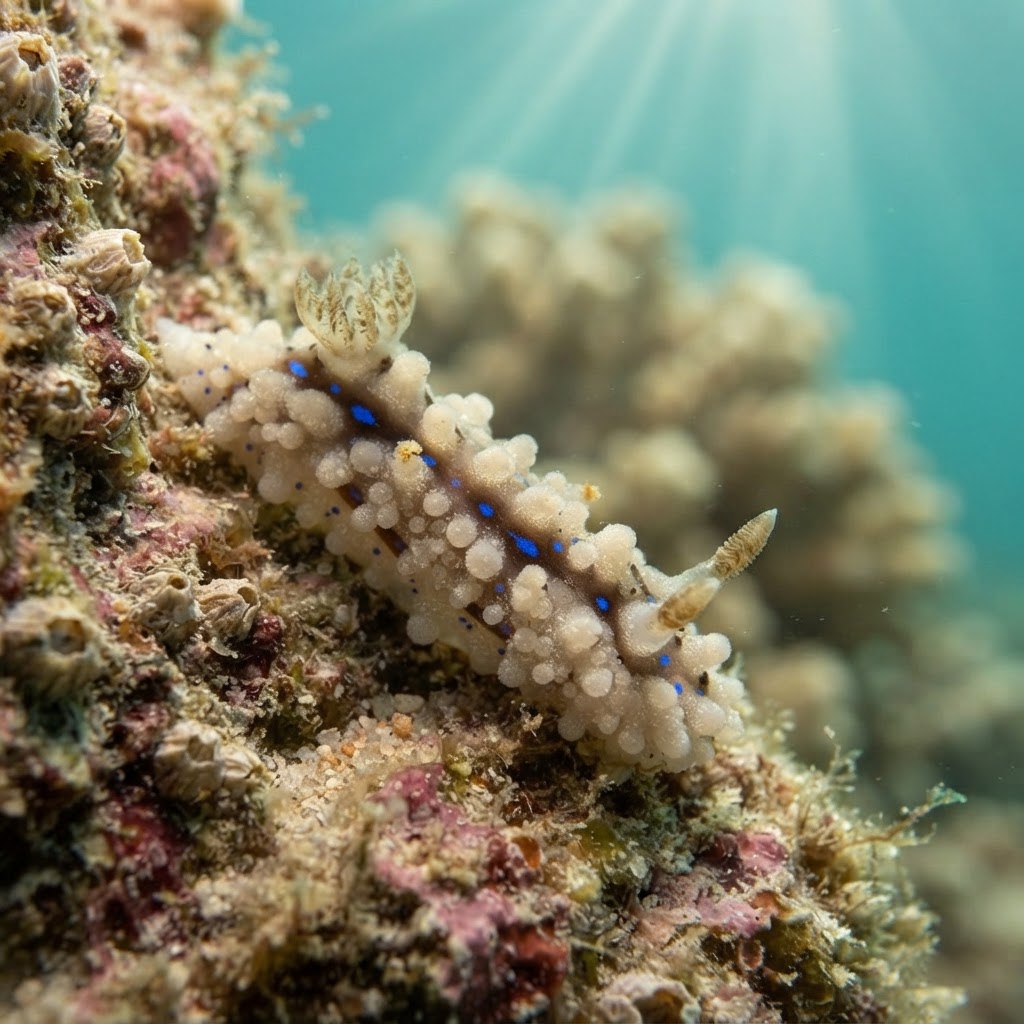
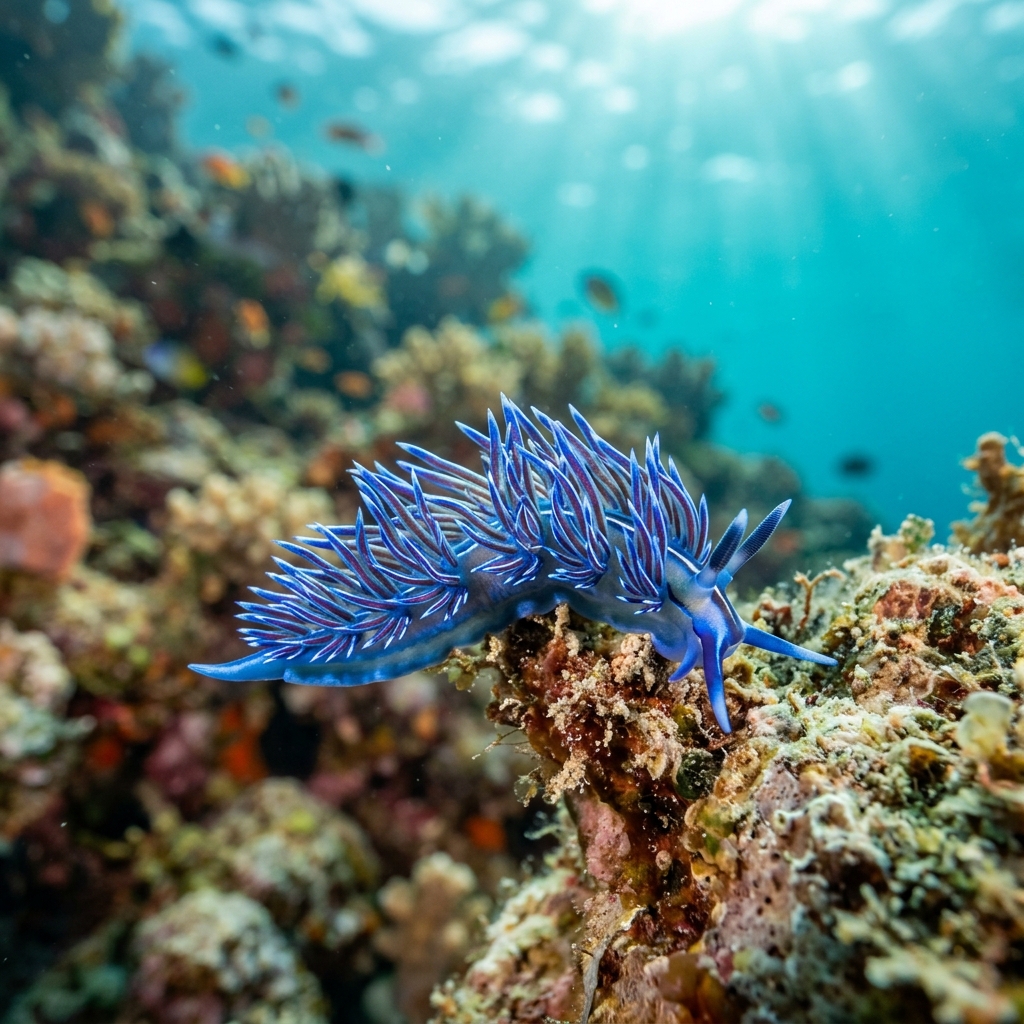
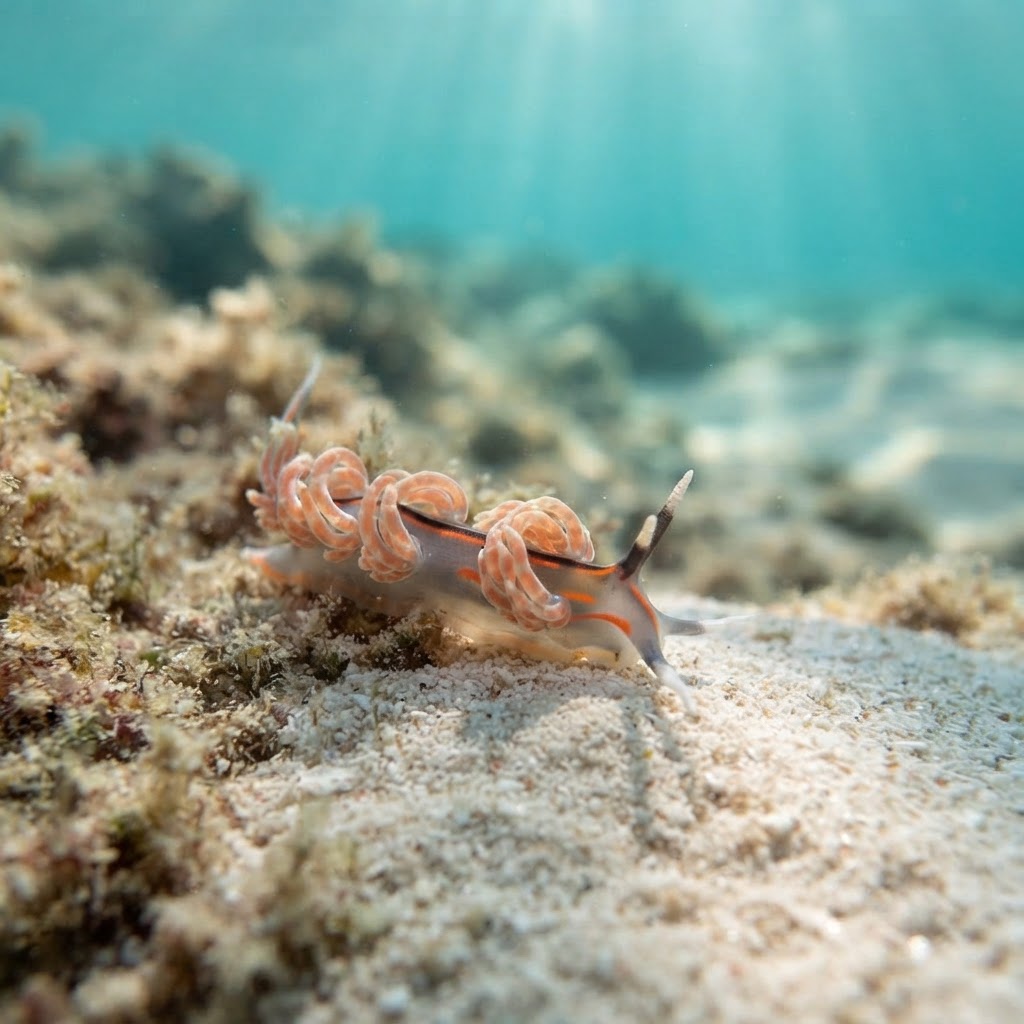
A small, slender sea slug with a translucent white to pale body carrying rows of finger-like projections (cerata) along its back, each often tipped or lined with reddish colour that gives the species its name. The head bears two pairs of sensory tentacles (rhinophores and oral tentacles) that it waves slowly as it moves. Look for it tucked among rocky crevices or hydroid growth rather than out on open sand, since its size and pattern make it easy to miss at a glance.
Divers usually spot it moving slowly over rock and algae-covered surfaces or resting among hydroids, which make up its diet. It shows no reaction to divers beyond continuing its slow grazing pace, so a steady light and a close look are usually enough to get a good view without disturbing it.
Like other facelinid nudibranchs, it can store stinging cells from the hydroids it eats and repurpose them in its own cerata as a defence against predators.
Sightings don't show a clear seasonal pattern, so treat it as a year-round find in its cooler-water range, roughly 14.7 to 20.7 C, which covers much of the Mediterranean diving calendar.
Most reliably found in France, especially across the French Riviera & Provence, with strong logs also from Corsica. Spain is the second stronghold, particularly the Balearic Islands and Andalusia, and it turns up less often further east in Crete, Greece.
Mapping where Red-striped Facelina is logged…
It's most commonly logged in France, particularly the French Riviera & Provence and Corsica, with a strong secondary presence in Spain's Balearic Islands and Andalusia, and occasional sightings in Crete, Greece.
There's no strong seasonal pattern in the sightings, so it can be found year-round within its typical water-temperature range of roughly 14.7 to 20.7 C.
Look for a small, translucent-bodied slug with rows of cerata along its back, often lined or tipped in red, and two pairs of tentacles on its head. It's usually found grazing slowly over rock or hydroid-covered surfaces rather than open sand.
No, it poses no danger to divers. It has no means of harming a diver and simply continues grazing if you approach carefully.
It feeds on hydroids and can recycle their stinging cells into its own cerata, turning a food source into a personal defence system, a trick shared by several facelinid nudibranchs.
Site and sighting data is aggregated from diver logs, iNaturalist and GBIF. For taxonomy and conservation status:
Light-spotted Aegires
3,168 sites