Diaphorodoris alba
A small white nudibranch turning up on rocky reefs from Catalonia to the Lisbon Coast, most active in cool 14.5-20.5C water.
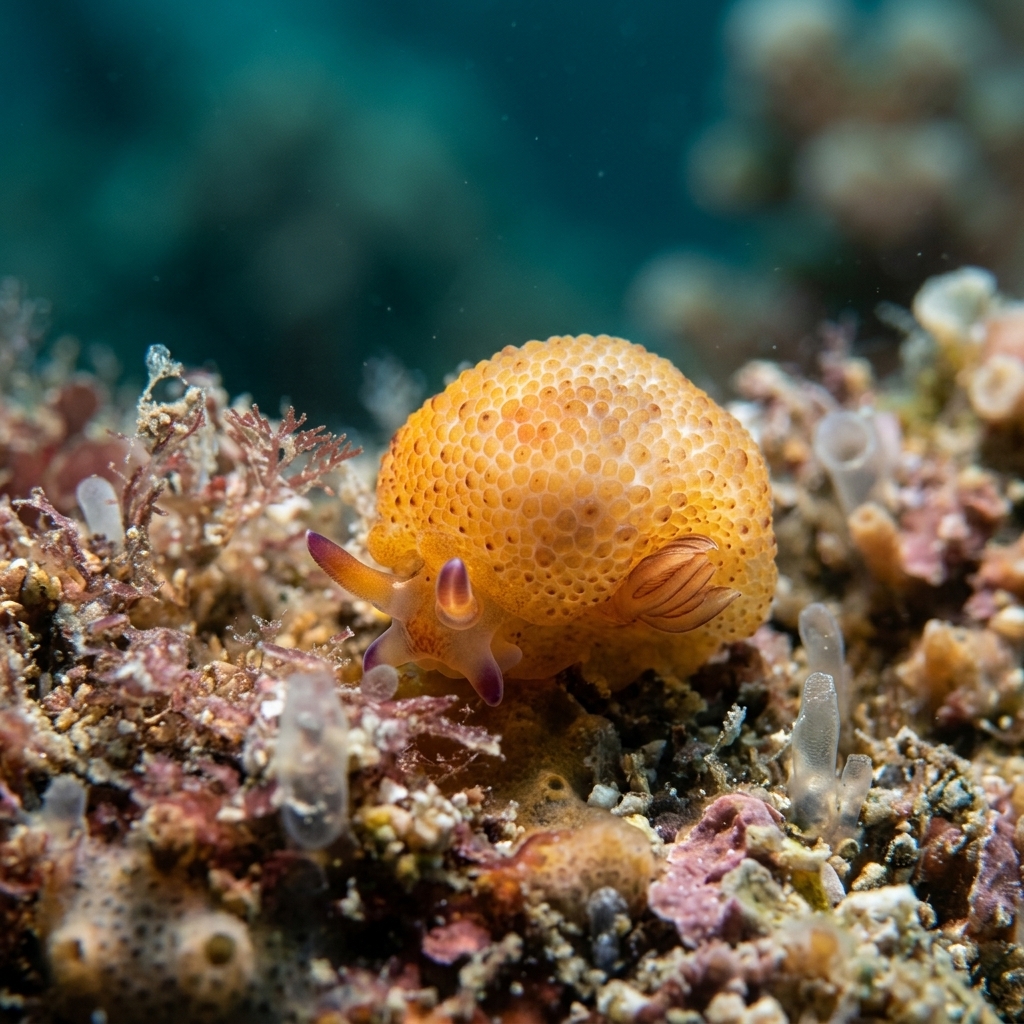
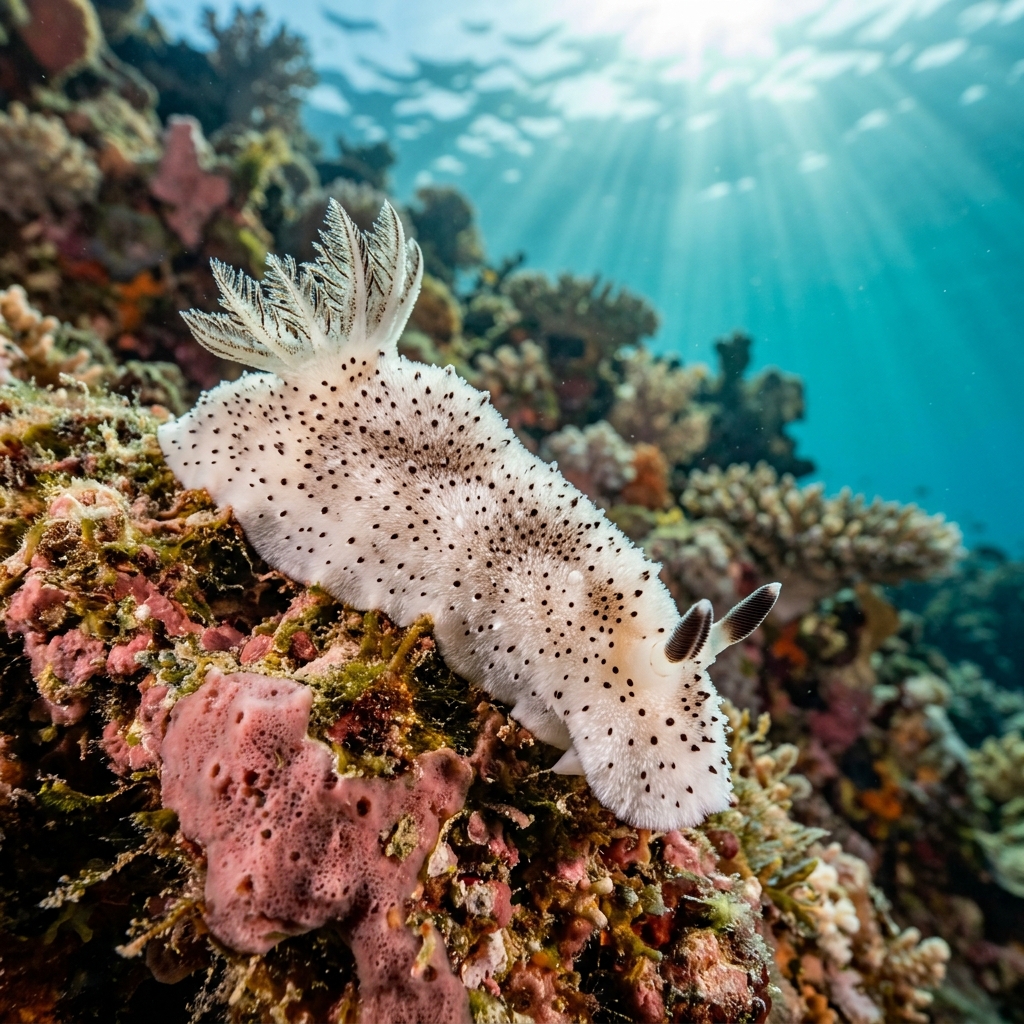
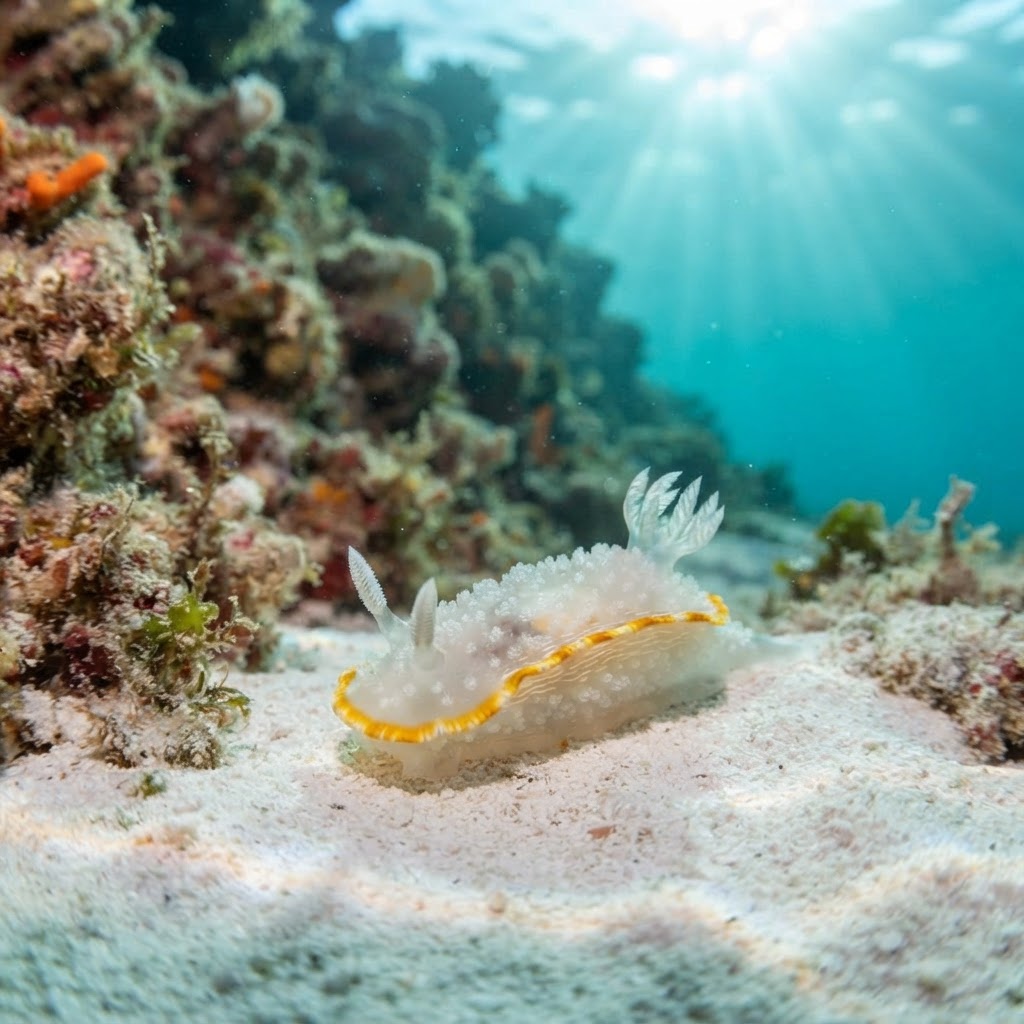
A tiny, translucent white to pale cream nudibranch, usually only a few millimetres to a centimetre or so long, easy to miss without a careful eye on the substrate. The body is smooth and rounded with no bold pattern, so divers key on its plain white or milky colouring and small size rather than any stripe or spot. Look closely near the rear for the feathery gill cluster (rhinophores and gills), which is where most of the visual interest is on an otherwise understated animal.
Divers find it grazing slowly over rock and encrusting growth, doing what most small dorid nudibranchs do: moving at a snail's pace across the substrate while feeding, largely unbothered by a torch or a close look. It shows no reaction to divers beyond continuing to graze, and is most often spotted by those doing a slow, close-focus search of rocky reef rather than mid-water swimmers. Most logs describe it as uncommon at any given site, so it rewards patient, careful looking rather than a quick pass.
Like other dorid nudibranchs, it likely feeds on sponges or bryozoans using specialised radula, though its plain white colouring probably helps it blend into pale encrusting growth rather than serving as a warning display.
Sightings show no strong seasonal pattern in the data, so treat it as a year-round find wherever water stays in its comfortable 14.5 to 20.5C range. In practice this means cooler-water diving seasons across the Mediterranean and Atlantic coasts of Spain, France, Portugal and the UK all produce sightings.
Most commonly logged in Spain, particularly Catalonia, Andalusia, the Balearic Islands and the Cantabrian Coast, with strong numbers also out of France, especially the French Riviera and Provence and Brittany. It's a reliable find along the Lisbon Coast in Portugal too, and turns up steadily around England in the UK, making it a solidly European Atlantic and Mediterranean species rather than a tropical one.
Mapping where White Diaphorodoris is logged…
It's most reliably found in Spain (Catalonia, Andalusia, the Balearic Islands, the Cantabrian Coast), along the French Riviera and Provence and in Brittany, on the Lisbon Coast of Portugal, and around England.
There's no clear seasonal spike in sightings, so it's considered a year-round species within its 14.5 to 20.5C water-temperature niche.
Look for a very small, plain white or pale cream nudibranch with a smooth, rounded body and a small feathery gill cluster near the rear. It lacks bold spots or stripes, so its size and uniform pale colour are the main clues.
It's a very small nudibranch, typically only millimetres to around a centimetre long, so divers need to search close to the substrate to spot one.
No, it poses no danger to divers. It's a tiny, slow-moving grazer that can be observed and photographed safely at close range.
Site and sighting data is aggregated from diver logs, iNaturalist and GBIF. For taxonomy and conservation status:
Light-spotted Aegires
3,168 sites