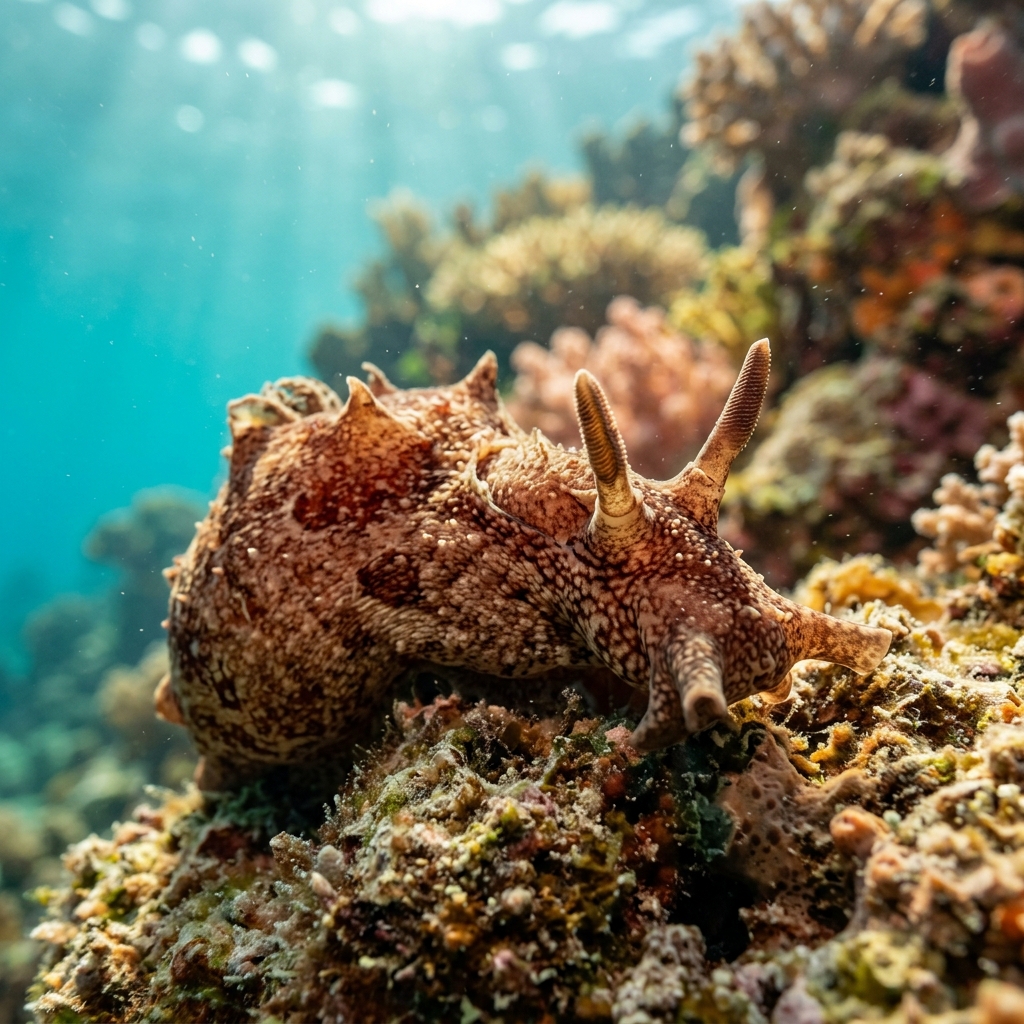
Trapania lineata
A small, easily missed nudibranch logged across the Balearic Islands and Valencia in waters from 12 to 20.5 C, most sightings rated uncommon.
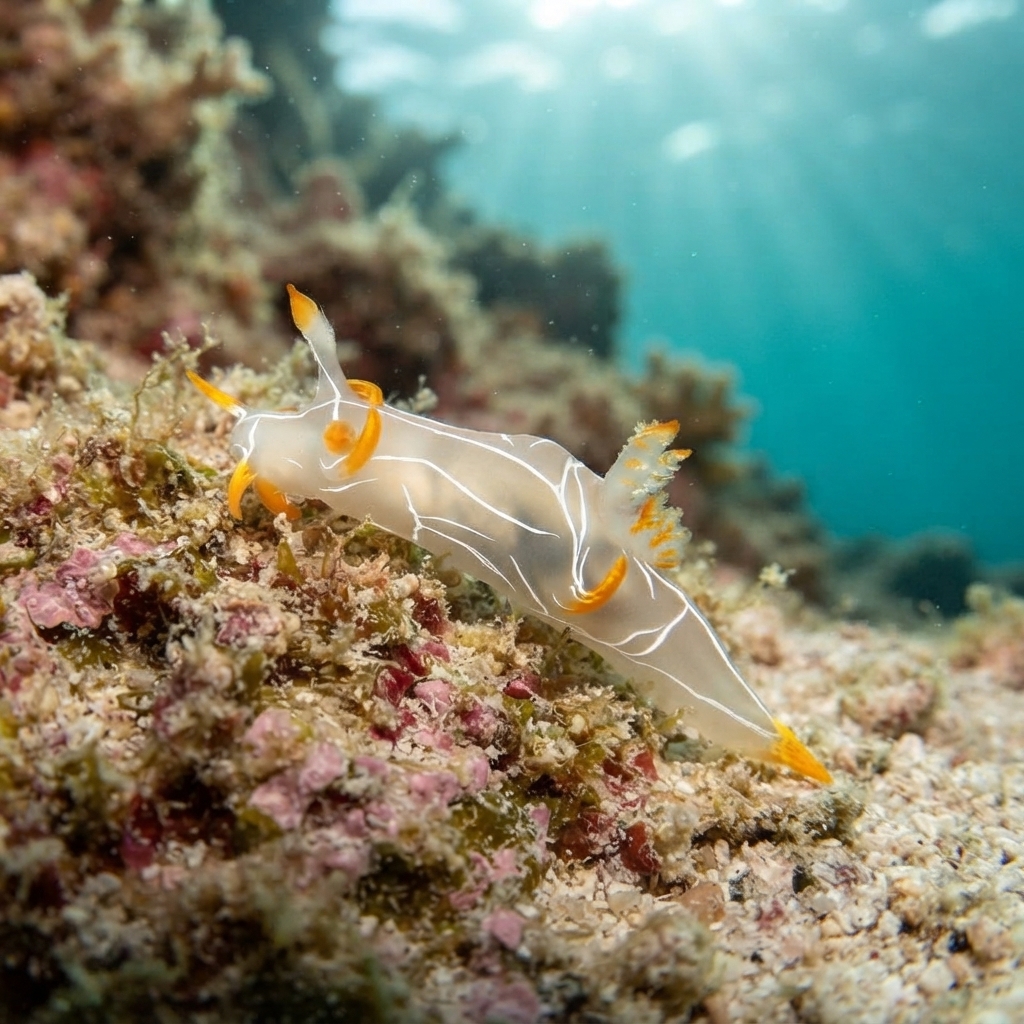
A small, slender nudibranch with a translucent white to pale body marked by fine longitudinal stripes running down its back, which is where the common name comes from. Look for two pairs of extended, curled appendages near the head, the oral tentacles and the rhinophores, which give it a slightly bristly silhouette compared to smoother dorid nudibranchs. It stays close to the substrate and is easy to swim past unless you are scanning rock and rubble at close range with a torch.
Divers typically find it grazing slowly over rock and rubble surfaces rather than swimming, moving at the unhurried pace typical of nudibranchs as it works over encrusting organisms. It shows no reaction to divers beyond continuing to feed, and its small size and pale colouring mean most sightings come from divers doing close-focus macro searches rather than casual reef scanning.
Like other members of the goniodorididae family, it likely feeds on small encrusting invertebrates such as bryozoans or ascidians found on the rock surfaces where it is logged, though its specific diet has not been well documented.
There is no detectable seasonal pattern in the sightings, and the wide observed temperature range of 12.4 to 20.5 C suggests it tolerates both cooler winter water and warmer summer conditions, so divers log it across the year rather than in a narrow window.
Spain is the strongest bet by a wide margin, with dense logging across the Balearic Islands and the Valencia region, and it also turns up along Brittany in France. Smaller but reliable pockets exist in Istria, Croatia, and the Lisbon Coast of Portugal, with a single logged sighting from England.
Mapping where Stripete Tritonia is logged…
Spain is the top spot by far, especially the Balearic Islands and Valencia. It also shows up along Brittany in France, Istria in Croatia, and the Lisbon Coast in Portugal.
There is no strong season in the data, so sightings are spread across the year. Its observed temperature range of 12.4 to 20.5 C covers both cooler and warmer conditions at the sites where it is found.
Look for a small, pale to translucent nudibranch with fine stripes along its back and two pairs of curled appendages near the head. It moves slowly over rock and rubble, so a close look with a torch helps confirm the ID.
No, it poses no danger to divers. It has no sting or venom of concern and simply grazes on the substrate, ignoring passing divers entirely.
Its exact diet is not well documented, but like related goniodorid nudibranchs it likely grazes on small encrusting invertebrates such as bryozoans on rock and rubble surfaces.
Site and sighting data is aggregated from diver logs, iNaturalist and GBIF. For taxonomy and conservation status:
Light-spotted Aegires
3,168 sites