
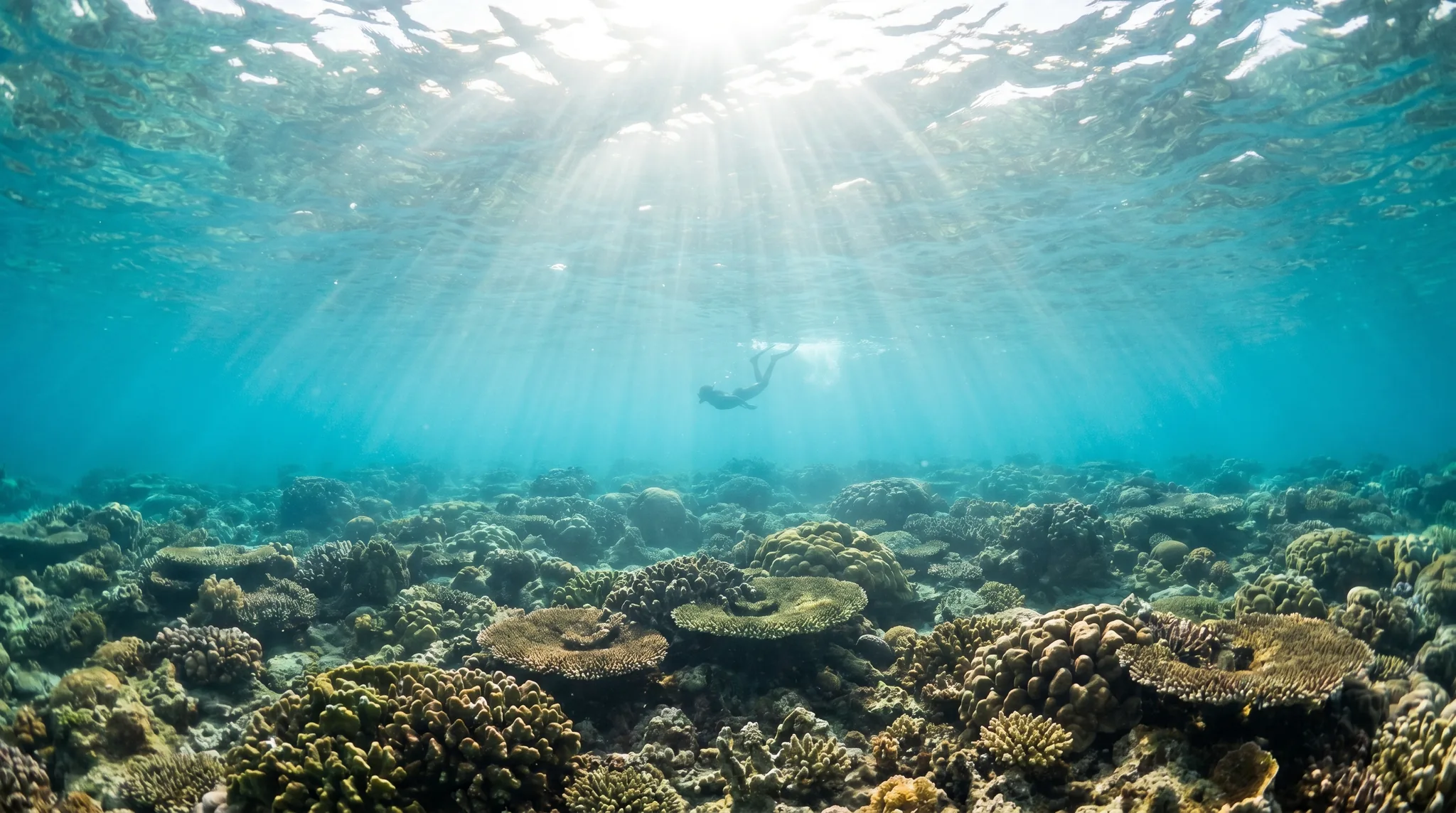
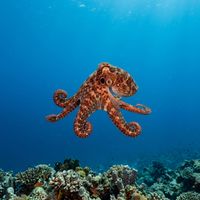
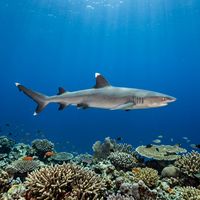
Praslin's underwater character is built on granitic architecture. Submerged boulders, pinnacles and reef structures define most sites, with seagrass beds adding variety at shallower spots like Anse Boudin and St Pierre Island. Drift conditions appear at several boat-access sites around Cousin Island, suiting a mix of skill levels from beginner to intermediate. The Hawksbill Sea Turtle, Spotted Eagle Ray, Whitetip Reef Shark and Day Octopus are consistently observed across the area.
Monthly water temperature across Praslin's sites, from satellite sea-surface data corrected for depth. The band shows the site-to-site spread.
Water stays warm through most of the year, peaking in the months from March to May when diver activity is also highest. A cooler period arrives from August into September, when currents at drift sites like Whale Rock and Red Point can be more pronounced. The shoulder months of October and November offer a good balance of comfortable water and active reefs.
18 operators
Seychelles
Seychelles
Water temperature around Praslin ranges from about 26°C in August to 30°C in March, based on satellite sea-temperature data for its dive sites.
In the warm season (about 30°C) a rash guard or 3mm shorty is comfortable in Praslin; in the coldest months (about 26°C) step up to a 3mm full suit.
Fin maps 31 sites in Praslin (24 scuba diving sites and 13 snorkelling spots, with some suited to both).
Across Praslin's dive sites, April, May, September, October and November are most often reported as the best months to visit.
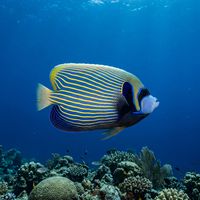
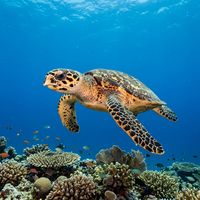
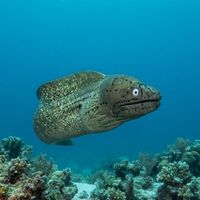
Praslin has an impressive list of regularly observed species. The Hawksbill Sea Turtle and Spotted Eagle Ray are very commonly seen across sites, while the Whitetip Reef Shark is a frequent presence around the granite reefs. The Day Octopus is also remarkably consistent throughout the area, and the Whale Shark appears on the signature species list for the region.
Yes, a good number of sites are rated for beginners. Aride Bank, Small Rock, Cherimon, Monkey Rock and Anse Petite Cour all fall into this category, covering a range of depths from very shallow to moderate. Intermediate divers have options at sites like Whale Rock and Big Mama, where drift conditions add an extra challenge.
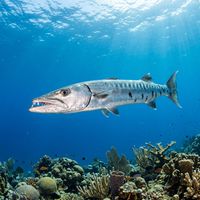
The Cousin Island cluster includes a high concentration of granite reef and pinnacle sites, several of which involve drift conditions and boat access. Sites directly off Praslin such as Monkey Rock and Anse Petite Cour tend to be shallower and calmer, with some offering shore entry. Both areas share a similar species list, including the Emperor Angelfish and Great Barracuda.
The majority of dive sites in Praslin require boat access, including all the sites around Cousin Island. Shore entry is available at Anse Petite Cour on Praslin's north coast, and Anse Boudin is accessible from shore for snorkellers. If you are planning a trip focused on shore diving, options are limited, so boat trips form the backbone of most dive programmes here.
19 more sites to explore